
Building Blocks of Life Carbon Hydrogen Oxygen Nitrogen
Building Blocks of Life (Carbon, Hydrogen, Oxygen, Nitrogen)
"THE BIG 4" MACRO MOLECULES Carbohydrates Lipids Proteins Nucleic Acids
So What Is A Macromolecule? A very large molecule, such as a polymer or protein, consisting of many smaller structural units linked together.

Macromolecules Carbohydrate Building Block Uses Simple sugars Quick source of energy Examples Glucose *Glycogen Cellulose Starch Test • • STARCH turns purple in iodine SUGARS react with Benedict’s Solution * Composed of C, H, & O
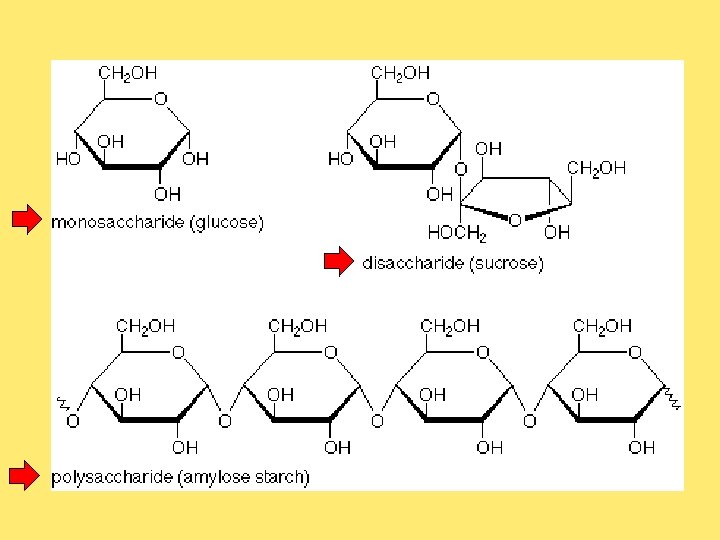
Monomer • Monosaccharide (1 sugar) – Glucose: in candy – Fructose: in fruits – Galactose: in milk
Disaccharides • Sucrose: table sugar • Lactose: in milk • Maltose (what starch breaks into): in pasta
Polymers • Polysccarhide – Starch – Fiber – Glycogen ****All three are strings of glucose
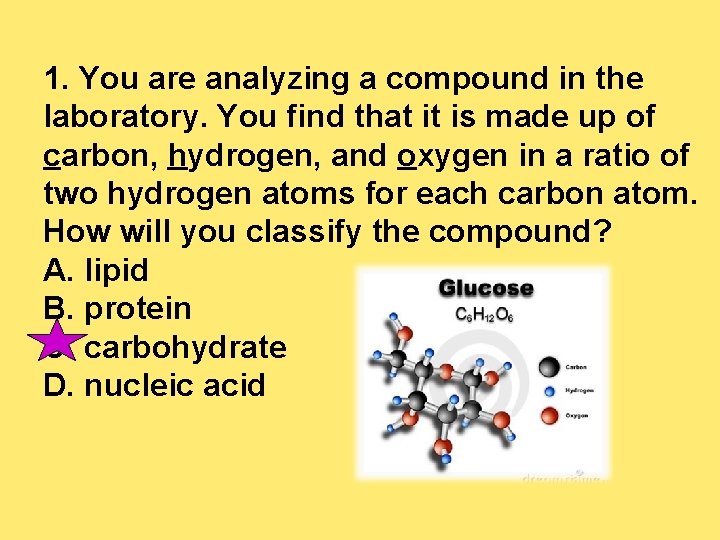
1. You are analyzing a compound in the laboratory. You find that it is made up of carbon, hydrogen, and oxygen in a ratio of two hydrogen atoms for each carbon atom. How will you classify the compound? A. lipid B. protein C. carbohydrate D. nucleic acid
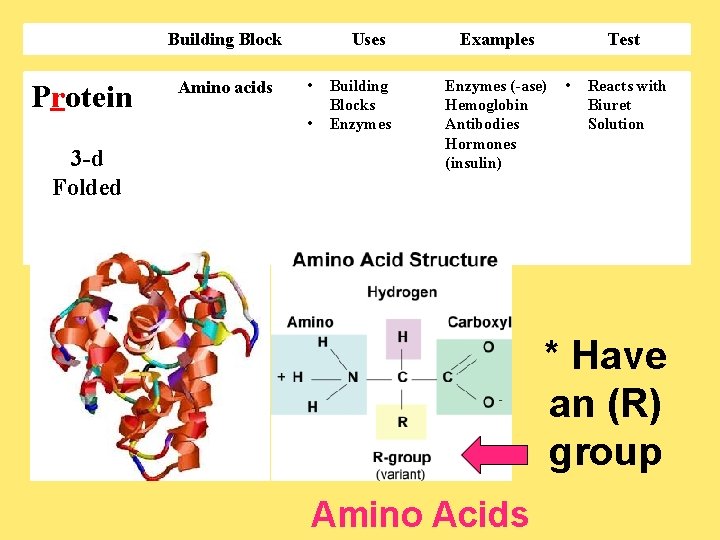
Building Block Protein Amino acids Uses • • 3 -d Folded Building Blocks Enzymes Examples Test Enzymes (-ase) Hemoglobin Antibodies Hormones (insulin) • Reacts with Biuret Solution * Have an (R) group Amino Acids
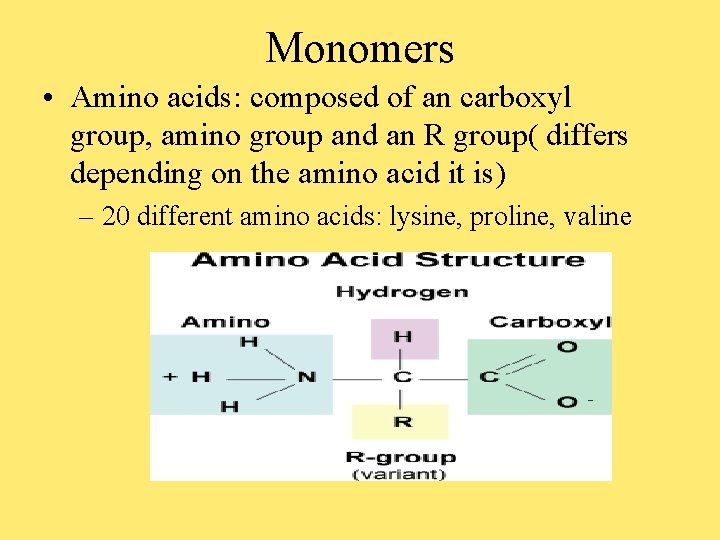
Monomers • Amino acids: composed of an carboxyl group, amino group and an R group( differs depending on the amino acid it is) – 20 different amino acids: lysine, proline, valine
Polymers • Polypeptides: many amino acids attached together by peptide bonds. – Glut-4: transport – Collagen: structural – Lactase: enzyme – Insulin: Hormone • Protein: Polypeptide gets folded (3 D) made of hundreds of amino acids.
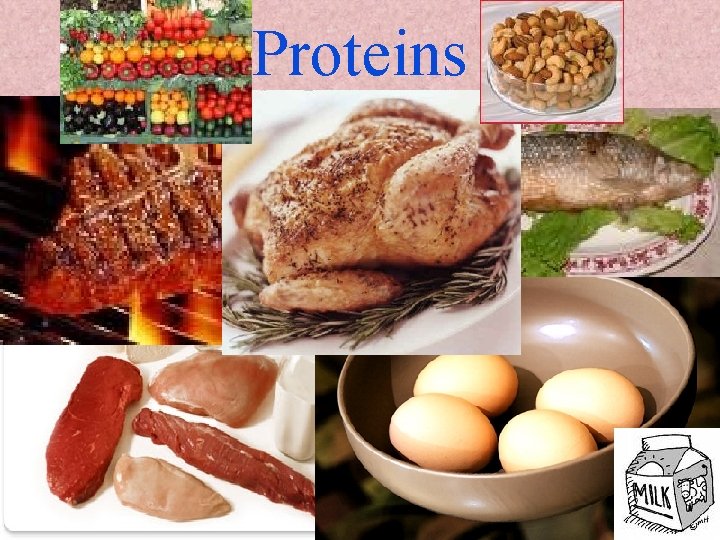
Proteins
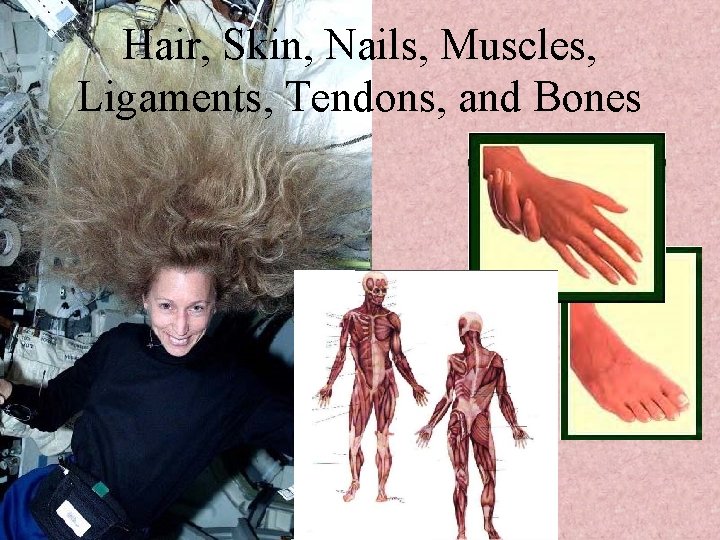
Hair, Skin, Nails, Muscles, Ligaments, Tendons, and Bones
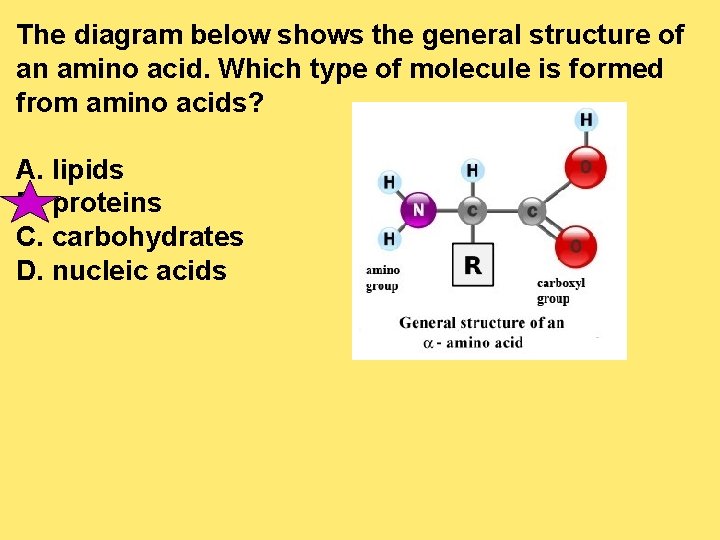
The diagram below shows the general structure of an amino acid. Which type of molecule is formed from amino acids? A. lipids B. proteins C. carbohydrates D. nucleic acids

Lipid Building Block Uses Fatty Acids • Stored energy source • In cell membrane Examples Test Fats, Oils, • Leaves oily Steroids, spot on Hormones. brown paper bag *cholesterolatherosclerosis . Long Chains of -C
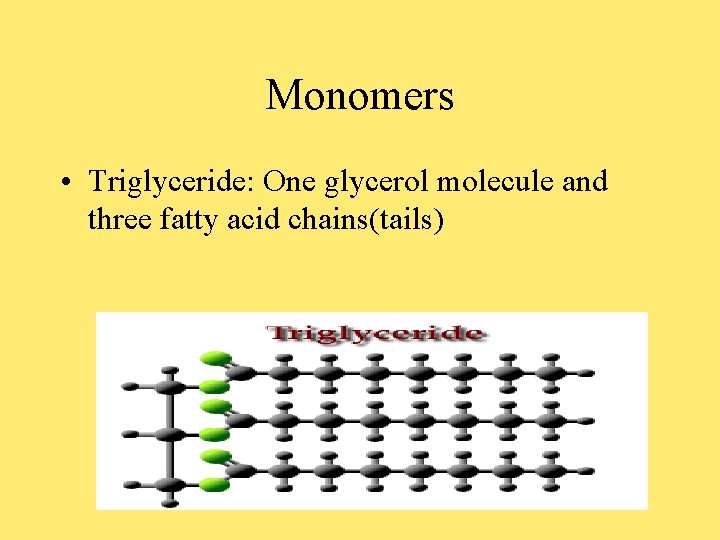
Monomers • Triglyceride: One glycerol molecule and three fatty acid chains(tails)
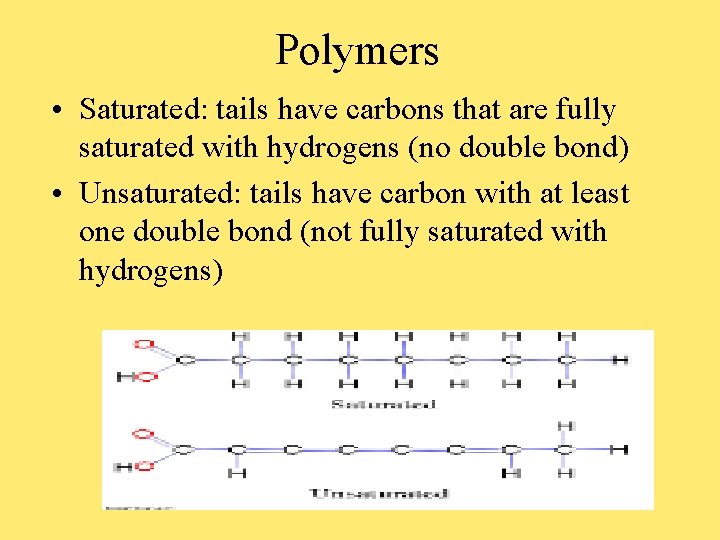
Polymers • Saturated: tails have carbons that are fully saturated with hydrogens (no double bond) • Unsaturated: tails have carbon with at least one double bond (not fully saturated with hydrogens)
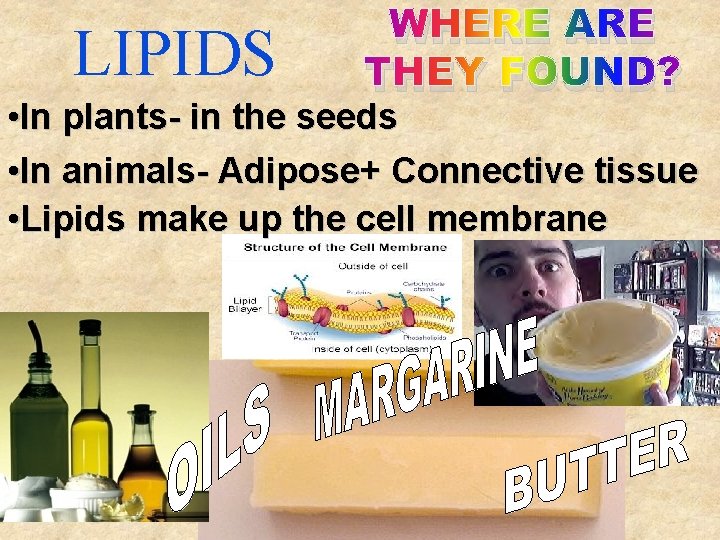
LIPIDS WHERE ARE THEY FOUND? • In plants- in the seeds • In animals- Adipose+ Connective tissue • Lipids make up the cell membrane
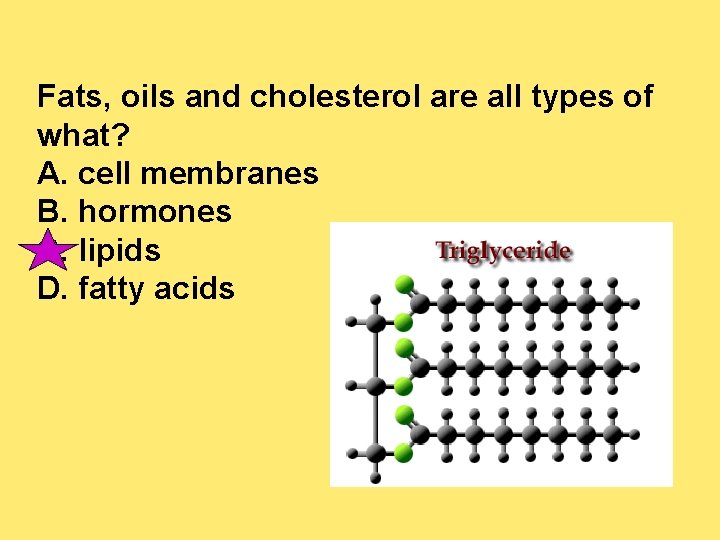
Fats, oils and cholesterol are all types of what? A. cell membranes B. hormones C. lipids D. fatty acids
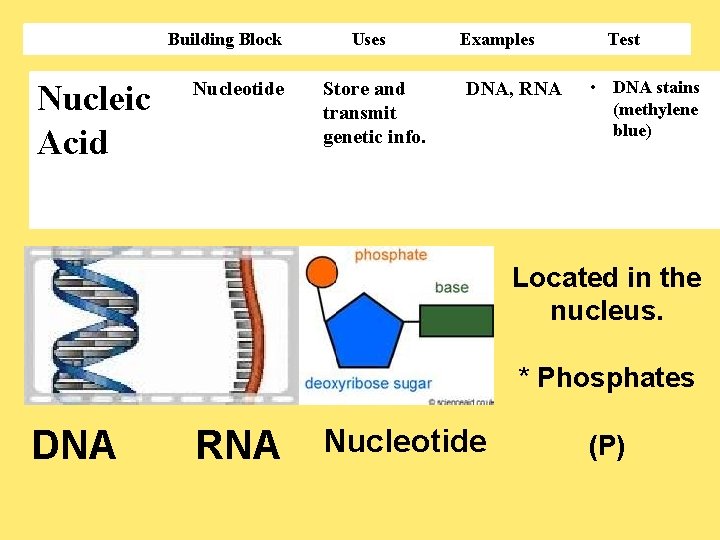
Building Block Nucleic Acid Nucleotide Uses Store and transmit genetic info. Examples DNA, RNA Test • DNA stains (methylene blue) Located in the nucleus. * Phosphates DNA RNA Nucleotide (P)
Monomers • Nucleotide: – Phosphate group – Sugar(deoxyribose or ribose) – Nitrogenous bases (Adenine, Thymine, Guanine, Uracil, Cytosine)
Polymers • DNA: Deoxyribose Nucleic Acid – Double helix – Adenine pairs with Thymine – Guanine pairs with Cytosine • RNA: Ribose Nucleic Acid – One strand – Adenine pairs with Uracil – Guanine pairs with Cytosine
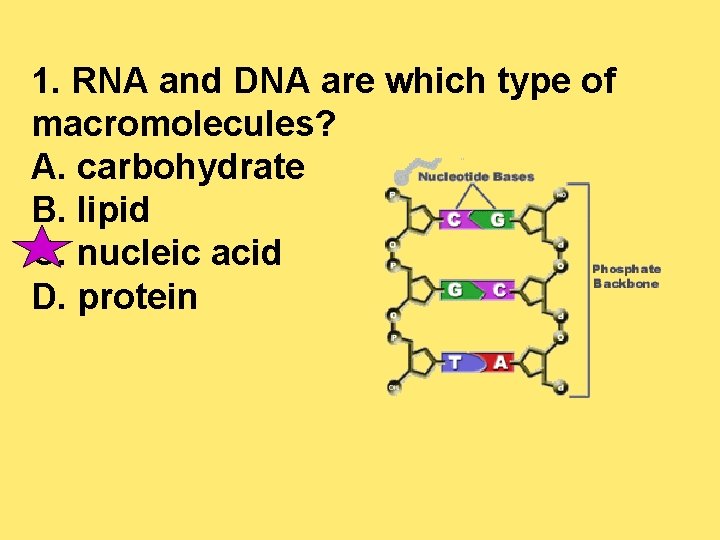
1. RNA and DNA are which type of macromolecules? A. carbohydrate B. lipid C. nucleic acid D. protein
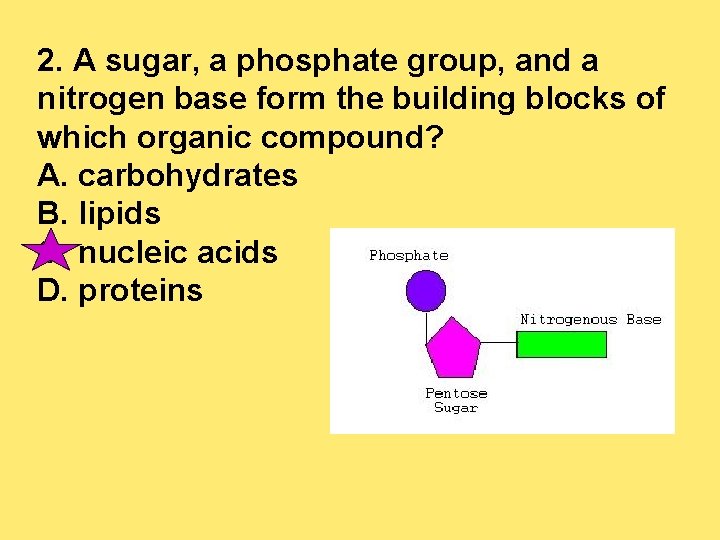
2. A sugar, a phosphate group, and a nitrogen base form the building blocks of which organic compound? A. carbohydrates B. lipids C. nucleic acids D. proteins
- Slides: 25