
Building Big Data Analytics as a Strategic Capability
Building Big Data Analytics as a Strategic Capability in Industrial Firms Firm Level Capabilities and Project Level Practices for Digital Transformation Dijo Alexander, Ph. D Head of Technology – e. Learning, SAP Management Design & Innovation Research Fellow, Case Western Reserve University Adjunct Faculty, University of Wisconsin - Milwaukee
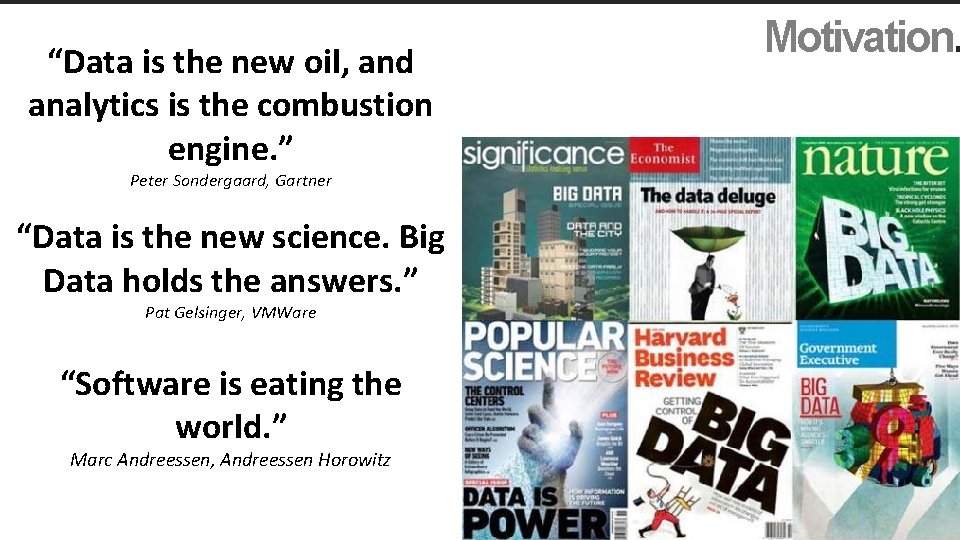
“Data is the new oil, and analytics is the combustion engine. ” Peter Sondergaard, Gartner “Data is the new science. Big Data holds the answers. ” Pat Gelsinger, VMWare “Software is eating the world. ” Marc Andreessen, Andreessen Horowitz Motivation.
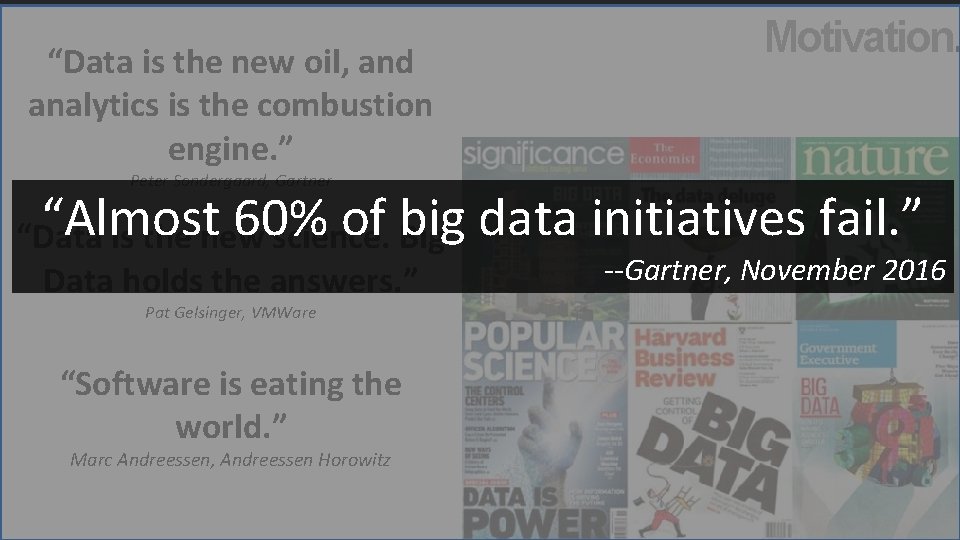
“Data is the new oil, and analytics is the combustion engine. ” Motivation. Peter Sondergaard, Gartner “Almost 60% of big data initiatives fail. ” “Data is the new science. Big Data holds the answers. ” Pat Gelsinger, VMWare “Software is eating the world. ” Marc Andreessen, Andreessen Horowitz --Gartner, November 2016
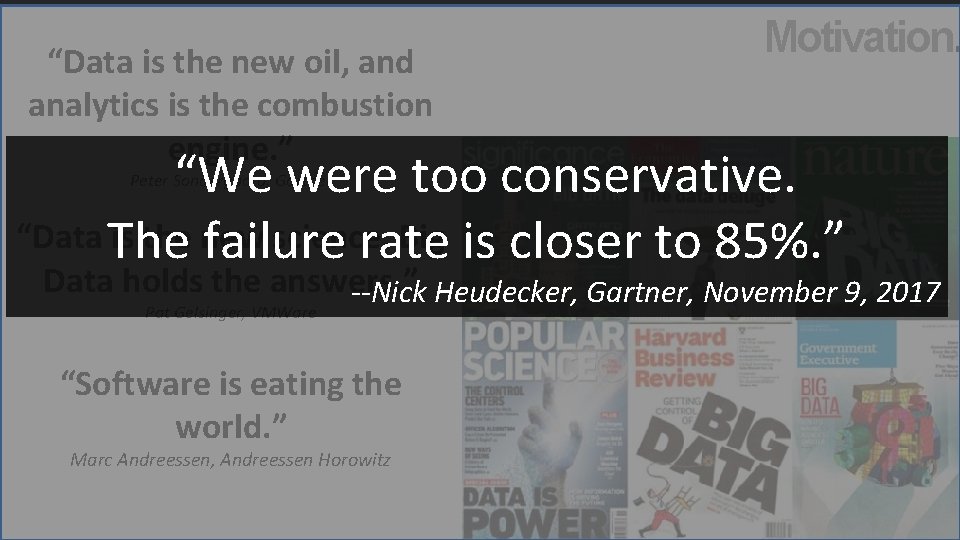
“Data is the new oil, and analytics is the combustion engine. ” Motivation. “We were too conservative. “Data The is the new science. Big is closer to 85%. ” failure rate Peter Sondergaard, Gartner Data holds the answers. ” --Nick Heudecker, Gartner, November 9, 2017 Pat Gelsinger, VMWare “Software is eating the world. ” Marc Andreessen, Andreessen Horowitz
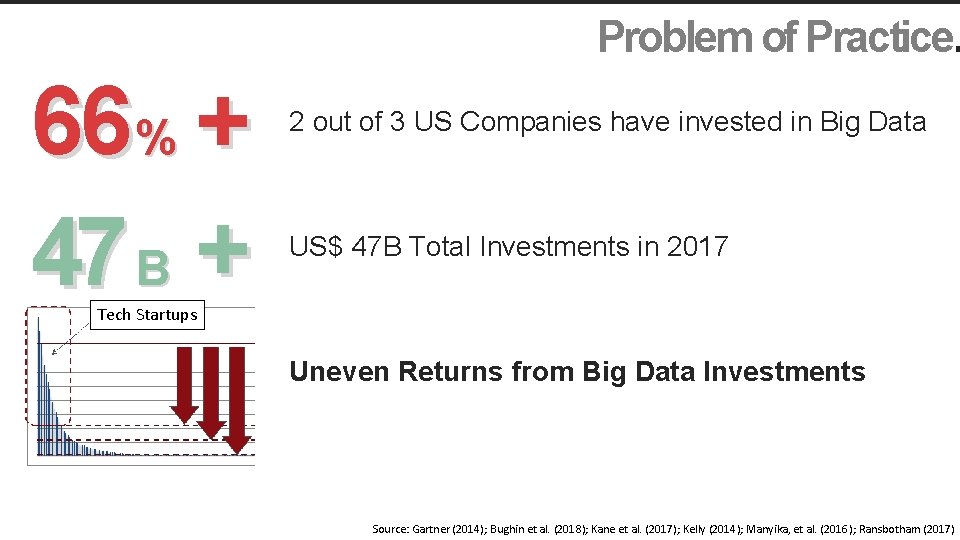
Problem of Practice. 66% + 47 B + 2 out of 3 US Companies have invested in Big Data US$ 47 B Total Investments in 2017 Tech Startups Uneven Returns from Big Data Investments Source: Gartner (2014); Bughin et al. (2018); Kane et al. (2017); Kelly (2014); Manyika, et al. (2016); Ransbotham (2017)
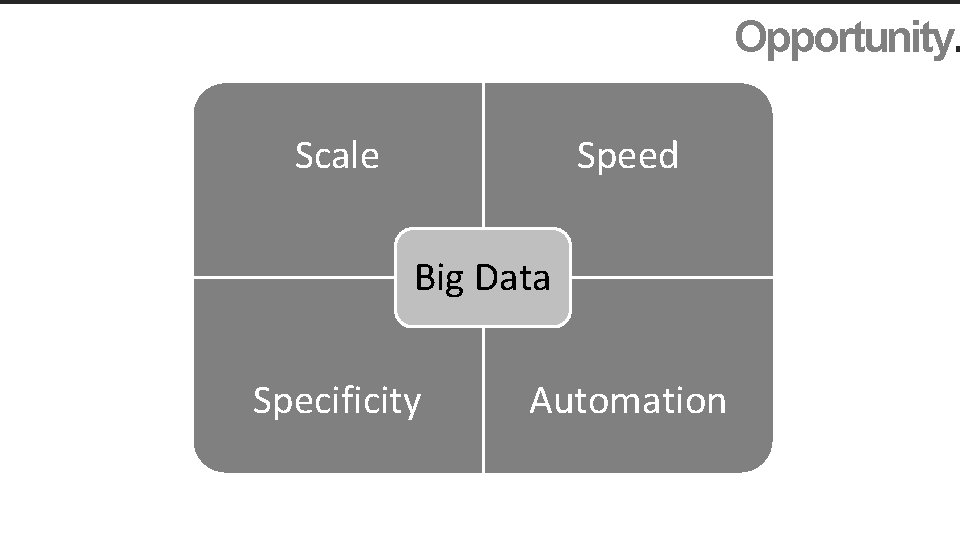
Opportunity. Speed Scale Big Data Specificity Automation
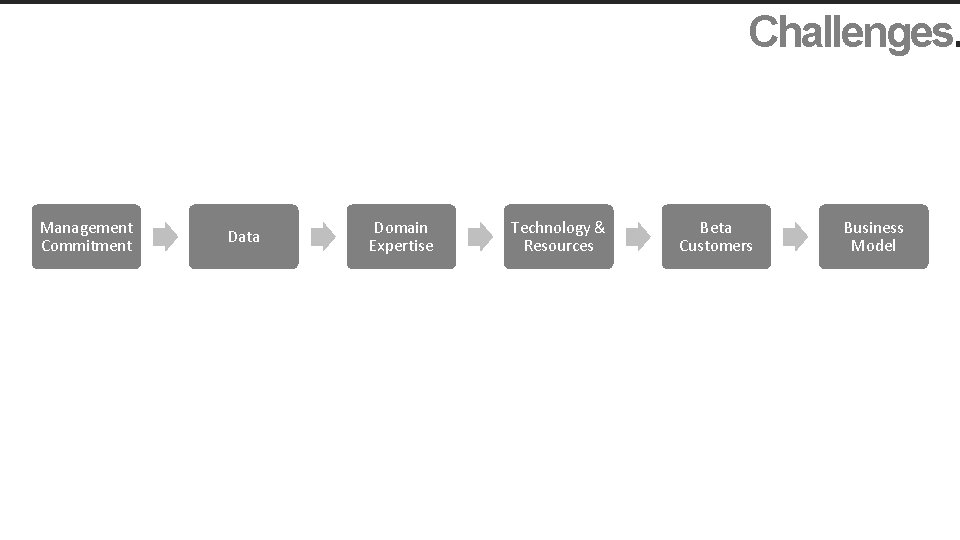
Challenges. Management Commitment Data Domain Expertise Technology & Resources Beta Customers Business Model
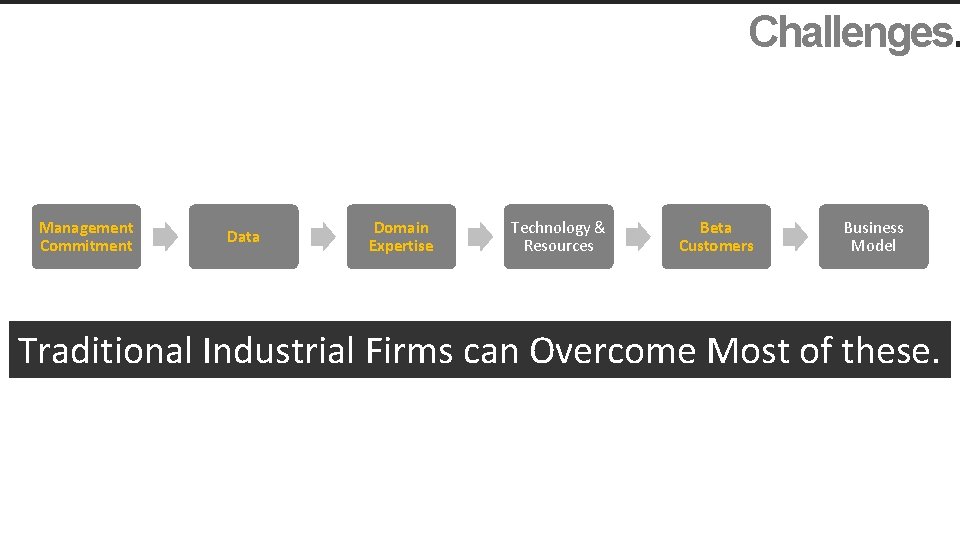
Challenges. Management Commitment Data Domain Expertise Technology & Resources Beta Customers Business Model Traditional Industrial Firms can Overcome Most of these.
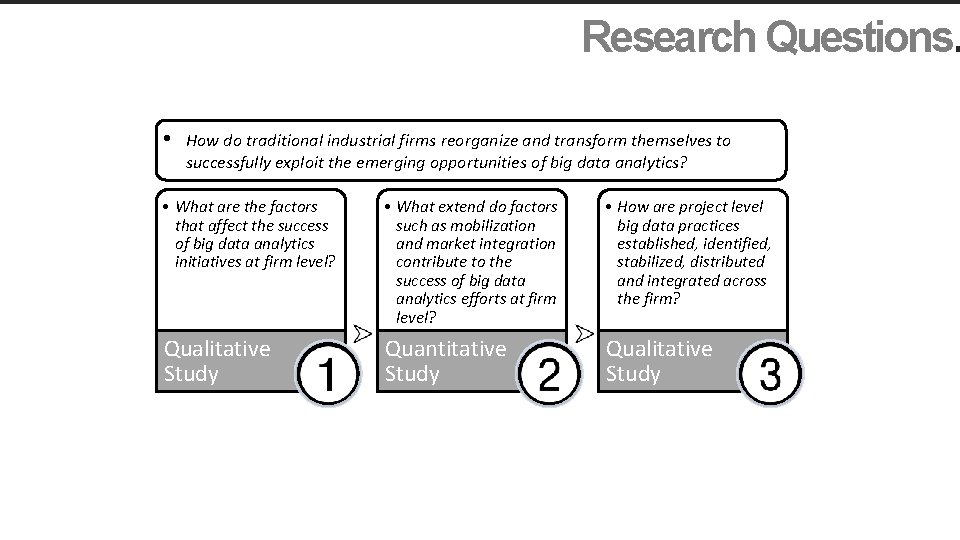
Research Questions. • How do traditional industrial firms reorganize and transform themselves to successfully exploit the emerging opportunities of big data analytics? • What are the factors that affect the success of big data analytics initiatives at firm level? • What extend do factors such as mobilization and market integration contribute to the success of big data analytics efforts at firm level? • How are project level big data practices established, identified, stabilized, distributed and integrated across the firm? Qualitative Study Quantitative Study Qualitative Study
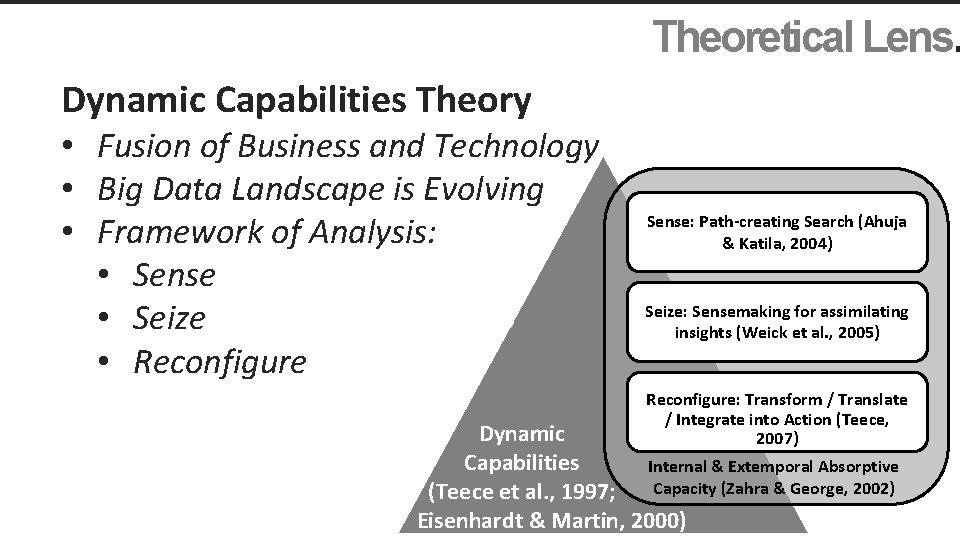
Theoretical Lens. Dynamic Capabilities Theory • Fusion of Business and Technology • Big Data Landscape is Evolving • Framework of Analysis: • Sense • Seize • Reconfigure Sense: Path-creating Search (Ahuja & Katila, 2004) Seize: Sensemaking for assimilating insights (Weick et al. , 2005) Reconfigure: Transform / Translate / Integrate into Action (Teece, 2007) Dynamic Capabilities Internal & Extemporal Absorptive Capacity (Zahra & George, 2002) (Teece et al. , 1997; Eisenhardt & Martin, 2000)
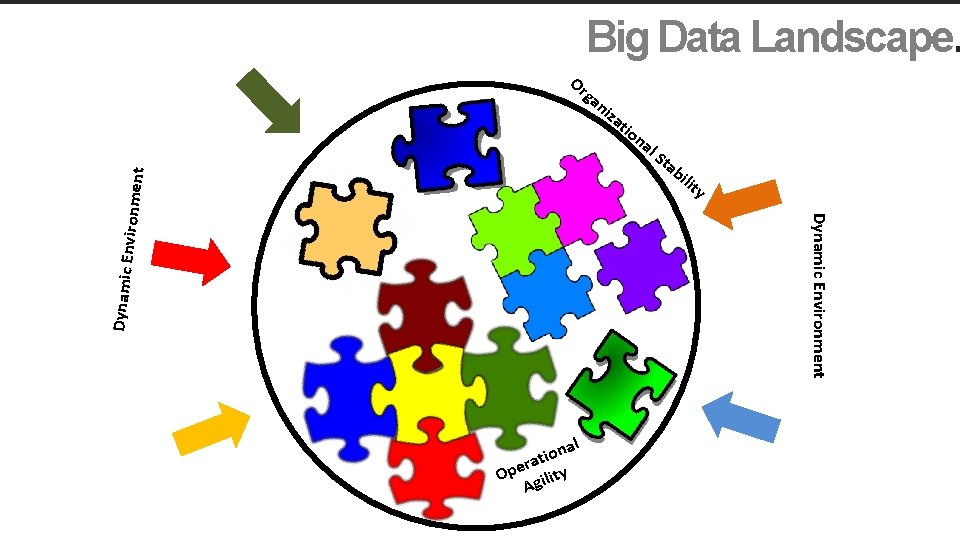
Big Data Landscape. Or ga ni za na l. S ta bi lit y Dynamic Environment Dynamic E nvironmen t tio nal o i t ra e p O gility A

Customer Domain Capability Analytics Maturity. Method Cognitive Prescriptive Tool Predictive • Analytics Competency • Descriptive • Predictive • Prescriptive • Cognitive • Analytics Capability • Tools and Technology Centric • Methods and Techniques Centric • Customer and Use Case Centric • Domain Expertise Centric Descriptive Maturity
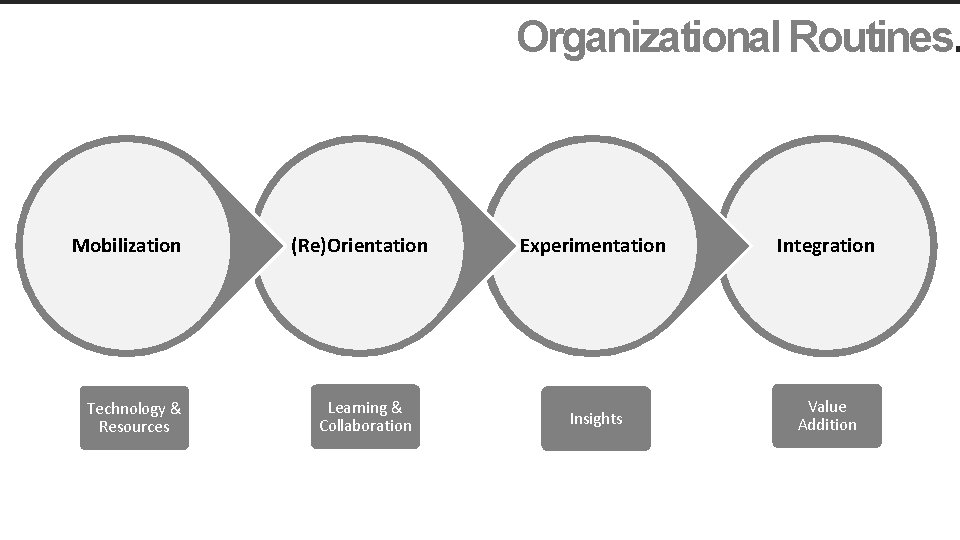
Organizational Routines. Mobilization Technology & Resources (Re)Orientation Learning & Collaboration Experimentation Integration Insights Value Addition
Findings. Big Data Analytics is NOT a Technology problem NOR an Information Technology (IT) implementation.
Findings. Big Data Analytics is NOT a Technology problem NOR an Information Technology (IT) implementation. Rather, it is a company-wide business initiative.
Findings. • Organizations Utilize Analytics • Projects Run Analytics • Organizational Practices Facilitate Operational Routines to Emerge • Agility and Speed of Organizational Change Moderate Analytics Success
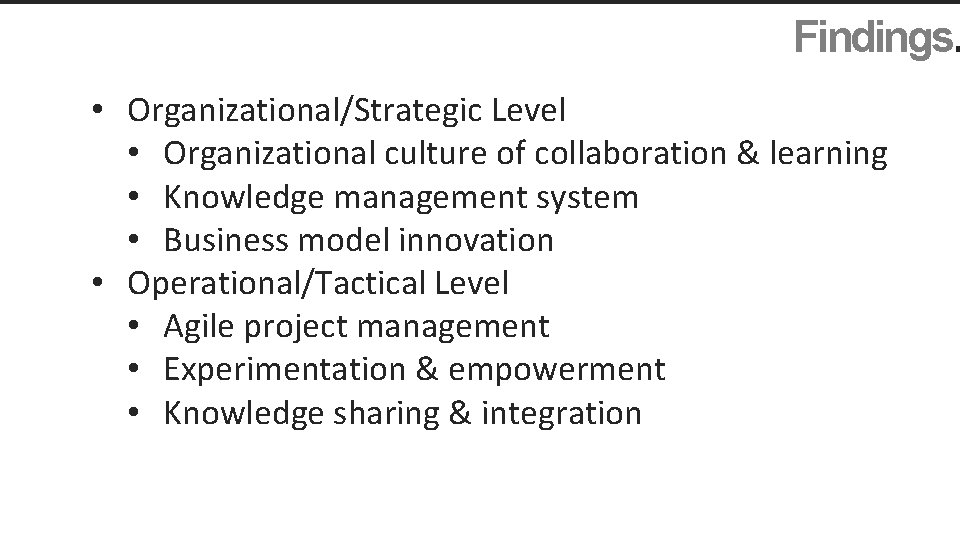
Findings. • Organizational/Strategic Level • Organizational culture of collaboration & learning • Knowledge management system • Business model innovation • Operational/Tactical Level • Agile project management • Experimentation & empowerment • Knowledge sharing & integration
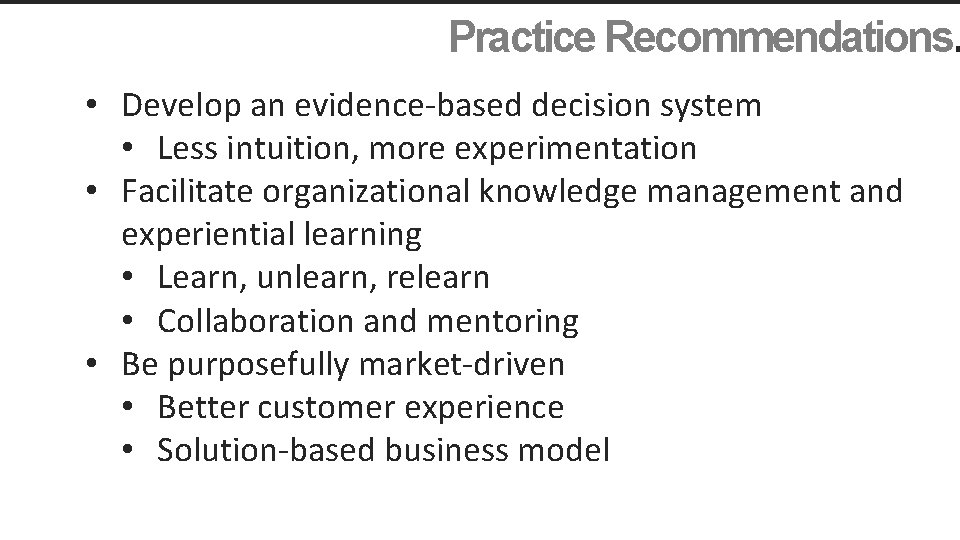
Practice Recommendations. • Develop an evidence-based decision system • Less intuition, more experimentation • Facilitate organizational knowledge management and experiential learning • Learn, unlearn, relearn • Collaboration and mentoring • Be purposefully market-driven • Better customer experience • Solution-based business model
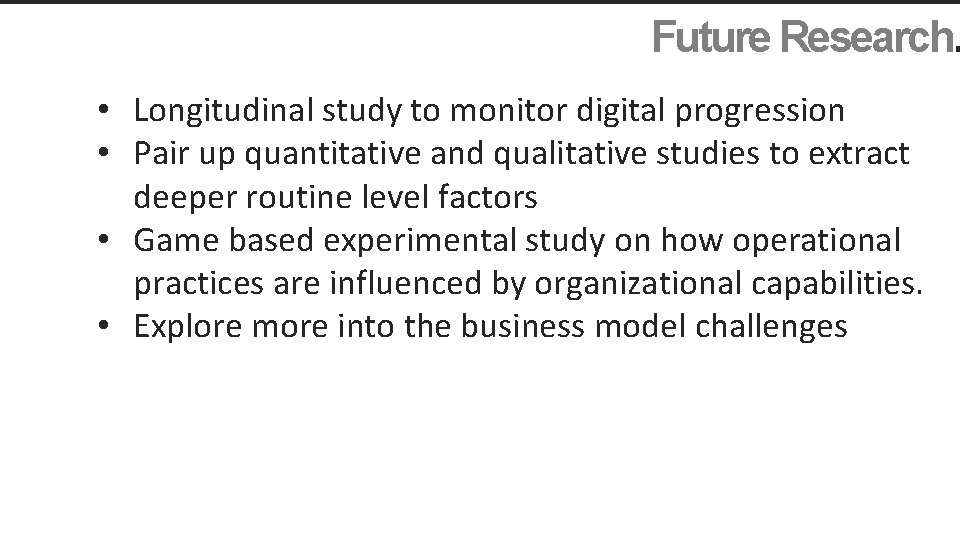
Future Research. • Longitudinal study to monitor digital progression • Pair up quantitative and qualitative studies to extract deeper routine level factors • Game based experimental study on how operational practices are influenced by organizational capabilities. • Explore more into the business model challenges
Thank You! Questions? dijo. alexander@sap. com
- Slides: 20