
Building Awareness and Value Across Your Institution NATASHA
Building Awareness and Value Across Your Institution NATASHA JANKOWSKI, PHD; EXECUTIVE DIRECTOR, NATIONAL INSTITUTE FOR LEARNING OUTCOMES ASSESSMENT (NILOA); RESEARCH ASSOCIATE PROFESSOR, UNIVERSITY OF ILLINOIS URBANACHAMPAIGN @NILOA_Web @njankow
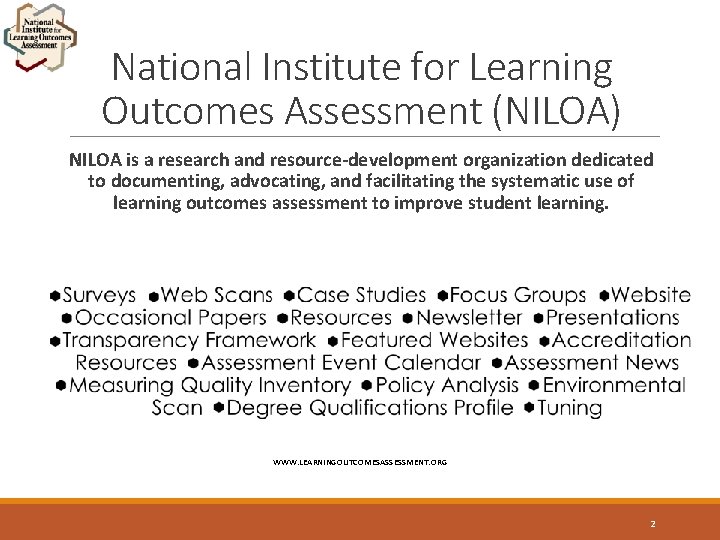
National Institute for Learning Outcomes Assessment (NILOA) NILOA is a research and resource-development organization dedicated to documenting, advocating, and facilitating the systematic use of learning outcomes assessment to improve student learning. WWW. LEARNINGOUTCOMESASSESSMENT. ORG 2
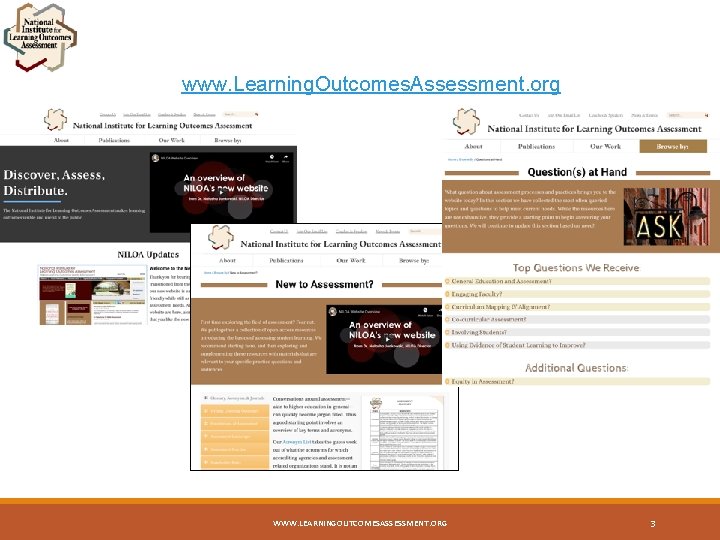
www. Learning. Outcomes. Assessment. org WWW. LEARNINGOUTCOMESASSESSMENT. ORG 3
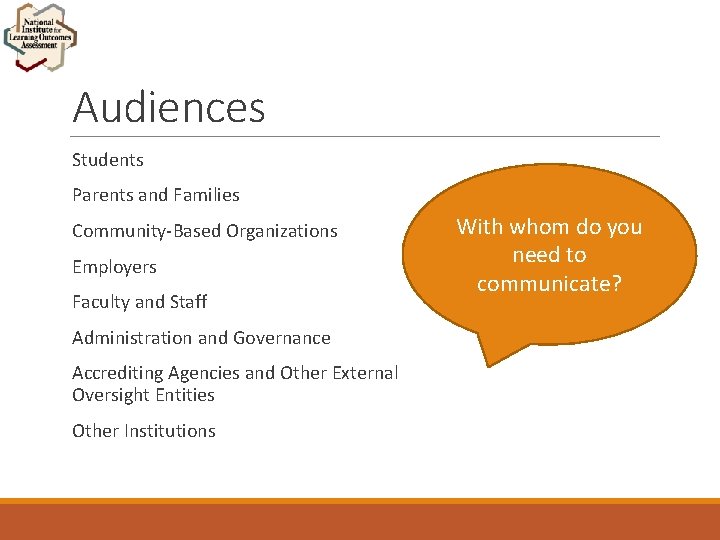
Audiences Students Parents and Families Community-Based Organizations Employers Faculty and Staff Administration and Governance Accrediting Agencies and Other External Oversight Entities Other Institutions With whom do you need to communicate?
Internal Audiences With whom do you need to communicate within your institution? Who is aware? And how do you know that?
Making the Case In what ways does PLA bring value to your institution? What is the philosophy (see Nan’s amazing work) at your institution regarding the recognition, validation, and integration of learning into institutionally awarded credentials? How does the mission of your institution support PLA? What efforts does PLA align with and what areas still need to be engaged in order to develop a shared understanding of the value of PLA?
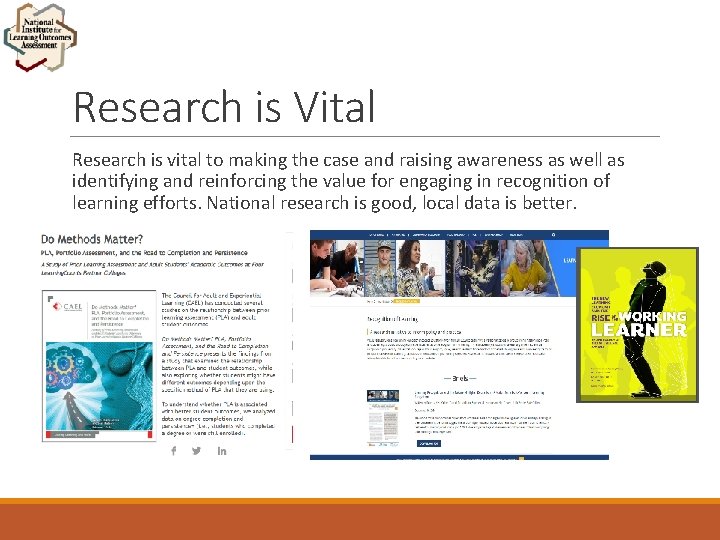
Research is Vital Research is vital to making the case and raising awareness as well as identifying and reinforcing the value for engaging in recognition of learning efforts. National research is good, local data is better.
Communicating Rarely do we focus on successful communication, but instead offer plans to keep people informed or make information available. 1. What communication mechanisms and mediums are most effective? How do you know that? Tailored Resources: Consider developing talking points, information sheets, and frequently asked questions for specific audiences. Ensure that any communication mechanisms that are targeted to specific audiences include audience appropriate language.
Value Propositions Value propositions present for a specific stakeholder the problem that PLA solves for them and helps to answer the question if it is right for them. Be sure in the value propositions to clarify any areas that will be a known concern. For instance, when speaking with faculty note that PLA is not about evaluating experiences or getting credit for participation, instead it is about assessment of verifiable college-level learning regardless of how, where, or in what way it was acquired. In essence, be prepared to bust myths or misconceptions. Ensure that value statements support espoused values and mission such that they are not in conflict with the institutional values or culture.
Value Propositions Cont. 1. To develop a value proposition start with audience. To whom are you making the case? 2. How is PLA unique and/or different from current approaches? 3. What key terms or definitions are vital and which are unnecessary? Avoid acronyms, do not introduce new terms or language an audience will need to understand in order to sign on or be on board, and ensure that as you develop the value propositions you check with the target audience about fitness instead of assuming the written statement will be effective. Also, use local data on your students to make the case that this is an issue that helps your current students.
Sample Value Propositions PLA increases persistence and completion for students whose learning is recognized. It is a way for students to save time and money in earning their degrees. It can even be a reason to return to school. Students come with learning that has value and can be validated and recognized by institutions of higher education. Recognizing student learning signals to students that they belong in higher education and are valued. Policy makers may take interest in the cost effectiveness, reduction in time to degree, and increase in graduation rate learning recognition can support. Employers benefit through students connecting work and learning. Instead of thinking about making or buying talent, employees can get credit for what they know and can do to advance, retain, and help determine talent pipelines by focusing on team development based on validated knowledge and skills. For faculty, there are pedagogical implications. It is not simply a policy change, but an alignment with our culture and values. Reflecting on their learning helps students have a greater sense of their own knowledge and ability to learn. It reinforces a strengths-based approach to learning.
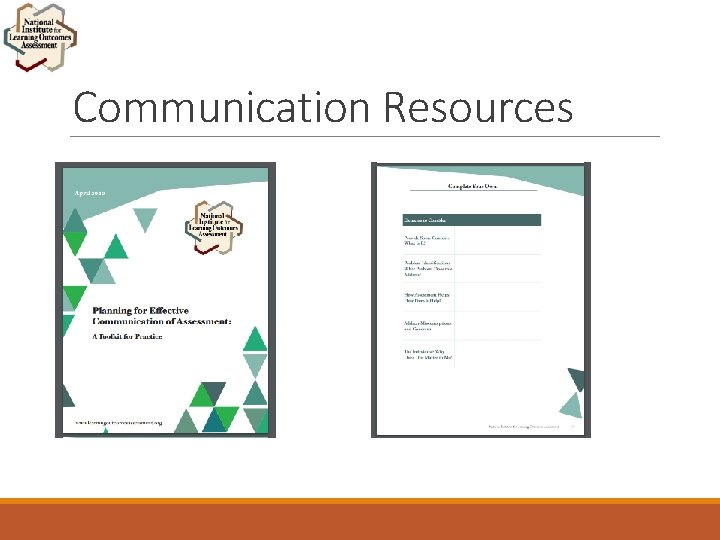
Communication Resources
Broadening Awareness Once you have clear value propositions, think through whom you need to bring together around the table. Consider: 1. What will this work do for them? 2. What is their willingness to do it? 3. What is their readiness to engage? 4. Can you succinctly explain what PLA does for them and why it is needed? Not only how it is different, but why that difference adds value? Why there is an urgency or need to address the focus now?
Questions to Consider What is theory of change behind PLA for your institution and how does it connect with the mission, students served, and current needs of the institution or program? Will it be in conflict with existing structures, infringe on other “turf” or programs, require partnership between areas that have not worked together before? Which student populations is this work going to support? Are any of these “deal breakers” that need to lead the conversation?
Future Planning What case needs to be made to administration or decision makers as it relates to budget allocation for professional development needs? What is the plan to keep decision makers informed and supportive of ongoing efforts?
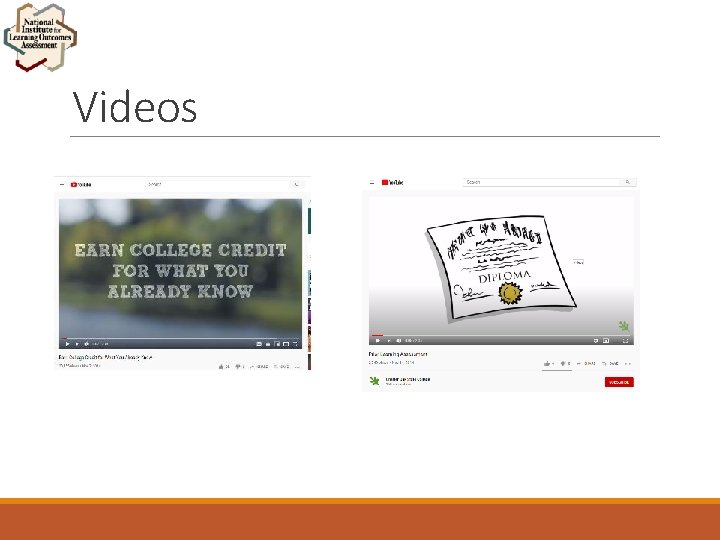
Videos
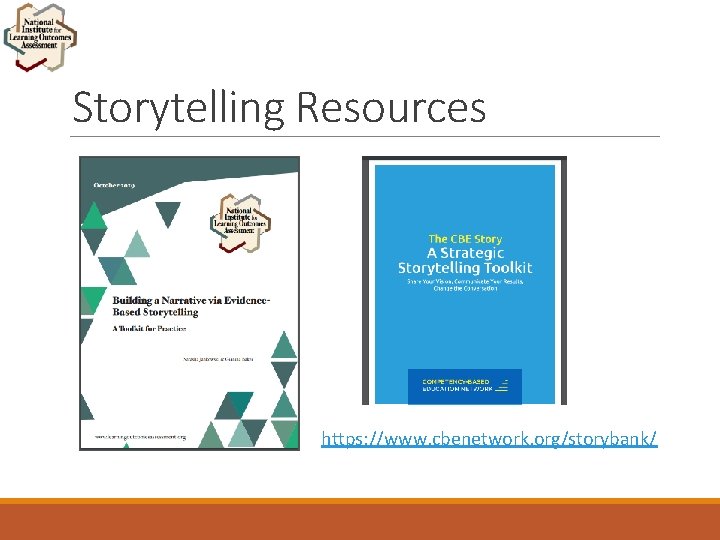
Storytelling Resources https: //www. cbenetwork. org/storybank/

Contact Us Email us: niloa@education. Illinois. edu Join Our Email List: learningoutcomesassessment. org/joinemail/ Website: http: //learningoutcomesassessment. org @NILOA_web @Learning. Outcomes. Assessment WWW. LEARNINGOUTCOMESASSESSMENT. ORG 20
- Slides: 20