
BUILDING AN ENGAGED CULTURE Dr Susan Inglis Professor

BUILDING AN ENGAGED CULTURE Dr Susan Inglis, Professor of Practice and Director, Executive Education, La Trobe Business School IPWEA Conference March 2017

ABOUT DR SUSAN INGLIS § Consulting for 20 years § Teaching MBA Leadership and Management students since 2009 § Passionate about developing leader/managers, improving teams and maximising success at work § s. inglis@latrobe. edu. au; 9479 2437 La Trobe Business School 2

LIST 3 CHARACTERISTICS OF AN EFFECTIVE TEAM YOU’VE BEEN PART OF La Trobe Business School 3

WHAT IS LEADERSHIP? § ‘Leading is the process of arousing enthusiasm and directing efforts towards organisational goals. ’ (Schermerhorn et al. 2014, p. 361) § ‘‘Leadership is about making others better as a result of your presence and making sure that impact lasts in your absence. ’ (Harvard Business School definition of leadership, in Sandberg, 2013, p. 158). Source: http: //commons. wikimedia. org/wiki/File: Garan_Sunrise. jpg La Trobe Business School

LEADERSHIP TIMELINE SIGNIFICANT THEORETICAL APPROACHES Great Man Theory/ Trait Theory 1840 -1940’s Behavioural Theories 1940’s-1950’s Contingency and Situational Leadership Theories 1960’s – 1970’s Values-based Leadership 1980’s – 2000’s Responsible leadership is a shared process, not an entity Now La Trobe Business School
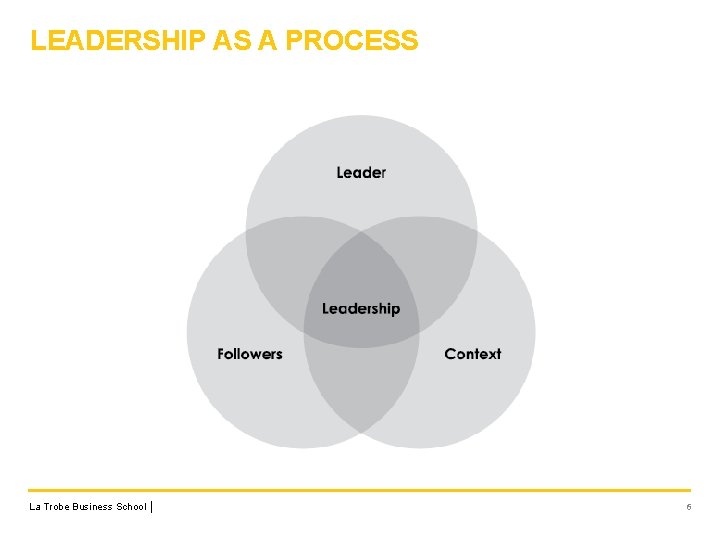
LEADERSHIP AS A PROCESS La Trobe Business School 6
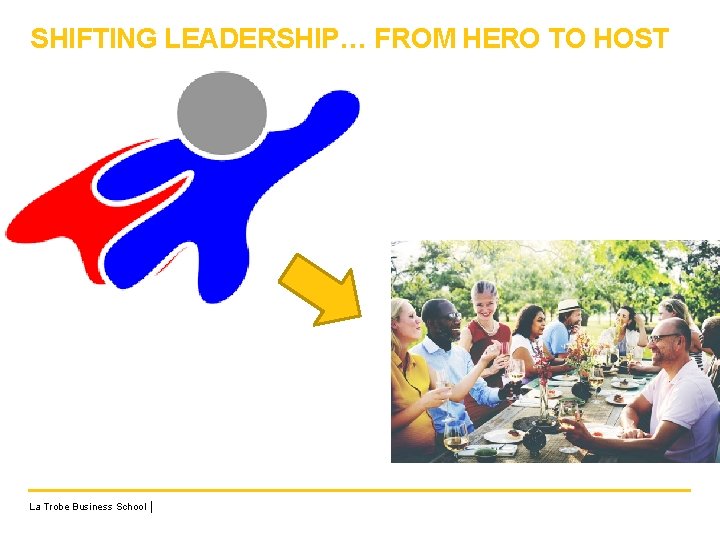
SHIFTING LEADERSHIP… FROM HERO TO HOST La Trobe Business School

HERO TO HOST HERO - UNITARY COMMAND HOST - SHARED LEADERSHIP § § § § § Ask good questions of others § Admit what they don’t know § Trust others to get the work done § Shared leadership “we” not “I” § Leader as teacher § Listen to and develop followers § Provide moral leadership § Genuine stakeholder engagement § Make achievements visible § Offer unequivocal support Has the answers Don’t admit mistakes Take control Omnipotent hero Has authority Embody courage Superior expertise In charge La Trobe Business School 8
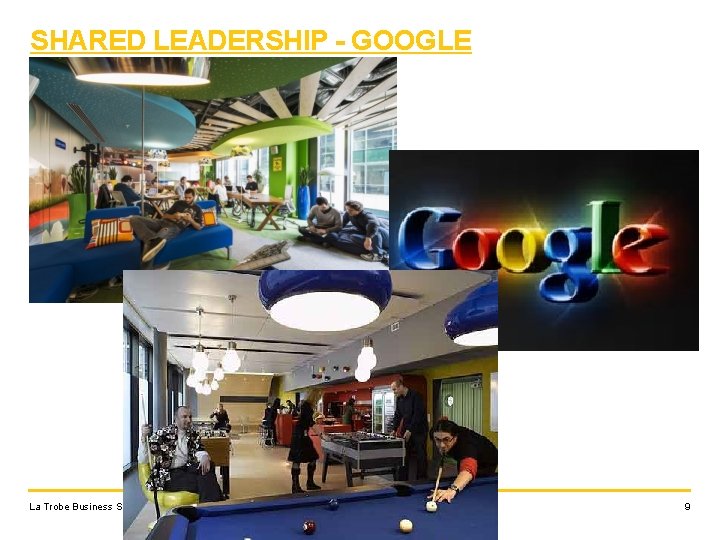
SHARED LEADERSHIP - GOOGLE La Trobe Business School Presentation Title 9
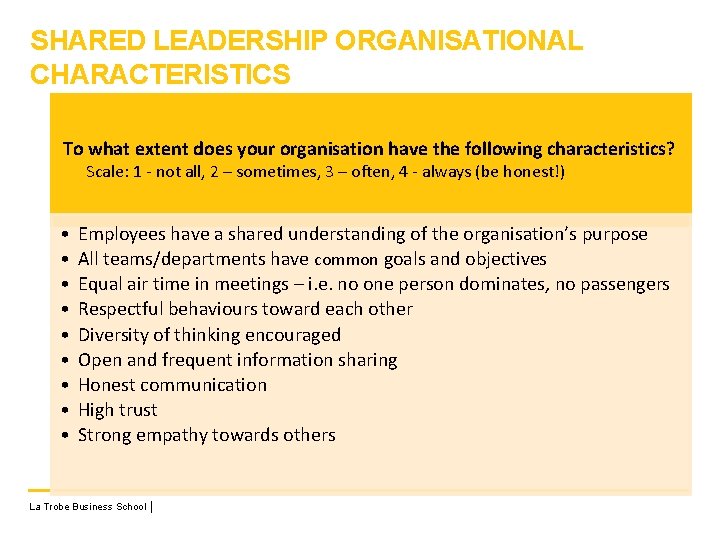
SHARED LEADERSHIP ORGANISATIONAL CHARACTERISTICS To what extent does your organisation have the following characteristics? Scale: 1 - not all, 2 – sometimes, 3 – often, 4 - always (be honest!) • • • Employees have a shared understanding of the organisation’s purpose All teams/departments have common goals and objectives Equal air time in meetings – i. e. no one person dominates, no passengers Respectful behaviours toward each other Diversity of thinking encouraged Open and frequent information sharing Honest communication High trust Strong empathy towards others La Trobe Business School
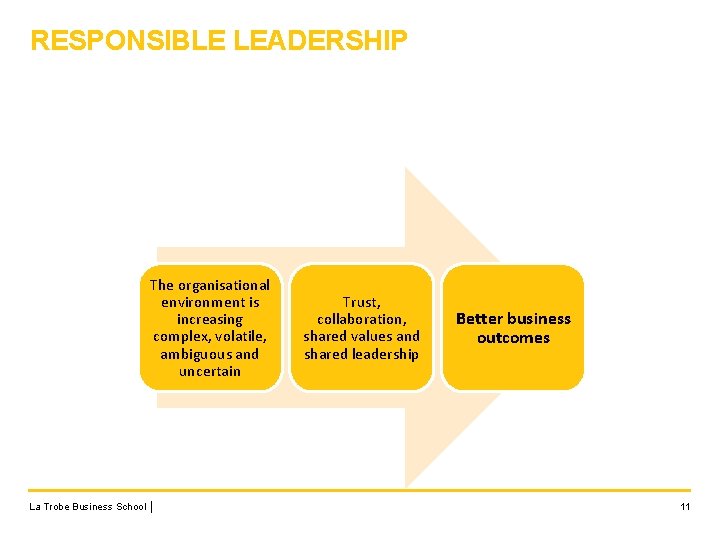
RESPONSIBLE LEADERSHIP The organisational environment is increasing complex, volatile, ambiguous and uncertain La Trobe Business School Trust, collaboration, shared values and shared leadership Better business outcomes 11
WHAT IS A ‘VALUE’ AND HOW DO WE DEVELOP OUR OWN SET OF VALUES? §A value is an idea, belief or mode of action that an individual considers to be important §Values are developed from parents, teachers, friends, family, social media, internet, music, books §Values are revised throughout life, i. e. our life experiences shape our values §Values are not facts La Trobe Business School 12
YOUR VALUES What is really important to you? How do these values guide your actions? How do they influence the way you lead? La Trobe Business School 13
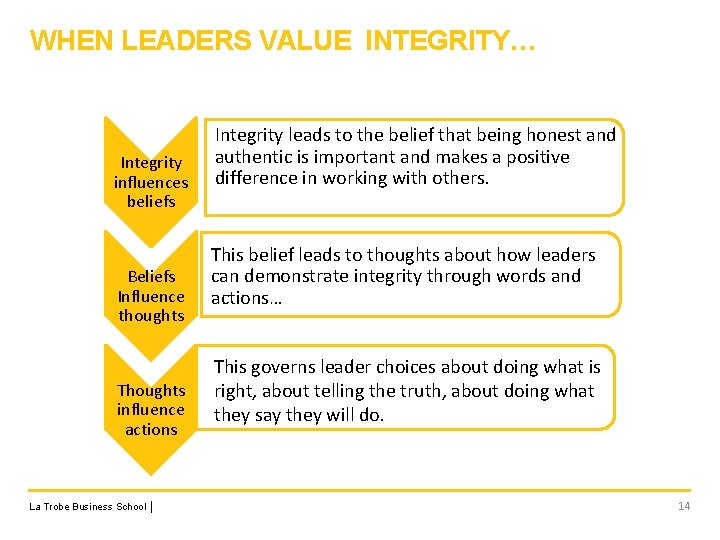
WHEN LEADERS VALUE INTEGRITY… Integrity influences beliefs Beliefs Influence thoughts Thoughts influence actions La Trobe Business School Integrity leads to the belief that being honest and authentic is important and makes a positive difference in working with others. This belief leads to thoughts about how leaders can demonstrate integrity through words and actions… This governs leader choices about doing what is right, about telling the truth, about doing what they say they will do. 14
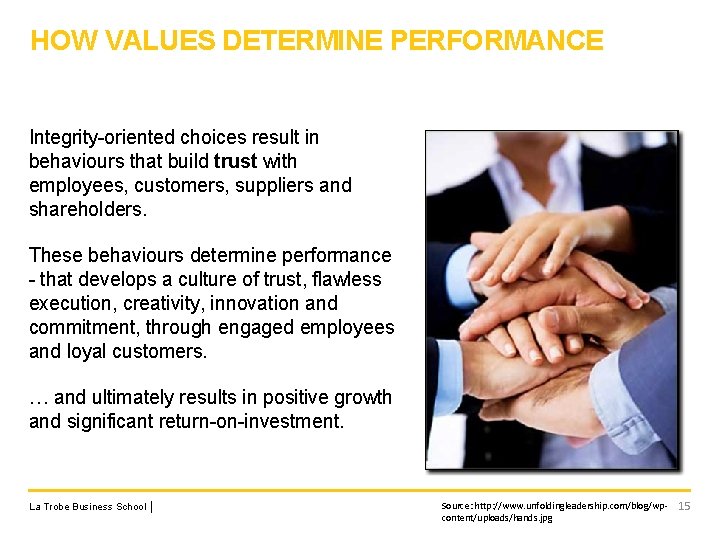
HOW VALUES DETERMINE PERFORMANCE Integrity-oriented choices result in behaviours that build trust with employees, customers, suppliers and shareholders. These behaviours determine performance - that develops a culture of trust, flawless execution, creativity, innovation and commitment, through engaged employees and loyal customers. … and ultimately results in positive growth and significant return-on-investment. La Trobe Business School Source: http: //www. unfoldingleadership. com/blog/wpcontent/uploads/hands. jpg 15
SHARED LEADERSHIP CHARACTERISTICS AND PRACTICES § Humble: admits mistakes, listens, asks good questions § § § § § Host rather than hero Builds trust Holds themselves & others accountable Shares knowledge Allows all to have a voice Demonstrates empathy and shows support Focus on all stakeholders Committed to integrity Creates a psychologically safe environment La Trobe Business School
- Slides: 16