
Building a Fire A World Literature teaching framework

“Building a Fire” A World Literature teaching framework Samantha Tess Julia Kroll
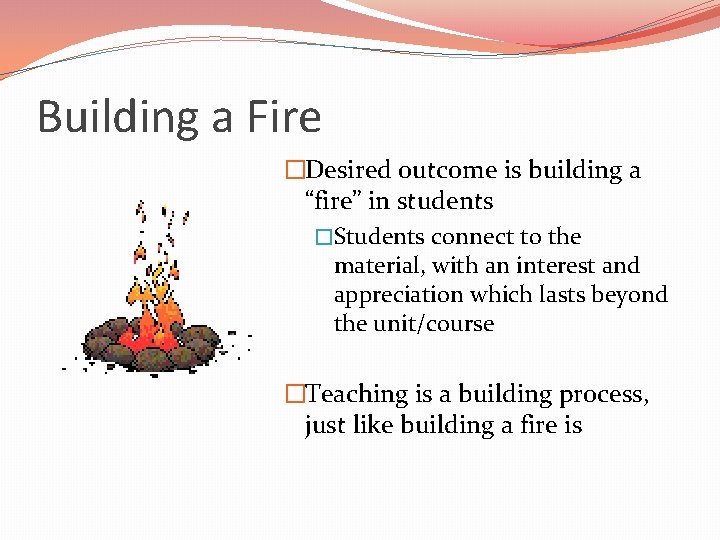
Building a Fire �Desired outcome is building a “fire” in students �Students connect to the material, with an interest and appreciation which lasts beyond the unit/course �Teaching is a building process, just like building a fire is
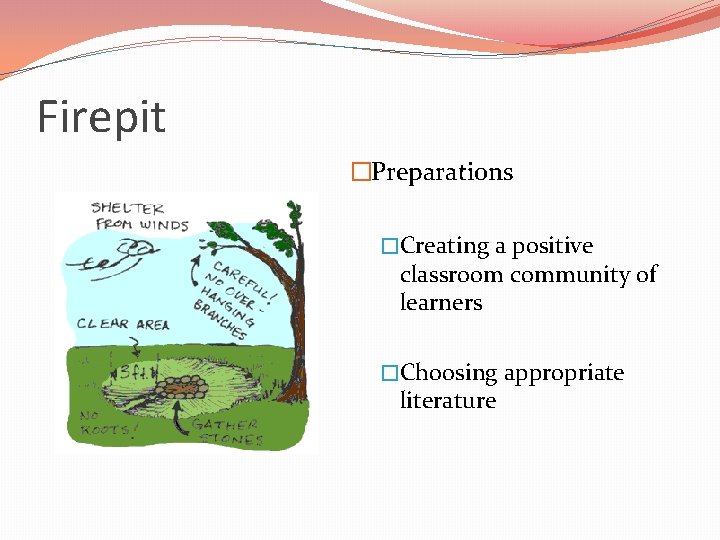
Firepit �Preparations �Creating a positive classroom community of learners �Choosing appropriate literature
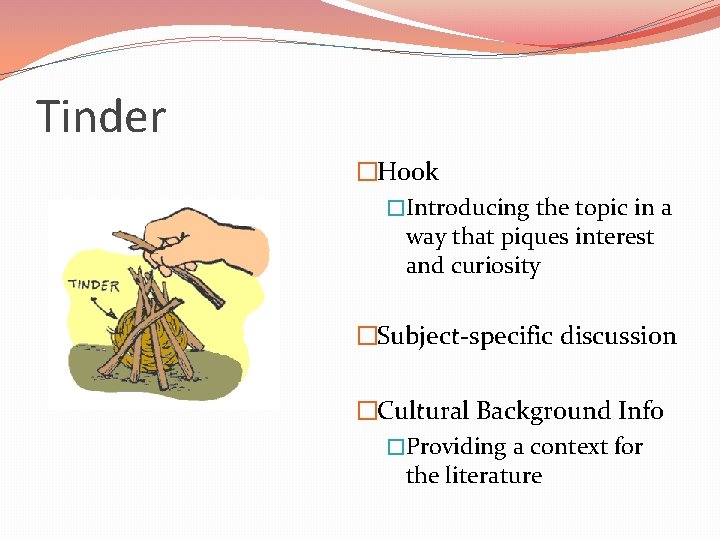
Tinder �Hook �Introducing the topic in a way that piques interest and curiosity �Subject-specific discussion �Cultural Background Info �Providing a context for the literature
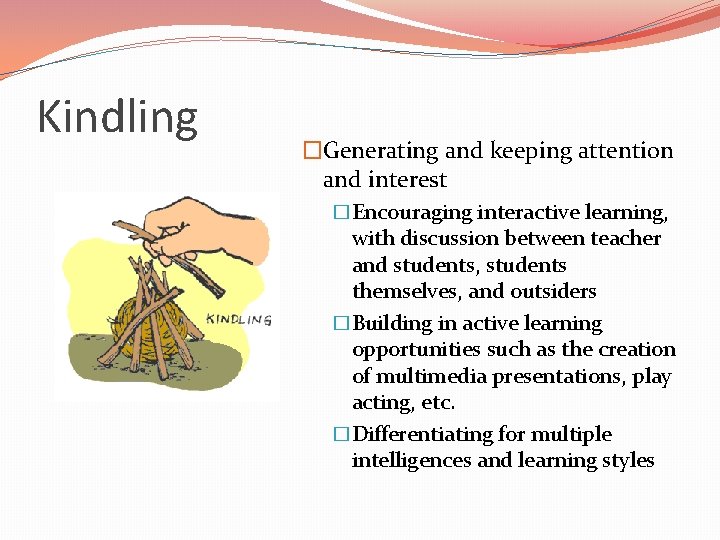
Kindling �Generating and keeping attention and interest �Encouraging interactive learning, with discussion between teacher and students, students themselves, and outsiders �Building in active learning opportunities such as the creation of multimedia presentations, play acting, etc. �Differentiating for multiple intelligences and learning styles
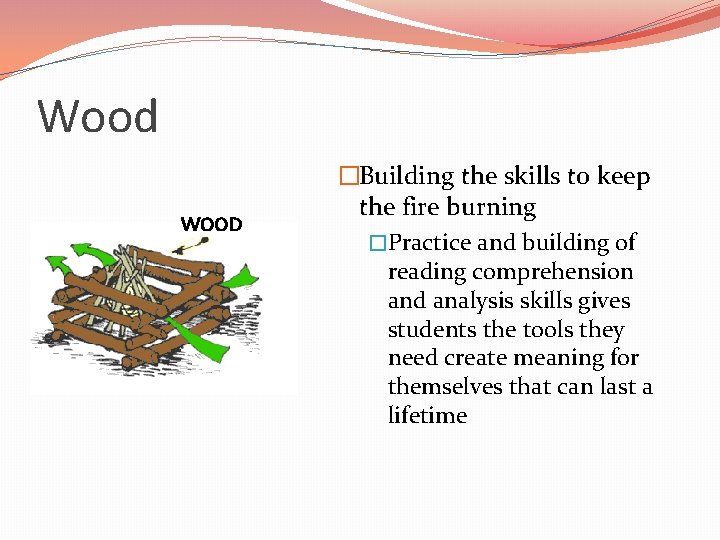
Wood WOOD �Building the skills to keep the fire burning �Practice and building of reading comprehension and analysis skills gives students the tools they need create meaning for themselves that can last a lifetime
Ignition �The spark happens when students find their personal connection to the material. Students could connect to: �Characters �Plot/subject matter �Themes �Issues
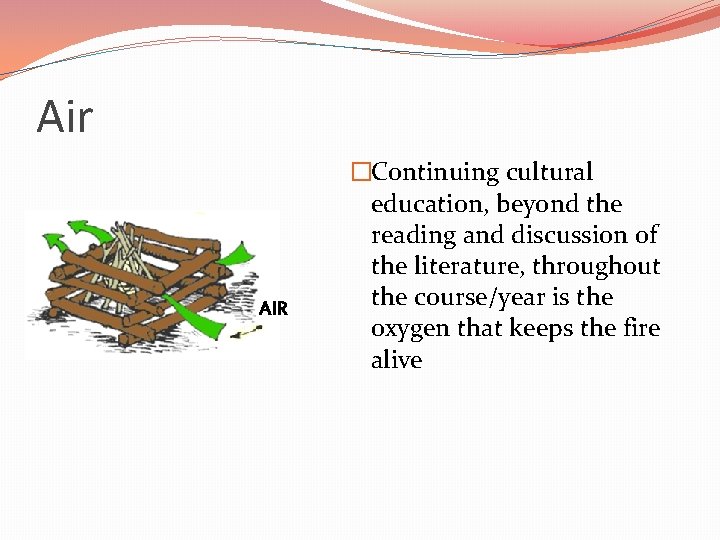
Air AIR �Continuing cultural education, beyond the reading and discussion of the literature, throughout the course/year is the oxygen that keeps the fire alive
Central Questions �Why do I care about different cultures, world literature, and this story? �What is my culture? �How do cultures influence each other? �What are some similarities and differences between cultures? �What are stereotypes about this culture? Where did they come from? �How do characters in the story exemplify or diverge from their cultural norms? �What action can I take based on what I learned from this story?
Students Using Technology �Research - internet and electronic resources �Presentations - Powerpoint, Popplet, or Glogster, with multimedia �Group work - Google Docs, Popplet, online chat, online discussion boards �Listening to world music and viewing world art through online resources �Translation apps or websites to experience foreign languages �Videochat with pen pals or guest speakers
Connection to Articles Inspiration for: �Interactive learning and diverse, interesting, fun, and reflective activities – nearly all articles �Helping students find their personal connection by teaching themes – Karen Downing’s “Travelers, Not Tourists” �Technology in the classroom – multimedia student presentations - Mark J. Bingen’s “From Archetypes to Xenophobia” �Guest speakers and outside input – Linda Milanese Kerschner’s “Teaching World Literature: Preparing Global Citizens”
Connection to Teaching Standards �#4)Teachers know how to teach. �The teacher understands and uses a variety of instructional strategies, including the use of technology, to encourage children’s development of critical thinking, problem solving, and performance skills. � Displayed throughout the ‘Building a Fire model’ through attention to different strategies for each stage of building. Wood stage emphasizes encouraging children’s development.
Connection to Teaching Standards �#7) Teachers are able to plan different kinds of lessons. �The teacher organizes and plans systematic instruction based upon knowledge of subject matter, pupils, the community, and curriculum goals. � Displayed particularly in the Kindling stage, which emphasizes different kinds of lessons to keep learning active and interactive, as well as differentiating for different types of learners.
Connection to Postcolonial Theory �Ignition source – Various aspects of postcolonial theory may elicit strong feelings and ideas and become a personal connection for students. �Central questions – How do cultures influence each other ? This would include postcolonial theory discussions.
Application of “The Fire” World Literature teaching framework �Why is The Housekeeper and the Professor a good book to teach? � Excellent “gateway” to world literature � Connection to baseball - American connection � Expands viewpoint on sensitive topics � Student connection with Alzheimer's, dementia � Time, memory, value of life, relationships
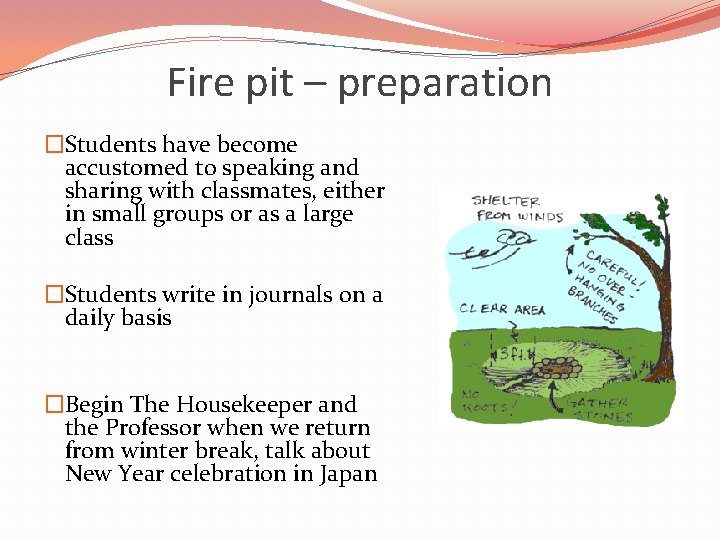
Fire pit – preparation �Students have become accustomed to speaking and sharing with classmates, either in small groups or as a large class �Students write in journals on a daily basis �Begin The Housekeeper and the Professor when we return from winter break, talk about New Year celebration in Japan
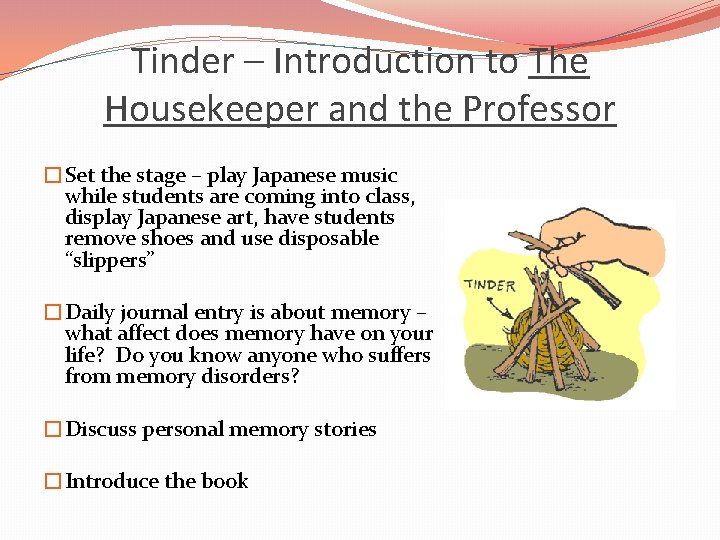
Tinder – Introduction to The Housekeeper and the Professor �Set the stage – play Japanese music while students are coming into class, display Japanese art, have students remove shoes and use disposable “slippers” �Daily journal entry is about memory – what affect does memory have on your life? Do you know anyone who suffers from memory disorders? �Discuss personal memory stories �Introduce the book
Tinder – Background on The Housekeeper and the Professor � Introduction to Japanese culture � Symbols, concept of Zen � Cherry blossoms � Nature � Beauty in imperfection � Discussion about education/math � Importance of math Math found in all parts of life � Math studied the same way in all countries �
Kindling – generating and keeping interest while reading �Interactive learning �Discussion, hands on activities and projects Passions – show and tell student’s own passion or have students swap passion statements, explain importance of each others’ passion � 80 minute project – Students track each 80 minutes of their day, write events that happen within each block of time � Math connections lesson – bring an example from another subject/discipline of mathematics at work � Artistic project/presentation incorporating Zen theory �
Wood – refining skills and applying state standards �These activities will reinforce learning and build depth of understanding, and “keep the fire burning” for students to continue to pursue world literature. �Well developed skills in reading comprehension and analysis of text, in addition to personal connections to literature, will make a student more willing and able to continue reading outside and beyond the classroom.
Wood – refining and enforcing skills and state standards � Standards we used for The Housekeeper and the Professor are for Reading, Grades 9 -10 � (2) Determine a theme or central idea of a text and analyze in detail its development over the course of the text, including how it emerges and is shaped and refined by specific details; provide an objective summary of the text. � � Written analysis of the development of theme of memory � Students analyze treatment of memory over the course of the text, characters’ individual strategies to deal with memory OR written analysis of theme of mathematics � Students may analyze the housekeeper’s vs. her son’s understanding of mathematics over the course of the text
Wood – refining and enforcing skills and state standards � (6) Analyze a particular point of view or cultural experience reflected in a work of literature from outside the United States, drawing on a wide reading of world literature. � Analyze the cultural experience of a Japanese family; Zen exercises � What traits, ideas, details from this book make it specifically Japanese? � Ask “central questions” about this book � How do characters in the story exemplify or diverge from their cultural norms? � Why do I care about different cultures, world literature, and this story? � What action can I take/how will I behave differently based on what I learned from this story?
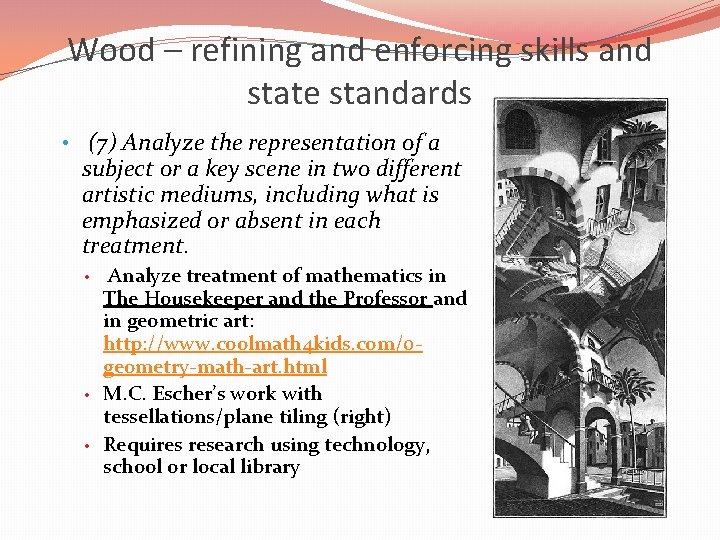
Wood – refining and enforcing skills and state standards • (7) Analyze the representation of a subject or a key scene in two different artistic mediums, including what is emphasized or absent in each treatment. • • • Analyze treatment of mathematics in The Housekeeper and the Professor and in geometric art: http: //www. coolmath 4 kids. com/0 geometry-math-art. html M. C. Escher’s work with tessellations/plane tiling (right) Requires research using technology, school or local library
Ignition source – “spark” �Help students to find their personal connection to The Housekeeper and the Professor �Character traits/situations � Single parent households, latchkey kids � Strong individual influences in students’ lives, mentors � Family members with memory loss �Post colonial theory � Abstract concepts in book – hybridity, double consciousness �Themes – meaning of life, memory � Journaling entry and discussions about memory, value of life
Supporting elements of fire oxygen � Continuing cultural education throughout the school year and promoting consciousness about cultures and countries outside of America � “Zen moment of the day” http: //chir. ag/stuff/sand/ - falling sand game � Utilize concept of “beauty of imperfection” in classroom � Coverage of cherry blossoming event in Japan when it occurs � International news/event awareness daily – Example: New York pedestrian awareness campaign using haikus http: //www. npr. org/2011/12/03/1430530 82/haiku-traffic-signs-bring-poetry-tonyc-streets? ft=1&f=1091
Learning burns, beautiful and bright Left untended Only ash remains.
- Slides: 26