
Building a Continuum of Behavioral Interventions for Advanced
Building a Continuum of Behavioral Interventions for Advanced Tiers Cristy Clouse Barbara Kelley CA PBIS Conference October 28 -29, 2019 PBIS Advanced Tiers
Today’s Targets ▲ Identify a Continuum of Interventions for Advanced Tiers ▲ De-bunk T 3 Myths ▲ Explore the T 3 TFI Support Planning Worksheet with: ▲ “Keep it Simple” (efficient BSP) ▲ “Prevent-Teach- Reinforce”(team-based comprehensive BIP)
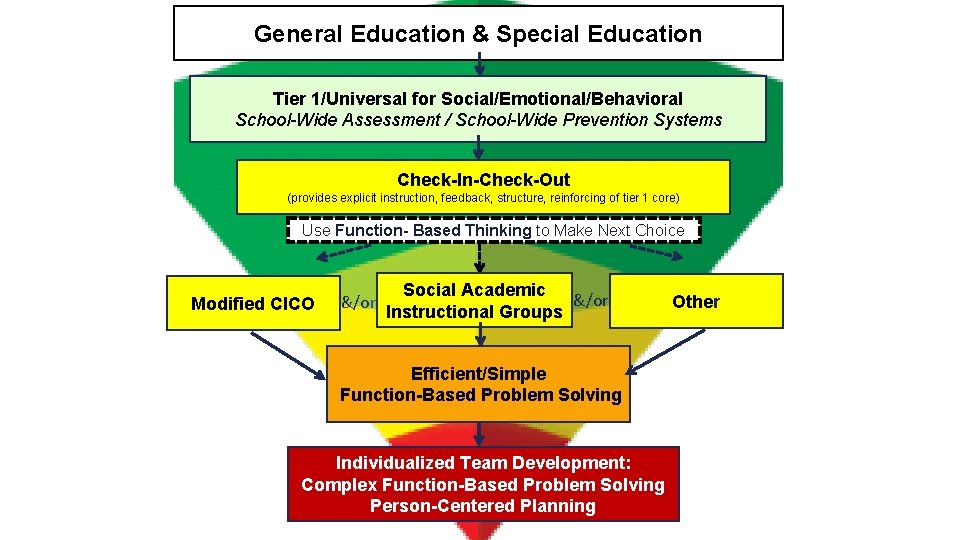
General Education & Special Education Tier 1/Universal for Social/Emotional/Behavioral School-Wide Assessment / School-Wide Prevention Systems Check-In-Check-Out (provides explicit instruction, feedback, structure, reinforcing of tier 1 core) Use Function- Based Thinking to Make Next Choice Modified CICO &/or Social Academic &/or Instructional Groups Efficient/Simple Function-Based Problem Solving Individualized Team Development: Complex Function-Based Problem Solving Person-Centered Planning Other
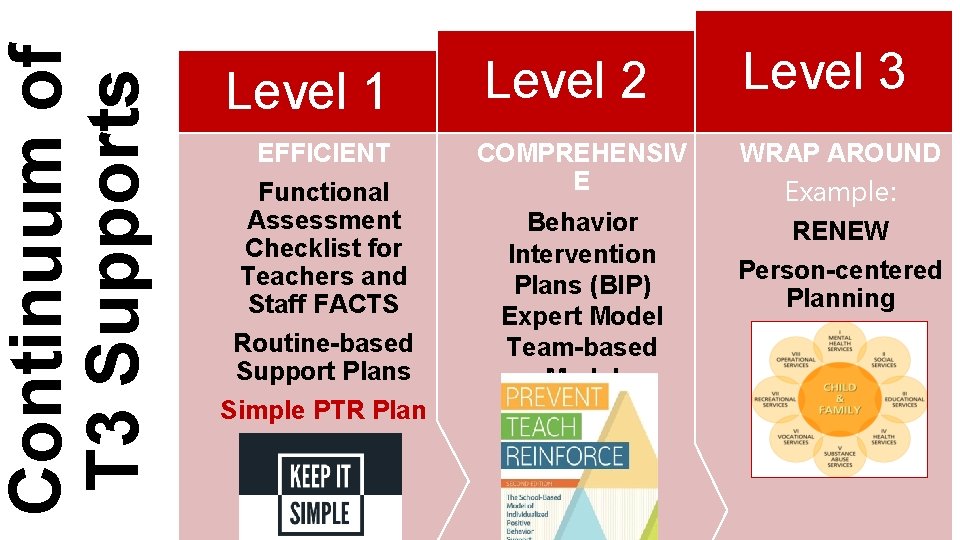
Continuum of T 3 Supports Level 1 EFFICIENT Functional Assessment Checklist for Teachers and Staff FACTS Routine-based Support Plans Simple PTR Plan Level 2 Level 3 COMPREHENSIV E WRAP AROUND Example: Behavior Intervention Plans (BIP) Expert Model Team-based Model RENEW Person-centered Planning
Myth #1 Tier 3 is equal to special education eligibility! 5
Consideration Tier 3 includes ALL students who need additional support that is intensive. It may be short term or unrelated to a diagnosis or eligibility determination.
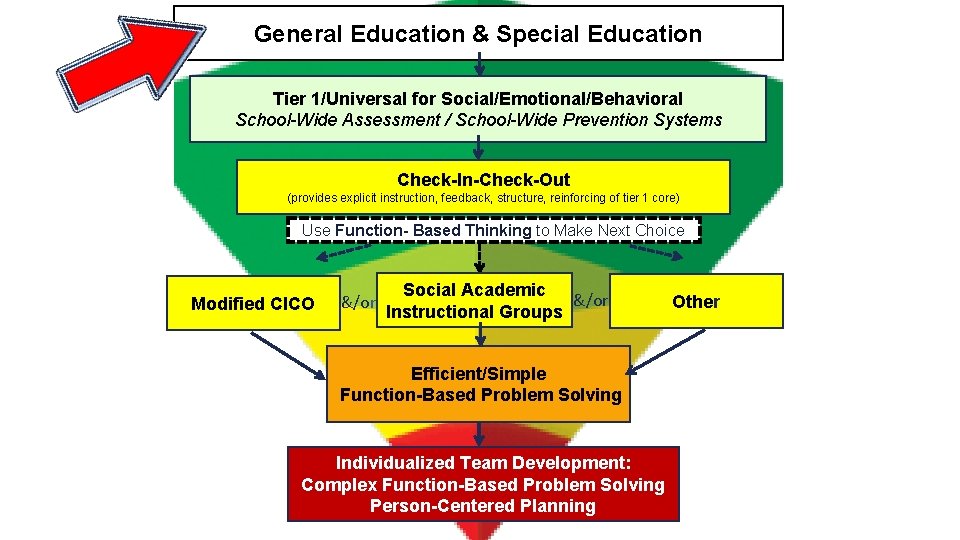
General Education & Special Education Tier 1/Universal for Social/Emotional/Behavioral School-Wide Assessment / School-Wide Prevention Systems Check-In-Check-Out (provides explicit instruction, feedback, structure, reinforcing of tier 1 core) Use Function- Based Thinking to Make Next Choice Modified CICO &/or Social Academic &/or Instructional Groups Efficient/Simple Function-Based Problem Solving Individualized Team Development: Complex Function-Based Problem Solving Person-Centered Planning Other
Myth #2 Tier 3 can only be provided by specialists and is often providing more of the same core intervention but in greater doses. 8
Consideration School-based teams are more likely to develop and implement plans that are contextually relevant. School-based teams that include content specialists are more likely to develop technically adequate plans that are also contextually relevant!
Myth #3 The behavior specialist is the only expert in Tier 3 assessment, intervention, and implementation. 10
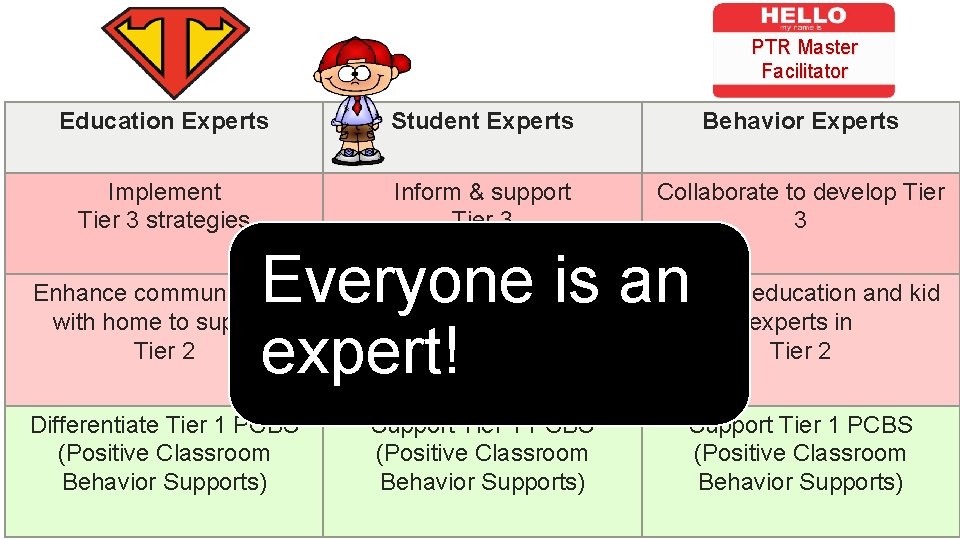
PTR Master Facilitator Education Experts Student Experts Behavior Experts Implement Tier 3 strategies Inform & support Tier 3 Collaborate to develop Tier 3 • Enhance communication with home to Tier 2 communication support. Enhance Everyone is an expert! Enhance with home to support Tier 2 communication with school to support Tier 2 Differentiate Tier 1 PCBS (Positive Classroom Behavior Supports) Support education and kid experts in Tier 2 Support Tier 1 PCBS (Positive Classroom Behavior Supports) 11
Myth #4 Most Tier 3 interventions are too complex and difficult to implement. 12
Consideration

Tier 3 Features
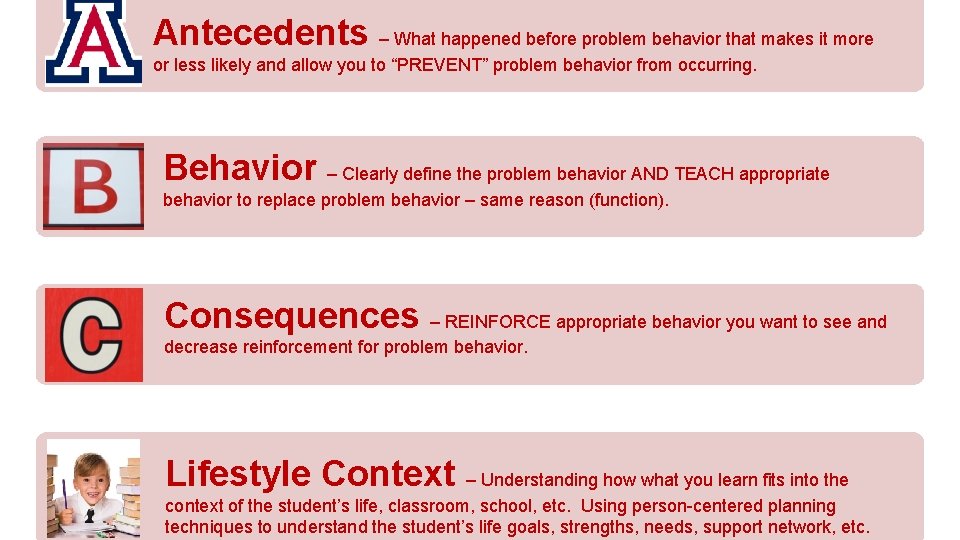
Antecedents – What happened before problem behavior that makes it more or less likely and allow you to “PREVENT” problem behavior from occurring. Behavior – Clearly define the problem behavior AND TEACH appropriate behavior to replace problem behavior – same reason (function). Consequences – REINFORCE appropriate behavior you want to see and decrease reinforcement for problem behavior. Lifestyle Context – Understanding how what you learn fits into the context of the student’s life, classroom, school, etc. Using person-centered planning techniques to understand the student’s life goals, strengths, needs, support network, etc.
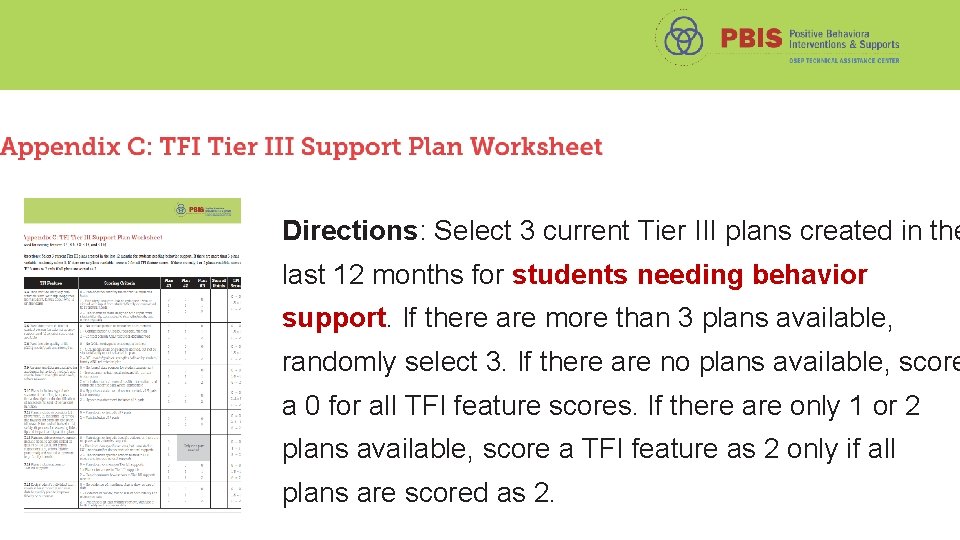
Directions: Select 3 current Tier III plans created in the last 12 months for students needing behavior support. If there are more than 3 plans available, randomly select 3. If there are no plans available, score a 0 for all TFI feature scores. If there are only 1 or 2 plans available, score a TFI feature as 2 only if all plans are scored as 2.
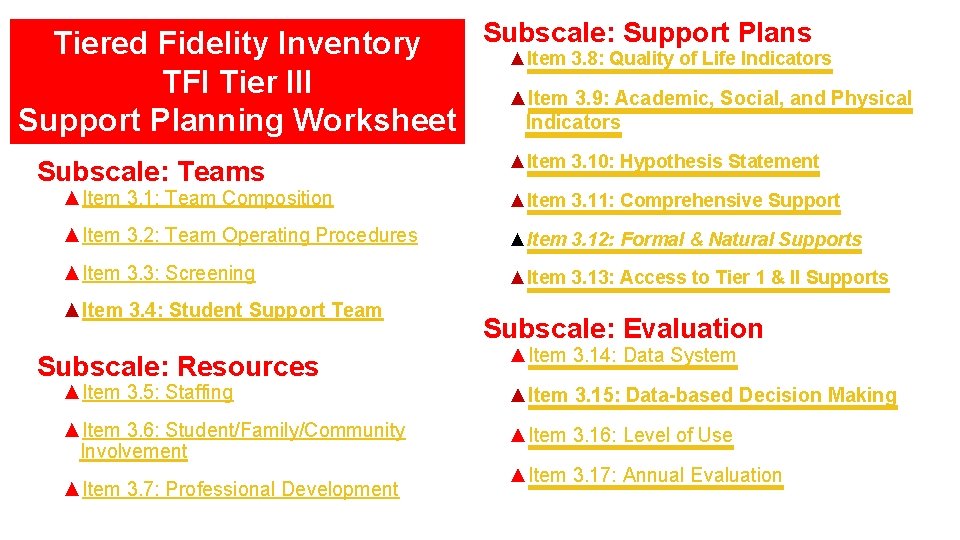
Subscale: Support Plans Tiered Fidelity Inventory TFI Tier 3 Items ▲Item 3. 8: Quality of Life Indicators TFI Tier III ▲Item 3. 9: Academic, Social, and Physical Indicators Support Planning Worksheet Subscale: Teams ▲Item 3. 10: Hypothesis Statement ▲Item 3. 1: Team Composition ▲Item 3. 11: Comprehensive Support ▲Item 3. 2: Team Operating Procedures ▲Item 3. 12: Formal & Natural Supports ▲Item 3. 3: Screening ▲Item 3. 13: Access to Tier 1 & II Supports ▲Item 3. 4: Student Support Team Subscale: Resources Subscale: Evaluation ▲Item 3. 14: Data System ▲Item 3. 5: Staffing ▲Item 3. 15: Data-based Decision Making ▲Item 3. 6: Student/Family/Community Involvement ▲Item 3. 16: Level of Use ▲Item 3. 7: Professional Development ▲Item 3. 17: Annual Evaluation

TFI T 3 Features: TFI 3. 4 Student Support Team: For each individual student support plan, a uniquely constructed team exists (with input/approval from student/family about who is on the team) to design, implement, monitor, and adapt the student-specific support plan. TFI 3. 8 Quality of Life Indicators: Assessment includes student strengths and identification of student/family preferences for individualized support options to meet their stated needs across life domains (e. g. , academics, health, career, social).
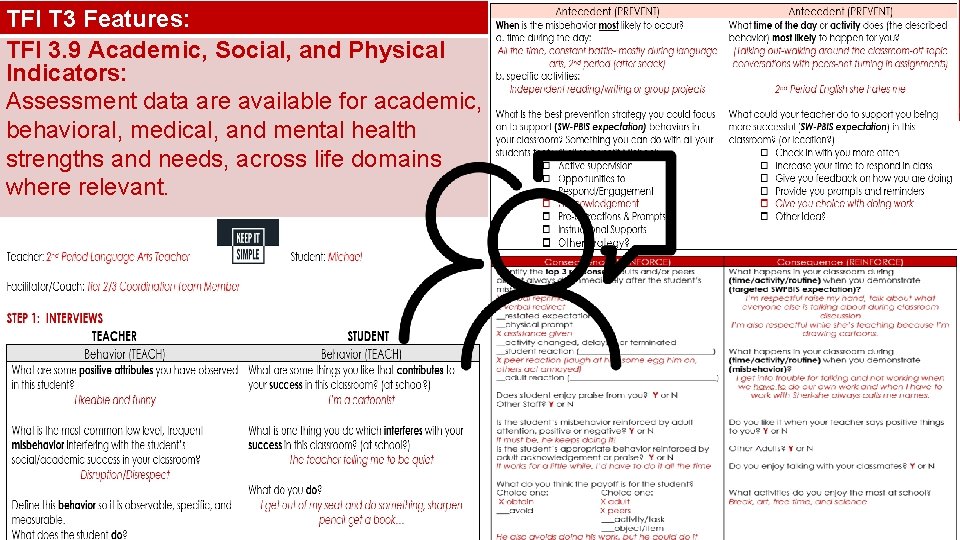
TFI T 3 Features: TFI 3. 9 Academic, Social, and Physical Indicators: Assessment data are available for academic, behavioral, medical, and mental health strengths and needs, across life domains where relevant.
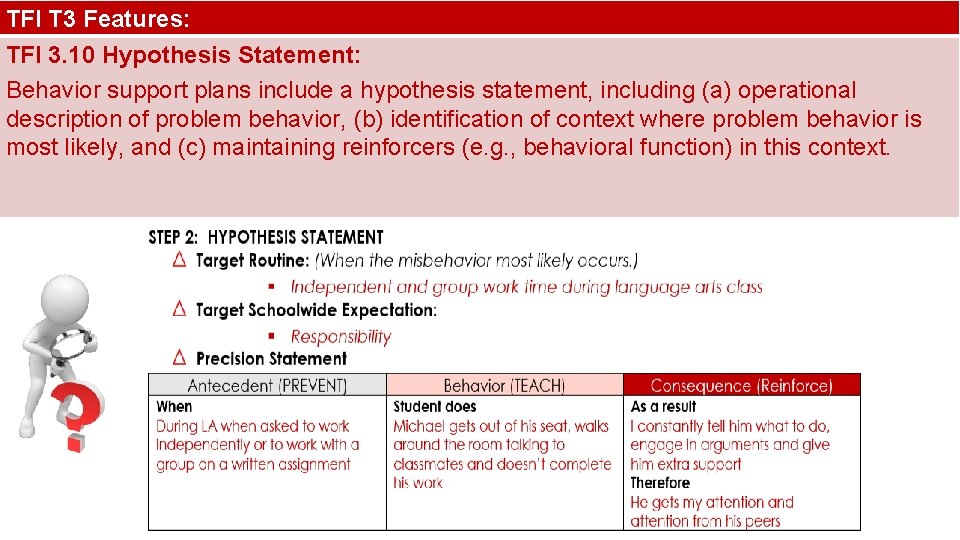
TFI T 3 Features: TFI 3. 10 Hypothesis Statement: Behavior support plans include a hypothesis statement, including (a) operational description of problem behavior, (b) identification of context where problem behavior is most likely, and (c) maintaining reinforcers (e. g. , behavioral function) in this context.

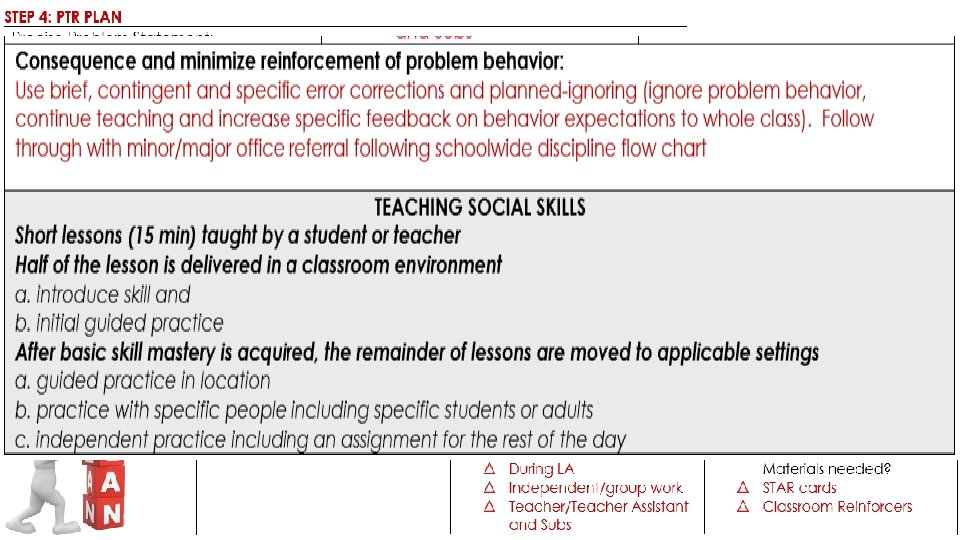
TFI T 3 Features: TFI 3. 11 Comprehensive Support: Behavior support plans include or consider (a) prevention strategies, (b) teaching strategies, (c) strategies for removing rewards for problem behavior, (d) specific rewards for desired behavior, (e) safety elements where needed, (f) a systematic process for assessing fidelity and impact, and (g) the action plan for putting the support plan in place. TFI 3. 13 Access to Tier 1 and Tier 2 Support: Students receiving Tier 3 supports have access to, and are included in available Tier 1 and Tier 2 supports.
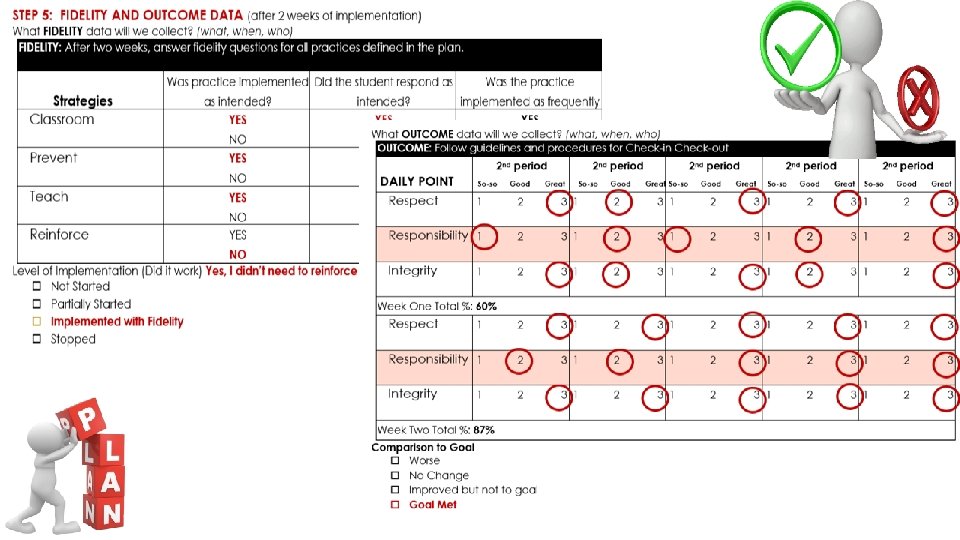
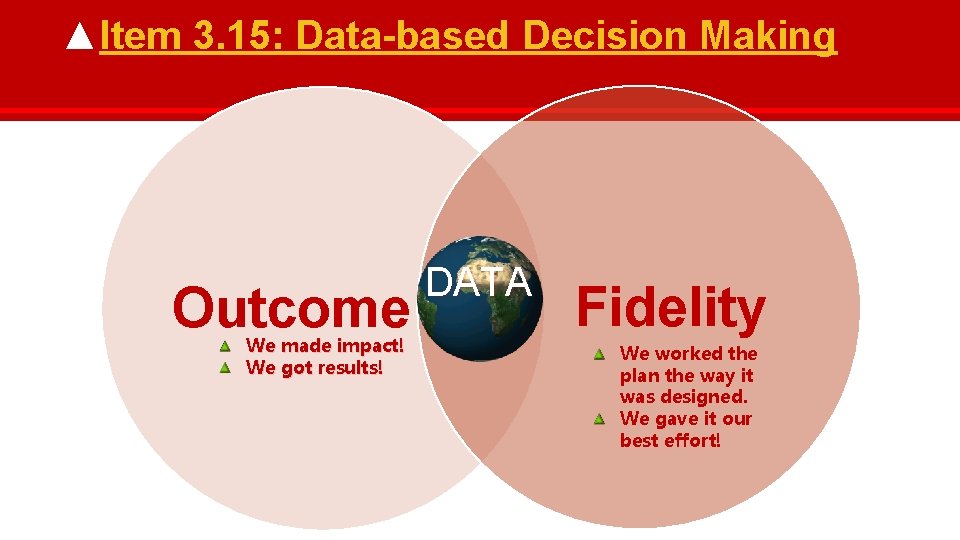
▲Item 3. 15: Data-based Decision Making Outcome We made impact! We got results! DATA Fidelity We worked the plan the way it was designed. We gave it our best effort!
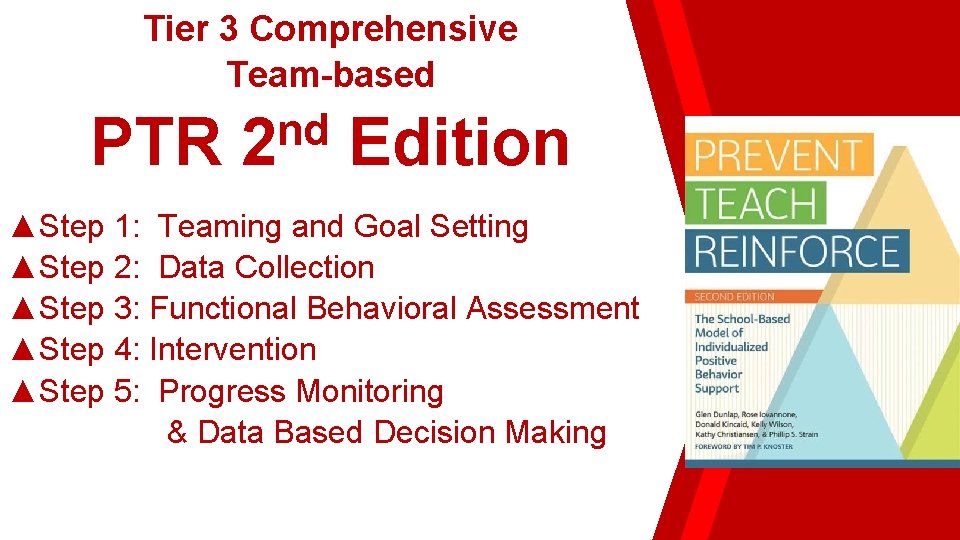
Tier 3 Comprehensive Team-based PTR nd 2 Edition ▲Step 1: Teaming and Goal Setting ▲Step 2: Data Collection ▲Step 3: Functional Behavioral Assessment ▲Step 4: Intervention ▲Step 5: Progress Monitoring & Data Based Decision Making
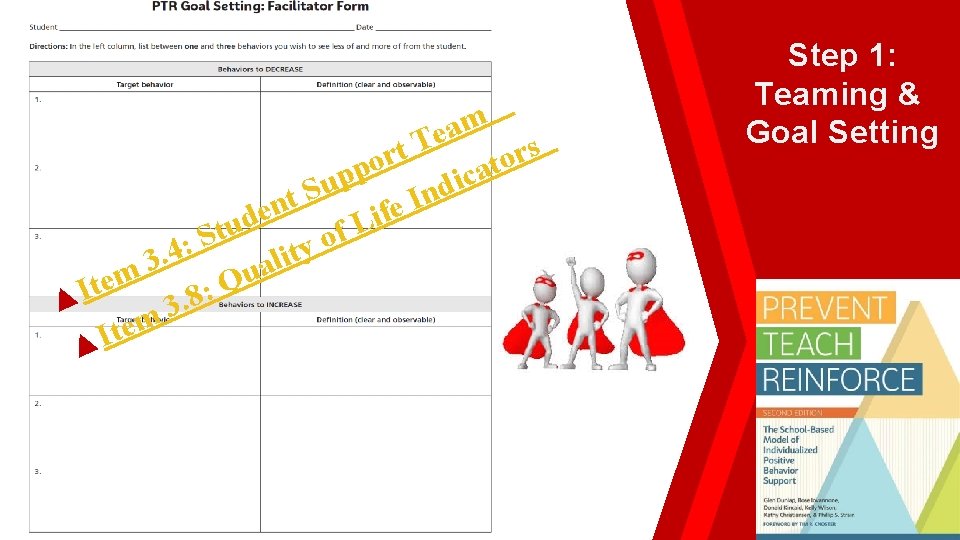
m a e T s t r r o o t p a c p i u d S n t I n e e f i d L u t f S o : y t. 4 i l 3 a u m e Q t I : . 8 ▲ 3 m e t I ▲ Step 1: Teaming & Goal Setting
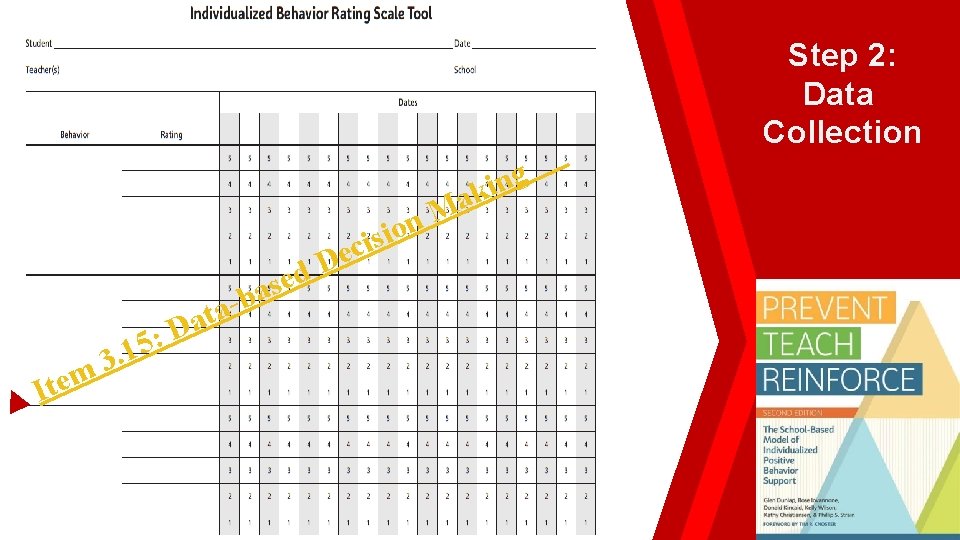
Step 2: Data Collection ▲ m e t I : 5 1 3. ta a D d e s -ba n o i s i c De g n i k a M
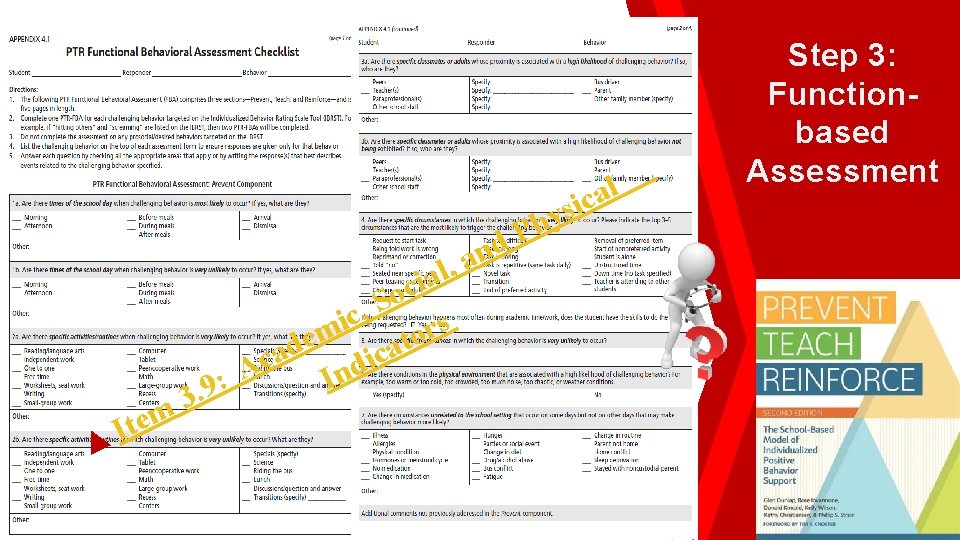
d n , a l a i c o S , c i s r m o e t d a a c i c d A n I : 9. 3 m e t I ▲ y h P l a c si Step 3: Functionbased Assessment
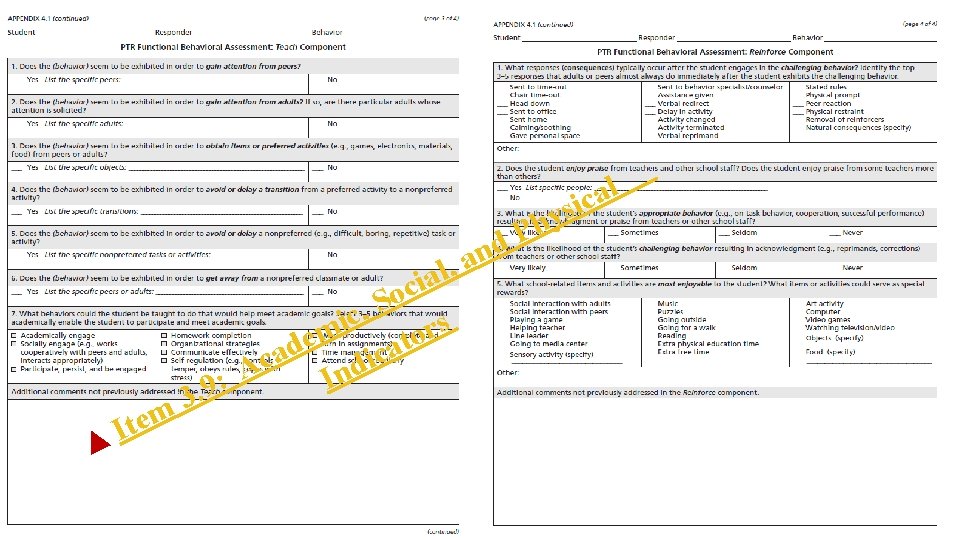
d n , a l a i c o S , c i s r m o e t d a a c i c d A n I : 9. 3 m e t I ▲ y h P l a c si
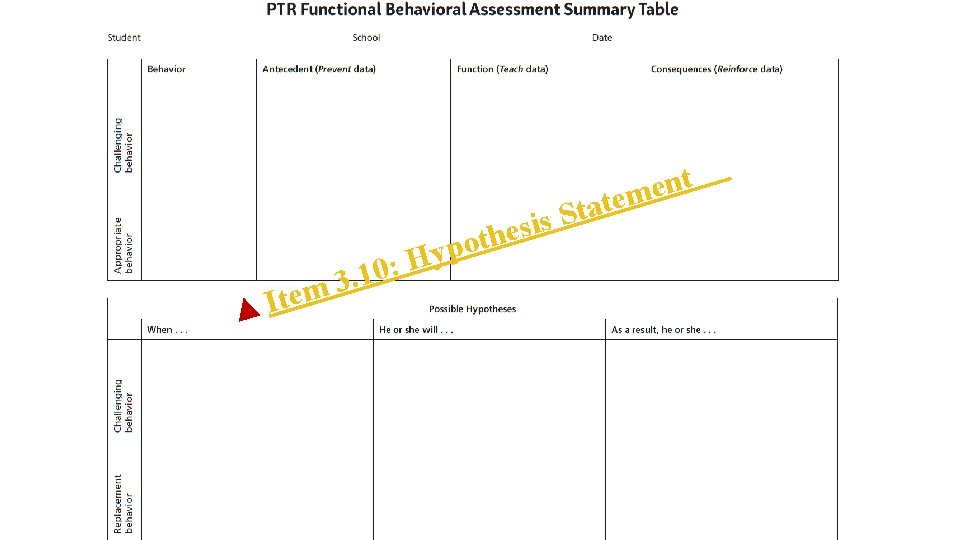
t n e tem e t I ▲ : 0 1. m 3 t o p Hy a t S s hesi
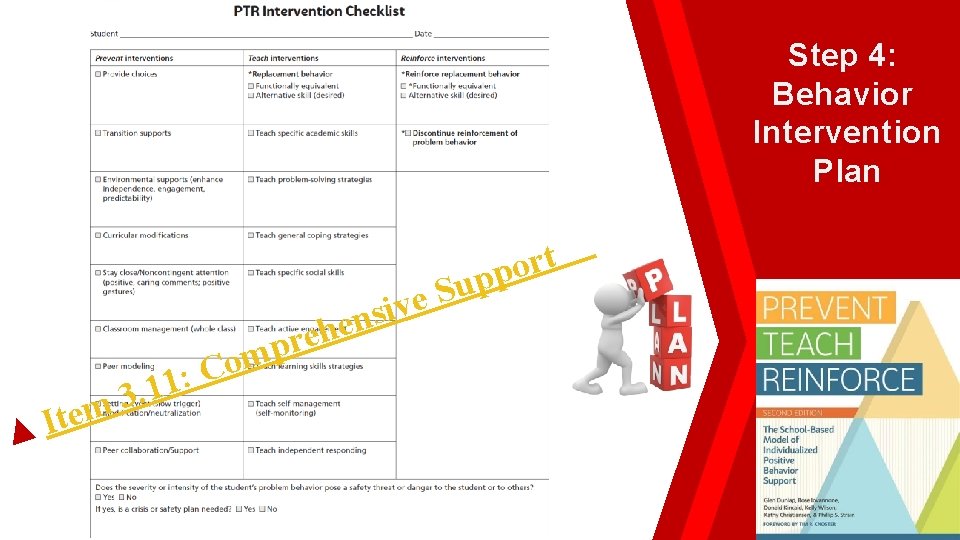
Step 4: Behavior Intervention Plan r p om e v i s n e h e e t I ▲ C : 1 1. 3 m t r o p p u S
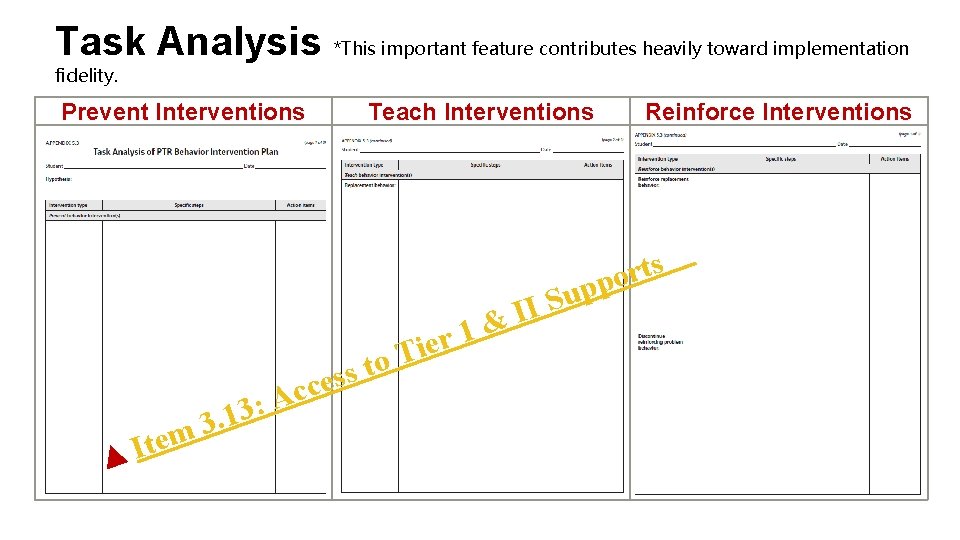
Task Analysis *This important feature contributes heavily toward implementation fidelity. Prevent Interventions Teach Interventions & 1 ier tem I ▲ : 3 1. 3 T o t s s e Acc p u S II Reinforce Interventions s t r po
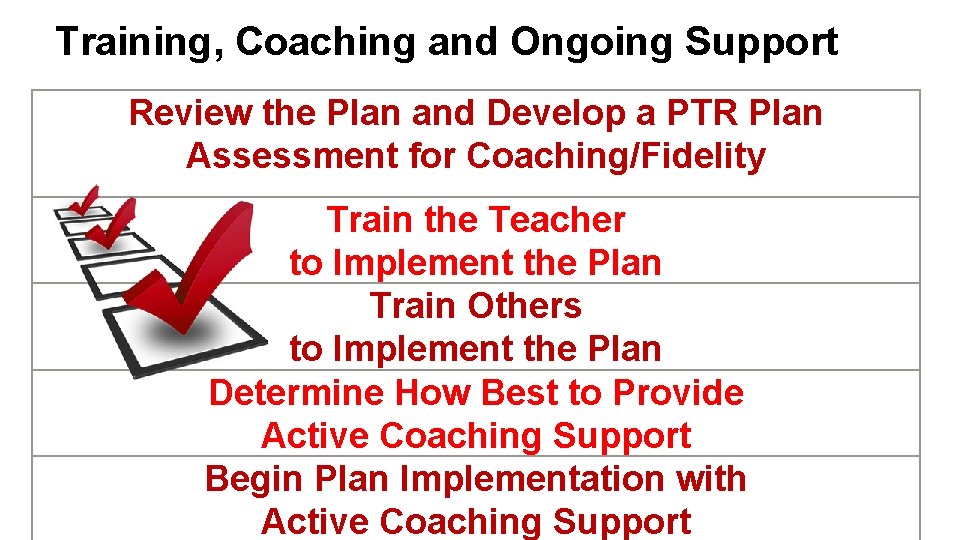
Training, Coaching and Ongoing Support Review the Plan and Develop a PTR Plan Assessment for Coaching/Fidelity Train the Teacher to Implement the Plan Train Others to Implement the Plan Determine How Best to Provide Active Coaching Support Begin Plan Implementation with Active Coaching Support
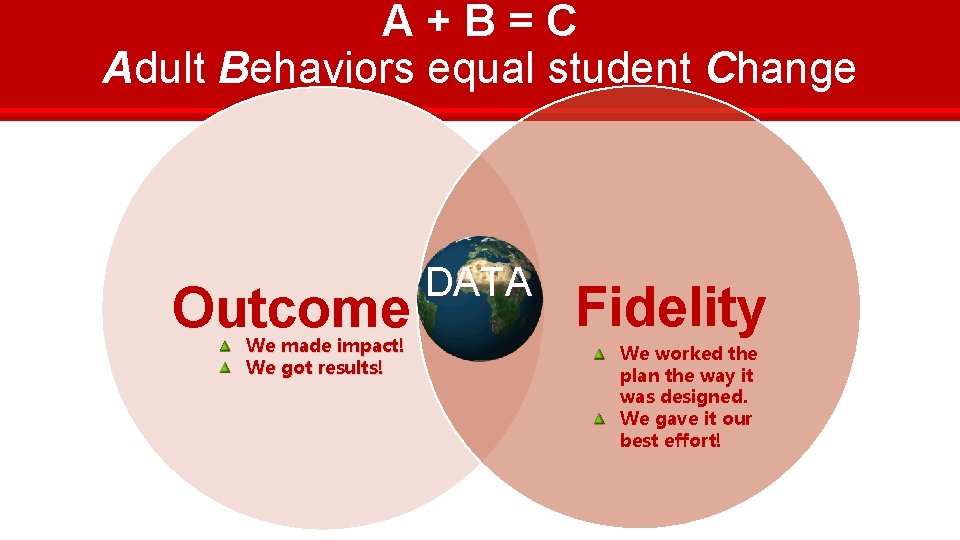
A+B=C Adult Behaviors equal student Change Outcome We made impact! We got results! DATA Fidelity We worked the plan the way it was designed. We gave it our best effort!
Barbara Kelley barbara@pbiscaltac. org www. pbiscaltac. org Cristy Clouse cristy@pbiscaltac. org
- Slides: 36