
Building a Childs SelfConcept STAND UP FROM THE

Building a Child’s Self-Concept
STAND UP FROM THE INSIDE! Resiliency = the capacity to bounce back after disappointment or tragedy. Self-Concept = The total picture of who we are. Our looks and traits, how we feel, what we think, who we see when we look in the mirror… A child’s self-concept is in place by age 5.
Children are born with 100% Self-Concept Why is this important for them to have? Do you still have the 100% you were born with? Why not? Imagine what you could do if you did!

� WHAT INFLUENCES THE DEVELOPMENT OF HIGH AND LOW SELF CONCEPT?

INFLUENCES ON SELF CONCEPT 1. Self-Perception 2. Verbal and Non-verbal communication 3. Positive and Negative Interactions
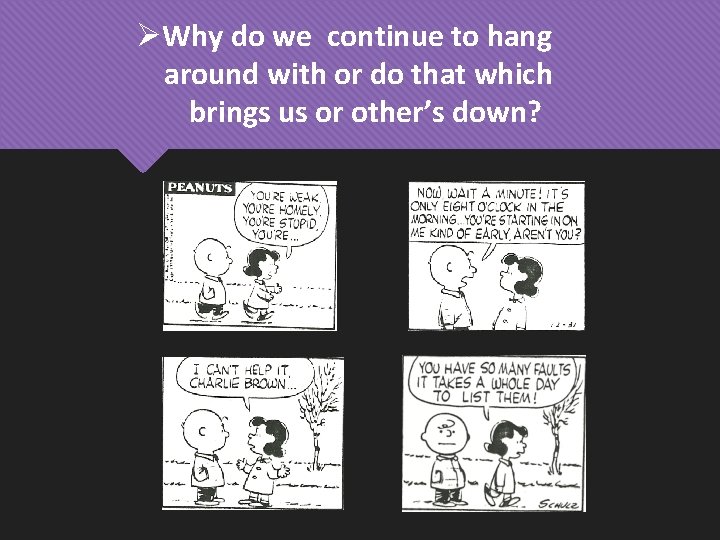
ØWhy do we continue to hang around with or do that which brings us or other’s down?
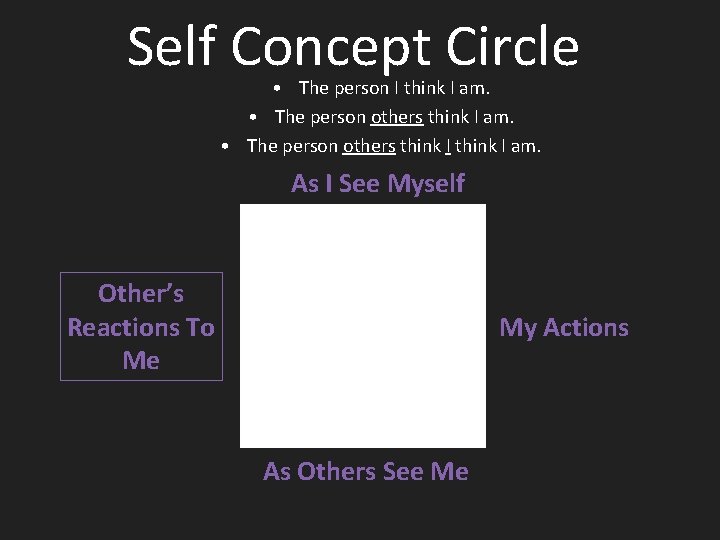
Self Concept Circle • The person I think I am. • The person others think I am. As I See Myself Other’s Reactions To Me My Actions As Others See Me
Keys to Developing a Child’s Self-Concept
Provide more successes than failures for the child. Plan successes Point out successes Help the child perceive him/herself as successful Provide practice to improve skills If they have more failures than successes, back up to where success is achieved, and then move ahead gradually Give the freedom to fail with acceptance. As long as there are more successes than failures, children learn to not let a few failures get them down. A child who is overprotected and not allowed to fail will learn to try only if success is guaranteed.
Give lots of encouragement. Recognize the effort and improvement, not just the final accomplishment. Support as they do new things. “I know you can do it” “You handled that really well” “You will make it next time” Show appreciation. “Thanks, you were a big help” Give unconditional love. Let child know that even if you do not approve of their behavior, you still love them. Accept children as they are, not as they could be. Respect your child. Show them how much you care about them.
Allow independence. Let them do things for themselves. Let them work through a problem. Give them choices as early as possible. Eliminate the negative. Tell children what they can do, not what they cannot do. Catch them doing something good more often than what they are doing wrong.
Do not set standards unreasonably high. They don’t have to be 100% all the time. Know their abilities and work within those abilities. Children are not miniature adults. Do not over-estimate their maturity. Development of child Avoid ridicule. Be careful of nicknames. Do not make fun of them, especially in front of others.
Allow exploration and encourage questions. Let them explore their environment. Give them a chance to see cause and effect, such as what happens when a rock is dropped in water. . . Play, get messy, touch Set limits (boundaries and rules) It helps them to feel security, protected, valued, and loved.
Help your child develop their talents. Every child needs to feel that they are good at something. Give them encouragement and opportunities to try new things. Encourage their talents, not the ones you wish they had. Take their ideas, emotions and feelings seriously. Do not belittle them “That is nothing to cry over”, or “You’ll get over it”. Ask them for their advice and opinions. Listen to them and act on their thoughts.
Be a good role model. Improve your own self-image. Let your children see that you value yourself. Let your children see you make mistakes, learn from them, and try again. Give your children responsibility. Give them chores that are appropriate for their age. Give them family jobs so that they feel valued and important to the family.
Be available. Give them support when they need it. Spend time together. Work, talk, and share activities together. Let children know when their behavior is appropriate Point out when they are meeting your expectations and requests.
-“I got two A’s”, the small boy said, his voice was filled with glee. His father bluntly asked, “Why didn’t you get three? ” -“Mom, I’ve got the dishes done, ” the girl called from the door. Her mother very calmly said, “Did you sweep the floor? ” -“I mowed the grass, ” the tall boy said, “and put the mower away. ” His father asked him with a shrug, "Did you clean off the sidewalks? ” The children in the house next door seemed happy and content. The same things happened over there, but this is how it went.
“I’ve got two A’s, ” the small boy said. His voice was filled with glee. His father proudly said, "That's great, I’m glad that you belong to me. ” “Mom, I’ve got the dishes done, ” the girl called from the door. Her mother smiled and softly said, “Each day I love you more. ” “I’ve mowed the grass, ” the tall boy said, “and put the mower away. ” His father answered with much joy, “You’ve made my happy day. ” Children deserve a little praise for tasks they’re asked to do. If they’re to lead a happy life, so much depends on you. Study guide scenarios

A Haiku Poem about you on back of 3 x 5 Card _____________________ Your Name _________________________ 2 adjectives describing you __________________________ 3 Verbs that relate to you __________________________ A 4 word phrase about you _________________________ 1 word that explains who you are
- Slides: 19