
Building a Capital Markets Union for the EU
Building a Capital Markets Union for the EU Presentation to Finance. Estonia conference, Tallinn, 13 May 2015
WHY CMU?
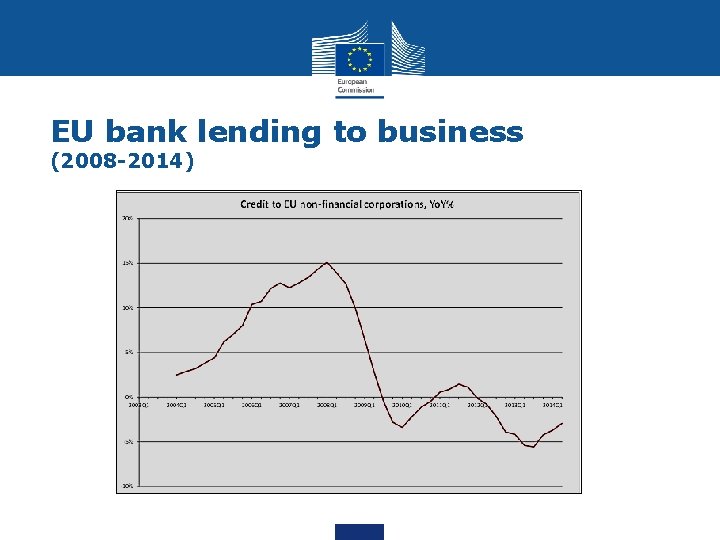
EU bank lending to business (2008 -2014)
Estonia: credit by economic sector •
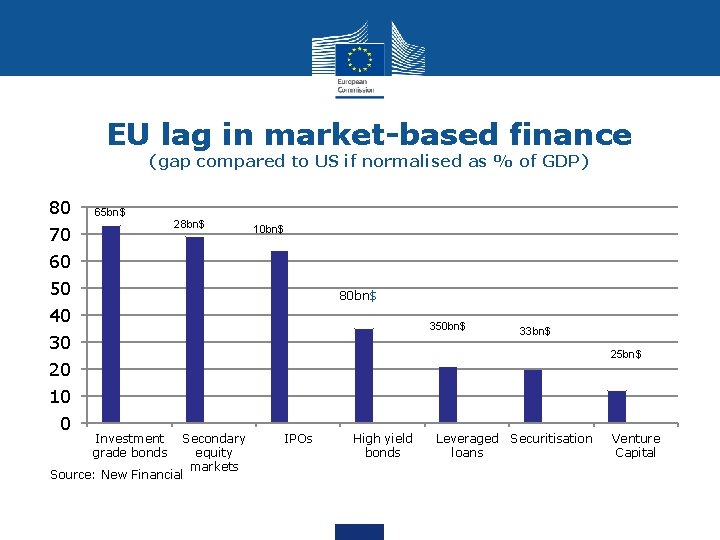
EU lag in market-based finance (gap compared to US if normalised as % of GDP) 80 65 bn$ 70 28 bn$ 10 bn$ 60 50 80 bn$ 40 350 bn$ 30 33 bn$ 25 bn$ 20 10 0 Investment grade bonds Secondary equity markets Source: New Financial IPOs High yield bonds Leveraged Securitisation loans Venture Capital
Estonia: funding of NFCs @ end 2014 Source: ECB, AMECO
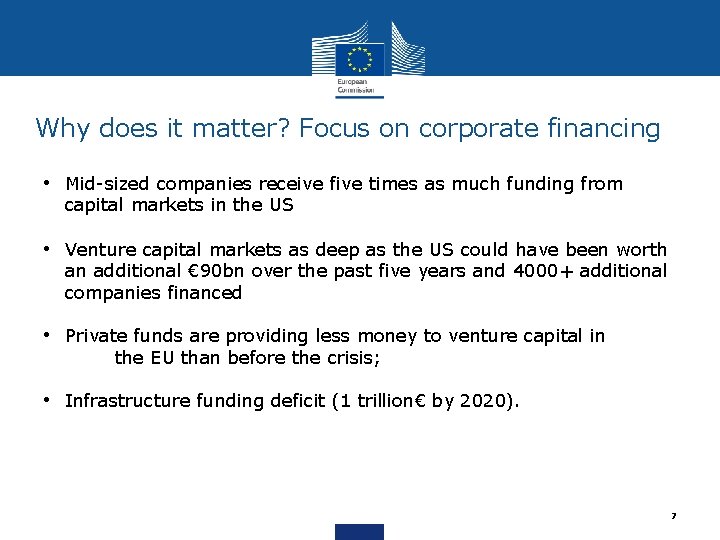
Why does it matter? Focus on corporate financing • Mid-sized companies receive five times as much funding from capital markets in the US • Venture capital markets as deep as the US could have been worth an additional € 90 bn over the past five years and 4000+ additional companies financed • Private funds are providing less money to venture capital in the EU than before the crisis; • Infrastructure funding deficit (1 trillion€ by 2020). 7

WHAT IS CMU?
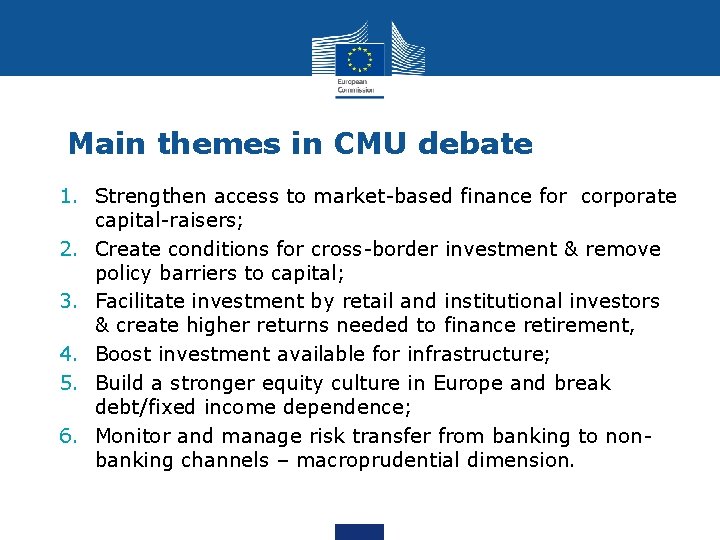
Main themes in CMU debate 1. Strengthen access to market-based finance for corporate capital-raisers; 2. Create conditions for cross-border investment & remove policy barriers to capital; 3. Facilitate investment by retail and institutional investors & create higher returns needed to finance retirement, 4. Boost investment available for infrastructure; 5. Build a stronger equity culture in Europe and break debt/fixed income dependence; 6. Monitor and manage risk transfer from banking to nonbanking channels – macroprudential dimension.
Raising capital: • Public (debt and equity) markets: • improve IPOs through revision of prospectus Directive; • more transparent/efficient secondary bond markets; • Conditions for SME listing • Private debt and equity (alternative finance): • private placement; • private equity & venture capital; • New channels: crowd-funding & peer-to-peer lending, loanoriginating funds; Use markets to support bank-credit • Securitisation of loans; • markets for loan transfer, Distressed debt.
Address tax and legal barriers to cross-border investment • Insolvency law: • Company law, corporate governance; • Tackling tax bias in favour of debt over equity, venture capital; • Securities law and collateral; • Infrastructure: clearing and settlement.
Estonia: doing business indicators World Bank, Doing Business Indicators 2014
Attracting investors: • Institutional investors: • Review capital treatment for securitisations; • Permit institutional investors to expand holdings of public/private equity, infrastructure projects; • Retail investors: • Rebuild damaged trust; • Exposure to attractive products on margins; • EU tax transparent private pension wrapper.
HOW TO BUILD CMU?
Guiding principles for CMU action plan: • Prioritise CMU barriers and evaluate cost-effectiveness of measures to overcome them (economic analysis); • examine different options before deciding on form: alternatives to legislation include: standardisation/codes. codify 'best practice', projects, • Enforce existing single market and competition rules (cf. letter to MS on capital market barriers). • CMU implies a structural shift in our economy = a long term project: need early success to provide a decisive impetus to some non-bank funding channels. . 15
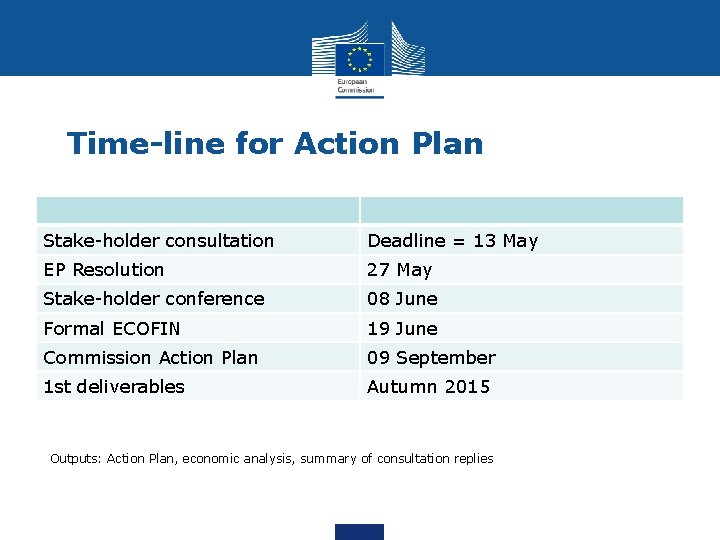
Time-line for Action Plan Stake-holder consultation Deadline = 13 May EP Resolution 27 May Stake-holder conference 08 June Formal ECOFIN 19 June Commission Action Plan 09 September 1 st deliverables Autumn 2015 Outputs: Action Plan, economic analysis, summary of consultation replies
- Slides: 16