
Building a Bridge to a Bright Future Self
Building a Bridge to a Bright Future: Self. Determination and 21 st Century Work-Life Skills Michael L. Wehmeyer, Ph. D. Ross and Marianna Beach Distinguished Professor in Special Education Chair, Department of Special Education Senior Scientist and Director, Beach Center on Disability University of Kansas
A Bridge to Where?

A Bridge to a Bright Future…
…or a Bridge to Nowhere?
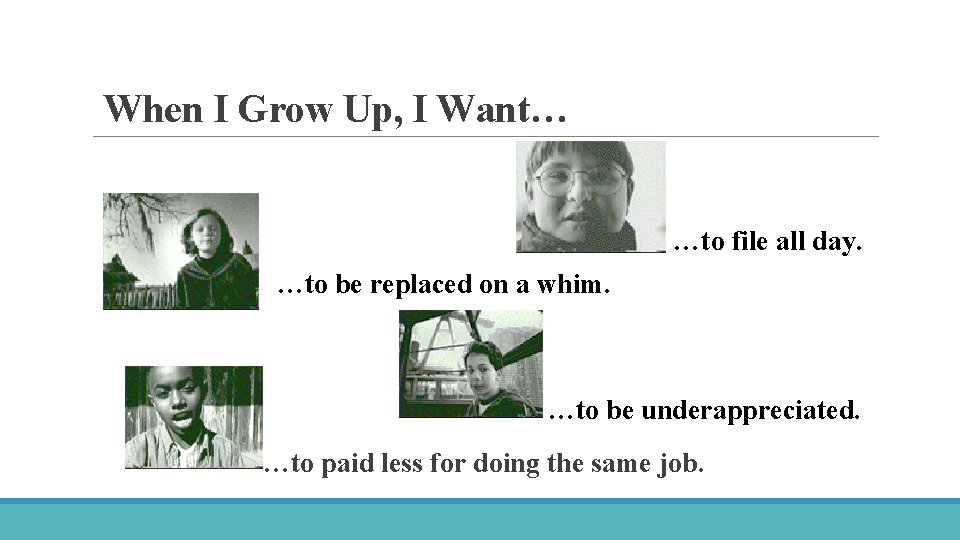
When I Grow Up, I Want… …to file all day. …to be replaced on a whim. …to be underappreciated. …to paid less for doing the same job.
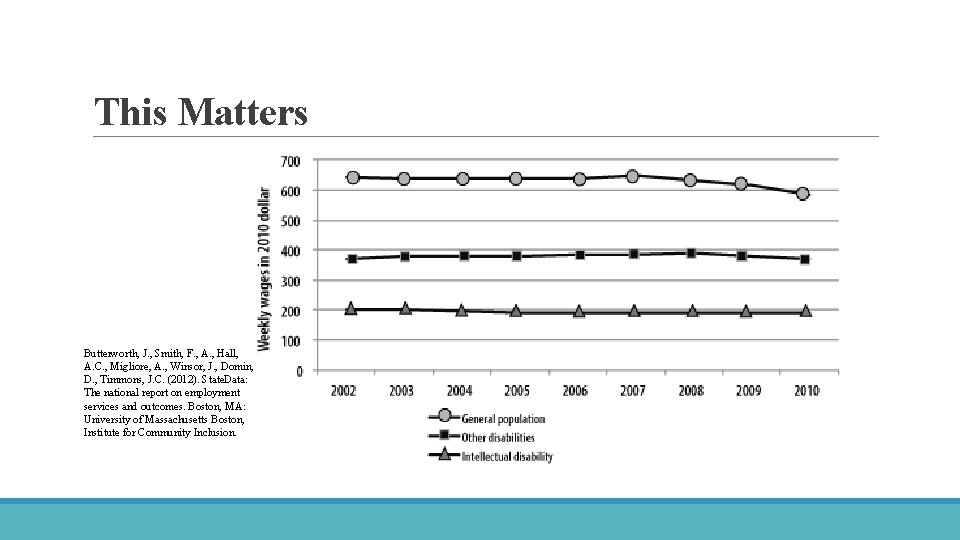
This Matters Butterworth, J. , Smith, F. , A. , Hall, A. C. , Migliore, A. , Winsor, J. , Domin, D. , Timmons, J. C. (2012). State. Data: The national report on employment services and outcomes. Boston, MA: University of Massachusetts Boston, Institute for Community Inclusion.
Building the Bridge: Changing How we Think About Disability
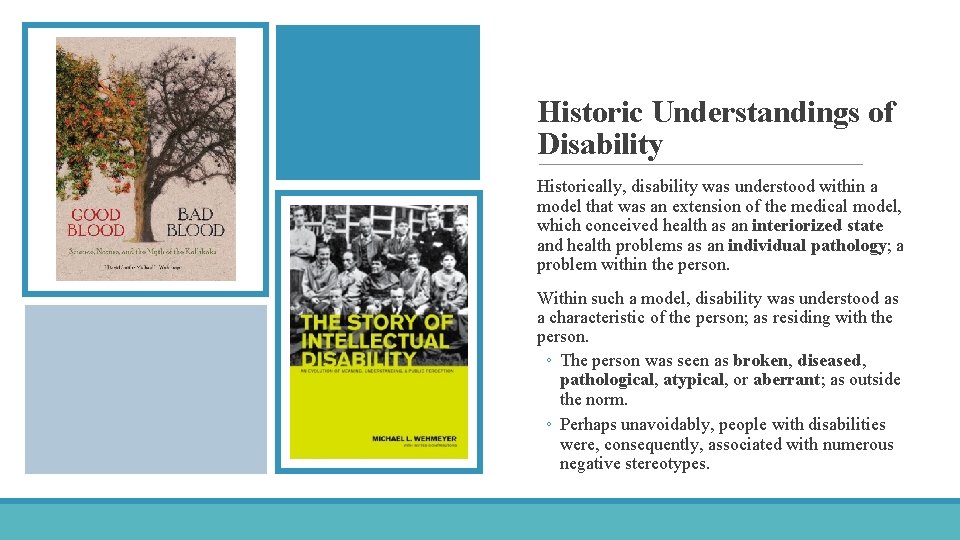
Historic Understandings of Disability Historically, disability was understood within a model that was an extension of the medical model, which conceived health as an interiorized state and health problems as an individual pathology; a problem within the person. Within such a model, disability was understood as a characteristic of the person; as residing with the person. ◦ The person was seen as broken, diseased, pathological, atypical, or aberrant; as outside the norm. ◦ Perhaps unavoidably, people with disabilities were, consequently, associated with numerous negative stereotypes.
Emergence of Strengths. Based Models of Disability 1980 - International Classification of Impairments, Disabilities, and Handicaps (ICIDH) 2001 - International Classification of Functioning, Disability and Health (ICF)
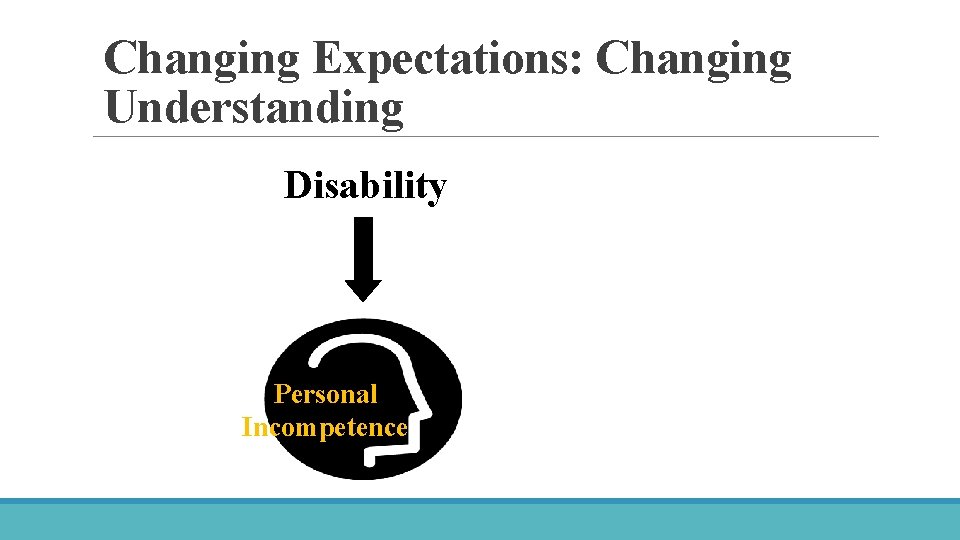
Changing Expectations: Changing Understanding Disability Personal Incompetence
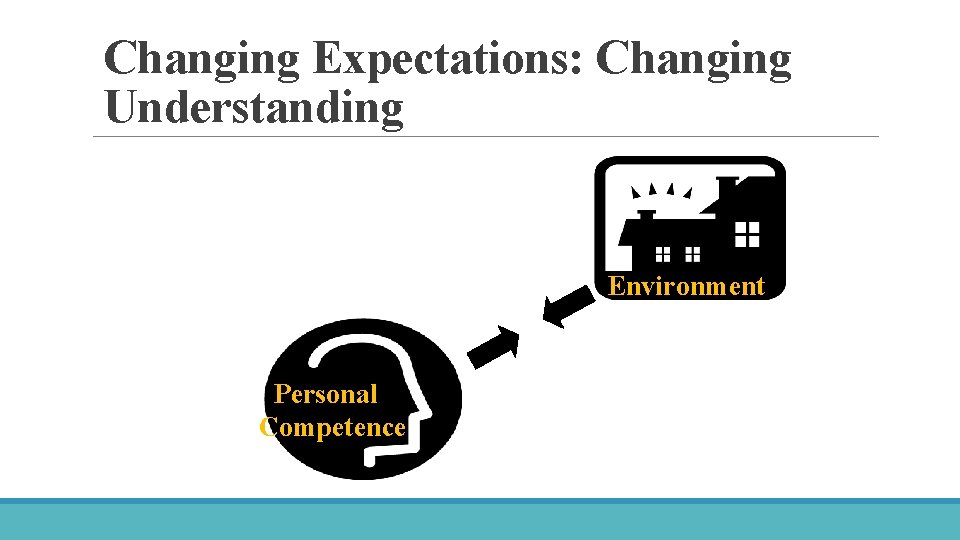
Changing Expectations: Changing Understanding Environment Personal Competence
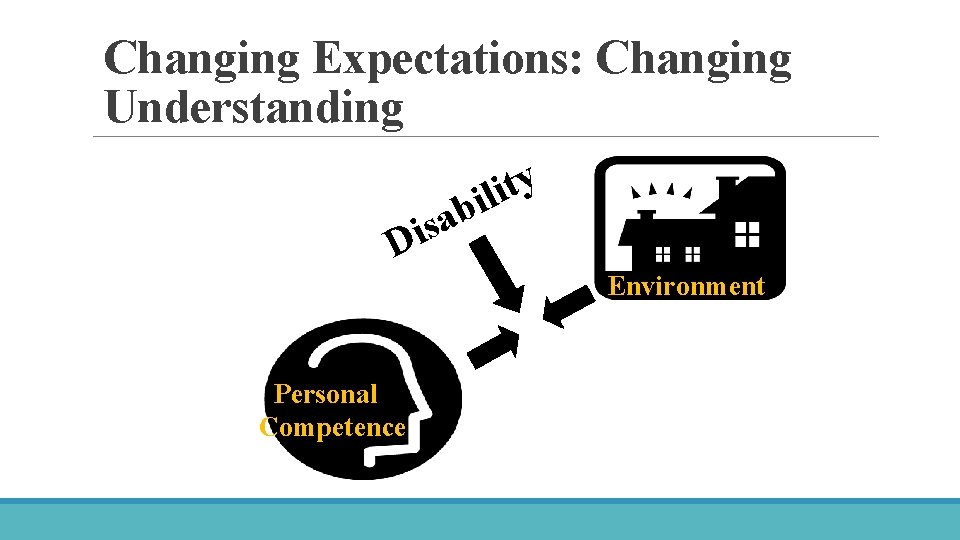
Changing Expectations: Changing Understanding y t i il b a is D Environment Personal Competence
Implications of Strengthsbased Approaches to Disability Ø Emphasizes abilities Ø Part of, not apart from, typical human functioning Ø Focus on environment/context, not fixing individual Ø Focus on participation Ø Emphasizes supports, not programs
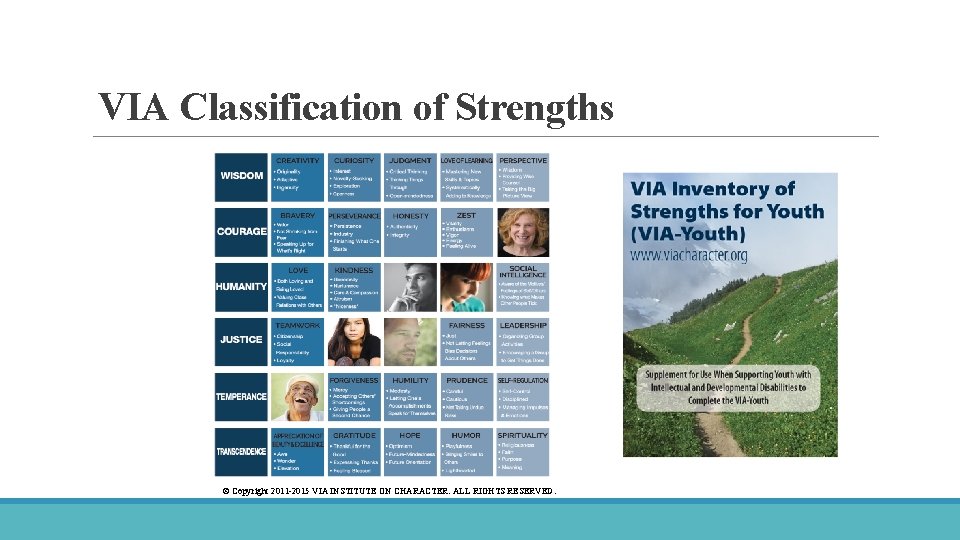
VIA Classification of Strengths © Copyright 2011 -2015 VIA INSTITUTE ON CHARACTER. ALL RIGHTS RESERVED.
Implications for the Education of All Learners ü Universal Design for Learning ü Technology Supports ü Assistive technology and accommodations. ü Electronic and information technology. ü Schoolwide Applications ü Positive Behavior Interventions and Supports ü Multitiered Systems of Supports ü Personalizable Education ü A Focus on Self-Determination and Self-Determined Learning ü Active Student Involvement in Educational Planning
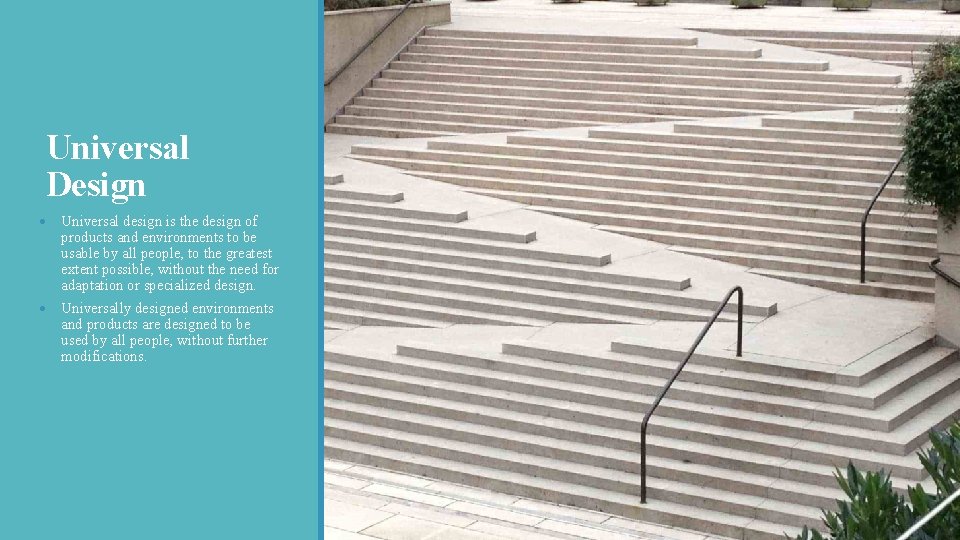
Universal Design • Universal design is the design of products and environments to be usable by all people, to the greatest extent possible, without the need for adaptation or specialized design. • Universally designed environments and products are designed to be used by all people, without further modifications.
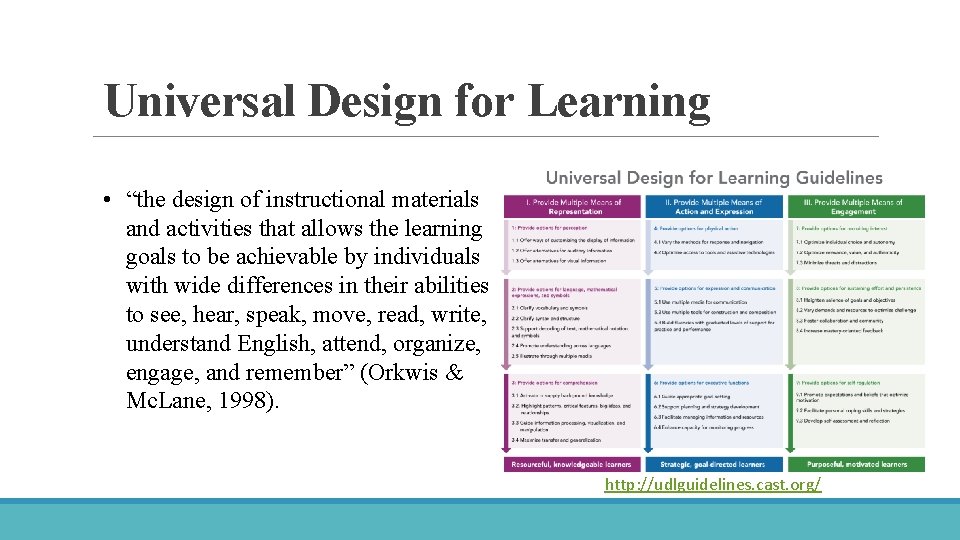
Universal Design for Learning • “the design of instructional materials and activities that allows the learning goals to be achievable by individuals with wide differences in their abilities to see, hear, speak, move, read, write, understand English, attend, organize, engage, and remember” (Orkwis & Mc. Lane, 1998). http: //udlguidelines. cast. org/
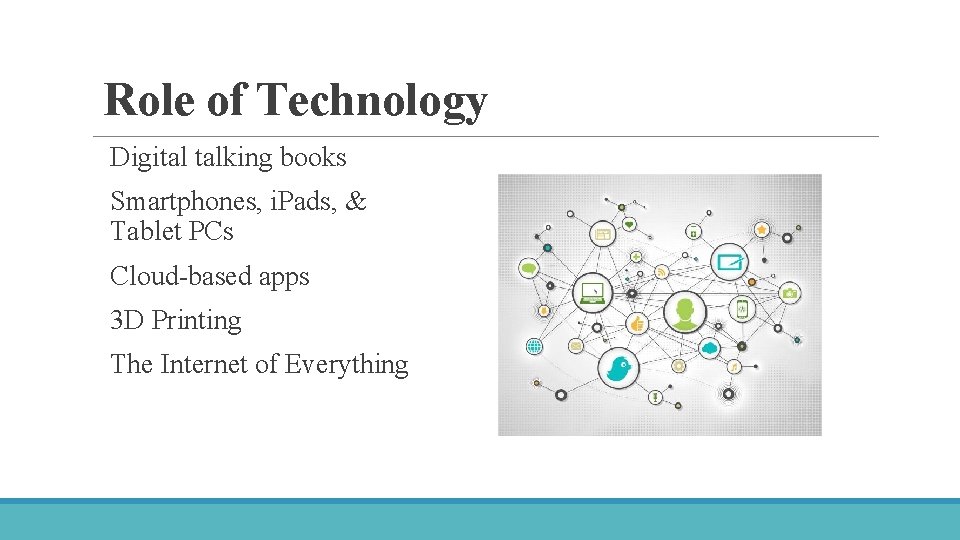
Role of Technology Digital talking books Smartphones, i. Pads, & Tablet PCs Cloud-based apps 3 D Printing The Internet of Everything
A 21 st Century Education Ø “In the modern ‘flat world, ’ the ‘Three Rs’ [reading, writing, arithmetic] simply aren’t enough. If today’s students want to compete in this global society, they must also be proficient communicators, creators, critical thinkers, and collaborators (the ‘Four Cs’)” (National Education Association, 2016, p. 5). Ø Deep learning “increases student engagement in the learning through personalization and ownership” and “connects students to the ‘real world, ’ which is often more reflective of their own reality and cultural identity” (Fullan et al. , 2018, p. 9). Ø “Today, in the new age, a majority of traditional routine tasks Fullan, M. , Quinn, J. , & Mc. Eachen, J. (2018). Deep learning: Engage the world change the world. Thousand Oaks, that required a homogenous set of skills and knowledge are now CA: Corwin. performed by machines, and human needs have shifted from National Education Association. (2016). Preparing 21 st basic needs to more psychological, aesthetic and intellectual century students for a global society: An educator’s needs. Thus, the full spectrum of human talents has become guide to the “four Cs. ” Washington, DC. Author. Zhao, Y. (2018). Reach for greatness: Personalizable economically valuable” (Zhao, 2018, p. 57). education for all children. Thousand Oaks, CA: Corwin.
Personalizable Education Ø The educational status quo is based upon two basic, but flawed assumptions: (1) “there is a set of skills and knowledge everyone must have in order to live a successful life in the world, ” and (2) “all children are capable of and interested in acquiring the skills and knowledge at a similar pace” (Zhao, 2018, p. 8). Instead: Ø Changes in society always redefine the value of knowledge and skills. Changes brought about by technology have made traditionally valued skills and knowledge obsolete, requiring the need to consider new human qualities. Ø Understandings of human nature and learning suggest that human beings are differently talented, have different desires and interests, and have different experiences that interact with their natural talents and interests to give each person a unique profile of abilities and desires, stronger in some areas and weaker in others. Ø In a world in which technology has and will continue to replace humans in routine tasks, we need human beings to be unique, creative, and entrepreneurial and an education system that helps every student become uniquely creative and entrepreneurial. (p. 9)
Personalizable Education We need to rethink individualization: “the education system rarely cares about children’s individual passions or talents” and emphasizes primarily the “talents” of being a good student, following rules, doing homework, getting good grades, and passing tests (Zhao, 2018, p. 17). Personalizable Education Ø Agency: “for students to explore, identify and enhance their strengths and follow their passions, they must become owners of their own learning. . . They must have agency in designing their own learning” (p. 58). Ø Shared Ownership: emphasizes that students and adults (teachers, administrators, cafeteria workers, para-educators, etc. ) are co-owners of what happens in the school. Ø Flexibility: [in] all aspects of the school: leadership, timetable, curriculum, facilities, students, and staffing. ” Flexibility is first and foremost a mindset that “believes in the value of change and that plans, no matter how carefully thought out, will always have unexpected disruptions and/or outcomes that require change” (p. 64). Ø Value Creation: “guiding students in turning their passions and strengths into something valuable, ” which makes learning meaningful and gives it purpose (p. 65).
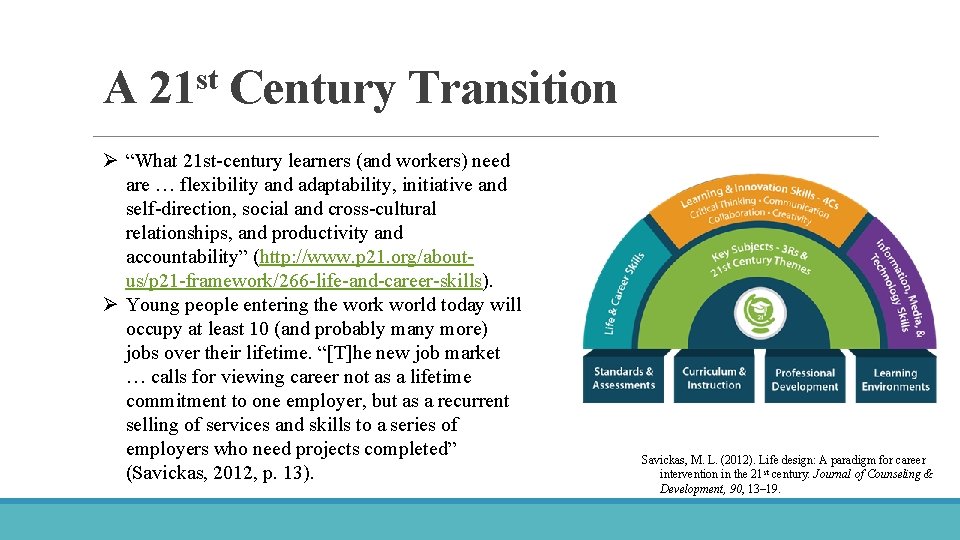
A 21 st Century Transition Ø “What 21 st-century learners (and workers) need are … flexibility and adaptability, initiative and self-direction, social and cross-cultural relationships, and productivity and accountability” (http: //www. p 21. org/aboutus/p 21 -framework/266 -life-and-career-skills). Ø Young people entering the work world today will occupy at least 10 (and probably many more) jobs over their lifetime. “[T]he new job market … calls for viewing career not as a lifetime commitment to one employer, but as a recurrent selling of services and skills to a series of employers who need projects completed” (Savickas, 2012, p. 13). Savickas, M. L. (2012). Life design: A paradigm for career intervention in the 21 st century. Journal of Counseling & Development, 90, 13– 19.
A 21 st Century Transition Ø Career construction is the idea that: “Careers do not unfold; they are constructed as individuals make choices that express their selfconcepts and substantiate their goals in the social reality of work role” (Savickas, 2005, p. 43). Ø The Life Design approach “is framed as a lifelong selfconstruction process that aims to promote skills and competences in overall life planning” (Wehmeyer et al. , in press). Ø Life-designing emphasizes enabling young people to become experts in ‘constructing’ their own career paths, taking on transitions, addressing threats and opportunities, and designing a better life (Nota & Rossier, 2009). http: //www. careerconstructioninstitute. org/ Nota, L. , & Rossier, J. (2014). Handbook of the life design paradigm: From practice to theory, from theory to practice. Gottingen: Hogrefe. Savickas, M. L. (2005). The theory and practice of career construction. In S. D. Brown & R. W. Lent (Eds. ), Career development and counseling: Putting theory and research to work (pp. 42– 60). Hoboken, NJ: Wiley.
Implications for Transition Educators • Presume competence. • Promote self-determination. • Involve young people in planning for their future. • Emphasize goal setting and problem solving. • Consider the role of hope, optimism, resilience, coping, and so forth in the lives of young people with disabilities.
Building the Bridge: Promoting Self-Determination
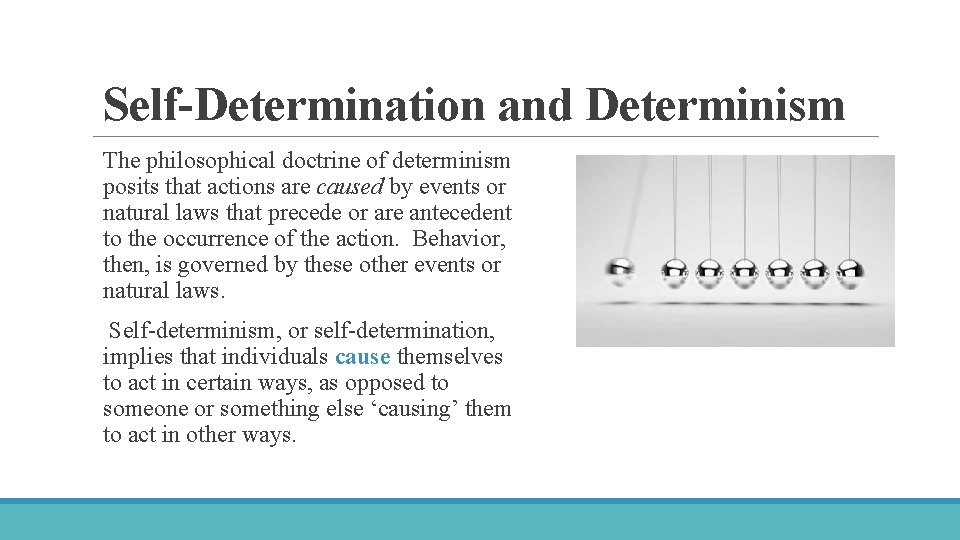
Self-Determination and Determinism The philosophical doctrine of determinism posits that actions are caused by events or natural laws that precede or are antecedent to the occurrence of the action. Behavior, then, is governed by these other events or natural laws. Self-determinism, or self-determination, implies that individuals cause themselves to act in certain ways, as opposed to someone or something else ‘causing’ them to act in other ways.
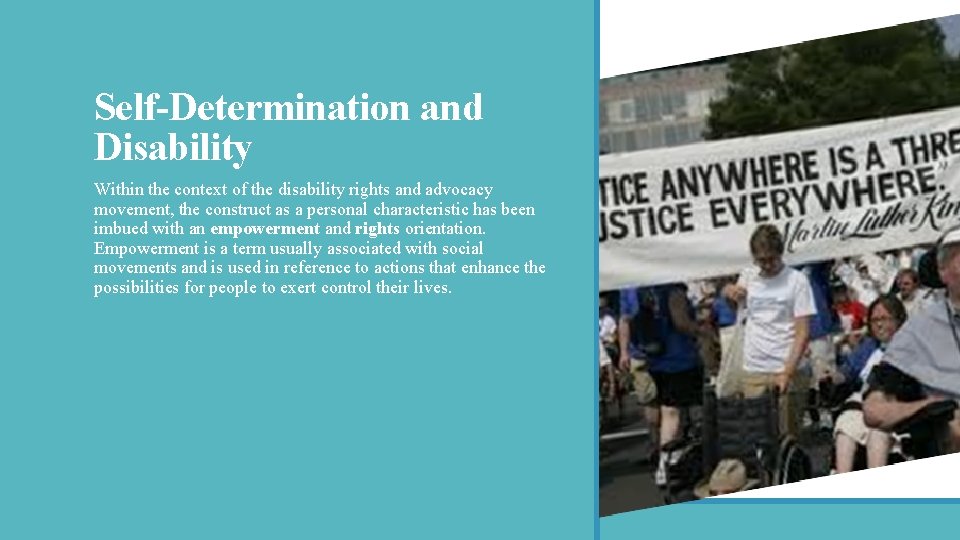
Self-Determination and Disability Within the context of the disability rights and advocacy movement, the construct as a personal characteristic has been imbued with an empowerment and rights orientation. Empowerment is a term usually associated with social movements and is used in reference to actions that enhance the possibilities for people to exert control their lives.
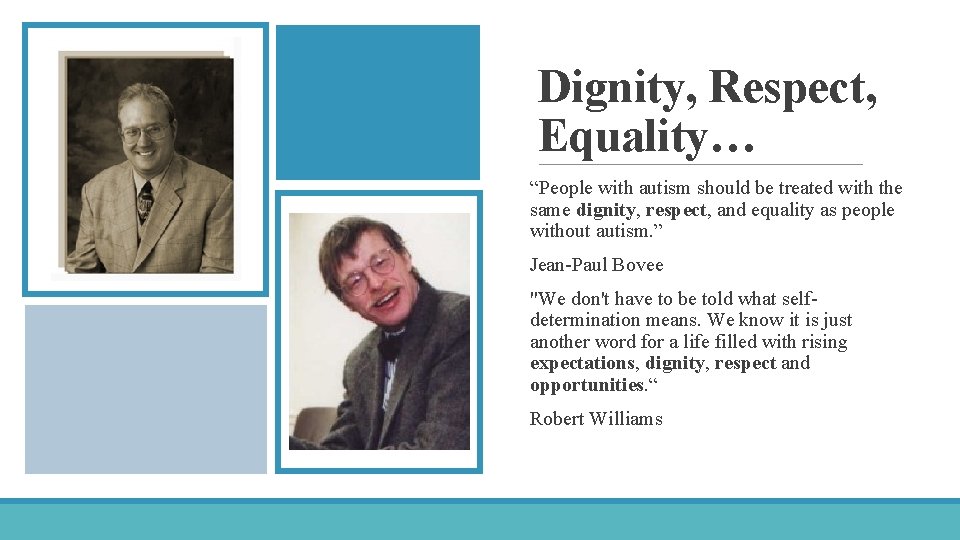
Dignity, Respect, Equality… “People with autism should be treated with the same dignity, respect, and equality as people without autism. ” Jean-Paul Bovee "We don't have to be told what selfdetermination means. We know it is just another word for a life filled with rising expectations, dignity, respect and opportunities. “ Robert Williams
Causal Agency Theory Ø Causal Agency Theory explains how people become selfdetermined. Ø Self-determination is “a dispositional characteristic manifested as acting as the causal agent in one’s life. Self-determined people (i. e. , causal agents) act in service to freely chosen goals. Selfdetermined actions function to enable a person to be the causal agent is his or her life” (Shogren et al. , 2015). • One purpose of Causal Agency Theory was to align our work with research in motivation to construct a theory of the development of self-determination.
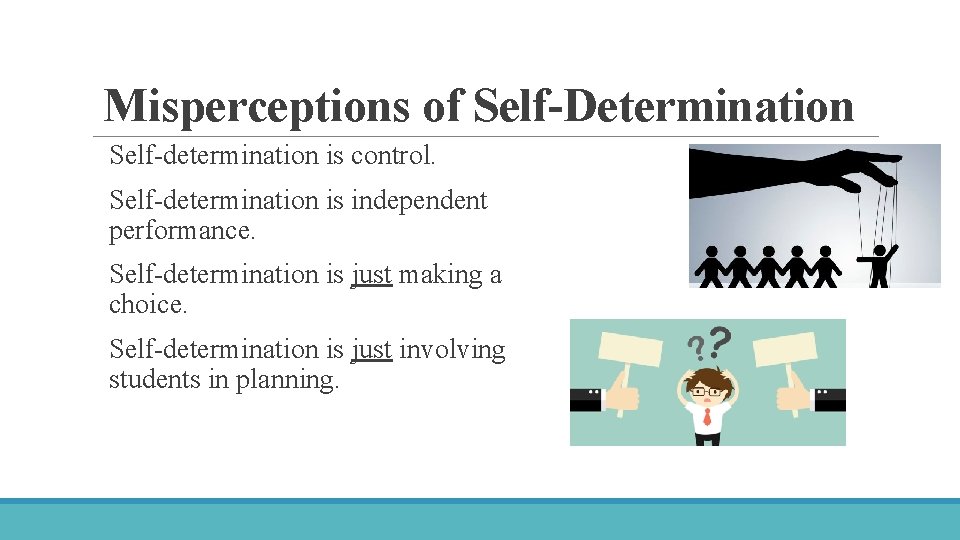
Misperceptions of Self-Determination Self-determination is control. Self-determination is independent performance. Self-determination is just making a choice. Self-determination is just involving students in planning.
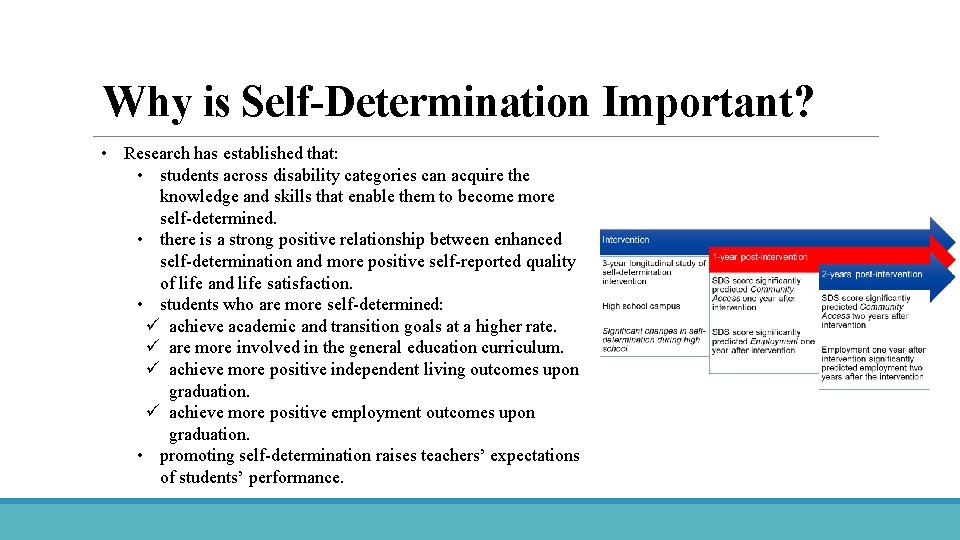
Evidence for the Importance of Self-Determination Why is Self-Determination Important? • Research has established that: • students across disability categories can acquire the knowledge and skills that enable them to become more self-determined. • there is a strong positive relationship between enhanced self-determination and more positive self-reported quality of life and life satisfaction. • students who are more self-determined: ü achieve academic and transition goals at a higher rate. ü are more involved in the general education curriculum. ü achieve more positive independent living outcomes upon graduation. ü achieve more positive employment outcomes upon graduation. • promoting self-determination raises teachers’ expectations of students’ performance.
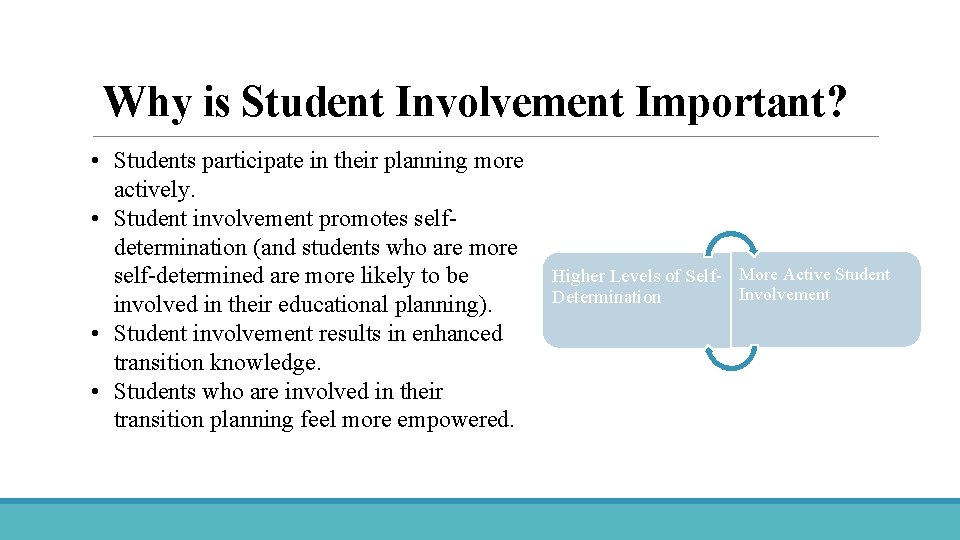
Why is Student Involvement Important? • Students participate in their planning more actively. • Student involvement promotes selfdetermination (and students who are more self-determined are more likely to be involved in their educational planning). • Student involvement results in enhanced transition knowledge. • Students who are involved in their transition planning feel more empowered. Higher Levels of Self- More Active Student Involvement Determination
Autonomy-Supportive Classrooms Research in motivation has validated the importance of autonomy-supportive classrooms and described the characteristics of autonomy-supportive teaching practices, including: ◦ Communicating frequently to present expectations and acknowledge students’ feelings. ◦ Offering more choices and removing controlling events in learning. ◦ Allowing students to participate actively. ◦ Providing positive and informational feedback. ◦ Providing structured guidance.
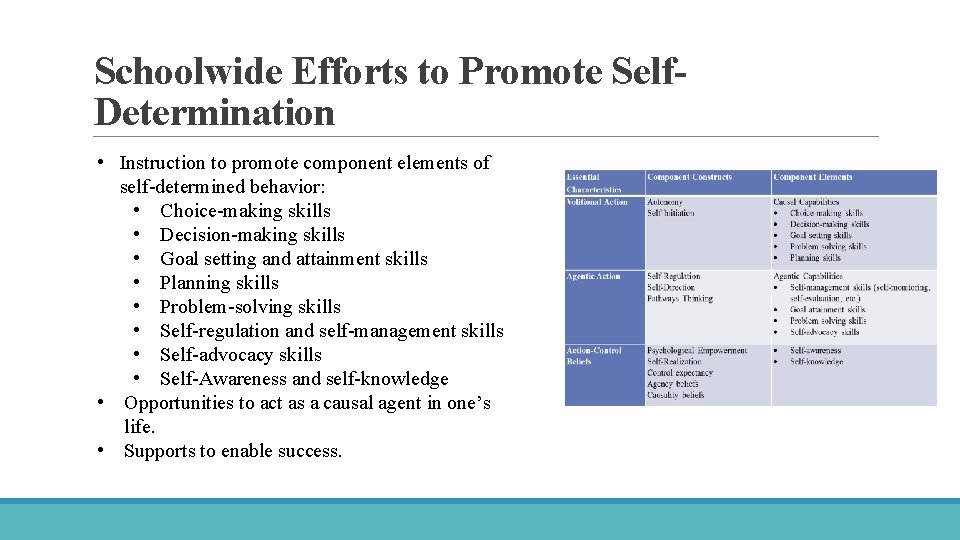
Promoting Self-Determination Schoolwide Efforts to Promote Self. Determination • Instruction to promote component elements of self-determined behavior: • Choice-making skills • Decision-making skills • Goal setting and attainment skills • Planning skills • Problem-solving skills • Self-regulation and self-management skills • Self-advocacy skills • Self-Awareness and self-knowledge • Opportunities to act as a causal agent in one’s life. • Supports to enable success.
In Self-Determined Learning: §Teachers teach students to teach themselves. §Students learn how to set and achieve goals and make plans. §Teachers relinquish ownership for learning to the student by: § Creating learning communities and using teaching methods that emphasize students’ curiosity and experiences; § Creating learning communities that are autonomy-supportive; § Ensuring that learning is tied to activities that are intrinsically motivating or lead to the attainment of goals that are valued and based upon student preferences, interests, values. §Teachers provide competence supports by emphasizing mastery experiences, using assessment (both teacher-directed and student-directed) to provide supportive feedback, and aligning instruction with students’ strengths and abilities. §Teachers provide relatedness supports by providing choice opportunities, supporting volition, and emphasizing the goal process and not just goal outcomes. §Students take initiative in learning because learning is meaningful and of personal value to them. §Students act volitionally because they are provided choices that are meaningful, meaningfully different, and autonomy-supportive.
Intervention and Measurement ◦ The Self-Determined Learning Model of Instruction ◦ A teaching model design to support teachers to teach students to selfregulate goal setting and attainment…to enable them to engage in causal action. ◦ Students are supported to learn to self-regulate problem solving to set relevant goals, create an action plan to achieve the goal, track their progress toward their goal, and adjust their action plan or goal as necessary. ◦ Strong evidence base with students with disabilities. ◦ The Self-Determination Inventory System ◦ Self-Determination Inventory: Self-Report Version ◦ Self-Determination Inventory: Adult-Report Version ◦ Measures volitional action, causal action, action-control beliefs.
http: //wehmeyer. pbworks. com
- Slides: 37