
Building a Better Runner Key Factors Affecting Optimal
Building a Better Runner
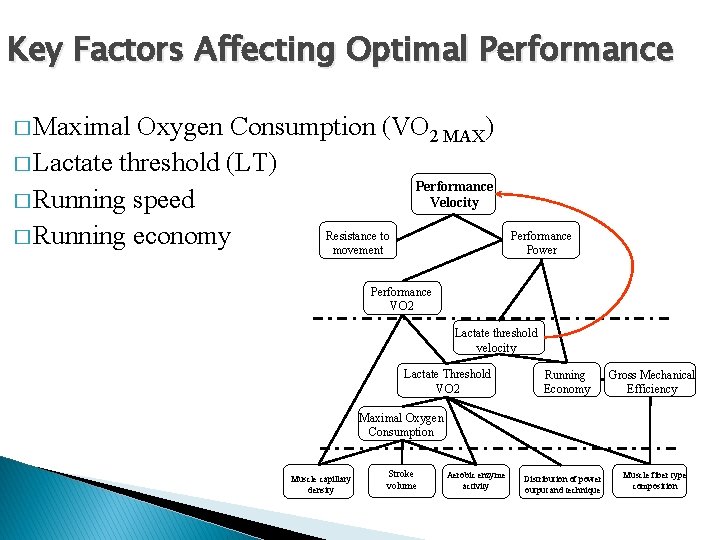
Key Factors Affecting Optimal Performance � Maximal Oxygen Consumption (VO 2 MAX) � Lactate threshold (LT) Performance Velocity � Running speed Resistance to � Running economy movement Performance Power Performance VO 2 Lactate threshold velocity Lactate Threshold VO 2 Running Economy Gross Mechanical Efficiency Maximal Oxygen Consumption Muscle capillary density Stroke volume Aerobic enzyme activity Distribution of power output and technique Muscle fiber type composition
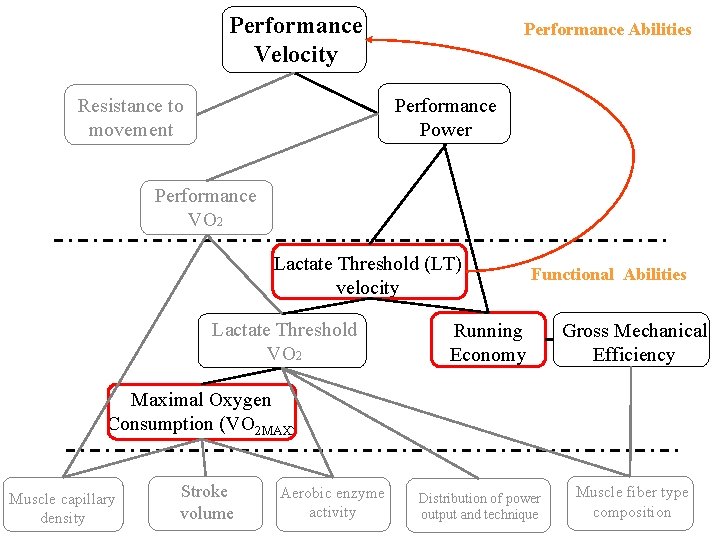
Performance Velocity Resistance to movement Performance Abilities Performance Power Performance VO 2 Lactate Threshold (LT) velocity Lactate Threshold VO 2 Functional Abilities Running Economy Gross Mechanical Efficiency Maximal Oxygen Consumption (VO 2 MAX) Muscle capillary density Stroke volume Aerobic enzyme activity Distribution of power output and technique Muscle fiber type composition
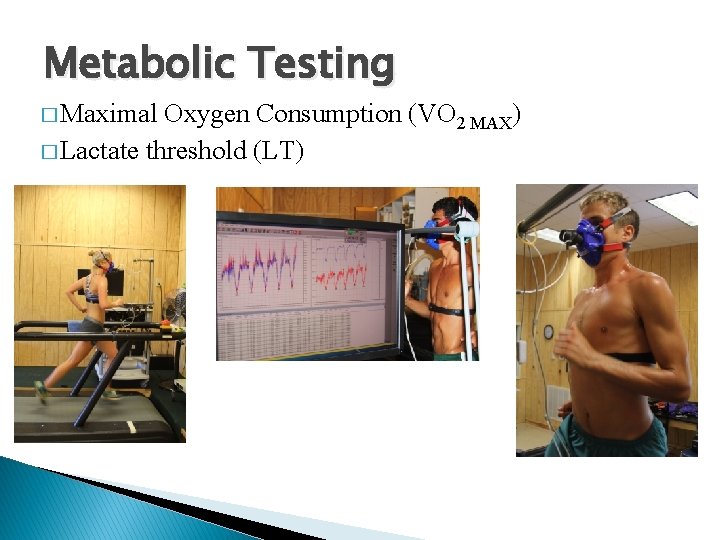
Metabolic Testing � Maximal Oxygen Consumption (VO 2 MAX) � Lactate threshold (LT)
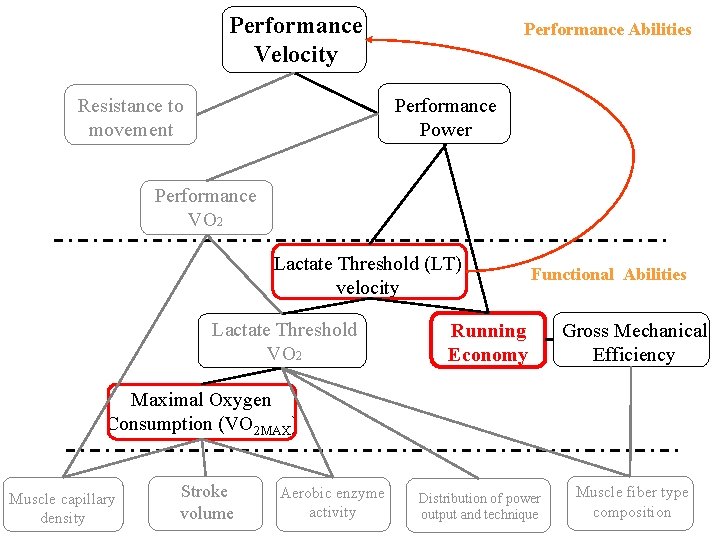
Performance Velocity Resistance to movement Performance Abilities Performance Power Performance VO 2 Lactate Threshold (LT) velocity Lactate Threshold VO 2 Functional Abilities Running Economy Gross Mechanical Efficiency Maximal Oxygen Consumption (VO 2 MAX) Muscle capillary density Stroke volume Aerobic enzyme activity Distribution of power output and technique Muscle fiber type composition
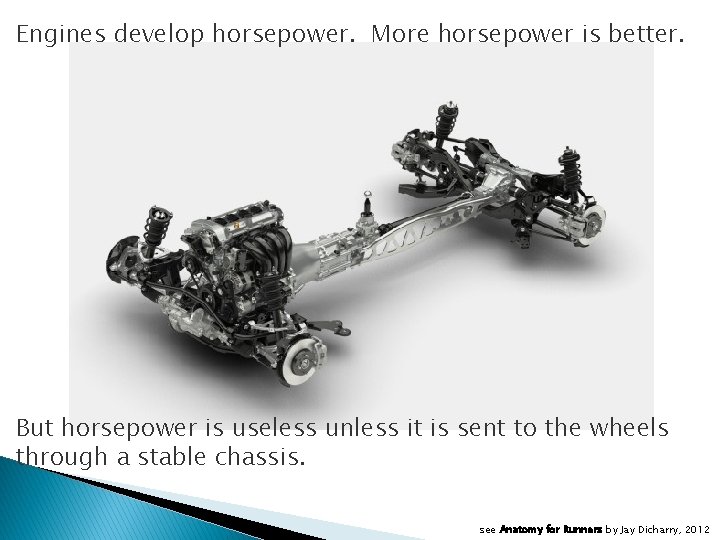
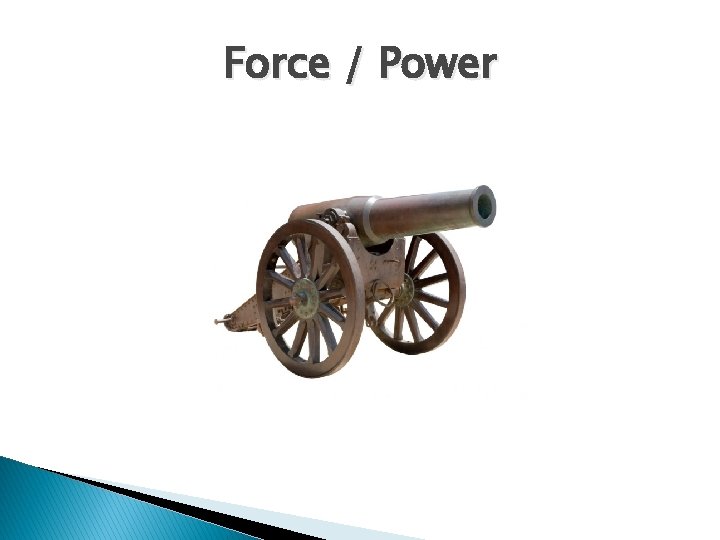
Engines develop horsepower. More horsepower is better. But horsepower is useless unless it is sent to the wheels through a stable chassis. see Anatomy for Runners by Jay Dicharry, 2012
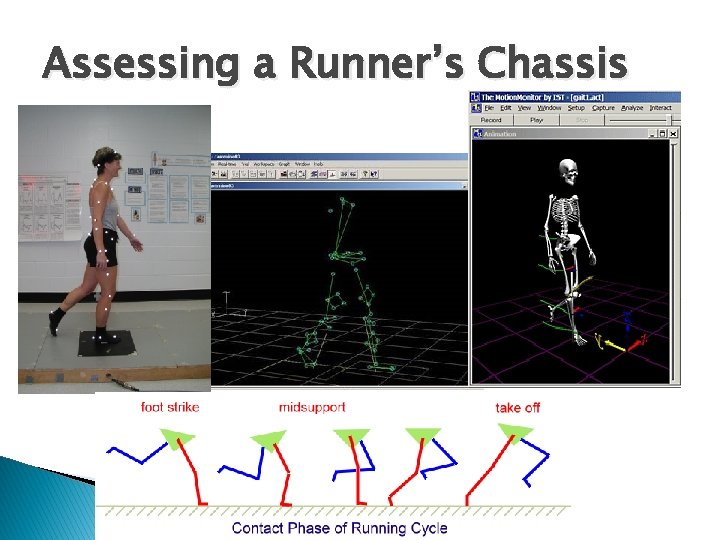
Assessing a Runner’s Chassis
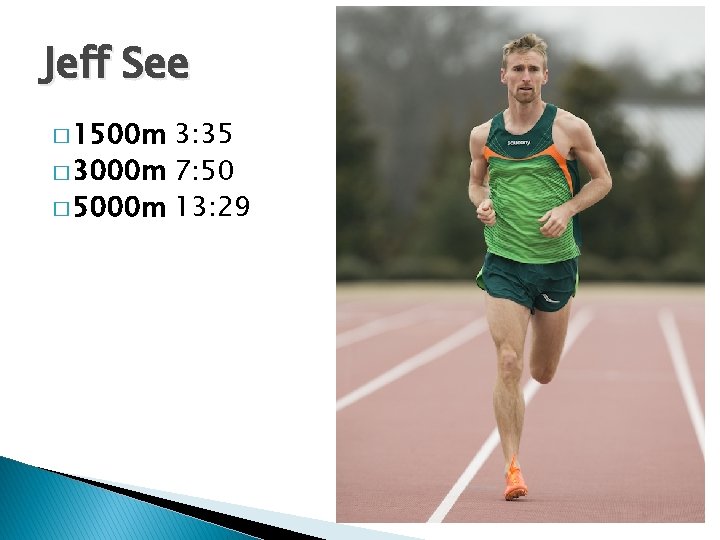
Jeff See � 1500 m 3: 35 � 3000 m 7: 50 � 5000 m 13: 29
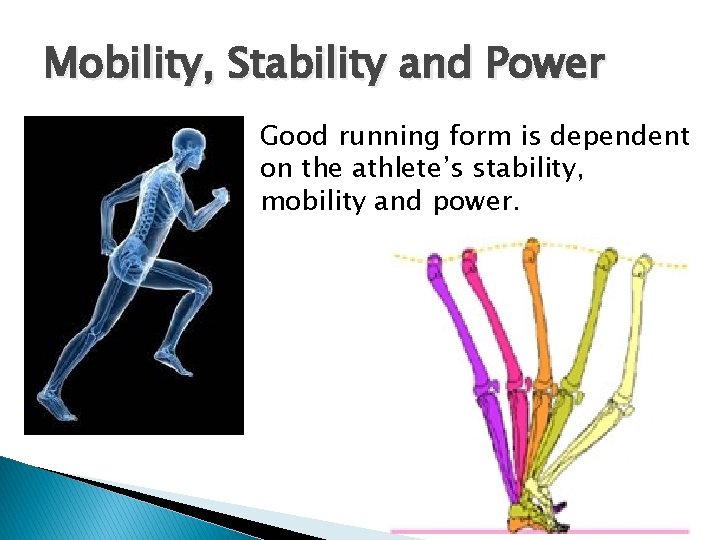
Mobility, Stability and Power Good running form is dependent on the athlete’s stability, mobility and power.
Force / Power
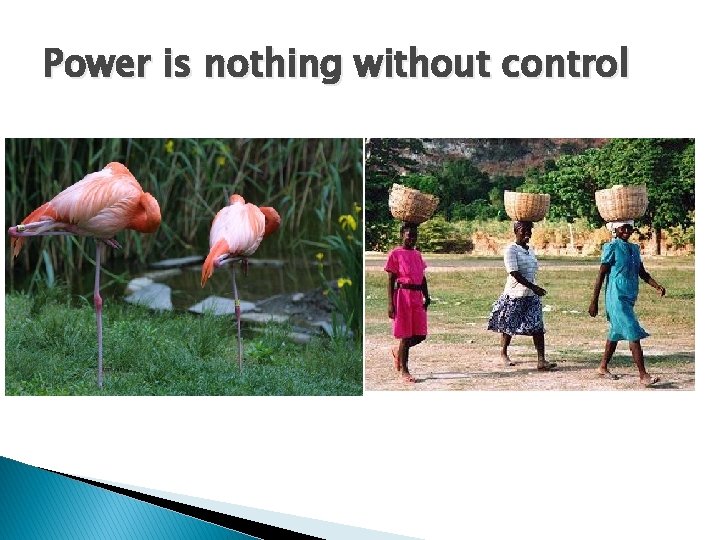
Power is nothing without control

Stability How stable is a canoe?
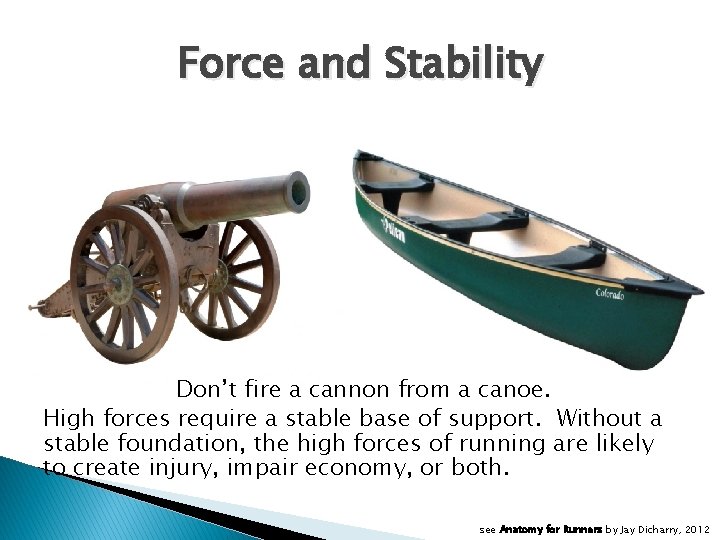
Force and Stability Don’t fire a cannon from a canoe. High forces require a stable base of support. Without a stable foundation, the high forces of running are likely to create injury, impair economy, or both. see Anatomy for Runners by Jay Dicharry, 2012
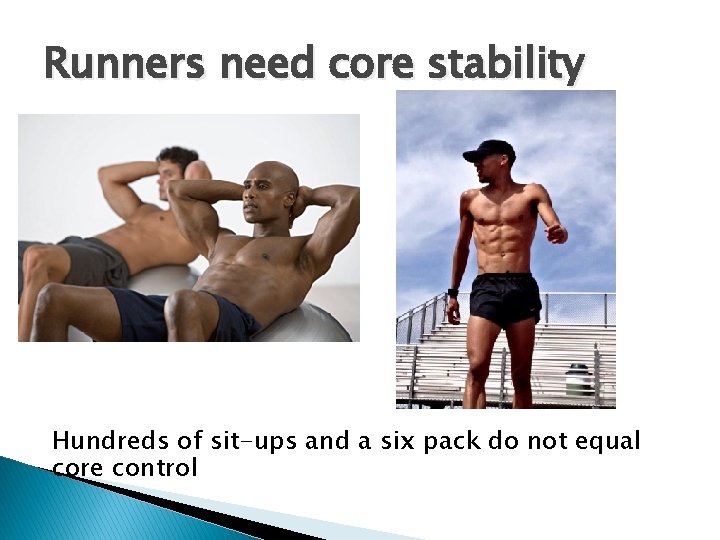
Runners need core stability Hundreds of sit-ups and a six pack do not equal core control
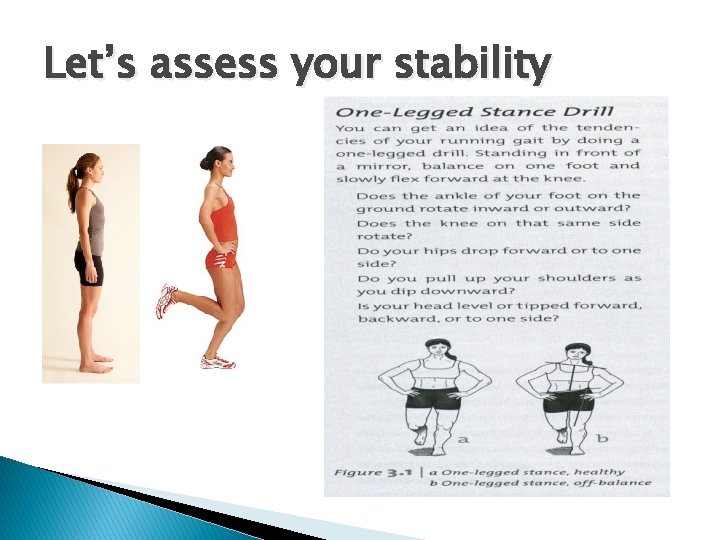
Let’s assess your stability
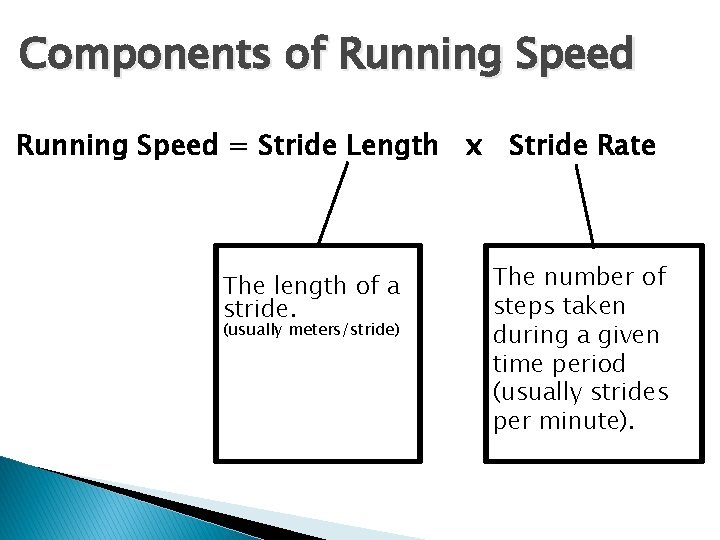
Components of Running Speed = Stride Length x Stride Rate The length of a stride. (usually meters/stride) The number of steps taken during a given time period (usually strides per minute).
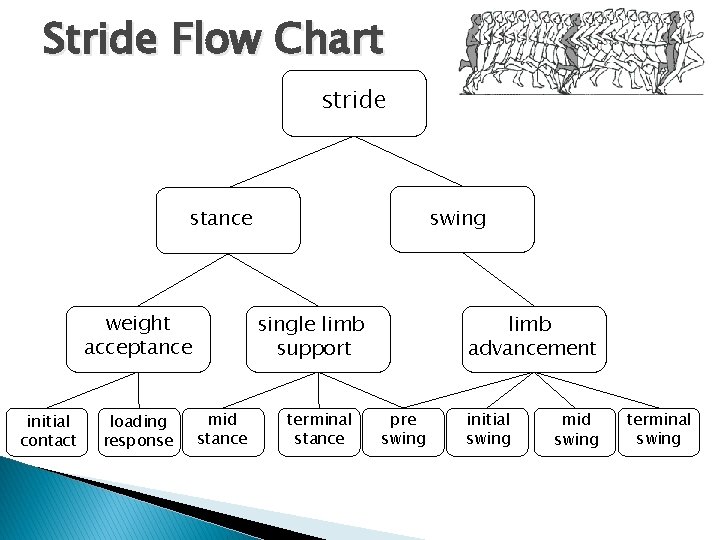
Stride Flow Chart stride stance weight acceptance initial contact loading response swing single limb support mid stance terminal stance limb advancement pre swing initial swing mid swing terminal swing
Stride � Varies from Runner to Runner � Forward � Quick � No not Up and Down and Light exaggerated knee lift
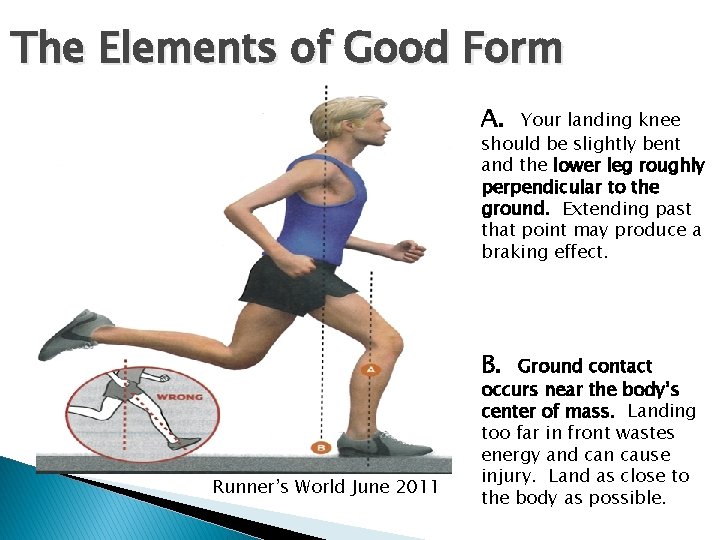
The Elements of Good Form A. Your landing knee should be slightly bent and the lower leg roughly perpendicular to the ground. Extending past that point may produce a braking effect. B. Runner’s World June 2011 Ground contact occurs near the body’s center of mass. Landing too far in front wastes energy and can cause injury. Land as close to the body as possible.
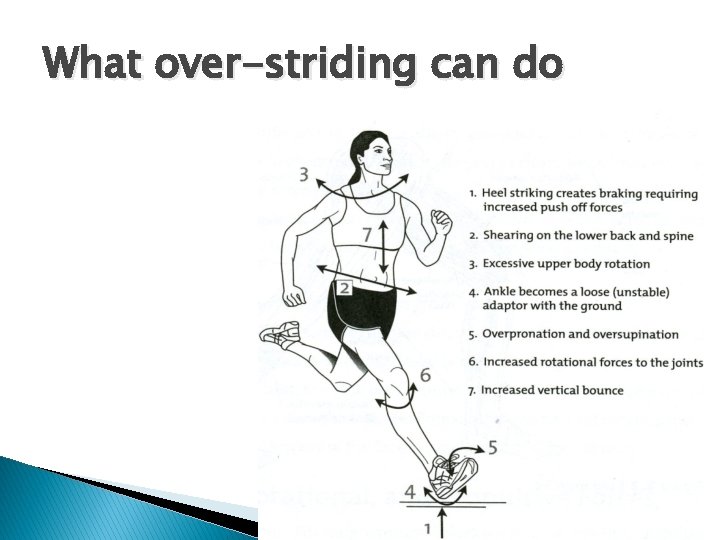
What over-striding can do
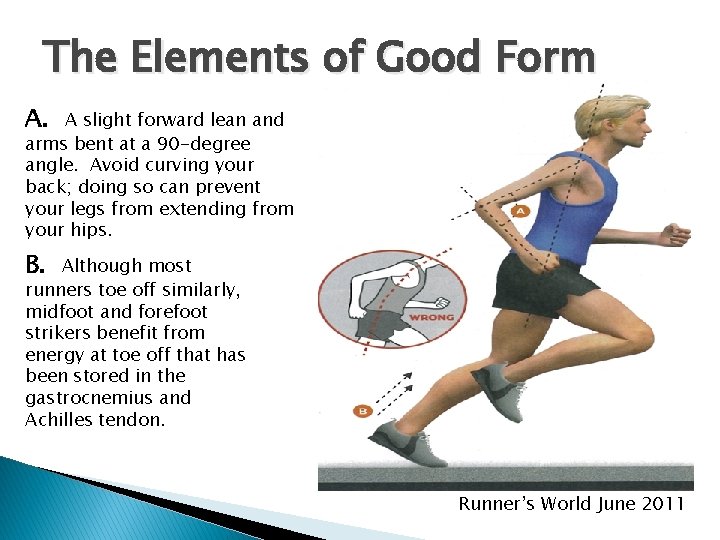
The Elements of Good Form A. A slight forward lean and arms bent at a 90 -degree angle. Avoid curving your back; doing so can prevent your legs from extending from your hips. B. Although most runners toe off similarly, midfoot and forefoot strikers benefit from energy at toe off that has been stored in the gastrocnemius and Achilles tendon. Runner’s World June 2011
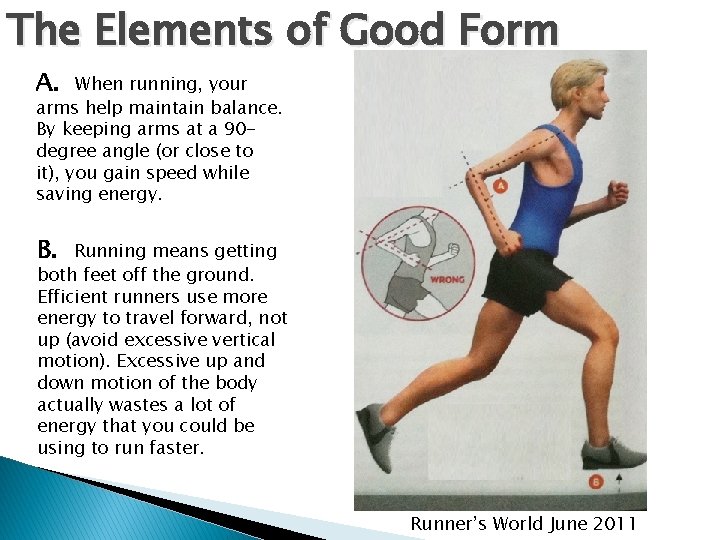
The Elements of Good Form A. When running, your arms help maintain balance. By keeping arms at a 90 degree angle (or close to it), you gain speed while saving energy. B. Running means getting both feet off the ground. Efficient runners use more energy to travel forward, not up (avoid excessive vertical motion). Excessive up and down motion of the body actually wastes a lot of energy that you could be using to run faster. Runner’s World June 2011
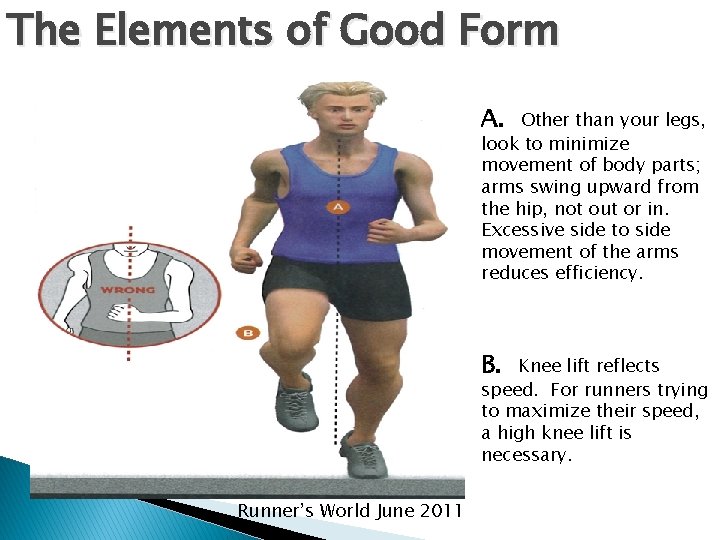
The Elements of Good Form A. Other than your legs, look to minimize movement of body parts; arms swing upward from the hip, not out or in. Excessive side to side movement of the arms reduces efficiency. B. Knee lift reflects speed. For runners trying to maximize their speed, a high knee lift is necessary. Runner’s World June 2011
Hip Flexion, Hip Extension and Heel lift
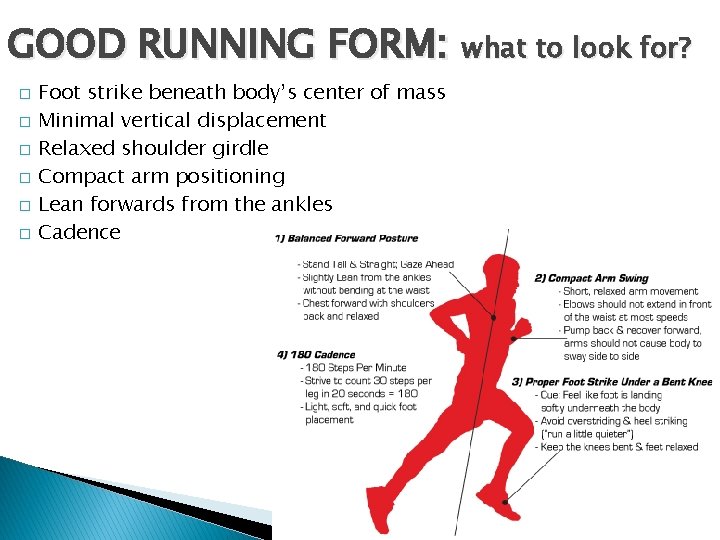
GOOD RUNNING FORM: what to look for? � � � Foot strike beneath body’s center of mass Minimal vertical displacement Relaxed shoulder girdle Compact arm positioning Lean forwards from the ankles Cadence
Ways to Improve Running Form � Fast Running � Strides � Strength Training � Stretching � Drills
�Building � Core a Better stability � Foot strike � Heel lift Runner
�Building � Skipping � Backwards � Single � Bridge a Better running leg squats � Clamshell � Donkey kick Runner � Single leg balance
�Building a Better Runner �Link to Dr. Murr’s analysis: �https: //www. youtube. com/wat ch? v=FDKANK 8 -ILY
- Slides: 29