
Build It Engage Explore Why Build Building structures
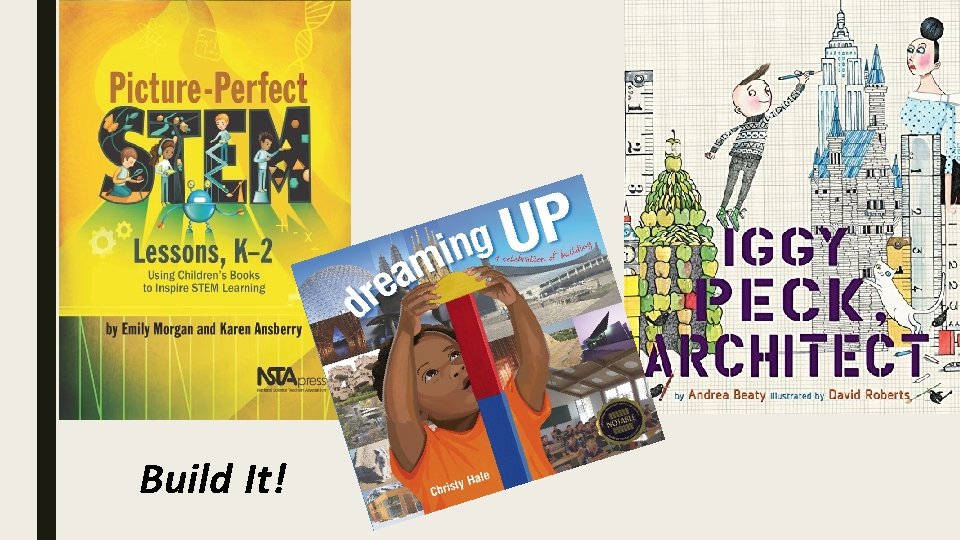
Build It!
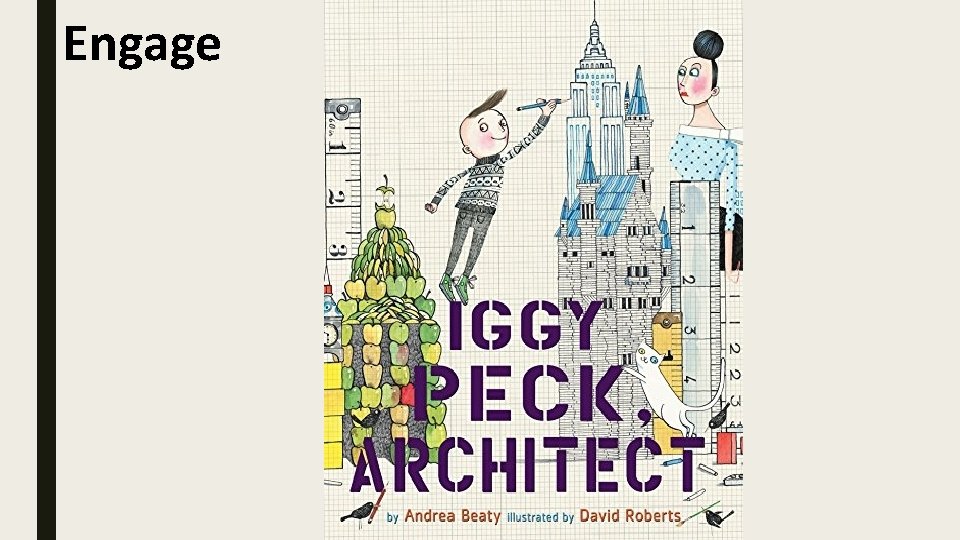
Engage
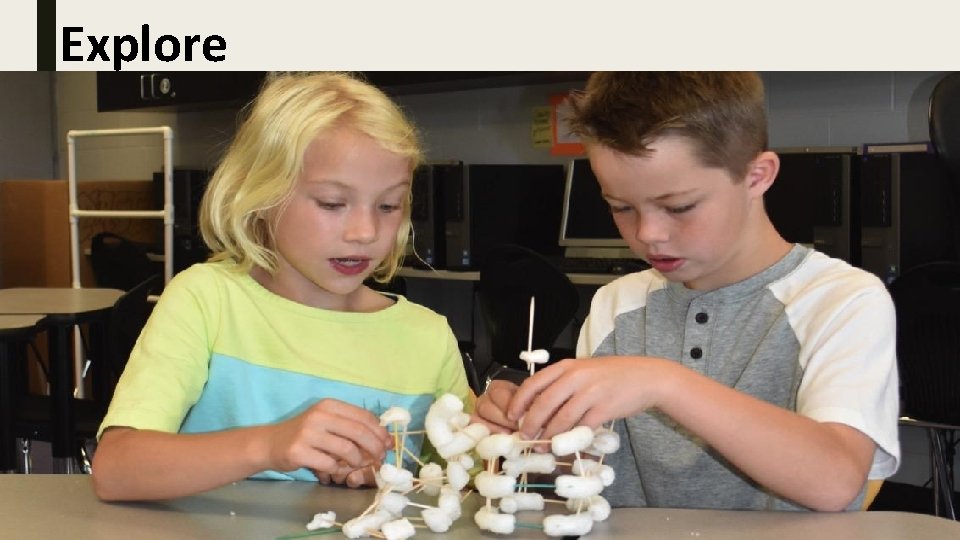
Explore

Why Build? Building structures encourages children to test spatial relationships and mentally rotate objects. Such practice might lead them to develop better spatial abilities. The research: • Kids who spend more free time playing with puzzles or building blocks score higher on tests of spatial ability (Jirout and Newcombe 2015; Levine et al 2012). • Studies of adolescents link construction play with superior performance on tests of spatial skills and mathematics (Oostermeijer et al 2014; Richardson et al 2014). • Kids become friendlier and more socially-savvy when they work on cooperative construction projects (Owens et al 2008; Legoff and Sherman 2006; Roseth et al 2009).
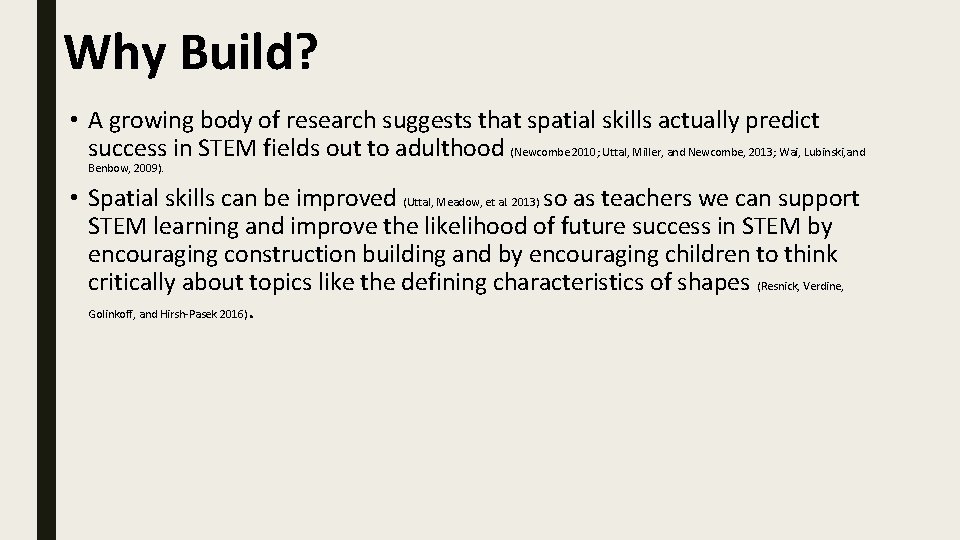
Why Build? • A growing body of research suggests that spatial skills actually predict success in STEM fields out to adulthood (Newcombe 2010; Uttal, Miller, and Newcombe, 2013; Wai, Lubinski, and Benbow, 2009). • Spatial skills can be improved (Uttal, Meadow, et al. 2013) so as teachers we can support STEM learning and improve the likelihood of future success in STEM by encouraging construction building and by encouraging children to think critically about topics like the defining characteristics of shapes (Resnick, Verdine, Golinkoff, and Hirsh-Pasek 2016).
Explain
Comparing Structures
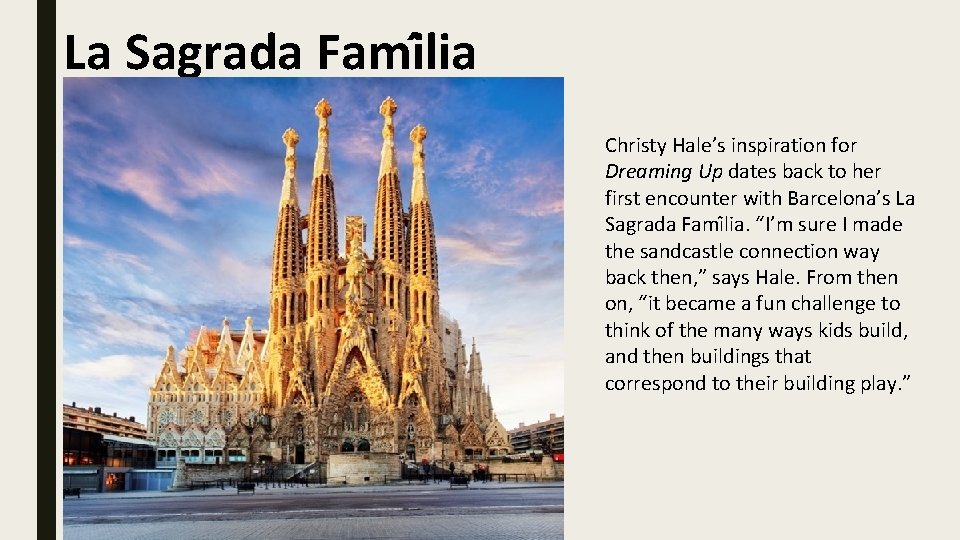
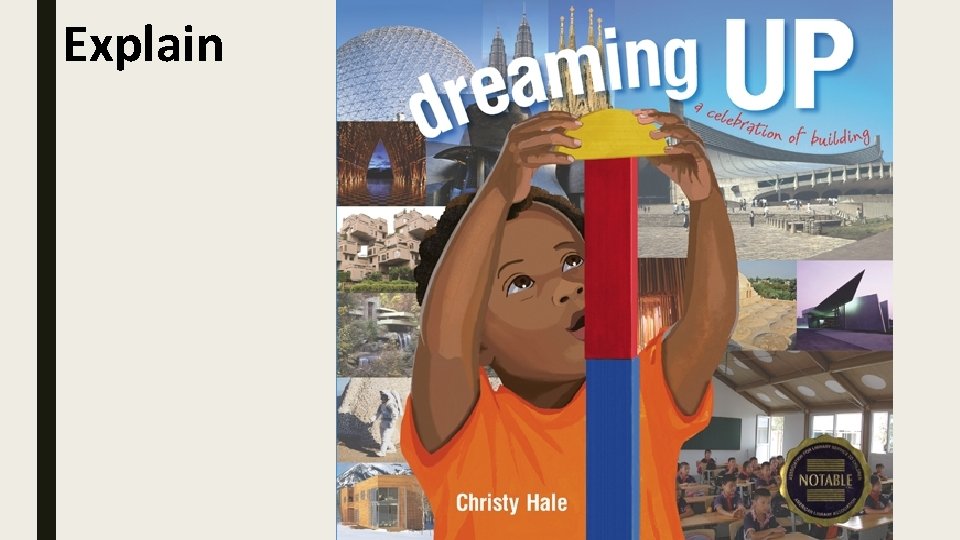
La Sagrada Fami lia Christy Hale’s inspiration for Dreaming Up dates back to her first encounter with Barcelona’s La Sagrada Fami lia. “I’m sure I made the sandcastle connection way back then, ” says Hale. From then on, “it became a fun challenge to think of the many ways kids build, and then buildings that correspond to their building play. ”

100 Most Famous Structures of All Time
Elaborate
Evaluate
Geometry in Architecture
h c t e r t S Share! & What ideas from this lesson could you use in your classroom?
- Slides: 15