
Build Execution into Strategy Blue Ocean Strategy Ch

Build Execution into Strategy Blue Ocean Strategy Ch. 8 Rebecca Eggerman Alexander Johnson Miguel Lopez Hannah Stephens Carissa Tarnowski
Overview • • Build Execution into Strategy Poor Process Can Ruin Strategy Execution The Power of Fair Process The Three E Principles of Fair Process A Tale of Two Plants Why Does Fair Process Matter? Intellectual and Emotional Recognition Theory Fair Process and Blue Ocean Strategy

Build Execution into Strategy • A company is not only top management • Strategy alignment and support – Stand apart • Culture of trust and commitment – Motivate people • More challenging in a BOS – Trepidation and change • Build Execution into Strategy from the start – Minimize risk of distrust, noncooperation, sabotage • Fair process
Whole Foods Market • • • No secrets Kumbaya culture Power to the people Perks Workplace democracy

Poor Process Can Ruin Strategy Execution • Lubber • Dramatically simplified sales process • Sales force fought the new strategy – Weren’t engaged in the strategy-making process – Felt threatened • Forced to pull the system
Whole Foods Market • Silencing online complaints • High annual turnover rate
The Power of Fair Process • Fair process – John W. Thibaut and Laurens Walker • procedural justice – People care about process as much as outcome – Level playing field presented inspires voluntary cooperation – Goes beyond call of duty to result in strategic decisions
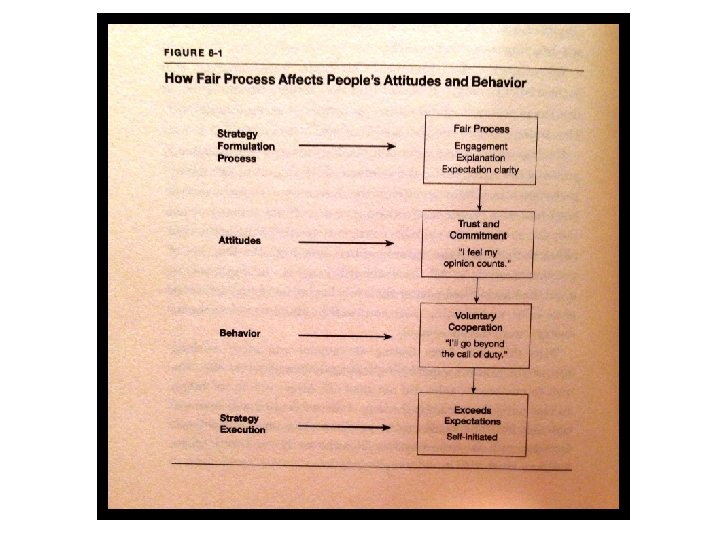
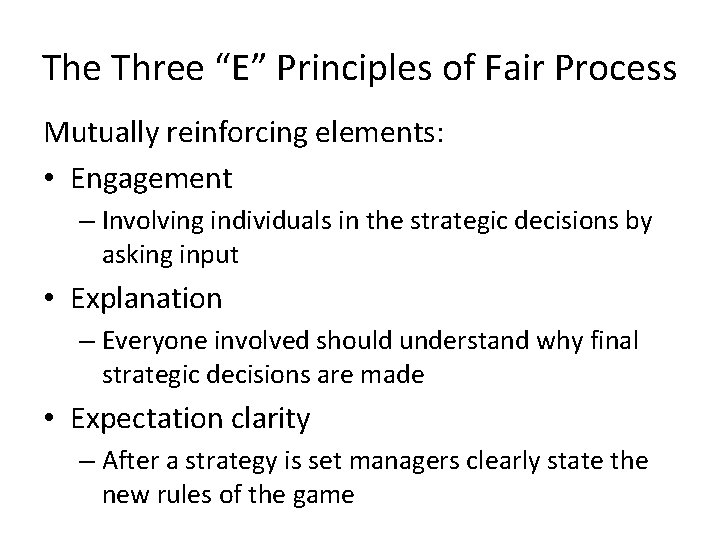
The Three “E” Principles of Fair Process Mutually reinforcing elements: • Engagement – Involving individuals in the strategic decisions by asking input • Explanation – Everyone involved should understand why final strategic decisions are made • Expectation clarity – After a strategy is set managers clearly state the new rules of the game
Three “E” Principles Continued • These three collectively lead to the judgment of fair process • Any subset of these does not create judgment of fair process
A Tale of Two Plants • Late 1980’s: sales in the elevator industry declined • Vacancy rates as high as 20% with excess office space • “Elco” manufacturing company wanted to offer buys a leap in value while lowering costs to stimulate new demand – Needed to replace batch manufacturing with cellular manufacturing that allowed self-directed teams to achieve superior performance
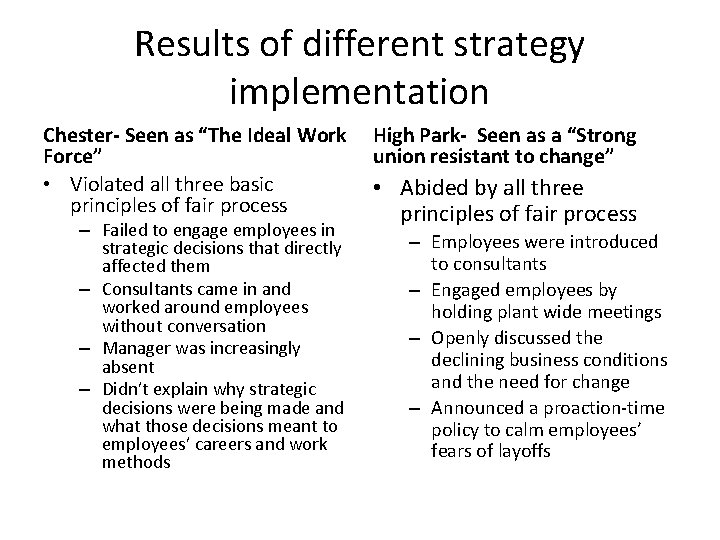
Results of different strategy implementation Chester- Seen as “The Ideal Work Force” • Violated all three basic principles of fair process – Failed to engage employees in strategic decisions that directly affected them – Consultants came in and worked around employees without conversation – Manager was increasingly absent – Didn’t explain why strategic decisions were being made and what those decisions meant to employees’ careers and work methods High Park- Seen as a “Strong union resistant to change” • Abided by all three principles of fair process – Employees were introduced to consultants – Engaged employees by holding plant wide meetings – Openly discussed the declining business conditions and the need for change – Announced a proaction-time policy to calm employees’ fears of layoffs
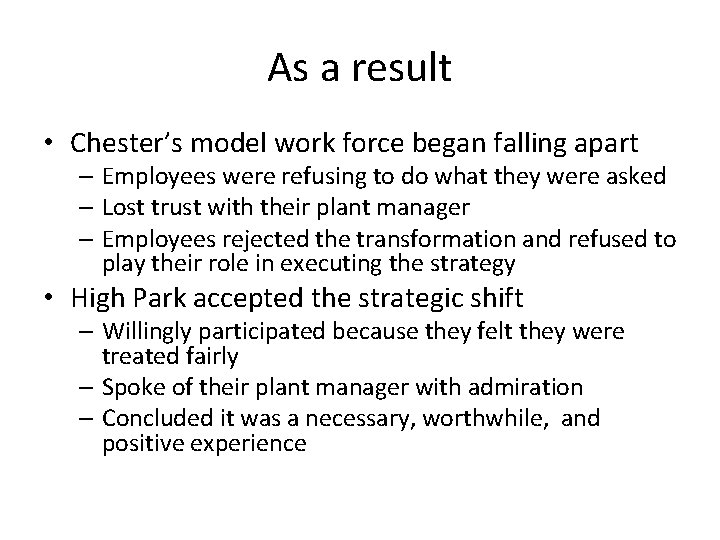
As a result • Chester’s model work force began falling apart – Employees were refusing to do what they were asked – Lost trust with their plant manager – Employees rejected the transformation and refused to play their role in executing the strategy • High Park accepted the strategic shift – Willingly participated because they felt they were treated fairly – Spoke of their plant manager with admiration – Concluded it was a necessary, worthwhile, and positive experience
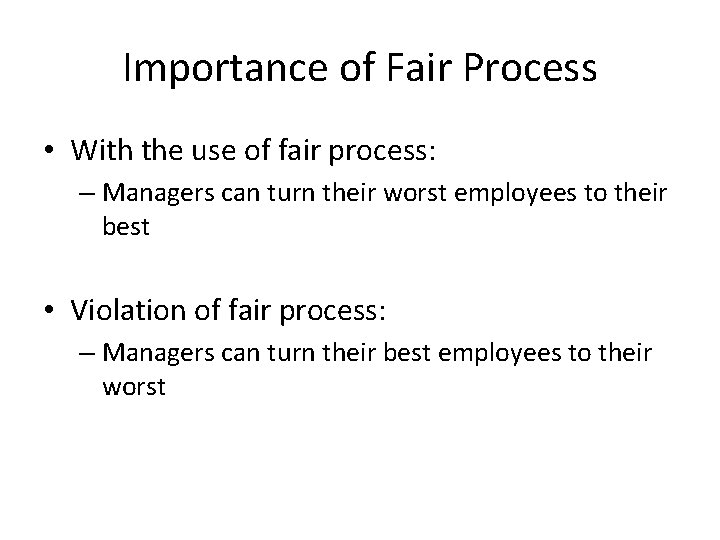
Importance of Fair Process • With the use of fair process: – Managers can turn their worst employees to their best • Violation of fair process: – Managers can turn their best employees to their worst
Why does fair process matter? • Emotional recognition • Intellectual Recognition
Intellectual and emotional recognition theory • Value of intellectual worth in a firm and motivation • Frederick Herzberg’s study on motivation
Violation of fair process • Denial of recognition of worth and intellectual indignation • Denial of emotional worth and lack of trust
Fair Process and Blue Ocean Strategy Fair Process • Commitment Ø Willing to override personal self-interest • Trust Ø Heightened confidence in one another’s intentions and actions • Voluntary Cooperation Ø Willing to work Whole Foods • Commitment Ø Make their front line people the company most important asset • Trust Ø Open books, open doors, and open people • Voluntary Cooperation Ø Willing to work
How to Create It? Don’t do this Do this • Have separate strategy formulation from execution • Organize the strategy formulation process around the principles of fair process. – Carrots and sticks – People realize that compromise and sacrifices are necessary in building a strong company

• http: //www. youtube. com/watch? v=A 7 OPPWl KV 2 A
- Slides: 20