
Build a DC motor Prof Anderson Electrical and
Build a DC motor Prof. Anderson Electrical and Computer Engineering 1
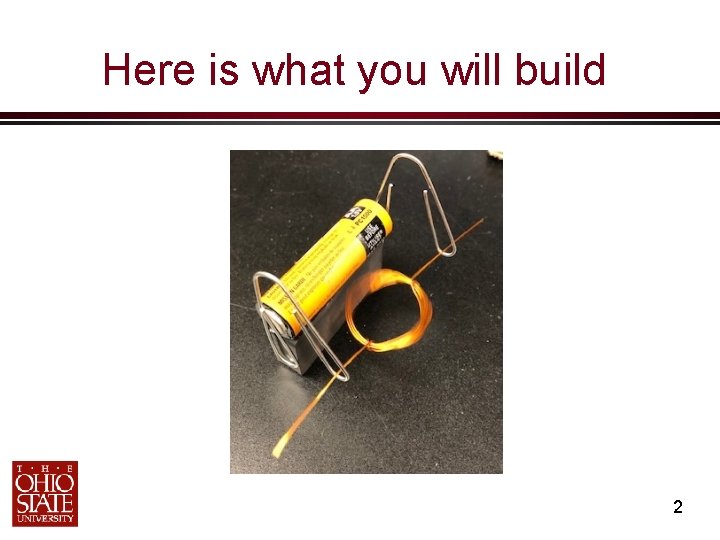
Here is what you will build 2
We will use electromagnetism n n We will create a force field: We will use electric current to produce a magnet (electromagnet) We will use the interaction of that magnet with a permanent magnet to rotate the coil How is that supposed to work? 3
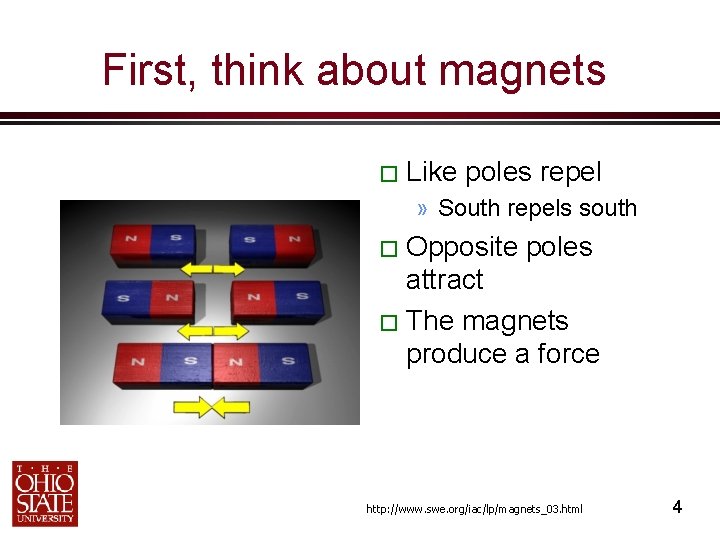
First, think about magnets � Like poles repel » South repels south � Opposite poles attract � The magnets produce a force http: //www. swe. org/iac/lp/magnets_03. html 4
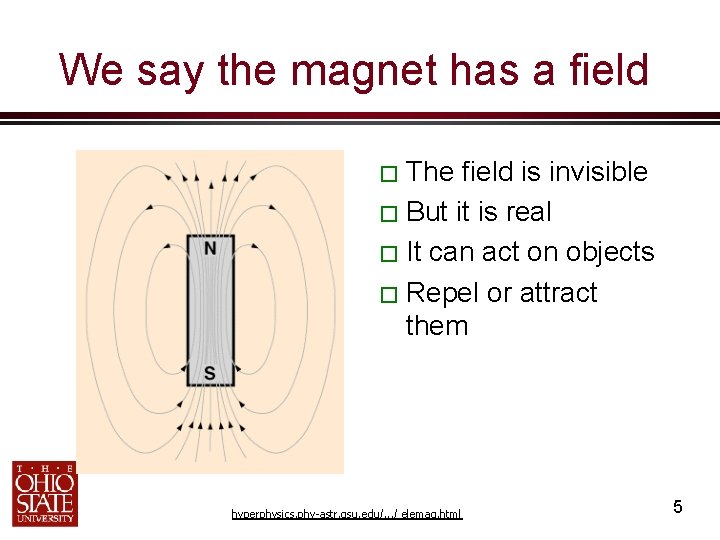
We say the magnet has a field � The field is invisible � But it is real � It can act on objects � Repel or attract them hyperphysics. phy-astr. gsu. edu/. . . / elemag. html 5
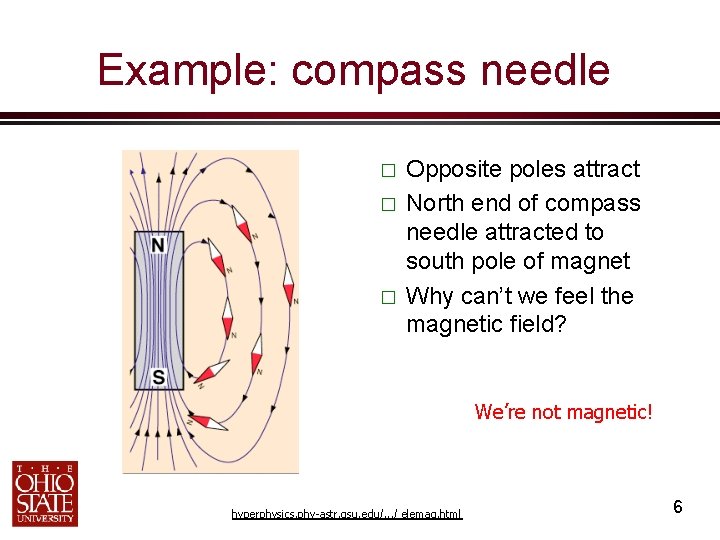
Example: compass needle � � � Opposite poles attract North end of compass needle attracted to south pole of magnet Why can’t we feel the magnetic field? We’re not magnetic! hyperphysics. phy-astr. gsu. edu/. . . / elemag. html 6
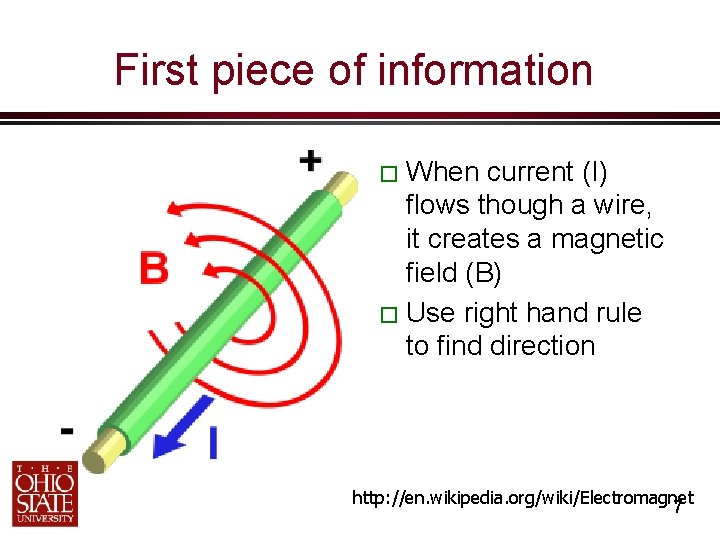
First piece of information � When current (I) flows though a wire, it creates a magnetic field (B) � Use right hand rule to find direction http: //en. wikipedia. org/wiki/Electromagnet 7
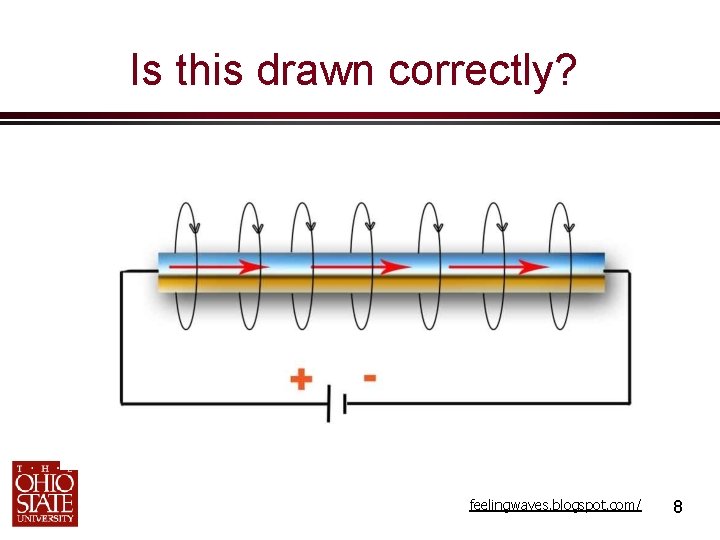
Is this drawn correctly? feelingwaves. blogspot. com/ 8
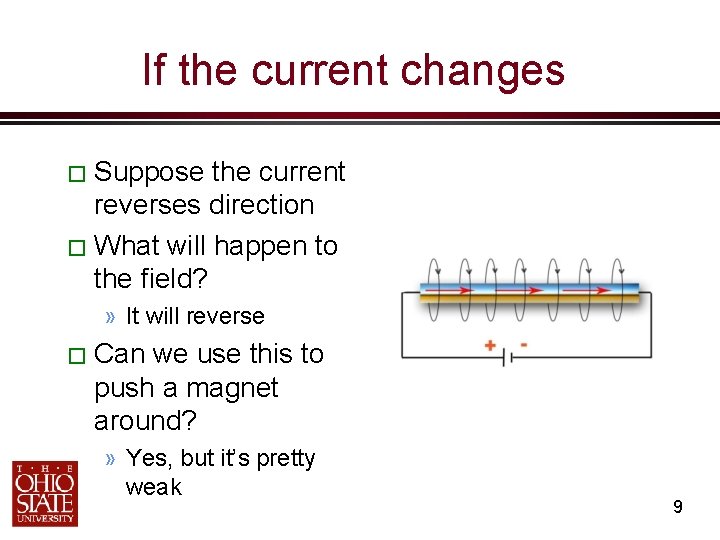
If the current changes � Suppose the current reverses direction � What will happen to the field? » It will reverse � Can we use this to push a magnet around? » Yes, but it’s pretty weak 9
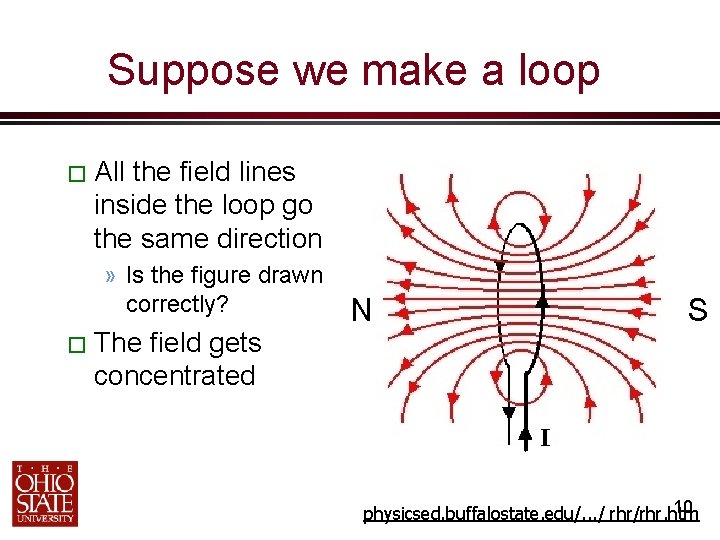
Suppose we make a loop � All the field lines inside the loop go the same direction » Is the figure drawn correctly? � The field gets concentrated N S 10 physicsed. buffalostate. edu/. . . / rhr/rhr. htm
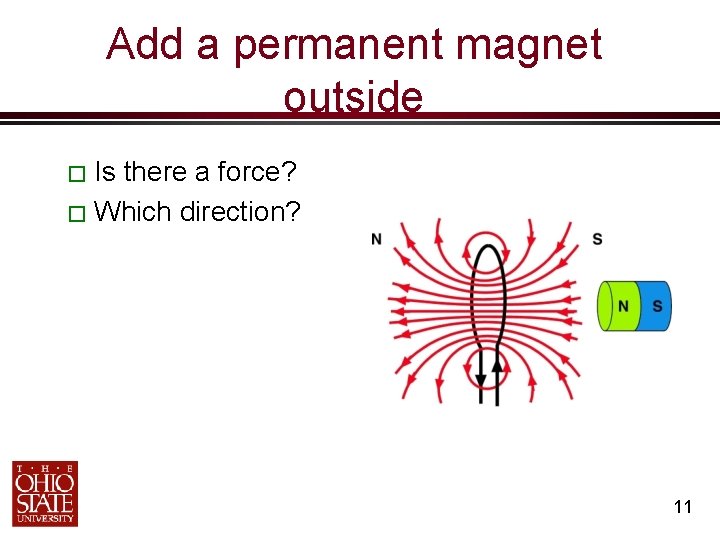
Add a permanent magnet outside � Is there a force? � Which direction? 11
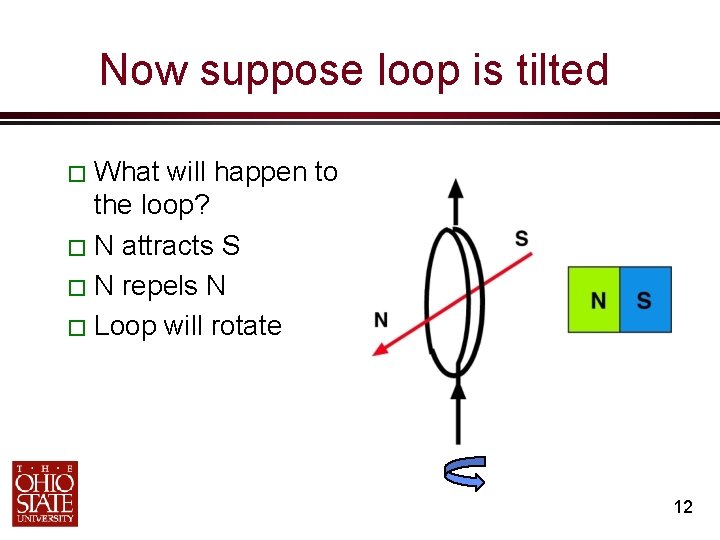
Now suppose loop is tilted � What will happen to the loop? � N attracts S � N repels N � Loop will rotate 12
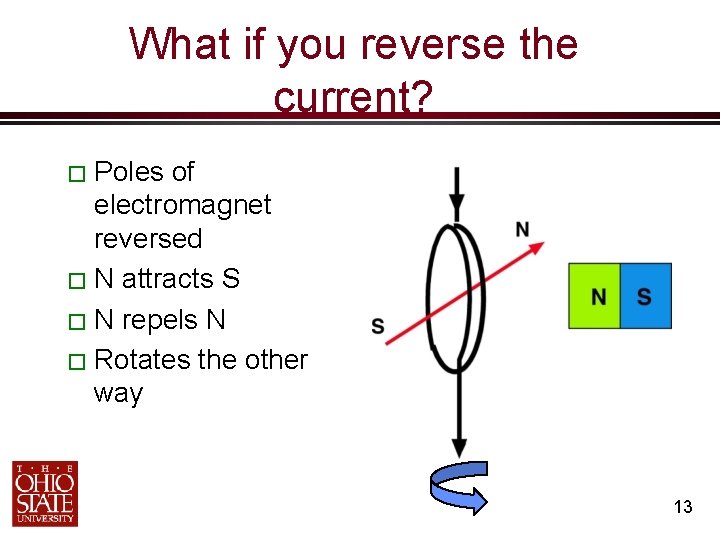
What if you reverse the current? � Poles of electromagnet reversed � N attracts S � N repels N � Rotates the other way 13
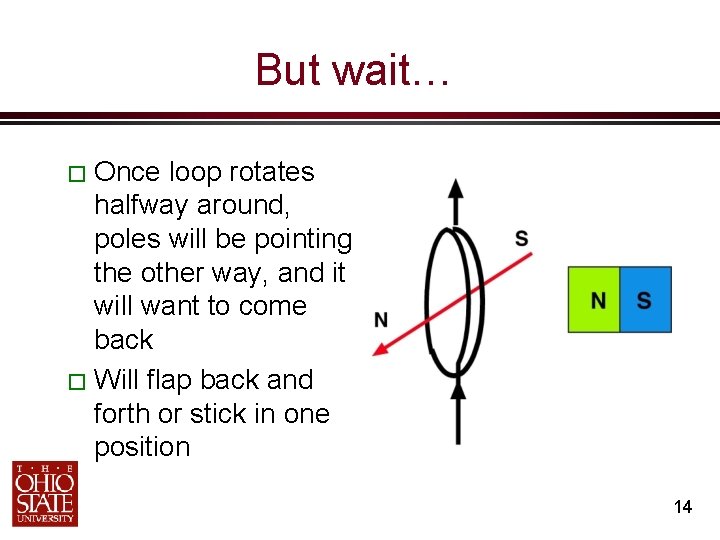
But wait… � Once loop rotates halfway around, poles will be pointing the other way, and it will want to come back � Will flap back and forth or stick in one position 14
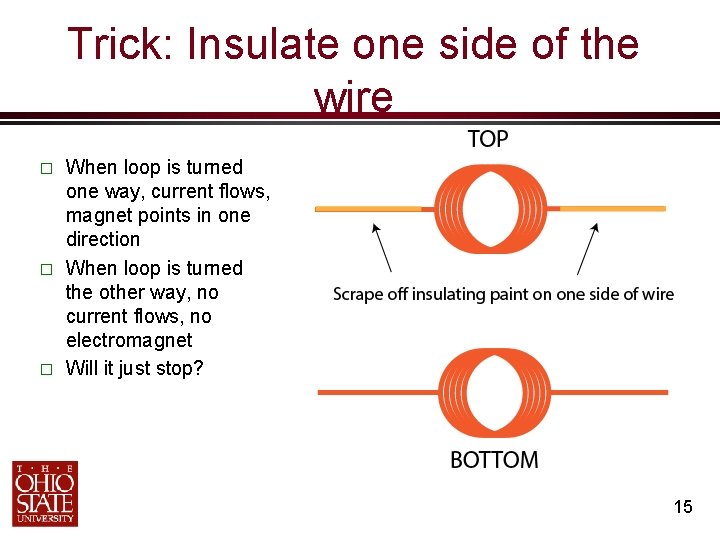
Trick: Insulate one side of the wire � � � When loop is turned one way, current flows, magnet points in one direction When loop is turned the other way, no current flows, no electromagnet Will it just stop? 15
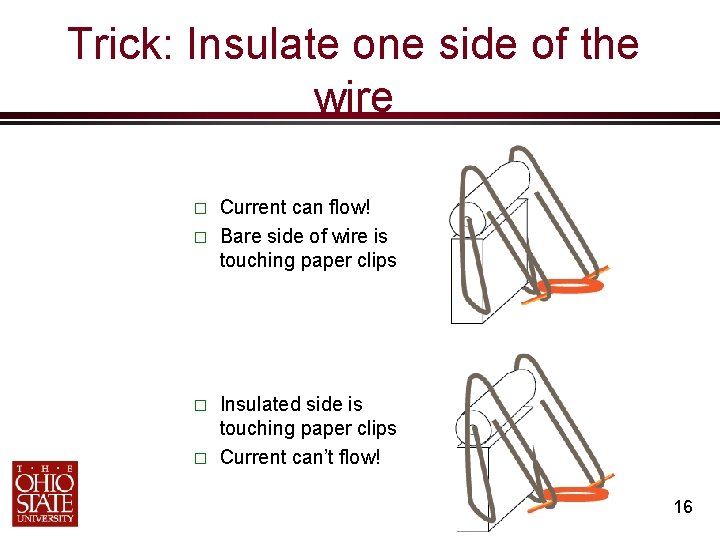
Trick: Insulate one side of the wire � � Current can flow! Bare side of wire is touching paper clips Insulated side is touching paper clips Current can’t flow! 16
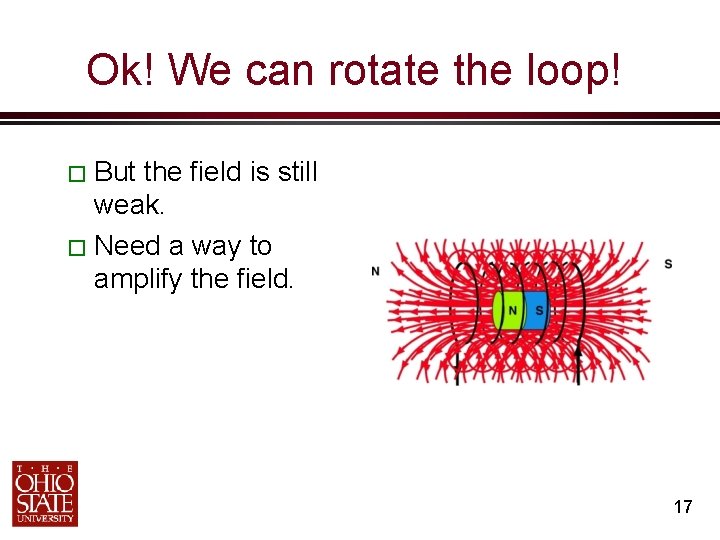
Ok! We can rotate the loop! � But the field is still weak. � Need a way to amplify the field. 17
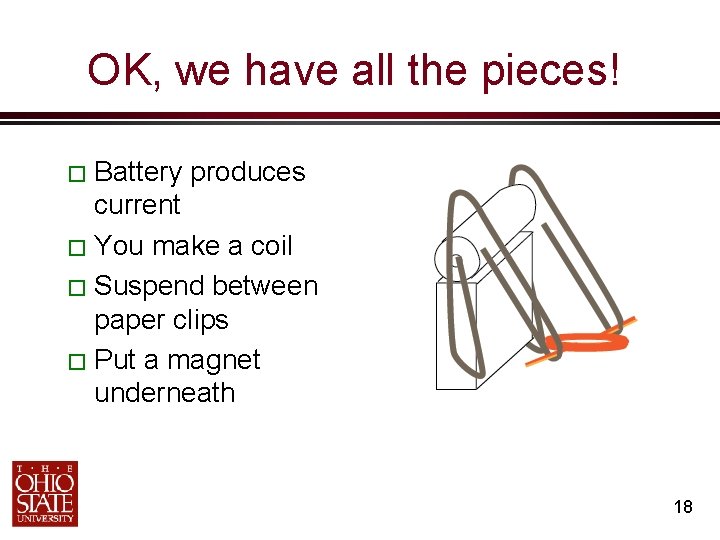
OK, we have all the pieces! � Battery produces current � You make a coil � Suspend between paper clips � Put a magnet underneath 18
Contents of Your Bag � 1 bar style magnet � 2 jumbo paper clips � 1 AA-size battery � A two foot length of magnet wire � 1 sheet of sand paper � 1 piece of carboard � PLEASE LET US KNOW IF YOU ARE MISSING ANY SUPPLIES 19
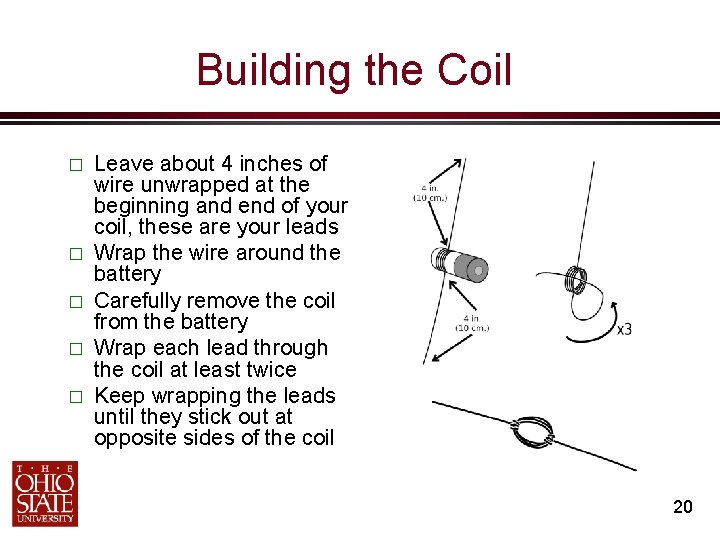
Building the Coil � � � Leave about 4 inches of wire unwrapped at the beginning and end of your coil, these are your leads Wrap the wire around the battery Carefully remove the coil from the battery Wrap each lead through the coil at least twice Keep wrapping the leads until they stick out at opposite sides of the coil 20
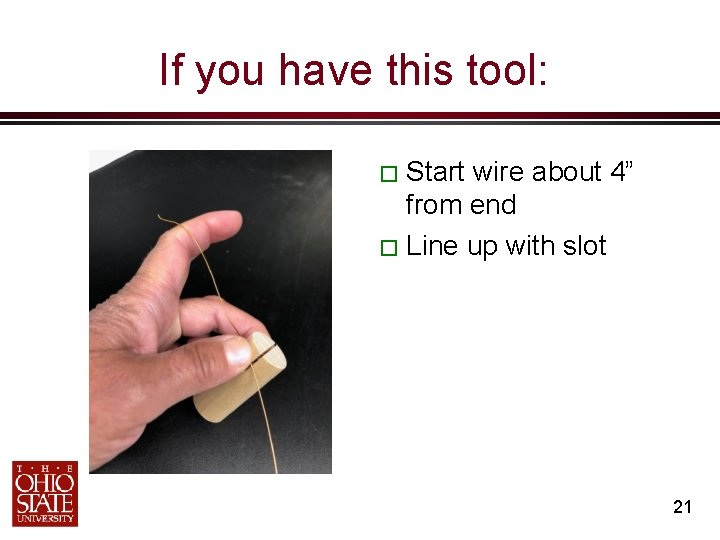
If you have this tool: � Start wire about 4” from end � Line up with slot 21
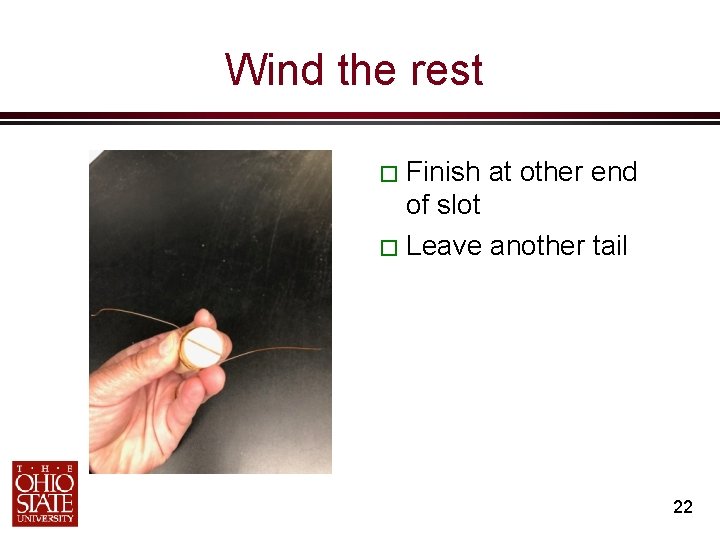
Wind the rest � Finish at other end of slot � Leave another tail 22
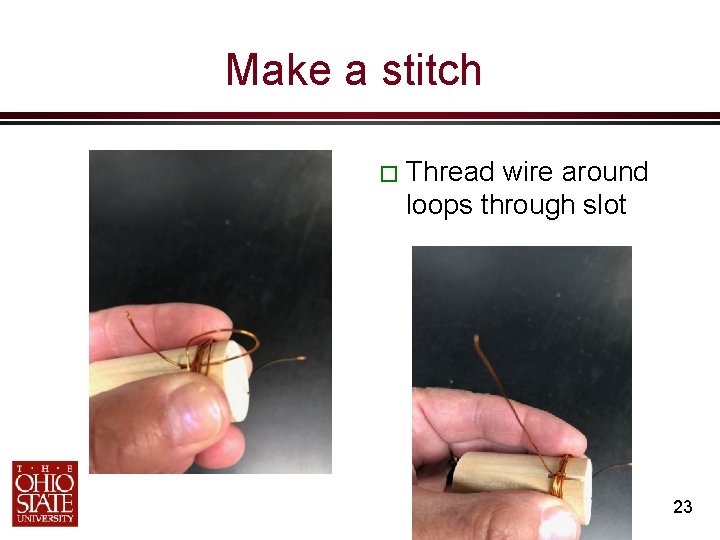
Make a stitch � Thread wire around loops through slot 23
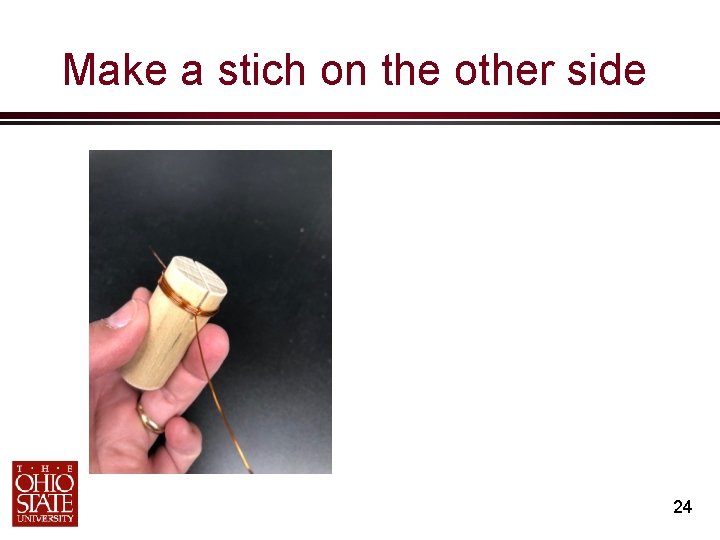
Make a stich on the other side 24
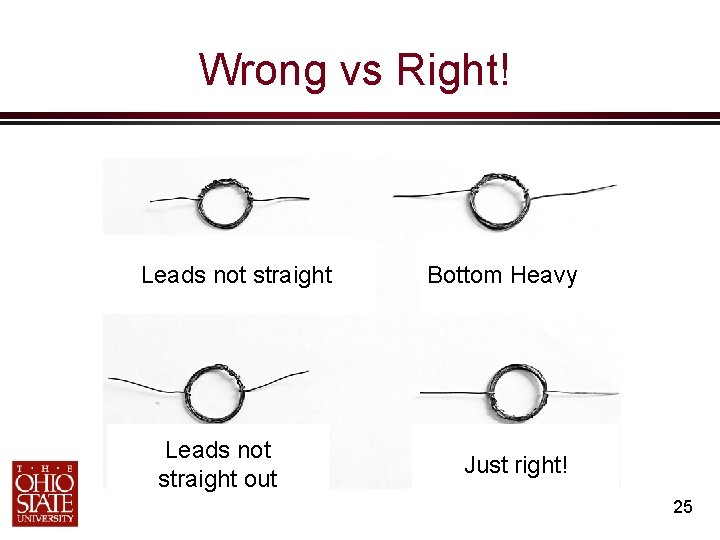
Wrong vs Right! Leads not straight out Bottom Heavy Just right! 25
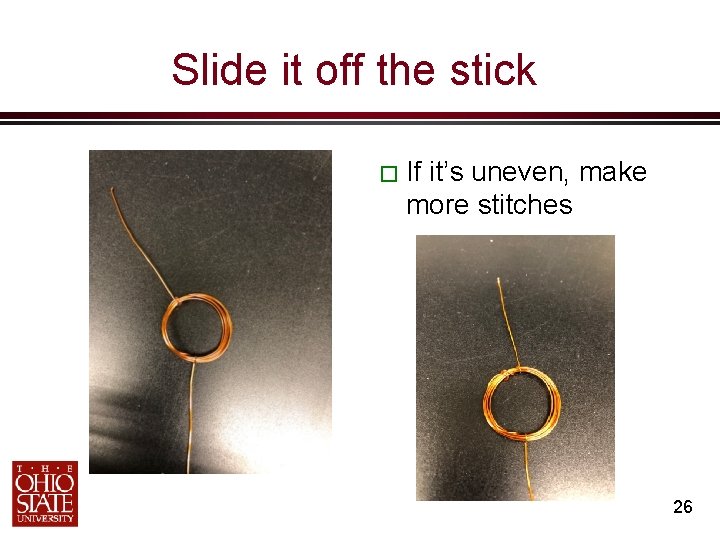
Slide it off the stick � If it’s uneven, make more stitches 26
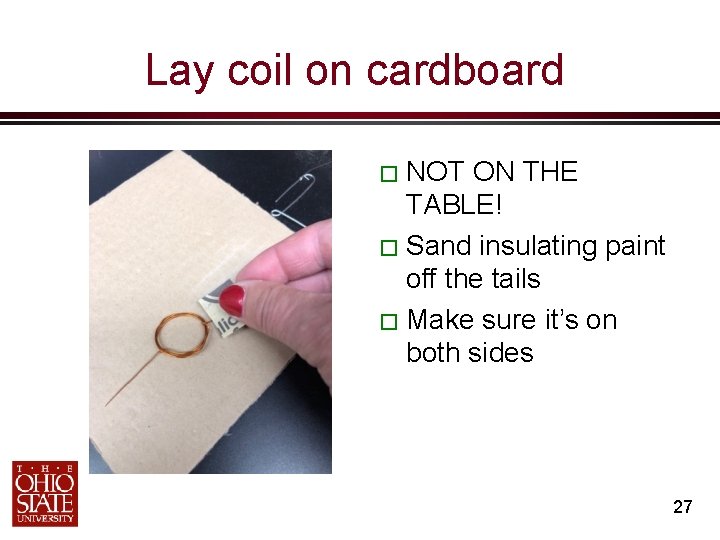
Lay coil on cardboard � NOT ON THE TABLE! � Sand insulating paint off the tails � Make sure it’s on both sides 27
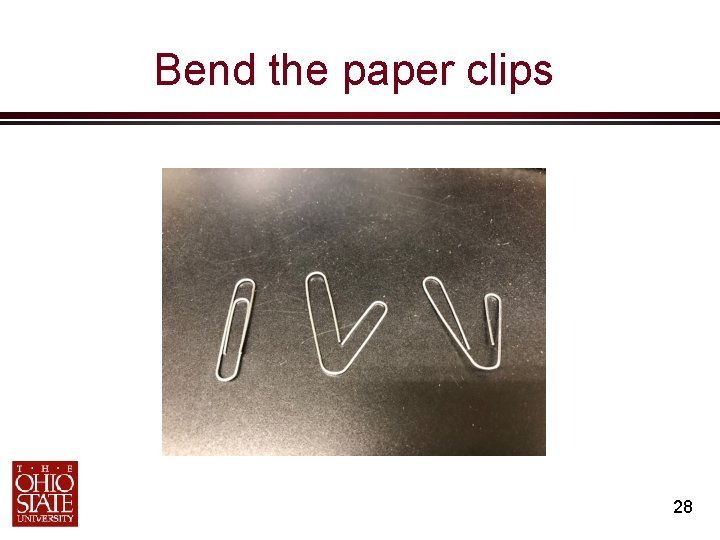
Bend the paper clips 28
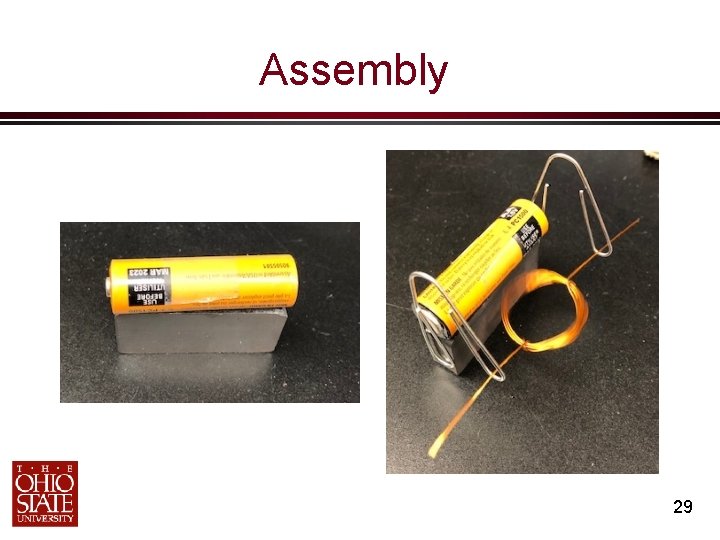
Assembly 29
Making Your Motor Run If all steps were done correctly and carefully, your motor should run just by manually turning the coil and then letting go. � If your motor does not run correctly, there are several things that could be wrong: � » Coil is bottom-heavy (check that it spins easily when you spin it with your fingers) » Not enough insulation was sanded from the bottom half of the coil lead wires, try to get as close to the coil as possible when sanding » A lead is either bent or out of alignment. Check these components. 35
How does a generator work? �A motor converts electrical current into mechanical motion » The current produces a magnetic field that pushes off the permanent magnet to turn �A generator converts mechanical motion into current » The turning magnet induces a current in the wire 36
- Slides: 31