
Buffers and AcidBase Titration Reaction of Weak Bases
Buffers and Acid/Base Titration
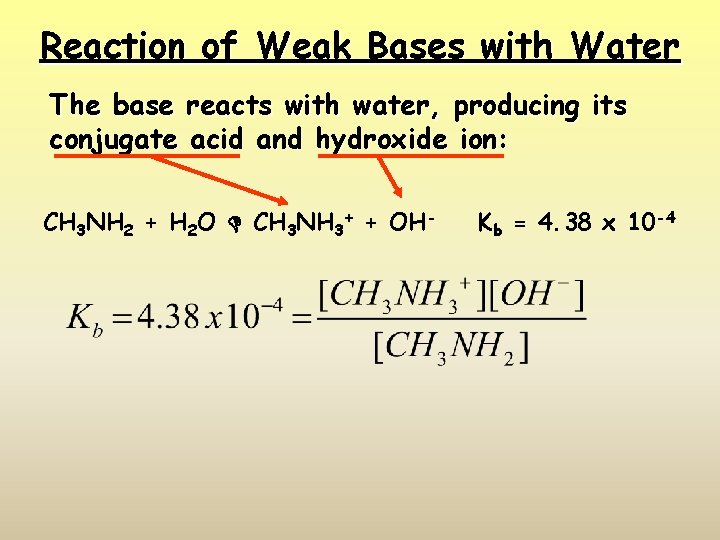
Reaction of Weak Bases with Water The base reacts with water, producing its conjugate acid and hydroxide ion: CH 3 NH 2 + H 2 O CH 3 NH 3+ + OH- Kb = 4. 38 x 10 -4
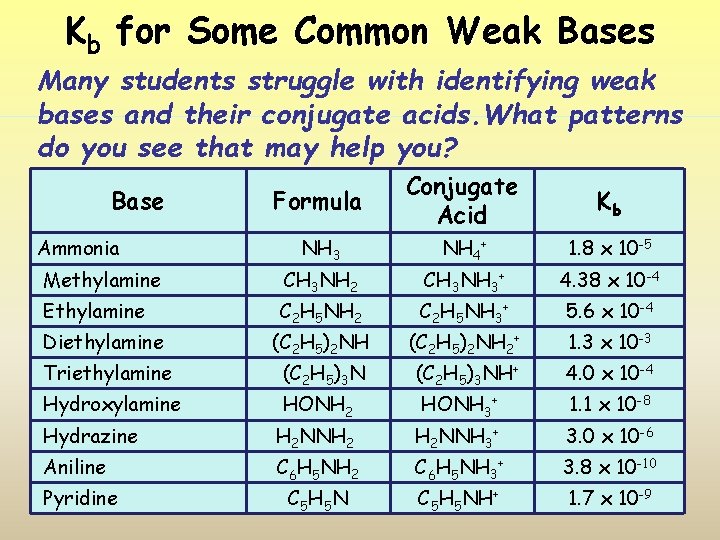
Kb for Some Common Weak Bases Many students struggle with identifying weak bases and their conjugate acids. What patterns do you see that may help you? Formula Conjugate Acid Kb NH 3 NH 4+ 1. 8 x 10 -5 Methylamine CH 3 NH 2 CH 3 NH 3+ 4. 38 x 10 -4 Ethylamine C 2 H 5 NH 2 C 2 H 5 NH 3+ 5. 6 x 10 -4 Diethylamine (C 2 H 5)2 NH 2+ 1. 3 x 10 -3 Triethylamine (C 2 H 5)3 NH+ 4. 0 x 10 -4 Hydroxylamine HONH 2 HONH 3+ 1. 1 x 10 -8 Base Ammonia Hydrazine H 2 NNH 2 H 2 NNH 3+ 3. 0 x 10 -6 Aniline C 6 H 5 NH 2 C 6 H 5 NH 3+ 3. 8 x 10 -10 Pyridine C 5 H 5 NH+ 1. 7 x 10 -9
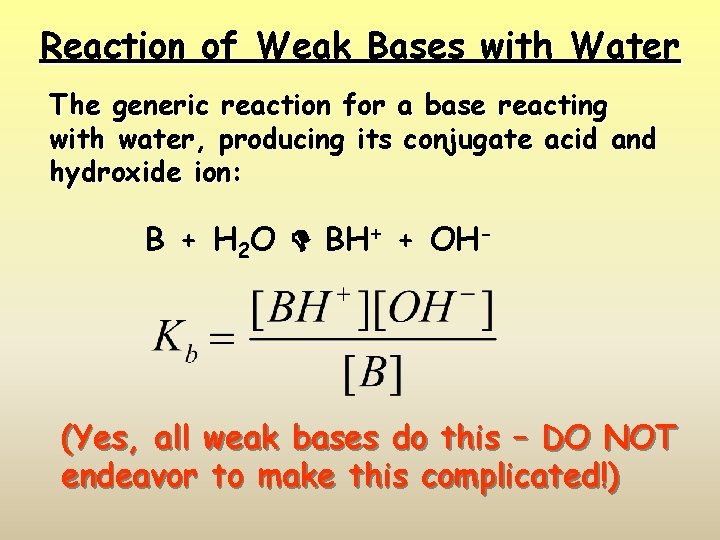
Reaction of Weak Bases with Water The generic reaction for a base reacting with water, producing its conjugate acid and hydroxide ion: B + H 2 O BH+ + OH- (Yes, all weak bases do this – DO NOT endeavor to make this complicated!)
Buffered Solutions q A solution that resists a change in p. H when either hydroxide ions or protons are added. q Buffered solutions contain either: Ø A weak acid and its salt Ø A weak base and its salt
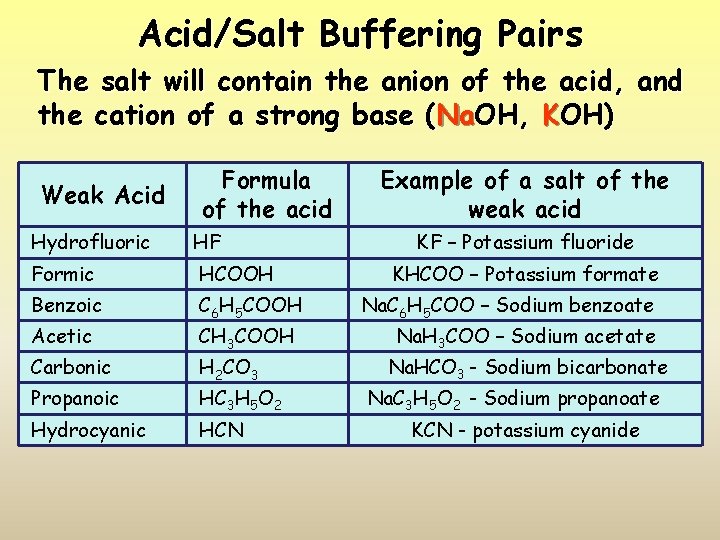
Acid/Salt Buffering Pairs The salt will contain the anion of the acid, and the cation of a strong base (Na. OH, KOH) Weak Acid Formula of the acid Hydrofluoric HF Formic HCOOH Benzoic C 6 H 5 COOH Acetic Carbonic Propanoic Hydrocyanic CH 3 COOH H 2 CO 3 HC 3 H 5 O 2 HCN Example of a salt of the weak acid KF – Potassium fluoride KHCOO – Potassium formate Na. C 6 H 5 COO – Sodium benzoate Na. H 3 COO – Sodium acetate Na. HCO 3 - Sodium bicarbonate Na. C 3 H 5 O 2 - Sodium propanoate KCN - potassium cyanide
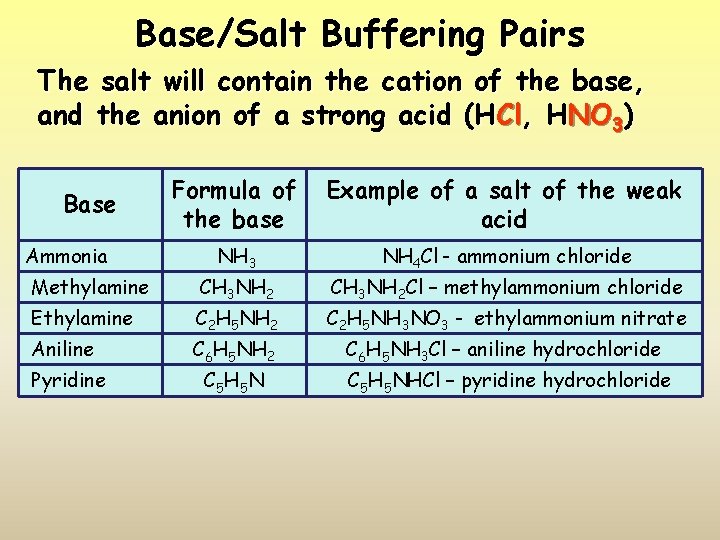
Base/Salt Buffering Pairs The salt will contain the cation of the base, and the anion of a strong acid (HCl, HNO 3) Formula of the base Example of a salt of the weak acid NH 3 NH 4 Cl - ammonium chloride Methylamine CH 3 NH 2 Cl – methylammonium chloride Ethylamine C 2 H 5 NH 2 C 2 H 5 NH 3 NO 3 - ethylammonium nitrate Aniline C 6 H 5 NH 2 C 6 H 5 NH 3 Cl – aniline hydrochloride Base Ammonia Pyridine C 5 H 5 NHCl – pyridine hydrochloride
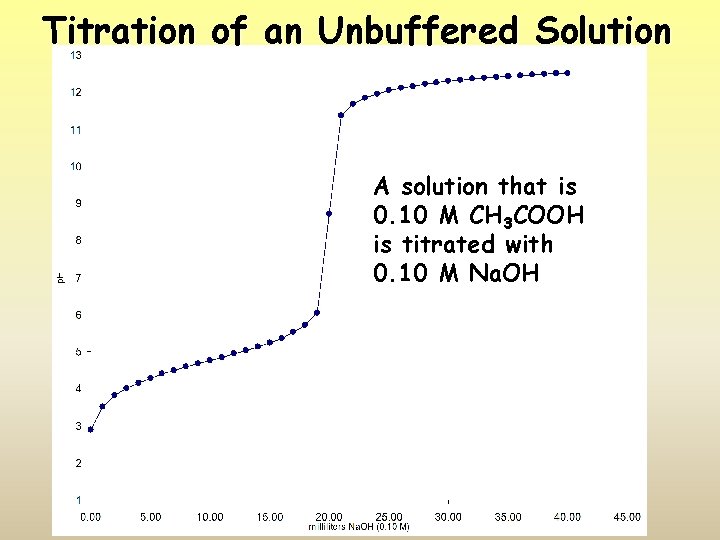
Titration of an Unbuffered Solution A solution that is 0. 10 M CH 3 COOH is titrated with 0. 10 M Na. OH
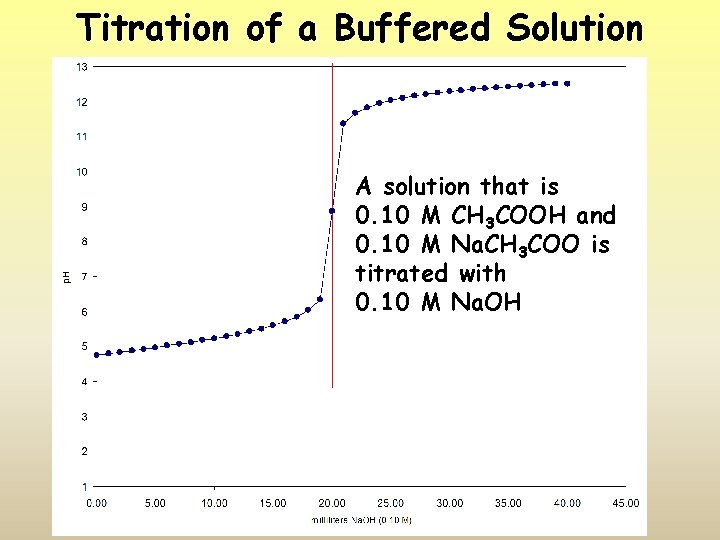
Titration of a Buffered Solution A solution that is 0. 10 M CH 3 COOH and 0. 10 M Na. CH 3 COO is titrated with 0. 10 M Na. OH
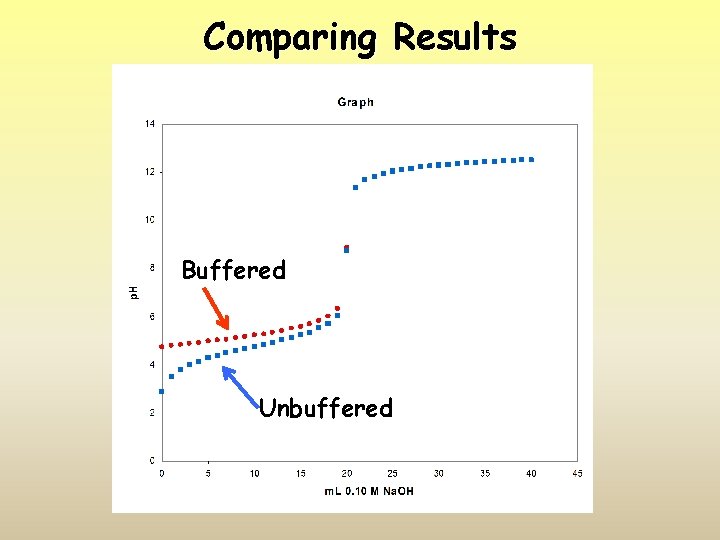
Comparing Results Buffered Unbuffered
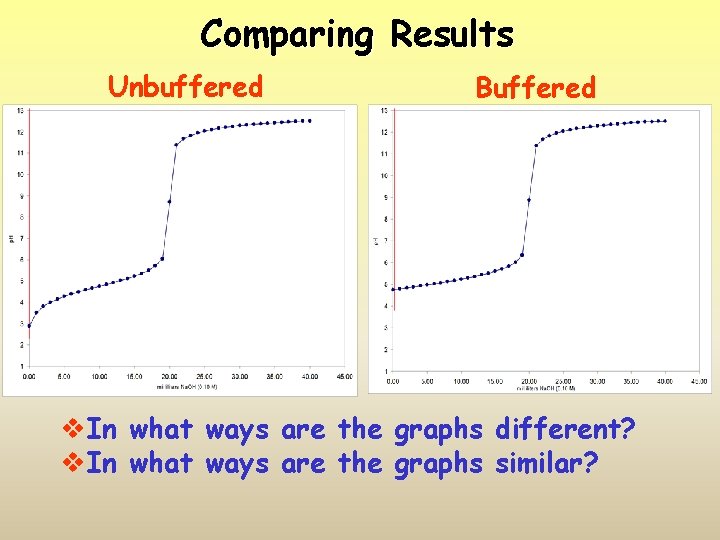
Comparing Results Unbuffered Buffered v. In what ways are the graphs different? v. In what ways are the graphs similar?
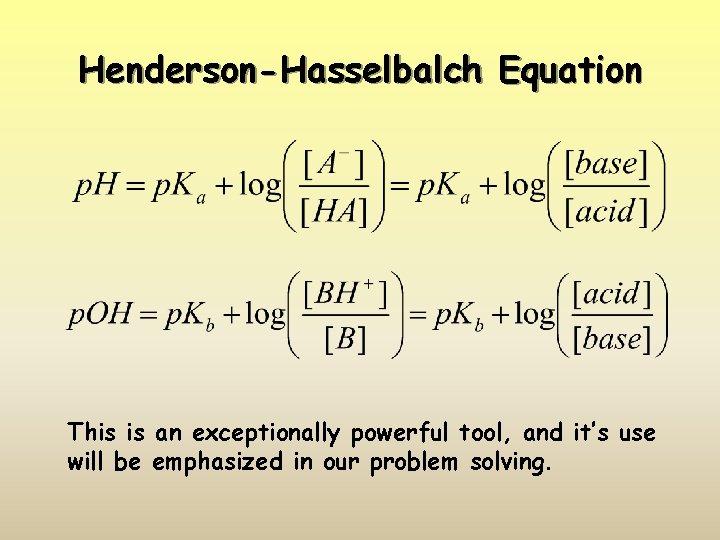
Henderson-Hasselbalch Equation This is an exceptionally powerful tool, and it’s use will be emphasized in our problem solving.

Weak Acid/Strong Base Titration Endpoint is above p. H 7 A solution that is 0. 10 M CH 3 COOH is titrated with 0. 10 M Na. OH
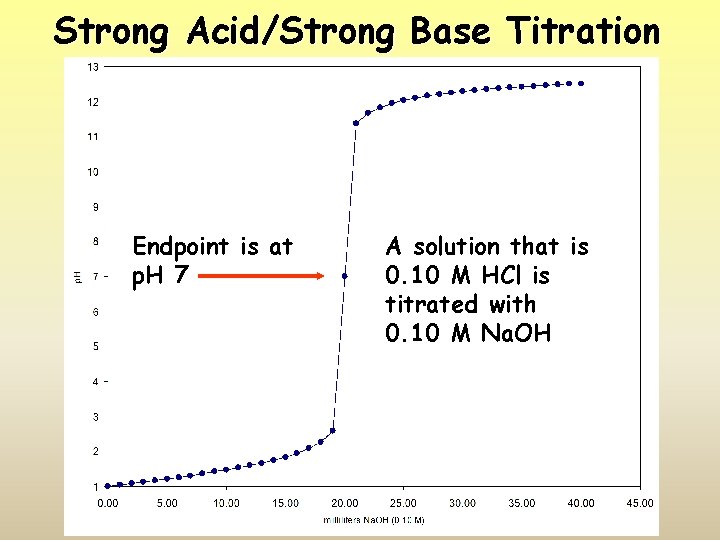
Strong Acid/Strong Base Titration Endpoint is at p. H 7 A solution that is 0. 10 M HCl is titrated with 0. 10 M Na. OH
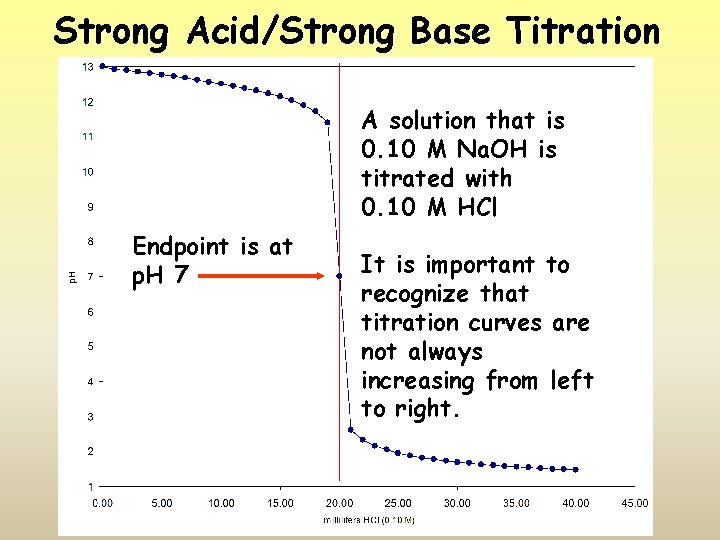
Strong Acid/Strong Base Titration A solution that is 0. 10 M Na. OH is titrated with 0. 10 M HCl Endpoint is at p. H 7 It is important to recognize that titration curves are not always increasing from left to right.
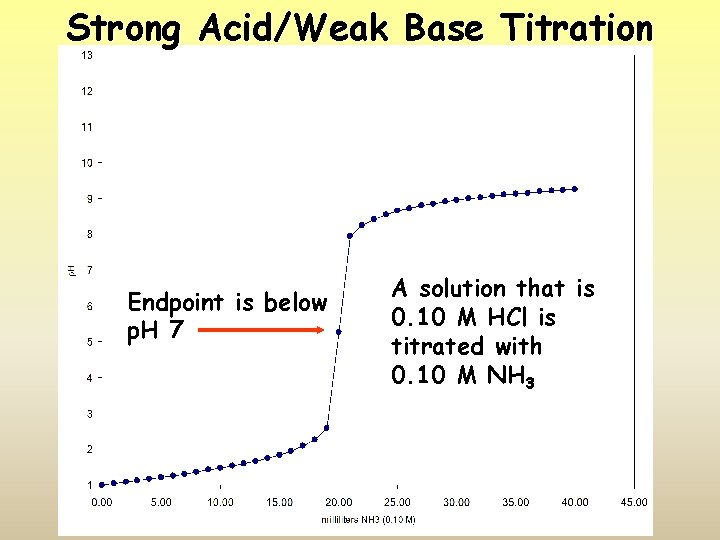
Strong Acid/Weak Base Titration Endpoint is below p. H 7 A solution that is 0. 10 M HCl is titrated with 0. 10 M NH 3
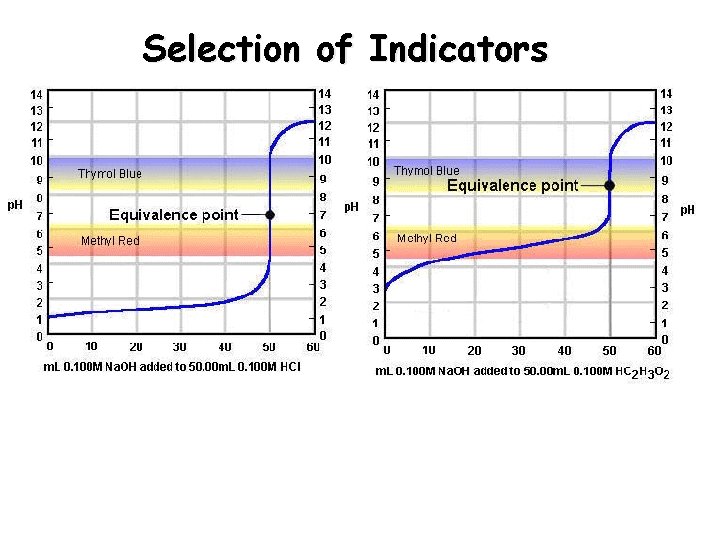
Selection of Indicators
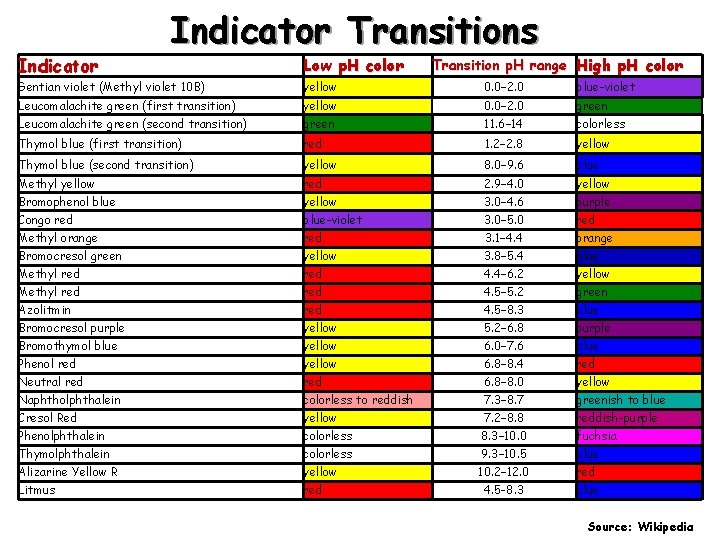
Indicator Transitions Low p. H color Transition p. H range High p. H color Gentian violet (Methyl violet 10 B) yellow 0. 0– 2. 0 blue-violet Leucomalachite green (first transition) Leucomalachite green (second transition) yellow green 0. 0– 2. 0 11. 6– 14 green colorless Thymol blue (first transition) red 1. 2– 2. 8 yellow Thymol blue (second transition) yellow 8. 0– 9. 6 blue Methyl yellow Bromophenol blue red yellow 2. 9– 4. 0 3. 0– 4. 6 yellow purple Congo red blue-violet 3. 0– 5. 0 red Methyl orange Bromocresol green Methyl red Azolitmin red yellow red red 3. 1– 4. 4 3. 8– 5. 4 4. 4– 6. 2 4. 5– 5. 2 4. 5– 8. 3 orange blue yellow green blue Bromocresol purple Bromothymol blue Phenol red Neutral red Naphtholphthalein Cresol Red Phenolphthalein Thymolphthalein Alizarine Yellow R Litmus yellow red colorless to reddish yellow colorless yellow red 5. 2– 6. 8 6. 0– 7. 6 6. 8– 8. 4 6. 8– 8. 0 7. 3– 8. 7 7. 2– 8. 8 8. 3– 10. 0 9. 3– 10. 5 10. 2– 12. 0 4. 5 -8. 3 purple blue red yellow greenish to blue reddish-purple fuchsia blue red blue Source: Wikipedia
- Slides: 18