
Budgeting for Life After Graduation A Reality Check
Budgeting for Life After Graduation: A Reality Check Part 3 of “Preparing for Civically Engaged Lives” Bonner 8 Themes Curriculum
After This Workshop ⦿ You will be able to: • Understand an average monthly budget breakdown • Practice tips for managing your money AFTER college • Establish a savings habit
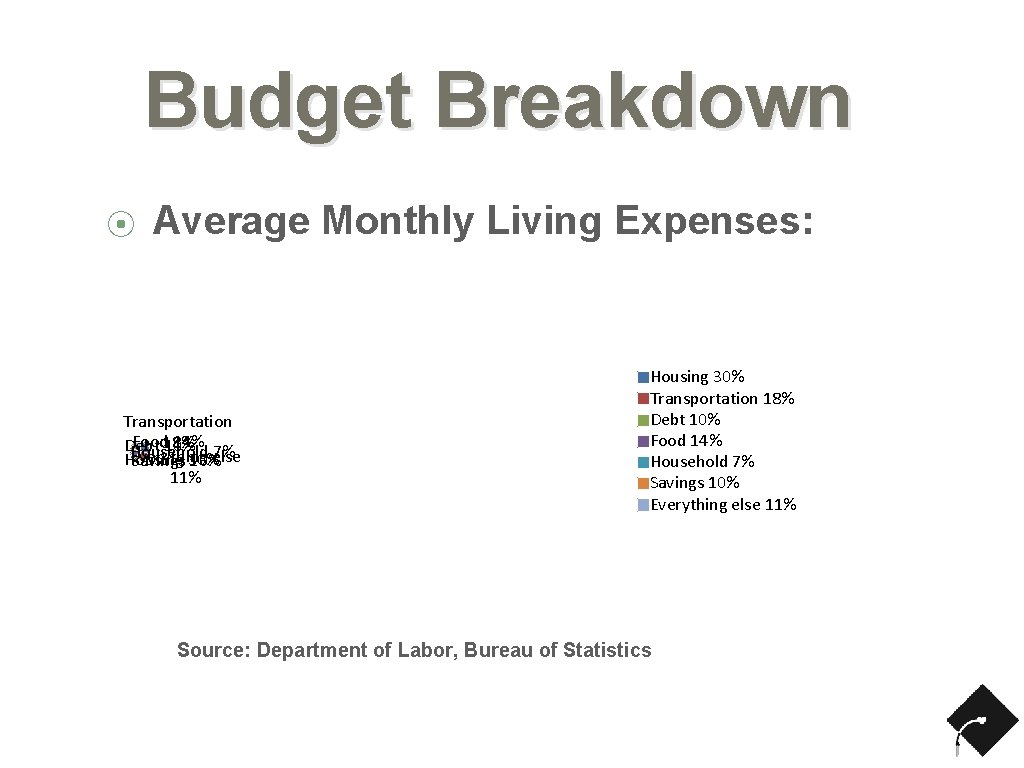
Budget Breakdown ⦿ Average Monthly Living Expenses: Transportation Food 18% 14% Debt 10% Household 7% Everything Housing Savings 30% 10%else 11% Housing 30% Transportation 18% Debt 10% Food 14% Household 7% Savings 10% Everything else 11% Source: Department of Labor, Bureau of Statistics
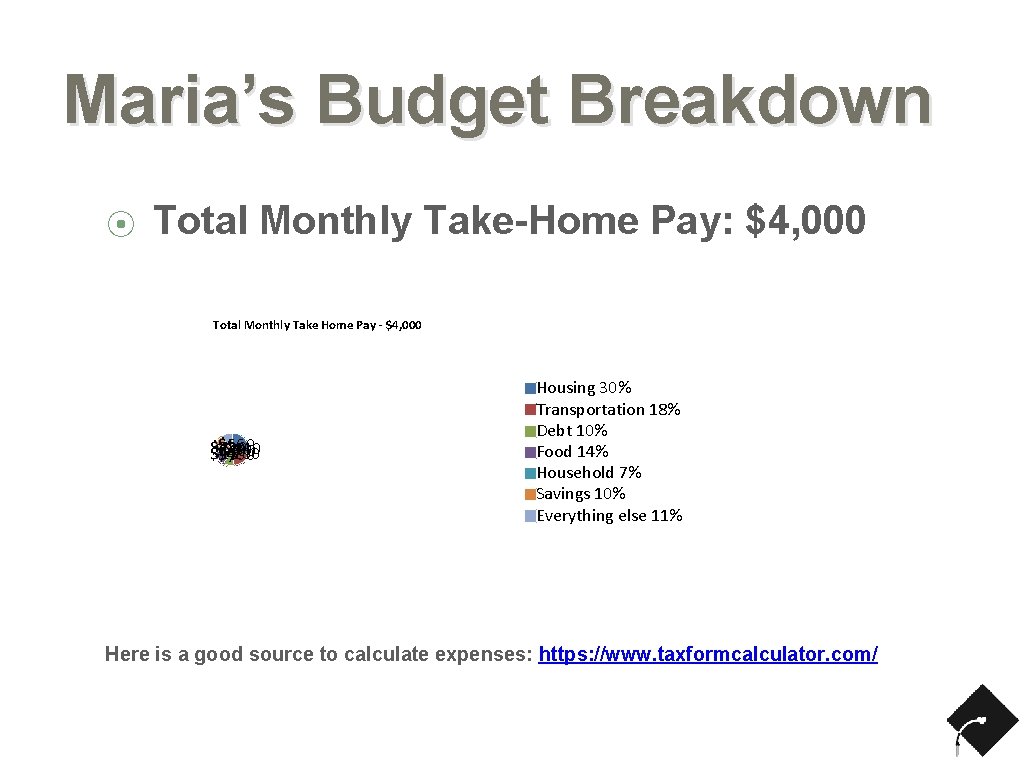
Maria’s Budget Breakdown ⦿ Total Monthly Take-Home Pay: $4, 000 Total Monthly Take Home Pay - $4, 000 $560 $720 $440 $280 $400 $1, 200 $400 Housing 30% Transportation 18% Debt 10% Food 14% Household 7% Savings 10% Everything else 11% Here is a good source to calculate expenses: https: //www. taxformcalculator. com/
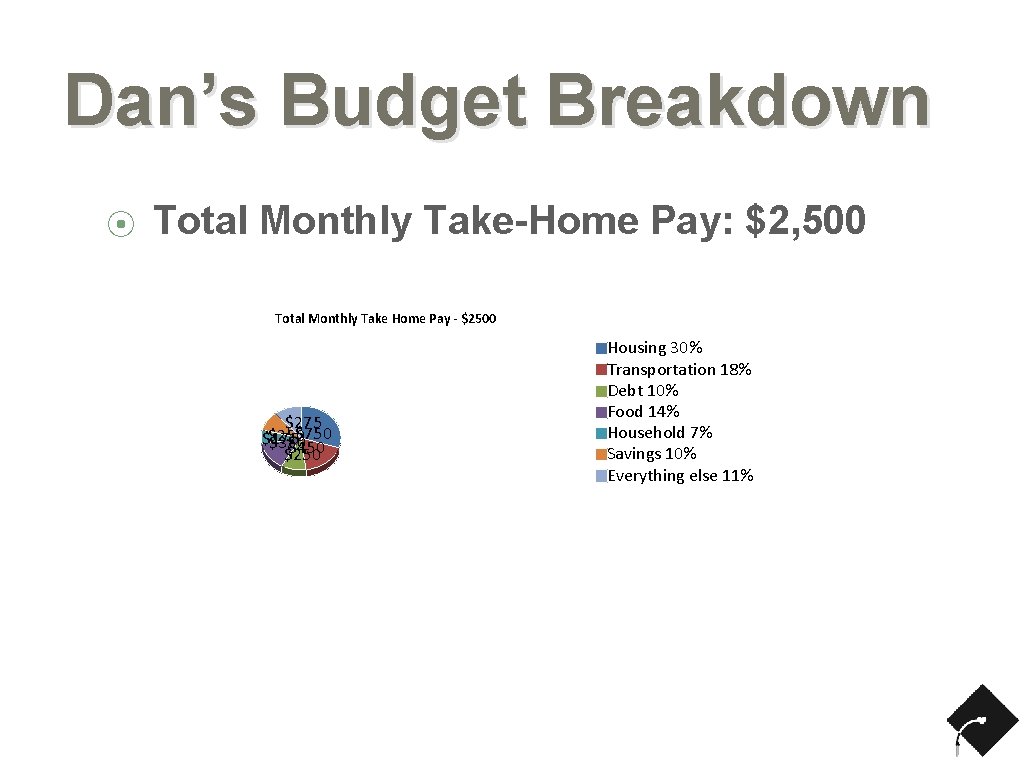
Dan’s Budget Breakdown ⦿ Total Monthly Take-Home Pay: $2, 500 Total Monthly Take Home Pay - $2500 $275 $750 $250 $175 $350 $450 $250 Housing 30% Transportation 18% Debt 10% Food 14% Household 7% Savings 10% Everything else 11%
Managing Money After College ⦿ Repaying student loans ⦿ Plugging spending leaks ⦿ Managing debt ⦿ Stretching a dollar
Financial Aid: Borrowing Tips ⦿ ⦿ The less you borrow, the less you have to repay Calculate repayment amounts BEFORE you borrow Total student loan debt should be less than starting annual salary after graduation Use loans only for educational expenses, not food, clothes, gas
Plugging Spending Leaks ⦿ ⦿ ⦿ Leave your debit/credit card at home Attend free campus concerts and plays Use your bike or public transportation Carry a refillable water bottle instead of purchasing soft drinks or coffee drinks Limit the number of songs, ringtones, etc. , you download USE A SPENDING DIARY

Your Spending Diary ⦿ ⦿ Date Item Amount Look back to see what the most common categories were in your spending and how much you spent in each category.
Credit Card Strategies ⦿ Limit use to one card ⦿ Define “emergency use” ⦿ Understand credit terms ⦿ Pay more than the minimum
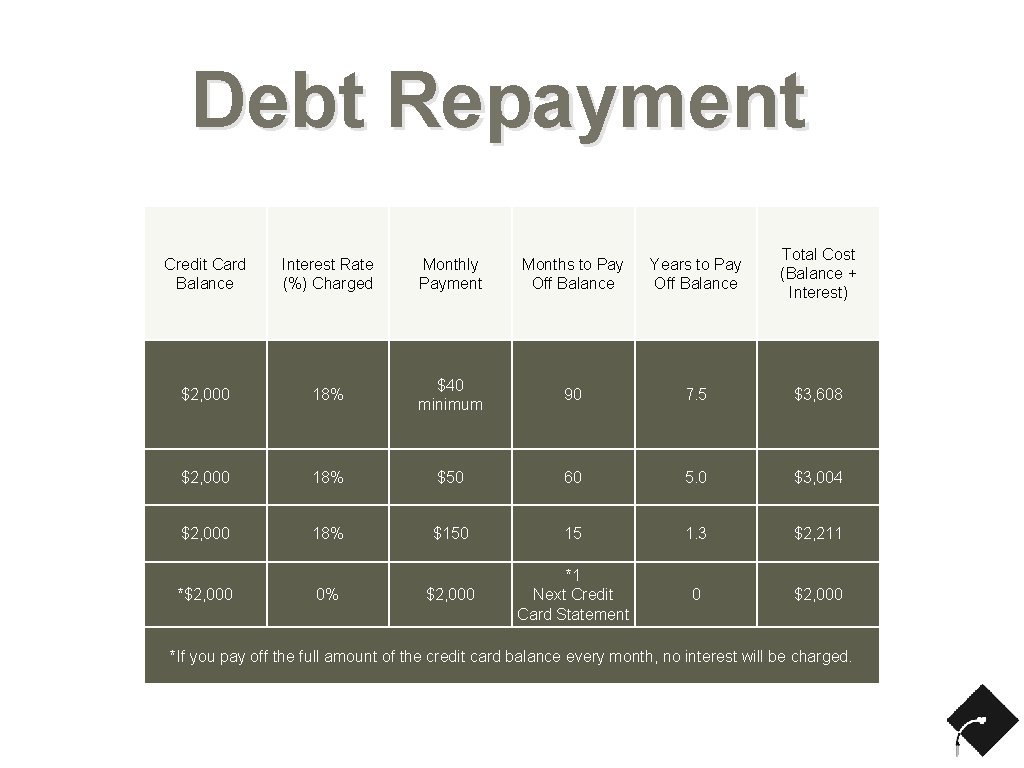
Debt Repayment Credit Card Balance Interest Rate (%) Charged Monthly Payment Months to Pay Off Balance Years to Pay Off Balance Total Cost (Balance + Interest) $2, 000 18% $40 minimum 90 7. 5 $3, 608 $2, 000 18% $50 60 5. 0 $3, 004 $2, 000 18% $150 15 1. 3 $2, 211 $2, 000 *1 Next Credit Card Statement 0 $2, 000 *$2, 000 0% *If you pay off the full amount of the credit card balance every month, no interest will be charged.
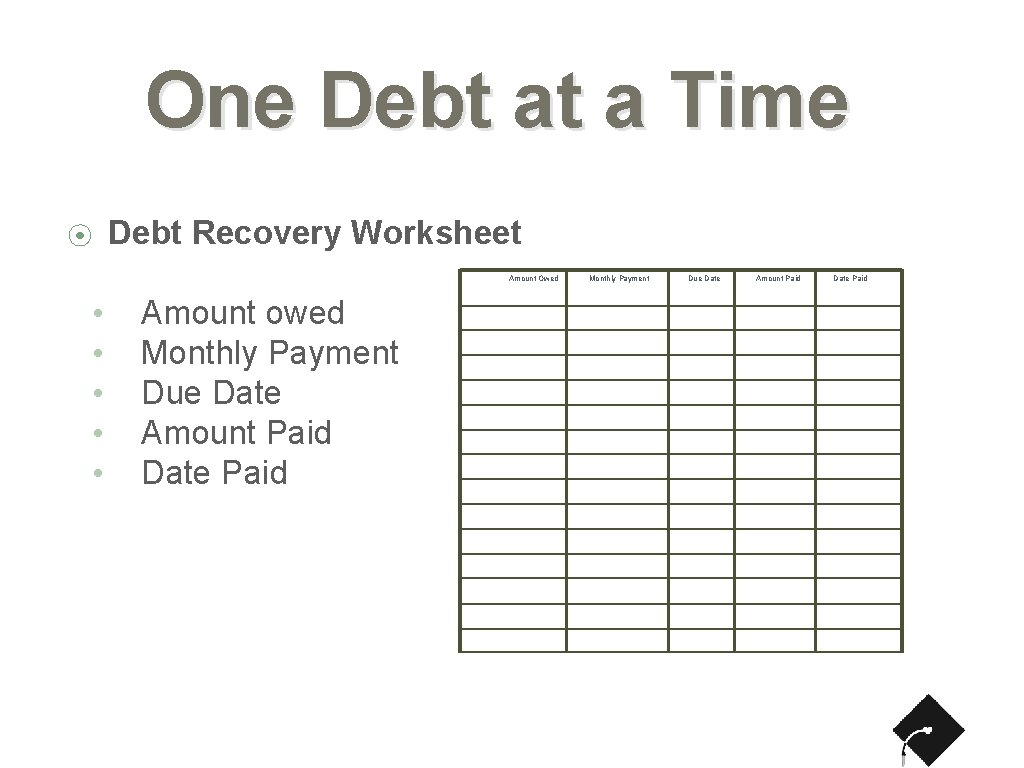
One Debt at a Time Debt Recovery Worksheet ⦿ Amount Owed • • • Amount owed Monthly Payment Due Date Amount Paid Date Paid
Making Your Money Go Further ⦿ ⦿ Avoid buying sodas and snack out of vending machines Kick a costly habit (cigarettes, lattes) Use the library Use the internet for comparison shopping
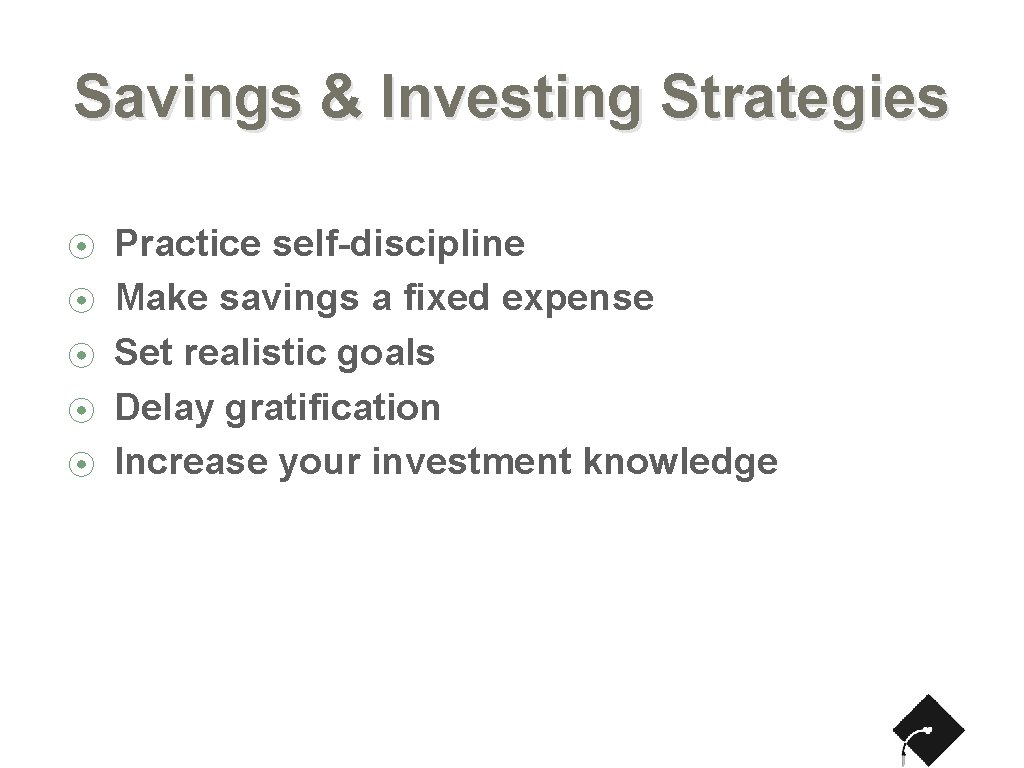
Savings & Investing Strategies ⦿ ⦿ ⦿ Practice self-discipline Make savings a fixed expense Set realistic goals Delay gratification Increase your investment knowledge
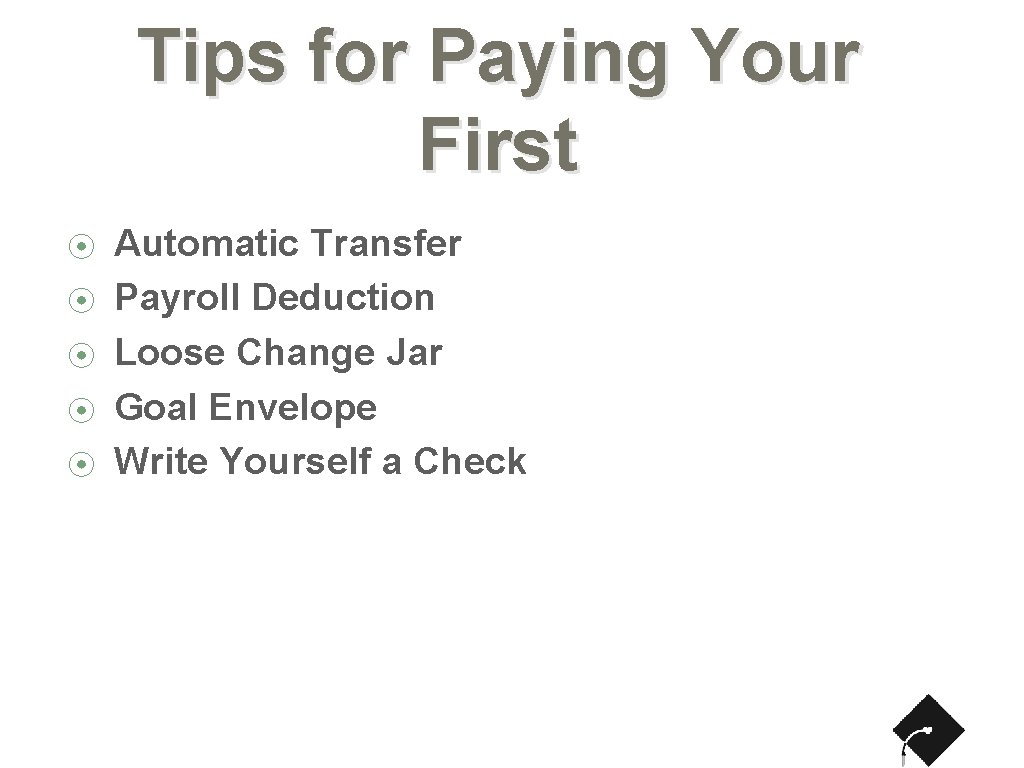
Tips for Paying Your First ⦿ ⦿ ⦿ Automatic Transfer Payroll Deduction Loose Change Jar Goal Envelope Write Yourself a Check

Retirement: Who Cares? ⦿ Reality Check • The earlier you begin to plan for and save for retirement, the better prepared financially you will be. • Economic Principle: Time Value of Money
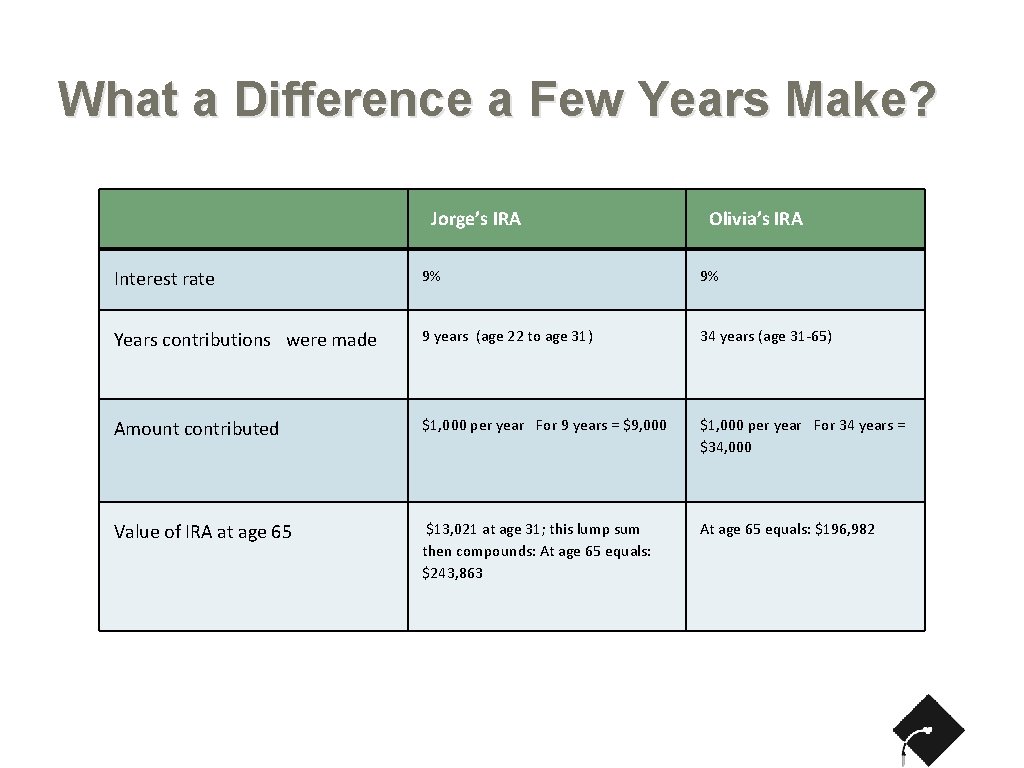
What a Difference a Few Years Make? Jorge’s IRA Olivia’s IRA Interest rate 9% 9% Years contributions were made 9 years (age 22 to age 31) 34 years (age 31 -65) Amount contributed $1, 000 per year For 9 years = $9, 000 $1, 000 per year For 34 years = $34, 000 Value of IRA at age 65 $13, 021 at age 31; this lump sum then compounds: At age 65 equals: $243, 863 At age 65 equals: $196, 982
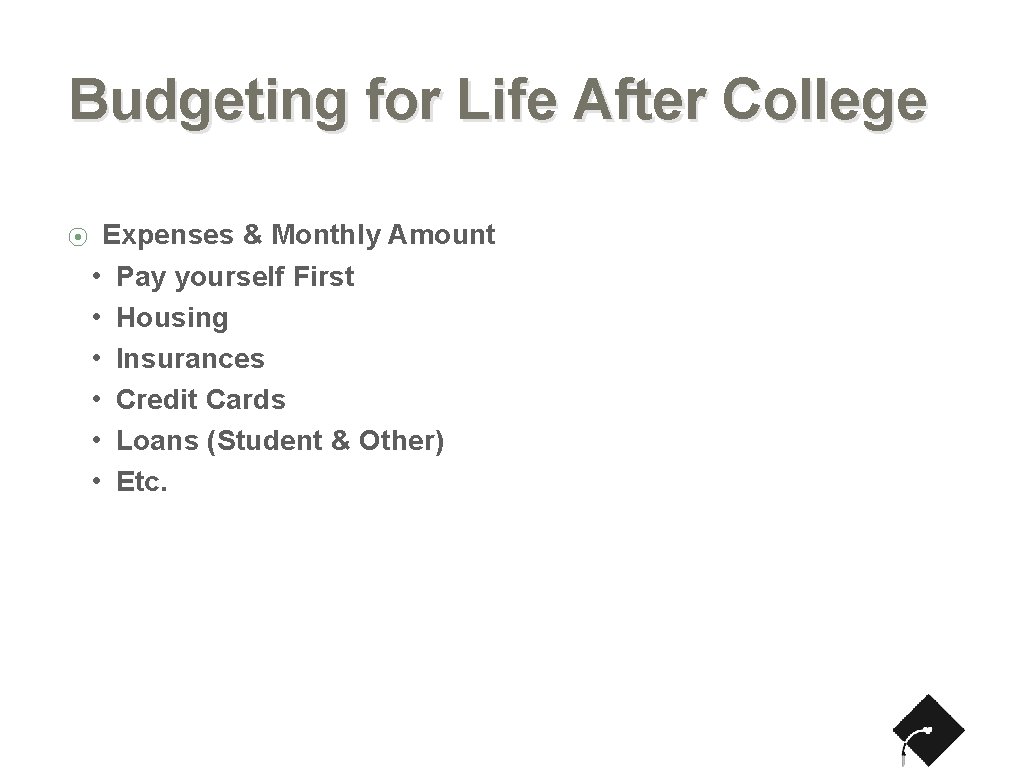
Budgeting for Life After College ⦿ Expenses & Monthly Amount • Pay yourself First • Housing • Insurances • Credit Cards • Loans (Student & Other) • Etc.
Recap ⦿ ⦿ ⦿ Understand an average monthly budget breakdown Practice tips for managing your money AFTER college Establish a savings habit
Now What? ⦿ ⦿ ⦿ Research careers that match your interest and your desired income Borrow wisely for your education Use credit only if you can afford to pay it back quickly Start saving and investing Create a budget for life after college
- Slides: 20