
BUDGET KICKOFF 2012 Meeting materials available for download
BUDGET KICKOFF 2012 Meeting materials available for download at: http: //budget. nv. gov/Upcoming/ Email available for Internet viewers*: bko@admin. nv. gov *Please note: The provided email is for the live meeting only. All other budget questions should be directed to your budget analyst. 1
Nevada’s best days are yet to come. 2
Janet Rogers, Budget Economist • Master’s Degree in Computer Science • Ph. D in Economics • 30 years with the federal government doing statistical data analysis and developing software and modeling algorithms • 5 years with the Colorado Governor’s Office of State Planning and Budgeting doing forecasts, reports, and developed an econometric model • Likes turtles 3
ECONOMIC OUTLOOK Partly Cloudy Clearing by Mid-Decade 4
Good News: The Great Recession is Over Officially ended nationally in June ’ 09 Nevada in recession much longer Exceptionally long Exceptionally bad 5
Not So Good News: Recovery is Tepid Employment below pre-recession peak National housing sector still struggling Consumer confidence low (but improving) World economy iffy 6
Nevada hardest hit by the Great Recession Largest employment drop Highest unemployment rate Highest foreclosure rate Last to enter recovery 7
Nevada Economy Strengthening Employment grew throughout 2011 Unemployment rate falling, albeit slowly Signs of stabilizing housing sector Retail activity is strong 8
Why was Nevada hit so hard? NV housing bubble among the largest nationwide NV economy largely dependent on consumption-based industries 9
Las Vegas Case-Shiller Home Price Index 10
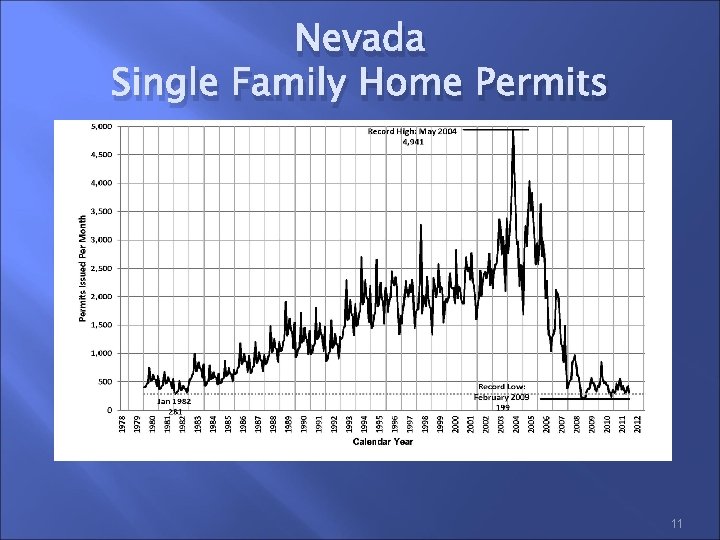
Nevada Single Family Home Permits 11
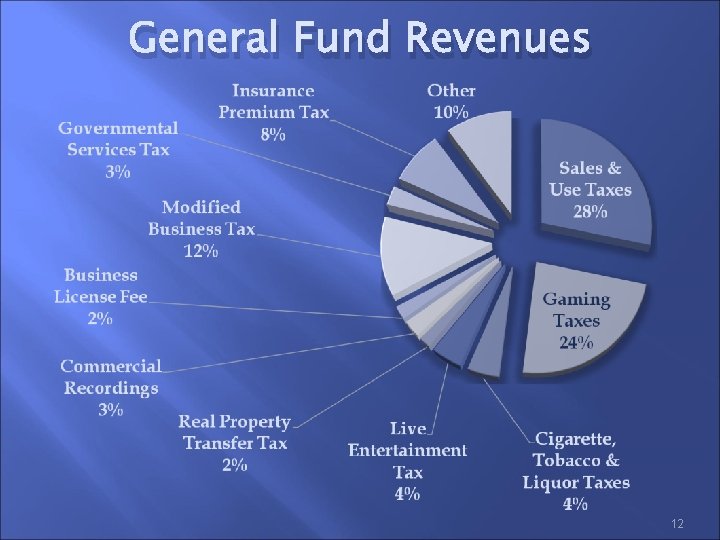
General Fund Revenues 12
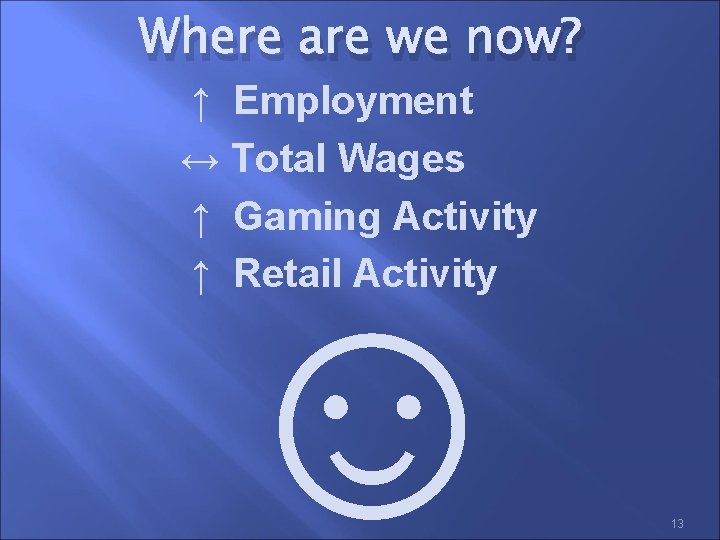
Where are we now? ↑ Employment ↔ Total Wages ↑ Gaming Activity ↑ Retail Activity ☺ 13
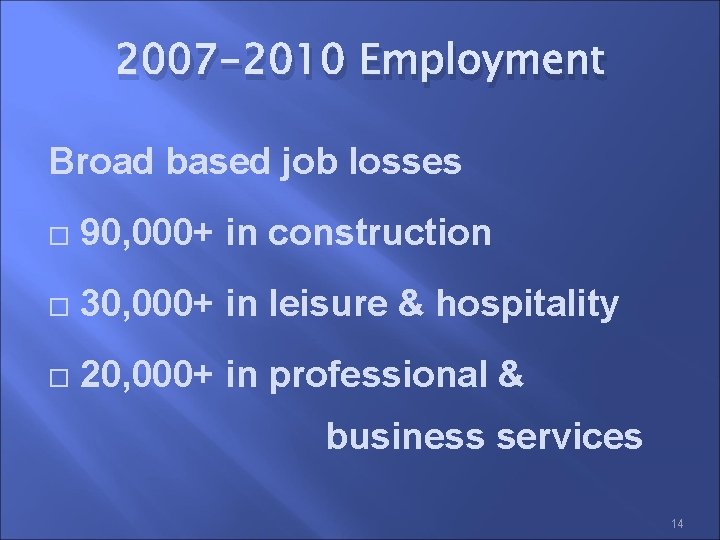
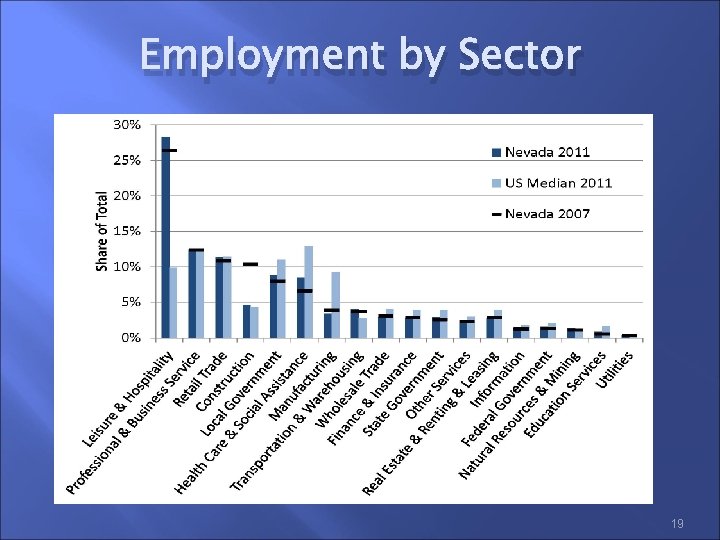
2007 -2010 Employment Broad based job losses 90, 000+ in construction 30, 000+ in leisure & hospitality 20, 000+ in professional & business services 14
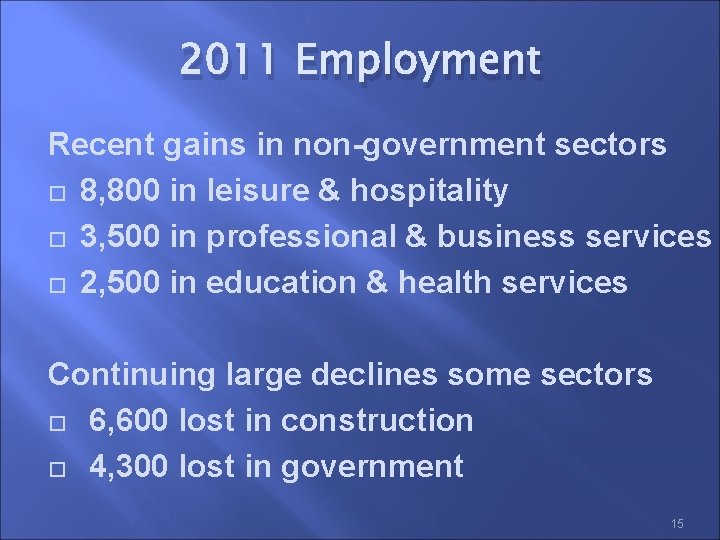
2011 Employment Recent gains in non-government sectors 8, 800 in leisure & hospitality 3, 500 in professional & business services 2, 500 in education & health services Continuing large declines some sectors 6, 600 lost in construction 4, 300 lost in government 15

Employment by Sector 16

Employment by Sector 17
Employment by Sector 18
Employment by Sector 19
Outlook NV Employment 20
21
22
23
24
Partly Cloudy Clearing by Mid-Decade 25
Budget Overview 26

2727
28 28
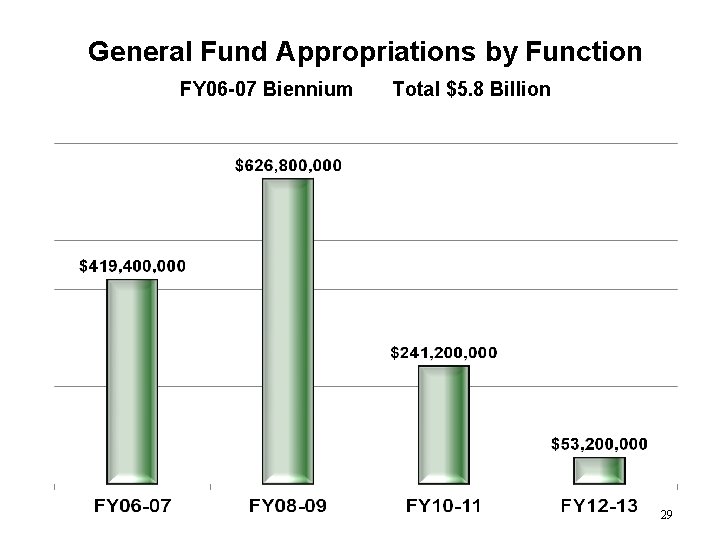
General Fund Appropriations by Function FY 06 -07 Biennium Total $5. 8 Billion 29 29
General Fund Appropriations by Function FY 12 -13 Biennium Total $6. 2 Billion 30 30
Difficult Economic Times Resulted in Major Budget Adjustments 31
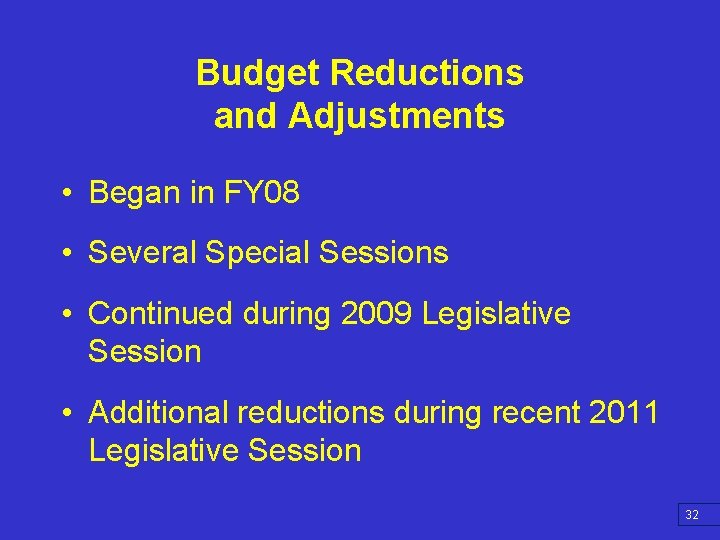
Budget Reductions and Adjustments • Began in FY 08 • Several Special Sessions • Continued during 2009 Legislative Session • Additional reductions during recent 2011 Legislative Session 32
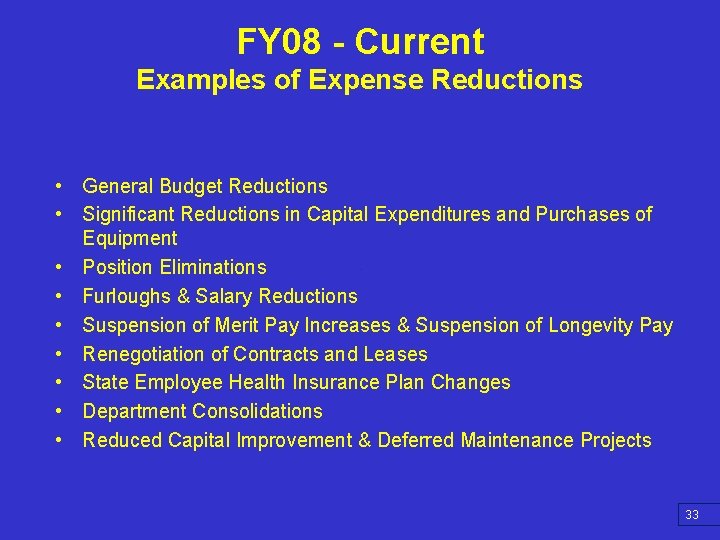
FY 08 - Current Examples of Expense Reductions • General Budget Reductions • Significant Reductions in Capital Expenditures and Purchases of Equipment • Position Eliminations • Furloughs & Salary Reductions • Suspension of Merit Pay Increases & Suspension of Longevity Pay • Renegotiation of Contracts and Leases • State Employee Health Insurance Plan Changes • Department Consolidations • Reduced Capital Improvement & Deferred Maintenance Projects 33
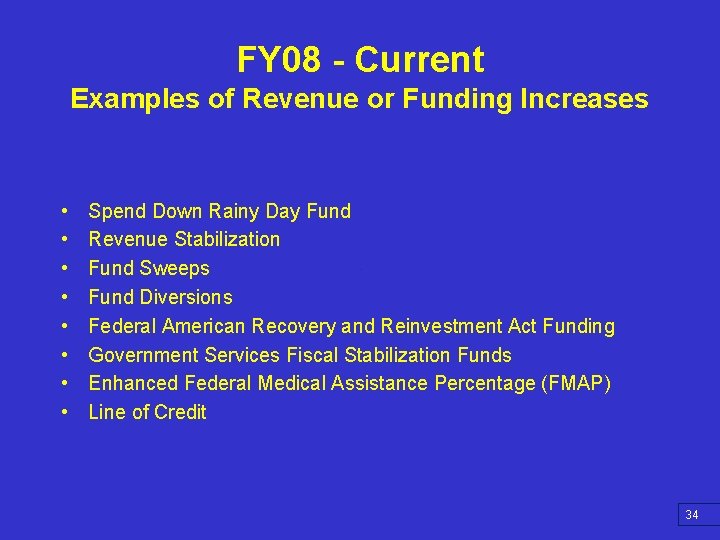
FY 08 - Current Examples of Revenue or Funding Increases • • Spend Down Rainy Day Fund Revenue Stabilization Fund Sweeps Fund Diversions Federal American Recovery and Reinvestment Act Funding Government Services Fiscal Stabilization Funds Enhanced Federal Medical Assistance Percentage (FMAP) Line of Credit 34
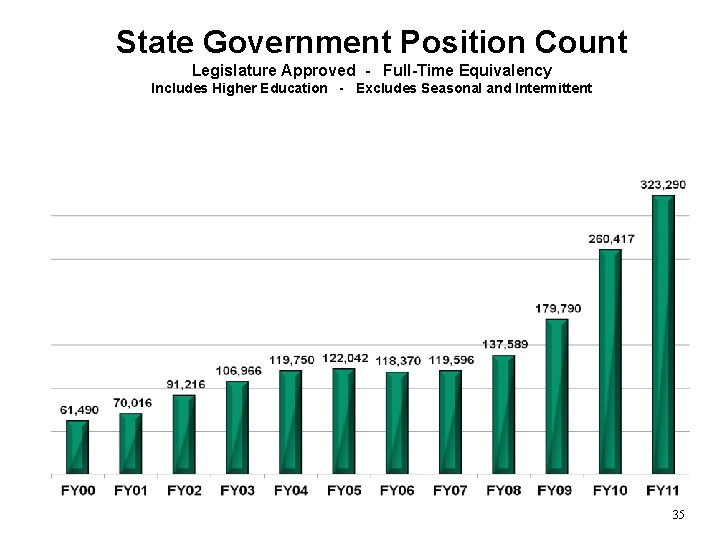
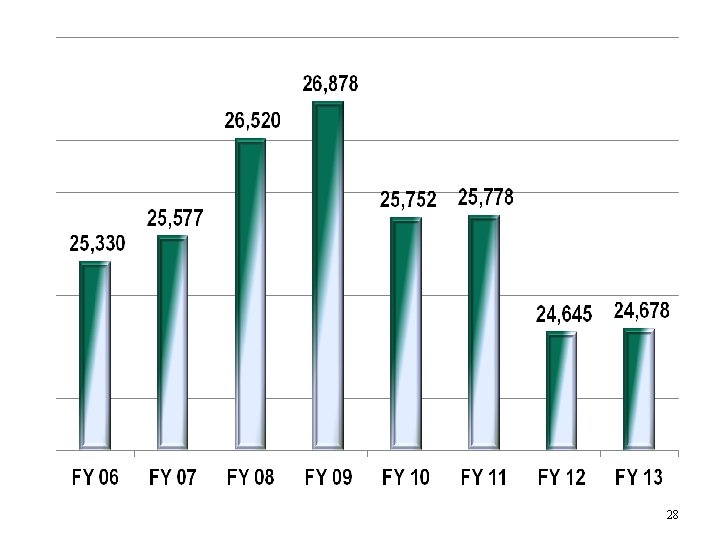
State Government Position Count Legislature Approved - Full-Time Equivalency Includes Higher Education - Excludes Seasonal and Intermittent 3535
Capital Improvement Projects Legislature Approved 3636
Demand for State Services Increases in Tough Financial Times 37
Medicaid Annual Average Recipients 3838
Supplemental Nutrition Assistance Program SNAP (Previously known as Food Stamps) Annual Average Recipients c 3939

40 40
Nevada’s Budget Outlook for FY 14 -15 Biennium 41
Revenues are Increasing • Sales tax increases for 17 straight months • Gaming win has posted year-over-year gains in 8 of the past 12 months • Revenues for 2011 finished higher than Economic Forum estimates • Revenues for 2012 are also tracking higher 42
Significant Challenges Remain • Sunsetting Revenues • Sunsetting Expense Reductions • Health Care Reform 43
Sunsetting Revenues FY 12 -13 Biennium General Fund • Taxes, Fees, Fund Sweeps, & Other Revenue • Adjustments to the Distributive School Account (DSA) 44
Sunsetting Expenditure Reductions FY 12 -13 Biennium • Furlough • Pay Rate Reduction • Suspension of Merit Salary Increase • Suspension of Longevity Pay 45
Health Care Reform • Newly eligible Medicaid caseload covered by federal government • Increase Medicaid caseload which will require significant state resources • Potential cost savings to state and local government 46
FY 14 -15 Biennium Budget Targets for General Fund will be Established 47
FY 14 -15 BUDGET • “Flat” general fund request – Exceptions will be determined on a case by case basis • No budget reductions are currently required • Highway Funds and Internal Service Funds will also have spending limits 48
What Does “Flat” Mean? • Spending caps at the Departmental level • Directors have flexibility within the cap • Certain general fund expenditures will be allowable outside of the cap • All other expenditure requests over the cap must be submitted in Items for Special Consideration. Note: Items for Special Consideration are NOT part of the official agency request budget. 49
How the Cap Works • FY 13 appropriation is the beginning point • The Budget Division multiplies this number by 2 • The Budget Division adds back costs associated with employee pay reductions that sunset (pay reduction, furloughs, merit and step increases, and longevity). Note: Statewide rate adjustments such as employee medical and retirement contributions will be calculated by the Budget Division and are NOT part of the cap. 50
Allowable Non-Cap Expenditures • M-200 Caseload Changes (Legislature Approved) • M-500 Federal Mandates (e. g. , Health Care Reform) • M-101 Agency Specific Inflation (e. g. , Medical Inflation, Highway Related Materials) Note: Most of these items are readily identifiable with a historical precedent. If not, please coordinate with your budget analyst whether your expenditure qualifies as a non-cap expenditure BEFORE putting in the time and effort. 51
Items for Special Consideration • Agency Identified “Think Big - Go Bold” Ideas • Replacement Equipment Requests (that do not fall within your cap) • Deferred Maintenance Requests (that do not fall within your cap) We understand there is a need for both replacement equipment and deferred maintenance projects. These items and other requests will be prioritized on a statewide basis. 52
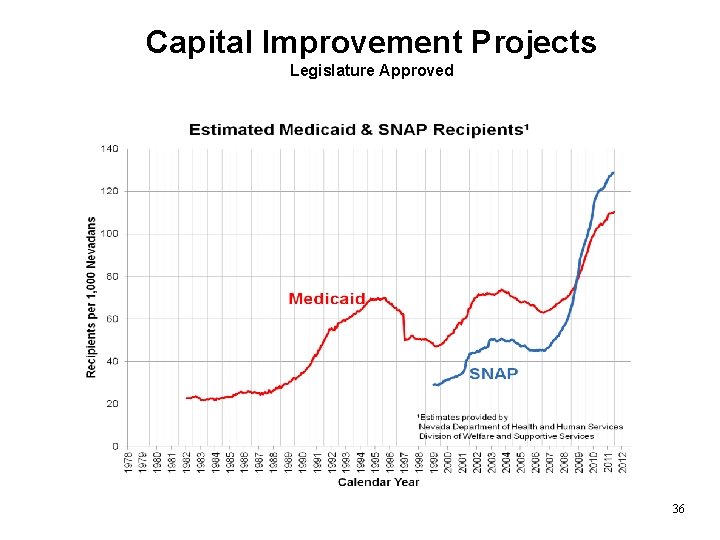
Examples of Legislature Approved Caseloads • Entitlement programs such as Medicaid and SNAP (food stamps) • K-12 student enrollment • Inmate populations Note: Coordinate with your budget analyst to determine if your caseload qualifies. 53
STATE PUBLIC WORKS BOARD 2013 CAPITAL IMPROVEMENT PLAN (CIP) • On-Line 2013 Capital Improvement Plan application is available on www. spwb. state. nv. us • The new application includes an emphasis on deferred maintenance needs at existing facilities. • Functionality has been improved to allow saving of partially completed forms rather than requiring all work be performed in one session. • All applications must be submitted by April 10, 2012. 54
Technology Investment Requests (TIR) • Projects will be evaluated on a case by case basis • Cost/benefit analysis will be applied • Leveraging resources to reduce capital requirements will be required 55
- Slides: 55