
BUDA UNIVERSITY Dr Ferenc Szlivka professor Dr Szlivka

ÓBUDA UNIVERSITY Dr. Ferenc Szlivka professor Dr. Szlivka: Fluid Mechanics 2. 1
Hydrostatic 2. chapter Dr. Szlivka: Fluid Mechanics 2. 2
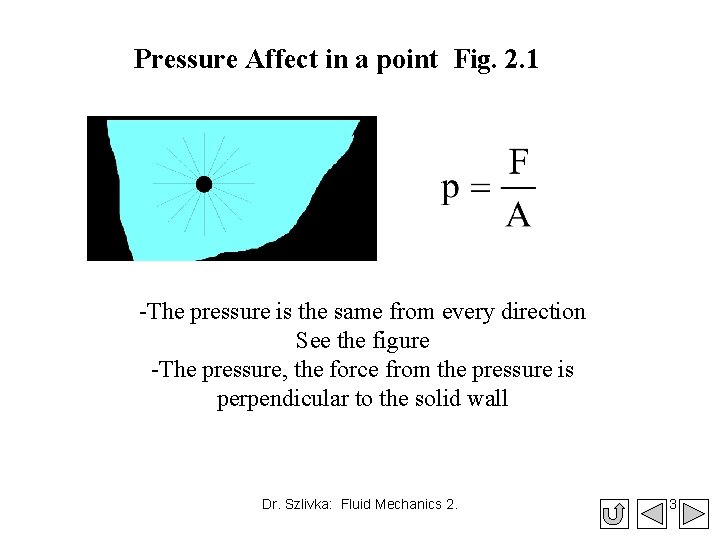
Pressure Affect in a point Fig. 2. 1 -The pressure is the same from every direction See the figure -The pressure, the force from the pressure is perpendicular to the solid wall Dr. Szlivka: Fluid Mechanics 2. 3
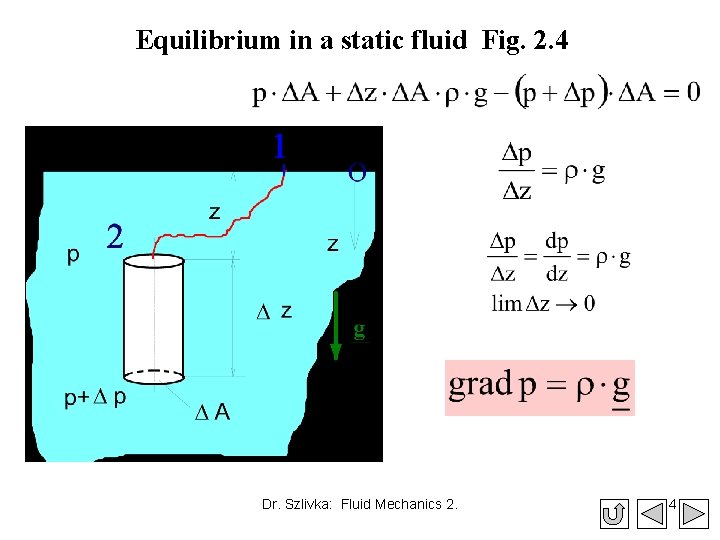
Equilibrium in a static fluid Fig. 2. 4 Dr. Szlivka: Fluid Mechanics 2. 4
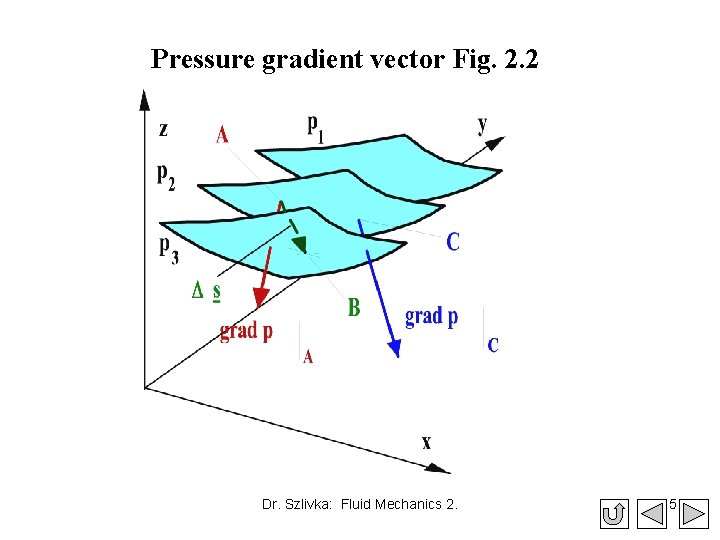
Pressure gradient vector Fig. 2. 2 Dr. Szlivka: Fluid Mechanics 2. 5
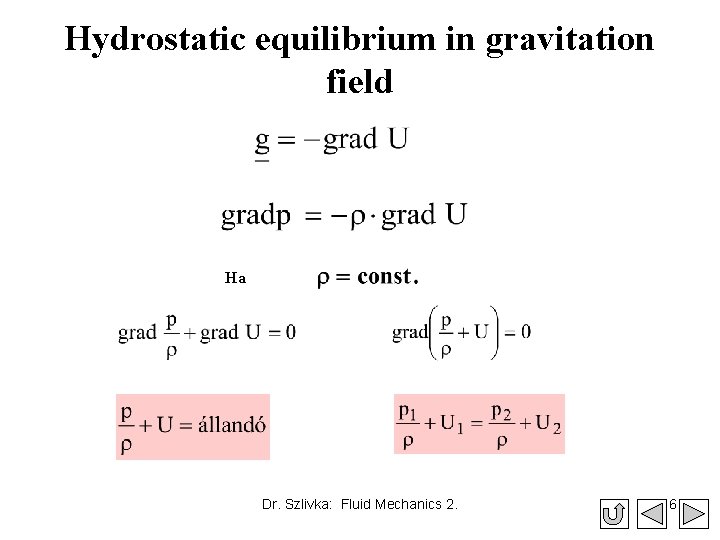
Hydrostatic equilibrium in gravitation field Ha Dr. Szlivka: Fluid Mechanics 2. 6
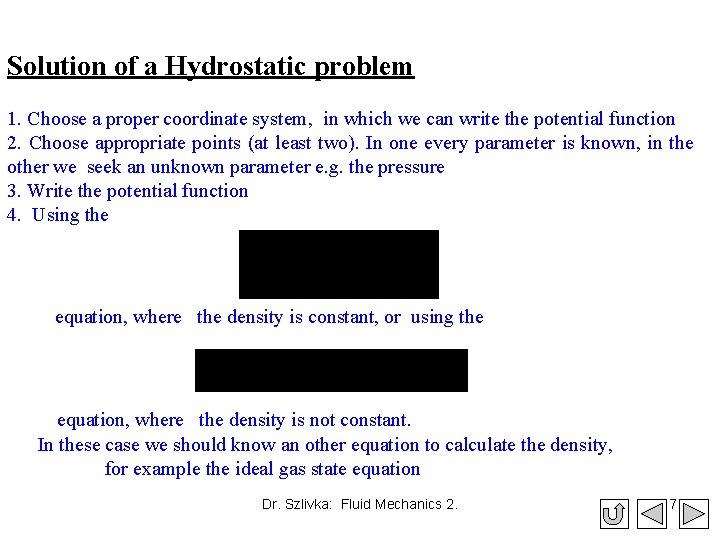
Solution of a Hydrostatic problem 1. Choose a proper coordinate system, in which we can write the potential function 2. Choose appropriate points (at least two). In one every parameter is known, in the other we seek an unknown parameter e. g. the pressure 3. Write the potential function 4. Using the equation, where the density is constant, or using the equation, where the density is not constant. In these case we should know an other equation to calculate the density, for example the ideal gas state equation Dr. Szlivka: Fluid Mechanics 2. 7
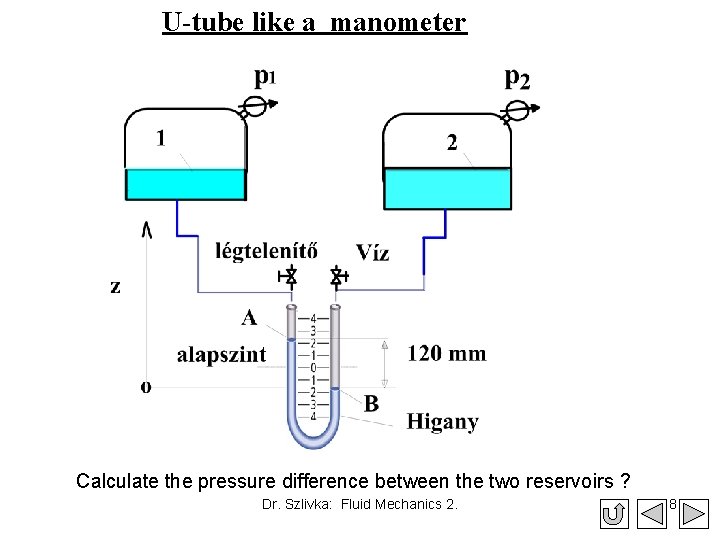
U-tube like a manometer Calculate the pressure difference between the two reservoirs ? Dr. Szlivka: Fluid Mechanics 2. 8
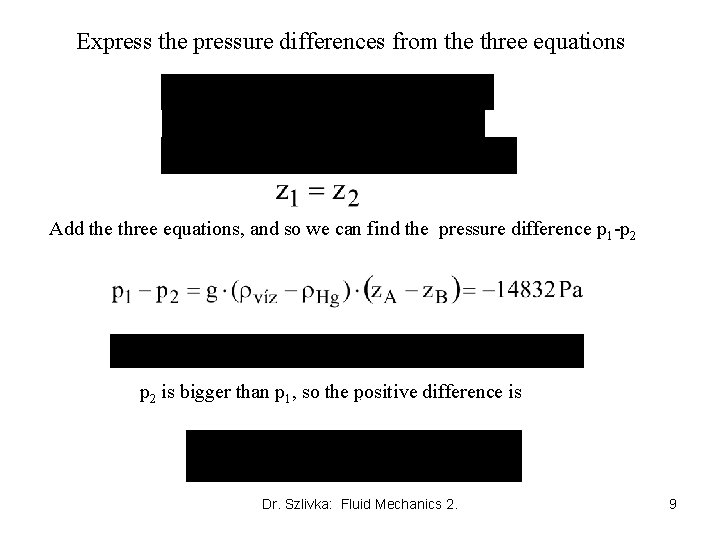
Express the pressure differences from the three equations Add the three equations, and so we can find the pressure difference p 1 -p 2 is bigger than p 1, so the positive difference is. Dr. Szlivka: Fluid Mechanics 2. 9
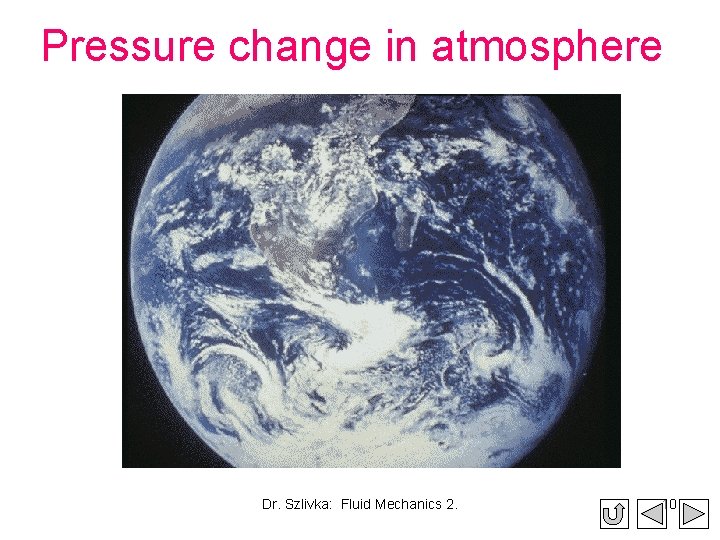
Pressure change in atmosphere Dr. Szlivka: Fluid Mechanics 2. 10
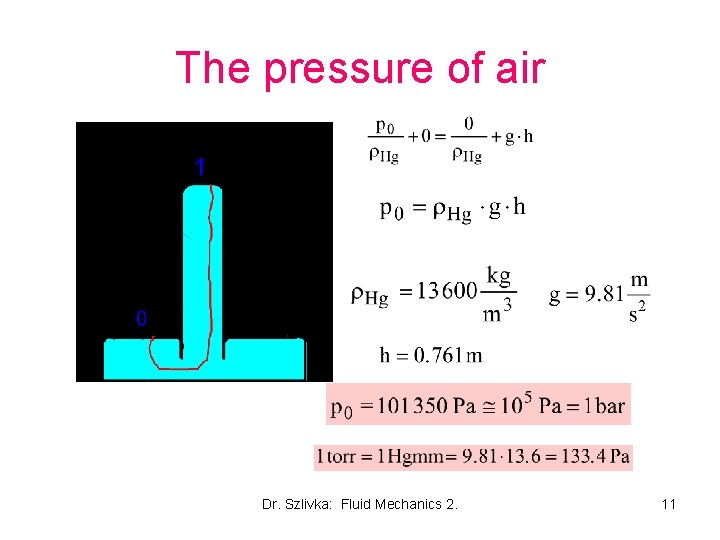
The pressure of air Dr. Szlivka: Fluid Mechanics 2. 11
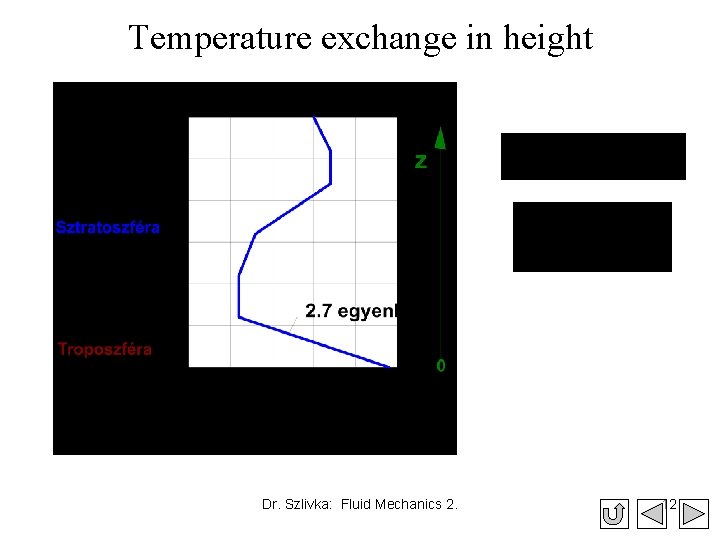
Temperature exchange in height Dr. Szlivka: Fluid Mechanics 2. 12
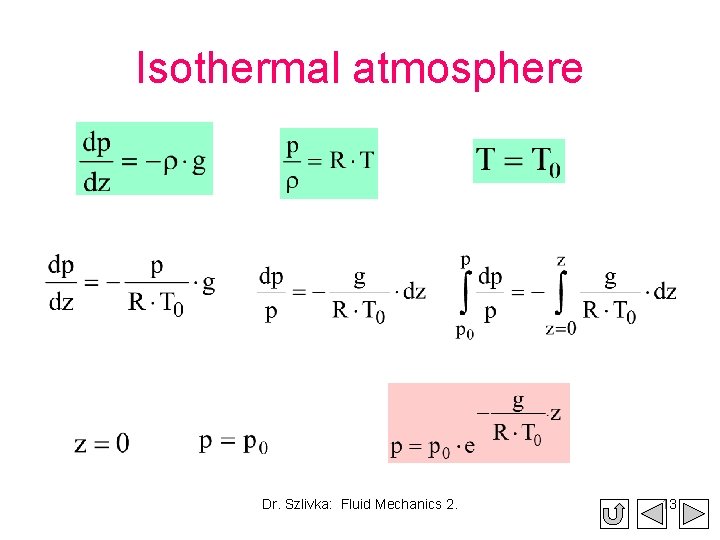
Isothermal atmosphere Dr. Szlivka: Fluid Mechanics 2. 13
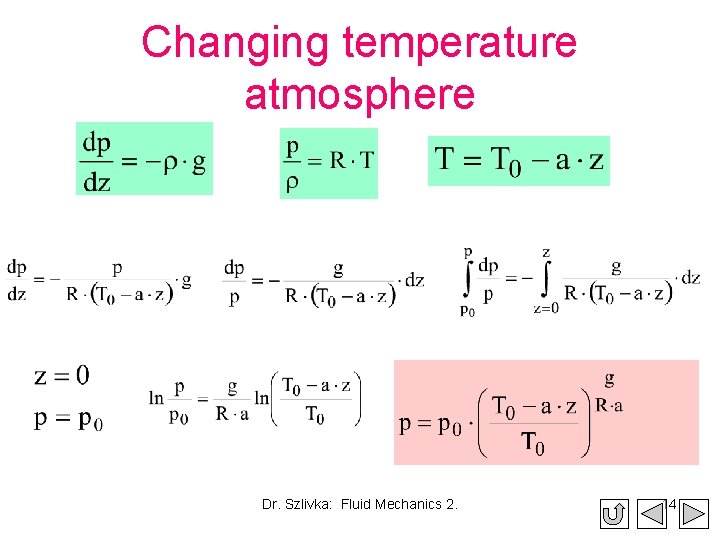
Changing temperature atmosphere Dr. Szlivka: Fluid Mechanics 2. 14
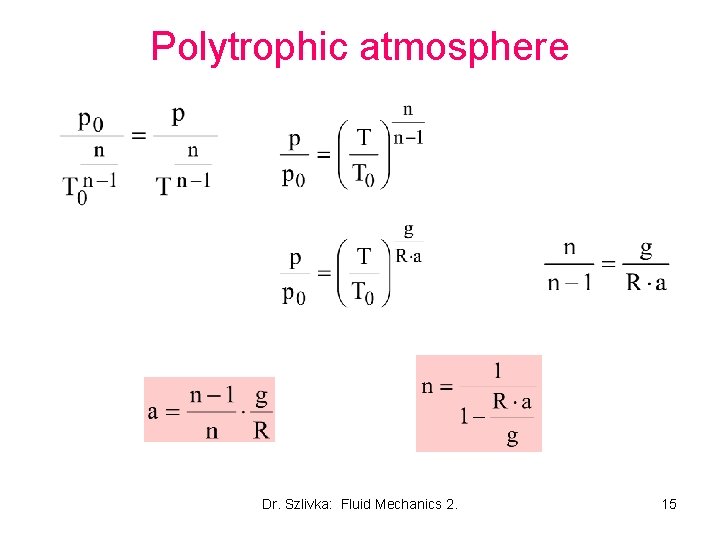
Polytrophic atmosphere Dr. Szlivka: Fluid Mechanics 2. 15
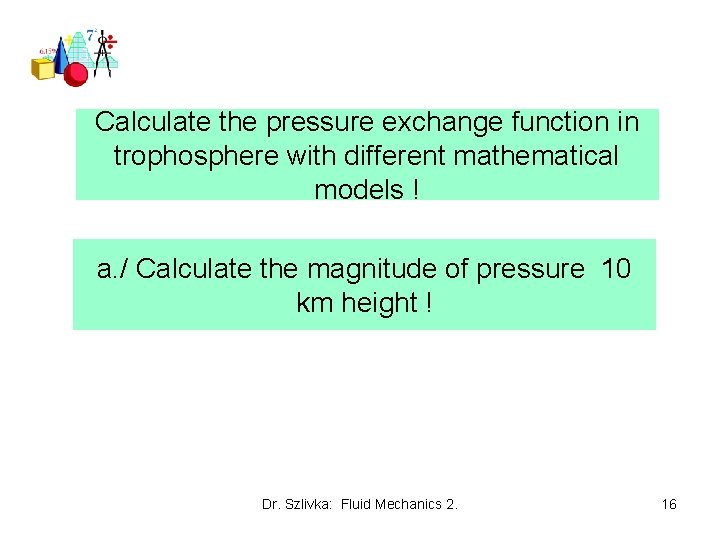
Calculate the pressure exchange function in trophosphere with different mathematical models ! a. / Calculate the magnitude of pressure 10 km height ! Dr. Szlivka: Fluid Mechanics 2. 16
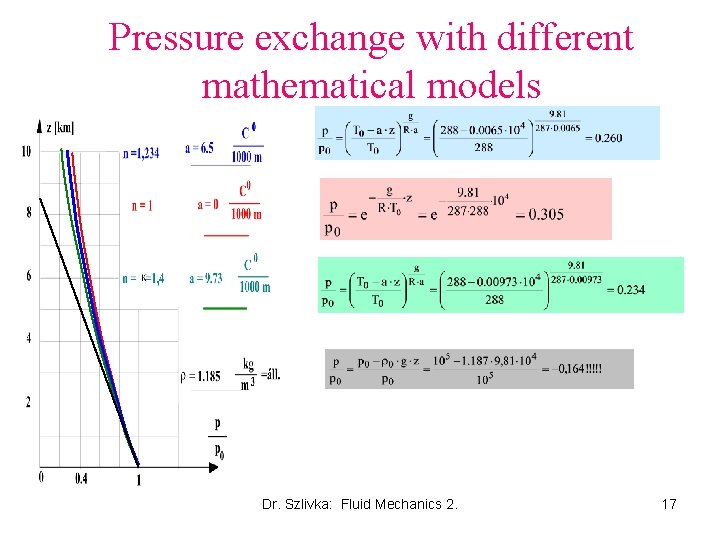
Pressure exchange with different mathematical models Dr. Szlivka: Fluid Mechanics 2. 17
Absolute and gauge pressure Dr. Szlivka: Fluid Mechanics 2. 18
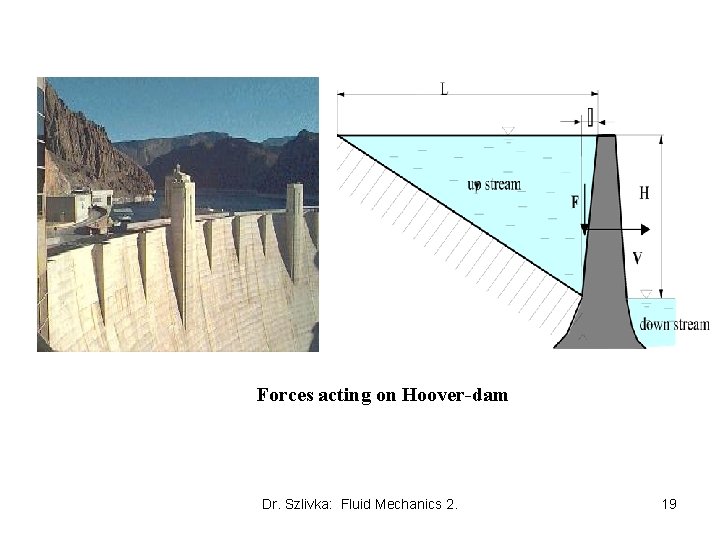
Forces acting on Hoover-dam Dr. Szlivka: Fluid Mechanics 2. 19
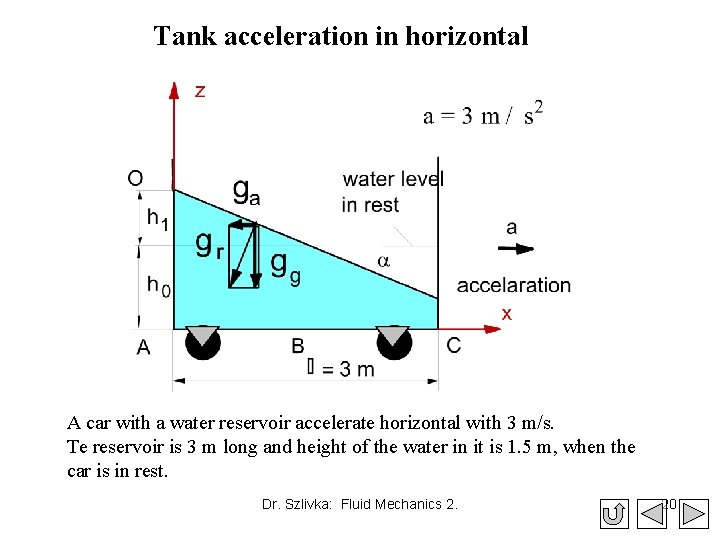
Tank acceleration in horizontal A car with a water reservoir accelerate horizontal with 3 m/s. Te reservoir is 3 m long and height of the water in it is 1. 5 m, when the car is in rest. Dr. Szlivka: Fluid Mechanics 2. 20
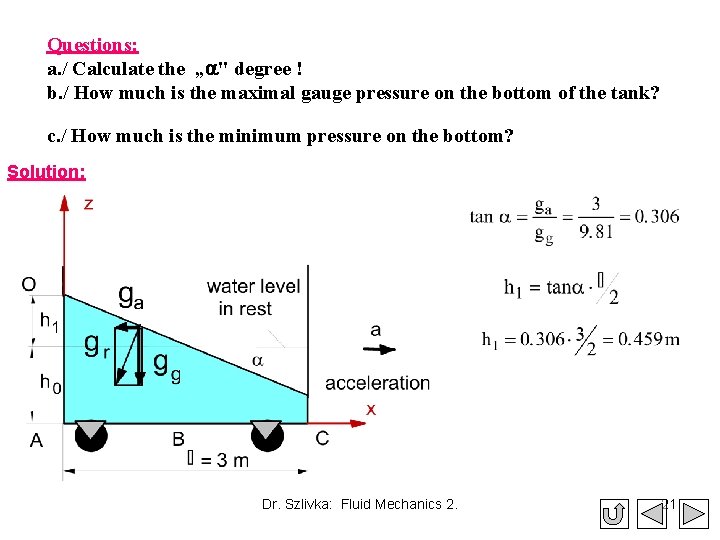
Questions: a. / Calculate the „a" degree ! b. / How much is the maximal gauge pressure on the bottom of the tank? c. / How much is the minimum pressure on the bottom? Solution: Dr. Szlivka: Fluid Mechanics 2. 21
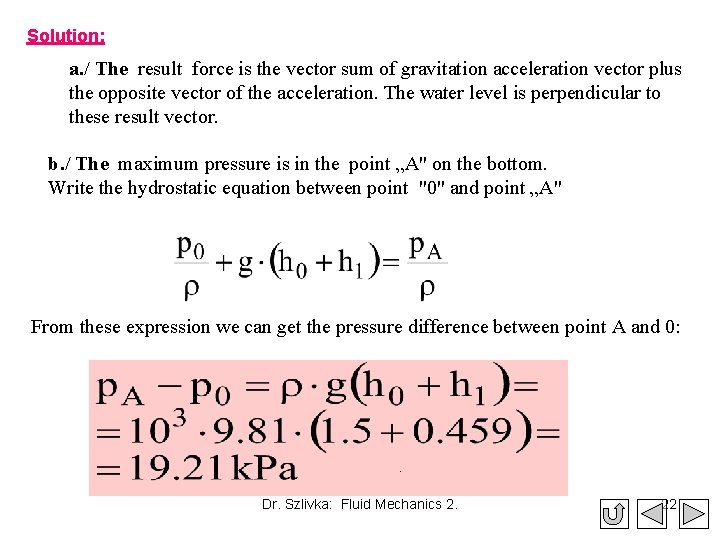
Solution: a. / The result force is the vector sum of gravitation acceleration vector plus the opposite vector of the acceleration. The water level is perpendicular to these result vector. b. / The maximum pressure is in the point „A" on the bottom. Write the hydrostatic equation between point "0" and point „A" From these expression we can get the pressure difference between point A and 0: . Dr. Szlivka: Fluid Mechanics 2. 22
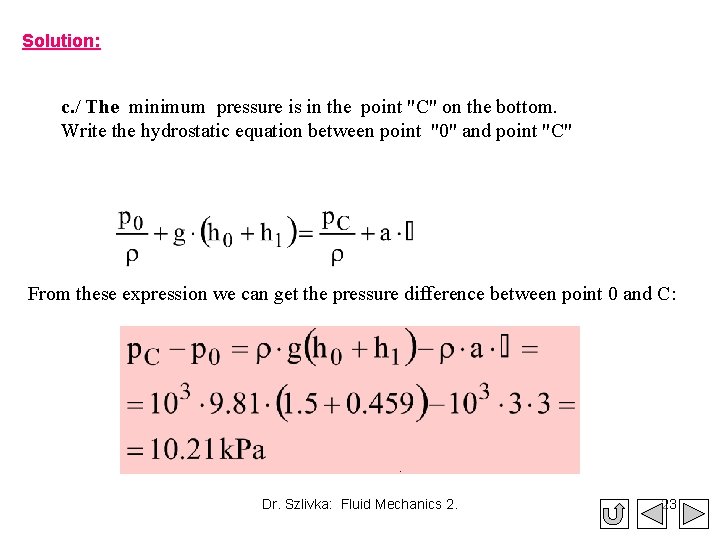
Solution: c. / The minimum pressure is in the point "C" on the bottom. Write the hydrostatic equation between point "0" and point "C" From these expression we can get the pressure difference between point 0 and C: . Dr. Szlivka: Fluid Mechanics 2. 23
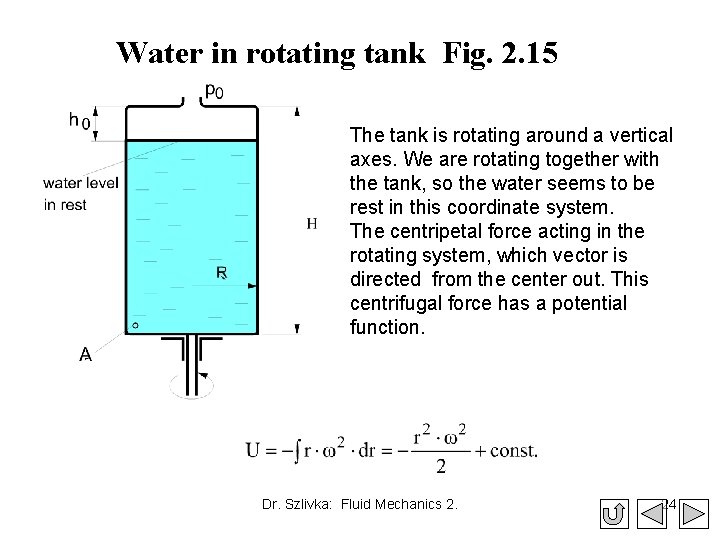
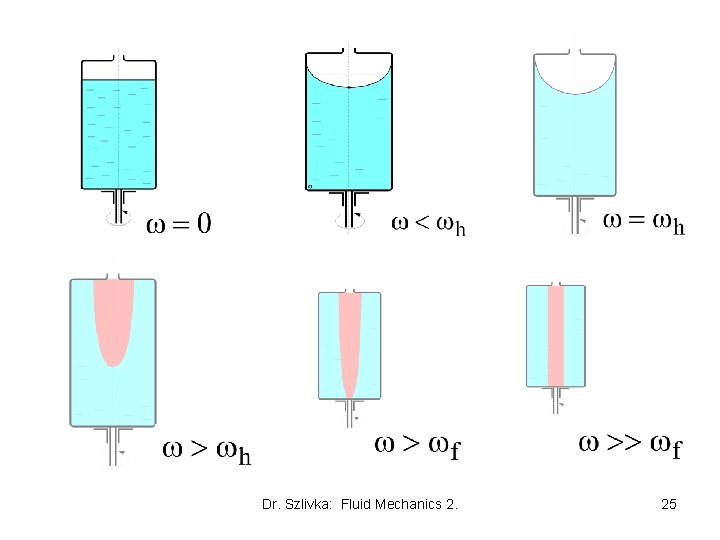
Water in rotating tank Fig. 2. 15 The tank is rotating around a vertical axes. We are rotating together with the tank, so the water seems to be rest in this coordinate system. The centripetal force acting in the rotating system, which vector is directed from the center out. This centrifugal force has a potential function. Dr. Szlivka: Fluid Mechanics 2. 24
Dr. Szlivka: Fluid Mechanics 2. 25
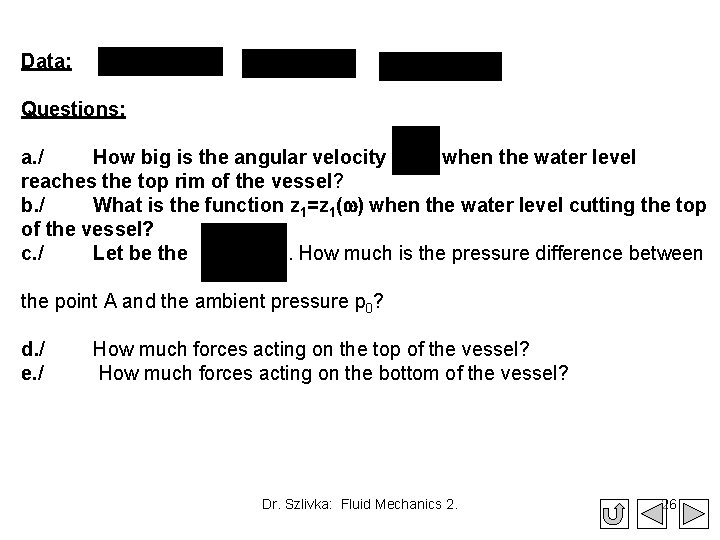
Data: Questions: a. / How big is the angular velocity when the water level reaches the top rim of the vessel? b. / What is the function z 1=z 1(w) when the water level cutting the top of the vessel? c. / Let be the. How much is the pressure difference between the point A and the ambient pressure p 0? d. / e. / How much forces acting on the top of the vessel? How much forces acting on the bottom of the vessel? Dr. Szlivka: Fluid Mechanics 2. 26
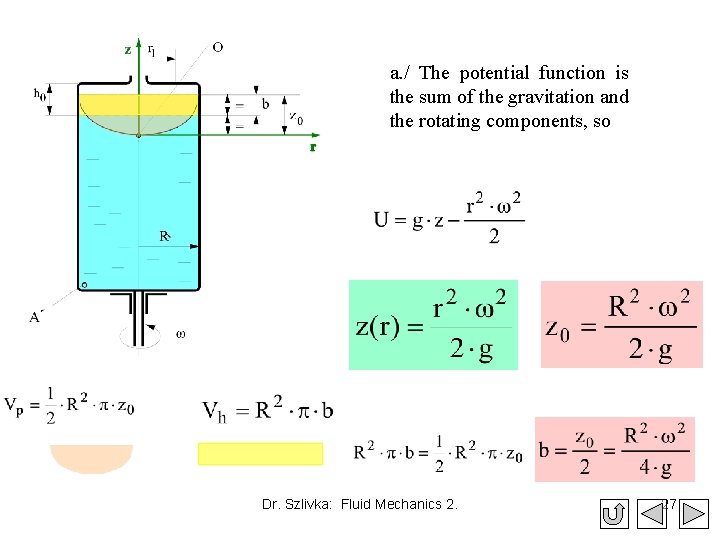
a. / The potential function is the sum of the gravitation and the rotating components, so Dr. Szlivka: Fluid Mechanics 2. 27
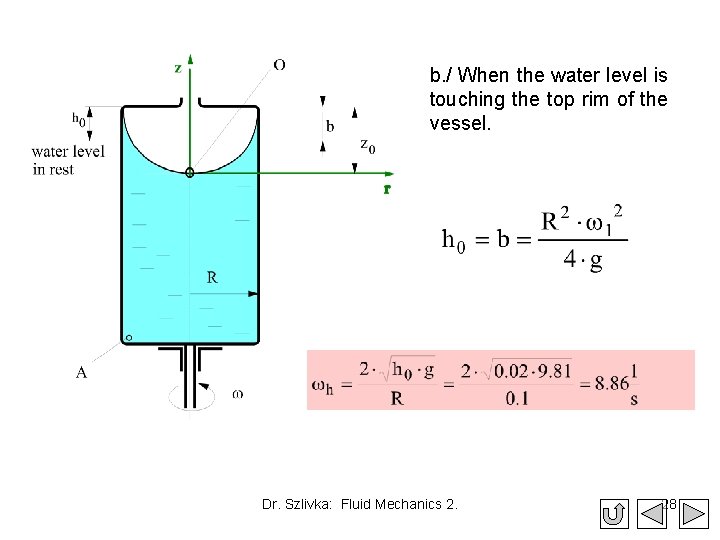
b. / When the water level is touching the top rim of the vessel. Dr. Szlivka: Fluid Mechanics 2. 28
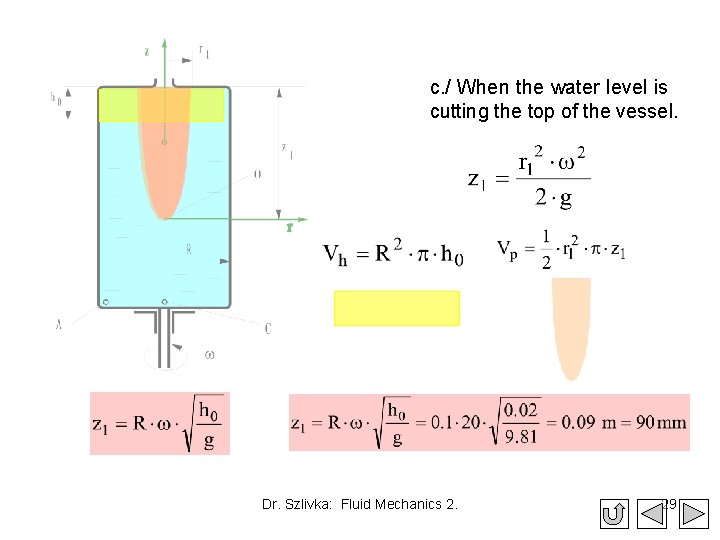
c. / When the water level is cutting the top of the vessel. Dr. Szlivka: Fluid Mechanics 2. 29
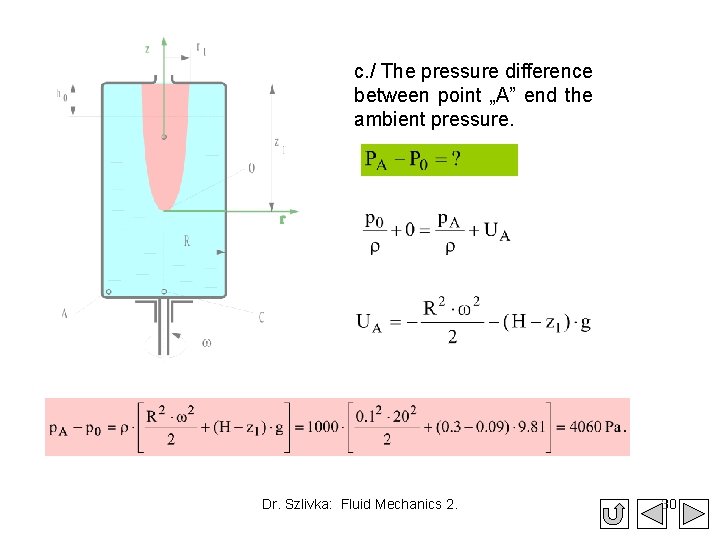
c. / The pressure difference between point „A” end the ambient pressure. Dr. Szlivka: Fluid Mechanics 2. 30
- Slides: 30