
Buchenwald Back Wall Artifact Buchenwald Museum Entrance Room
Buchenwald Back Wall Artifact Buchenwald Museum Entrance Room Five Antonin Kalina Welcome to the Museum of Antonin Kalina Curator’s Offices
Antonin Kalina Room 1 Artifact 4 Return to Entry
Buchenwald Room 2 Artifact 5 Artifact 6 Artifact 7 Return to Entry Artifact 8
Buchenwald Room 3 Artifact 9 Artifact 10 Artifact 11 Return to Entry Artifact 12
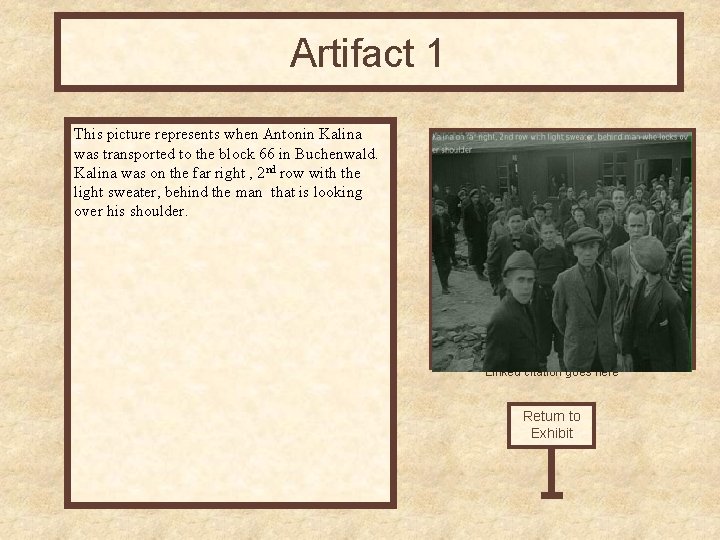
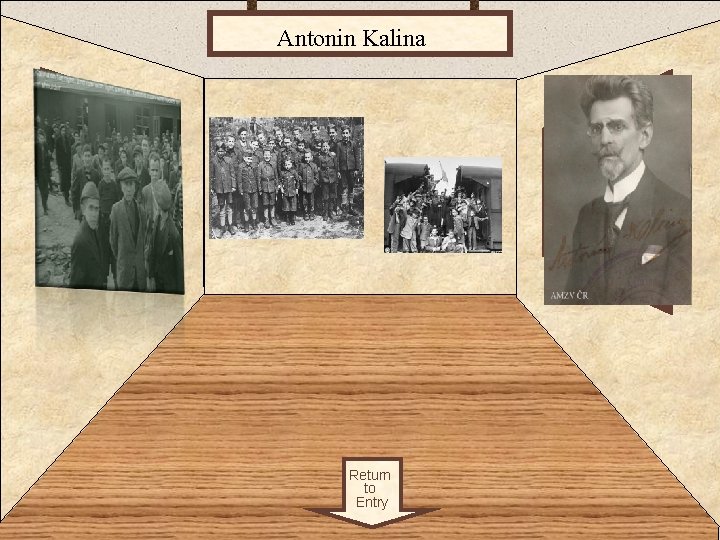
Artifact 1 This picture represents when Antonin Kalina was transported to the block 66 in Buchenwald. Kalina was on the far right , 2 nd row with the light sweater, behind the man that is looking over his shoulder. Linked citation goes here Return to Exhibit
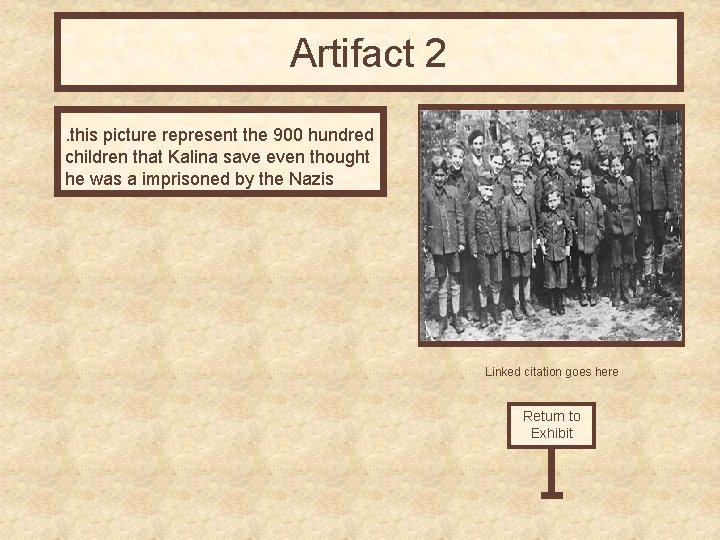
Artifact 2. this picture represent the 900 hundred children that Kalina save even thought he was a imprisoned by the Nazis Linked citation goes here Return to Exhibit
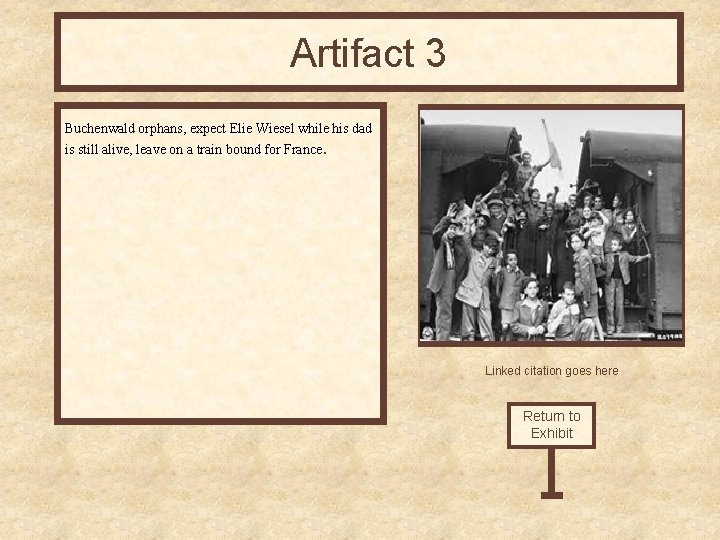
Artifact 3 Buchenwald orphans, expect Elie Wiesel while his dad is still alive, leave on a train bound for France. Linked citation goes here Return to Exhibit
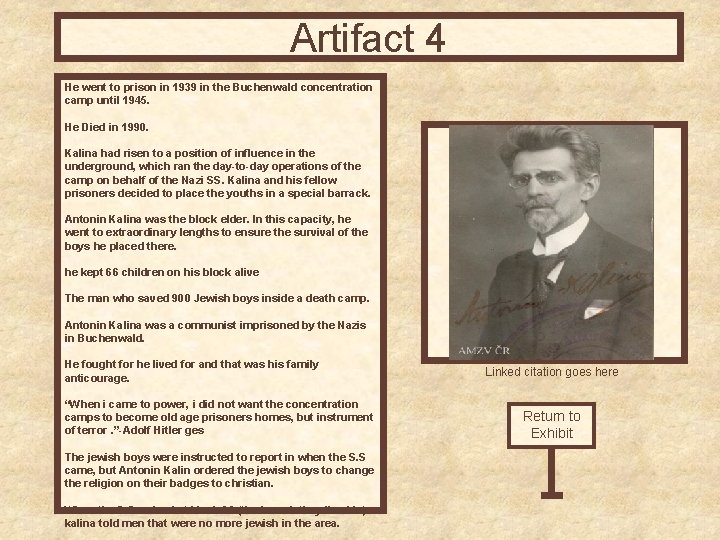
Artifact 4 He went to prison in 1939 in the Buchenwald concentration camp until 1945. He Died in 1990. Kalina had risen to a position of influence in the underground, which ran the day-to-day operations of the camp on behalf of the Nazi SS. Kalina and his fellow prisoners decided to place the youths in a special barrack. Antonin Kalina was the block elder. In this capacity, he went to extraordinary lengths to ensure the survival of the boys he placed there. he kept 66 children on his block alive The man who saved 900 Jewish boys inside a death camp. Antonin Kalina was a communist imprisoned by the Nazis in Buchenwald. He fought for he lived for and that was his family anticourage. “When i came to power, i did not want the concentration camps to become old age prisoners homes, but instrument of terror. ”-Adolf Hitler ges The jewish boys were instructed to report in when the S. S came, but Antonin Kalin ordered the jewish boys to change the religion on their badges to christian. When the S. S arrived at block 66 (the barack they lived in) kalina told men that were no more jewish in the area. Linked citation goes here Return to Exhibit
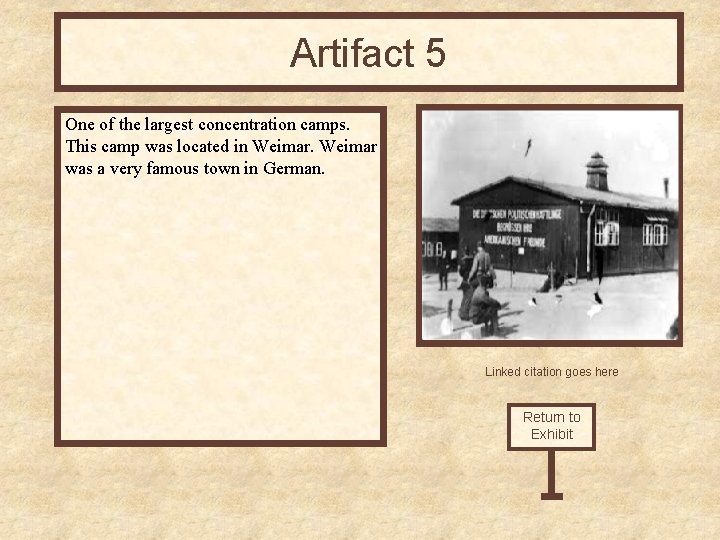
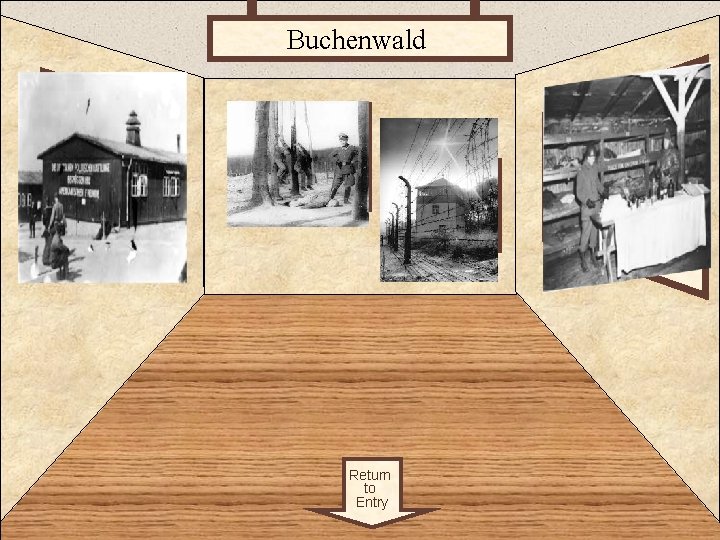
Artifact 5 One of the largest concentration camps. This camp was located in Weimar was a very famous town in German. Linked citation goes here Return to Exhibit
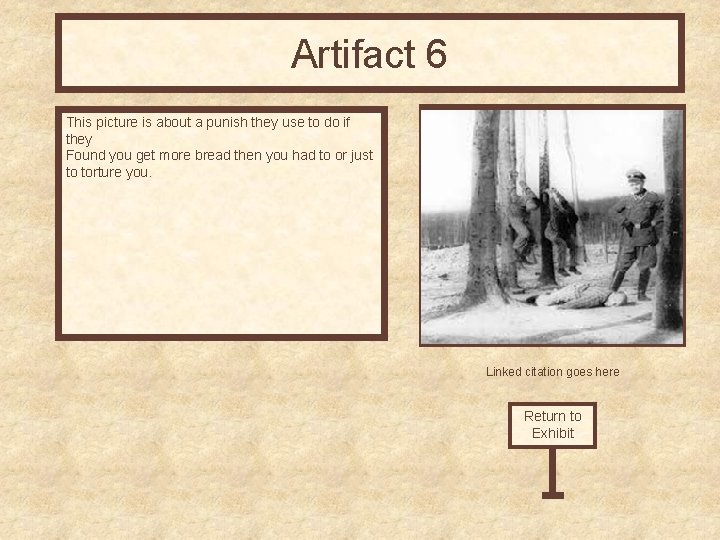
Artifact 6 This picture is about a punish they use to do if they Found you get more bread then you had to or just to torture you. Linked citation goes here Return to Exhibit
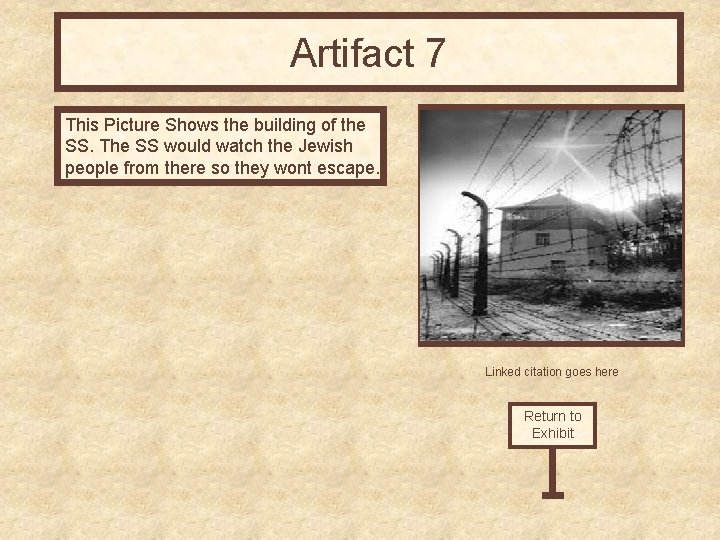
Artifact 7 This Picture Shows the building of the SS. The SS would watch the Jewish people from there so they wont escape. Linked citation goes here Return to Exhibit
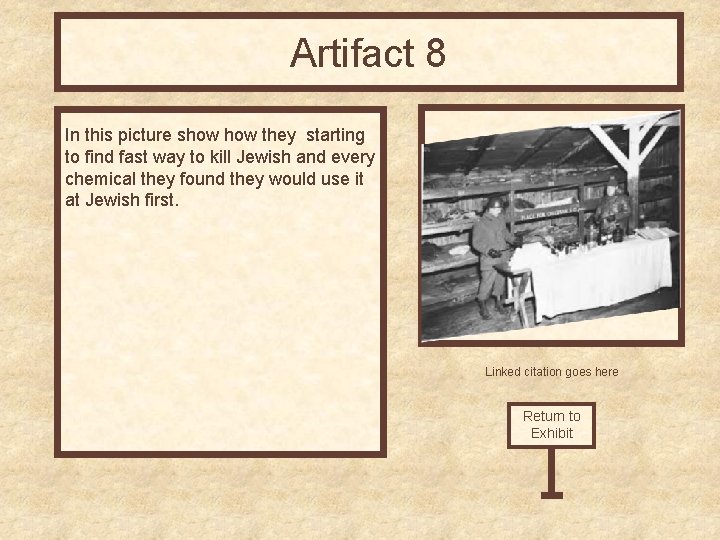
Artifact 8 In this picture show they starting to find fast way to kill Jewish and every chemical they found they would use it at Jewish first. Linked citation goes here Return to Exhibit
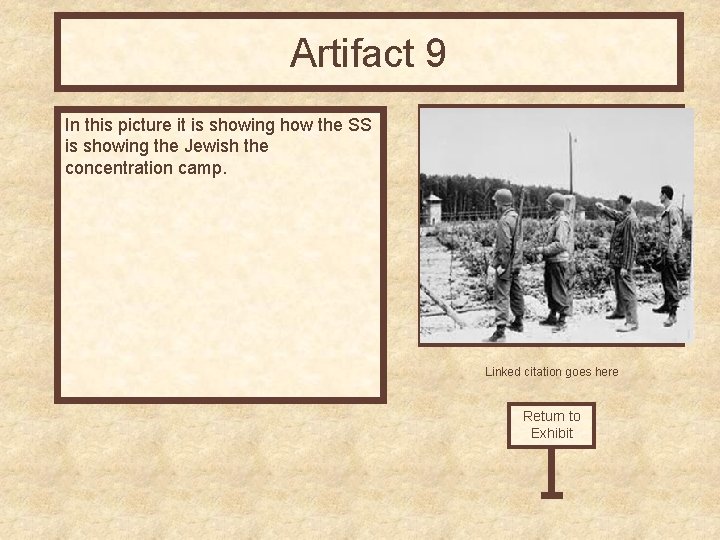
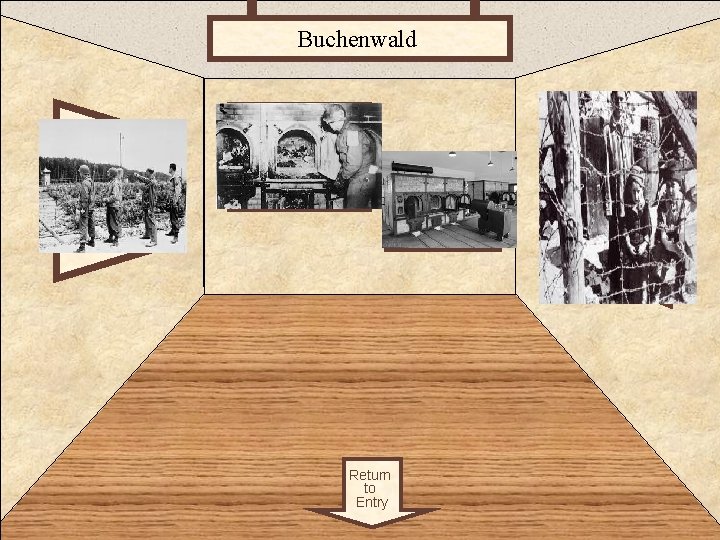
Artifact 9 In this picture it is showing how the SS is showing the Jewish the concentration camp. Linked citation goes here Return to Exhibit
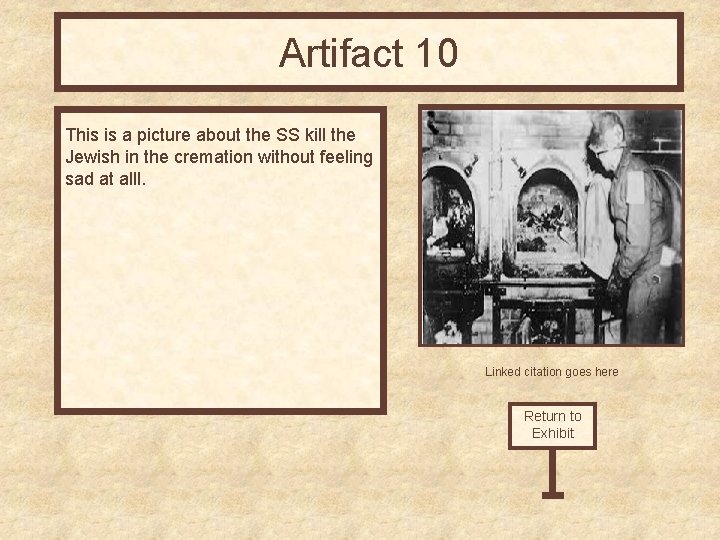
Artifact 10 This is a picture about the SS kill the Jewish in the cremation without feeling sad at alll. Linked citation goes here Return to Exhibit
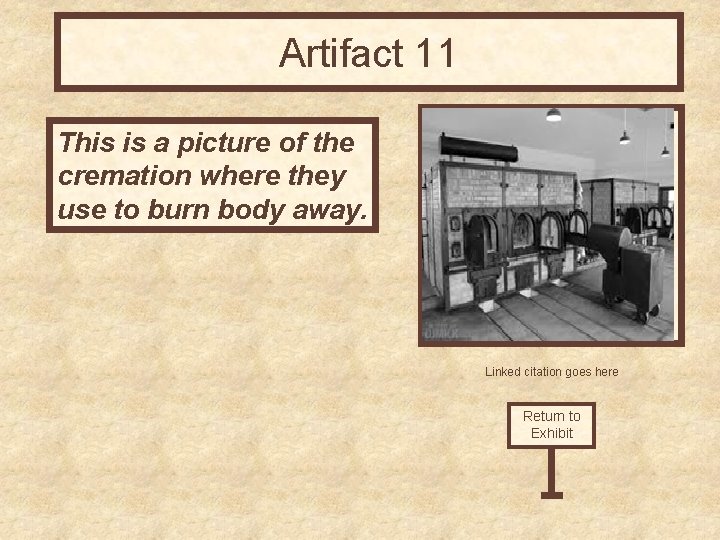
Artifact 11 This is a picture of the cremation where they use to burn body away. Linked citation goes here Return to Exhibit
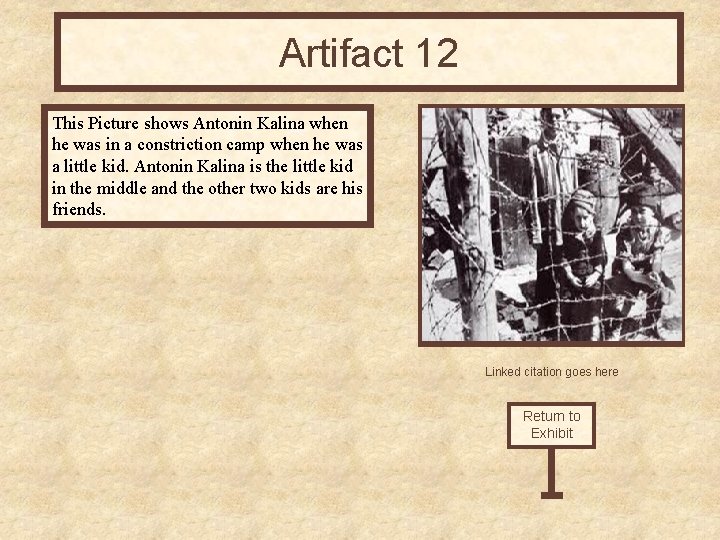
Artifact 12 This Picture shows Antonin Kalina when he was in a constriction camp when he was a little kid. Antonin Kalina is the little kid in the middle and the other two kids are his friends. Linked citation goes here Return to Exhibit
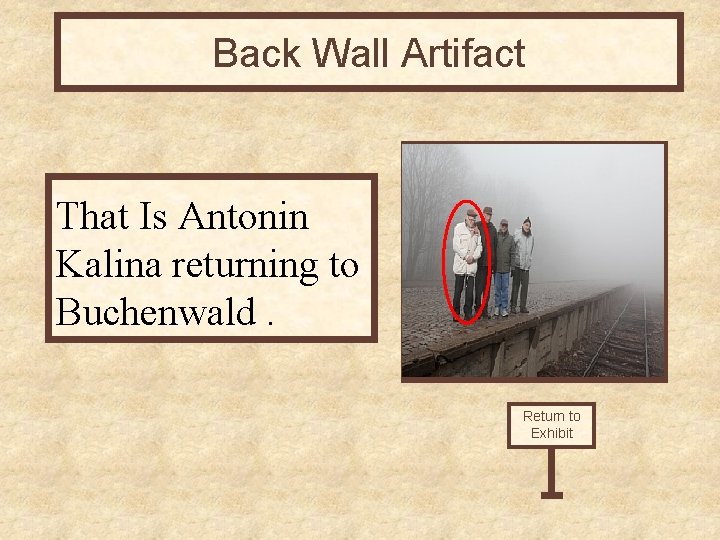
Back Wall Artifact That Is Antonin Kalina returning to Buchenwald. Linked citation goes here Return to Exhibit
Chantal Chavez & Veronica Curator’s Office Izquierdo Something that we learn was that Antonin Kalina saved 900 children and he existence. He was in block 66 Elie Wiesel Contact me at [Your linked email address] Return to Entry Note: Virtual museums were first introduced by educators at Keith Valley Middle School in Horsham, Pennsylvania. This template was designed by Dr. Christy Keeler. View the Educational Virtual Museums website for more information on this instructional technique.
- Slides: 18