
BUAD 306 Aggregate Planning Aggregate Planning Determines the
BUAD 306 Aggregate Planning
Aggregate Planning Determines the resource capacity needed to meet demand over an intermediate time horizon ¢ Typically 2 - 12 months in duration ¢
Objectives ¢ To establish a company-wide game plan for allocating resources l ¢ Example: Avoid battles between Marketing and Production To develop an economic strategy for meeting demand l Demand can be met by adjusting capacity or by managing the demand
Managing Demand Pricing – raise prices during highdemand times ¢ Promotion – to increase demand during low-demand seasons ¢ Backorders – taking orders before production and shipping at a later date ¢ New Demand – developing new products ¢
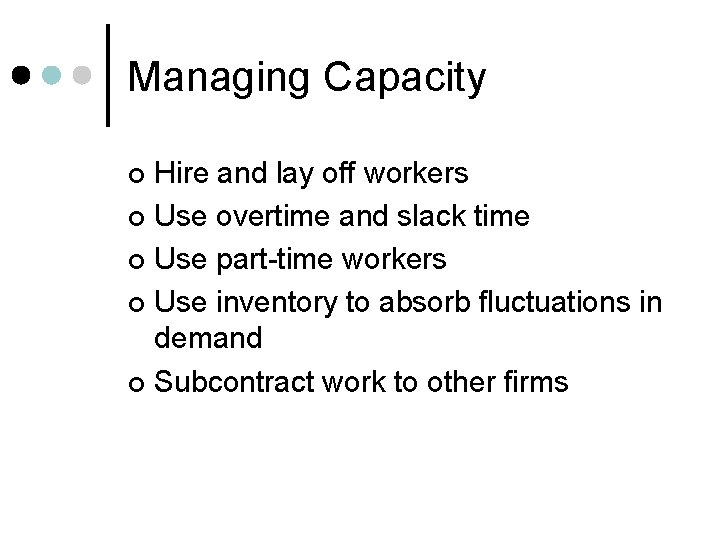
Managing Capacity Hire and lay off workers ¢ Use overtime and slack time ¢ Use part-time workers ¢ Use inventory to absorb fluctuations in demand ¢ Subcontract work to other firms ¢
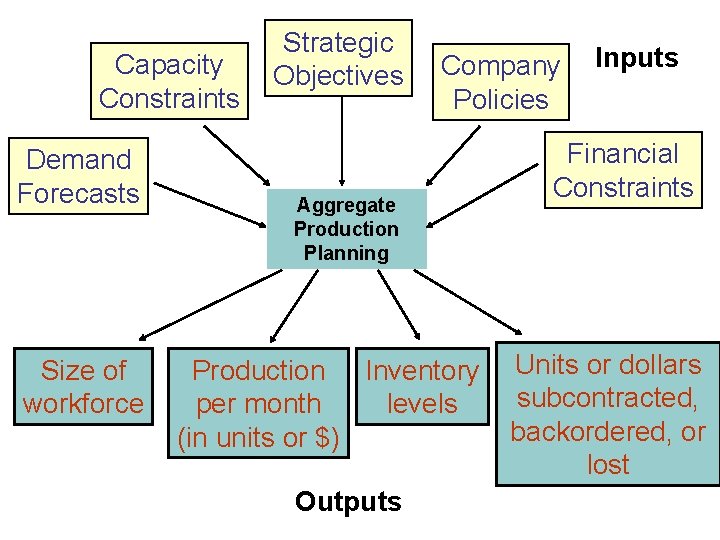
Capacity Constraints Demand Forecasts Size of workforce Strategic Objectives Company Policies Aggregate Production Planning Production Inventory levels per month (in units or $) Outputs Inputs Financial Constraints Units or dollars subcontracted, backordered, or lost
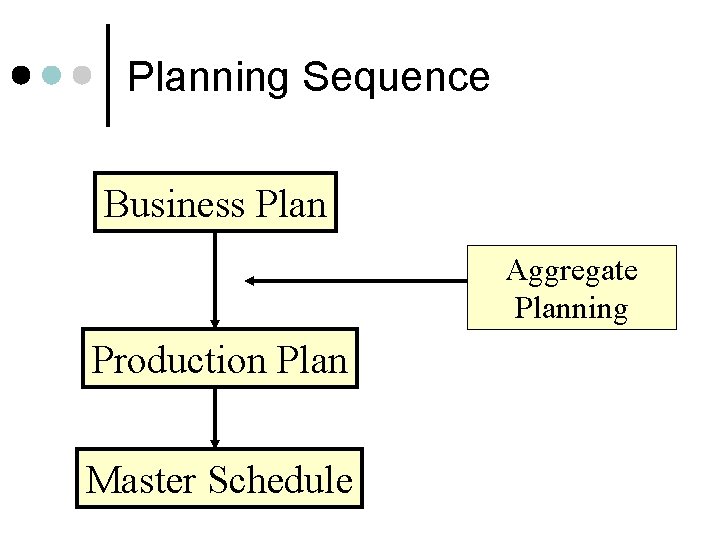
Planning Sequence Business Plan Aggregate Planning Production Plan Master Schedule
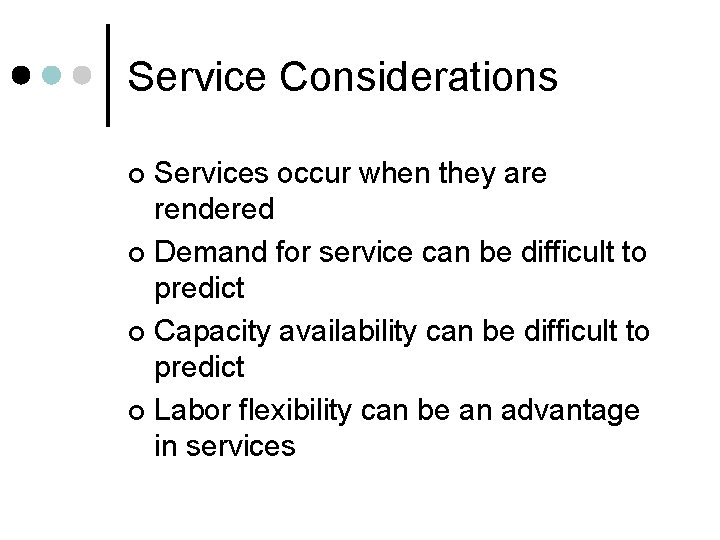
Service Considerations Services occur when they are rendered ¢ Demand for service can be difficult to predict ¢ Capacity availability can be difficult to predict ¢ Labor flexibility can be an advantage in services ¢
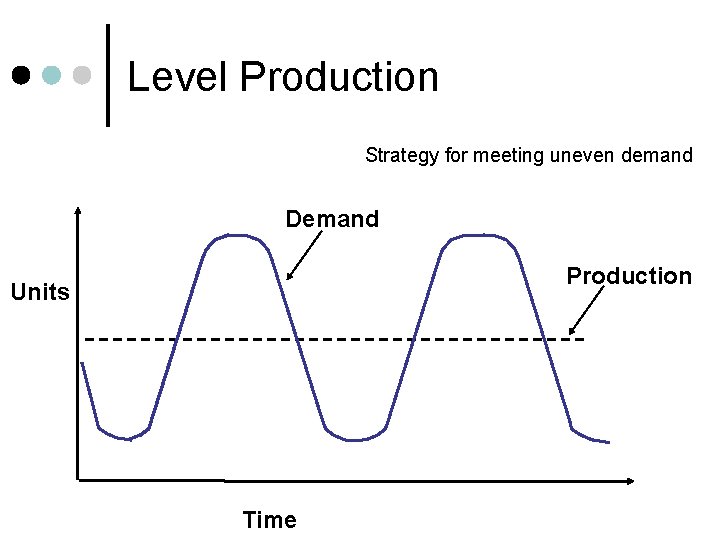
Level Production Strategy for meeting uneven demand Demand Production Units Time
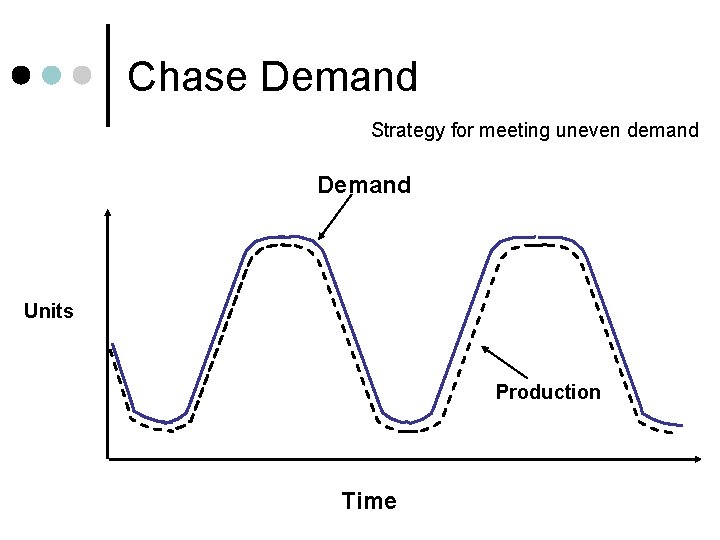
Chase Demand Strategy for meeting uneven demand Demand Units Production Time
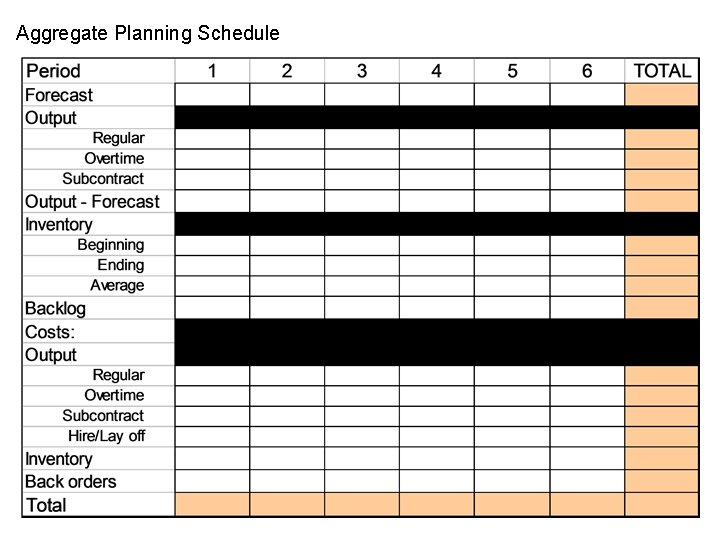
Aggregate Planning Schedule
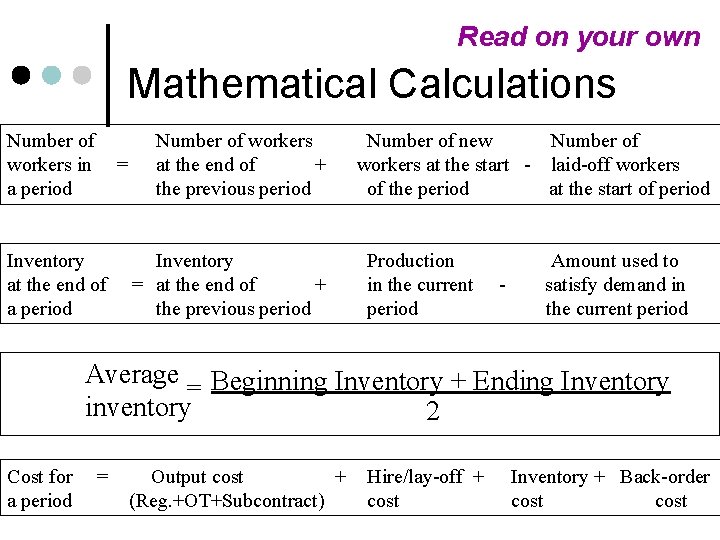
Read on your own Mathematical Calculations Number of workers in a period = Inventory at the end of a period Number of workers at the end of + the previous period Inventory = at the end of + the previous period Number of new Number of workers at the start - laid-off workers of the period at the start of period Production in the current period - Amount used to satisfy demand in the current period Average Beginning Inventory + Ending Inventory = inventory 2 Cost for a period = Output cost + (Reg. +OT+Subcontract) Hire/lay-off + cost Inventory + Back-order cost
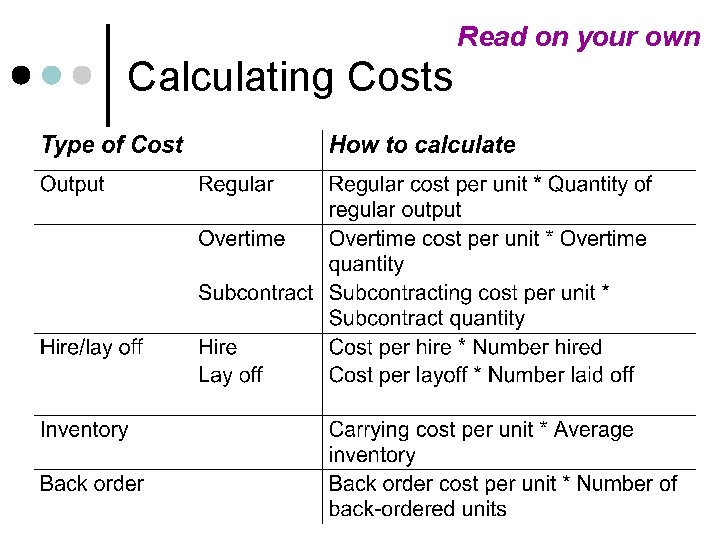
Read on your own Calculating Costs
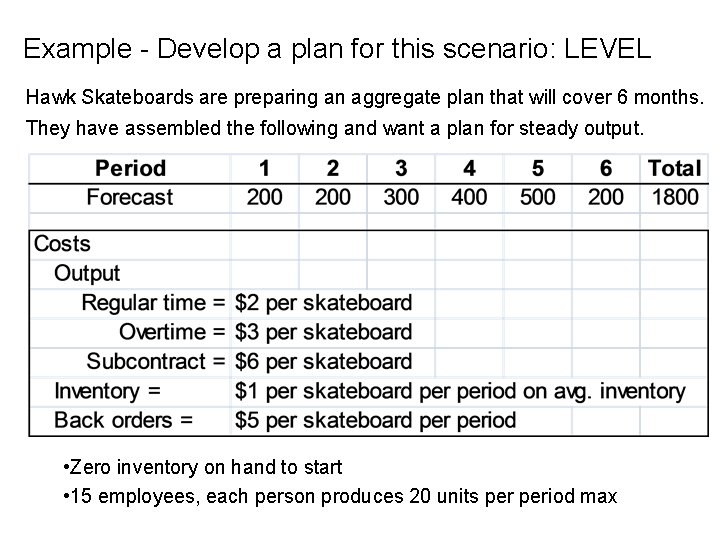
Example - Develop a plan for this scenario: LEVEL Hawk Skateboards are preparing an aggregate plan that will cover 6 months. They have assembled the following and want a plan for steady output. • Zero inventory on hand to start • 15 employees, each person produces 20 units period max
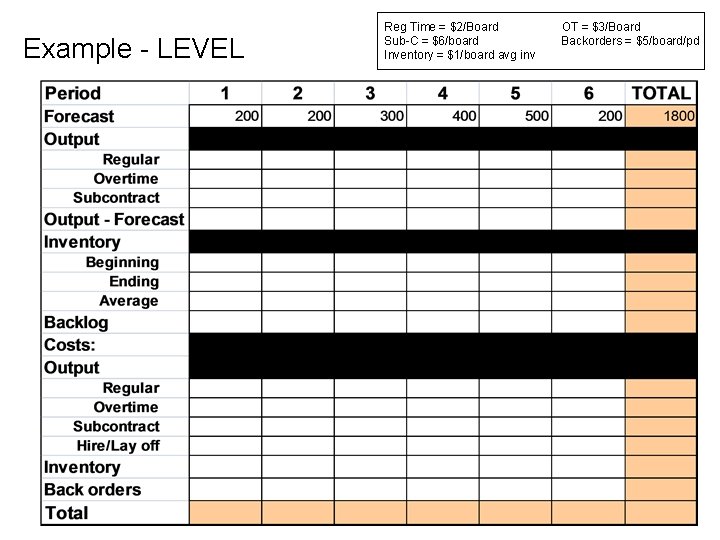
Example - LEVEL Reg Time = $2/Board Sub-C = $6/board Inventory = $1/board avg inv OT = $3/Board Backorders = $5/board/pd
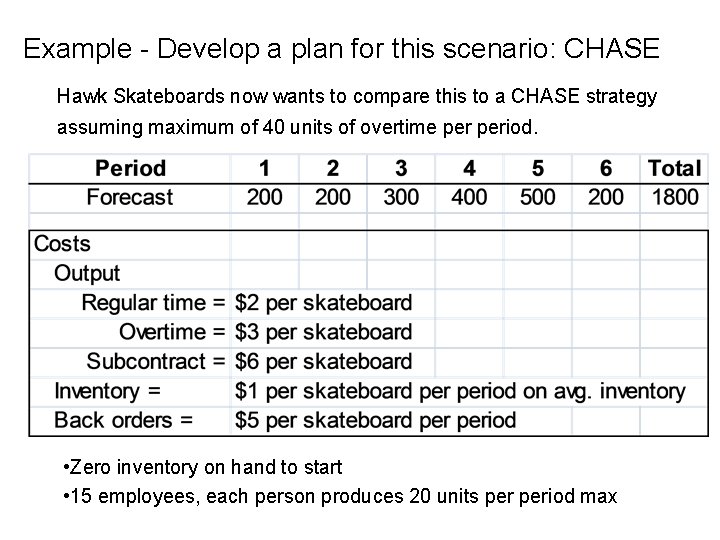
Example - Develop a plan for this scenario: CHASE Hawk Skateboards now wants to compare this to a CHASE strategy assuming maximum of 40 units of overtime period. • Zero inventory on hand to start • 15 employees, each person produces 20 units period max
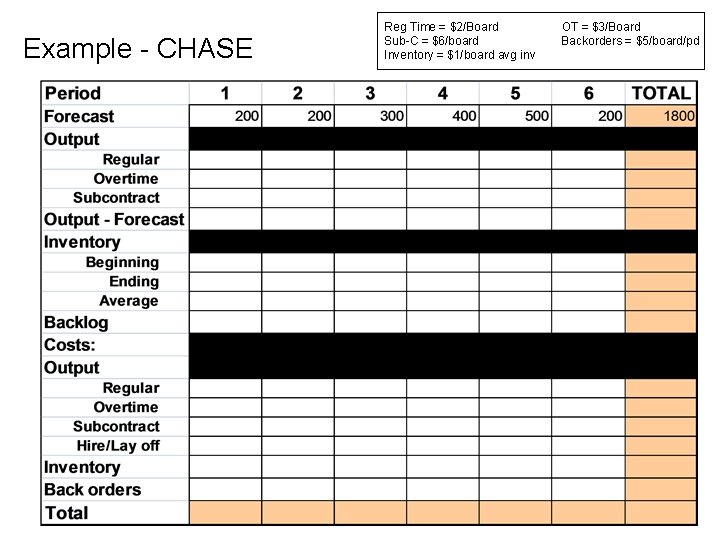
Example - CHASE Reg Time = $2/Board Sub-C = $6/board Inventory = $1/board avg inv OT = $3/Board Backorders = $5/board/pd
Example - Develop a plan for this scenario: COMBO Hawk Skateboards learns that one of their production workers was badly injured during a skateboard competition and will be out of commission for 6 months. Rather than replace the person, the company would like to work with a smaller workforce and use overtime to make up for the lost output. The reduced regular time output is now 280 units period. The maximum amount of overtime output period is 40 units. They want to develop an aggregate plan for this scenario and compare it to the other one to confirm that costs will be reduced. NO SUBCONTRACTING IS ALLOWED!!!
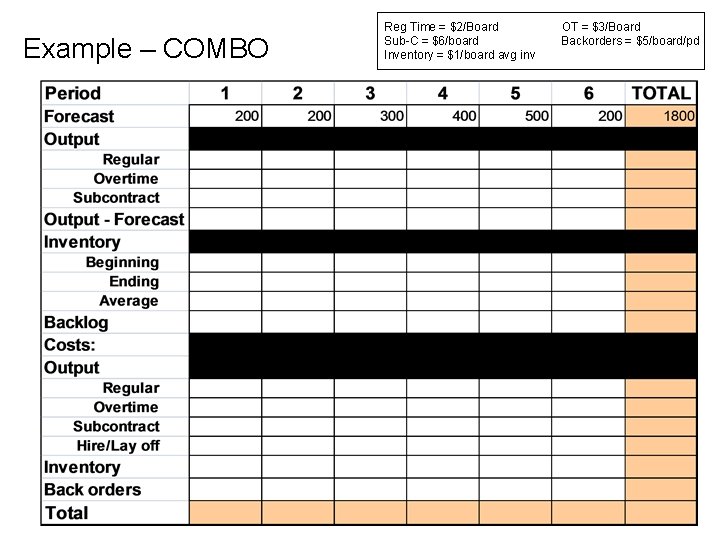
Example – COMBO Reg Time = $2/Board Sub-C = $6/board Inventory = $1/board avg inv OT = $3/Board Backorders = $5/board/pd
Example – Compare costs from both scenarios Cost of Steady Production with 15 workers Cost of Overtime Production with 14 workers Their decision would be to continue without their injured employee and assume overtime/backorder costs. Why wouldn’t this be a good permanent plan?
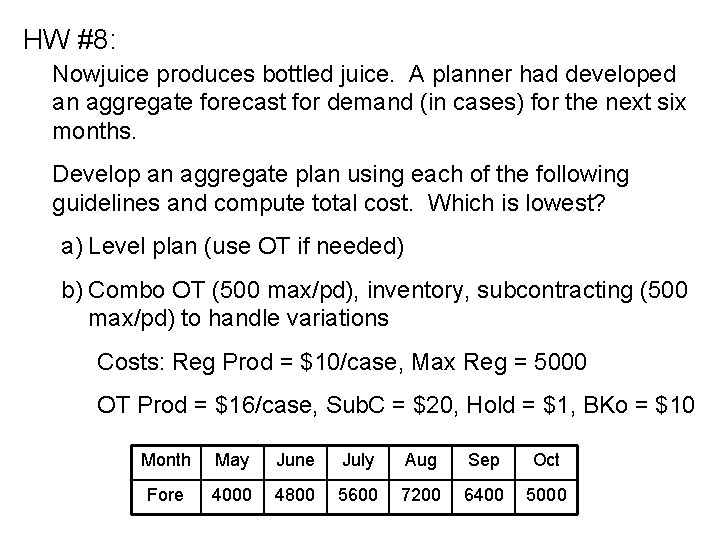
HW #8: Nowjuice produces bottled juice. A planner had developed an aggregate forecast for demand (in cases) for the next six months. Develop an aggregate plan using each of the following guidelines and compute total cost. Which is lowest? a) Level plan (use OT if needed) b) Combo OT (500 max/pd), inventory, subcontracting (500 max/pd) to handle variations Costs: Reg Prod = $10/case, Max Reg = 5000 OT Prod = $16/case, Sub. C = $20, Hold = $1, BKo = $10 Month May June July Aug Sep Oct Fore 4000 4800 5600 7200 6400 5000
- Slides: 21