
BTG 403 Recombinant DNA Technology r DNA Technology
BTG 403 Recombinant DNA Technology
r. DNA Technology • • Restriction Enzymes and DNA Ligase Plasmid Cloning Vectors Transformation of Bacteria Blotting Techniques
Restriction Enzymes • Most significant advancement permitting r. DNA manipulation • Differ from other nucleases – recognize and cleave a specific DNA sequence (Type II restriction enzymes)
Restriction Enzymes • Nomenclature – Eco. RI • E = Escherichia genus name • co = coli species name • R = strain RY 12 strain or serotype • I = Roman numeral one = first enzyme – Hin. DIII • Haemophilus influenza serotype d 3 rd enzyme
Restriction Enzymes • Recognition sites – Generally 4, 6, or 8 bp in length – Most sites are palindromic • OTTO / HANNAH / REGAL LAGER • A MAN A PLAN A CANAL PANAMA – For REases - sequence reads the same in a 5’--->3’ direction on each strand
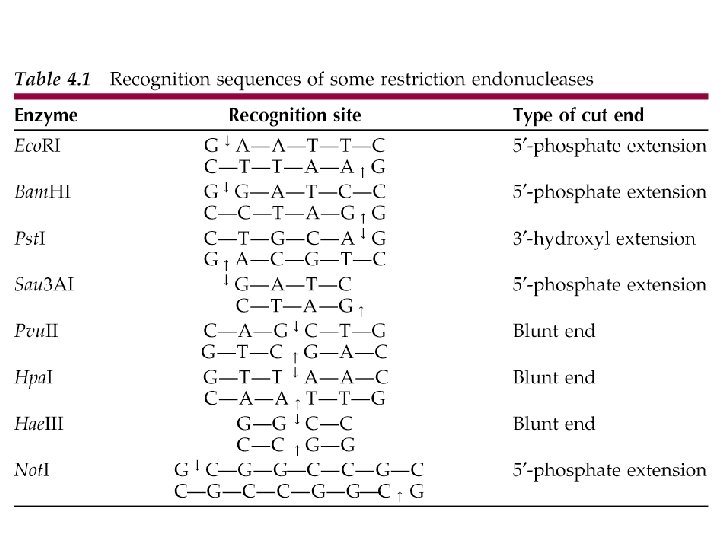
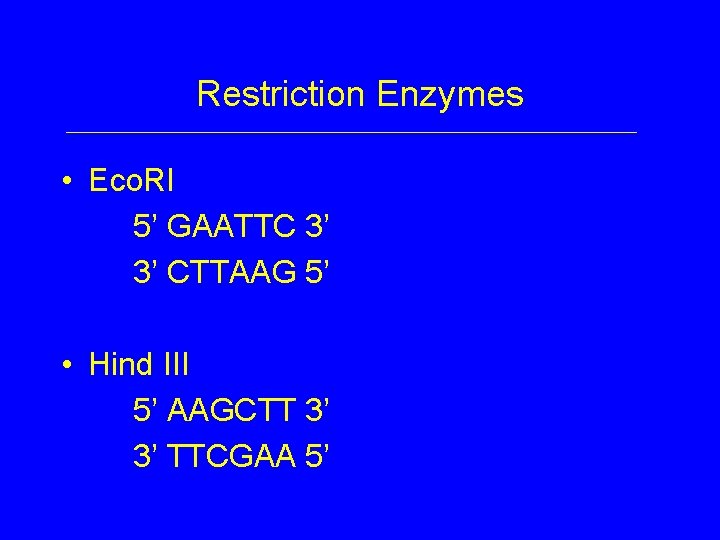
Restriction Enzymes • Eco. RI 5’ GAATTC 3’ 3’ CTTAAG 5’ • Hind III 5’ AAGCTT 3’ 3’ TTCGAA 5’
Restriction Enzymes • Cleave DNA to generate different “ends” – Staggered cut • 5’ extension • 3’ extension – Blunt end
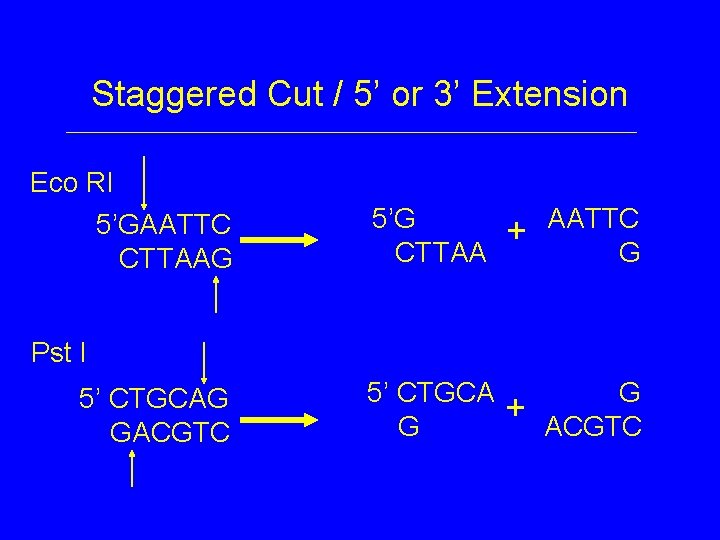
Staggered Cut / 5’ or 3’ Extension Eco RI 5’GAATTC CTTAAG 5’G CTTAA + AATTC G + G ACGTC Pst I 5’ CTGCAG GACGTC 5’ CTGCA G
Restriction Enzymes in DNA Cloning • How are REases used ? – Ends are “sticky” – Complementary – Any two DNAs cut with same enzyme can stick together through complementary base pairing
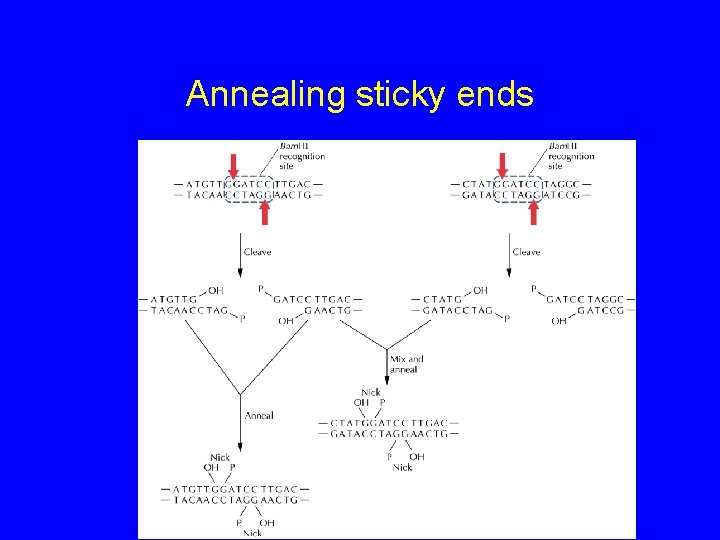
Annealing sticky ends
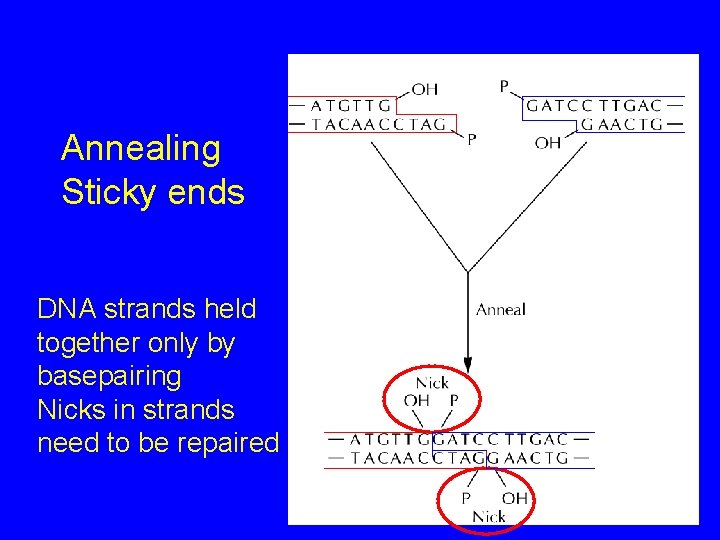
Annealing Sticky ends DNA strands held together only by basepairing Nicks in strands need to be repaired
Linking Restriction Fragments • T 4 DNA Ligase – repairs nicks in DNA strands (reforms phosphodiester bond) – uses energy from ATP – works on blunt or sticky ends • Other enzymes used in r. DNA technology
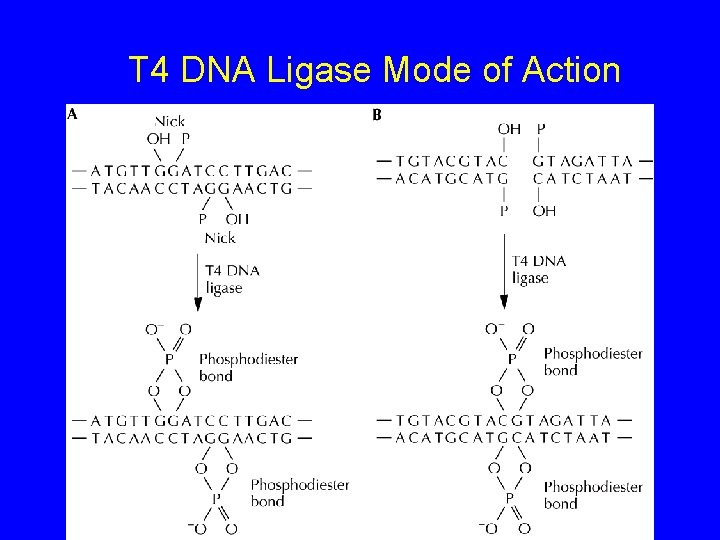
T 4 DNA Ligase Mode of Action
r. DNA Technology • • Restriction Enzymes and DNA Ligase Plasmid Cloning Vectors Transformation of Bacteria Creating and Screening Genomic Libraries c. DNA Library Construction Vectors for Cloning Large Pieces of DNA Blotting Techniques
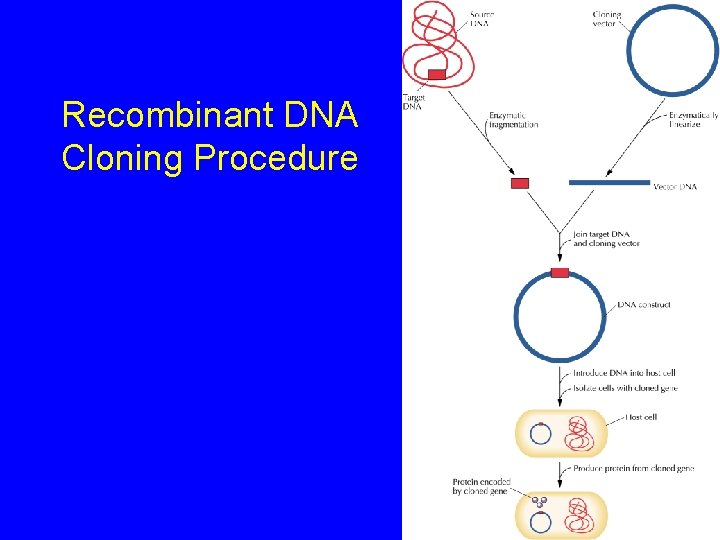
Recombinant DNA Cloning Procedure
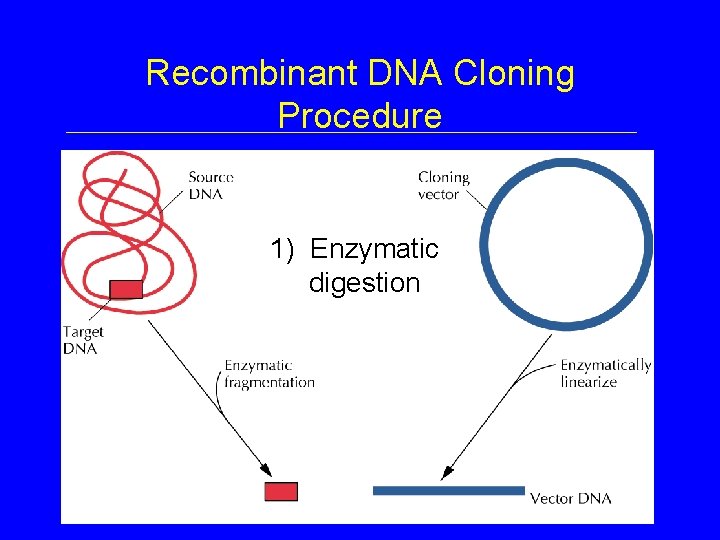
Recombinant DNA Cloning Procedure 1) Enzymatic digestion
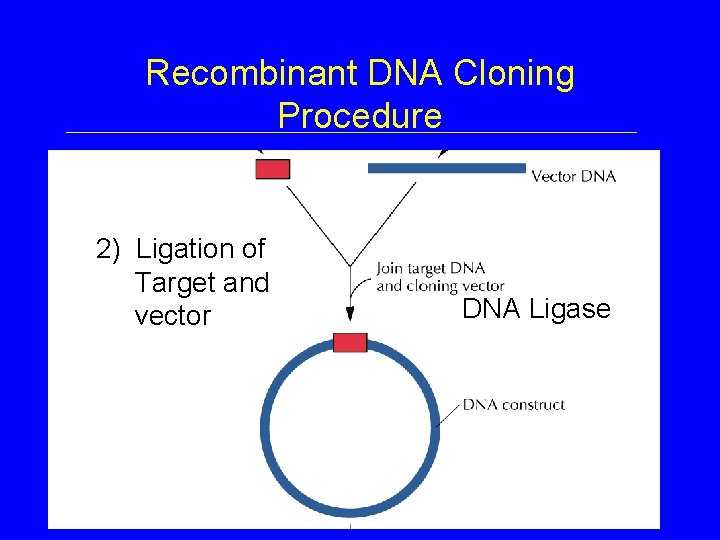
Recombinant DNA Cloning Procedure 2) Ligation of Target and vector DNA Ligase
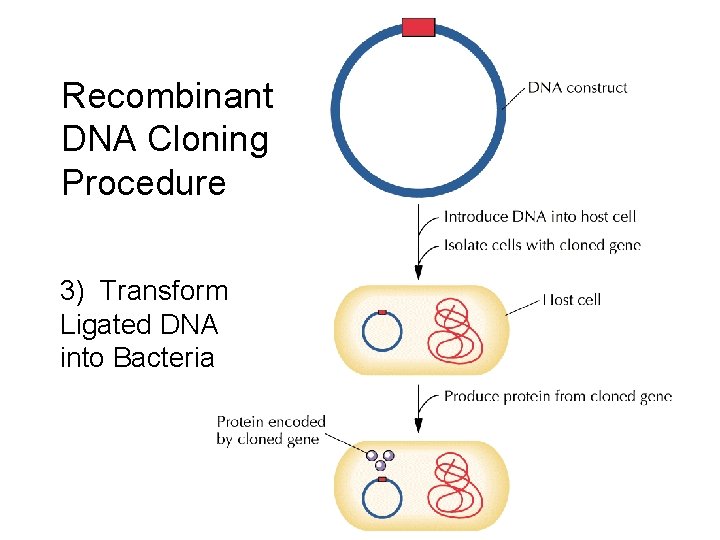
Recombinant DNA Cloning Procedure 3) Transform Ligated DNA into Bacteria
Plasmid Cloning Vectors • Recombinant DNA needs to be replicated in bacterial cell • Self-replicating piece of DNA – termed cloning vehicle – can be plasmid or phage
Plasmid Cloning Vectors • Small circular piece of DNA • Exists separate from chromosome • Derived from naturally occurring plasmids • High copy number = 10 -100 copies / cell • Low copy number = 1 -4 copies / cell
Plasmid Cloning Vectors • Derived from naturally occurring plasmids • Altered features – small size (removal of non-essential DNA) • higher transformation efficiency – unique restriction enzyme sites – one or more selectable markers – origin of replication (retained from original plasmid) – other features: promoters, etc.
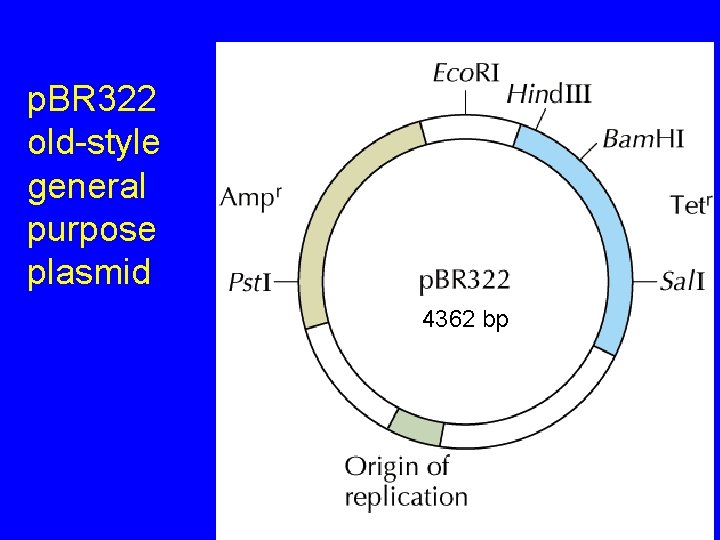
p. BR 322 old-style general purpose plasmid 4362 bp
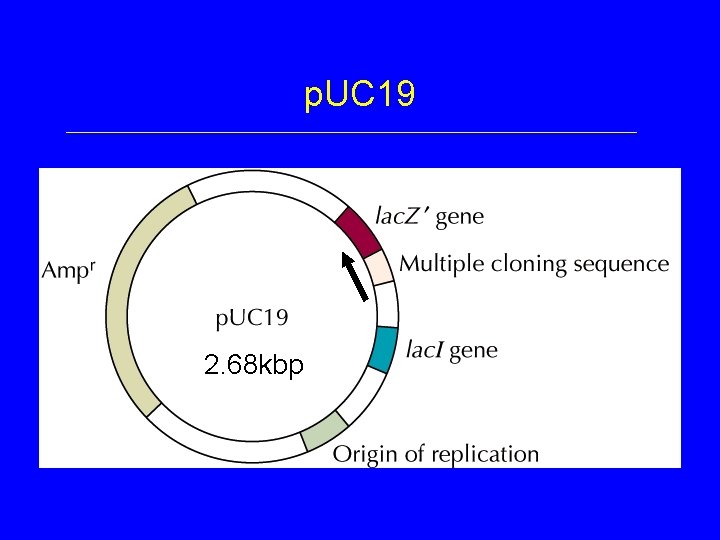
p. UC 19 2. 68 kbp
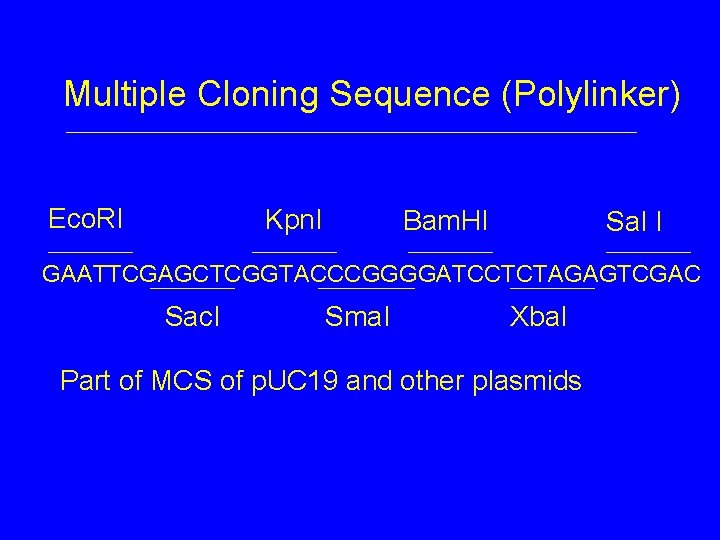
Multiple Cloning Sequence (Polylinker) Eco. RI Kpn. I Bam. HI Sal I GAATTCGAGCTCGGTACCCGGGGATCCTCTAGAGTCGAC Sac. I Sma. I Xba. I Part of MCS of p. UC 19 and other plasmids
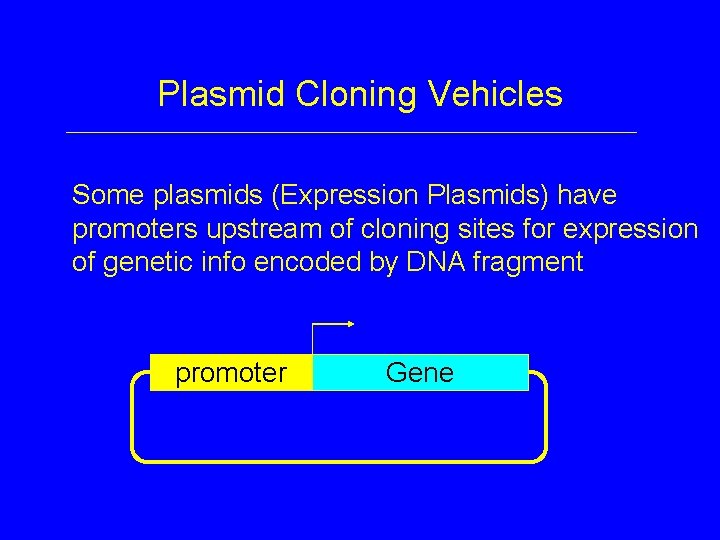
Plasmid Cloning Vehicles Some plasmids (Expression Plasmids) have promoters upstream of cloning sites for expression of genetic info encoded by DNA fragment promoter Gene
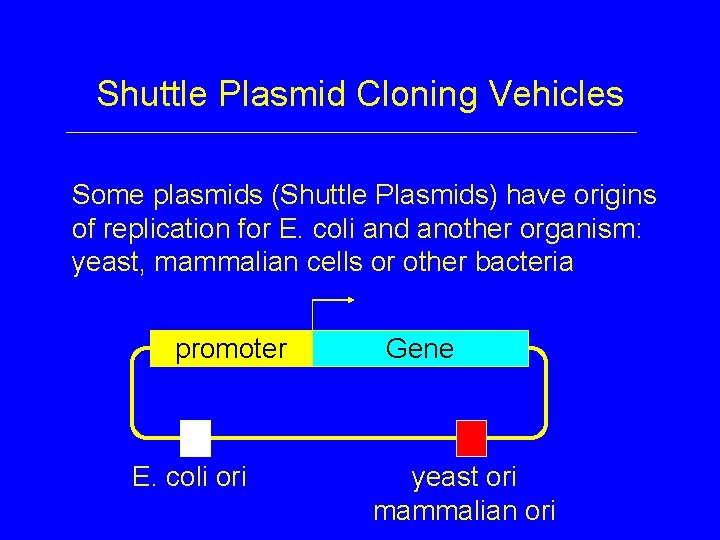
Shuttle Plasmid Cloning Vehicles Some plasmids (Shuttle Plasmids) have origins of replication for E. coli and another organism: yeast, mammalian cells or other bacteria promoter E. coli ori Gene yeast ori mammalian ori
Plasmid Cloning Vehicles • What prevents plasmid DNA from reforming during ligation?
Plasmid Cloning Vehicles • What prevents plasmid DNA from reforming during ligation and transforming cells as do the recombinant molecules? • Three ways to prevent – Treat with Alkaline Phosphatase – Directional Cloning – Suicide Plasmids with ccd. B gene
Plasmid Cloning Vehicles • Alkaline Phosphatase – removes 5’ PO 4 from end of DNA strand – prevents formation of new phosphodiester bond by DNA Ligase
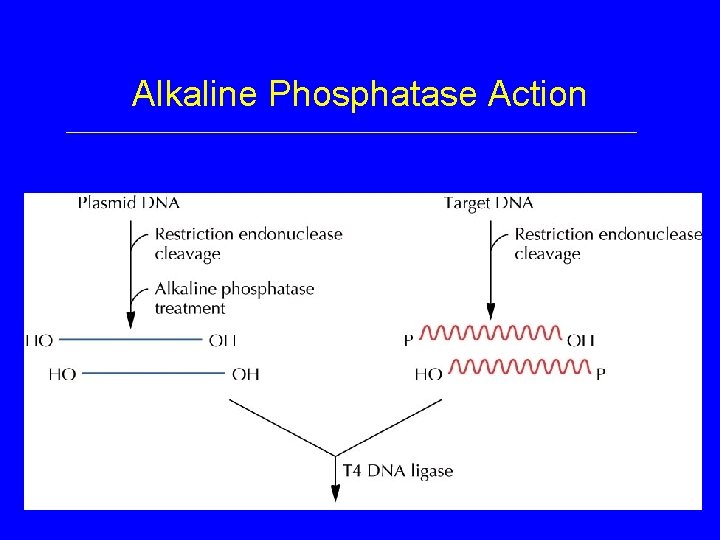
Alkaline Phosphatase Action
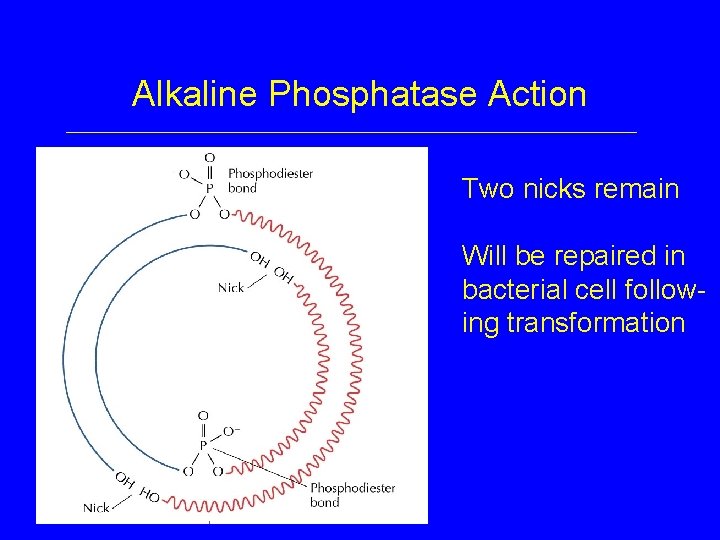
Alkaline Phosphatase Action Two nicks remain Will be repaired in bacterial cell following transformation
Directional Cloning • Digest plasmid and target DNA with two different restriction enzymes – Hind III and Bam. HI – Ends are not compatible (can’t basepair) – Plasmid won’t re-circularize unless target DNA has inserted

Transformation of Bacteria • r. DNA constructed in the lab must be introduced into “host” cell • Cells must be able to take up DNA “COMPETENT” • Growing bacteria will produce lots of copies of the DNA

Transformation of Bacteria • Two basic methods to produce competent bacteria (able to take up added DNA) – Chemical competent – Electroporation

Transformation of Bacteria • Chemical competent – Divalent metal ion Ca++ , required – treat cells with ice-cold Ca. Cl 2 solutions – Ca++ ions alter membrane so it is permeable to DNA

Transformation of Bacteria • Electroporation – Cell/DNA mix given high voltage electric shock – 2. 5 kvolts, ~5 msec – useful for high efficiency transformation – 109 transformants / µg of DNA

Transformation of Bacteria • Both methods are very inefficient – only a few % of cells actually take up DNA • How are the transformed cells selected? – antibiotic resistance gene on plasmid – ampicilin, tetracycline, chloramphenicol, etc. – transformed cells grow; non-transformed die

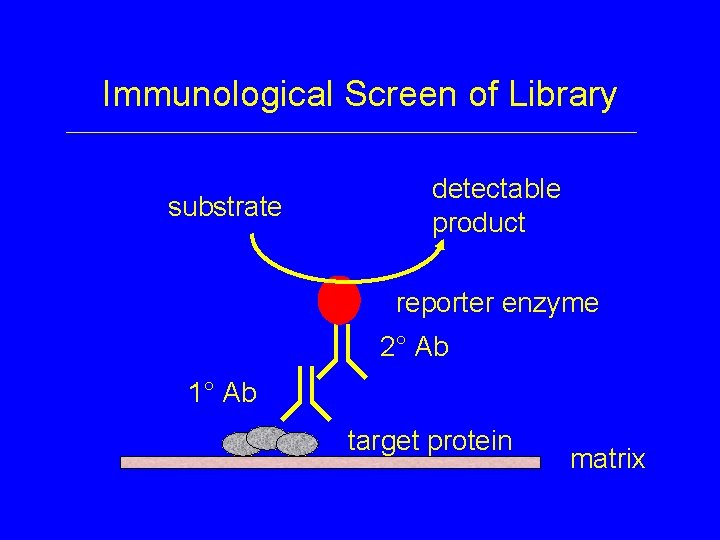
Immunological Screen of Library substrate detectable product reporter enzyme 2° Ab 1° Ab target protein matrix

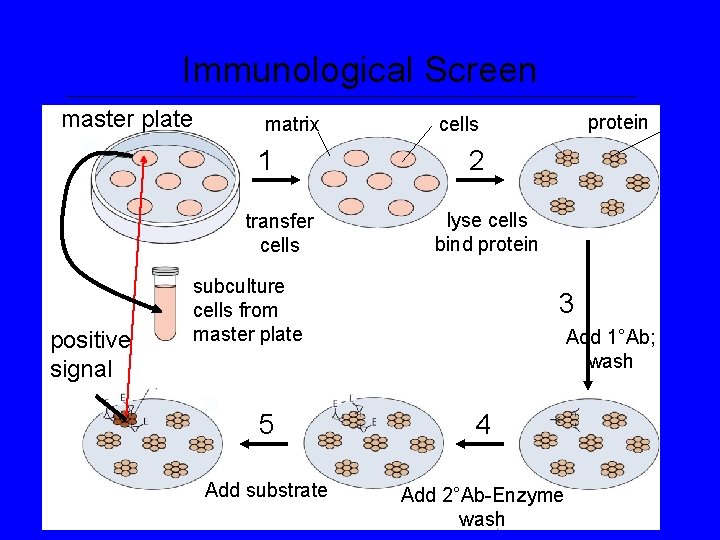
Immunological Screen master plate matrix 1 transfer cells positive signal protein cells 2 lyse cells bind protein subculture cells from master plate 3 Add 1°Ab; wash 5 4 Add substrate Add 2°Ab-Enzyme wash

Blotting Techniques • Several techniques for size fraction of nucleic acid fragments and proteins – Nucleic Acids • Agarose Gels • Polyacrylamide Gels - higher resolution – Proteins • SDS PAGE - denatured proteins

Blotting Techniques • How can one fragment be detected in a complex mixture? – Transfer the macromolecule to a membrane – Detect with • complementary nucleic acid probe or • with an antibody to the specific protein

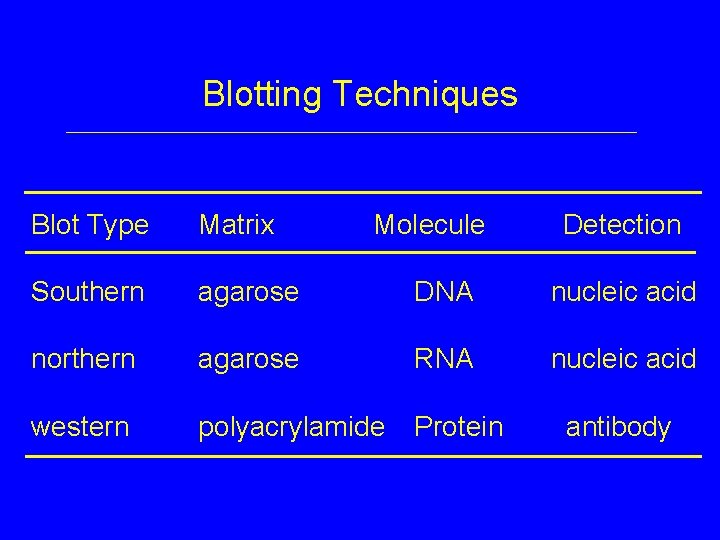
Blotting Techniques Blot Type Matrix Molecule Detection Southern agarose DNA nucleic acid northern agarose RNA nucleic acid western polyacrylamide Protein antibody

Blotting Techniques: Info Obtained • Southern Blots – presence of fragment (gene) – # of fragments (approx. # of genes) – sizes of fragments – sequence similarity between target & probe
Blotting Techniques: Info Obtained • Northern blots – presence of RNA in tissue – level of expression – size of m. RNA – sequence similarity between target & probe
Blotting Techniques: Info Obtained • Western blots – presence of protein in tissue – level of expression – size of protein
- Slides: 57