
BSC 2011 L PLATYHELMINTHES NEMATODES MOLLUSCS Animal Characteristics
BSC 2011 L PLATYHELMINTHES, NEMATODES, MOLLUSCS
Animal Characteristics Symmetry Radiata – radial symmetry, diploblastic (2 tissues) Bilateria – bilateral symmetry, triploblastic Body Cavity Acoelomates – no cavity Psuedocoelomates – false coelom, not completely lined by mesoderm derived tissue Coelomates – true coelom, room for organs in body cavity lined with mesoderm tissue Protostomes – 1 st embryonic opening becomes mouth Deuterostomes – 1 st embryonic opening becomes anus
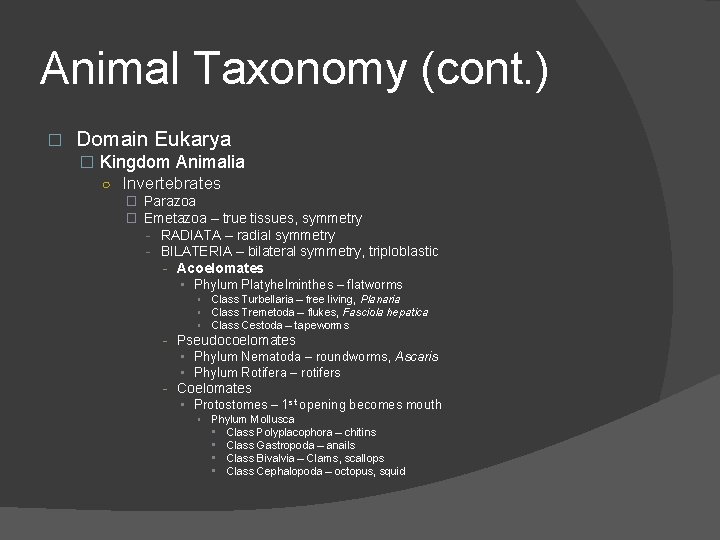
Animal Taxonomy (cont. ) � Domain Eukarya � Kingdom Animalia ○ Invertebrates � Parazoa � Emetazoa – true tissues, symmetry - RADIATA – radial symmetry - BILATERIA – bilateral symmetry, triploblastic - Acoelomates • Phylum Platyhelminthes – flatworms ▪ Class Turbellaria – free living, Planaria ▪ Class Tremetoda – flukes, Fasciola hepatica ▪ Class Cestoda – tapeworms - Pseudocoelomates • Phylum Nematoda – roundworms, Ascaris • Phylum Rotifera – rotifers - Coelomates • Protostomes – 1 st opening becomes mouth ▪ Phylum Mollusca • Class Polyplacophora – chitins • Class Gastropoda – anails • Class Bivalvia – Clams, scallops • Class Cephalopoda – octopus, squid
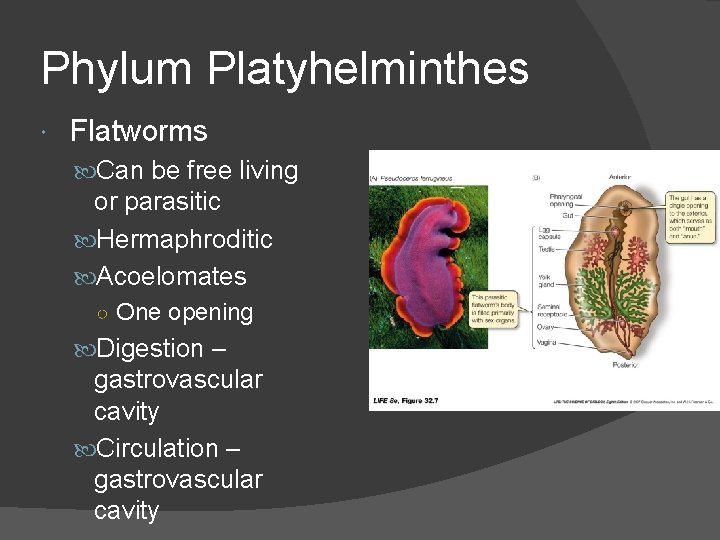
Phylum Platyhelminthes Flatworms Can be free living or parasitic Hermaphroditic Acoelomates ○ One opening Digestion – gastrovascular cavity Circulation – gastrovascular cavity
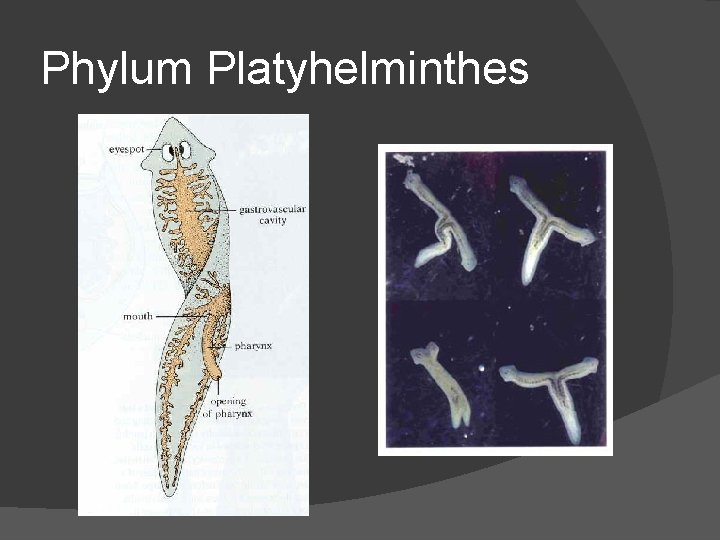
Phylum Platyhelminthes
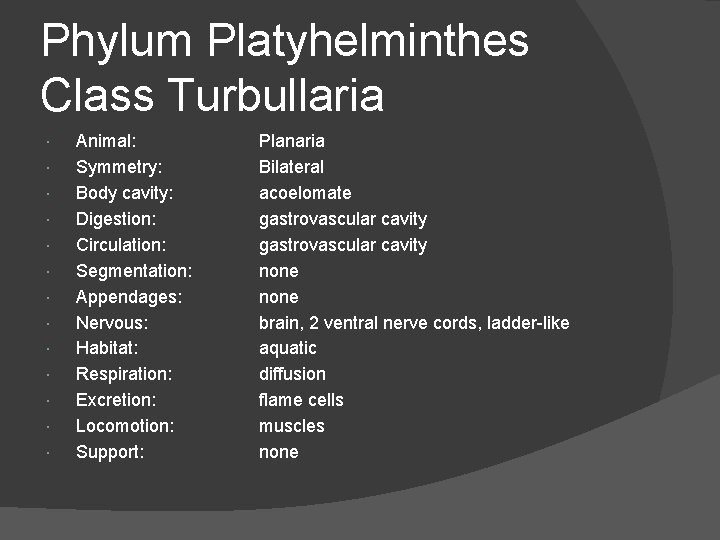
Phylum Platyhelminthes Class Turbullaria Animal: Symmetry: Body cavity: Digestion: Circulation: Segmentation: Appendages: Nervous: Habitat: Respiration: Excretion: Locomotion: Support: Planaria Bilateral acoelomate gastrovascular cavity none brain, 2 ventral nerve cords, ladder-like aquatic diffusion flame cells muscles none

Planaria model
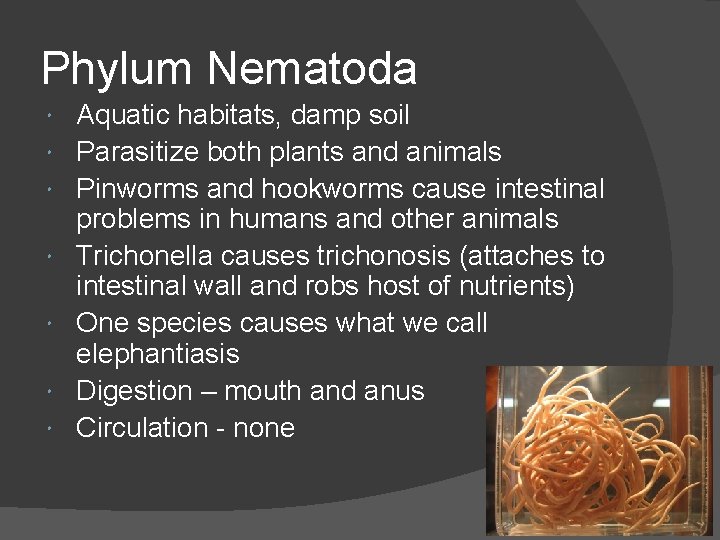
Phylum Nematoda Aquatic habitats, damp soil Parasitize both plants and animals Pinworms and hookworms cause intestinal problems in humans and other animals Trichonella causes trichonosis (attaches to intestinal wall and robs host of nutrients) One species causes what we call elephantiasis Digestion – mouth and anus Circulation - none
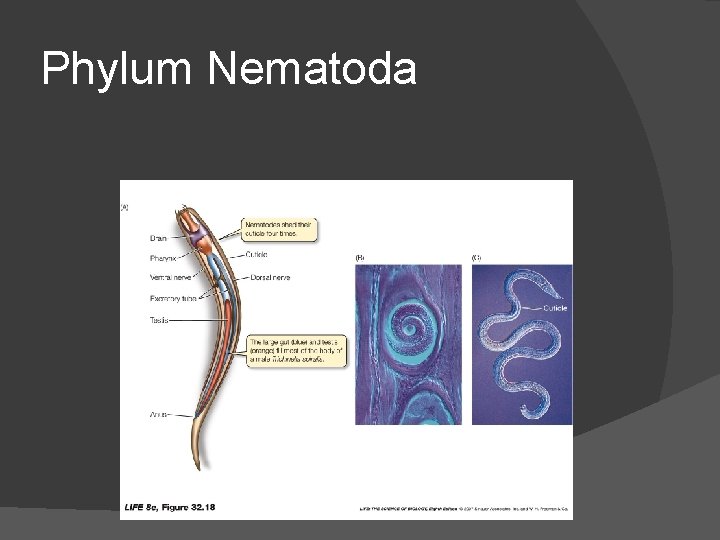
Phylum Nematoda
Phylum Nematoda Animal: Symmetry: Body cavity: Digestion: Circulation: Segmentation: Appendages: Nervous: Habitat: Respiration: Excretion: Locomotion: Support: Roundworm bilateral pseudocoelomate mouth and anus none, fluid in pseudocoel none dorsal and ventral nerve cord parasitic diffusion through body surface 2 lateral tubes longitudinal muscles, whipping motion hydrostatic skeleton, pseudocoel
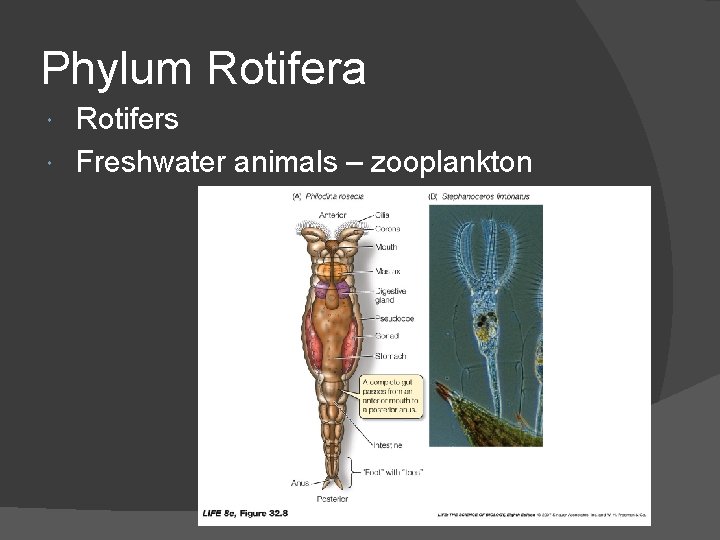
Phylum Rotifera Rotifers Freshwater animals – zooplankton
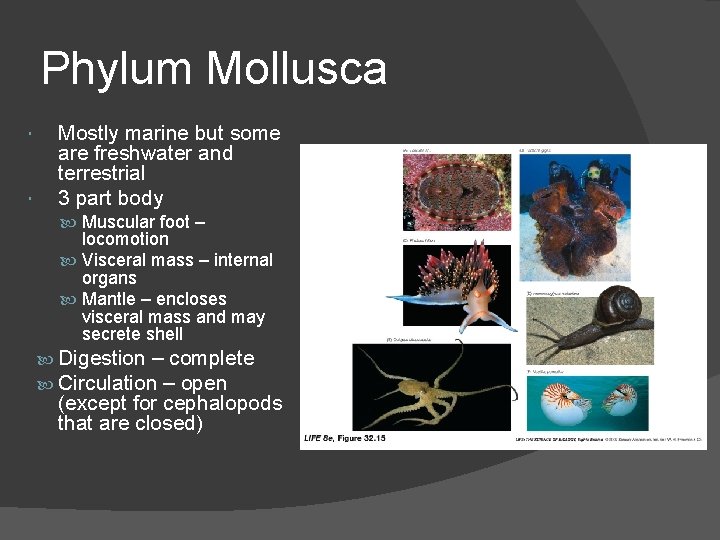
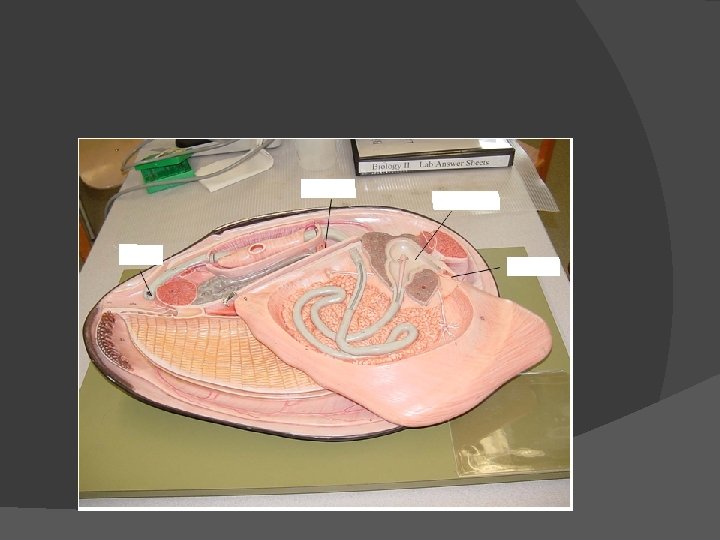
Phylum Mollusca Mostly marine but some are freshwater and terrestrial 3 part body Muscular foot – locomotion Visceral mass – internal organs Mantle – encloses visceral mass and may secrete shell Digestion – complete Circulation – open (except for cephalopods that are closed)
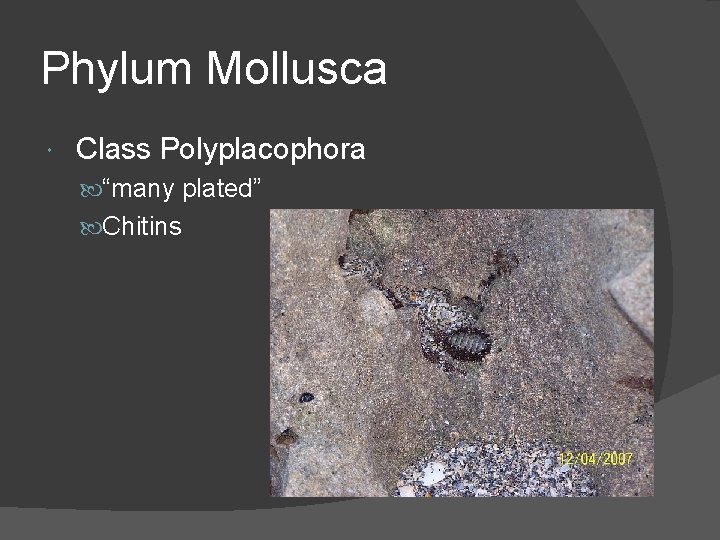
Phylum Mollusca Class Polyplacophora “many plated” Chitins
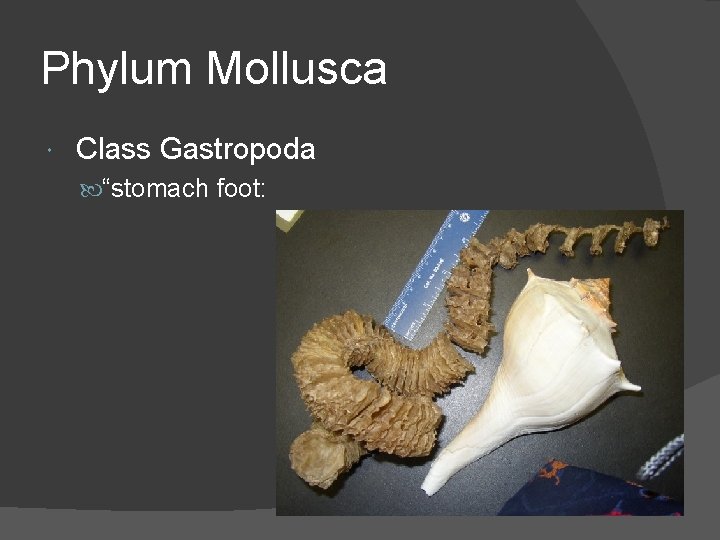
Phylum Mollusca Class Gastropoda “stomach foot:
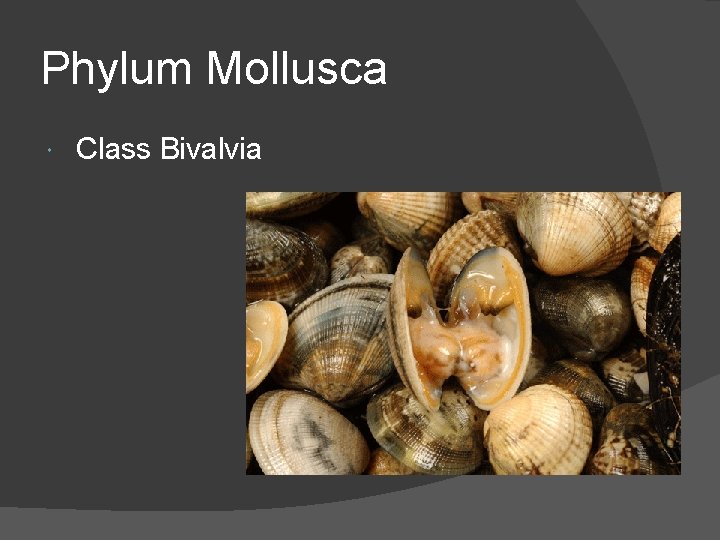
Phylum Mollusca Class Bivalvia
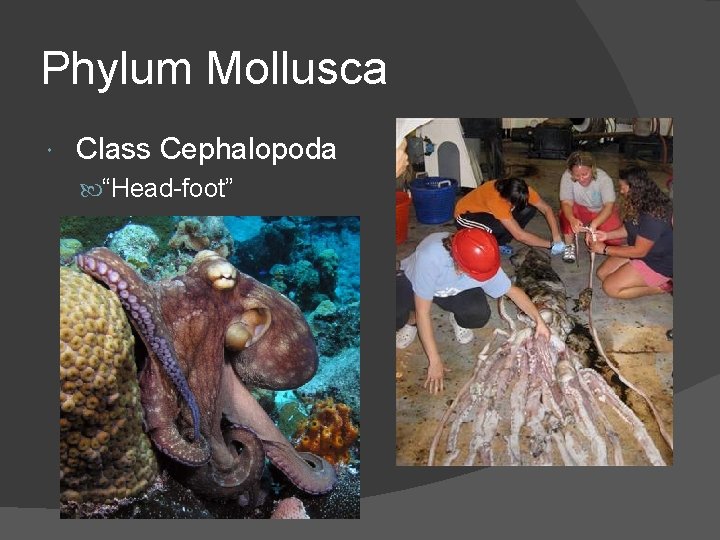
Phylum Mollusca Class Cephalopoda “Head-foot”
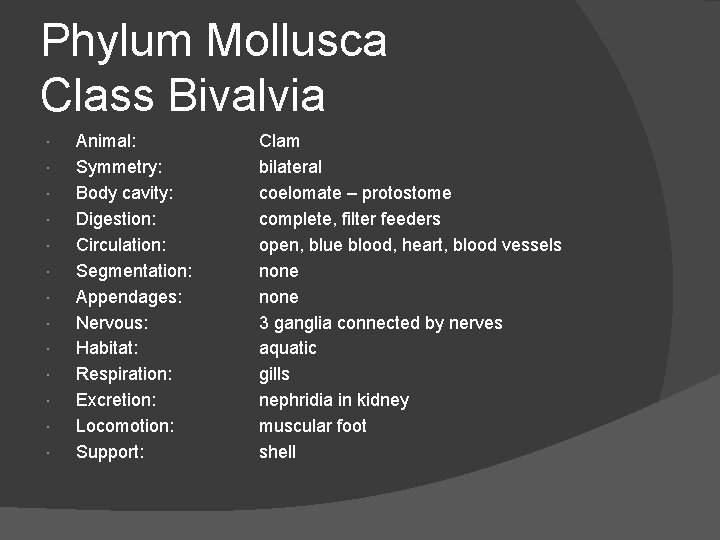
Phylum Mollusca Class Bivalvia Animal: Symmetry: Body cavity: Digestion: Circulation: Segmentation: Appendages: Nervous: Habitat: Respiration: Excretion: Locomotion: Support: Clam bilateral coelomate – protostome complete, filter feeders open, blue blood, heart, blood vessels none 3 ganglia connected by nerves aquatic gills nephridia in kidney muscular foot shell
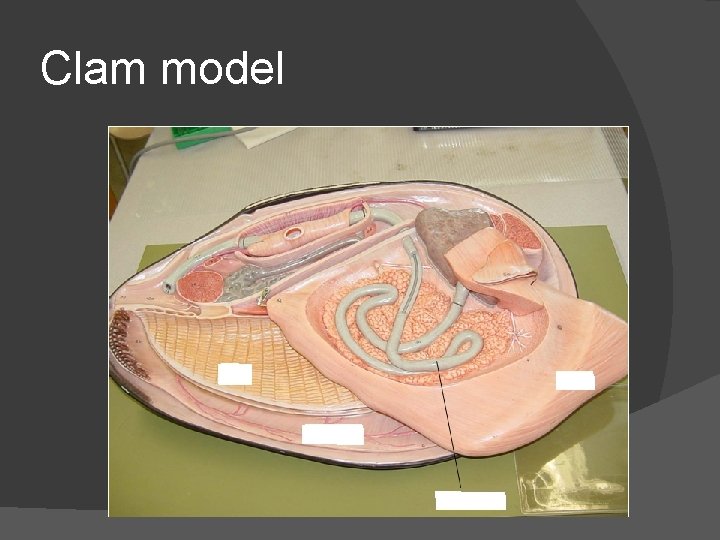
Clam model
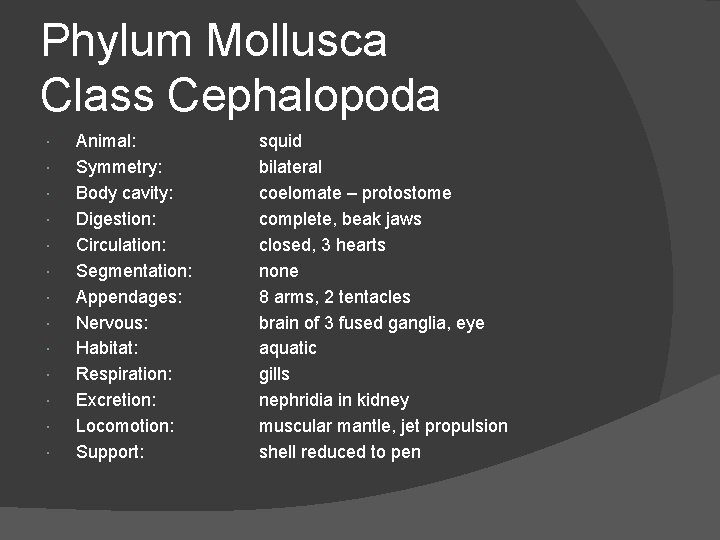
Phylum Mollusca Class Cephalopoda Animal: Symmetry: Body cavity: Digestion: Circulation: Segmentation: Appendages: Nervous: Habitat: Respiration: Excretion: Locomotion: Support: squid bilateral coelomate – protostome complete, beak jaws closed, 3 hearts none 8 arms, 2 tentacles brain of 3 fused ganglia, eye aquatic gills nephridia in kidney muscular mantle, jet propulsion shell reduced to pen
What we are doing today: Phylum Platyhelminthes Look at specimens on benches from all classes Planaria model ○ Know following parts: eye spot, pharynx, ovary, testis, flame cell, brain Planaria – microscope #29, 30 Phylum Nematoda Look at specimens on lab bench Ascaris – microscope # 31, 34 Phylum Rotifera Microscope # 46 Phylum Mollusca Look at specimens from all classes Learn clam model ○ Refer to page 315 and 316 ○ Know following parts: Foot, gill, gonad, intestine, mouth, stomach, anus, kidney, mantle
- Slides: 21