
BSC 2011 L DUETEROSTOMES Phylum Echinodermata Now we
BSC 2011 L DUETEROSTOMES
Phylum Echinodermata Now we are dealing with the deuterostomes (1 st embryonic blastophore becomes anus) � Marine � “spiny-skinned” � Endoskeleton covered by living tissue � Adults are radially symmetrical but larvae are bilaterally symmetrical � Water vascular system � Digestion – complete � Circulation – poorly developed �
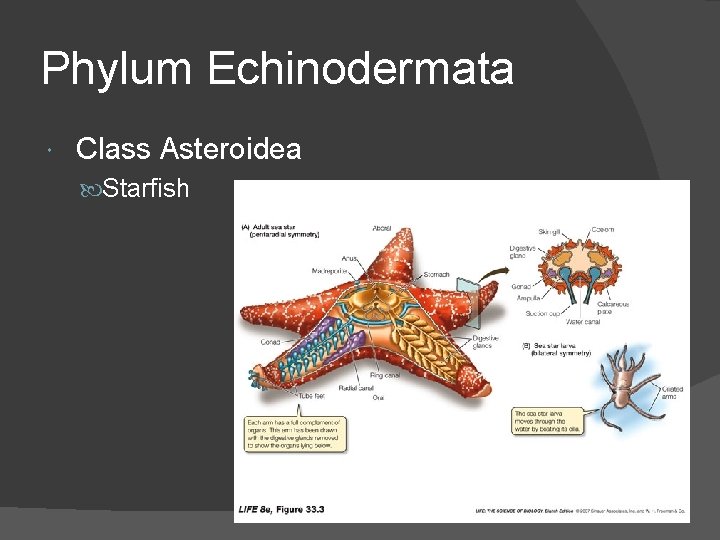
Phylum Echinodermata Class Asteroidea Starfish
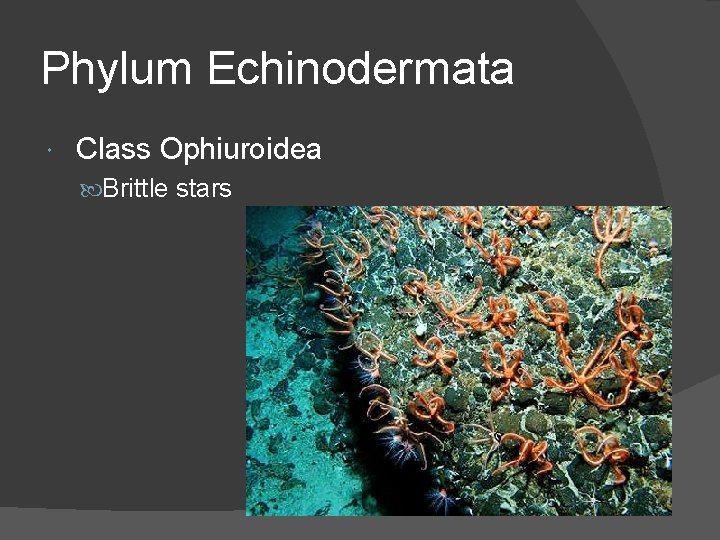
Phylum Echinodermata Class Ophiuroidea Brittle stars
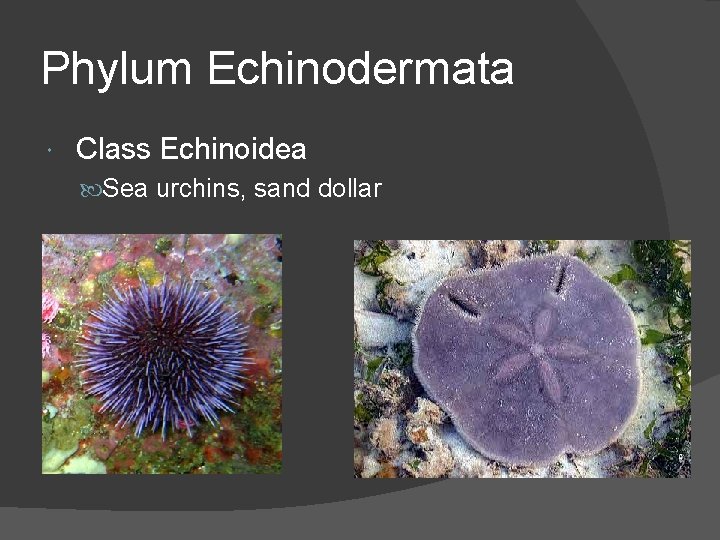
Phylum Echinodermata Class Echinoidea Sea urchins, sand dollar
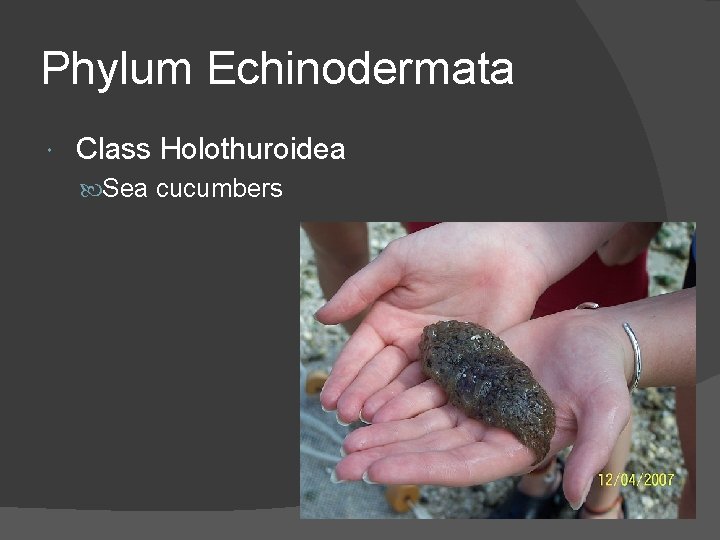
Phylum Echinodermata Class Holothuroidea Sea cucumbers
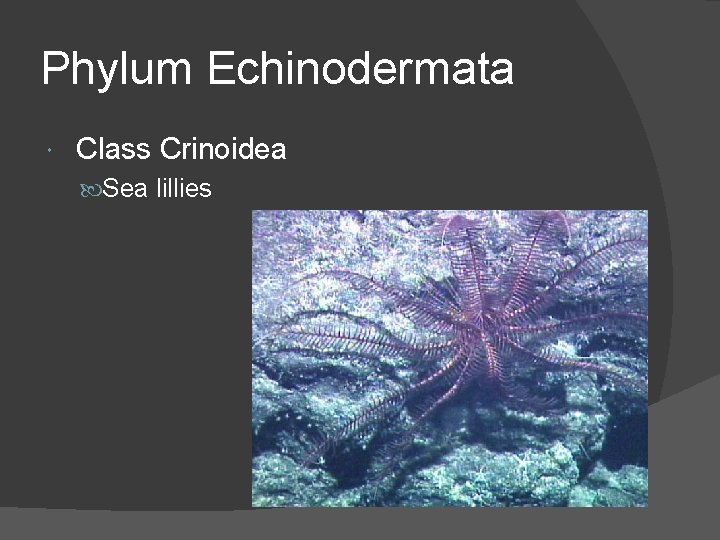
Phylum Echinodermata Class Crinoidea Sea lillies
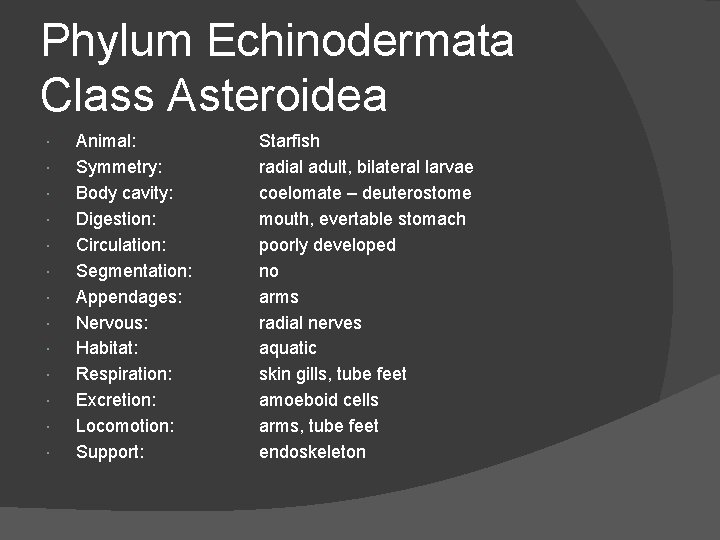
Phylum Echinodermata Class Asteroidea Animal: Symmetry: Body cavity: Digestion: Circulation: Segmentation: Appendages: Nervous: Habitat: Respiration: Excretion: Locomotion: Support: Starfish radial adult, bilateral larvae coelomate – deuterostome mouth, evertable stomach poorly developed no arms radial nerves aquatic skin gills, tube feet amoeboid cells arms, tube feet endoskeleton
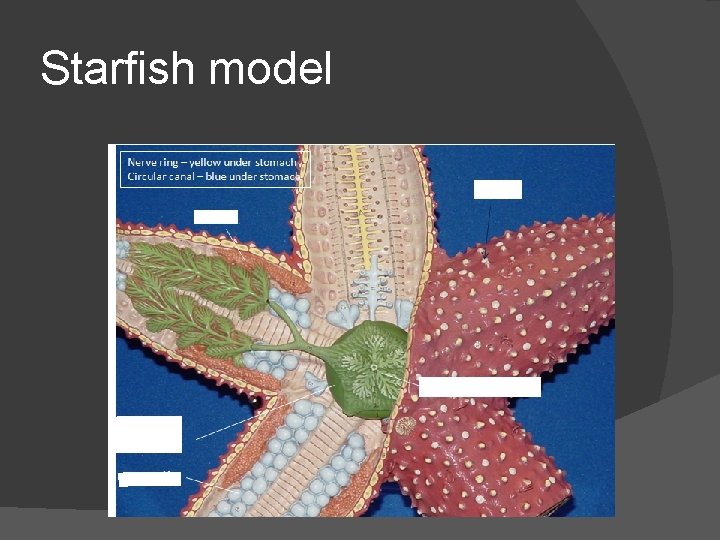
Starfish model
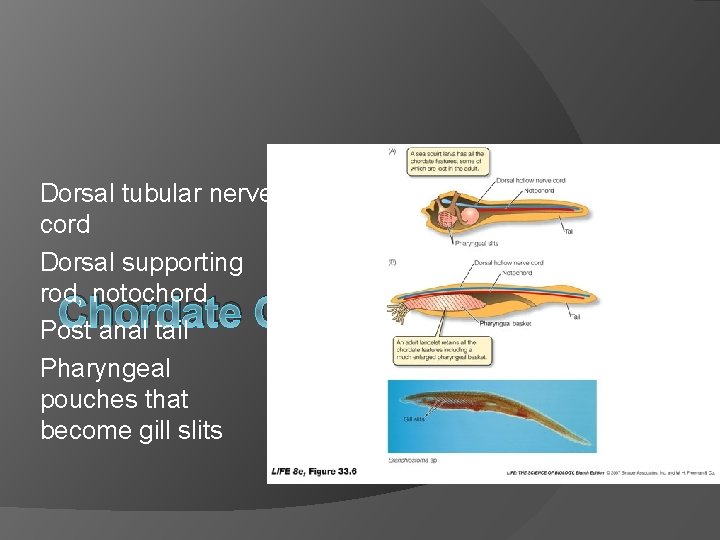
Dorsal tubular nerve cord Dorsal supporting rod, notochord Post anal tail Pharyngeal pouches that become gill slits Chordate Characteristics
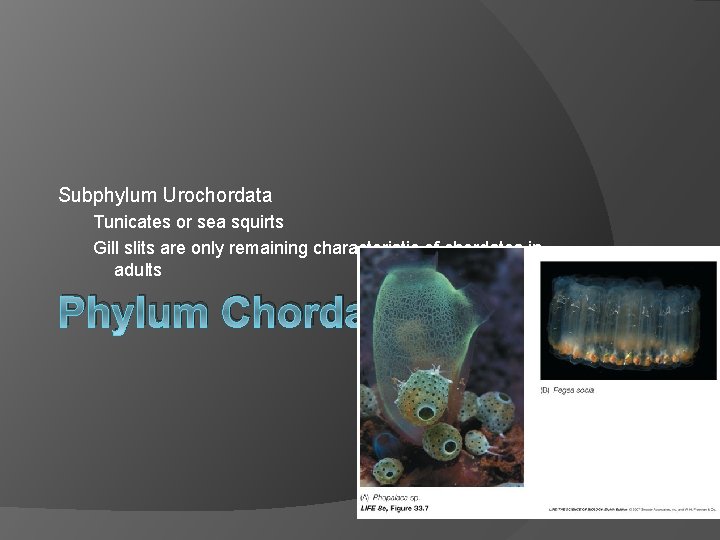
Subphylum Urochordata Tunicates or sea squirts Gill slits are only remaining characteristic of chordates in adults Phylum Chordata
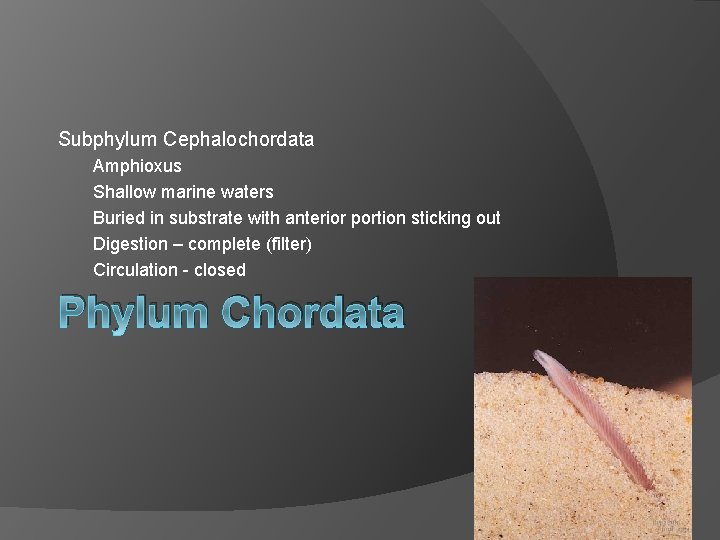
Subphylum Cephalochordata Amphioxus Shallow marine waters Buried in substrate with anterior portion sticking out Digestion – complete (filter) Circulation - closed Phylum Chordata
Subphylum Vertebrata Notochord replaced by vertebral column Jointed skeleton Skull that protects well developed brain Extreme degree of cephalization Well developed muscles Extremely mobile Reproduction is usually sexual Phylum Chordata
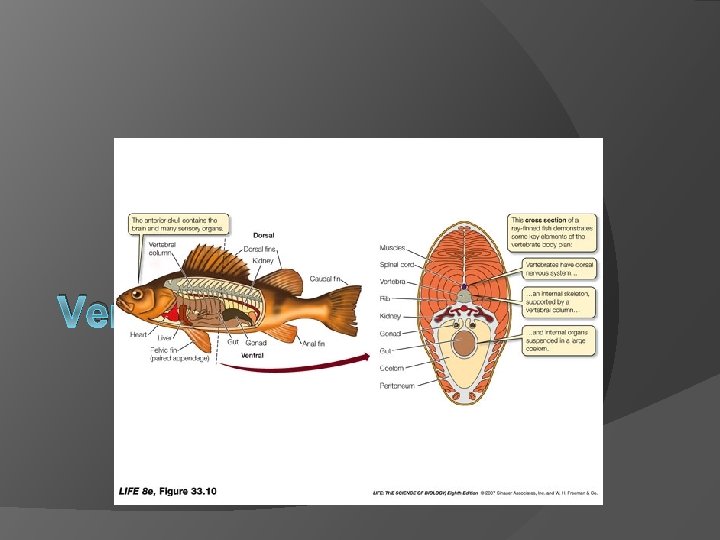
Vertebrate Anatomy
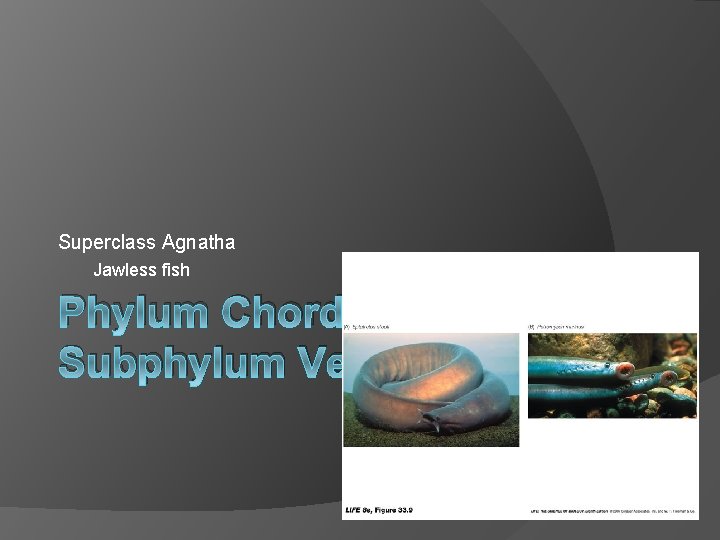
Superclass Agnatha Jawless fish Phylum Chordata Subphylum Vertebrata
Superclass Gnathostoma Animals with jaws Phylum Chordata Subphylum Vertebrata
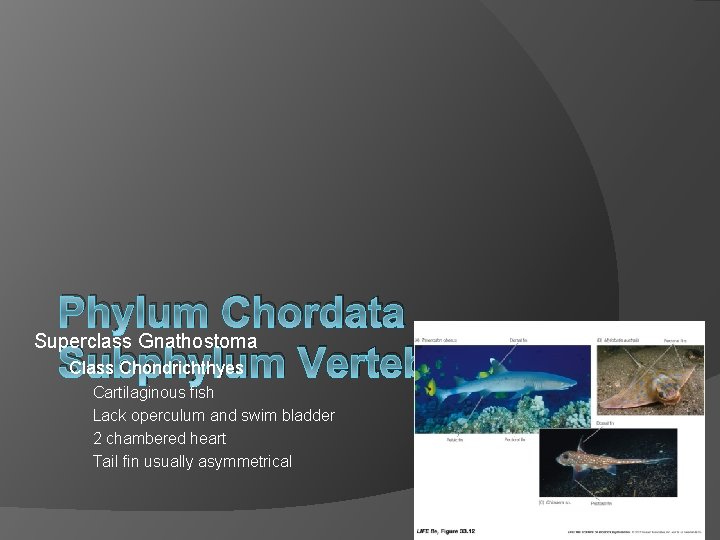
Phylum Chordata Superclass Gnathostoma Class Chondrichthyes Subphylum Vertebrata Cartilaginous fish Lack operculum and swim bladder 2 chambered heart Tail fin usually asymmetrical
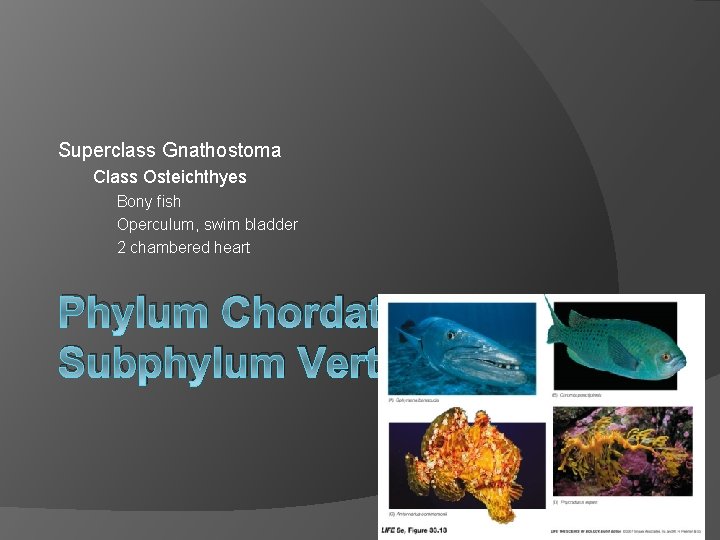
Superclass Gnathostoma Class Osteichthyes Bony fish Operculum, swim bladder 2 chambered heart Phylum Chordata Subphylum Vertebrata
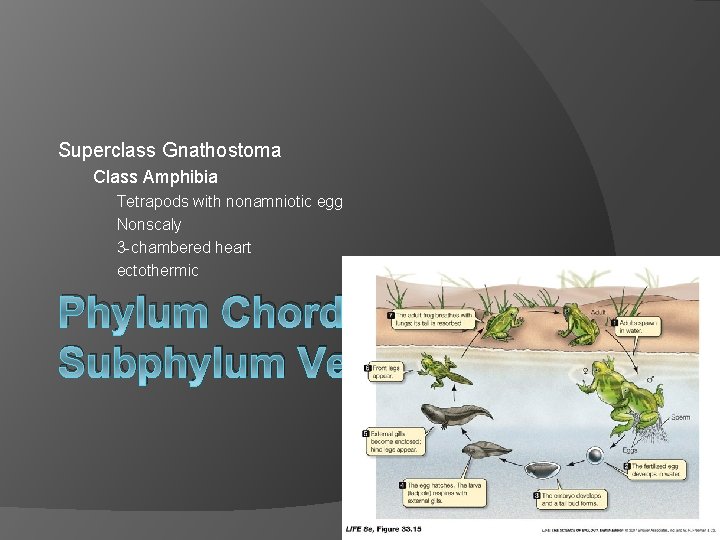
Superclass Gnathostoma Class Amphibia Tetrapods with nonamniotic egg Nonscaly 3 -chambered heart ectothermic Phylum Chordata Subphylum Vertebrata
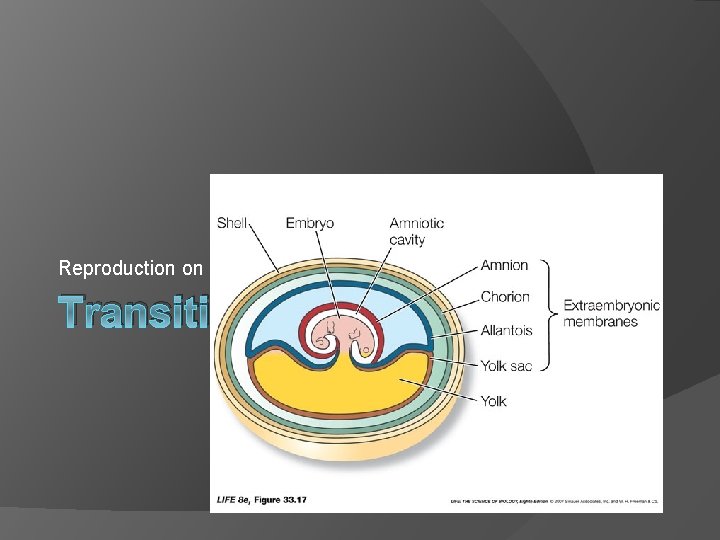
Reproduction on Land Transitions to Land
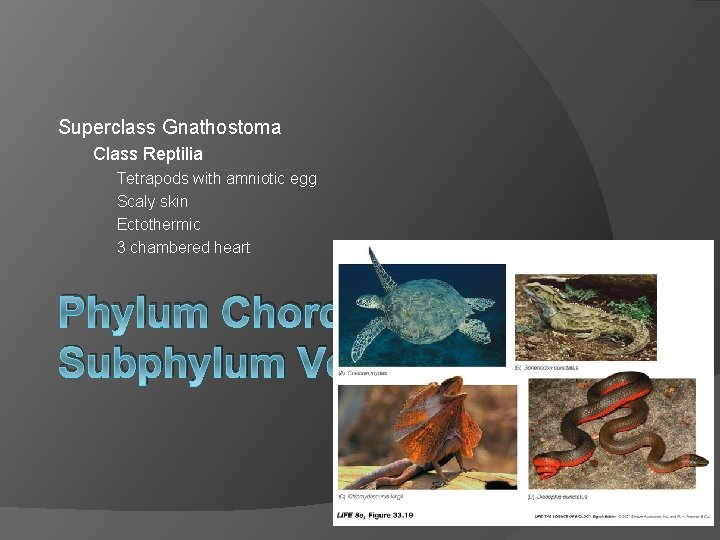
Superclass Gnathostoma Class Reptilia Tetrapods with amniotic egg Scaly skin Ectothermic 3 chambered heart Phylum Chordata Subphylum Vertebrata
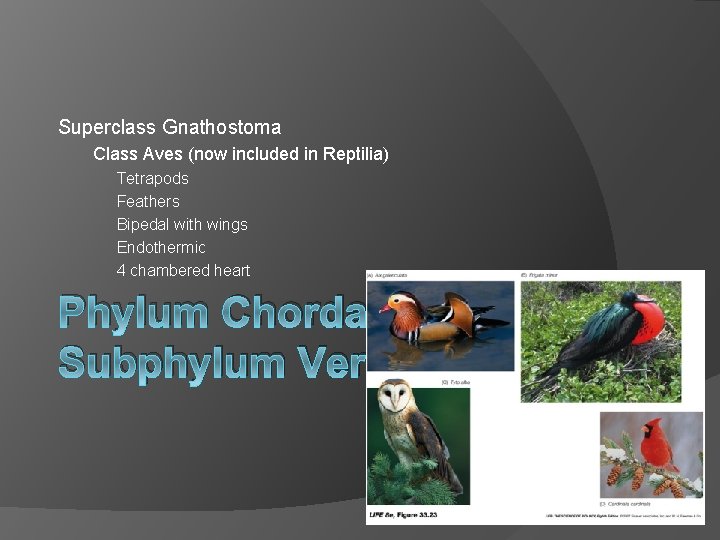
Superclass Gnathostoma Class Aves (now included in Reptilia) Tetrapods Feathers Bipedal with wings Endothermic 4 chambered heart Phylum Chordata Subphylum Vertebrata
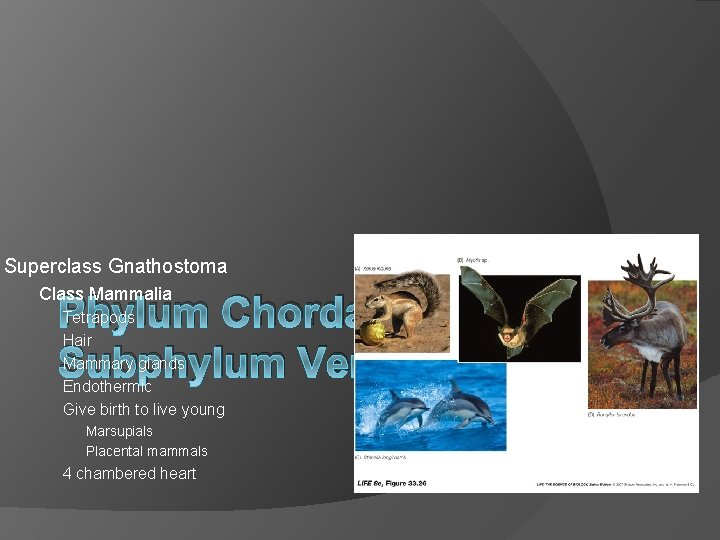
Superclass Gnathostoma Class Mammalia Phylum Chordata Subphylum Vertebrata Tetrapods Hair Mammary glands Endothermic Give birth to live young Marsupials Placental mammals 4 chambered heart
Animal: Symmetry: Body Cavity: Digestion: Circulation: Segmentation: Appendages: Nervous: Habitat: Respiration: Excretion: Locomotion: Support: Amphioxus Bilateral Coelomate – Deuterostome complete closed, complete yes none dorsal brain and dorsal nerve cord aquatic, buried in sand skin surface nephridia tail, fin notochord Phylum Chordata Subphylum Cephlachordata
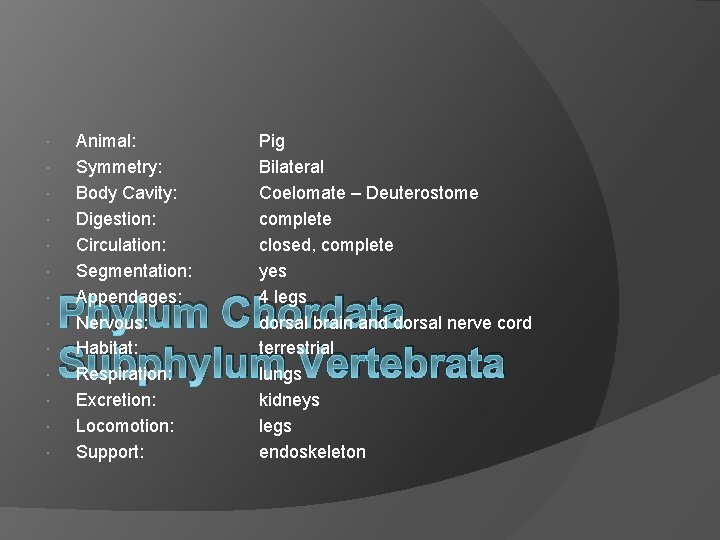
Animal: Symmetry: Body Cavity: Digestion: Circulation: Segmentation: Appendages: Nervous: Habitat: Respiration: Excretion: Locomotion: Support: Pig Bilateral Coelomate – Deuterostome complete closed, complete yes 4 legs dorsal brain and dorsal nerve cord terrestrial lungs kidneys legs endoskeleton Phylum Chordata Subphylum Vertebrata
- Slides: 25