
BSBSMB 405 Monitor and manage small business operations
BSBSMB 405 Monitor and manage small business operations
Housekeeping Ø Emergency Procedures Ø Mobiles, Security Issues Ø Break times / Smoking policy Ø This course is “interactive” – ask questions Ø Respect, Confidentiality, Practice Ø Ground Rules
Objectives Ø Know how to develop a marketing plan Ø Discover how to implement operational strategies and procedures Ø Learn how to monitor business performance Ø Understand how to review business operations Ø Gain skills and knowledge required for this unit
Develop operational strategies and procedures 1. 1. Develop an action plan to provide a clear and coherent direction, in accordance with business goals and objectives
Develop a business plan Production/operations plans are created in accordance with the business goals and objectives and in fact an operations plan is part of the Business Plan.
Operational plan Start within your limits! The production/operations plan component of your business plan is designed to describe how the business functions on a continuing basis.
What it contained It was also stated that when writing a business plan, the operations plan section of a small business in not much different to that of a larger scale operation.
How it is best presented Ø Mission & Vision Ø Period covered by the operations plan Ø Differentiation
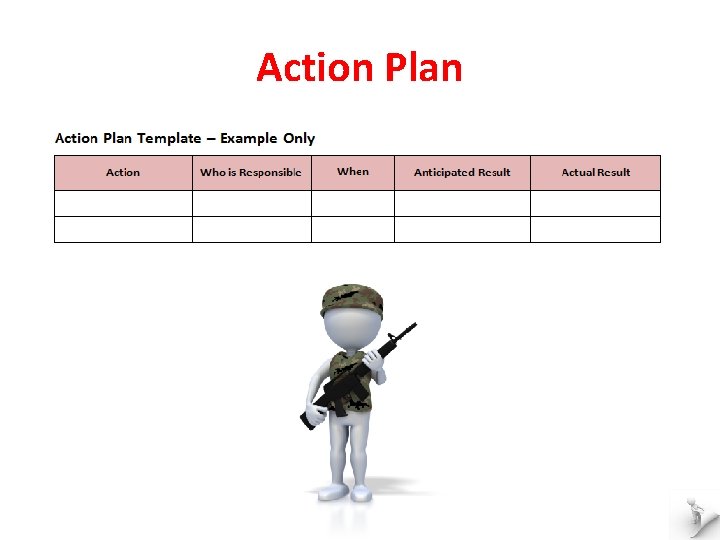
Action Plan
Business goals and objectives Examples of business goals and objectives are: Ø Customer needs/marketing projections Ø Family or community benefits Ø Financial projections Ø Goals, objectives, plans, systems and processes Ø Lifestyle issues Ø Short, medium or long-term goals.

Activity 1 A
Develop operational strategies and procedures 1. 2 Identify work health and safety (WHS) and environmental issues and implement strategies to minimise risk factors
WHS and environmental issues include: Ø Controls Ø Establishment and maintenance of procedures for identifying risks to health and safety Ø Environmentally sustainable purchase and supply of goods and services Ø Waste and by-products.
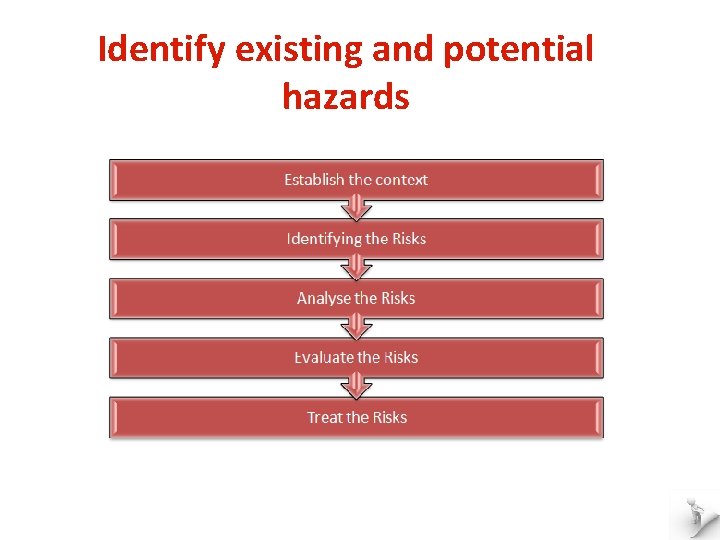
Identify existing and potential hazards
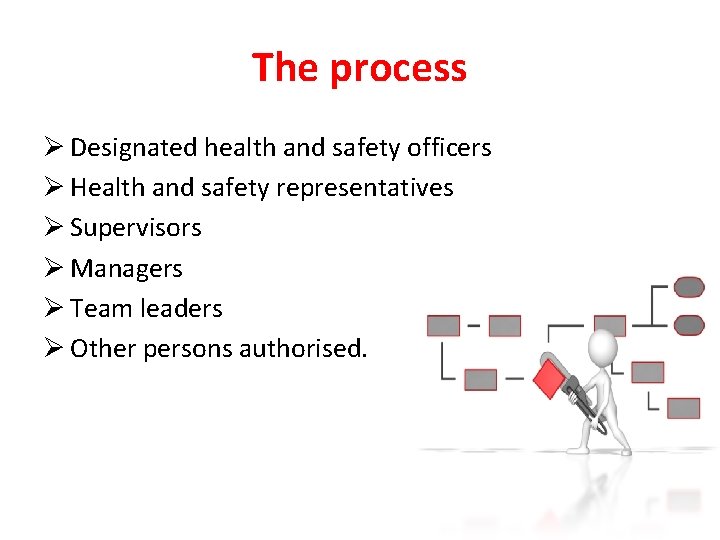
The process Ø Designated health and safety officers Ø Health and safety representatives Ø Supervisors Ø Managers Ø Team leaders Ø Other persons authorised.
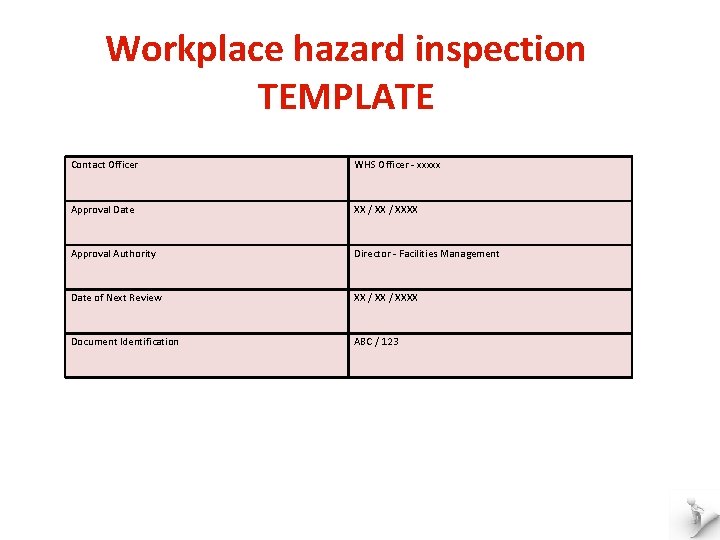
Workplace hazard inspection TEMPLATE Contact Officer WHS Officer - xxxxx Approval Date XX / XXXX Approval Authority Director - Facilities Management Date of Next Review XX / XXXX Document Identification ABC / 123
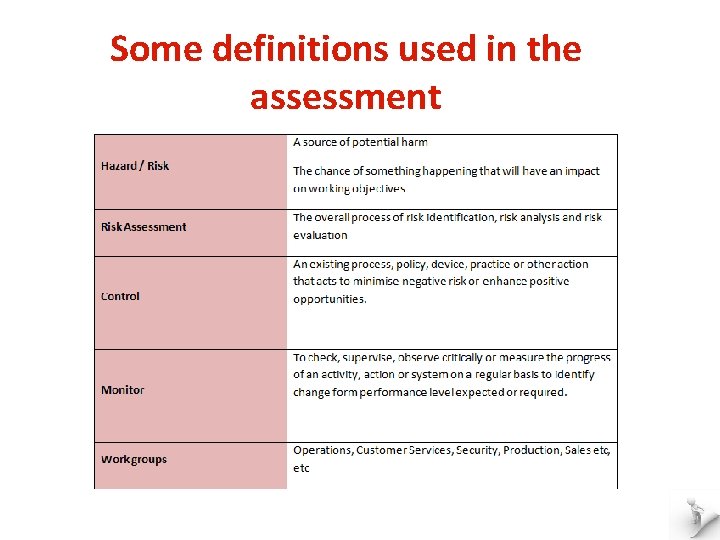
Some definitions used in the assessment
Operating suggestions Operations suggestions include: Ø The inspection program Ø Specific responsibilities Ø Inspection checklist
Activity 1 B
Develop operational strategies and procedures 1. 3. Develop a quality system for the business in line with industry standards, compliance requirements and cultural criteria
Quality systems may include: Ø Manual or computer quality control systems Ø Quality assurance/management approaches Ø Random inspections and assessments of processes against standards Ø Random sampling and follow-up of customers.
Activity 1 C
Develop operational strategies and procedures 1. 4 Develop performance measures and operational targets to conform to the business plan
Performance measurement in the organisation Organisations usually develop their own categories of performance measurement as they relate to specific targets. These can be grouped as “characteristics” of performance measurement
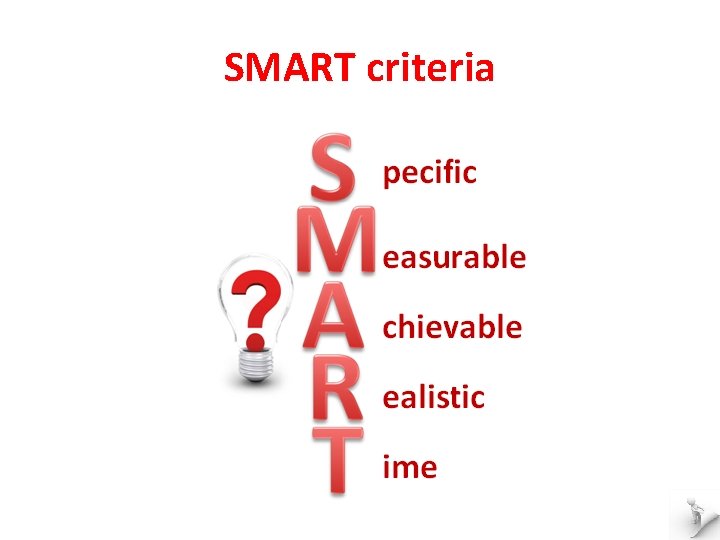
SMART criteria
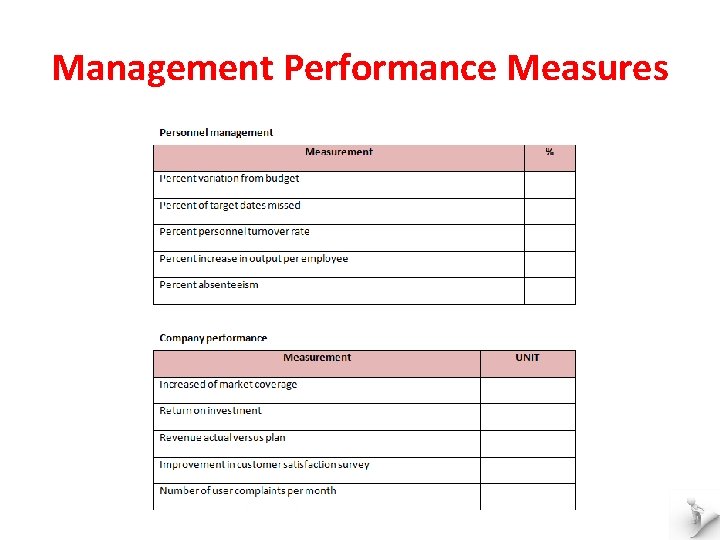
Management Performance Measures
Activity 1 D
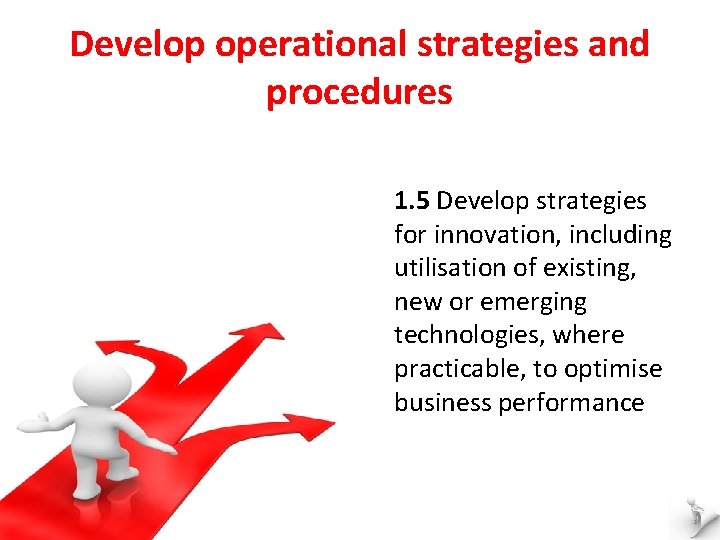
Develop operational strategies and procedures 1. 5 Develop strategies for innovation, including utilisation of existing, new or emerging technologies, where practicable, to optimise business performance
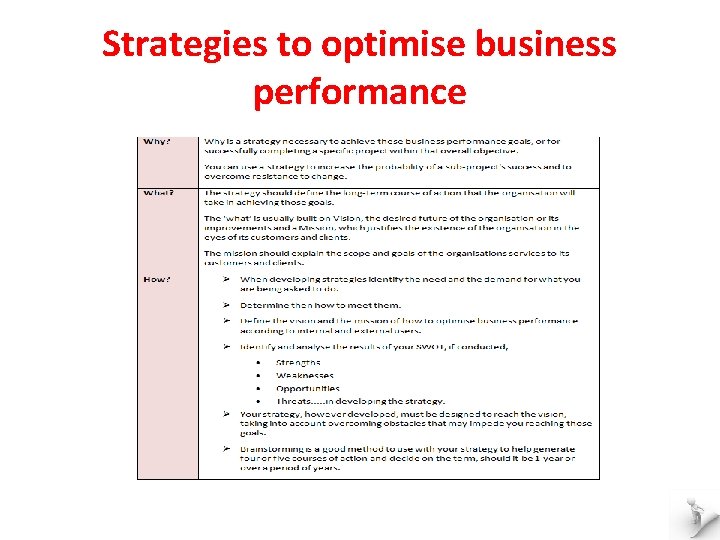
Strategies to optimise business performance
How to determine what to achieve? In determining innovation in any environment, the first stage is to determine what is it that will optimise business performance?
Utilisation of existing, new or emerging technologies Ø review Ø optimisation Ø assessment Ø performance measurement
Aggregating data It is especially important that technology used to develop strategies for innovation or to optimise business performance has the capacity to access the organisations existing performance data and the ability to evaluate its progress against the new or current goals.
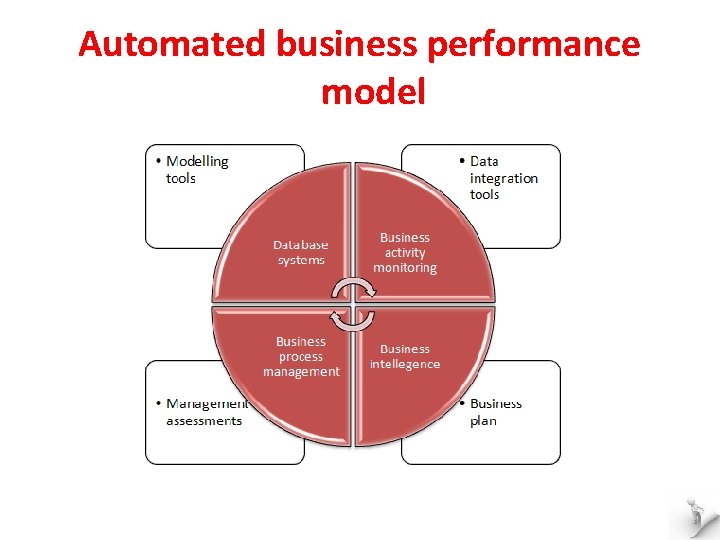
Automated business performance model

Activity 1 E
Implement operational strategies and procedures 2. 1 Implement systems and key performance indicators/targets to monitor business performance and customer satisfaction
Implement systems and key performance indicators Successful business management requires the ongoing monitoring of performance. Improvement in performance can only be realistically achieved when management is properly informed about current performance as a result of monitoring.
Monitoring KPIs can be used to also monitor: Ø Financial performance Ø Business development Ø Provision of and the delivery of professional services Ø Personnel relationships within the organisation.
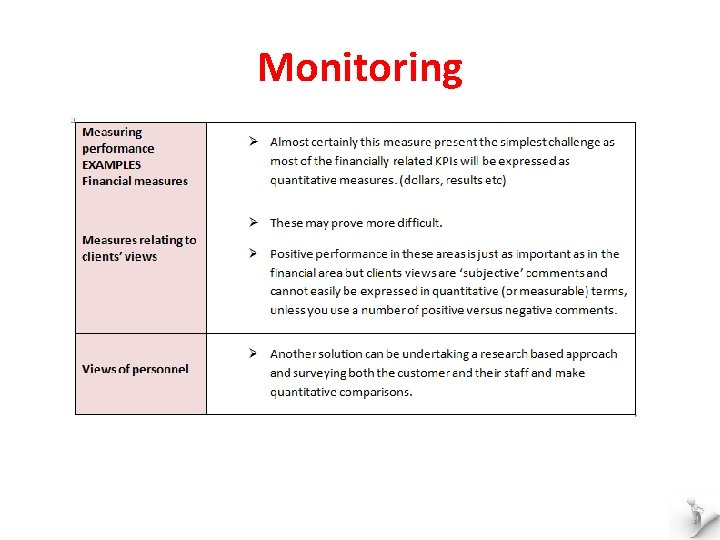
Monitoring

Activity 2 A
Implement operational strategies and procedures 2. 2 Implement systems to control stock, expenditure/cost, wastage/shrinkage and risks to health and safety in accordance with the business plan
Software systems . . . used to control stock, expenditure/cost, wastage/shrinkage. There are NUMEROUS propriety software packages available. Search on stock control system returns over 10 Million pages. There are over 10, 000 different software systems available.
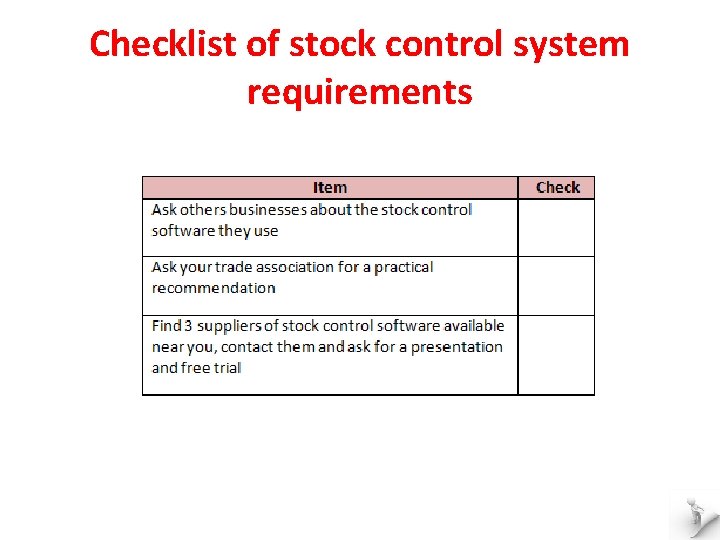
Checklist of stock control system requirements
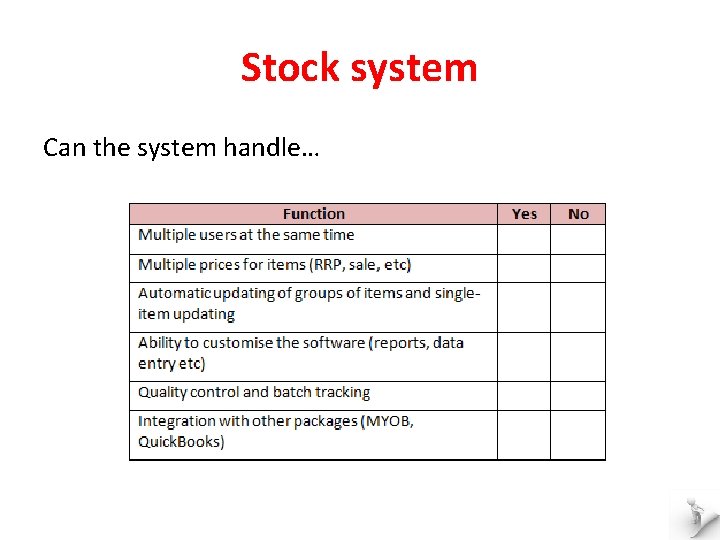
Stock system Can the system handle…
Manual systems However, before the age of computers, stock control was handled manually usually by the accounts department in a “stock control records book” or similar name.
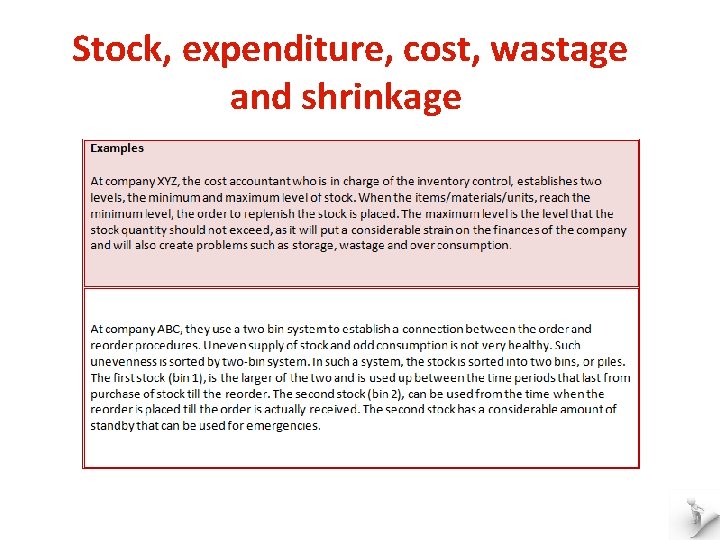
Stock, expenditure, cost, wastage and shrinkage
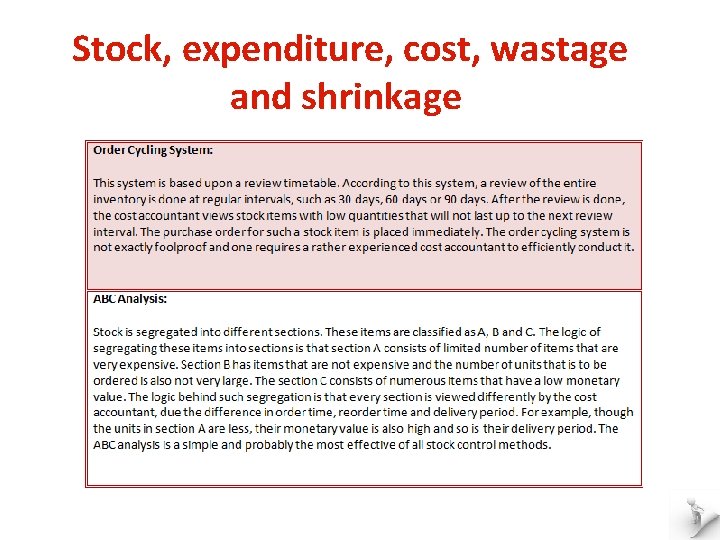
Stock, expenditure, cost, wastage and shrinkage
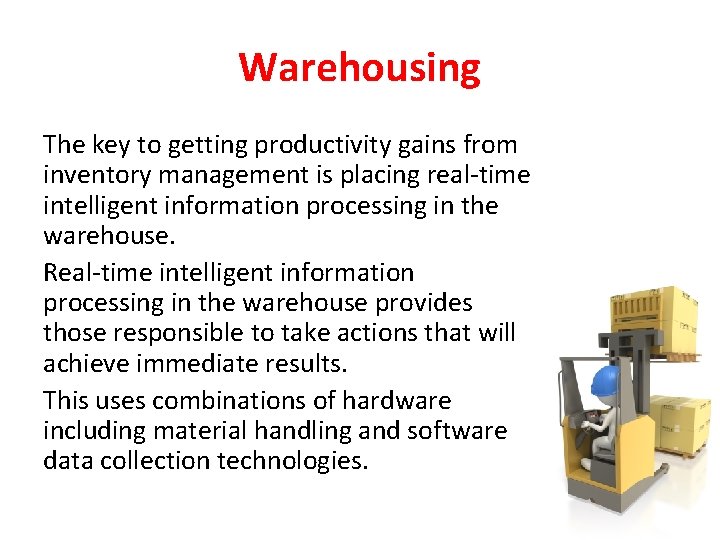
Warehousing The key to getting productivity gains from inventory management is placing real-time intelligent information processing in the warehouse. Real-time intelligent information processing in the warehouse provides those responsible to take actions that will achieve immediate results. This uses combinations of hardware including material handling and software data collection technologies.
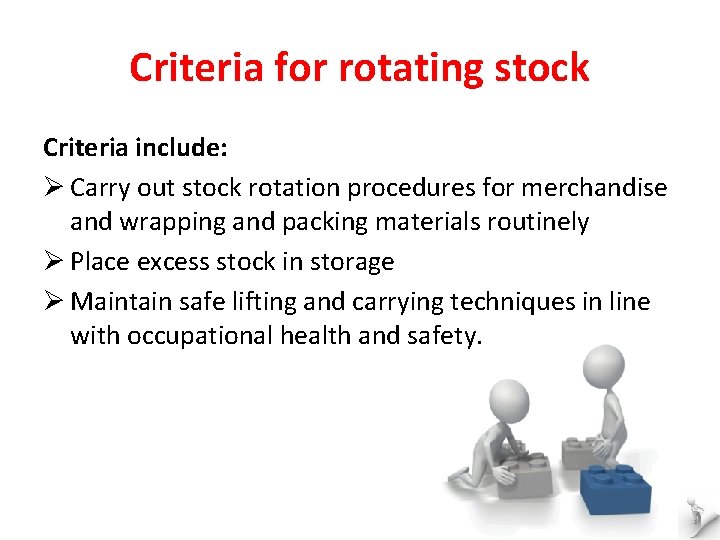
Criteria for rotating stock Criteria include: Ø Carry out stock rotation procedures for merchandise and wrapping and packing materials routinely Ø Place excess stock in storage Ø Maintain safe lifting and carrying techniques in line with occupational health and safety.
Activity 2 B
Implement operational strategies and procedures 2. 3 Maintain staffing requirements, where applicable, within budget, to maximise productivity
Maintain staffing requirements, Three issues vied for third place among the most significant headaches: ØDifficult market conditions ØGovernment red tape ØLack of time to enjoy family life.
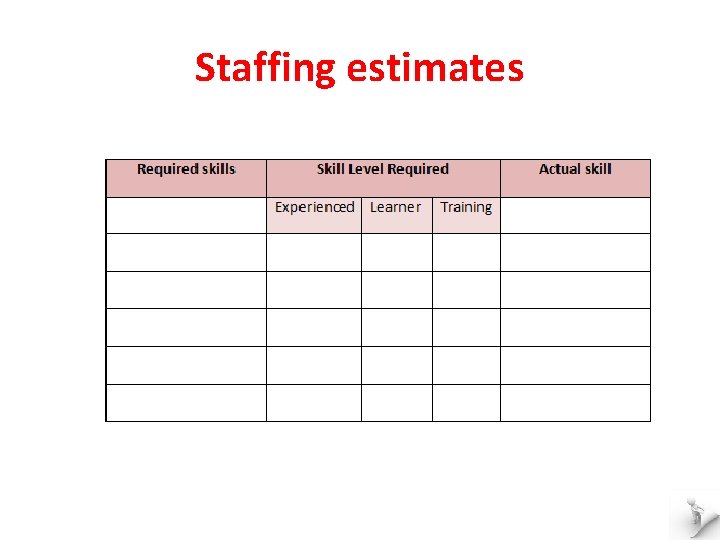
Staffing estimates
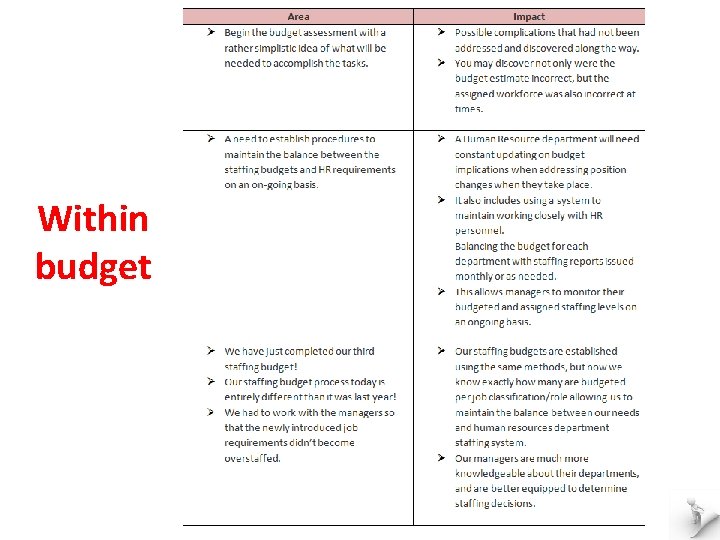
Within budget
Implement operational strategies and procedures 2. 4 Carry out provision of goods/services in accordance with established legal, ethical cultural and technical standards
Technical standards include: Ø Current and generally agreed descriptions of what the product/service is Ø How it should be produced/delivered Ø The environmental sustainability, quality, safety and efficiency.
Legislative Provisions (The Laws) There are many statutes which impact on contracts in Australia.
Activity 2 C
Implement operational strategies and procedures 2. 5 Provide goods/services in accordance with time, cost and quality specifications, and customer requirements 2. 6 Apply quality procedures to address product/service and customer requirements
Providing goods/services You will need to consider: Ø Quality procedures Ø Product/service Ø Address customer requirements.
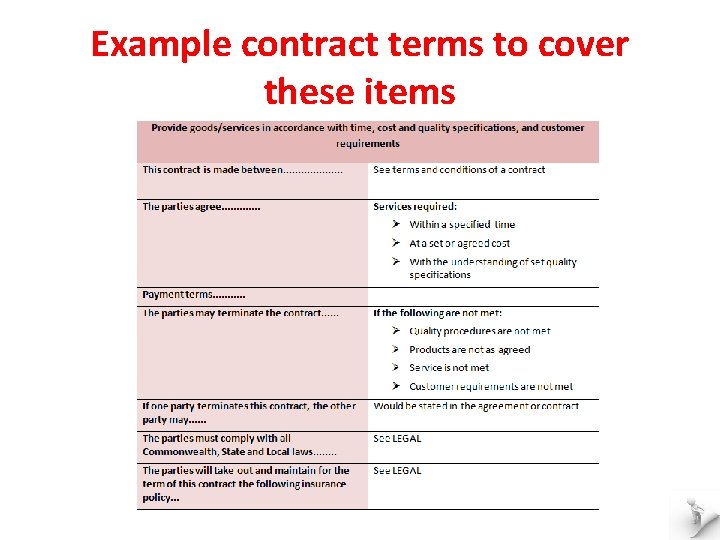
Example contract terms to cover these items
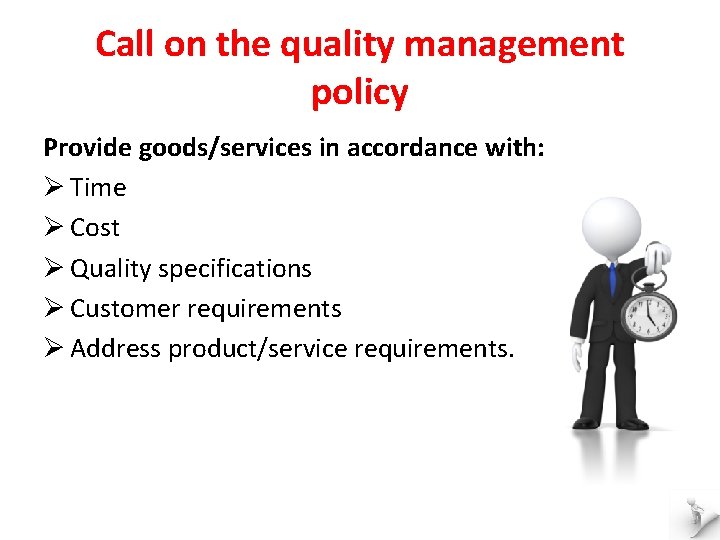
Call on the quality management policy Provide goods/services in accordance with: Ø Time Ø Cost Ø Quality specifications Ø Customer requirements Ø Address product/service requirements.
Activity 2 D
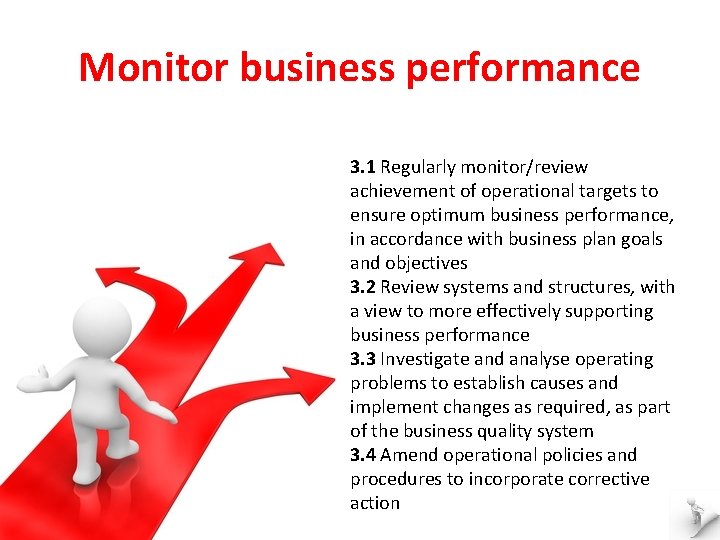
Monitor business performance 3. 1 Regularly monitor/review achievement of operational targets to ensure optimum business performance, in accordance with business plan goals and objectives 3. 2 Review systems and structures, with a view to more effectively supporting business performance 3. 3 Investigate and analyse operating problems to establish causes and implement changes as required, as part of the business quality system 3. 4 Amend operational policies and procedures to incorporate corrective action
Holistic review systems The purpose of an assessment document is to identify all business impacts and report findings to stakeholders both internal and external, using the suggested items in the elements, 3. 1, 3. 2, 3. 3 and 3. 4.
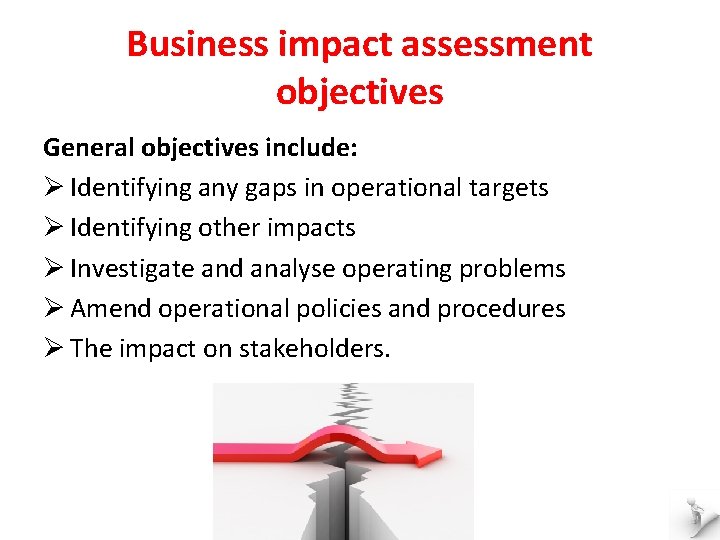
Business impact assessment objectives General objectives include: Ø Identifying any gaps in operational targets Ø Identifying other impacts Ø Investigate and analyse operating problems Ø Amend operational policies and procedures Ø The impact on stakeholders.
Optimum business performance
Gap analysis Identifying and recognising a Gap exists within the captured analysis which will impact on business, processes. The analysis/monitoring identifies the difference between current performance and targets and then you will need to identify the extent of the impact on business, processes.
Impact analysis Review the overall result below Identification of the impacts from the monitoring will help to identify key areas of focus such as stakeholder management.
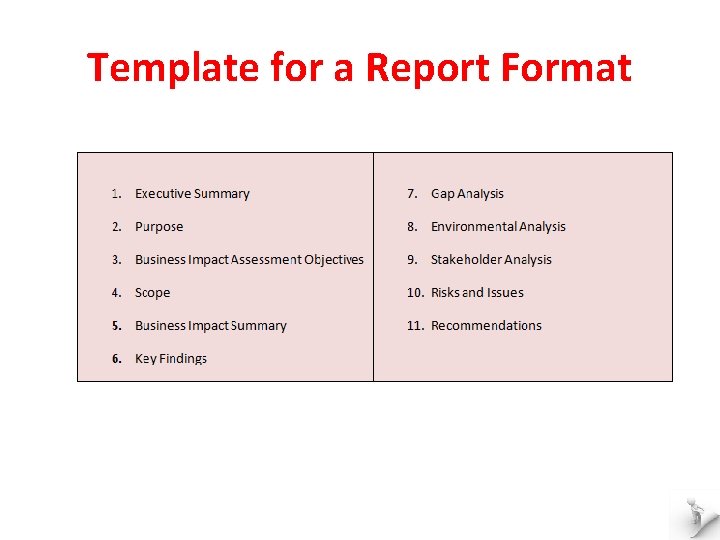
Template for a Report Format

Activity 3 A
Review business operations 4. 1 Review and adjust business plan, as required, to maintain business viability, in accordance with business goals and objectives
Reviewing business plan Annually schedule a review of the business plan as a strategic assessment, not just a reactive change process.
Key review criteria Ensure the business plan is practical and that there is a good chance for success. Be brave- make changes! Show options at key decision points. Share the plan review. Don’t isolate the assessment. Funding arrangements are vital to survival.
Detailed assessments of sub-areas Ø Lease agreements Ø Advertising agreements Ø Do you just keep renewing? Ø Insurance policies

Activity 4 A
Review business operations 4. 2 Clearly record proposed changes to aid future planning and evaluation
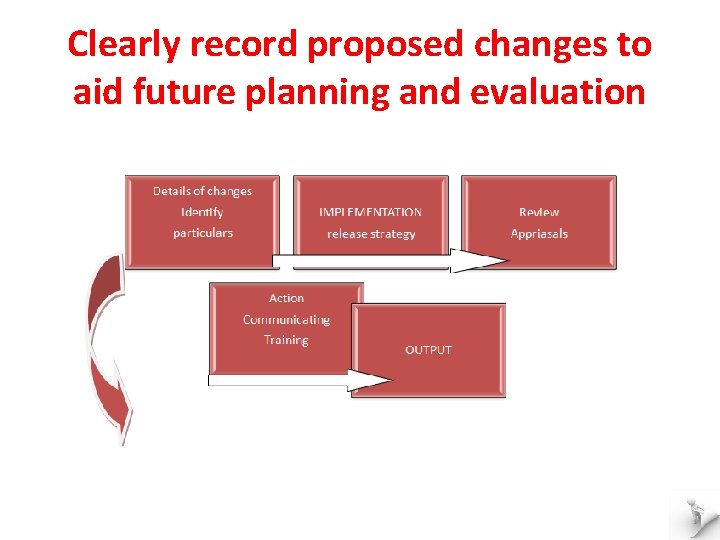
Clearly record proposed changes to aid future planning and evaluation
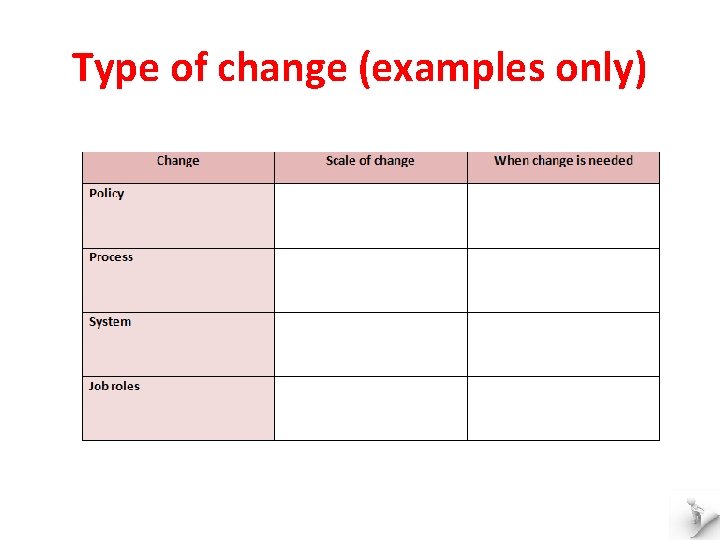
Type of change (examples only)
Aid future planning and evaluation Describe the reason for the change and its benefits to the business: ØScope the change ØDescribe who in the business it includes ØHow far reaching in the organisation is the change?
Activity 4 B
Review business operations 4. 3 Undertake ongoing research into new business opportunities and adjust business goals and objectives as new business opportunities arise
Ongoing research into new opportunities Ongoing research will obviously need to be RELEVANT to a series of objectives. 1) Are you expanding? 2) Are you changing direction? 3) Are you looking for additional but similar product/service opportunities?
Focus on new opportunities on the horizon Ø Alignment: of the forces both internal and external that will get you there; Ø Leverage: the relationships and stakeholders for their best input Ø Differentiation: establish the points of difference that are required as a new direction
Activity 4 C
Skills and Knowledge Activity
Major Activity Ø This activity should take anywhere between an 1 -2 hours to complete and can be found at the end of your workbook. Ø Your instructor will let you know whether they wish for you to complete it in session time or your own time.
Summary and Feedback Ø Did we meet our objectives? Ø How did you find this session? Ø Any questions?
Congratulations! You have now finished the unit… ‘Monitor and manage small business operations’
- Slides: 88