
BSA Merit Badge Program PUBLIC HEALTH A historic

BSA Merit Badge Program; PUBLIC HEALTH A historic public health event in the 1800’s was stopping disease outbreak by removing the water pump handle. Enter Your Contact Information Here
Boy Scout Public Health Merit Badge • This presentation developed by a Scout Leader from the Erie County Department of Health. • This presentation focuses on communicable/ infectious diseases and diseases that may be contracted while in the outdoors. • You may want to include slides about chronic disease and health behaviors, which are also important topics in public health. • Please visit the New York State Department of Health website for more information.
Chronic Diseases • These are common chronic diseases – Obesity – Diabetes – Heart Disease – Cancer – Stroke
Health Behaviors • • Diet and nutrition Physical Activity Smoking Alcohol consumption

Enter the name of your facility (LHD, etc. ) here. • Provide an outline of the agenda for the day here. • Include general topics to be covered.
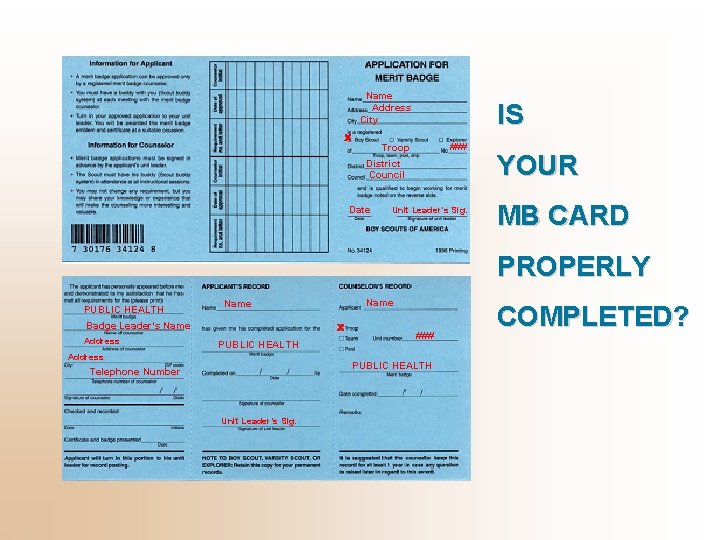
Name Address City X IS ### Troop District Council Date Unit Leader’s Sig. YOUR MB CARD PROPERLY PUBLIC HEALTH Badge Leader’s Name Address Name X PUBLIC HEALTH Address ### PUBLIC HEALTH Telephone Number Unit Leader’s Sig. COMPLETED?
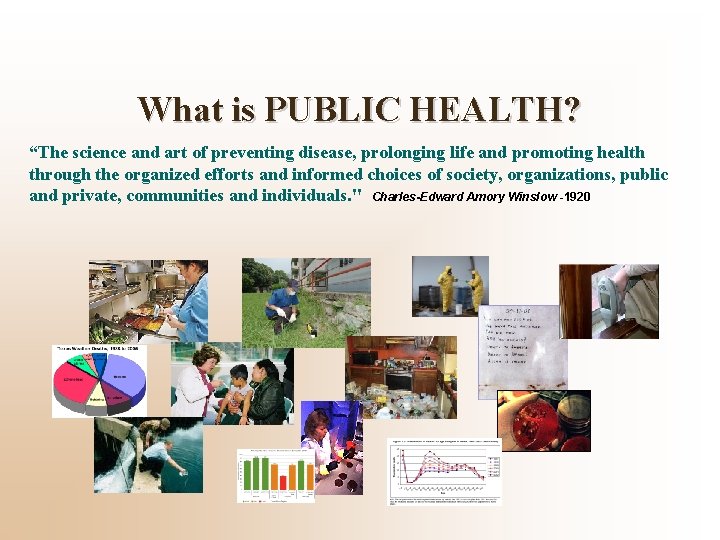
What is PUBLIC HEALTH? “The science and art of preventing disease, prolonging life and promoting health through the organized efforts and informed choices of society, organizations, public and private, communities and individuals. " Charles-Edward Amory Winslow -1920
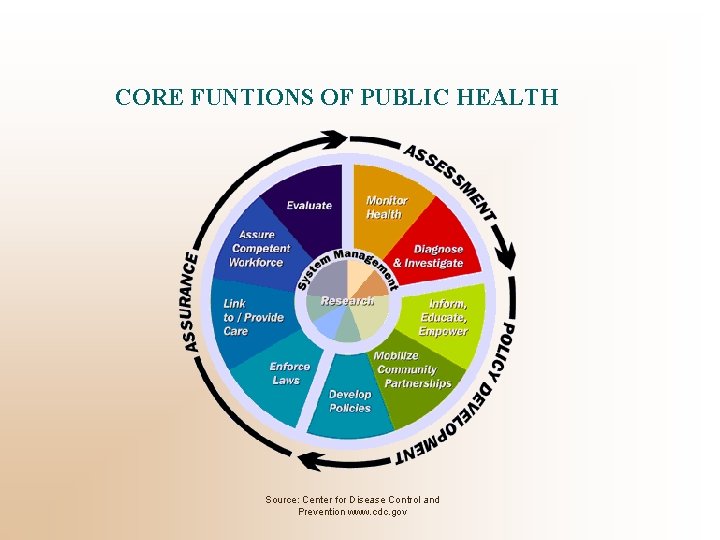
CORE FUNTIONS OF PUBLIC HEALTH Source: Center for Disease Control and Prevention www. cdc. gov
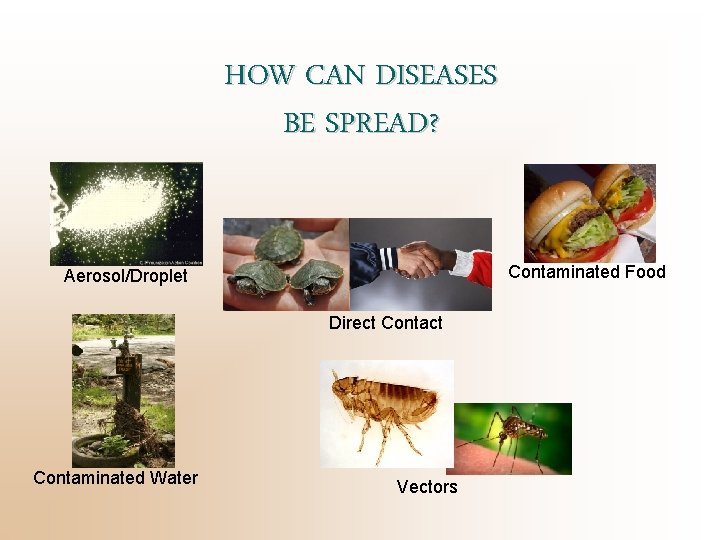
HOW CAN DISEASES BE SPREAD? Contaminated Food Aerosol/Droplet Direct Contaminated Water Vectors
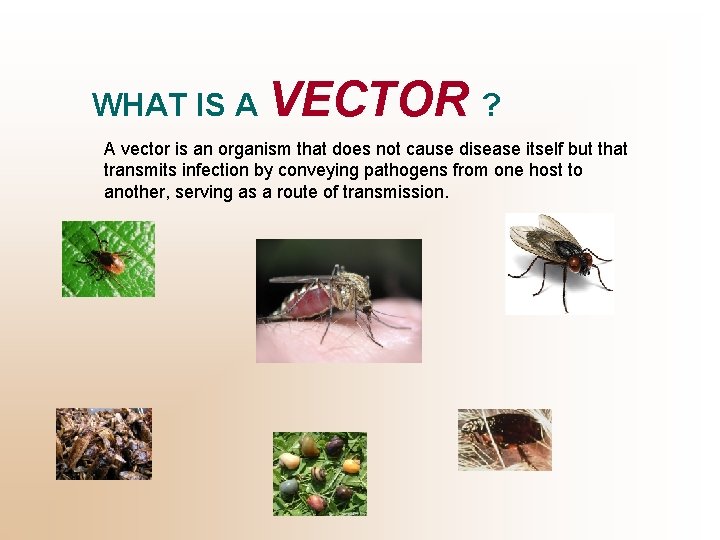
WHAT IS A VECTOR ? A vector is an organism that does not cause disease itself but that transmits infection by conveying pathogens from one host to another, serving as a route of transmission.
CONTROLLING DISEASE IN YOUR HOME, COMMUNITY AND AT CAMP • • In our homes and community… – Proper trash storage and disposal – Prompt disposal of pet feces – Eliminate standing water (old tires, poor-draining gutters, natural puddles and pools, etc. ) – Remove debris and weed overgrowth (wood or rock piles, construction debris, etc. ) – Make sure your home or business is well maintained, with no opening for rodents to get inside At camp… – Keep your tent and campsite clean (not “Boy clean”, “Mom clean”!) – Proper food storage (NOT IN YOUR TENT!) – Proper trash storage and disposal – Practice LEAVE NO TRACE – Leave cabin doors and windows closed to avoid mosquitoes and unwanted animals – Check body and clothing for ticks
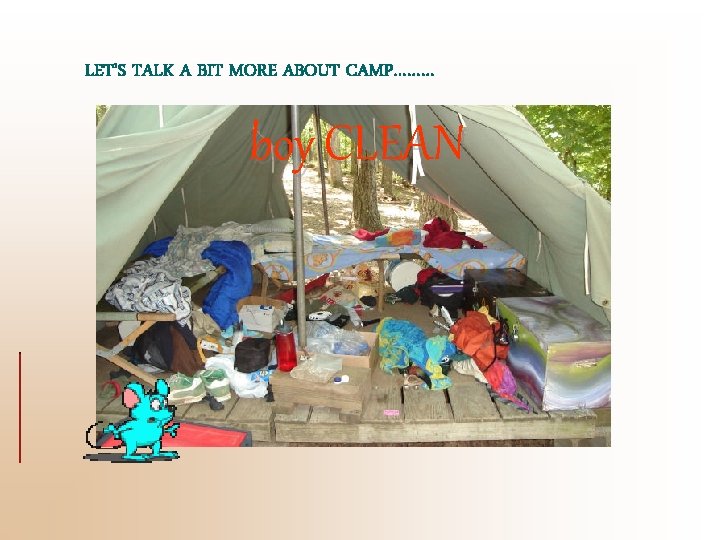
LET’S TALK A BIT MORE ABOUT CAMP……… mom CLEAN boy CLEAN
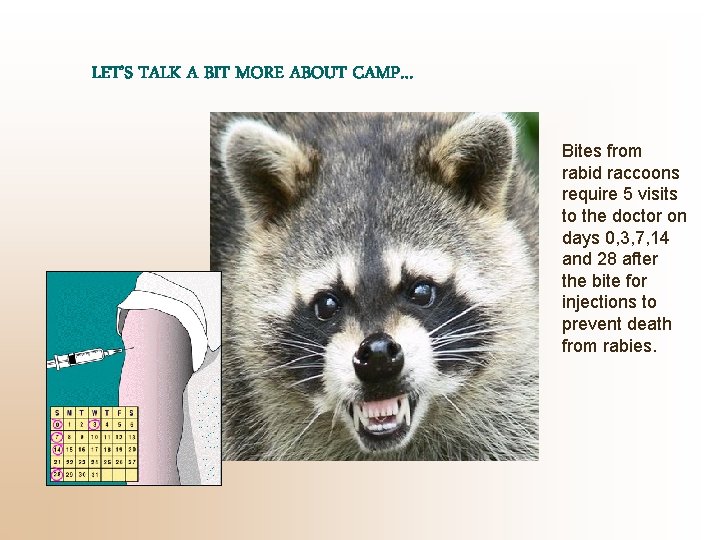
LET’S TALK A BIT MORE ABOUT CAMP… Bites from rabid raccoons require 5 visits to the doctor on days 0, 3, 7, 14 and 28 after the bite for injections to prevent death from rabies.
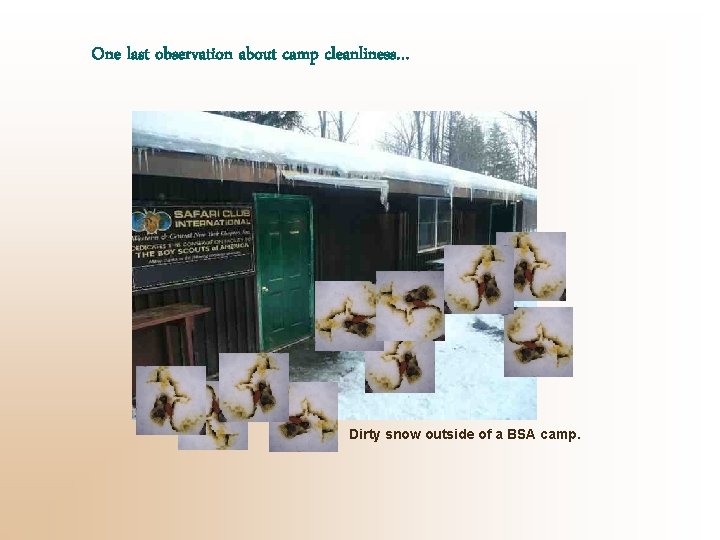
One last observation about camp cleanliness… Dirty snow outside of a BSA camp.
LABORATORY ACTIVITY #1 Investigation of Germ Distribution due to Fomite Exposure A D T O G O ? H S W OTIE CO You may want to conduct an activity here. When this presentation was originally given, the badge leader used “Glow-Germ" powder to demonstrate germ transmission person-to-person and/or fomite-to-person. Ideas for other activities can be found on the NYSDOH Public Health Works! Website: http: //www. health. state. ny. us/prevention/public_health_w orks/
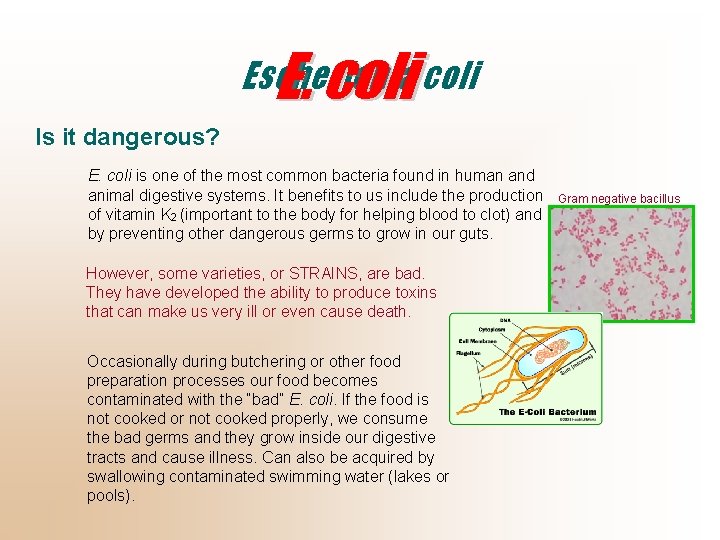
E. coli Escherichia coli Is it dangerous? E. coli is one of the most common bacteria found in human and animal digestive systems. It benefits to us include the production of vitamin K 2 (important to the body for helping blood to clot) and by preventing other dangerous germs to grow in our guts. However, some varieties, or STRAINS, are bad. They have developed the ability to produce toxins that can make us very ill or even cause death. Occasionally during butchering or other food preparation processes our food becomes contaminated with the “bad” E. coli. If the food is not cooked or not cooked properly, we consume the bad germs and they grow inside our digestive tracts and cause illness. Can also be acquired by swallowing contaminated swimming water (lakes or pools). Gram negative bacillus
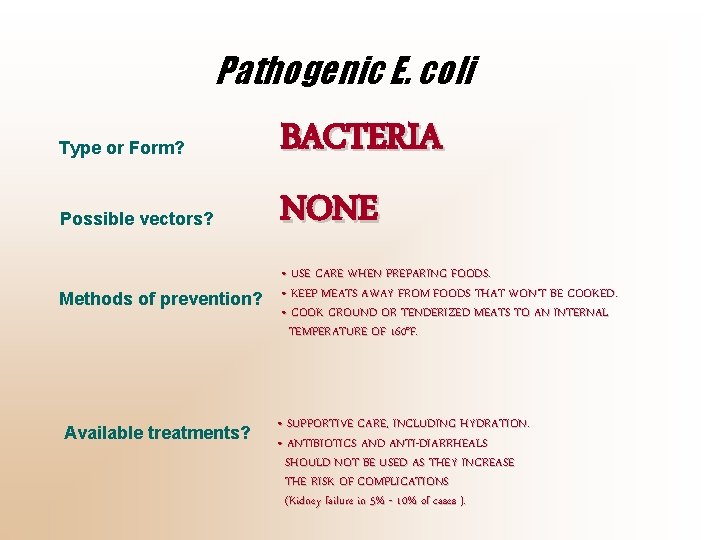
Pathogenic E. coli Type or Form? Possible vectors? Methods of prevention? Available treatments? BACTERIA NONE • USE CARE WHEN PREPARING FOODS. • KEEP MEATS AWAY FROM FOODS THAT WON’T BE COOKED. • COOK GROUND OR TENDERIZED MEATS TO AN INTERNAL TEMPERATURE OF 160 o. F. • SUPPORTIVE CARE, INCLUDING HYDRATION. • ANTIBIOTICS AND ANTI-DIARRHEALS SHOULD NOT BE USED AS THEY INCREASE THE RISK OF COMPLICATIONS (Kidney failure in 5% - 10% of cases ).
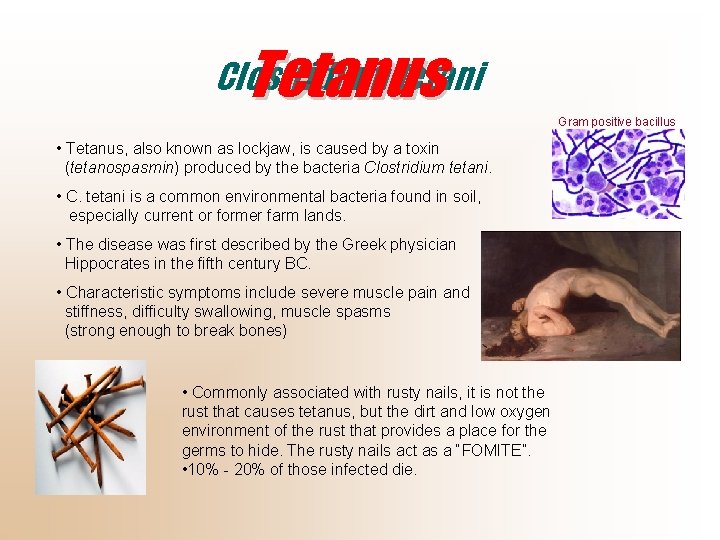
Tetanus Clostridium tetani Gram positive bacillus • Tetanus, also known as lockjaw, is caused by a toxin (tetanospasmin) produced by the bacteria Clostridium tetani. • C. tetani is a common environmental bacteria found in soil, especially current or former farm lands. • The disease was first described by the Greek physician Hippocrates in the fifth century BC. • Characteristic symptoms include severe muscle pain and stiffness, difficulty swallowing, muscle spasms (strong enough to break bones) • Commonly associated with rusty nails, it is not the rust that causes tetanus, but the dirt and low oxygen environment of the rust that provides a place for the germs to hide. The rusty nails act as a “FOMITE”. • 10% - 20% of those infected die.
Tetanus Type or Form? BACTERIA Possible vectors? PUNCTURE WOUNDS FROM DIRTY OBJECTS (FOMITES) • CHILDHOOD VACCINATION SERIES AVAILABLE. • BOOSTER SHOTS EVERY 10 YEARS FOR ADULTS. Methods of prevention? • IF YOU SUFFER A DEEP PUNCTURE WOUND APPLY APPROPRIATE FIRST-AID AND FOLLOW-UP WITH A DOCTOR. Available treatments? • TETANUS BOOSTER SHOT. • TETANUS IMMUNE GLOBULIN. • ANTIBIOTICS.
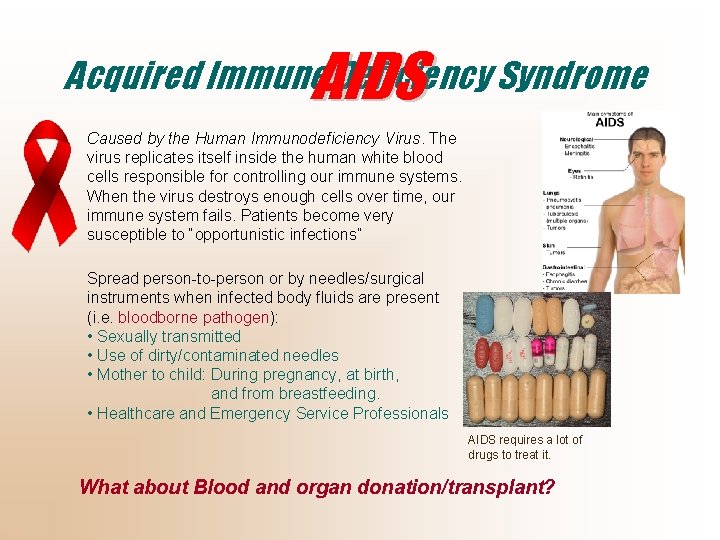
AIDS Acquired Immune Deficiency Syndrome Caused by the Human Immunodeficiency Virus. The virus replicates itself inside the human white blood cells responsible for controlling our immune systems. When the virus destroys enough cells over time, our immune system fails. Patients become very susceptible to “opportunistic infections” Spread person-to-person or by needles/surgical instruments when infected body fluids are present (i. e. bloodborne pathogen): • Sexually transmitted • Use of dirty/contaminated needles • Mother to child: During pregnancy, at birth, and from breastfeeding. • Healthcare and Emergency Service Professionals AIDS requires a lot of drugs to treat it. What about Blood and organ donation/transplant?
AIDS Type or Form? VIRUS Possible vectors? NONE IDENTIFIED Methods of prevention? Available treatments? • SAFE SEX PRACTICES OR ABSTINENCE. • DON’T USE ILLICIT DRUGS. • SUBSTANCE ABUSERS TAKE ADVANTAGE OF NEEDLE EXCHANGE PROGRAMS. • WORKERS NEED TO WEAR personal protective equipment (PPE). • TESTING OF BLOOD/ORGANS BEFORE TRANSFUSION/TRANSPLANT. • NO VACCINE, NO CURE. • ANTIVIRAL DRUGS CAN SLOW PROGRESS OF DISEASE. • TREATMENT OF OPPORTUNISTIC INFECTIONS.
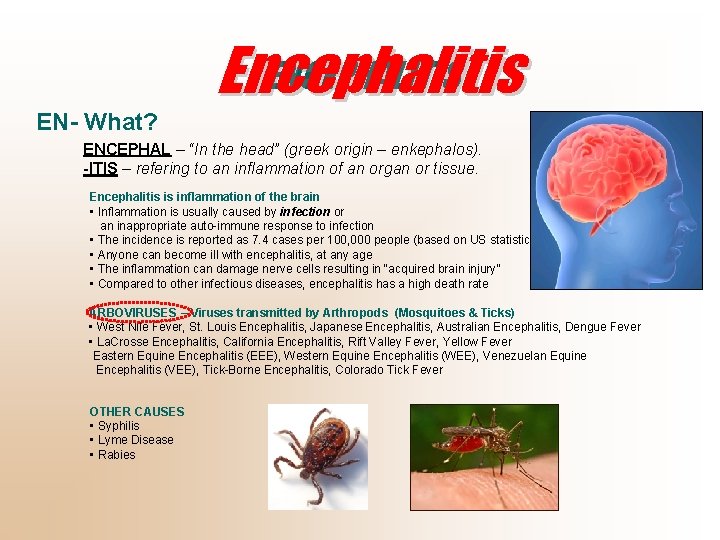
EN- What? ENCEPHALITIS Encephalitis ENCEPHAL – “In the head” (greek origin – enkephalos). -ITIS – refering to an inflammation of an organ or tissue. Encephalitis is inflammation of the brain • Inflammation is usually caused by infection or an inappropriate auto-immune response to infection • The incidence is reported as 7. 4 cases per 100, 000 people (based on US statistics) • Anyone can become ill with encephalitis, at any age • The inflammation can damage nerve cells resulting in “acquired brain injury” • Compared to other infectious diseases, encephalitis has a high death rate ARBOVIRUSES – Viruses transmitted by Arthropods (Mosquitoes & Ticks) • West Nile Fever, St. Louis Encephalitis, Japanese Encephalitis, Australian Encephalitis, Dengue Fever • La. Crosse Encephalitis, California Encephalitis, Rift Valley Fever, Yellow Fever Eastern Equine Encephalitis (EEE), Western Equine Encephalitis (WEE), Venezuelan Equine Encephalitis (VEE), Tick-Borne Encephalitis, Colorado Tick Fever OTHER CAUSES • Syphilis • Lyme Disease • Rabies
Encephalitis Type or Form? Possible vectors? VIRUS or BACTERIA MOSQUITOES, TICKS, ? ? ? • VECTOR CONTROL Methods of prevention? • SOME VACCINES AVAILABLE • USE OF TICK & MOSQUITO REPELLENTS Available treatments? • SOME VACCINES AVAILABLE • ANTIVIRAL DRUGS SOMETIMES WORK • SUPPORTIVE CARE • ANTIBIOTICS FOR BACTERIAL CAUSES • SOME HAVE NO CURE/TREATMENT
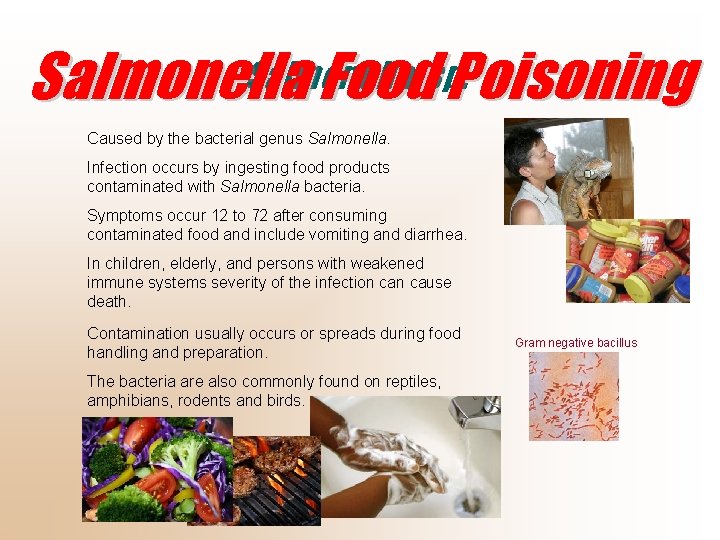
Salmonella Foodsp. Poisoning Caused by the bacterial genus Salmonella. Infection occurs by ingesting food products contaminated with Salmonella bacteria. Symptoms occur 12 to 72 after consuming contaminated food and include vomiting and diarrhea. In children, elderly, and persons with weakened immune systems severity of the infection cause death. Contamination usually occurs or spreads during food handling and preparation. The bacteria are also commonly found on reptiles, amphibians, rodents and birds. Gram negative bacillus
Salmonella Type or Form? BACTERIA Possible vectors? NONE Methods of prevention? • SAFE FOOD HANDLING PRACTICES • Wash hands after handing pet rodents, turtles, • SUPPORTIVE CARE Available treatments? • ANTIBIOTICS AND ANTI-DIARRHEALS SHOULD NOT BE USED AS THEY INCREASE THE RISK OF COMPLICATIONS lizards, etc.
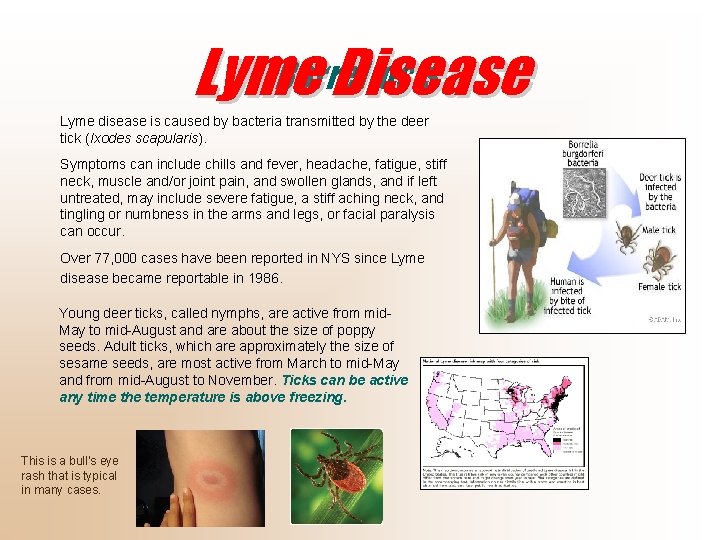
Borreliosis Lyme Disease Lyme disease is caused by bacteria transmitted by the deer tick (Ixodes scapularis). Symptoms can include chills and fever, headache, fatigue, stiff neck, muscle and/or joint pain, and swollen glands, and if left untreated, may include severe fatigue, a stiff aching neck, and tingling or numbness in the arms and legs, or facial paralysis can occur. Over 77, 000 cases have been reported in NYS since Lyme disease became reportable in 1986. Young deer ticks, called nymphs, are active from mid. May to mid-August and are about the size of poppy seeds. Adult ticks, which are approximately the size of sesame seeds, are most active from March to mid-May and from mid-August to November. Ticks can be active any time the temperature is above freezing. This is a bull’s eye rash that is typical in many cases.
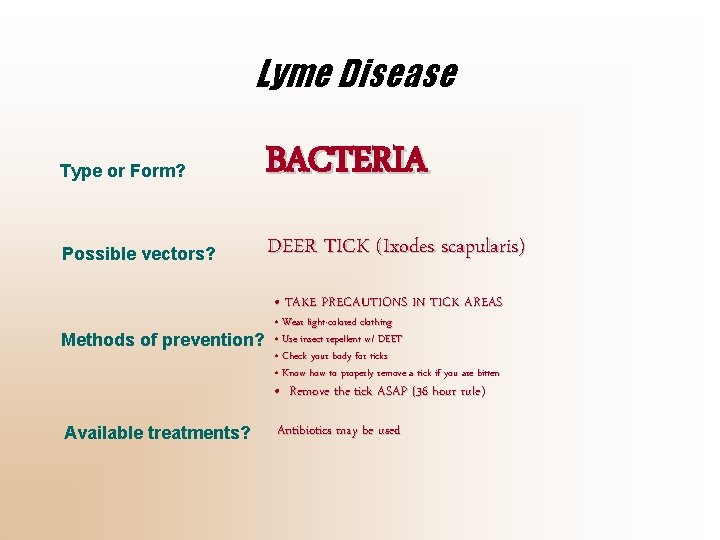
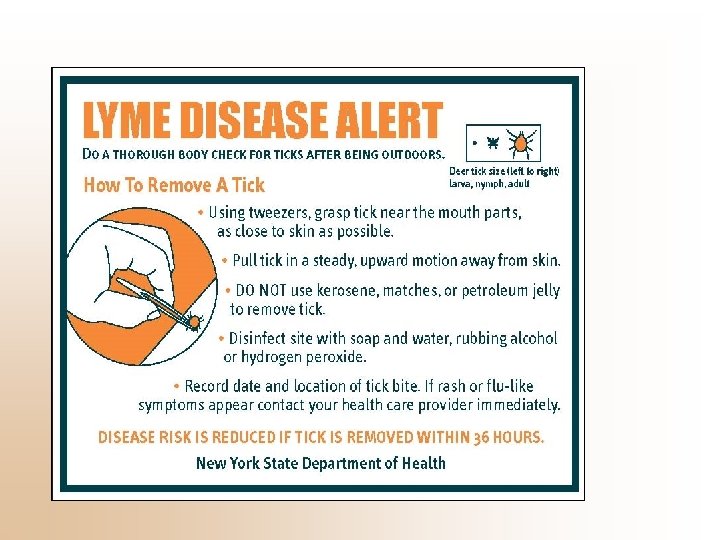
Lyme Disease Type or Form? BACTERIA Possible vectors? DEER TICK (Ixodes scapularis) • TAKE PRECAUTIONS IN TICK AREAS Methods of prevention? • Wear light-colored clothing • Use insect repellent w/ DEET • Check your body for ticks • Know how to properly remove a tick if you are bitten • Remove the tick ASAP (36 hour rule) Available treatments? Antibiotics may be used
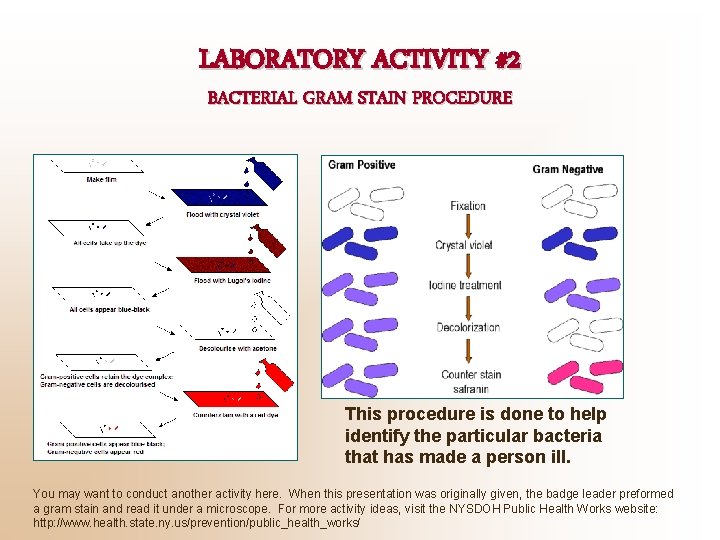
LABORATORY ACTIVITY #2 BACTERIAL GRAM STAIN PROCEDURE This procedure is done to help identify the particular bacteria that has made a person ill. You may want to conduct another activity here. When this presentation was originally given, the badge leader preformed a gram stain and read it under a microscope. For more activity ideas, visit the NYSDOH Public Health Works website: http: //www. health. state. ny. us/prevention/public_health_works/
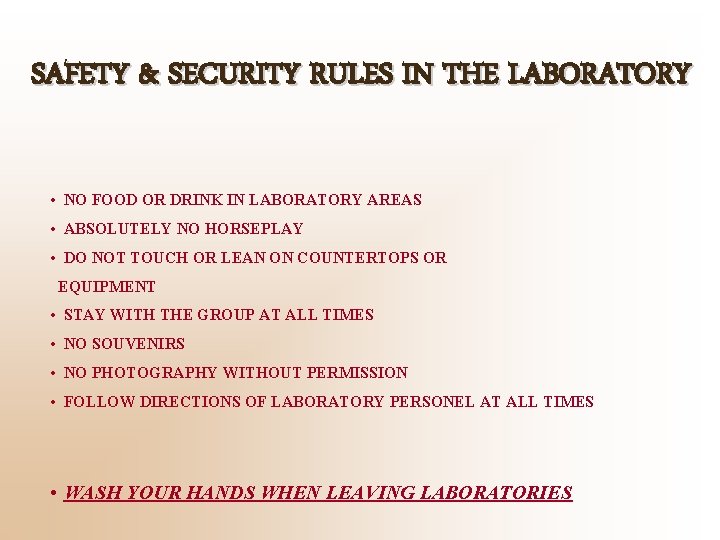
SAFETY & SECURITY RULES IN THE LABORATORY • NO FOOD OR DRINK IN LABORATORY AREAS • ABSOLUTELY NO HORSEPLAY • DO NOT TOUCH OR LEAN ON COUNTERTOPS OR EQUIPMENT • STAY WITH THE GROUP AT ALL TIMES • NO SOUVENIRS • NO PHOTOGRAPHY WITHOUT PERMISSION • FOLLOW DIRECTIONS OF LABORATORY PERSONEL AT ALL TIMES • WASH YOUR HANDS WHEN LEAVING LABORATORIES
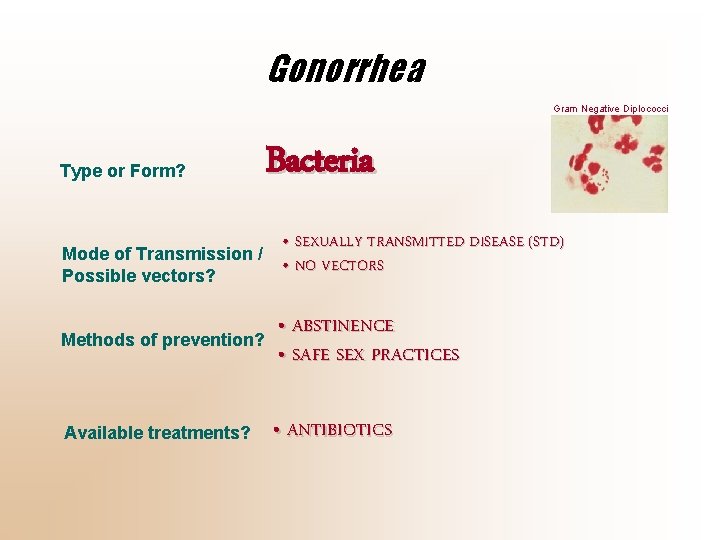
Gonorrhea Gram Negative Diplococci Type or Form? Bacteria • SEXUALLY TRANSMITTED DISEASE (STD) Mode of Transmission / • NO VECTORS Possible vectors? Methods of prevention? • ABSTINENCE • SAFE SEX PRACTICES Available treatments? • ANTIBIOTICS
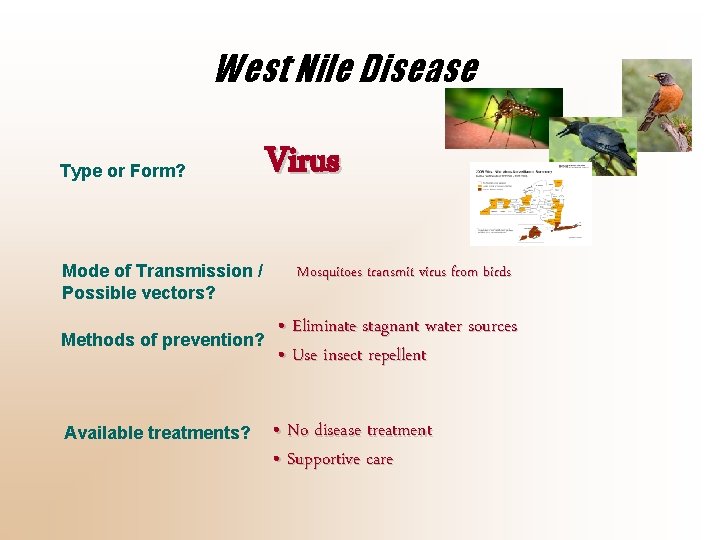
West Nile Disease Type or Form? Mode of Transmission / Possible vectors? Methods of prevention? Available treatments? Virus Mosquitoes transmit virus from birds • Eliminate stagnant water sources • Use insect repellent • No disease treatment • Supportive care
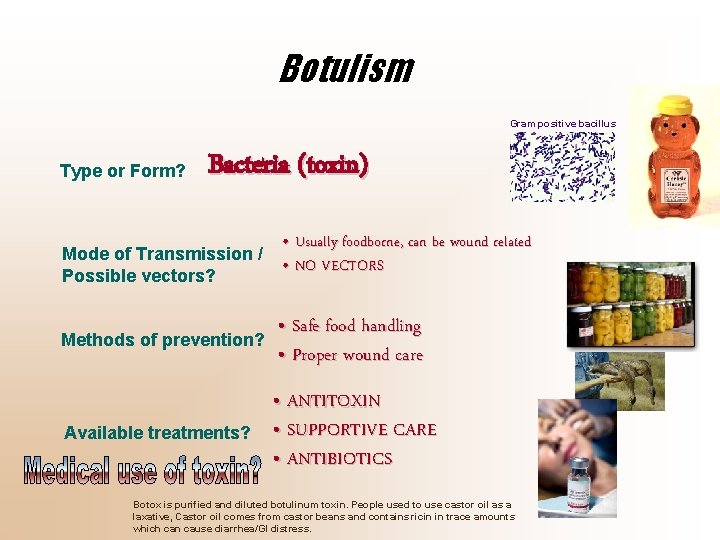
Botulism Gram positive bacillus Type or Form? Bacteria (toxin) • Usually foodborne, can be wound related Mode of Transmission / • NO VECTORS Possible vectors? Methods of prevention? • Safe food handling • Proper wound care Available treatments? • ANTITOXIN • SUPPORTIVE CARE • ANTIBIOTICS Botox is purified and diluted botulinum toxin. People used to use castor oil as a laxative, Castor oil comes from castor beans and contains ricin in trace amounts which can cause diarrhea/GI distress.
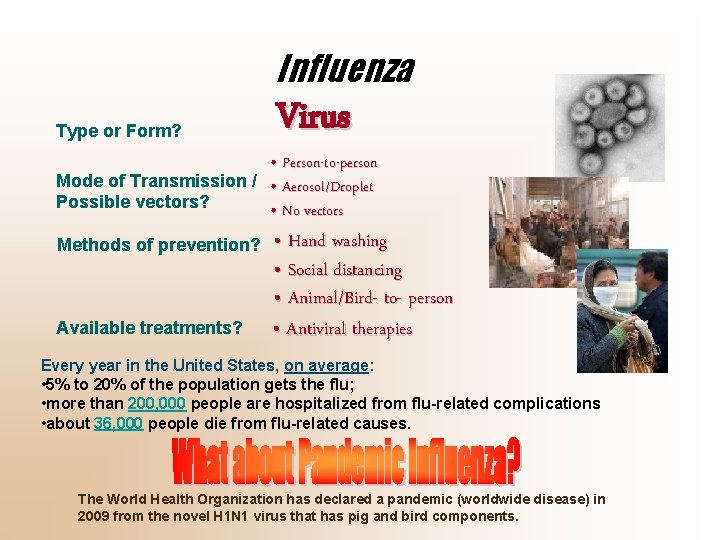
Influenza Type or Form? Virus • Person-to-person Mode of Transmission / • Aerosol/Droplet Possible vectors? • No vectors Methods of prevention? Available treatments? • Hand washing • Social distancing • Animal/Bird- to- person • Antiviral therapies Every year in the United States, on average: • 5% to 20% of the population gets the flu; • more than 200, 000 people are hospitalized from flu-related complications • about 36, 000 people die from flu-related causes. The World Health Organization has declared a pandemic (worldwide disease) in 2009 from the novel H 1 N 1 virus that has pig and bird components.
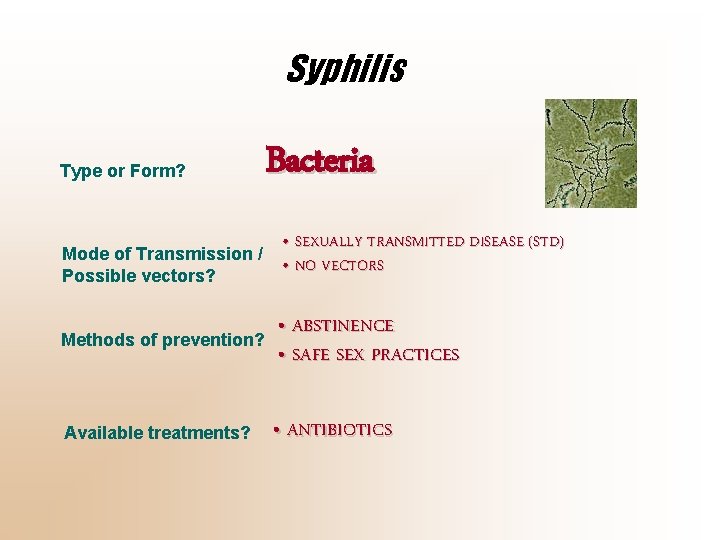
Syphilis Type or Form? Bacteria • SEXUALLY TRANSMITTED DISEASE (STD) Mode of Transmission / • NO VECTORS Possible vectors? Methods of prevention? • ABSTINENCE • SAFE SEX PRACTICES Available treatments? • ANTIBIOTICS
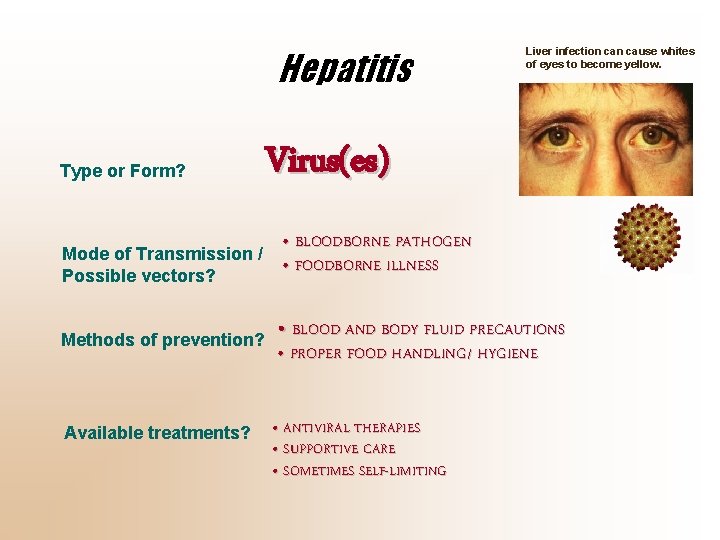
Hepatitis Type or Form? Liver infection cause whites of eyes to become yellow. Virus(es) • BLOODBORNE PATHOGEN Mode of Transmission / • FOODBORNE ILLNESS Possible vectors? Methods of prevention? Available treatments? • BLOOD AND BODY FLUID PRECAUTIONS • PROPER FOOD HANDLING/ HYGIENE • ANTIVIRAL THERAPIES • SUPPORTIVE CARE • SOMETIMES SELF-LIMITING
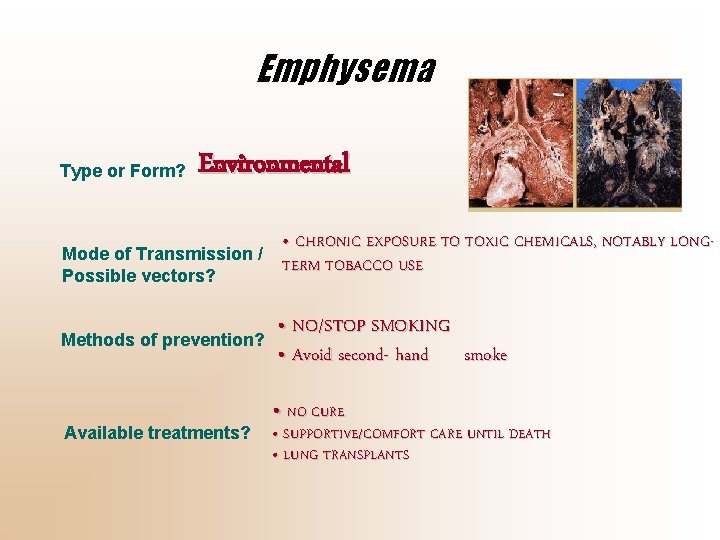
Emphysema Type or Form? Environmental • CHRONIC EXPOSURE TO TOXIC CHEMICALS, NOTABLY LONGMode of Transmission / TERM TOBACCO USE Possible vectors? Methods of prevention? Available treatments? • NO/STOP SMOKING • Avoid second- hand smoke • NO CURE • SUPPORTIVE/COMFORT CARE UNTIL DEATH • LUNG TRANSPLANTS
Meningitis: Inflammation of the lining of the spinal cord or brain Type or Form? Bacterial or Viral • Person-to-Person Mode of Transmission / • No vectors Possible vectors? Methods of prevention? Available treatments? • Vaccination • Isolation/Quarantine • Bacterial – Antibiotics • Viral – Usually self-limiting • Supportive care
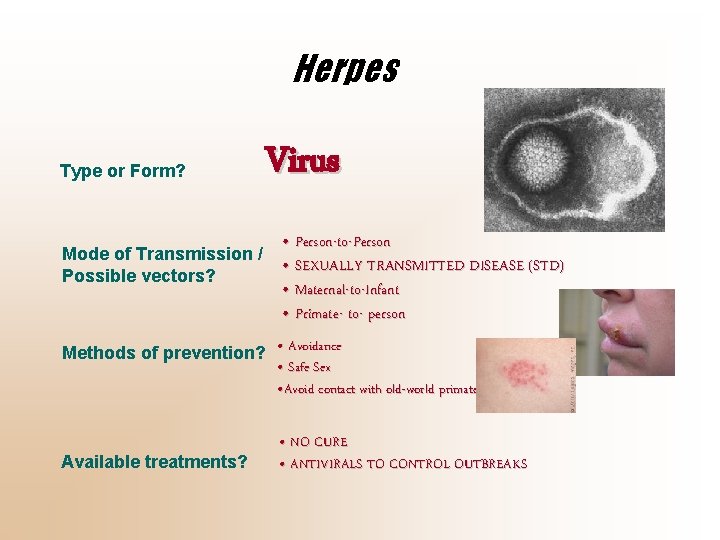
Herpes Type or Form? Virus • Person-to-Person Mode of Transmission / • SEXUALLY TRANSMITTED DISEASE (STD) Possible vectors? • Maternal-to-Infant • Primate- to- person • Avoidance Methods of prevention? • Safe Sex • Avoid contact with old-world primates Available treatments? • NO CURE • ANTIVIRALS TO CONTROL OUTBREAKS
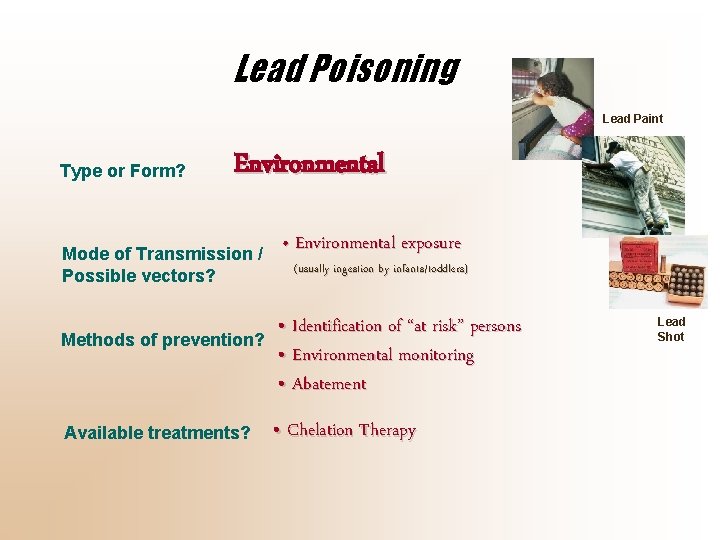
Lead Poisoning Lead Paint Type or Form? Environmental Mode of Transmission / Possible vectors? Methods of prevention? Available treatments? • Environmental exposure (usually ingestion by infants/toddlers) • Identification of “at risk” persons • Environmental monitoring • Abatement • Chelation Therapy Lead Shot
Switching Gears
IMMUNIZATIONS Immunization is the process by which an individual's immune system becomes “trained” to protect a person from a disease agent. NATURAL vs. ARTIFICIAL IMMUNIZATION ACTIVE vs. PASSIVE IMMUNIZATION VACCINATION
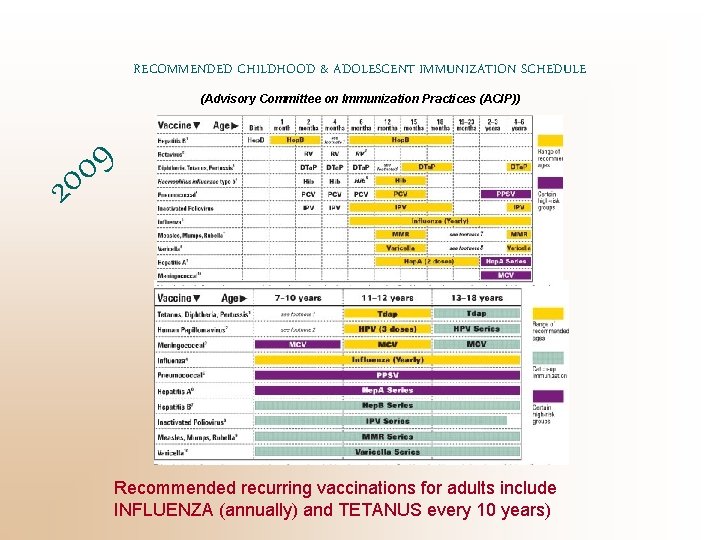
RECOMMENDED CHILDHOOD & ADOLESCENT IMMUNIZATION SCHEDULE (Advisory Committee on Immunization Practices (ACIP)) 9 0 20 Recommended recurring vaccinations for adults include INFLUENZA (annually) and TETANUS every 10 years)
DISEASES FOR WHICH THERE IS CURRENTLY NO VACCINATION • • • Food Poisonings (E. coli, Salmonella, others) AIDS Encephalitis (Some vaccines in development or available outside of the U. S. ) Gonorrhea West Nile Virus (available for animals, human trials in progress) Botulism (In development/Experimental) Syphilis Emphysema Lead Poisoning
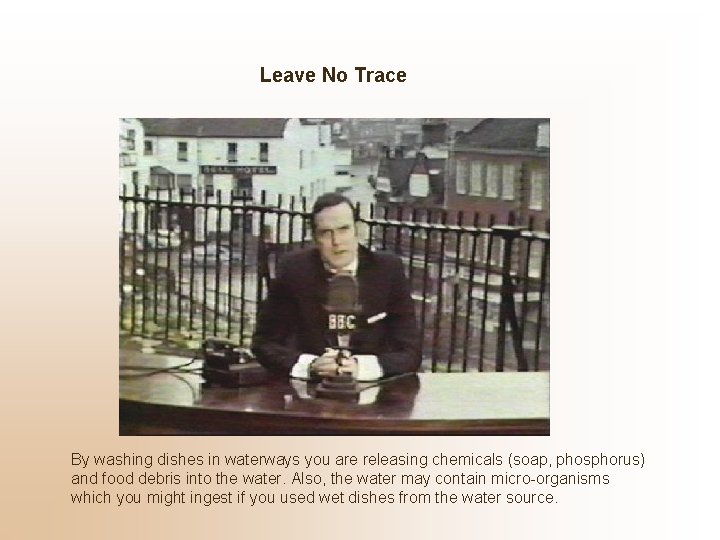
Leave No Trace By washing dishes in waterways you are releasing chemicals (soap, phosphorus) and food debris into the water. Also, the water may contain micro-organisms which you might ingest if you used wet dishes from the water source.
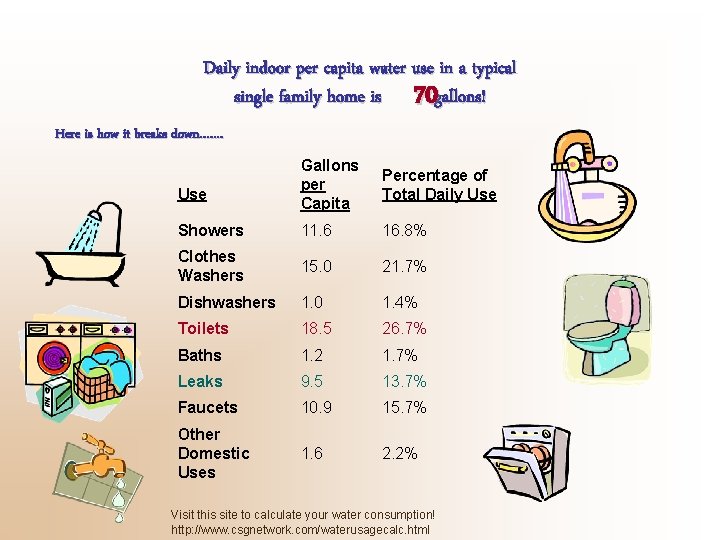
Daily indoor per capita water use in a typical single family home is 70 gallons! Here is how it breaks down……. Gallons per Capita Percentage of Total Daily Use Showers 11. 6 16. 8% Clothes Washers 15. 0 21. 7% Dishwashers 1. 0 1. 4% Toilets 18. 5 26. 7% Baths 1. 2 1. 7% Leaks 9. 5 13. 7% Faucets 10. 9 15. 7% Other Domestic Uses 1. 6 2. 2% Use Visit this site to calculate your water consumption! http: //www. csgnetwork. com/waterusagecalc. html
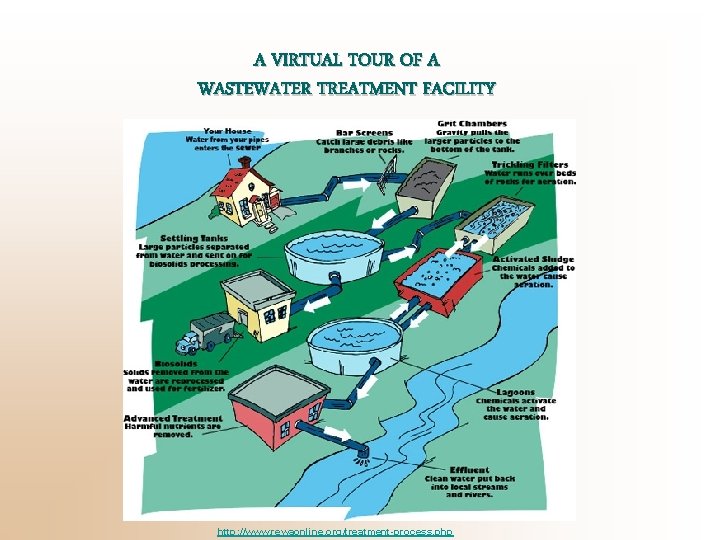
A VIRTUAL TOUR OF A WASTEWATER TREATMENT FACILITY http: //www. rewaonline. org/treatment-process. php
LABORATORY ACTIVITY #3 Water Quality Analysis TURBIDITY p. H Dissolved O 2 You may want to conduct an activity here. When this presentation was originally given, the badge leader performed some basic water quality analyses including p. H, dissolved oxygen, and turbidity. Ideas for other activities can be found on the NYSDOH Public Health Works! Website: http: //www. health. state. ny. us/pr evention/public_health_works/ and www. worldwatermonitoringd ay. org. Please contact your local health department or consult a text book or the internet for help in completing this lab.
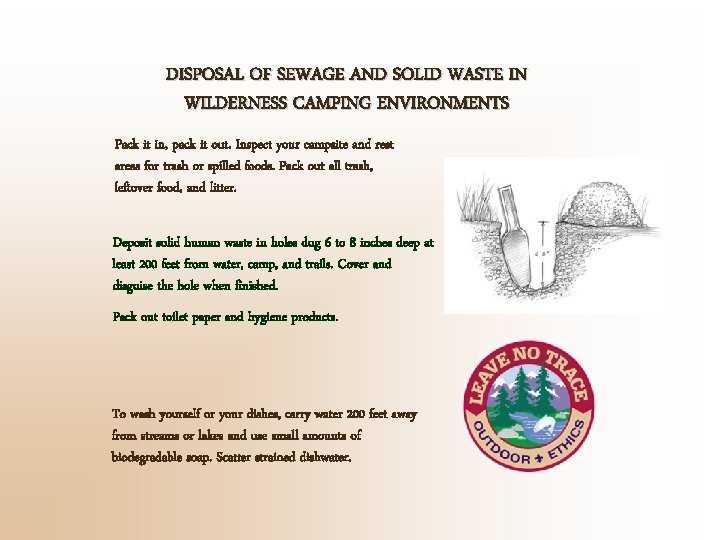
DISPOSAL OF SEWAGE AND SOLID WASTE IN WILDERNESS CAMPING ENVIRONMENTS Pack it in, pack it out. Inspect your campsite and rest areas for trash or spilled foods. Pack out all trash, leftover food, and litter. Deposit solid human waste in holes dug 6 to 8 inches deep at least 200 feet from water, camp, and trails. Cover and disguise the hole when finished. Pack out toilet paper and hygiene products. To wash yourself or your dishes, carry water 200 feet away from streams or lakes and use small amounts of biodegradable soap. Scatter strained dishwater.
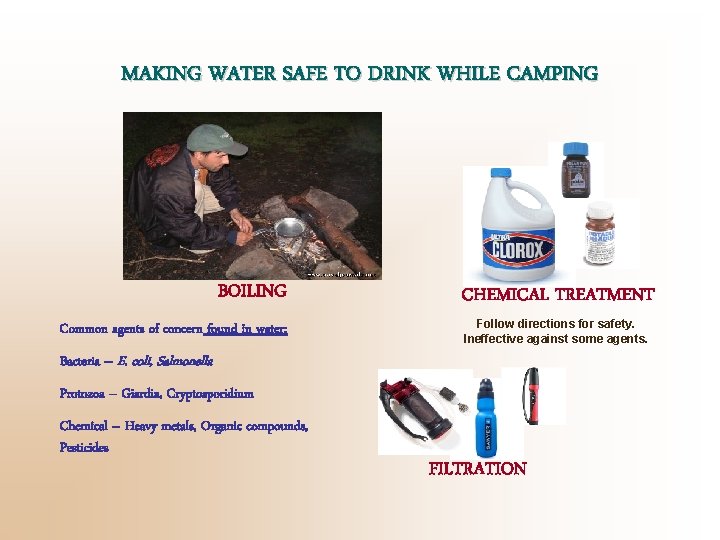
MAKING WATER SAFE TO DRINK WHILE CAMPING BOILING Common agents of concern found in water: CHEMICAL TREATMENT Follow directions for safety. Ineffective against some agents. Bacteria – E. coli, Salmonella Protozoa – Giardia, Cryptosporidium Chemical – Heavy metals, Organic compounds, Pesticides FILTRATION
FOOD SAFETY When this presentation was originally given, the badge leader showed 2 short videos on food safety. You may want to look for similar videos or other activities related to food safety. FOOD SAFETY VIDEO #1 FOOD SAFETY VIDEO #2
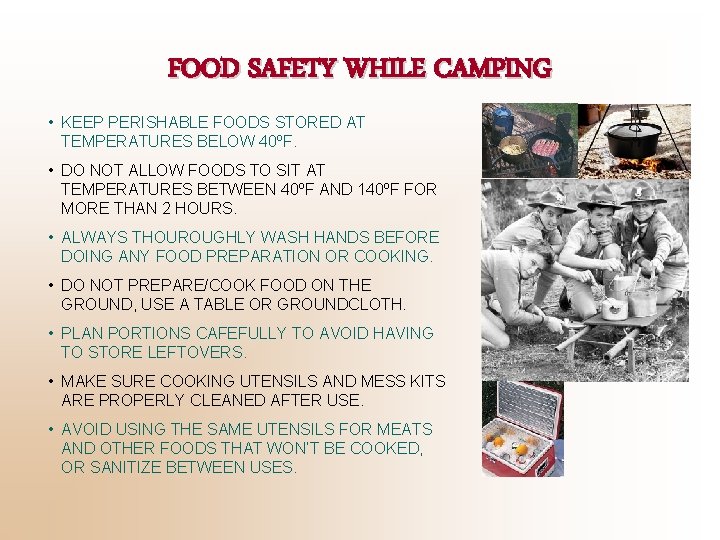
FOOD SAFETY WHILE CAMPING • KEEP PERISHABLE FOODS STORED AT TEMPERATURES BELOW 40 o. F. • DO NOT ALLOW FOODS TO SIT AT TEMPERATURES BETWEEN 40 o. F AND 140 o. F FOR MORE THAN 2 HOURS. • ALWAYS THOUROUGHLY WASH HANDS BEFORE DOING ANY FOOD PREPARATION OR COOKING. • DO NOT PREPARE/COOK FOOD ON THE GROUND, USE A TABLE OR GROUNDCLOTH. • PLAN PORTIONS CAFEFULLY TO AVOID HAVING TO STORE LEFTOVERS. • MAKE SURE COOKING UTENSILS AND MESS KITS ARE PROPERLY CLEANED AFTER USE. • AVOID USING THE SAME UTENSILS FOR MEATS AND OTHER FOODS THAT WON’T BE COOKED, OR SANITIZE BETWEEN USES.
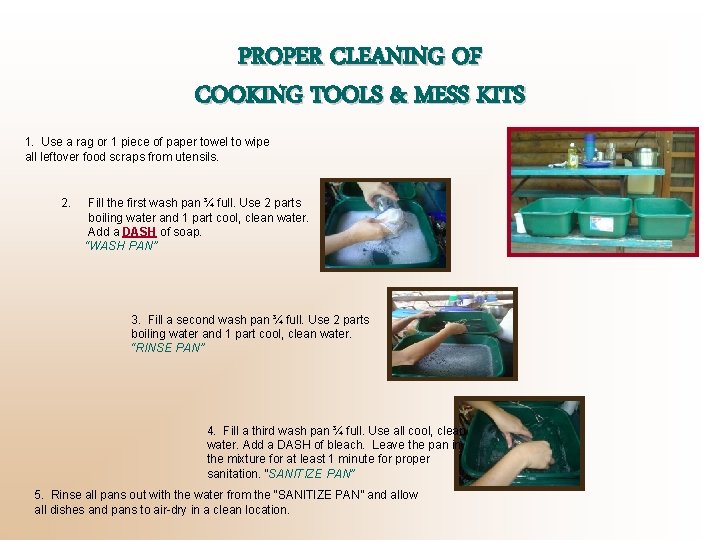
PROPER CLEANING OF COOKING TOOLS & MESS KITS 1. Use a rag or 1 piece of paper towel to wipe all leftover food scraps from utensils. 2. Fill the first wash pan ¾ full. Use 2 parts boiling water and 1 part cool, clean water. Add a DASH of soap. “WASH PAN” 3. Fill a second wash pan ¾ full. Use 2 parts boiling water and 1 part cool, clean water. “RINSE PAN” 4. Fill a third wash pan ¾ full. Use all cool, clean water. Add a DASH of bleach. Leave the pan in the mixture for at least 1 minute for proper sanitation. “SANITIZE PAN” 5. Rinse all pans out with the water from the “SANITIZE PAN” and allow all dishes and pans to air-dry in a clean location.
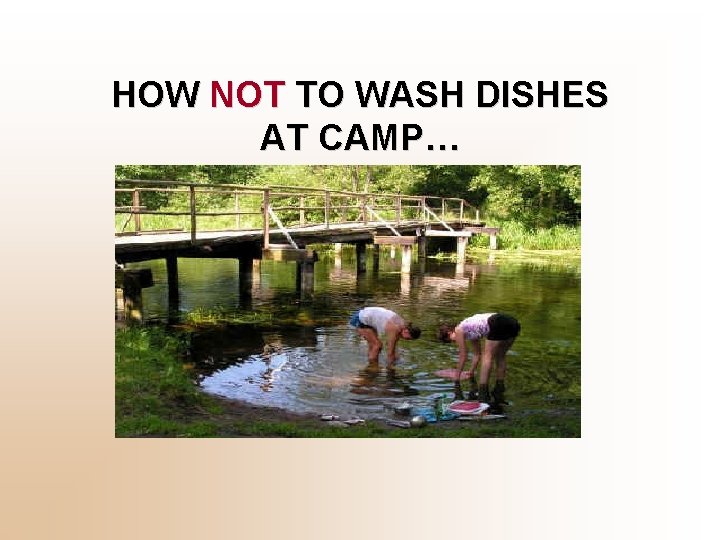
HOW NOT TO WASH DISHES AT CAMP…
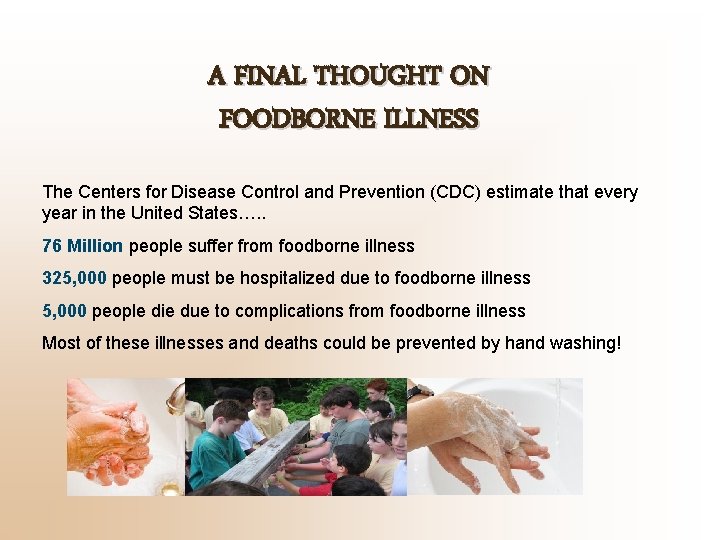
A FINAL THOUGHT ON FOODBORNE ILLNESS The Centers for Disease Control and Prevention (CDC) estimate that every year in the United States…. . 76 Million people suffer from foodborne illness 325, 000 people must be hospitalized due to foodborne illness 5, 000 people die due to complications from foodborne illness Most of these illnesses and deaths could be prevented by hand washing!
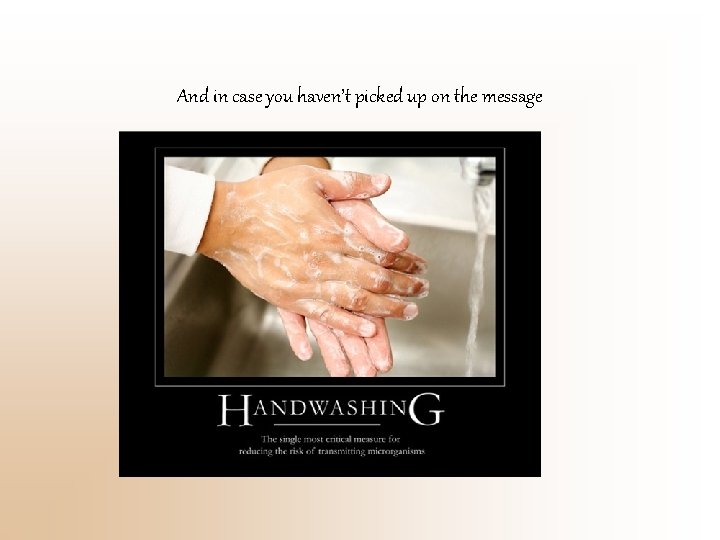
And in case you haven’t picked up on the message
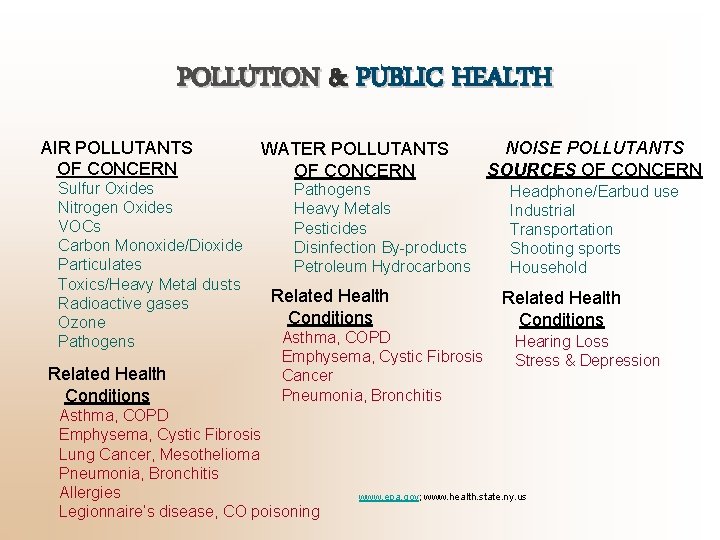
POLLUTION & PUBLIC HEALTH AIR POLLUTANTS OF CONCERN Sulfur Oxides Nitrogen Oxides VOCs Carbon Monoxide/Dioxide Particulates Toxics/Heavy Metal dusts Radioactive gases Ozone Pathogens Related Health Conditions WATER POLLUTANTS OF CONCERN Pathogens Heavy Metals Pesticides Disinfection By-products Petroleum Hydrocarbons Related Health Conditions Asthma, COPD Emphysema, Cystic Fibrosis Cancer Pneumonia, Bronchitis Asthma, COPD Emphysema, Cystic Fibrosis Lung Cancer, Mesothelioma Pneumonia, Bronchitis Allergies Legionnaire’s disease, CO poisoning NOISE POLLUTANTS SOURCES OF CONCERN Headphone/Earbud use Industrial Transportation Shooting sports Household Related Health Conditions Hearing Loss Stress & Depression www. epa. gov; www. health. state. ny. us
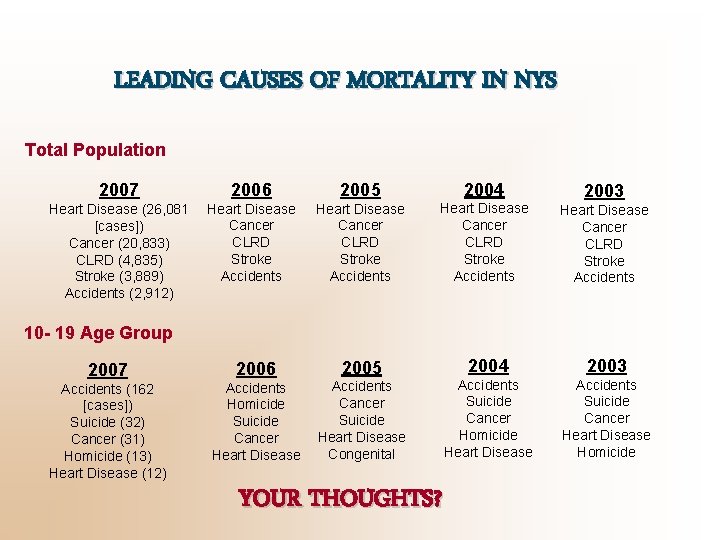
LEADING CAUSES OF MORTALITY IN NYS Total Population 2007 2006 2005 2004 Heart Disease (26, 081 [cases]) Cancer (20, 833) CLRD (4, 835) Stroke (3, 889) Accidents (2, 912) Heart Disease Cancer CLRD Stroke Accidents 2003 Heart Disease Cancer CLRD Stroke Accidents 10 - 19 Age Group 2007 2006 Accidents (162 [cases]) Suicide (32) Cancer (31) Homicide (13) Heart Disease (12) Accidents Homicide Suicide Cancer Heart Disease 2005 Accidents Cancer Suicide Heart Disease Congenital YOUR THOUGHTS? 2004 2003 Accidents Suicide Cancer Homicide Heart Disease Accidents Suicide Cancer Heart Disease Homicide
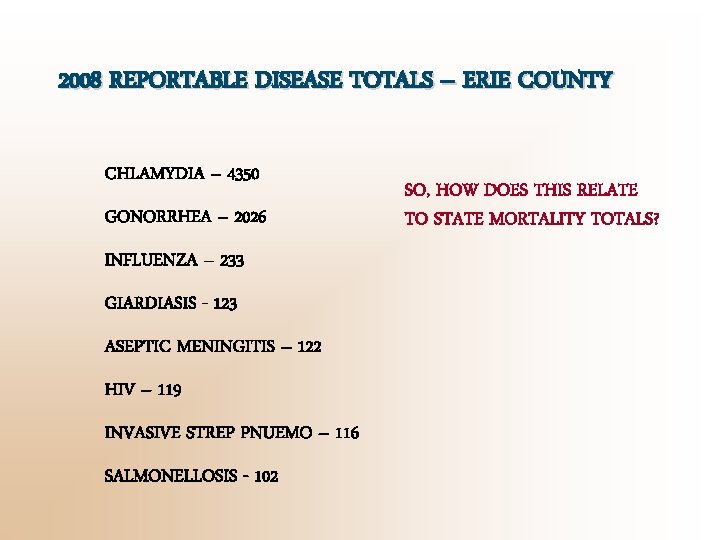
2008 REPORTABLE DISEASE TOTALS – ERIE COUNTY CHLAMYDIA – 4350 GONORRHEA – 2026 INFLUENZA – 233 GIARDIASIS - 123 ASEPTIC MENINGITIS – 122 HIV – 119 INVASIVE STREP PNUEMO – 116 SALMONELLOSIS - 102 SO, HOW DOES THIS RELATE TO STATE MORTALITY TOTALS?
Enter the name of your county health department here. Provide a graphical representation of the organizational structure of the department here to aid in the explanation of its functions.
Enter the name of any laboratories, environmental health program and/or epidemiological program of your county health department here. Provide a graphic of the organizational structure of this department here.

Careers in Public Health
Provide contact information here for someone who can respond to questions and answers.

THANK YOU FOR YOUR ATTENTION! PLEASE CLEAN UP AROUND YOU BEFORE YOU LEAVE! MAKE SURE YOU GET YOUR SIGNED BLUE CARD BACK BEFORE YOU LEAVE!
Acknowledgements Michael Simkins, Erie County Public Health Laboratories Erie County Department of Health Dr. Millicent Eidson, New York State Department of Health, Office of Public Health Practice
- Slides: 65