
Brush tailed rock wallaby By Katelyn Joey Bush
Brush tailed rock wallaby By Katelyn
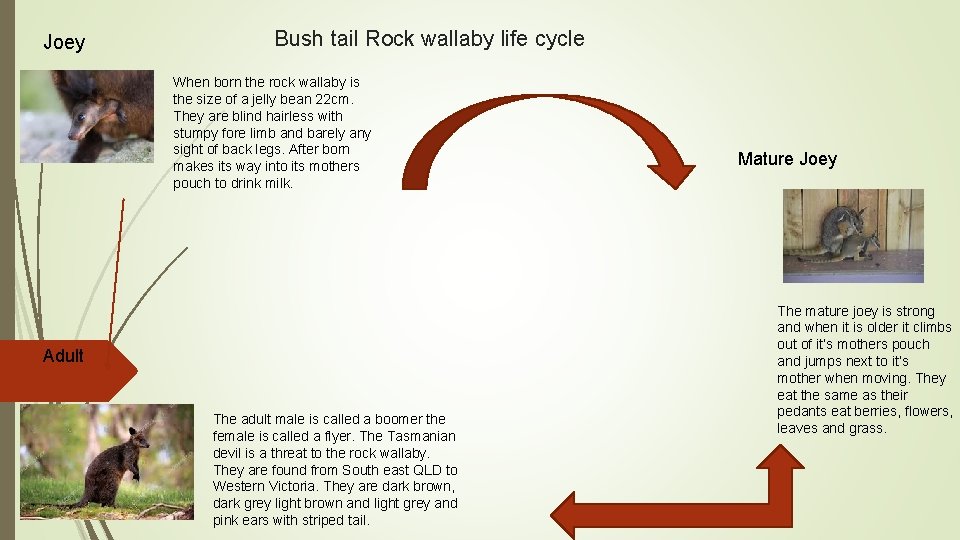
Joey Bush tail Rock wallaby life cycle When born the rock wallaby is the size of a jelly bean 22 cm. They are blind hairless with stumpy fore limb and barely any sight of back legs. After born makes its way into its mothers pouch to drink milk. Adult The adult male is called a boomer the female is called a flyer. The Tasmanian devil is a threat to the rock wallaby. They are found from South east QLD to Western Victoria. They are dark brown, dark grey light brown and light grey and pink ears with striped tail. Mature Joey The mature joey is strong and when it is older it climbs out of it’s mothers pouch and jumps next to it’s mother when moving. They eat the same as their pedants eat berries, flowers, leaves and grass.
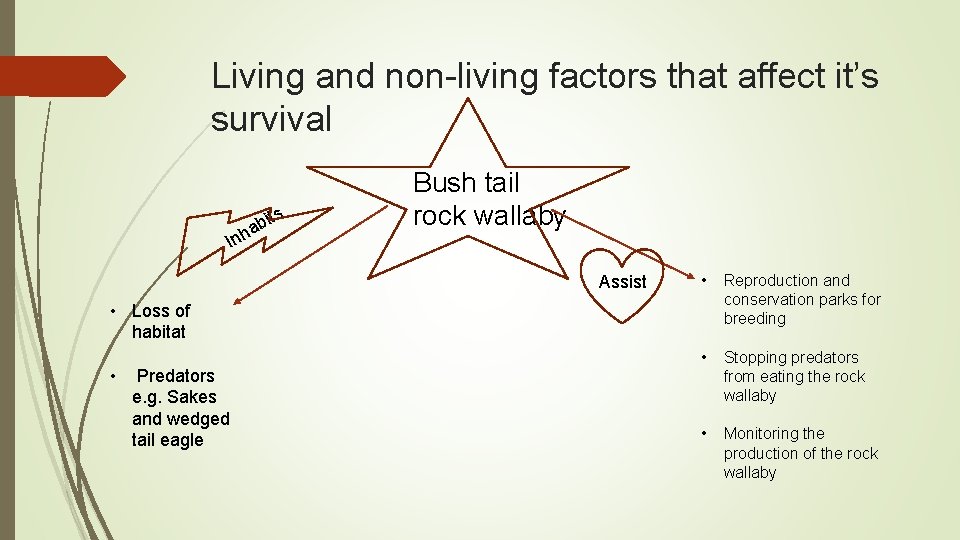
Living and non-living factors that affect it’s survival b ha In its Bush tail rock wallaby Assist • Reproduction and conservation parks for breeding • Stopping predators from eating the rock wallaby • Monitoring the production of the rock wallaby • Loss of habitat • Predators e. g. Sakes and wedged tail eagle
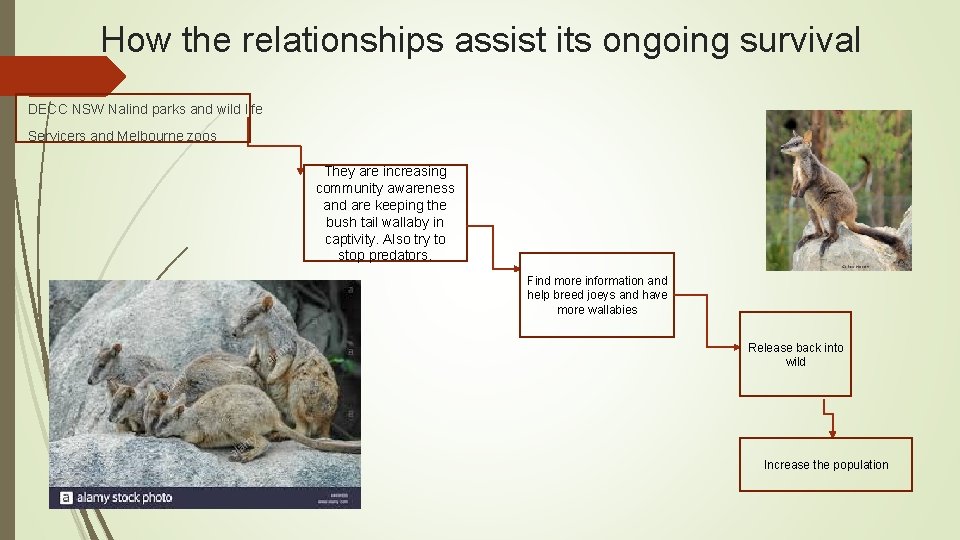
How the relationships assist its ongoing survival DECC NSW Nalind parks and wild life Servicers and Melbourne zoos They are increasing community awareness and are keeping the bush tail wallaby in captivity. Also try to stop predators. Find more information and help breed joeys and have more wallabies Release back into wild Increase the population

One element that assists its survival and in what stage of its life cycle is it most beneficial Department of Environment and climate change conservation group is monitoring there breeding and what they do. They also try to increase their population. It mostly helps the adult stage and the joey because it helps reproduce joeys makes sure the adults have notarise to reproduce Bush tail rock wallaby.
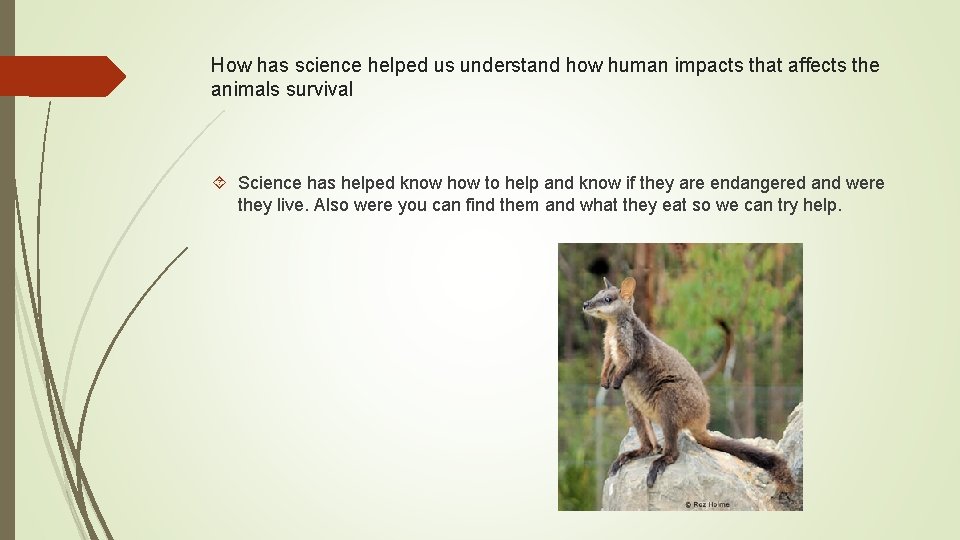
How has science helped us understand how human impacts that affects the animals survival Science has helped know how to help and know if they are endangered and were they live. Also were you can find them and what they eat so we can try help.
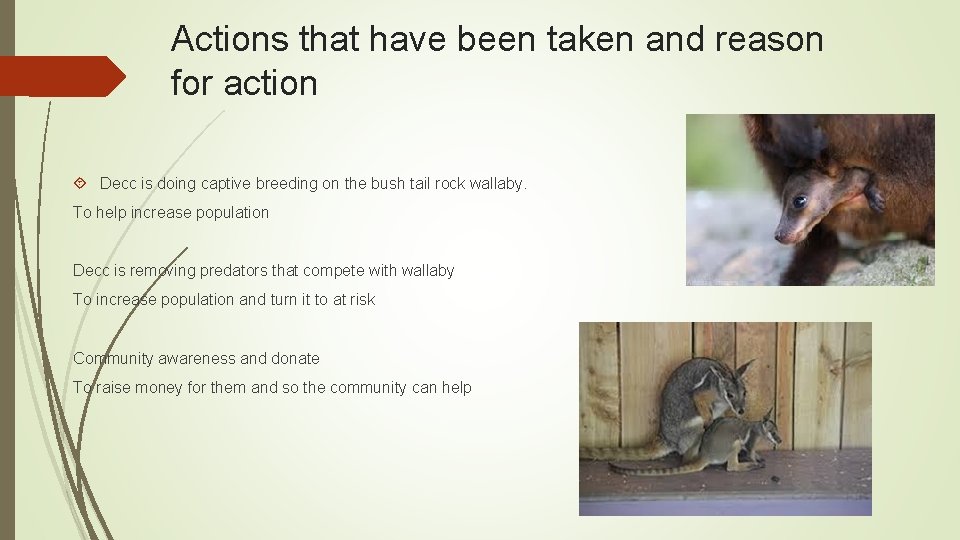
Actions that have been taken and reason for action Decc is doing captive breeding on the bush tail rock wallaby. To help increase population Decc is removing predators that compete with wallaby To increase population and turn it to at risk Community awareness and donate To raise money for them and so the community can help
- Slides: 7