
Brugada Syndrome Does this patient with Brugada ECG
Brugada Syndrome
Does this patient with Brugada ECG need an ICD?
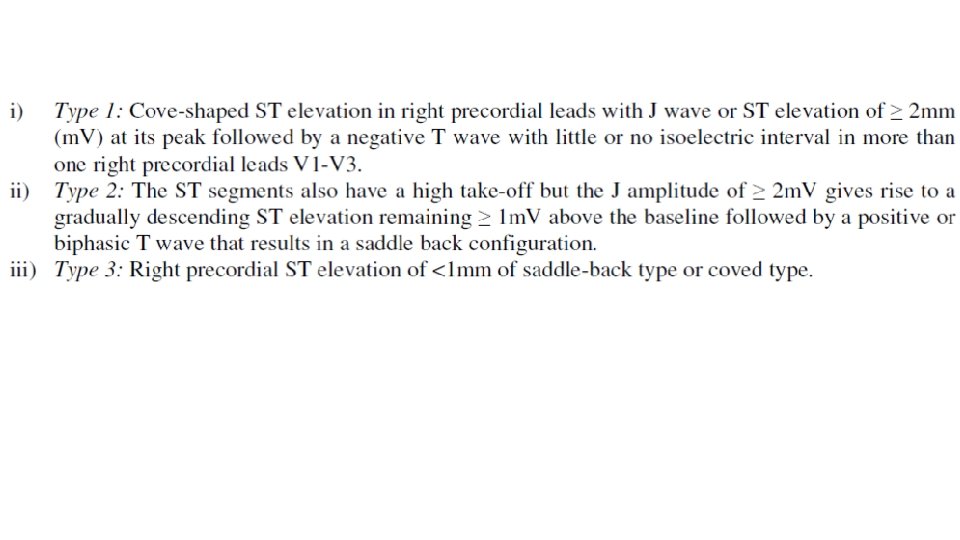
Clinical Features and Epidemiology • First described in 1992 • Characterized by an aberrant pattern of ST segment elevation in right precordial leads and a high incidence of sudden death in patients with structurally normal heart • 4 - 12% of all sudden death and 20% of sudden death in patients with structurally normal heart • Leading cause of death of men under age 40 in regions where the inheritance is endemic
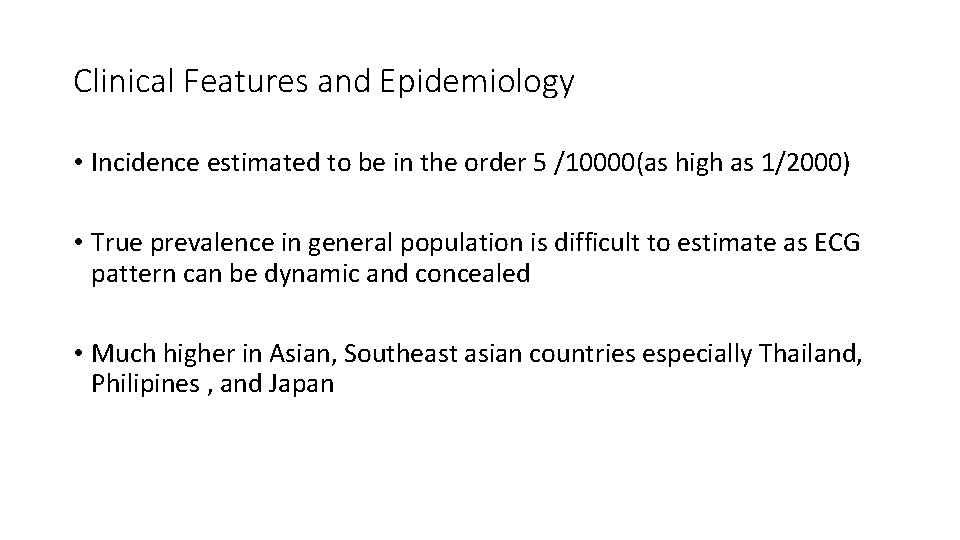
Clinical Features and Epidemiology • Incidence estimated to be in the order 5 /10000(as high as 1/2000) • True prevalence in general population is difficult to estimate as ECG pattern can be dynamic and concealed • Much higher in Asian, Southeast asian countries especially Thailand, Philipines , and Japan
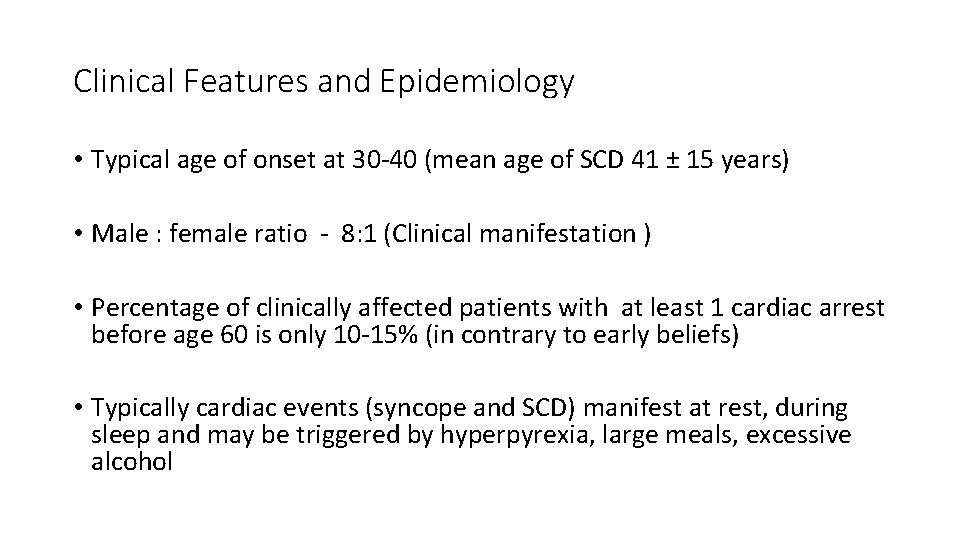
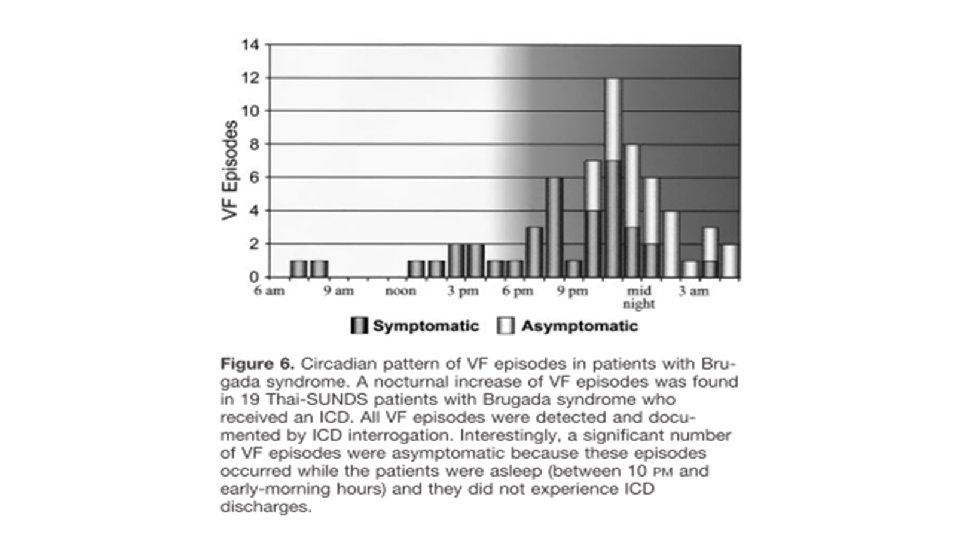
Clinical Features and Epidemiology • Typical age of onset at 30 -40 (mean age of SCD 41 ± 15 years) • Male : female ratio - 8: 1 (Clinical manifestation ) • Percentage of clinically affected patients with at least 1 cardiac arrest before age 60 is only 10 -15% (in contrary to early beliefs) • Typically cardiac events (syncope and SCD) manifest at rest, during sleep and may be triggered by hyperpyrexia, large meals, excessive alcohol

Clinical Features and Epidemiology • Approximately 20% of Br. S patients develop SVT • AF is associated in 10 -20% of cases • Incidence of atrial arrhythmias is higher in patients with ICD indication (27% vs 13% P<0. 05), causing inappropiate shocks in 14% of ICD patients
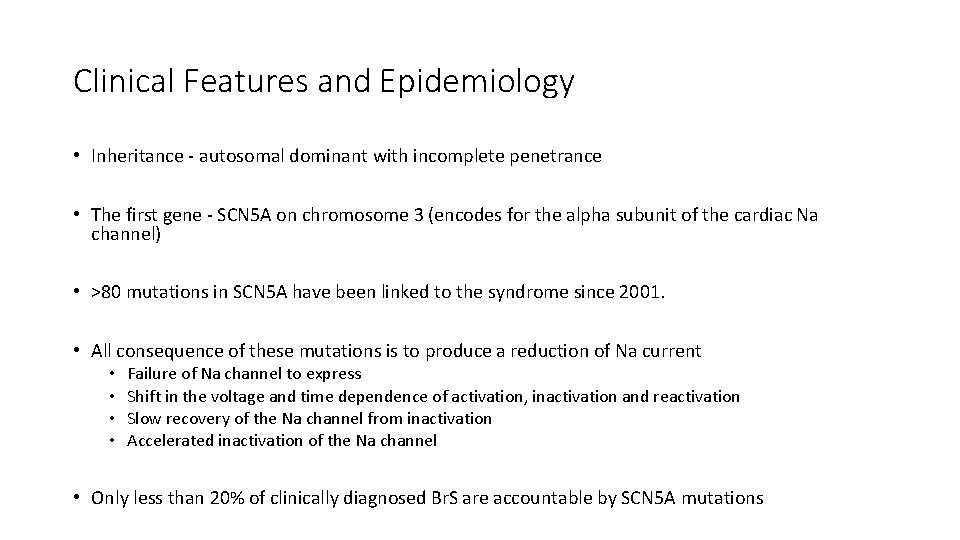
Clinical Features and Epidemiology • Inheritance - autosomal dominant with incomplete penetrance • The first gene - SCN 5 A on chromosome 3 (encodes for the alpha subunit of the cardiac Na channel) • >80 mutations in SCN 5 A have been linked to the syndrome since 2001. • All consequence of these mutations is to produce a reduction of Na current • • Failure of Na channel to express Shift in the voltage and time dependence of activation, inactivation and reactivation Slow recovery of the Na channel from inactivation Accelerated inactivation of the Na channel • Only less than 20% of clinically diagnosed Br. S are accountable by SCN 5 A mutations

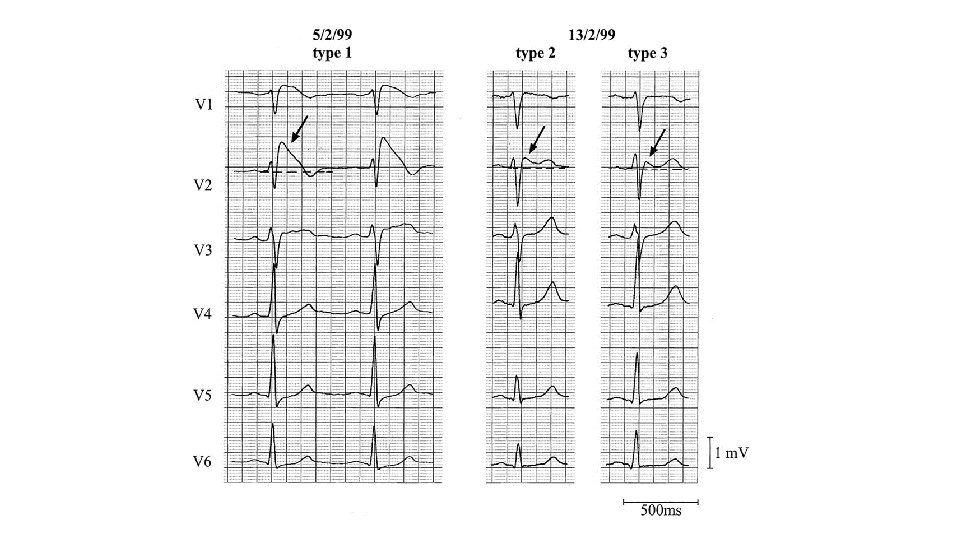
Diagnostic Criteria of Brugada Syndrome • Appearance of on a type 1 ST segment elevation (coved type) ≥ 2 mm in >1 right precordial lead (V 1 -3) (either spontaneously or after Na channel blocker exposure) AND • One of the following: • • Documented VF (Self-terminating) polymorphic VT Inducibility of ventricular arrhythmias with programmed electrical stimulation Family history of sudden death before age 45 Presence of of a coved-type ECG in family members Syncope Nocturnal agonal respiration • Other factors accounting for the ECG abnormality should be ruled out

Brugada syndrome: Diagnosis • type 2 or type 3 ST segment elevation in >1 right precordial leads under baseline conditions with conversion to type 1 following challenge with a Na channel blocker is considered positive • One or more of the clinical criteria should also be present • Drug induced ST elevation to <2 mm is considered inconclusive • Drug-induced conversion of type 3 to type 2 ECG pattern is considered inconclusive

Drugs used to unmask Brugada syndrome Ajmaline 1 mg/kg over 5 min. IV Flecainide 2 mg/kg over 10 min. IV (max 150 mg) Procainamide 10 mg/kg over 10 min. IV Pilsicainide 1 mg/kg over 10 min. IV Penetrance of Br. S phenotype increase from 32. 7% to 78. 6% with the use of Na channel blocker. Flecainide : Sens 77%, Spec 80%, PPV 96%, NPV 36% (Meregalli et al. J Cardiovas Electrophysiol 2006; 17: 857 -864) Ajmaline: Sens 80%, Spec 94. 4%, PPV 93. 3%, NPV 82. 9% (Hong et al. Circulation 2004; 110: 3203 -7)

Modulating and Precipitating factors
Therapeutic recommendation for Brugada syndrome • ICD is the only proven effective treatment of Br. S. • Drugs reported to exacerbate the ECG pattern of ST segment elevation and trigger arrhythmias in Br. S should be avoided. (Brugadadrugs. org) • Antiarrhythmics (class Ia Ic betablockers), CCB, nitrates, TCA, phenothiazines, SSRI like fluoxetine, bupivacaine, propoxyphene, propofol, pinacidil, nicorandil (K channel activators), Li, cociane, methoxamine (alpha- agonists) • Avoid excessive alcohol, large carbohydrate meal, very hot baths, hypokalemia • Hyperpyrexia should be treated promptly
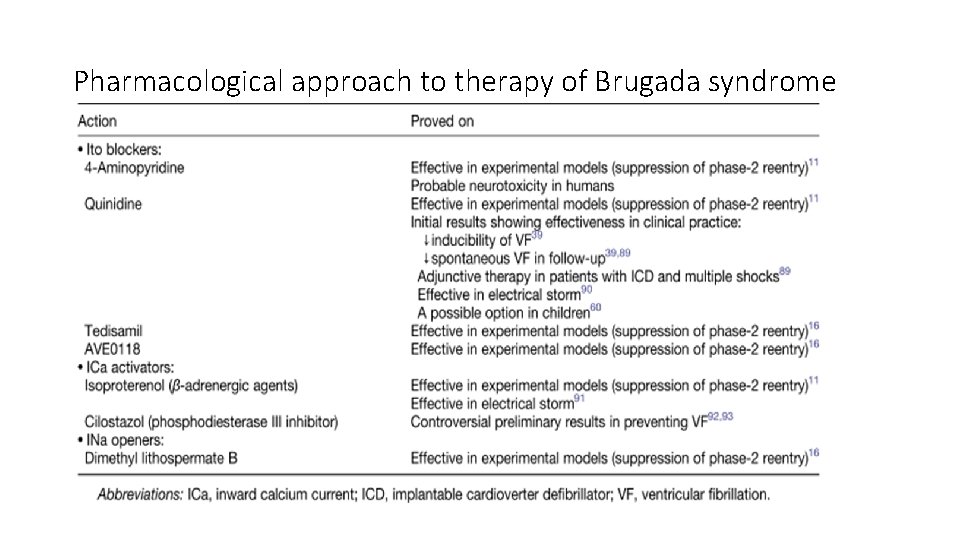
Pharmacological approach to therapy of Brugada syndrome
Case 1 • Male, age 61, doctor • History of hypertension and hyperlipidemia • Good exercise tolerance with frequent jogging • Attended ER for epigastric pain for 1 day without radiation • Fever for 1 day • No angina or palpitation or CHF symptom • Stable hemodynamics and no heart failure • Not septic • No acute abdomen
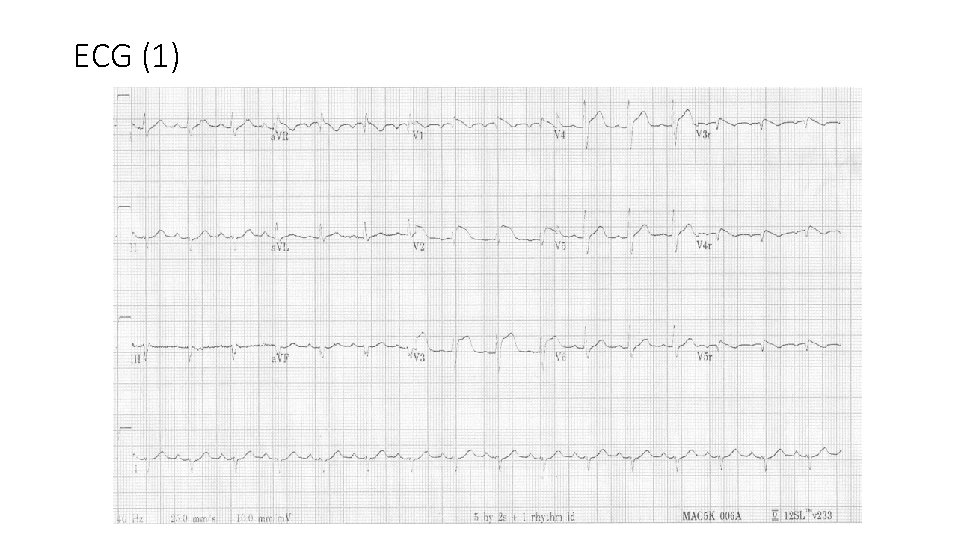
ECG (1)
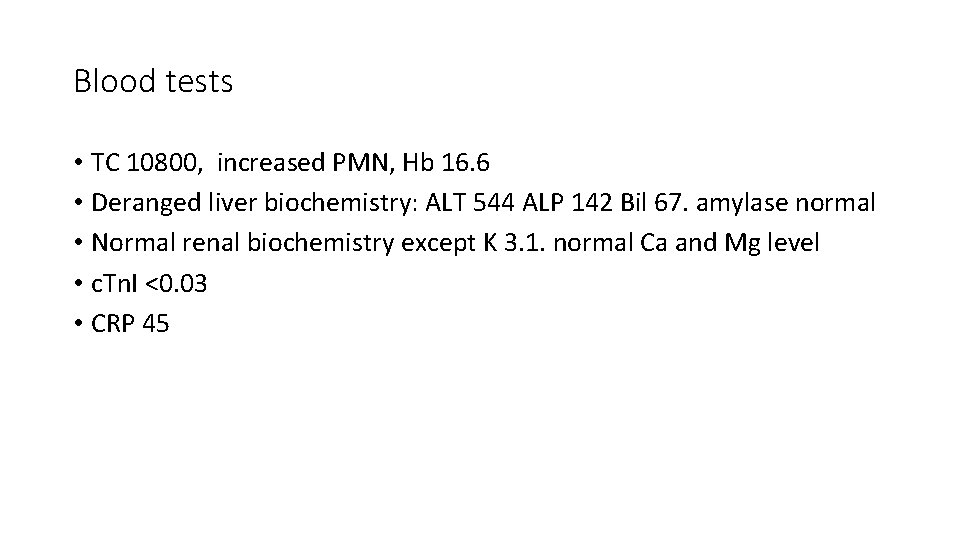
Blood tests • TC 10800, increased PMN, Hb 16. 6 • Deranged liver biochemistry: ALT 544 ALP 142 Bil 67. amylase normal • Normal renal biochemistry except K 3. 1. normal Ca and Mg level • c. Tn. I <0. 03 • CRP 45
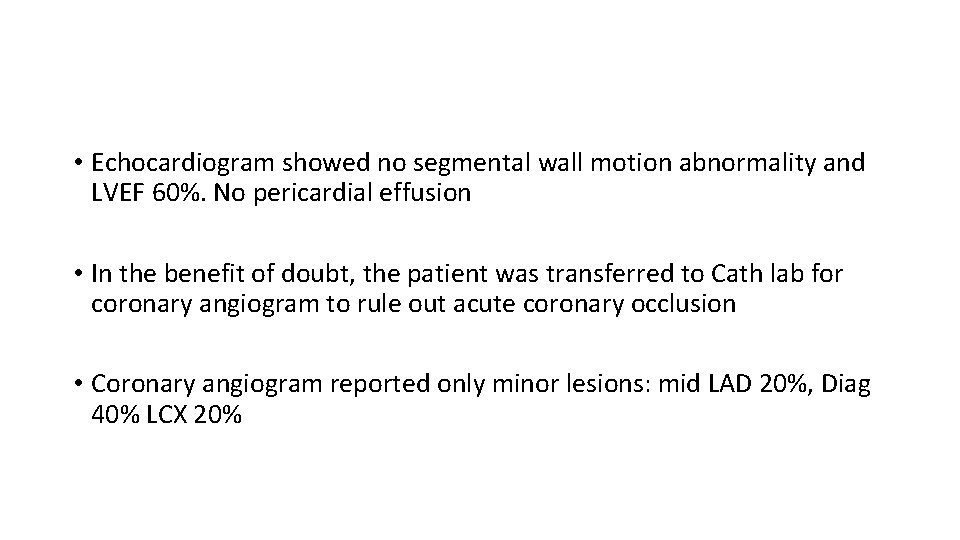
• Echocardiogram showed no segmental wall motion abnormality and LVEF 60%. No pericardial effusion • In the benefit of doubt, the patient was transferred to Cath lab for coronary angiogram to rule out acute coronary occlusion • Coronary angiogram reported only minor lesions: mid LAD 20%, Diag 40% LCX 20%
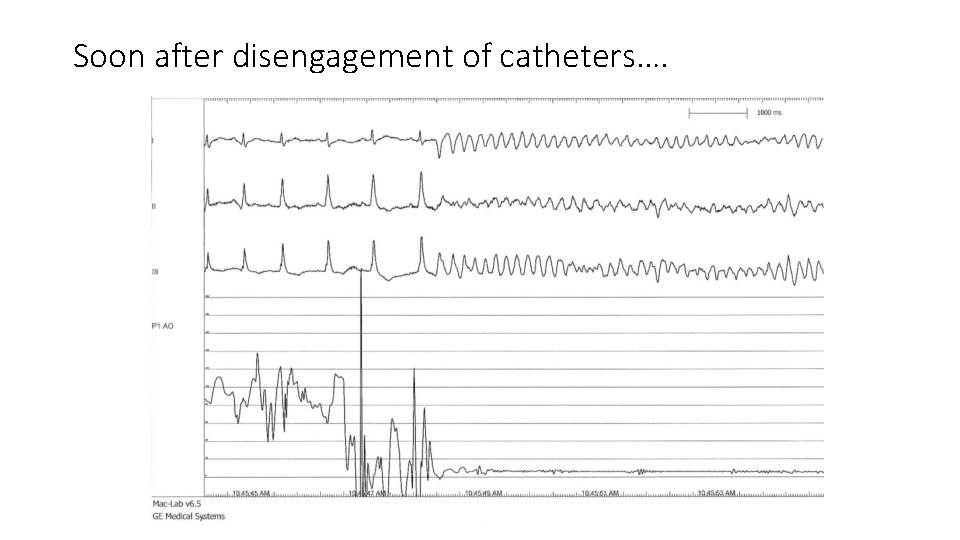
Soon after disengagement of catheters….
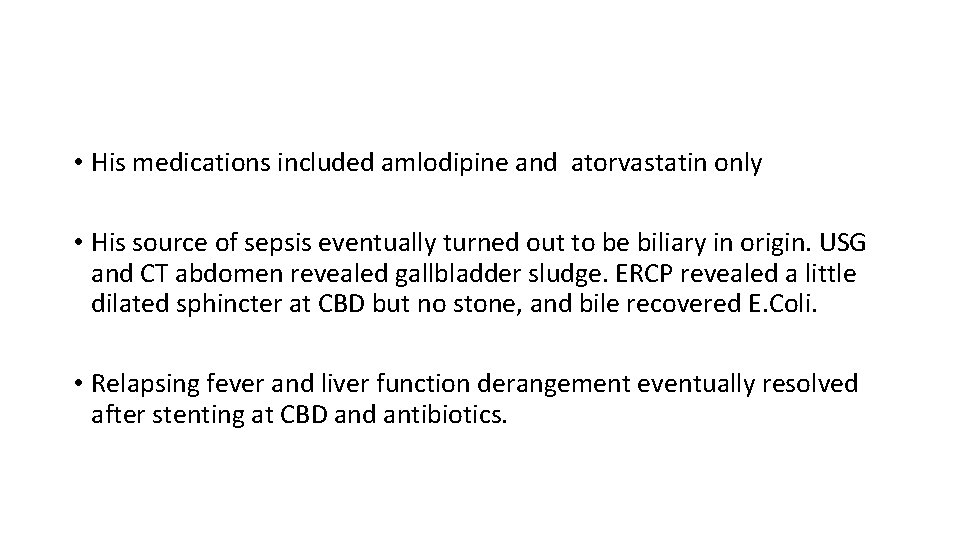
• His medications included amlodipine and atorvastatin only • His source of sepsis eventually turned out to be biliary in origin. USG and CT abdomen revealed gallbladder sludge. ERCP revealed a little dilated sphincter at CBD but no stone, and bile recovered E. Coli. • Relapsing fever and liver function derangement eventually resolved after stenting at CBD and antibiotics.
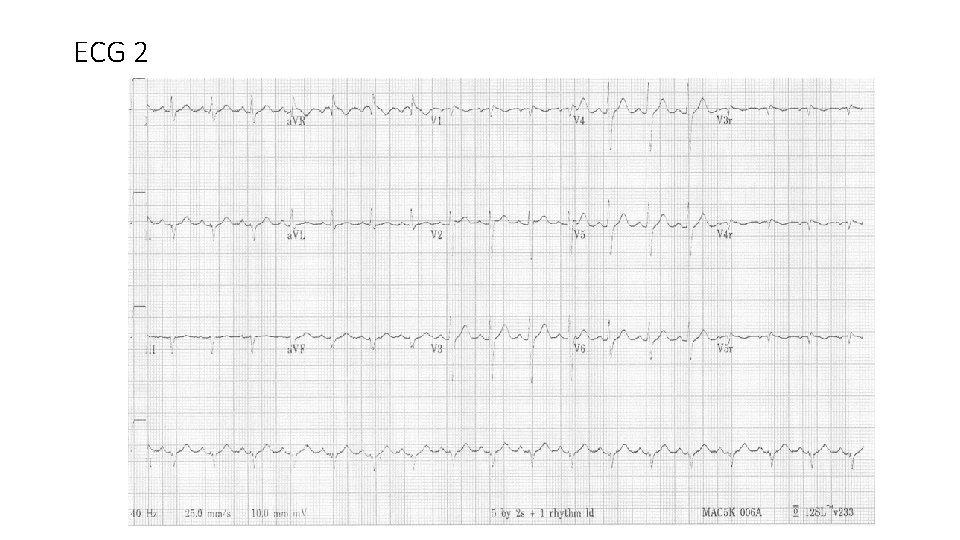
ECG 2
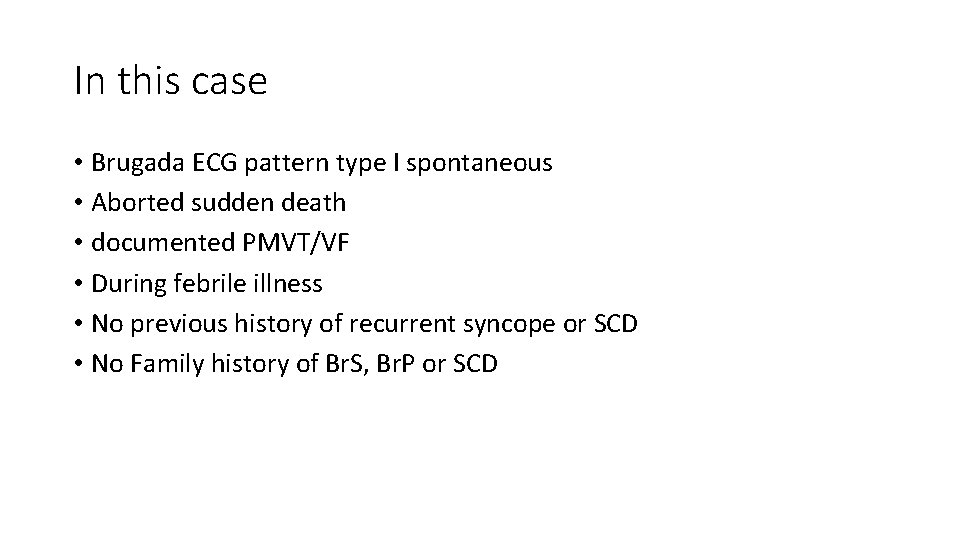
In this case • Brugada ECG pattern type I spontaneous • Aborted sudden death • documented PMVT/VF • During febrile illness • No previous history of recurrent syncope or SCD • No Family history of Br. S, Br. P or SCD
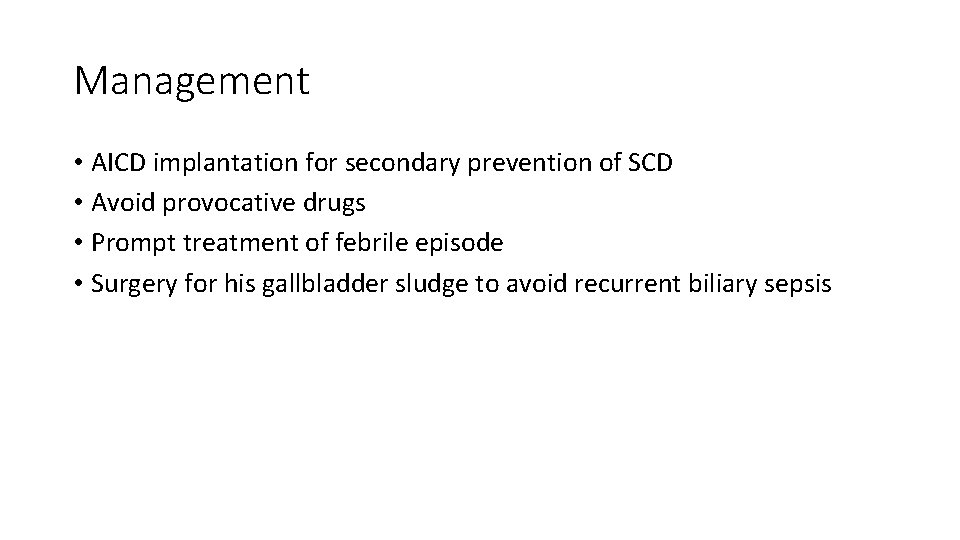
Management • AICD implantation for secondary prevention of SCD • Avoid provocative drugs • Prompt treatment of febrile episode • Surgery for his gallbladder sludge to avoid recurrent biliary sepsis
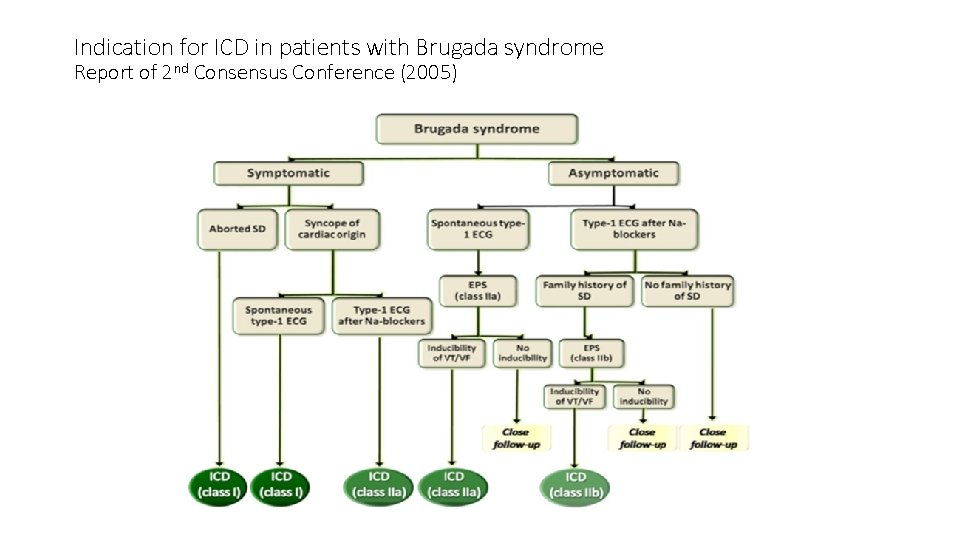
Indication for ICD in patients with Brugada syndrome Report of 2 nd Consensus Conference (2005)

Indication for ICD in patients with Brugada syndrome Report of 2 nd Consensus Conference (2005)

Clear consensus for secondary prevention • Little controversy exists on the value of a previous cardiac arrest as a risk marker for future events. • Data from Brugada et al. (Circulation 2002) reported 62% of SCD survivors are at risk for a new arrhythmic event in the following 54 months. • Other groups consistently reported high annual event rate in SCD survivors: • Eckardt et al. 2005: 5. 1% • Kamakura et al. 2009: 10. 2% • FINGER registry 2010: 7. 7%
• In all the analysis of Dr. Brugada’s series (1998, 2002, 2003), several clinical variables predict a worst outcome: • • Presence of symptoms before diagnosis Spontaneous type 1 ECG at baseline Inducibility of ventricular arrhythmia by programmed stimulation (EPS) Male gender
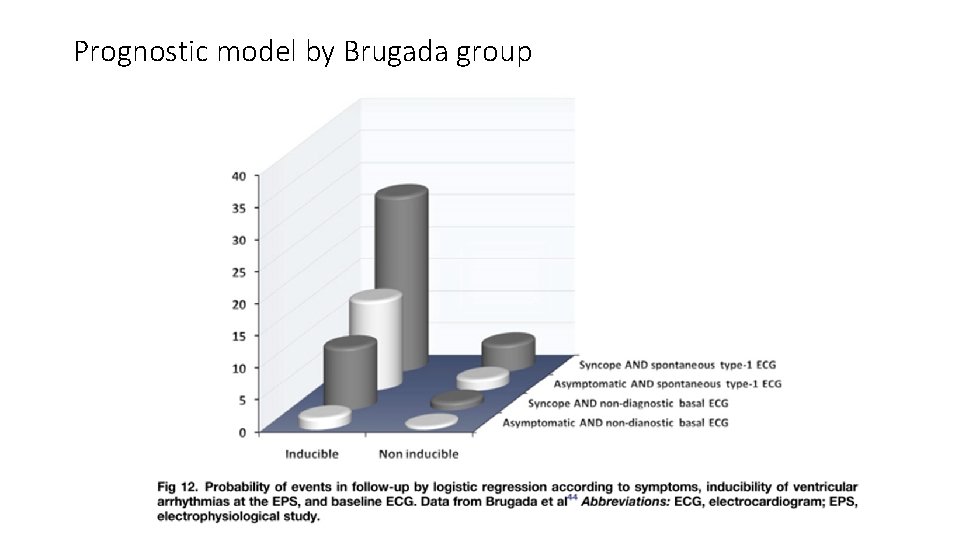
Prognostic model by Brugada group
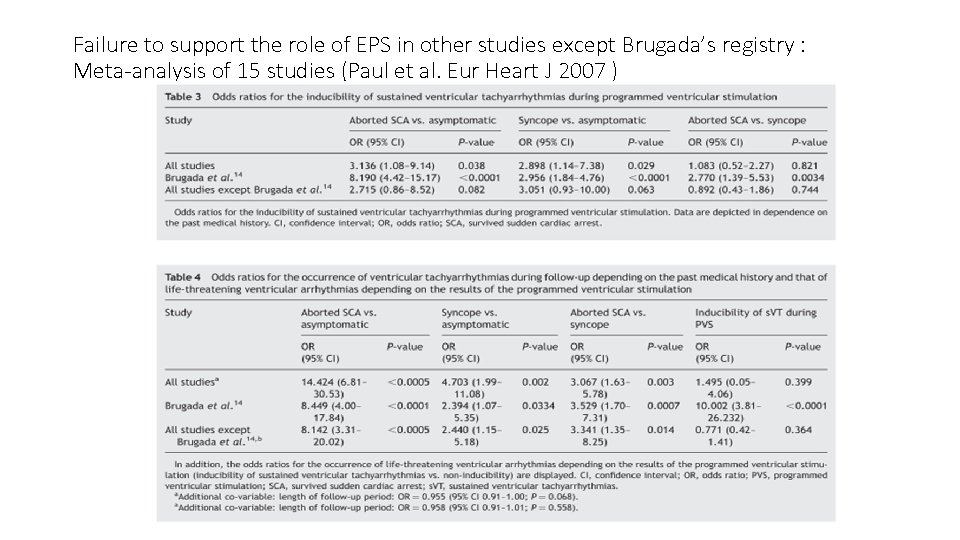
Failure to support the role of EPS in other studies except Brugada’s registry : Meta-analysis of 15 studies (Paul et al. Eur Heart J 2007 )
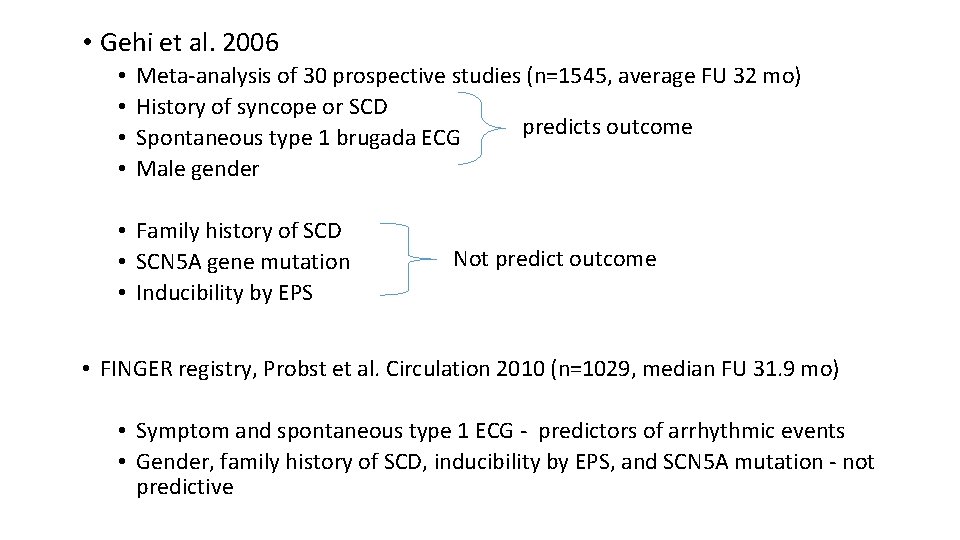
• Gehi et al. 2006 • • Meta-analysis of 30 prospective studies (n=1545, average FU 32 mo) History of syncope or SCD predicts outcome Spontaneous type 1 brugada ECG Male gender • Family history of SCD • SCN 5 A gene mutation • Inducibility by EPS Not predict outcome • FINGER registry, Probst et al. Circulation 2010 (n=1029, median FU 31. 9 mo) • Symptom and spontaneous type 1 ECG - predictors of arrhythmic events • Gender, family history of SCD, inducibility by EPS, and SCN 5 A mutation - not predictive
Case 2 • Male age 73 retired GS • Hyperlipidemia, DM on diet, Gout. • Hx of Syncope since 2010. Baseline ECG and holter unremarkable • Admitted for syncope and flu-like Sx, sorethroat and fever for 1 day. • Clarified with wife: Near-syncope after lunch sitting upright on couch. Cold sweating, nausea and then vomiting. Brief episode with spontaneous recovery. Neurologically intact. • Abnormal ECG was noted by ER physician
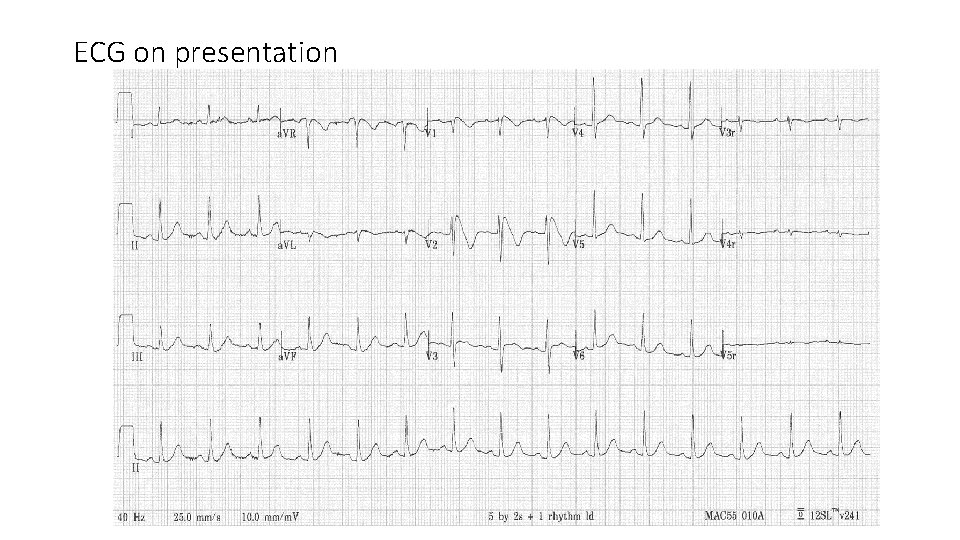
ECG on presentation
• Cardiologist was called upon by ER for ? STEMI. • Echocardiogram at bedside revealed normal LVEF with no segmental wall motion abnormality. • The ECG was recognized as type I Brugada pattern. • He was transferred to CCU and put under telemetry monitor. • Tn. I in serial normal <0. 03 ng/m. L • Blood biochemistries including Ca and Mg, cell counts, thyroid function all normal
• There was no further episode of syncopal attack and no ventricular/supraventricular arrhythmia were documented. • He did not have any angina all along. • He did give a history of 3 -4 syncope episodes in the past • His drug history included only aspirin and statin. • No family history of SCD or inherited arrhythmia disorders • Fever was treated with antipyretic and ice pad. Rx as URI. • ECG returned to normal after the febrile illness.
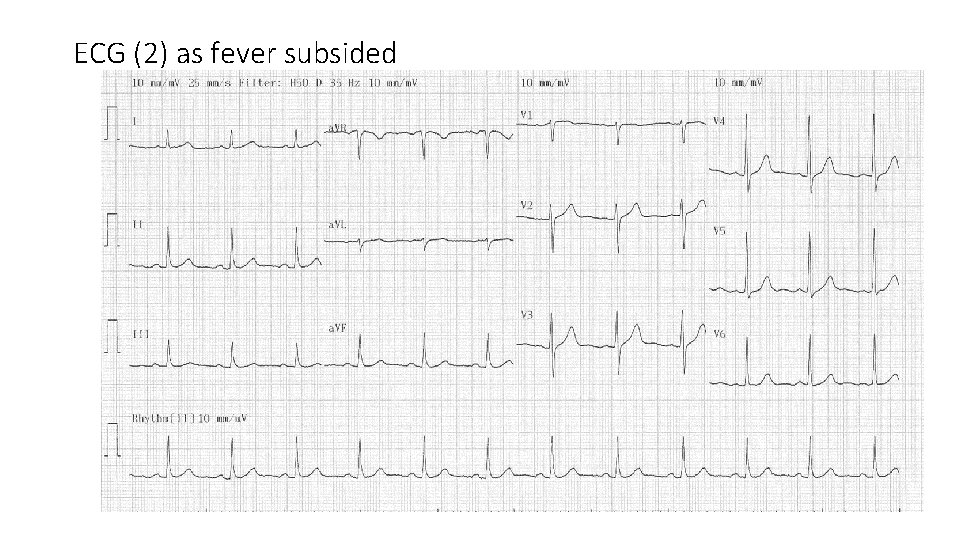
ECG (2) as fever subsided
• CT angiogram reported a moderate to severe mid LAD lesion

In this case • Male age 73 • Type I brugada ECG pattern during febrile illness • History of recurrent syncope ? mechanism • No documented VT/VF • Concomitant coronary artery disease but normal LVEF and cardiac structures • No Family history of Br. S, Br. P or SCD
• Discussion was held with patient: • 1. Brudaga syndrome with recurrent syncope • 2. incidental finding of mid LAD stenosis not accountable for the presentation and ECG findings. • For ICD implantation followed by coronary angio and PCI after hemostasis of device pocket secured
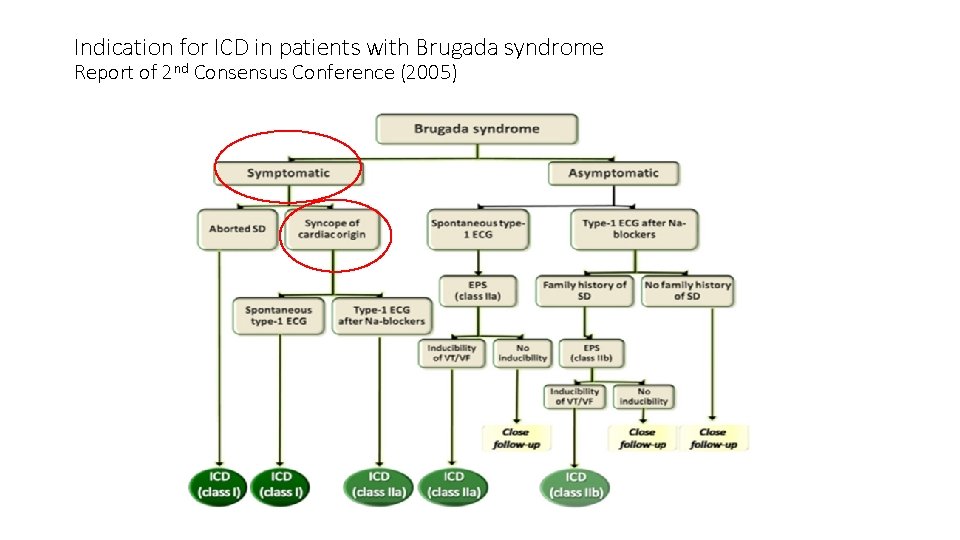
Indication for ICD in patients with Brugada syndrome Report of 2 nd Consensus Conference (2005)
Cause of Syncope in Br. S patient: unresolved dilemma • It is not always easy to delineate the cause of syncope in a patient including those with the Brugada phenotype. • Identification of other causes of syncope in a Br. S patient inevitably pose an uncomfortable and unsettled clinical dilemma
Vasovagal syncope vs Br. S : coexistence • Neurally mediated syncope and Brugada syndrome share common pathophysiological mechanism particularly sympatho-vagal imbalance. • High incidence of neurally mediated susceptibility (positive Head-up Tilt test) has been demonstrated in asymptomatic subjects with Brugada pattern. (Letsas et al. PACE 2008)
Do no harm is not always easy • Overprotecting a patient with vasovagal syncope and Brugada pattern with ICD? vs • just accepting a vasovagal origin for all syncope episode: a false sense of security?
Case 3 • 45 year old man referred for abnormal ECG : ? ? Brugada pattern. • Apparently healthy. Good exercise tolerance. • No history of recurrent syncope/presyncope/ palpitation • No CHF / anginal symptom • No family history of SCD / Brugada pattern or syndrome or other arrhythmic syndrome • No remarkable drug history or exposure to herb
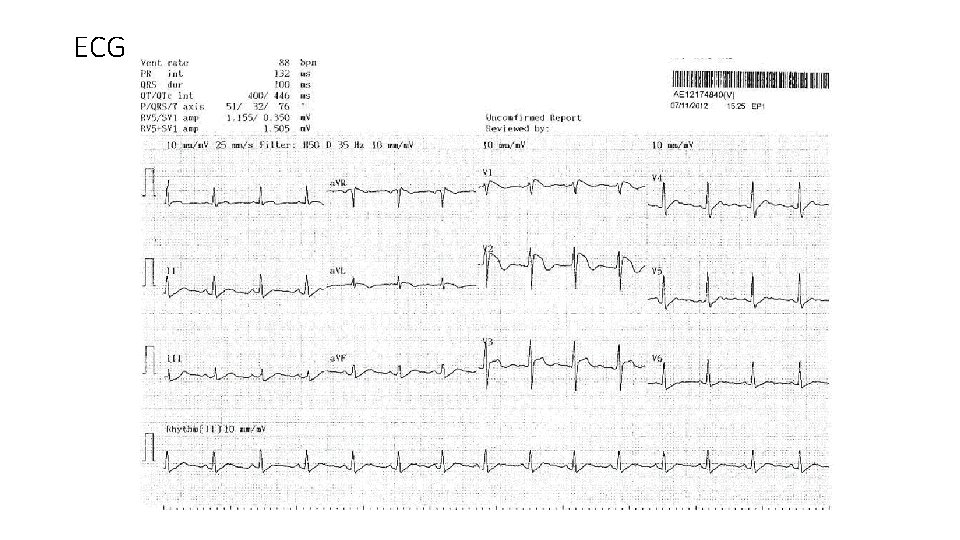
ECG
• Holter screening reported no ventricular arrhythmia except from isolated PVC and PAC of <2%. • Exercise ECG testing negative for ischemic change. No augmentation of ST segment elevation during exercise or recovery. 10. 1 METS. No symptom produced. • Echocardiogram showed normal chambers sizes and function, normal valvular function • CT coronary angiogram showed only minor lesion with normal coronary origin. • Blood tests showed normal biochemistries.
In this case • Middle age male with Brugada ECG pattern • ? spontaneous ? during febrile episode • Asymptomatic without history of SCD / syncope • No documented ventricular arrhythmia • No family history of SCD / arrhythmia syndromes • No other structural or metabolic cause for the ECG change
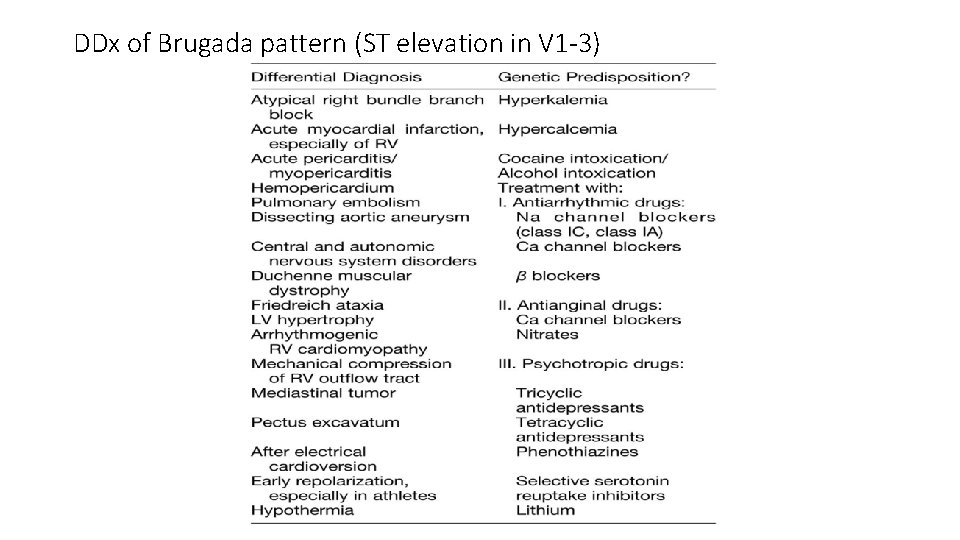
DDx of Brugada pattern (ST elevation in V 1 -3)

Indication for ICD in patients with Brugada syndrome Report of 2 nd Consensus Conference (2005) Role of EP Study
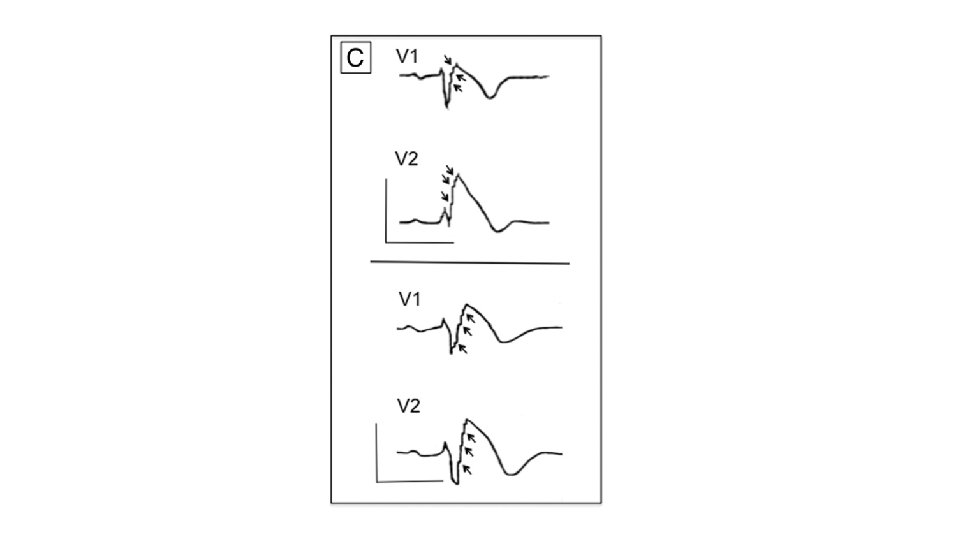
Questionable role of EPS for risk stratification • All the studies published since the 2005 consensus have failed to show a prognostic impact from inducibility of ventricular arrhythmia. • PRELUDE registry (Prioi et al. JACC 2012) (n=308 median FU 34 mo) • VT/VF inducibility by programmed electrical stimulation - unable to predict event • • Spontaneous type 1 ECG History of syncope VERP <200 ms QRS fragmentation significant predictors
Negative inducibility: useful? • Symptomatic patients who are non-inducible still have a significant event rate and therefore suggesting no role for EPS in the symptomatic group. • Sacher et al. (Circulation 2006) reports an annual 1. 5% event rate for asymptomatic patients with type 1 ECG after ICD implanted for inducible ventricular arrhythmia on testing. (n=220, asymptomatic n=99) • Analysis of combined data from Japanese and European registries reports a 3 % risk of arrhythmic event at 4 -5 years in asymptomatic patients with a type 1 ECG who are non-inducible.

Annual event rates (SCD or documented VF) reported in published registries
Councelling and Follow up is no less important than an ICD • ICD implantation especially in a young patient is not without a significant price, with concern in risk of inappropriate therapy (due to sinus tachycardia, SVT, lead failure), lead complications and psychosocial impact in the many years to come. • It is imperative to discuss with the patient on implication of having an ICD (and EP testing to guide the treatment if plan to do so), versus expectant approach. • Regular re-evaluation is mandatory as phenotype changes with time and new data emerges

HRS/EHRA/APHRS Expert Consensus 2013 Recommendations on Br. S therapeutic interventions

HRS/EHRA/APHRS Expert Consensus 2013 Recommendations on Br. S therapeutic interventions Class I • The following lifestyle changes are recommended in all patients with diagnosis of Br. S: • a. Avoidance of drugs that may induce or aggravate ST-segment elevation in right precordial leads (e. g. , Brugadadrugs. org) • b. Avoidance of excessive alcohol intake • c. Immediate treatment of fever with antipyretic drugs. • ICD implantation is recommended in patients with a diagnosis of Br. S who: • a. Are survivors of a cardiac arrest and/or • b. Have documented spontaneous sustained VT with or without syncope
HRS/EHRA/APHRS Expert Consensus 2013 Recommendations on Br. S therapeutic interventions Class IIa • ICD implantation can be useful in patients with a spontaneous diagnostic type I ECG who have a history of syncope judged to be likely caused by ventricular arrhythmias. • Quinidine can be useful in patients with a diagnosis of Br. S and history of arrhythmic storms defined as more than two episodes of VT/VF in 24 hours. • Quinidine can be useful in patients with a diagnosis of Br. S who: • a. Qualify for an ICD but present a contraindication to the ICD or refuse it and/or • b. Have a history of documented supraventricular arrhythmias that require treatment. • Isoproterenol infusion can be useful in suppressing arrhythmic storms in Br. S patients
HRS/EHRA/APHRS Expert Consensus 2013 Recommendations on Br. S therapeutic interventions Class IIb • ICD implantation may be considered in patients with a diagnosis of Br. S who develop VF during programmed electrical stimulation (inducible patients). • Quinidine may be considered in asymptomatic patients with a diagnosis of Br. S with a spontaneous type I ECG. • Catheter ablation may be considered in patients with a diagnosis of Br. S and history of arrhythmic storms or repeated appropriate ICD shocks
HRS/EHRA/APHRS Expert Consensus 2013 Recommendations on Br. S therapeutic interventions Class III • ICD implantation is not indicated in asymptomatic Br. S patients with a drug-induced type I ECG and on the basis of a family history of sudden cardiac death (SCD) alone
conclusion • Since its description 20 years ago, clinical data of Brugada syndrome has been changing as the milder form of its phenotypes are included. • Nevertheless, risk stratification and management of asymptomatic subjects with Brugada pattern remains a clinical challenge, although the risk of event seems to be much lower than early description

Thank you……
- Slides: 62