
BRT in Metro Manila Options Possibilities National Center
BRT in Metro Manila -Options & Possibilities National Center for Transportation Studies University of the Philippines

Metro Manila Profile Cities : 13 Municipalities: 4 Land Area: 636 Km 2 Population: 10. 76 M (2002) Pop. Growth Rate: 2. 26% Population Density: 16, 918/Km 2 Average Household Size: 4. 63 members
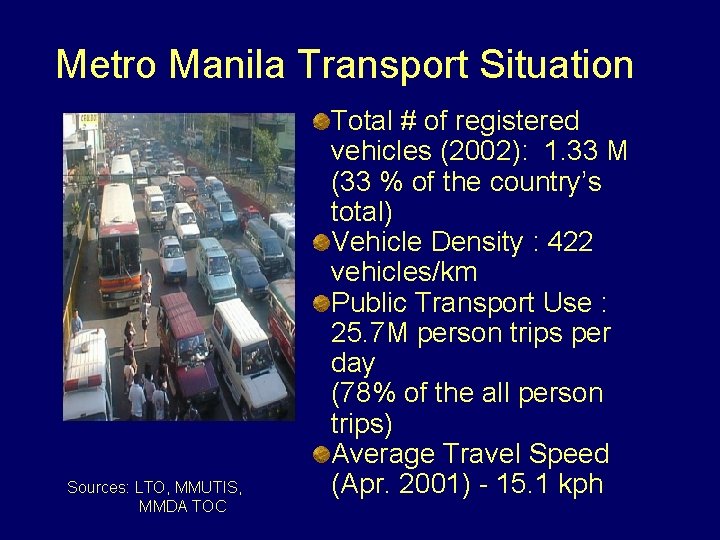
Metro Manila Transport Situation Sources: LTO, MMUTIS, MMDA TOC Total # of registered vehicles (2002): 1. 33 M (33 % of the country’s total) Vehicle Density : 422 vehicles/km Public Transport Use : 25. 7 M person trips per day (78% of the all person trips) Average Travel Speed (Apr. 2001) - 15. 1 kph
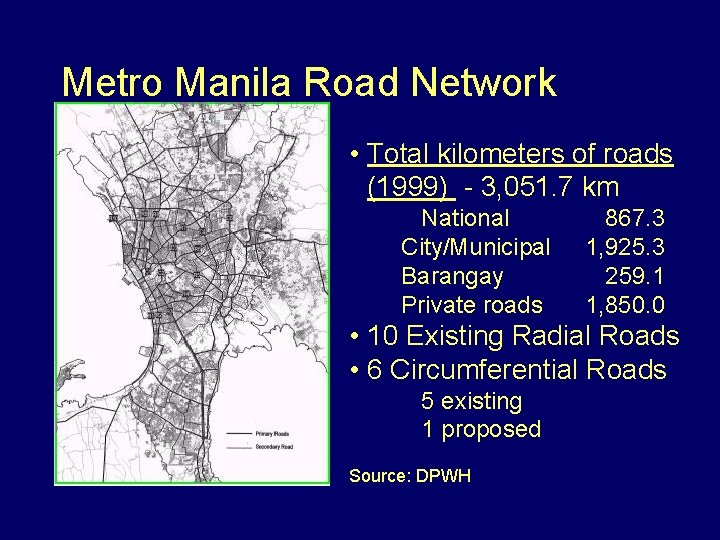
Metro Manila Road Network • Total kilometers of roads (1999) - 3, 051. 7 km National City/Municipal Barangay Private roads 867. 3 1, 925. 3 259. 1 1, 850. 0 • 10 Existing Radial Roads • 6 Circumferential Roads 5 existing 1 proposed Source: DPWH
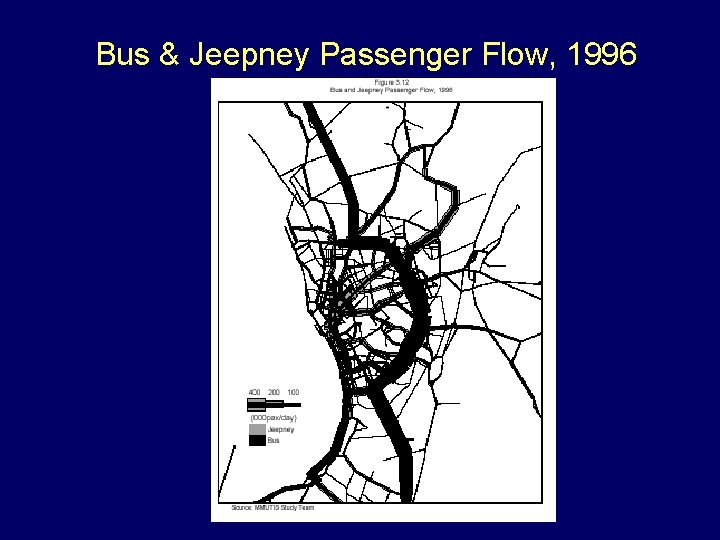
Bus & Jeepney Passenger Flow, 1996
Metro Manila Land Use Pattern Increased density and size of squatter settlements in city centers Development of medium-scale residential subdivisions up to the peripheries of inner and intermediate cores while low-cost housing has moved to the outer core Growth of big commercial centers along EDSA and other major thoroughfares Infilling of the urban area with high density housing
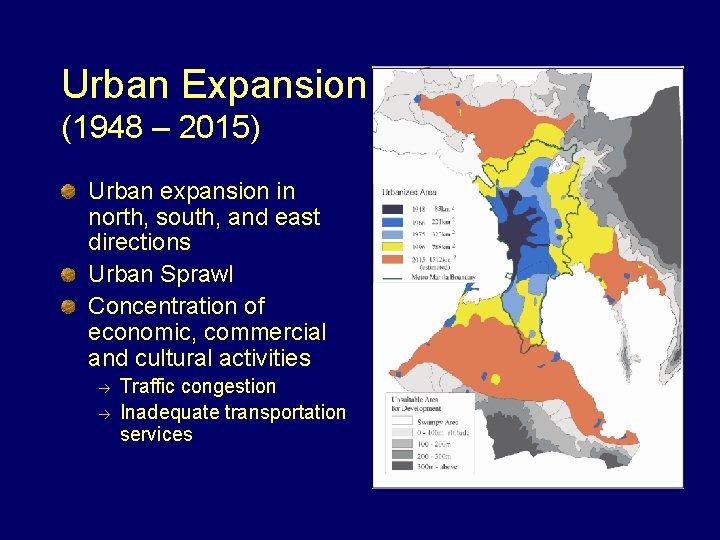
Urban Expansion (1948 – 2015) Urban expansion in north, south, and east directions Urban Sprawl Concentration of economic, commercial and cultural activities à à Traffic congestion Inadequate transportation services
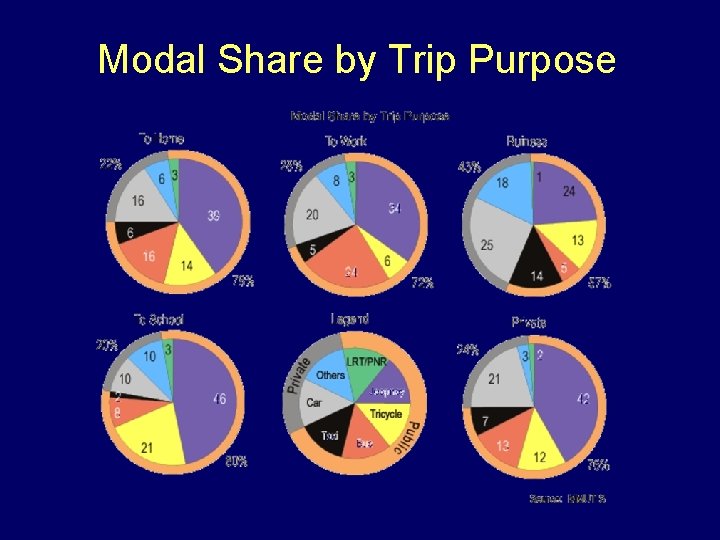
Modal Share by Trip Purpose
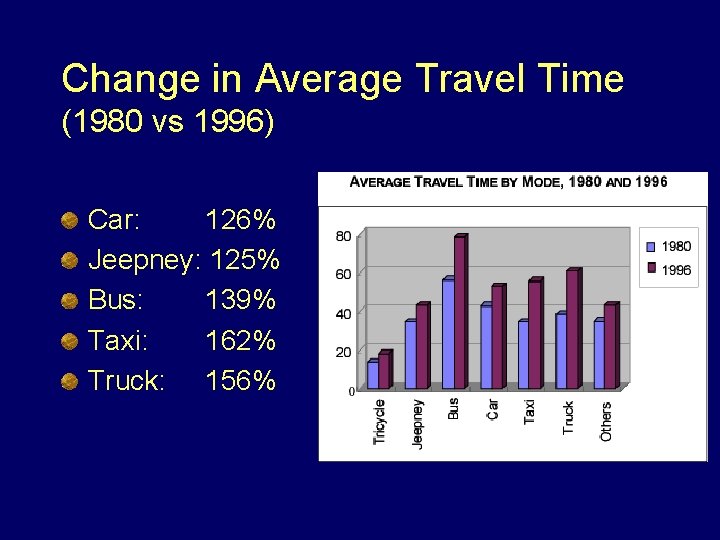
Change in Average Travel Time (1980 vs 1996) Car: 126% Jeepney: 125% Bus: 139% Taxi: 162% Truck: 156%
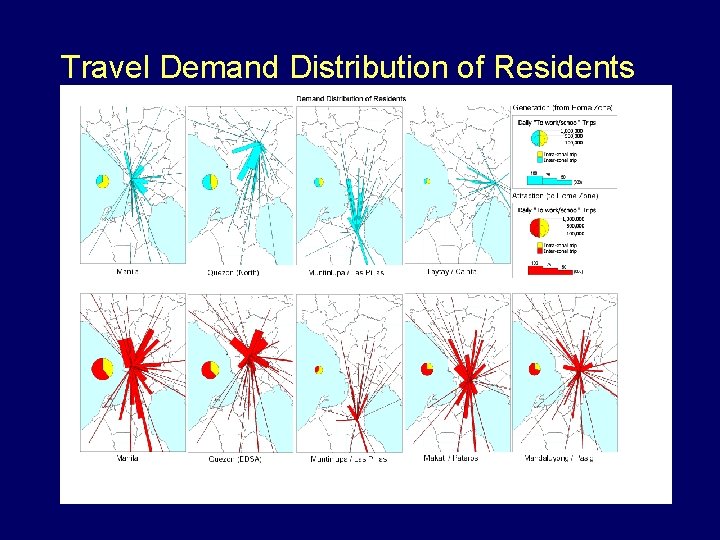
Travel Demand Distribution of Residents
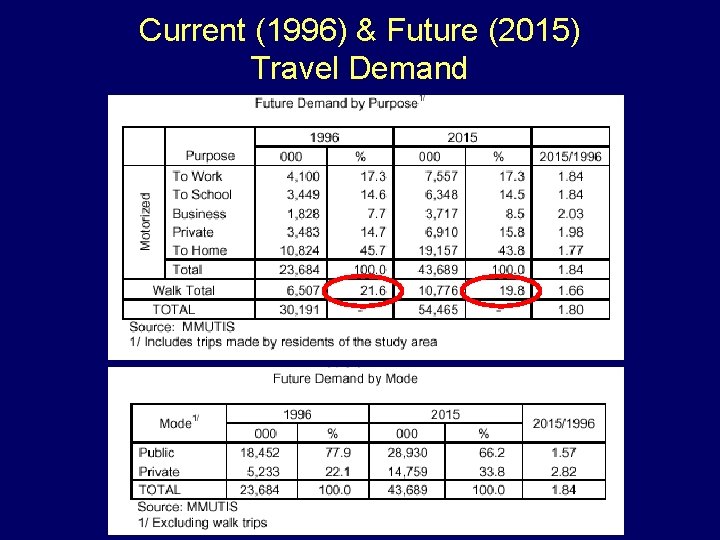
Current (1996) & Future (2015) Travel Demand
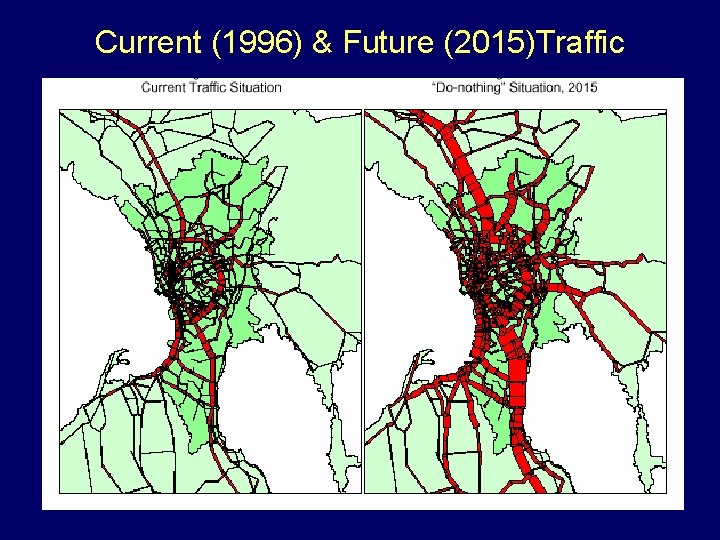
Current (1996) & Future (2015)Traffic
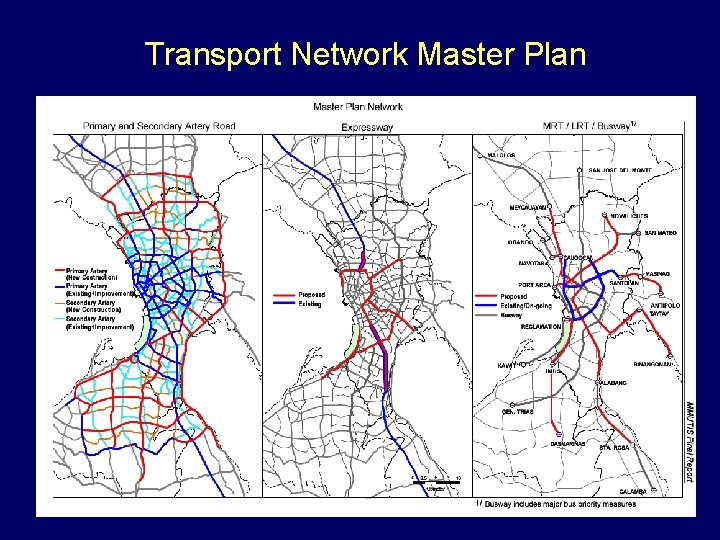
Transport Network Master Plan
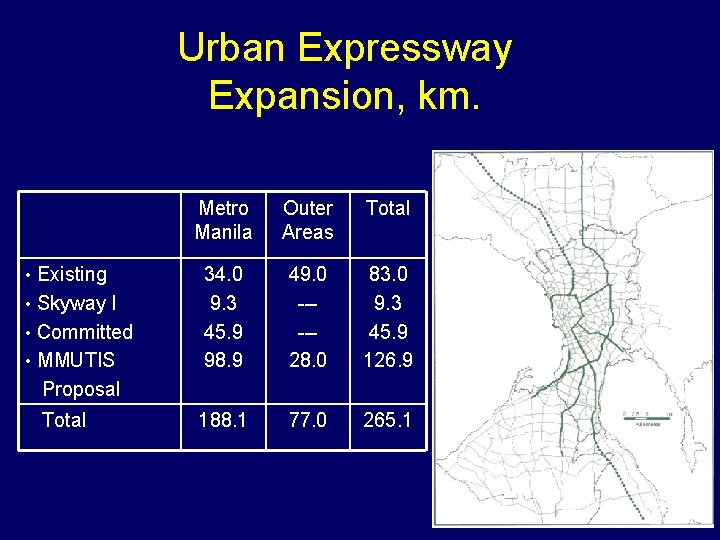
Urban Expressway Expansion, km. • Existing • Skyway I • Committed • MMUTIS Metro Manila Outer Areas Total 34. 0 9. 3 45. 9 98. 9 49. 0 ----28. 0 83. 0 9. 3 45. 9 126. 9 188. 1 77. 0 265. 1 Proposal Total
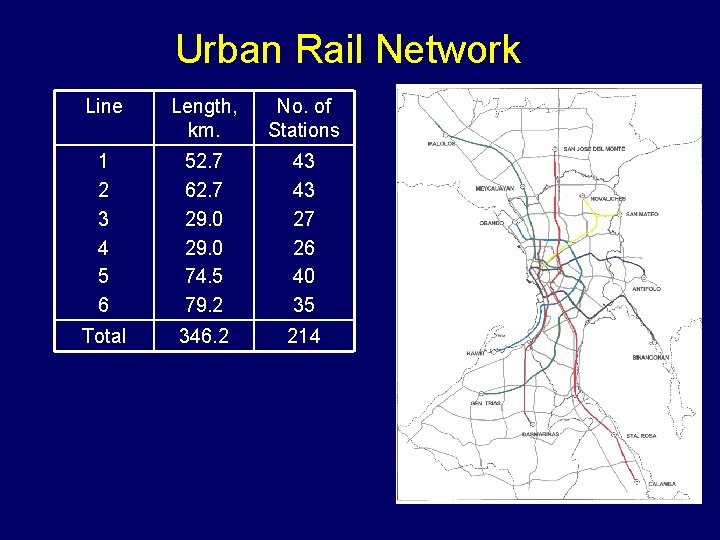
Urban Rail Network Line Length, km. No. of Stations 1 2 3 4 5 6 52. 7 62. 7 29. 0 74. 5 79. 2 43 43 27 26 40 35 Total 346. 2 214
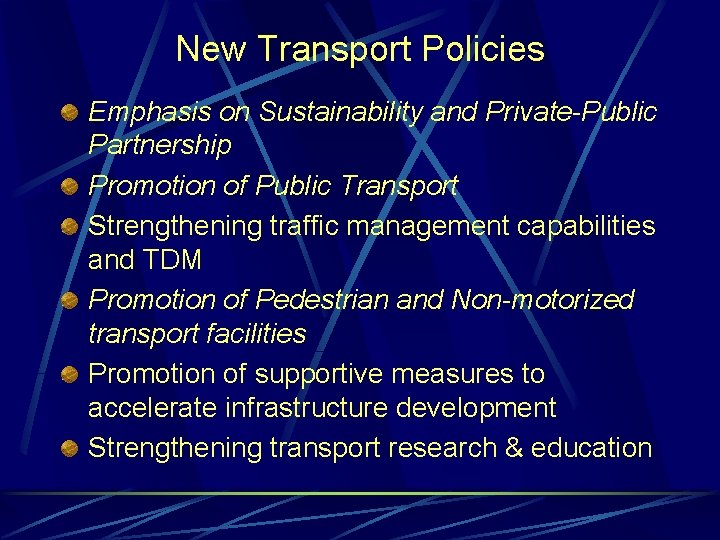
New Transport Policies Emphasis on Sustainability and Private-Public Partnership Promotion of Public Transport Strengthening traffic management capabilities and TDM Promotion of Pedestrian and Non-motorized transport facilities Promotion of supportive measures to accelerate infrastructure development Strengthening transport research & education
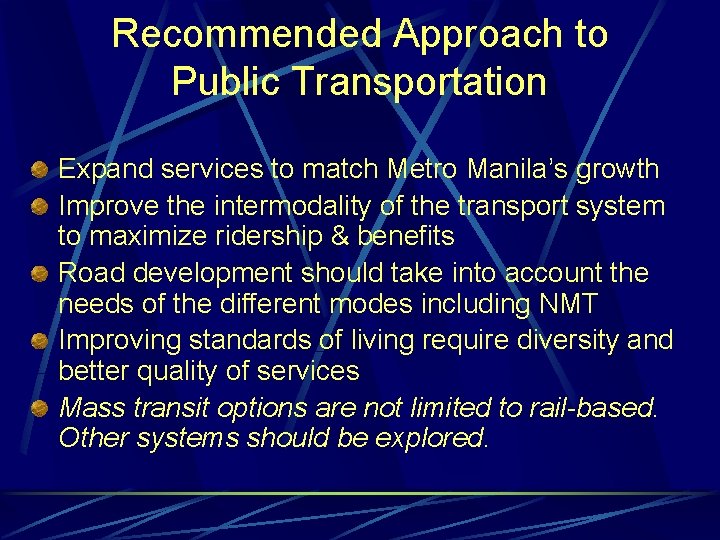
Recommended Approach to Public Transportation Expand services to match Metro Manila’s growth Improve the intermodality of the transport system to maximize ridership & benefits Road development should take into account the needs of the different modes including NMT Improving standards of living require diversity and better quality of services Mass transit options are not limited to rail-based. Other systems should be explored.
Criteria for choice of BRT corridor Compatibility with transport master plan of Metro Manila with due consideration of NMT Adequacy and efficiency of existing public transport system Availability of existing ROW to accommodate BRT Passenger and development density to sustain BRT Help alleviate congestion
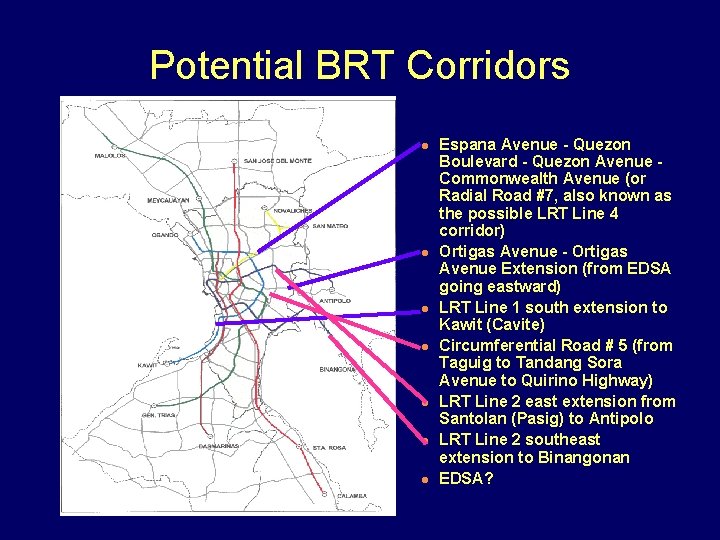
Potential BRT Corridors l l l l Espana Avenue - Quezon Boulevard - Quezon Avenue Commonwealth Avenue (or Radial Road #7, also known as the possible LRT Line 4 corridor) Ortigas Avenue - Ortigas Avenue Extension (from EDSA going eastward) LRT Line 1 south extension to Kawit (Cavite) Circumferential Road # 5 (from Taguig to Tandang Sora Avenue to Quirino Highway) LRT Line 2 east extension from Santolan (Pasig) to Antipolo LRT Line 2 southeast extension to Binangonan EDSA?
- Slides: 19