
Brood parasitism Brood parasites manipulate hosts to care
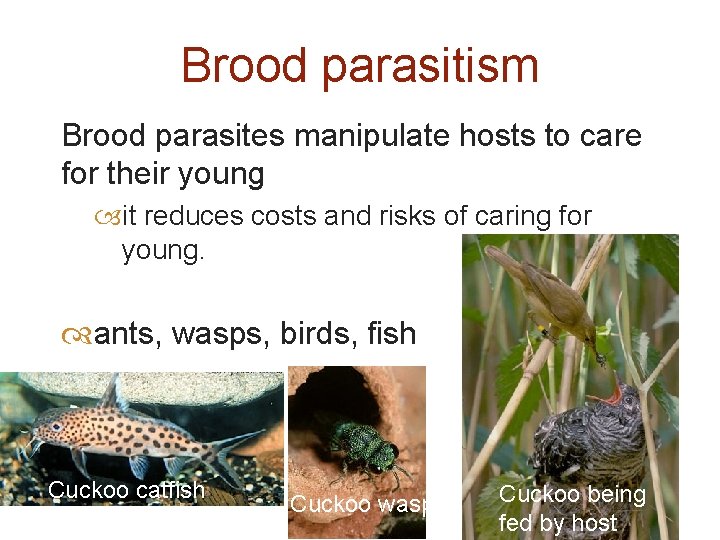
Brood parasitism Brood parasites manipulate hosts to care for their young it reduces costs and risks of caring for young. ants, wasps, birds, fish Cuckoo catfish Cuckoo wasp Cuckoo being fed by host
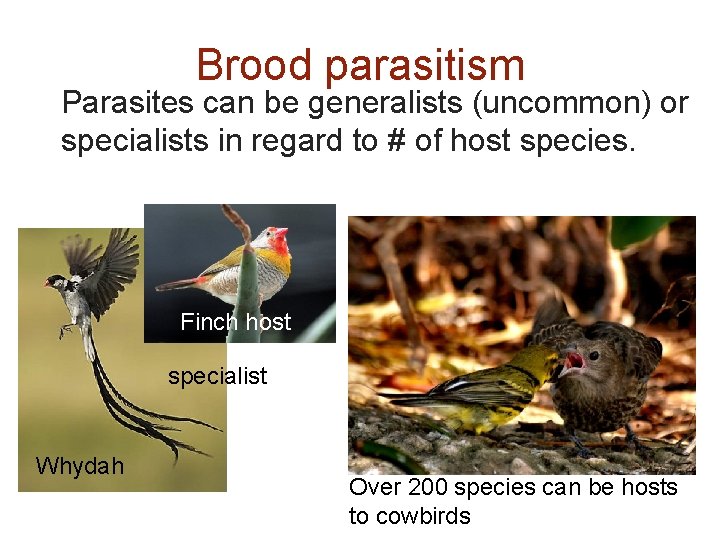
Brood parasitism Parasites can be generalists (uncommon) or specialists in regard to # of host species. Finch host specialist Whydah Over 200 species can be hosts to cowbirds
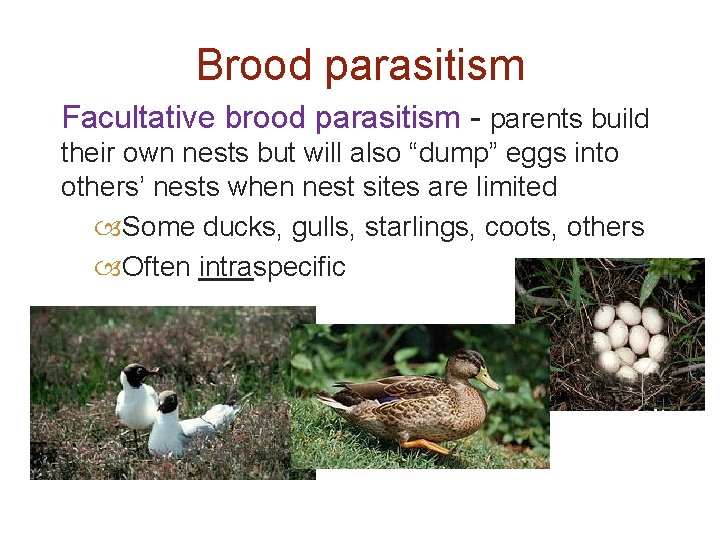
Brood parasitism Facultative brood parasitism - parents build their own nests but will also “dump” eggs into others’ nests when nest sites are limited Some ducks, gulls, starlings, coots, others Often intraspecific
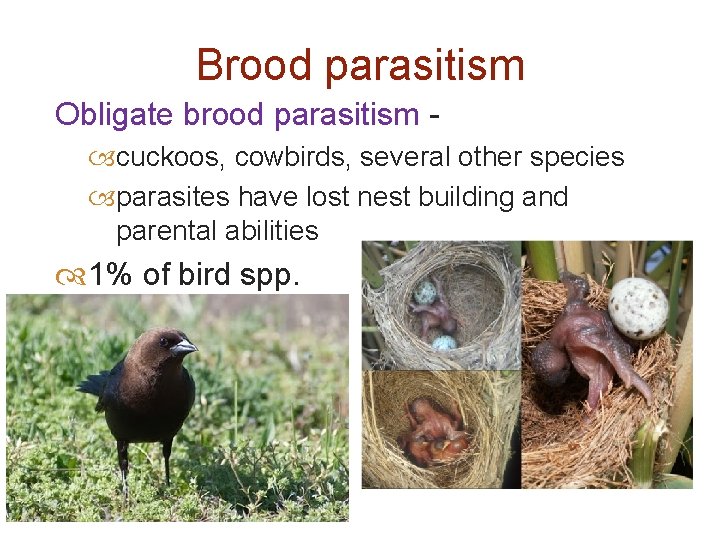
Brood parasitism Obligate brood parasitism cuckoos, cowbirds, several other species parasites have lost nest building and parental abilities 1% of bird spp.
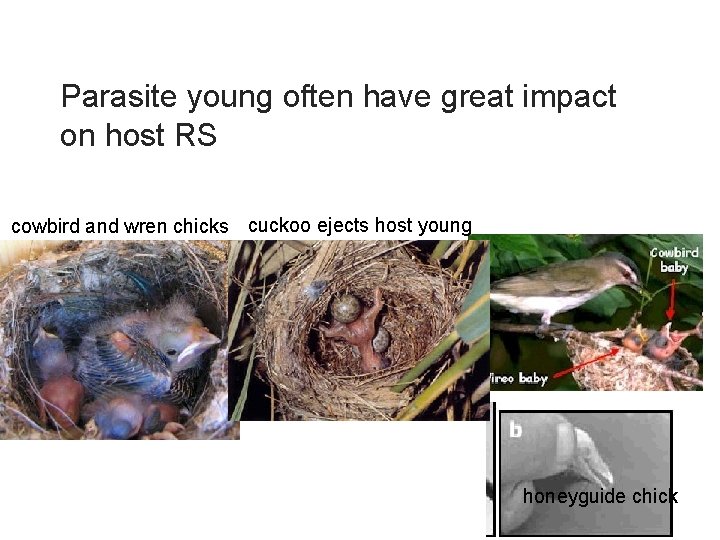
Parasite young often have great impact on host RS cowbird and wren chicks cuckoo ejects host young honeyguide chick
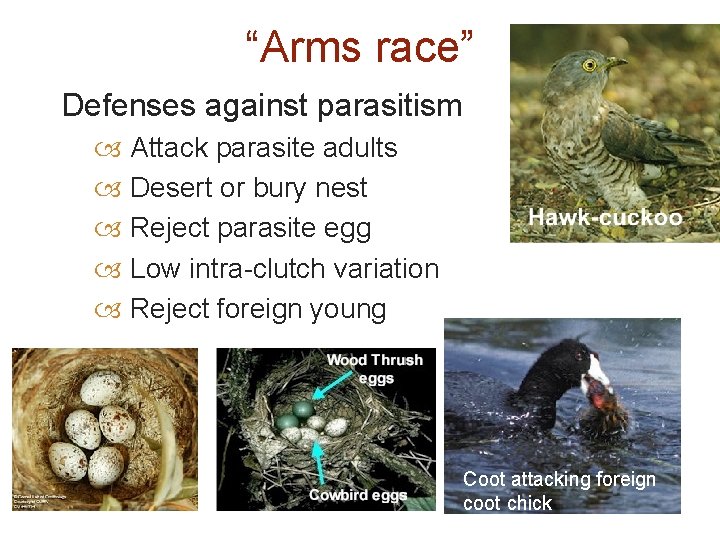
“Arms race” Defenses against parasitism Attack parasite adults Desert or bury nest Reject parasite egg Low intra-clutch variation Reject foreign young Coot attacking foreign coot chick
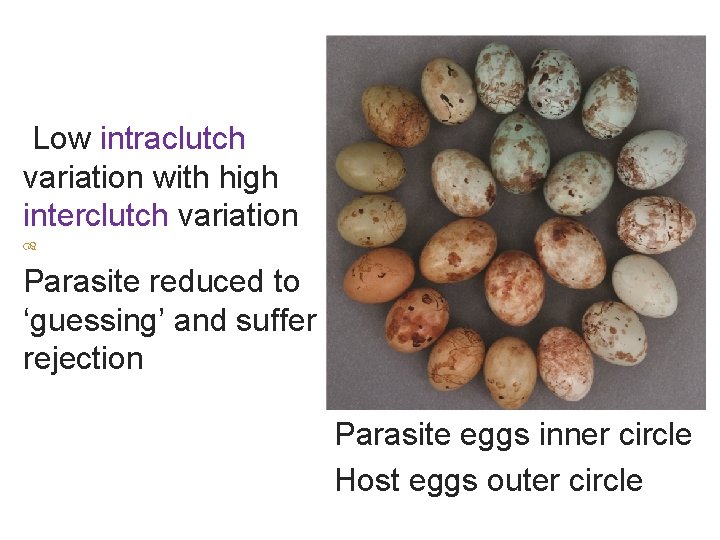
Low intraclutch variation with high interclutch variation Parasite reduced to ‘guessing’ and suffer rejection Parasite eggs inner circle Host eggs outer circle
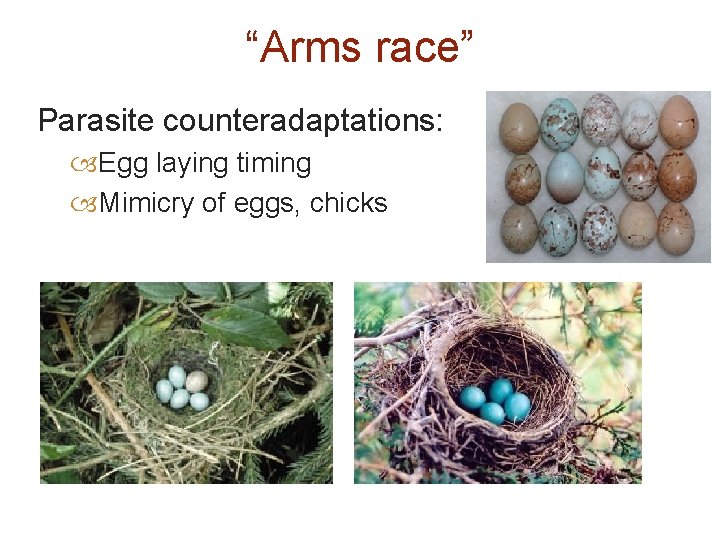
“Arms race” Parasite counteradaptations: Egg laying timing Mimicry of eggs, chicks
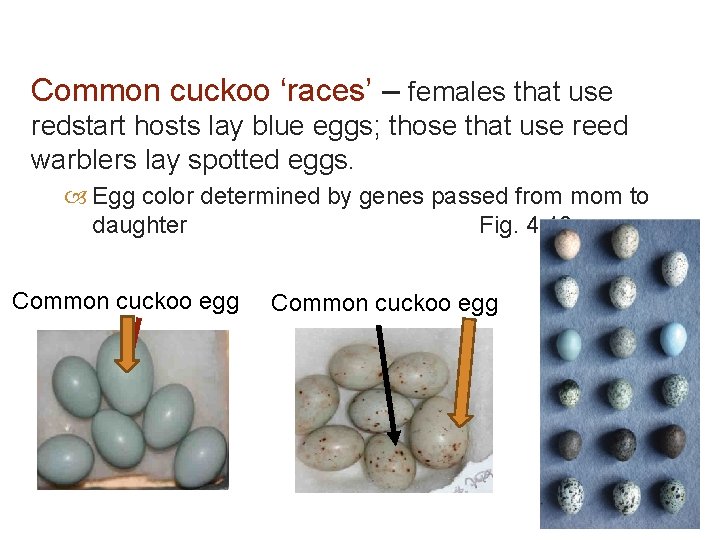
Common cuckoo ‘races’ – females that use redstart hosts lay blue eggs; those that use reed warblers lay spotted eggs. Egg color determined by genes passed from mom to daughter Fig. 4. 18 Common cuckoo egg
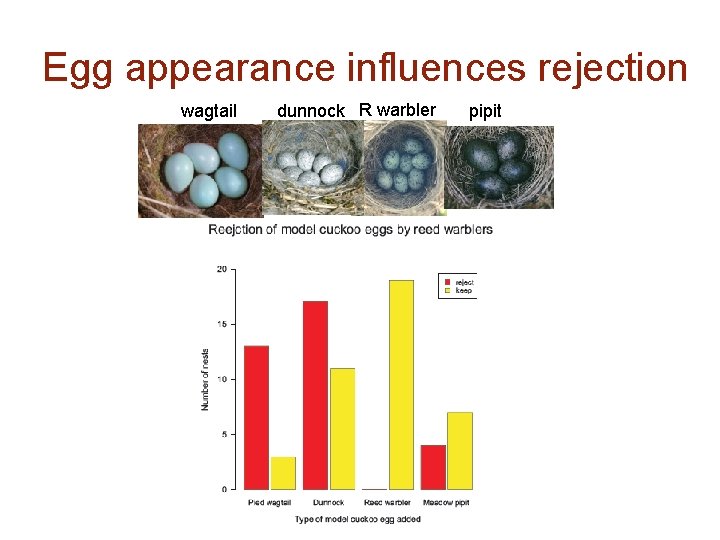
Egg appearance influences rejection wagtail dunnock R warbler pipit
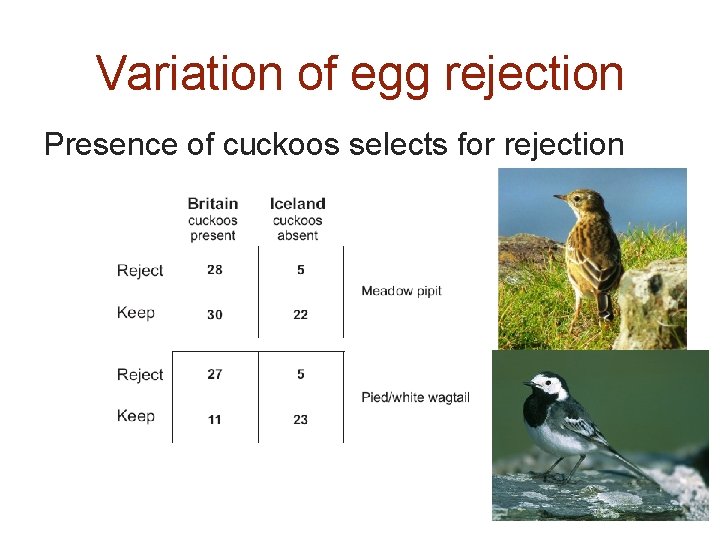
Variation of egg rejection Presence of cuckoos selects for rejection
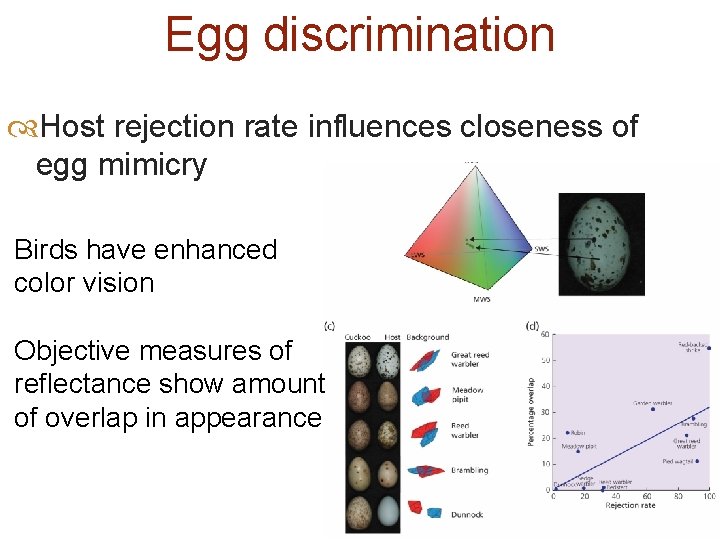
Egg discrimination Host rejection rate influences closeness of egg mimicry Birds have enhanced color vision Objective measures of reflectance show amount of overlap in appearance
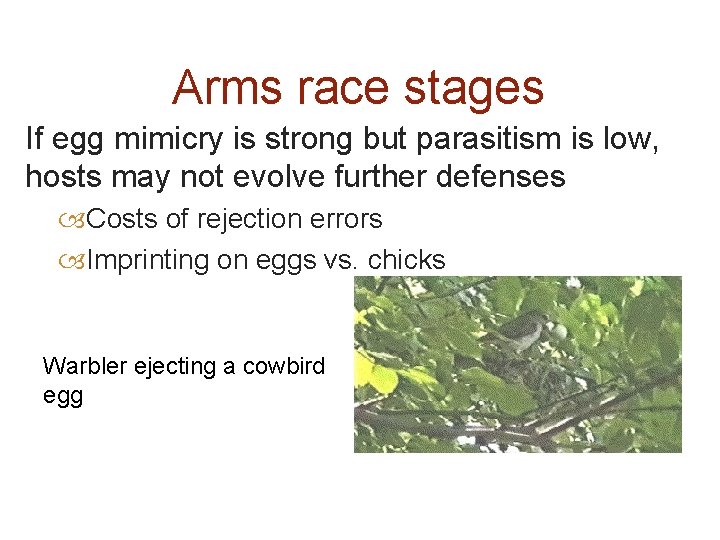
Arms race stages If egg mimicry is strong but parasitism is low, hosts may not evolve further defenses Costs of rejection errors Imprinting on eggs vs. chicks Warbler ejecting a cowbird egg
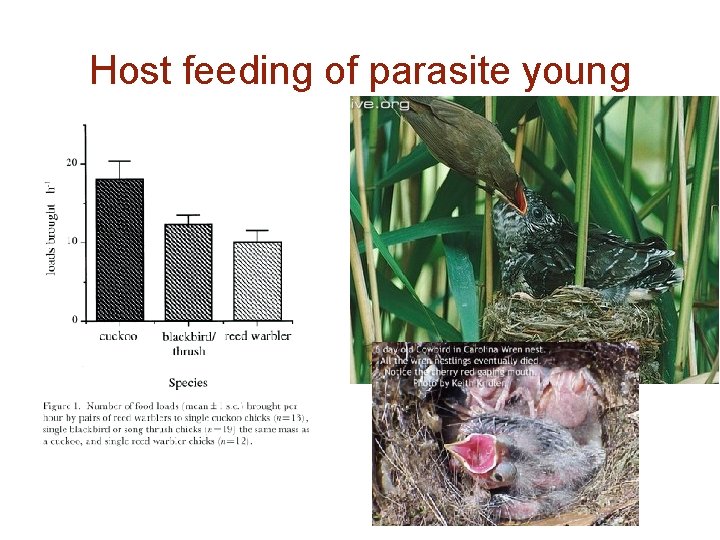
Host feeding of parasite young
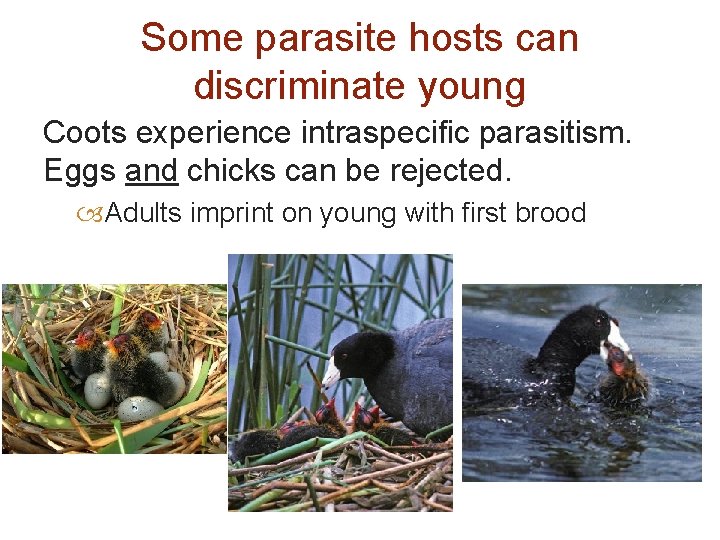
Some parasite hosts can discriminate young Coots experience intraspecific parasitism. Eggs and chicks can be rejected. Adults imprint on young with first brood
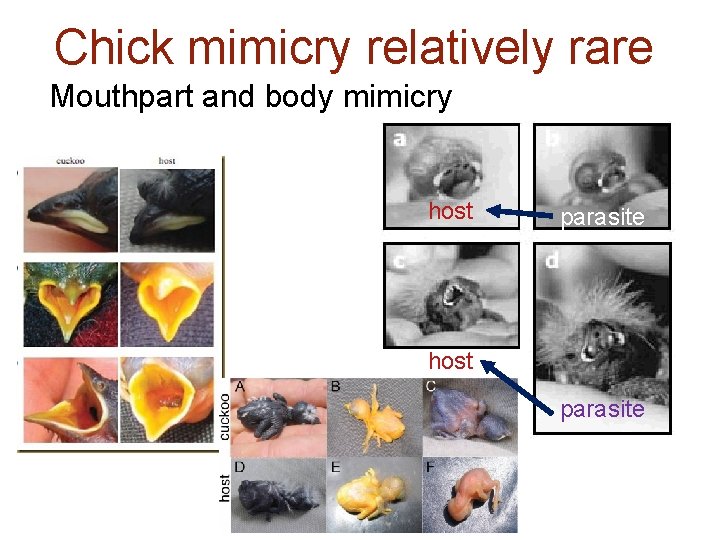
Chick mimicry relatively rare Mouthpart and body mimicry host parasite
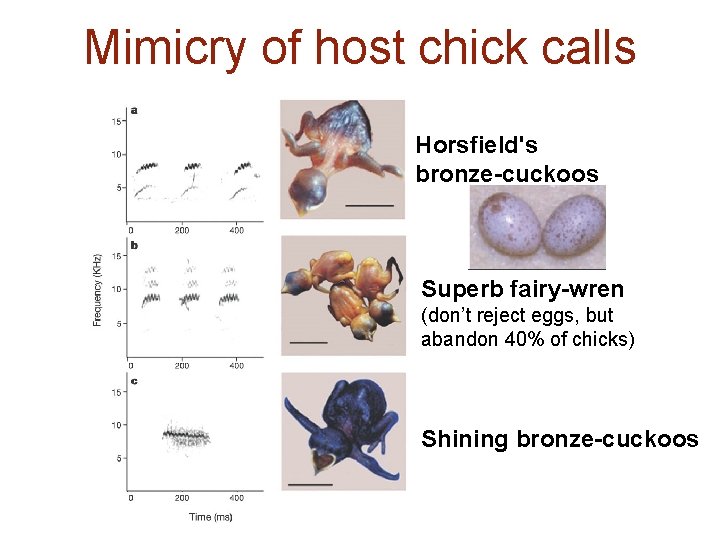
Mimicry of host chick calls Horsfield's bronze-cuckoos Superb fairy-wren (don’t reject eggs, but abandon 40% of chicks) Shining bronze-cuckoos
- Slides: 17