
BRONCHIECTASIS Definition Abnormal and permanent dilation of bronchi
BRONCHIECTASIS • • • Definition: Abnormal and permanent dilation of bronchi. Focal or diffuse distribution It is a disorder that typically affects older individuals approximately 2/3 of patients are women It is usually acquired but may result from an underlying genetic or congenital defect of airway defences Clinical consequences – • chronic and recurrent infection and • Pooling of secretions in dilated airways.
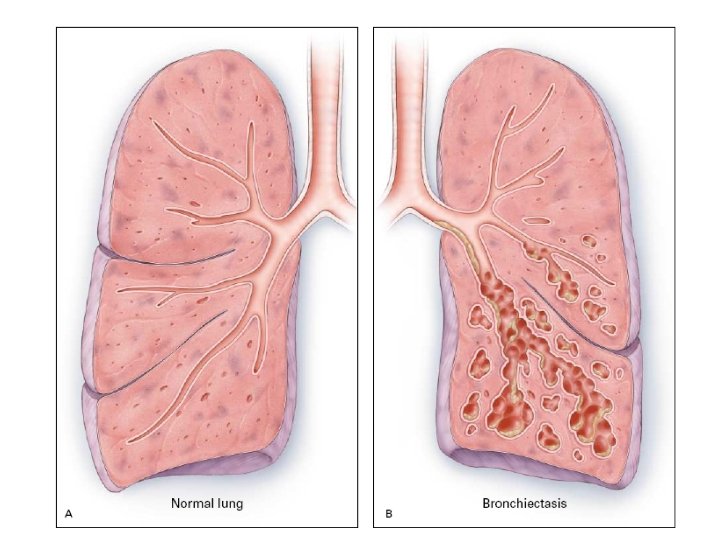

PATTERNS OF BRONCHIECTASIS Three different patterns of bronchiectasis have been described Ø Cylindrical bronchiectasis: the involved bronchi appear uniformly dilated Ø Varicose bronchiectasis: the affected bronchi have an irregular or beaded pattern of dilatation resembling varicose veins Ø Saccular (cystic) bronchiectasis: the bronchi have a ballooned appearance at the periphery, ending in blind sacs
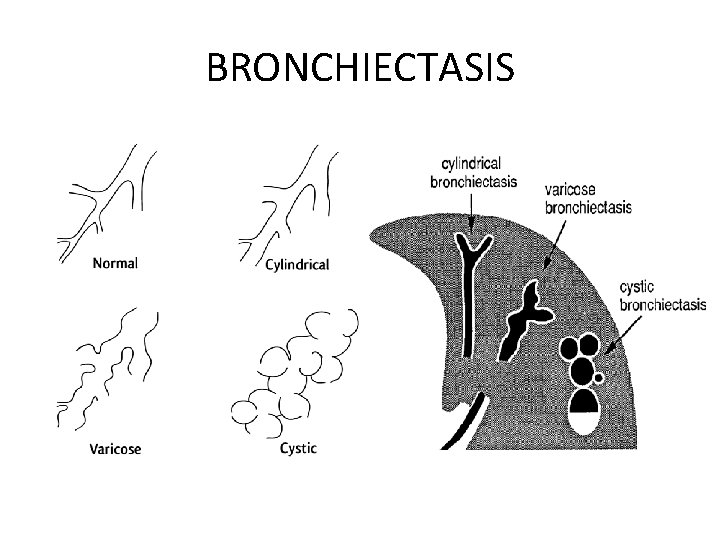
BRONCHIECTASIS
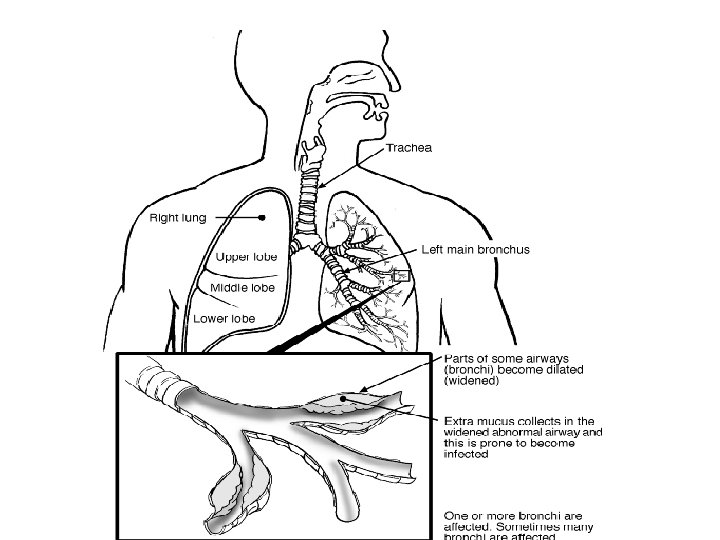
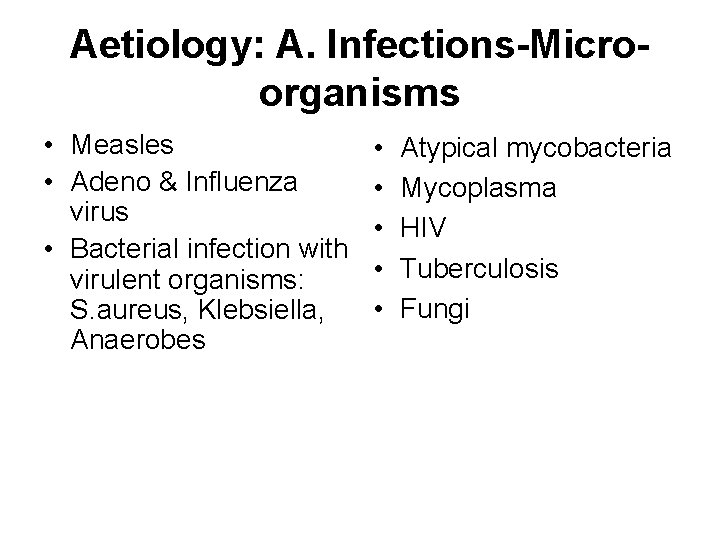
Aetiology: A. Infections-Microorganisms • Measles • Adeno & Influenza virus • Bacterial infection with virulent organisms: S. aureus, Klebsiella, Anaerobes • • • Atypical mycobacteria Mycoplasma HIV Tuberculosis Fungi
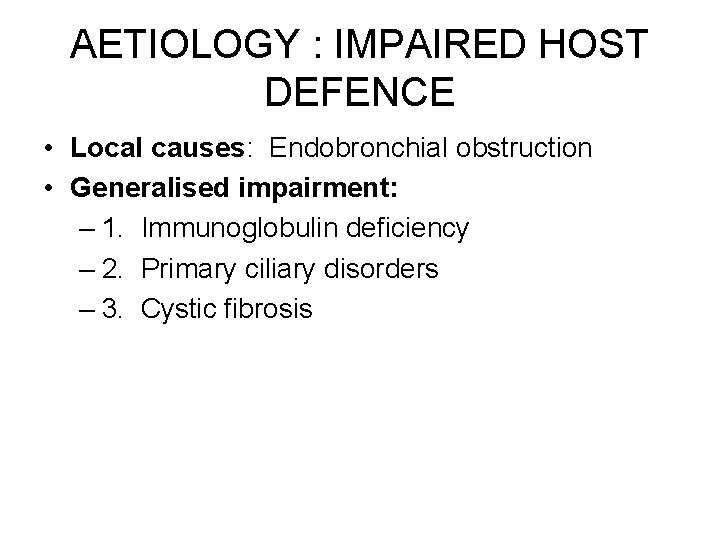
AETIOLOGY : IMPAIRED HOST DEFENCE • Local causes: Endobronchial obstruction • Generalised impairment: – 1. Immunoglobulin deficiency – 2. Primary ciliary disorders – 3. Cystic fibrosis
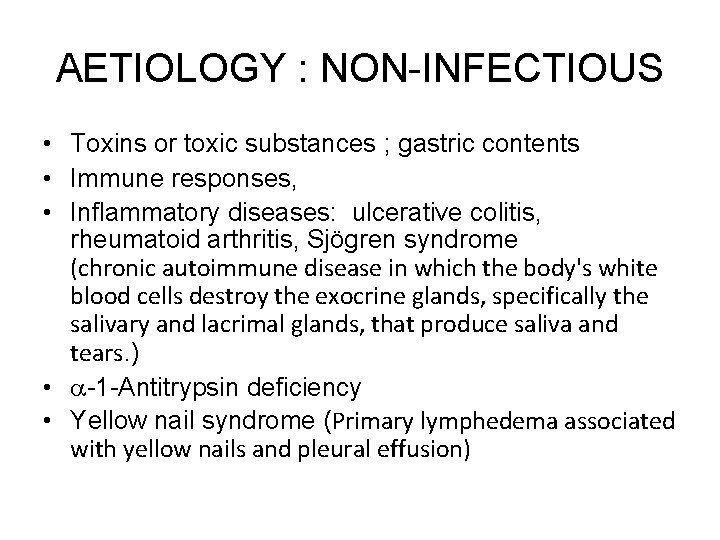
AETIOLOGY : NON-INFECTIOUS • Toxins or toxic substances ; gastric contents • Immune responses, • Inflammatory diseases: ulcerative colitis, rheumatoid arthritis, Sjögren syndrome (chronic autoimmune disease in which the body's white blood cells destroy the exocrine glands, specifically the salivary and lacrimal glands, that produce saliva and tears. ) • -1 -Antitrypsin deficiency • Yellow nail syndrome (Primary lymphedema associated with yellow nails and pleural effusion)
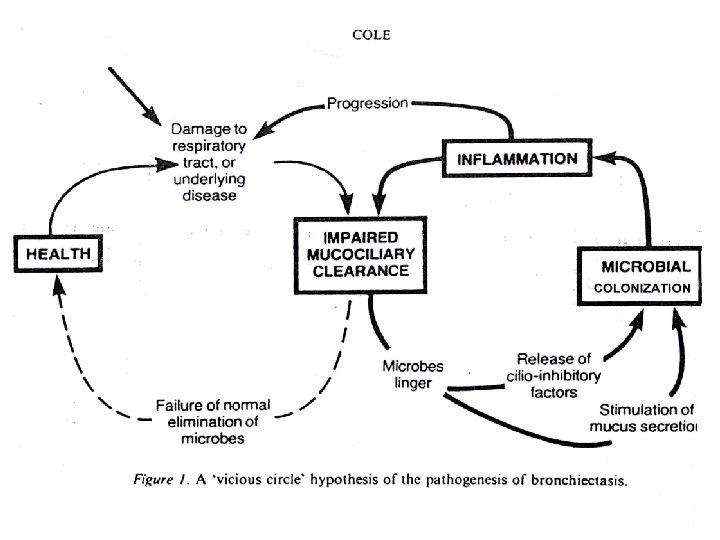
Clinical features of bronchiectasis Due to accumulation of pus in dilated bronchi • Chronic productive cough usually worse in mornings and often brought on by changes of posture. • Sputum often copious and persistently purulent in advanced disease. • Halitosis is a common accompanying feature • SOB
Due to inflammatory changes in lung and pleura surrounding dilated bronchi • Fever, malaise and increased cough and sputum volume when spread of infection causes pneumonia, which may be associated with pleurisy. • Recurrent pleurisy in the same site often occurs in bronchiectasis
• Haemoptysis Can be slight or massive and is often recurrent. Usually associated with purulent sputum or an increase in sputum purulence. Can, however, be the only symptom in so-called 'dry bronchiectasis' • General health When disease is extensive and sputum persistently purulent a decline in general health occurs with weight loss, anorexia, low-grade fever, and failure to thrive in children. In these patients digital clubbing is common
Clinical features of bronchiectasis con… • Bronchiactasis may involve any part of the lungs but the more efficient drainage by gravity of the upper lobes usually produces less serious symptomes & complications than when bronchiactasis involves the lower lobes.
Physical signs • may be unilateral or bilateral. • If the bronchiectatic airways do not contain secretions and there is no associated lobar collapse, there are no abnormal physical signs. • When there are large amounts of sputum in the bronchiectatic spaces numerous coarse crackles may be heard over the affected areas. • When collapse is present the character of the physical signs depends on whether or not the proximal bronchus supplying the collapsed lobe is patent (breath sounds are diminished if the airway is obstructed). • Advanced disease may lead to scarring with associated overlying bronchial breathing.
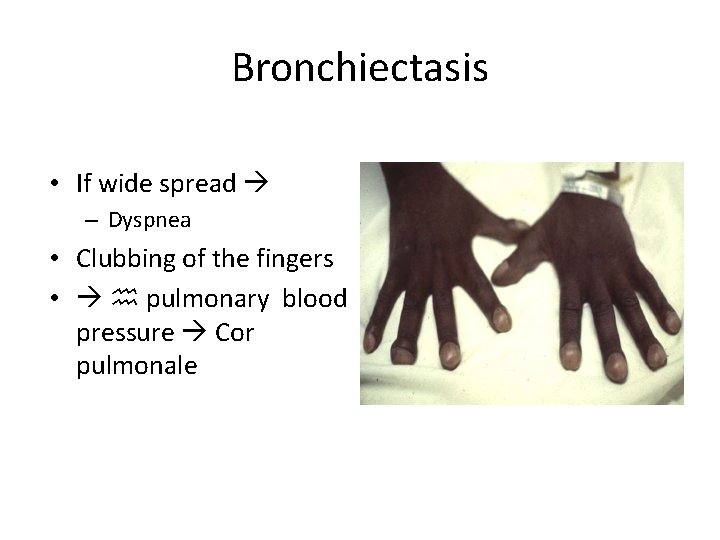
Bronchiectasis • If wide spread – Dyspnea • Clubbing of the fingers • h pulmonary blood pressure Cor pulmonale

When to suspect bronchiectasis? Chronic cough, sputum hemoptysis Coarse rales Persistent respiratory symptoms • Recurrent pneumonia • Progressive obstructive lung disease • clubbing • •

Investigations • Bacteriological and mycological examination of sputum • In addition to common respiratory pathogens, sputum culture may reveal Pseudomonas aeruginosa, fungi such as Aspergillus and various Mycobacteria. • Frequent cultures are necessary to ensure appropriate treatment of resistant organisms. • Radiological examination Bronchiectasis, unless very gross, is not usually apparent on a chest X-ray. • In advanced disease, thickened airway walls, cystic bronchiectatic spaces, and associated areas of pneumonic consolidation or collapse may be visible. • CT scan of chest is much more sensitive, and shows thickened dilated airways
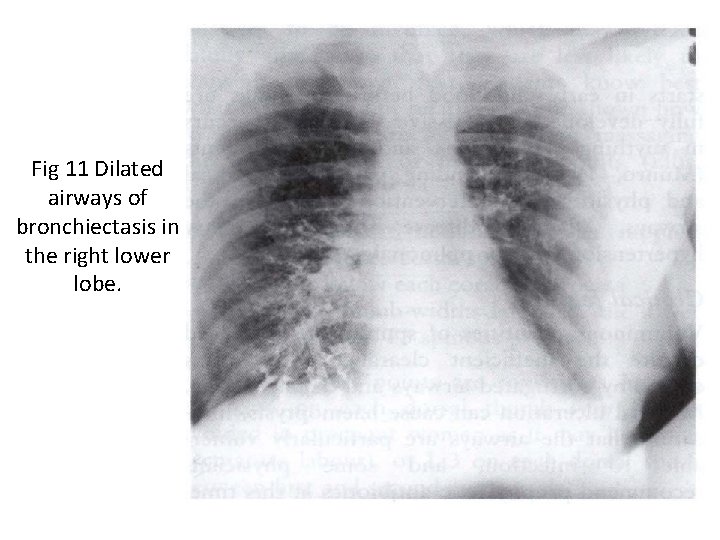
Fig 11 Dilated airways of bronchiectasis in the right lower lobe.
MEDICAL TREATMENT 4 Goals: 1. Eliminate cause 2. Improve tracheo bronchial clearance 3. Control infection 4. Reverse airflow obstruction
Medical treatment • Liberal use of antibiotics helps control infection. • Patients are given a store of antibiotics to be taken at the first sign of colour change in their sputum. • For patients who deteriorate every winter, regular antibiotics can be taken in the cold months. • Antibiotics do not control the persistent inflammation that may be progressively destroying the airways but inhaled steroids can assist this and reduce the volume of sputum. • Other drugs that may decrease sputum volume are dry powder mannitol and erythromycin. • Bronchodilators are used if there is demonstrable hyperreactivity. • Surgical resection of non-perfused lung may be indicated for localized and disabling disease. • Occasionally, transplantation is possible in late-stage disease. • Sometimes the cause of the disorder might be treatable, e. g. topical steroids for rhinosinusitis to prevent mucus sliding from the back of the nose into the lung.
Physical therapy • Bronchiectasis reduces mucociliary clearance and patients need education in sputum clearance to compensate for this. • A daily programme is required that is sufficient to eliminate coughing in between clearance sessions. • Hydration, an exercise programme and ACBT are often adequate but other measures may be required, sometimes including postural drainage. • Patients should be discouraged from coughing until they are ready to expectorate in order to minimize fatigue and coughrelated stress incontinence. • Much encouragement is needed to help patients set up a lifelong programme that is effective and suited to their lifestyle. • Thereafter, occasional reviews are needed. • Non-invasive ventilation is not well-established in progressive end-stage disease, but it can benefit those with diffuse disease.
Prevention • As bronchiectasis commonly starts in childhood following measles, whooping cough or a primary tuberculous infection, it is essential that these conditions receive adequate prophylaxis and treatment. • The early recognition and treatment of bronchial obstruction are also particularly important.
- Slides: 22