
Bronchial Thermoplasty and Guided Bronchoscopy Part One Wes
Bronchial Thermoplasty and Guided Bronchoscopy Part One Wes Shepherd, MD Director of Interventional Pulmonology Associate Professor of Pulmonary and Critical Care VCU Medical Center
Objectives: • Describe the physiologic background of asthma and tissue effects of bronchial thermoplasty • Summarize the current treatment evidence for bronchial thermoplasty and indications/contraindications • Identify the various modalities of guided bronchoscopy and their utility
Disclosure: Financial relationships to disclose: • Consulting– Boston Scientific, CSA Medical • Grants - Allegro Diagnostics, Veracyte, Spiration • Royalties – Up. To. Date • No off label use of any product will be discussed
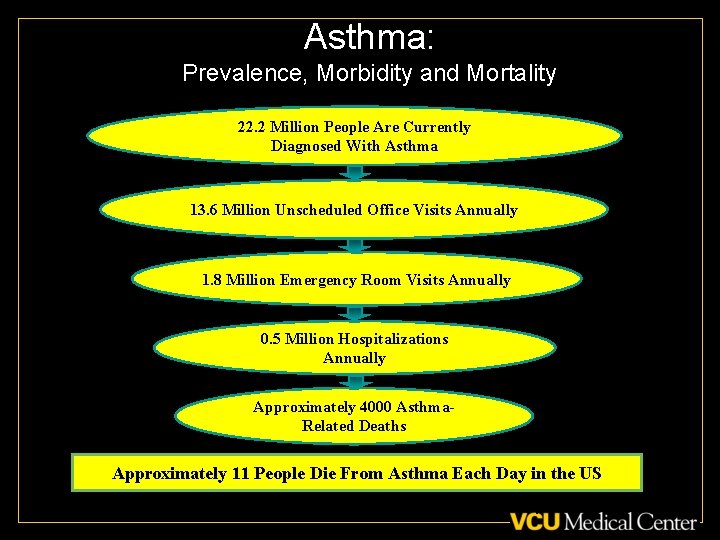
Asthma: Prevalence, Morbidity and Mortality 22. 2 Million People Are Currently Diagnosed With Asthma 13. 6 Million Unscheduled Office Visits Annually 1. 8 Million Emergency Room Visits Annually 0. 5 Million Hospitalizations Annually Approximately 4000 Asthma. Related Deaths Approximately 11 People Die From Asthma Each Day in the US National Center for Health Statistics, CDC, 2005; http: //www. cdc. gov/nchs/products/pubd/hestats/asthma. html 4
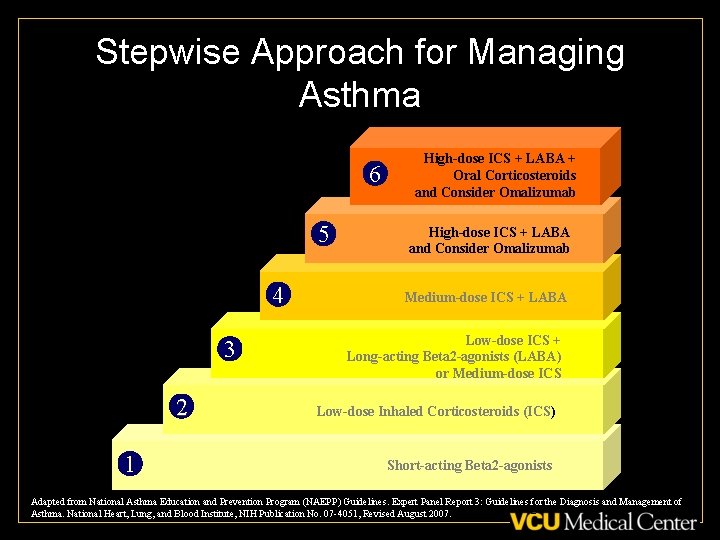
Stepwise Approach for Managing Asthma 6 5 4 3 2 1 High-dose ICS + LABA + Oral Corticosteroids and Consider Omalizumab High-dose ICS + LABA and Consider Omalizumab Medium-dose ICS + LABA Low-dose ICS + Long-acting Beta 2 -agonists (LABA) or Medium-dose ICS Low-dose Inhaled Corticosteroids (ICS) Short-acting Beta 2 -agonists 5 Adapted from National Asthma Education and Prevention Program (NAEPP) Guidelines. Expert Panel Report 3: Guidelines for the Diagnosis and Management of Asthma. National Heart, Lung, and Blood Institute, NIH Publication No. 07 -4051, Revised August 2007.
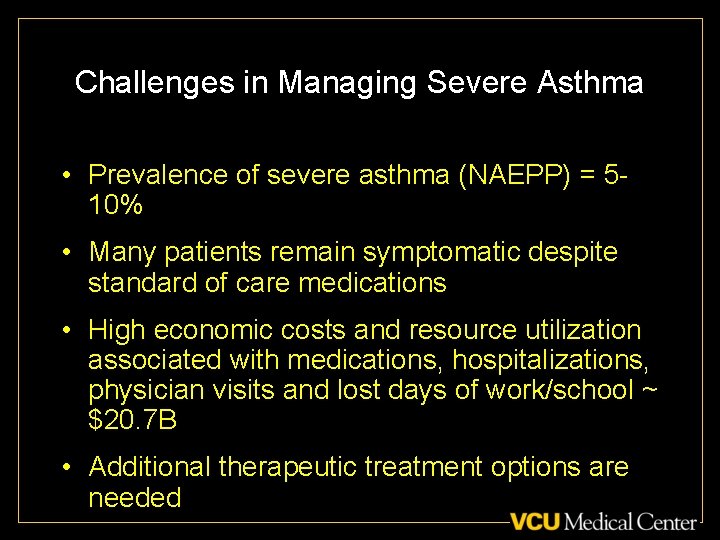
Challenges in Managing Severe Asthma • Prevalence of severe asthma (NAEPP) = 510% • Many patients remain symptomatic despite standard of care medications • High economic costs and resource utilization associated with medications, hospitalizations, physician visits and lost days of work/school ~ $20. 7 B • Additional therapeutic treatment options are needed
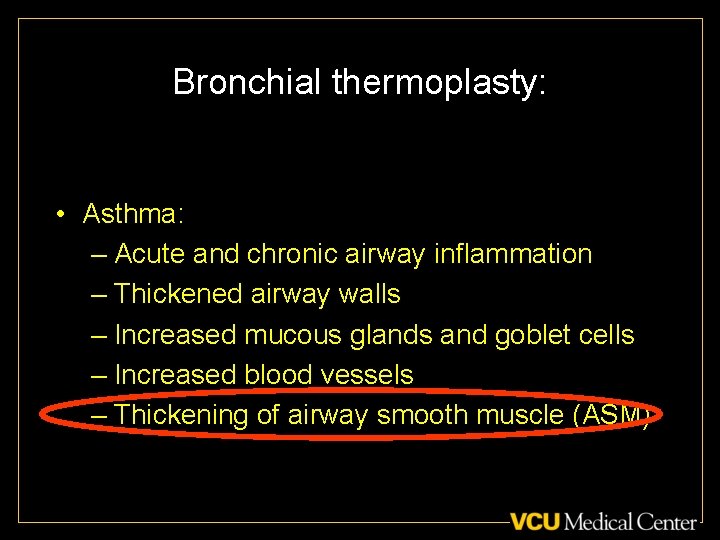
Bronchial thermoplasty: • Asthma: – Acute and chronic airway inflammation – Thickened airway walls – Increased mucous glands and goblet cells – Increased blood vessels – Thickening of airway smooth muscle (ASM)
Bronchial thermoplasty: • Acute asthma attack – Allergic stimuli – Nonallergic – infection, cold, exercise, irritant • Cascade always leads to ASM contraction • Which airways cause the problem in asthma ? – Most baseline airway resistance lies in the conducting airways > 2 mm – Primary site of resistance uncertain in acute asthma • Diffuse narrowing of small airways ? • Narrowing of large airways ? • Generalized narrowing of all airways ?
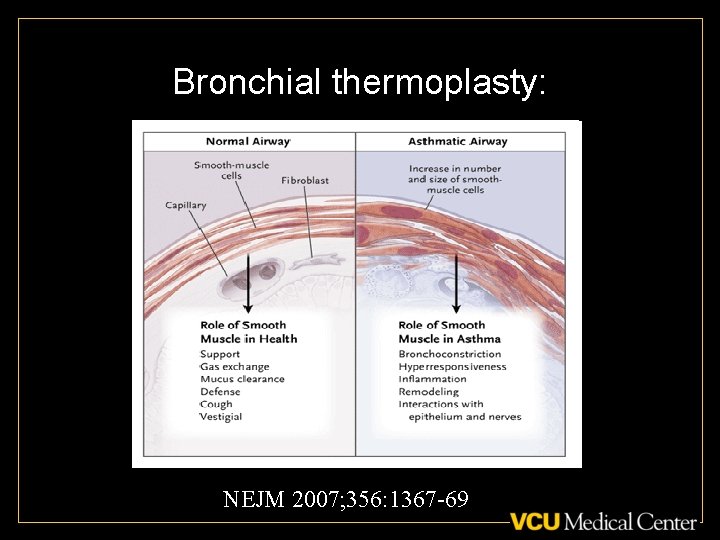
Bronchial thermoplasty: NEJM 2007; 356: 1367 -69
Bronchial thermoplasty: • Functional role of smooth muscle ? – Extends down to respiratory bronchioles – No strong experimental evidence for its purpose – Proposed functions: • Peristalsis for mucous clearance • Promote lymphatic and venous flow • Improving cough • Airway stabilization • Others – ASM seems to be uniquely heat sensitive
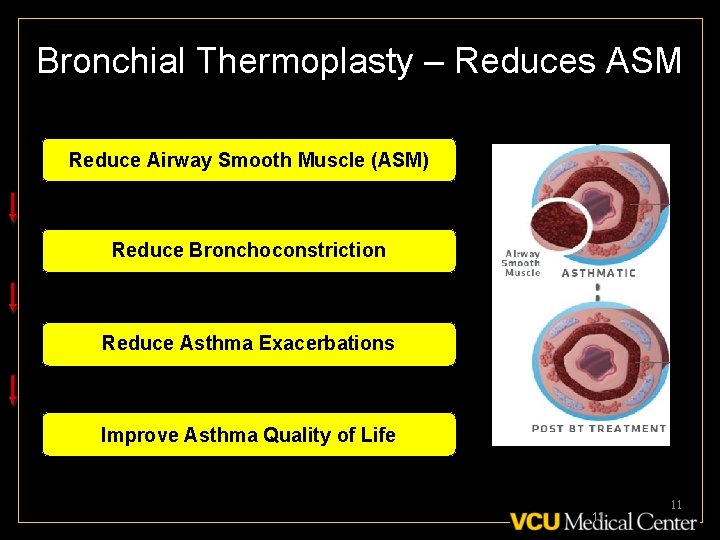
Bronchial Thermoplasty – Reduces ASM Reduce Airway Smooth Muscle (ASM) Reduce Bronchoconstriction Reduce Asthma Exacerbations Improve Asthma Quality of Life 11 11
Indications for Bronchial Thermoplasty: • Severe asthma • Adult asthmatics (≥ 18 years old) • Inadequate control despite combination of inhaled corticosteroids (ICS) and a longacting β 2 -agonist (LABA) • Able to undergo bronchoscopy Alair Bronchial Thermoplasty System Instructions for Use 12
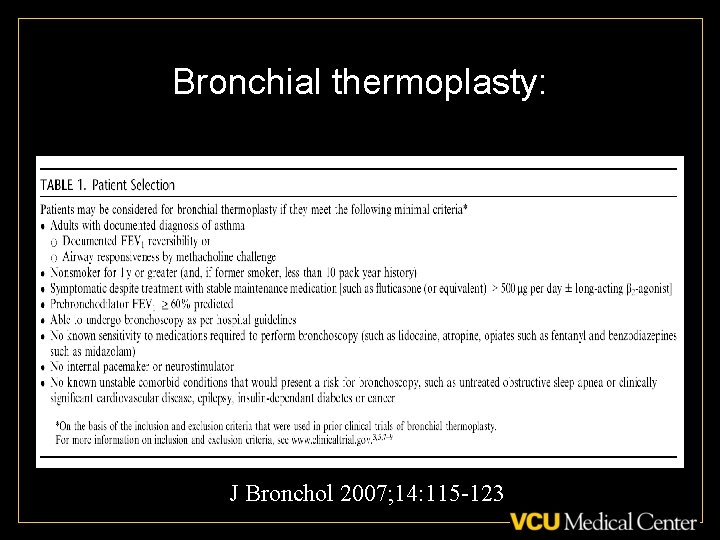
Bronchial thermoplasty: J Bronchol 2007; 14: 115 -123
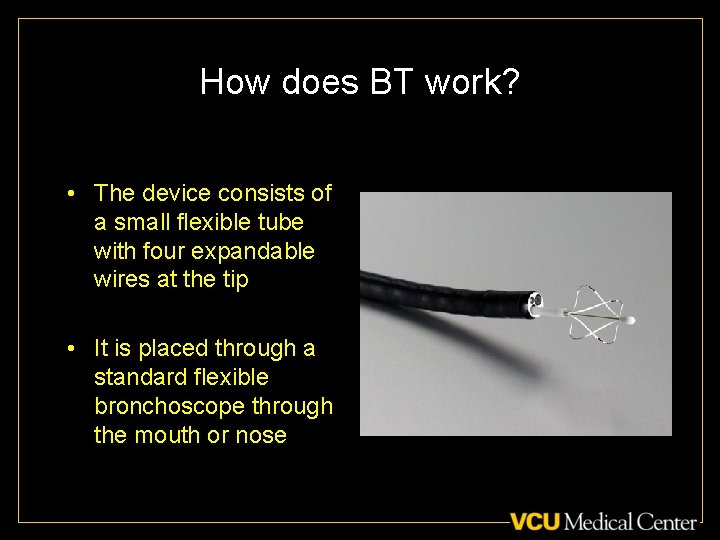
How does BT work? • The device consists of a small flexible tube with four expandable wires at the tip • It is placed through a standard flexible bronchoscope through the mouth or nose
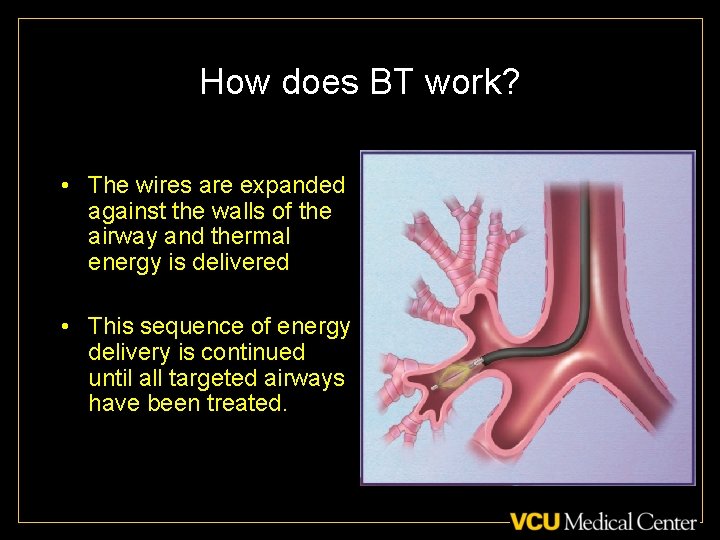
How does BT work? • The wires are expanded against the walls of the airway and thermal energy is delivered • This sequence of energy delivery is continued until all targeted airways have been treated.
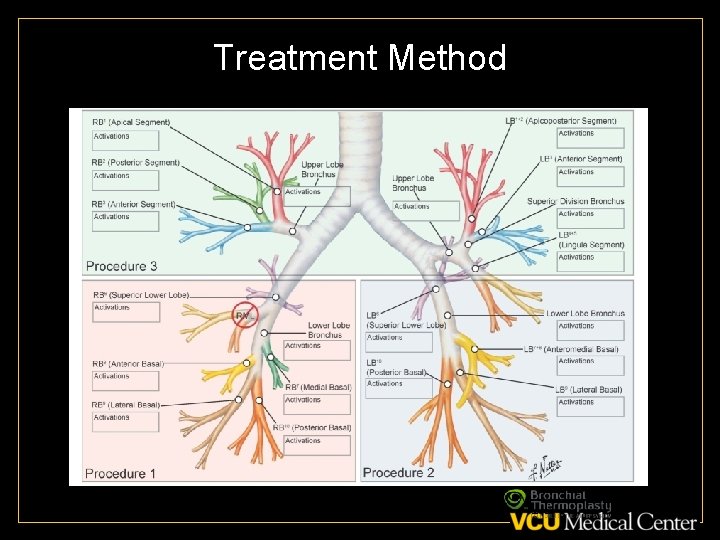
Treatment Method 16
Bronchial Thermoplasty with the Alair® System
Application of RF Energy • Temperature controlled energy (650 C) is delivered to airway wall for 10 seconds per activation – no permanent damage to epithelium
Procedure Overview • Patient evaluated pre-procedure to verify stability and ability to undergo bronchoscopy • Prophylactic OCS initiated 3 days prior, day of and day after procedure • Local anesthesia administered – lidocaine and albuterol nebulizer • Patient placed under moderate or deep sedation • RF energy delivered to airways ~30 -60 activations per procedure and completed within 40 -60 minutes • Patient monitored 2 -4 hours post-op and discharged home same day • Lung function stable within 80% of pre-procedure post BD FEV 1 19
Bronchial thermoplasty: • Technique: – Flexible bronchoscopy with moderate or deep sedation – Tightly controlled RF energy via a catheter to airways 3 mm -10 mm (no burn) – Right middle lobe excluded (RML syndrome) – Target temperature controlled to avoid perforation or airway stenosis – 3 bronchoscopies each about 3 weeks apart
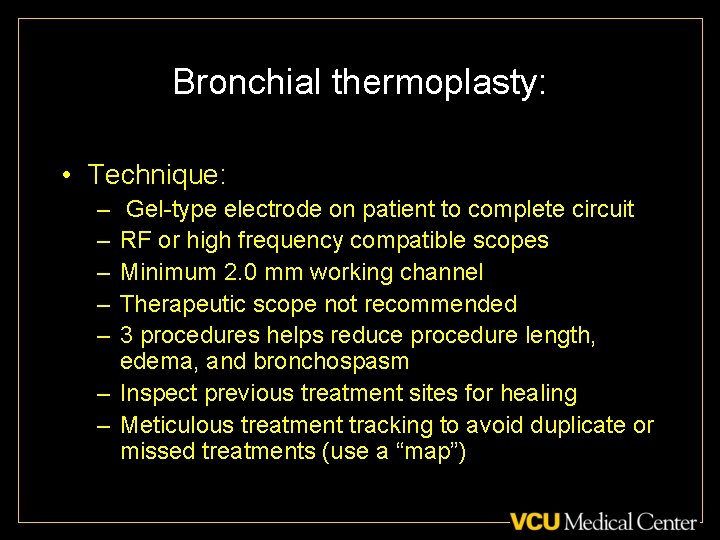
Bronchial thermoplasty: • Technique: – – – Gel-type electrode on patient to complete circuit RF or high frequency compatible scopes Minimum 2. 0 mm working channel Therapeutic scope not recommended 3 procedures helps reduce procedure length, edema, and bronchospasm – Inspect previous treatment sites for healing – Meticulous treatment tracking to avoid duplicate or missed treatments (use a “map”)
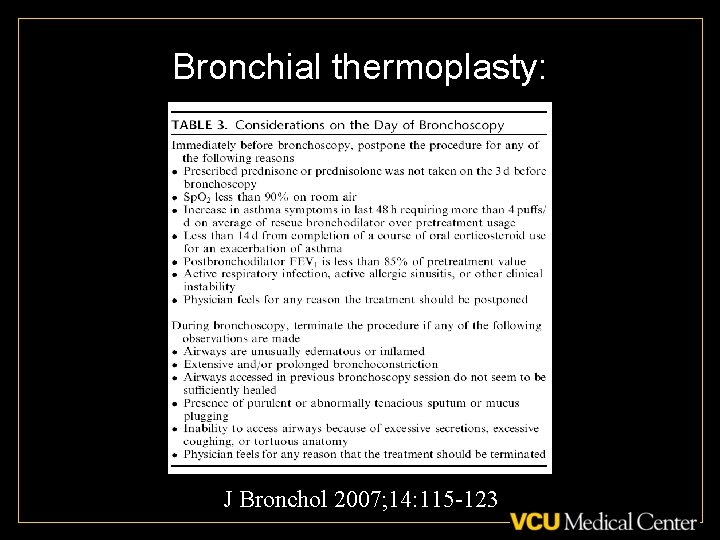
Bronchial thermoplasty: J Bronchol 2007; 14: 115 -123
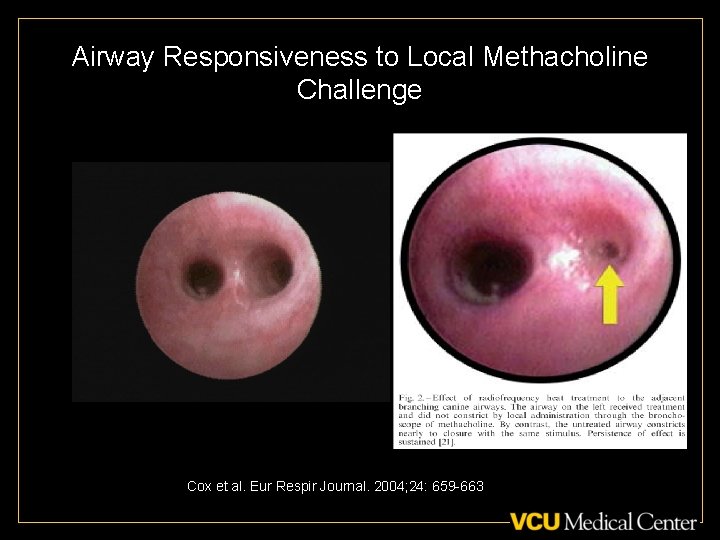
Airway Responsiveness to Local Methacholine Challenge Canine Model: Airway on left treated with bronchial thermoplasty. Airway on. Cox right not treated. et was al. Eur Respir Journal. 2004; 24: 659 -663
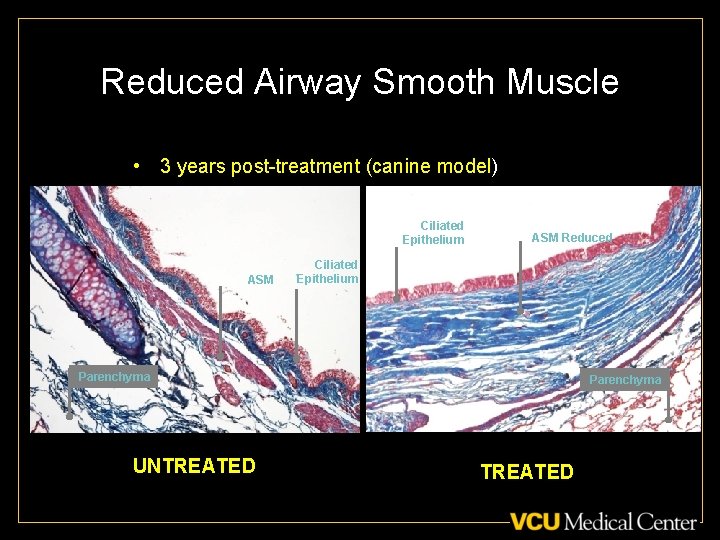
Reduced Airway Smooth Muscle • 3 years post-treatment (canine model) Ciliated Epithelium ASM Reduced Ciliated Epithelium Parenchyma UNTREATED Masson’s Trichrome stain TREATED
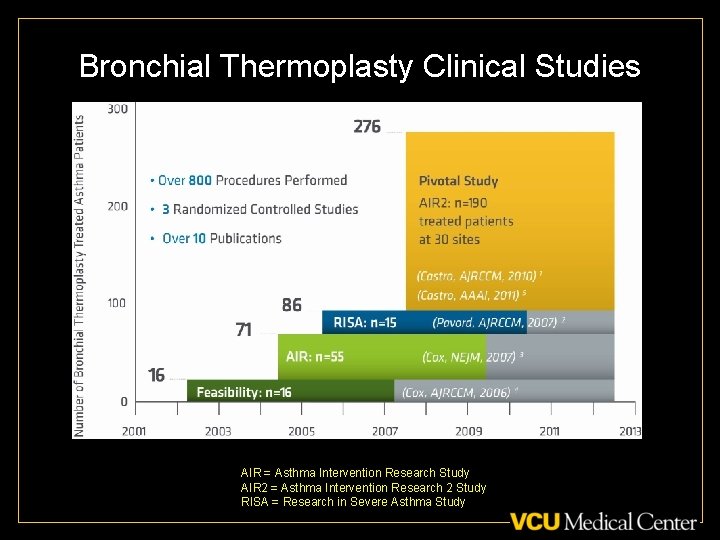
Bronchial Thermoplasty Clinical Studies AIR = Asthma Intervention Research Study AIR 2 = Asthma Intervention Research 2 Study RISA = Research in Severe Asthma Study
- Slides: 25