
Bronchial Asthma Dr Radhakrishna S A Scheme Introduction
Bronchial Asthma Dr. Radhakrishna. S. A
Scheme • • Introduction Definition History Types Causes Pathophysiology Diagnosis Treatment
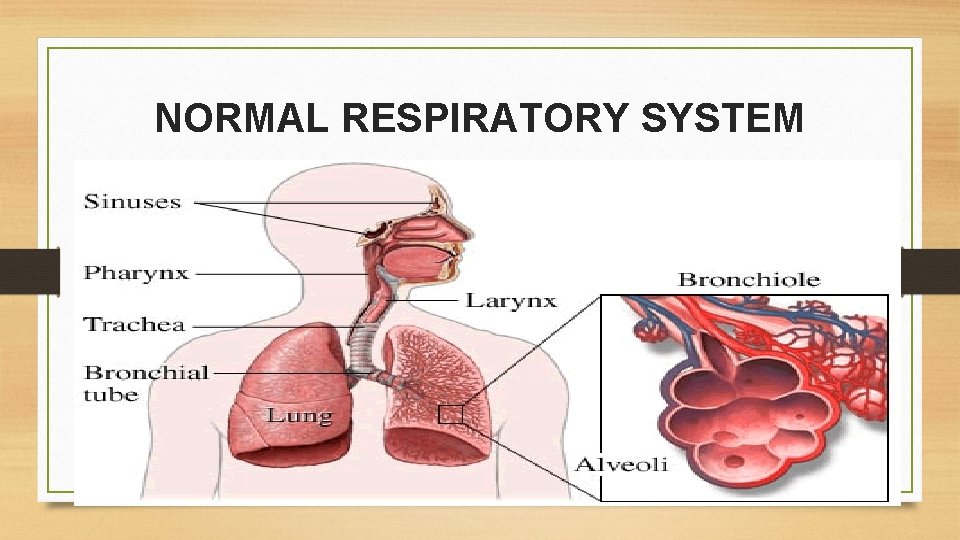
NORMAL RESPIRATORY SYSTEM
Introduction • Prevalence of asthma increased steadily over the latter part of the last century • asthma affects 300 million people worldwide, with a predicted additional 100 million people affected by 2025. • About 2. 5 lakh people die due to this
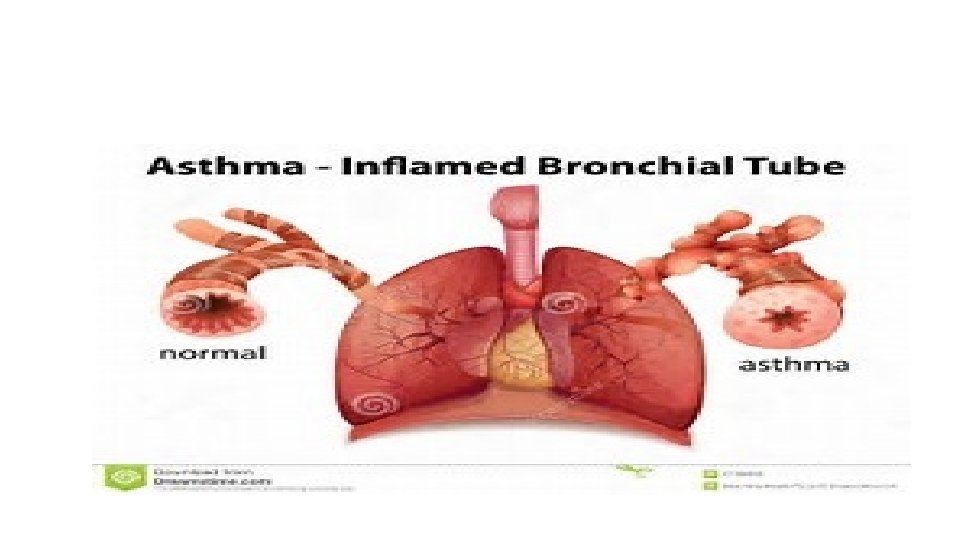
Definition • Is a chronic inflammatory reversible obstructive airway disease characterized by bronchial hyper reactivity. • Number of people with asthma- in developed & developing countries.

HISTORY • China (3000 -250 BC) • Egypt(3000 -1200 BC) • Greek-Rome (1000 BC- AD 200) • Ancient Hebrew (300 BC- AD 700) • India (800 BC- AD 500) • America (AD 1600)
Asthma • Mild attacks more common whereas sever asthma attacks less common but it is important to recognize & treat even mild • Fewer childhood infections underdeveloped immune system risk of asthma
Types • Allergic asthma • Exercise induced asthma • Cough variant asthma • Nocturnal asthma • Gastric asthma • Aspirin sensitive asthma • Occupational (Work related asthma)
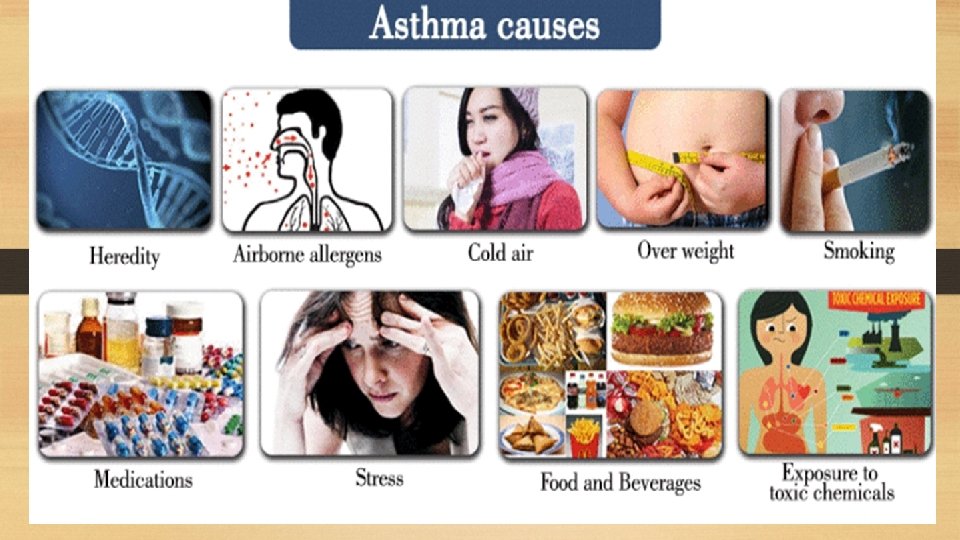
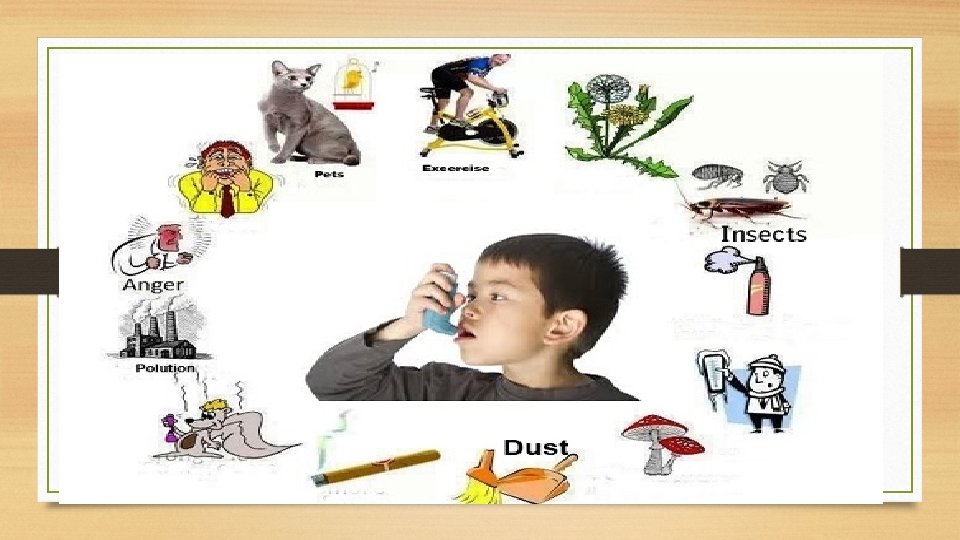
CAUSES- Triggers 1. Allergens- pollens, dandruff, dust, animals fur 2. Iritants-fumes, smoke, paint 3. Certain drugs-Aspirin, β blockers etc. 4. Cold air, dry whether 5. Stress 6. Exercise 7. Family history of asthma (Genetic)
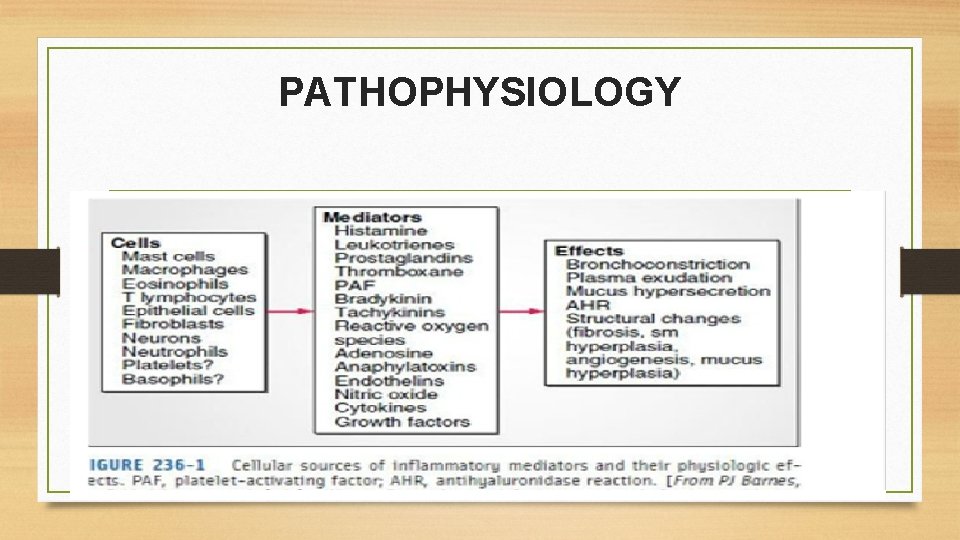
PATHOPHYSIOLOGY
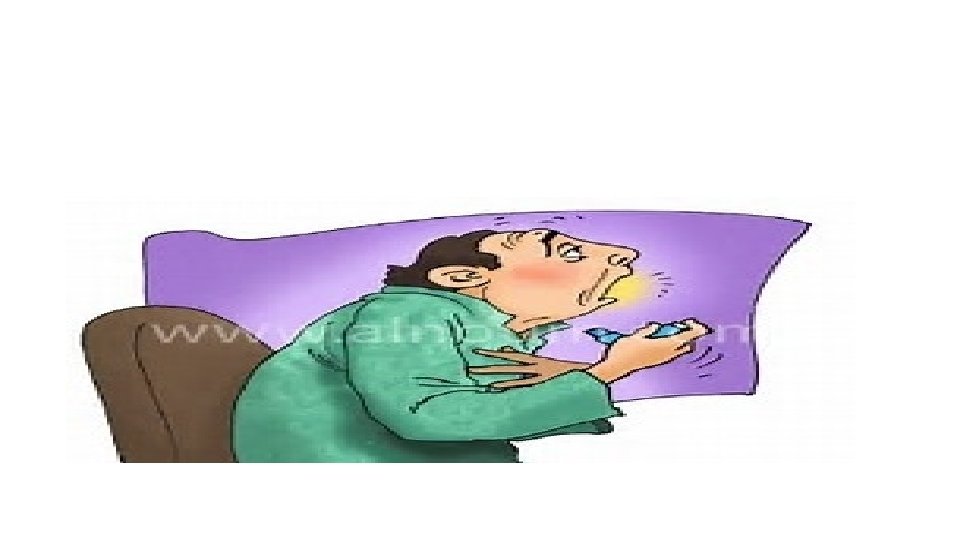
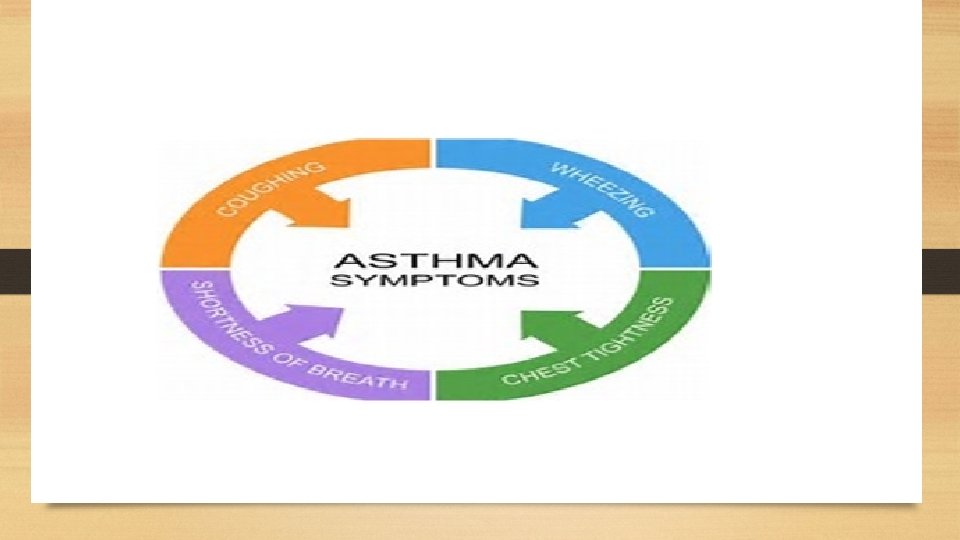
SYMPTOMS • • • Shortness of breath difficult to breath/ Breathlessness Wheezing Chest tightness Coughing Frequent getup at night
Wheezing • Wheezing is a whistling sound that can be made while breathing that may be a symptom of an illness or other causes or conditions. • If wheezing is accompanied with difficulty breathing, this may be a medical emergency • a musical or whistling sound and laboured breathing, particularly when exhaling; sometimes accompanied by a feeling of tightening in the chest.
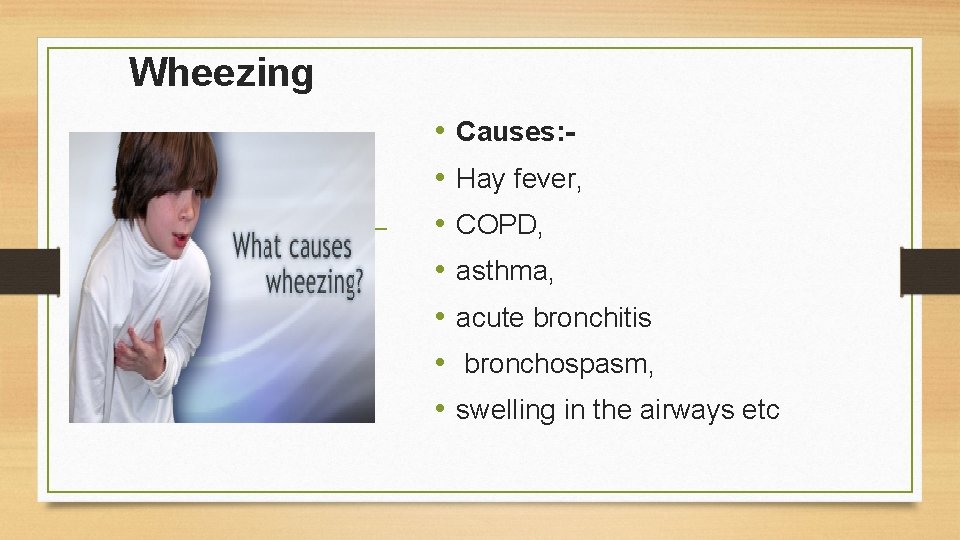
Wheezing • • Causes: Hay fever, COPD, asthma, acute bronchitis bronchospasm, swelling in the airways etc
OTHER SYMPTOMS OF ASTHMA • • Palpitation Mucus production Weakness Tiredness after exercise Sneezing, nasal congestion, sore throat Sleeping disorder Difficulty in speaking
DIAGNOSIS • Compatible clinical history plus either/or: • FEV 1 ≥ 15%* (and 200 m. L) increase following administration of a bronchodilator/trial of corticosteroids • History of diurnal variation • FEV 1 ≥ 15% decrease after 6 mins of exercise
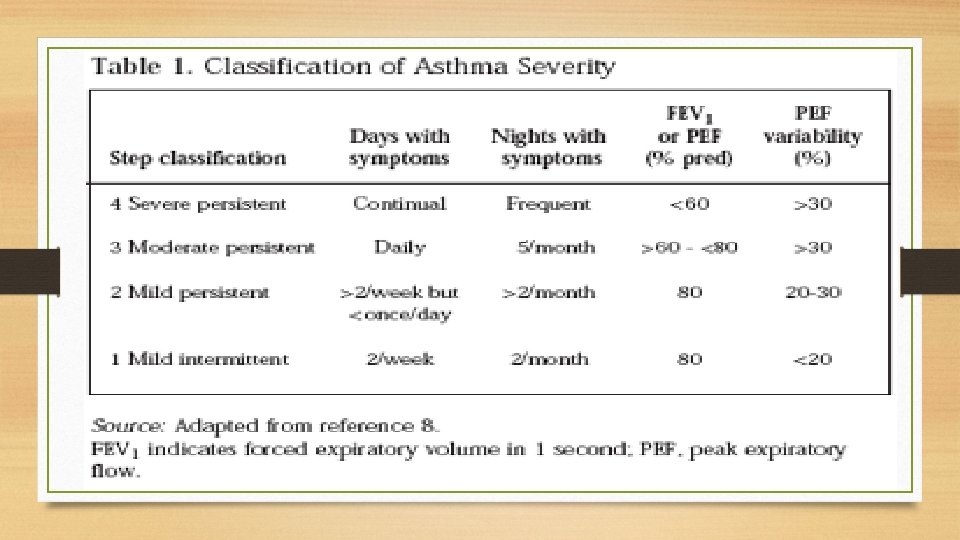

• TREATMENT
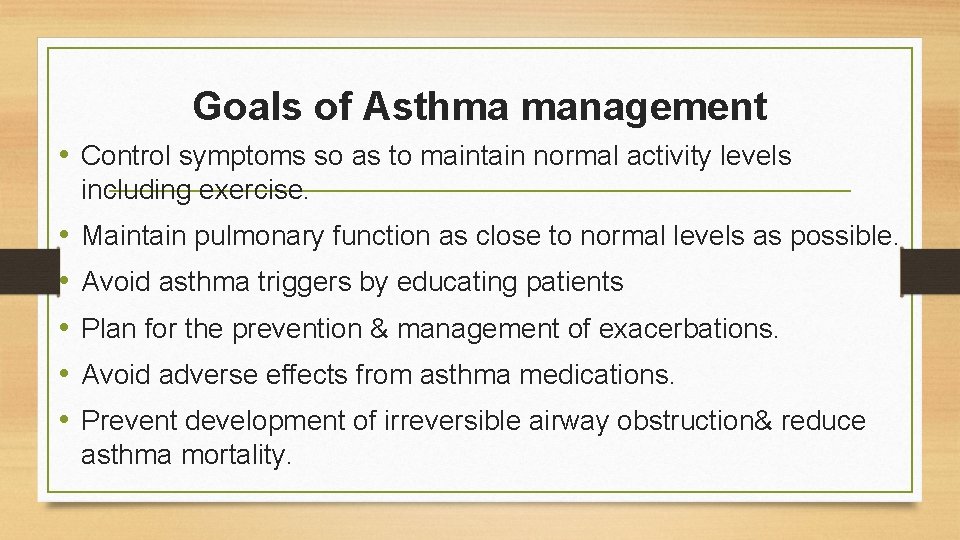
Goals of Asthma management • Control symptoms so as to maintain normal activity levels including exercise. • • • Maintain pulmonary function as close to normal levels as possible. Avoid asthma triggers by educating patients Plan for the prevention & management of exacerbations. Avoid adverse effects from asthma medications. Prevent development of irreversible airway obstruction& reduce asthma mortality.
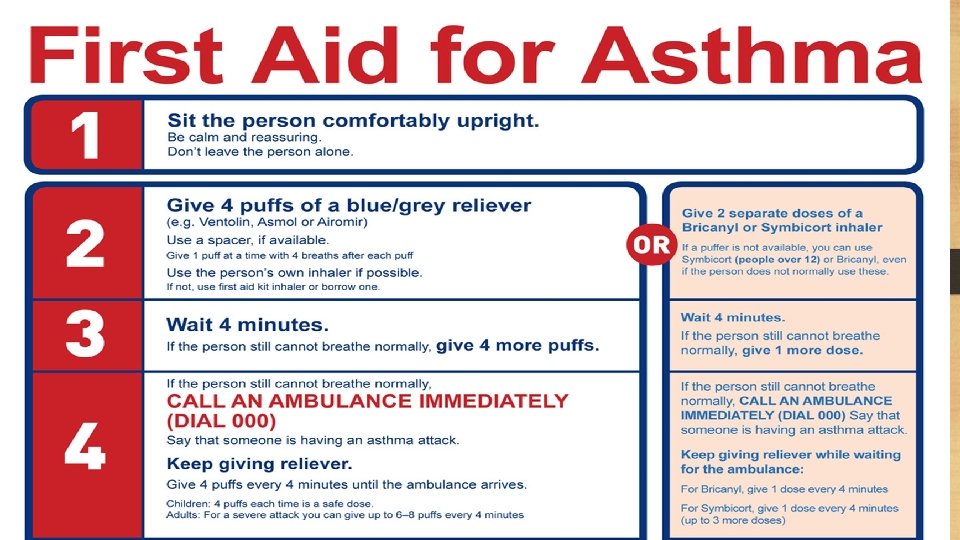
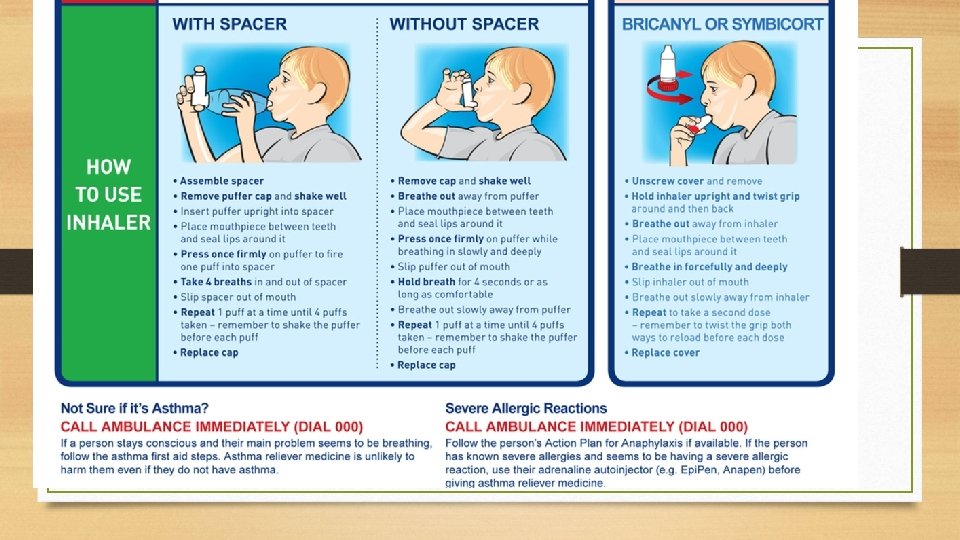
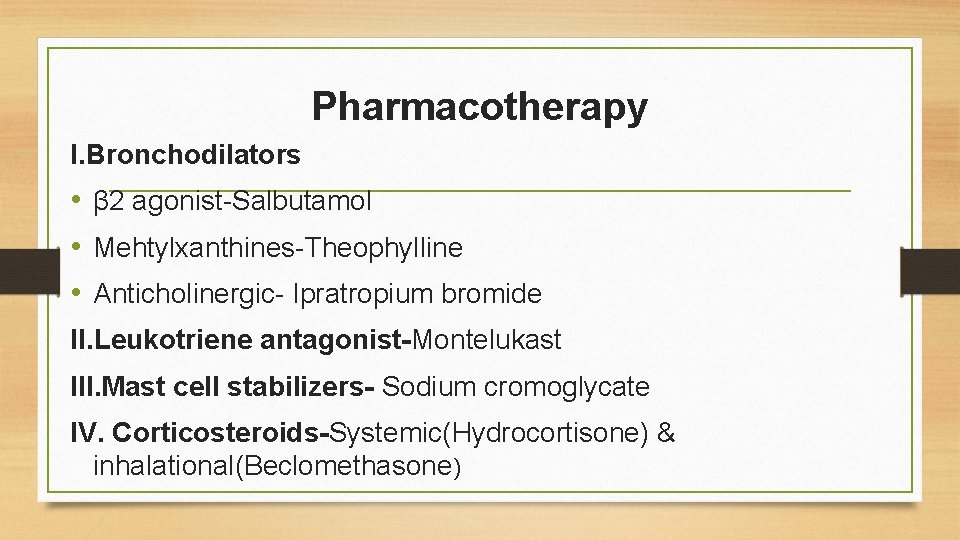
Pharmacotherapy I. Bronchodilators • β 2 agonist-Salbutamol • Mehtylxanthines-Theophylline • Anticholinergic- Ipratropium bromide II. Leukotriene antagonist-Montelukast III. Mast cell stabilizers- Sodium cromoglycate IV. Corticosteroids-Systemic(Hydrocortisone) & inhalational(Beclomethasone)
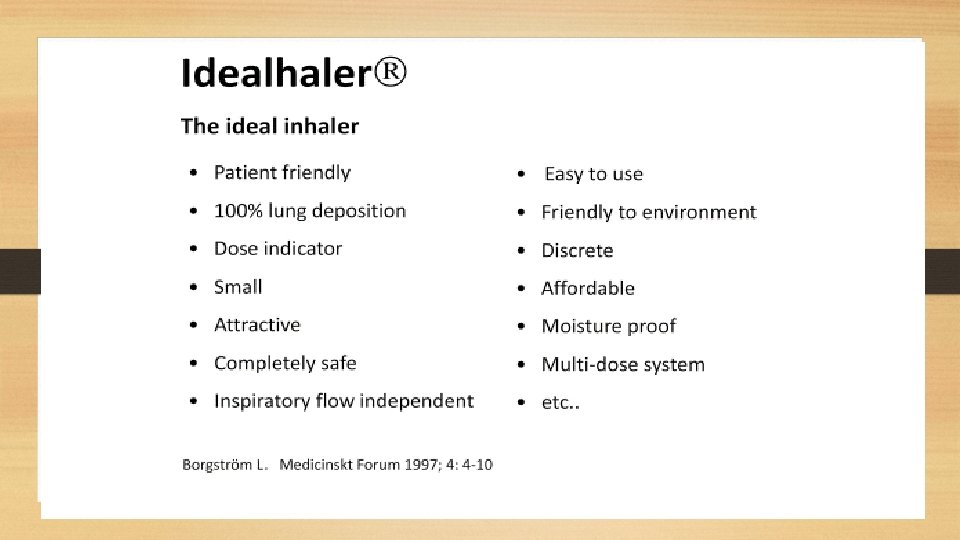
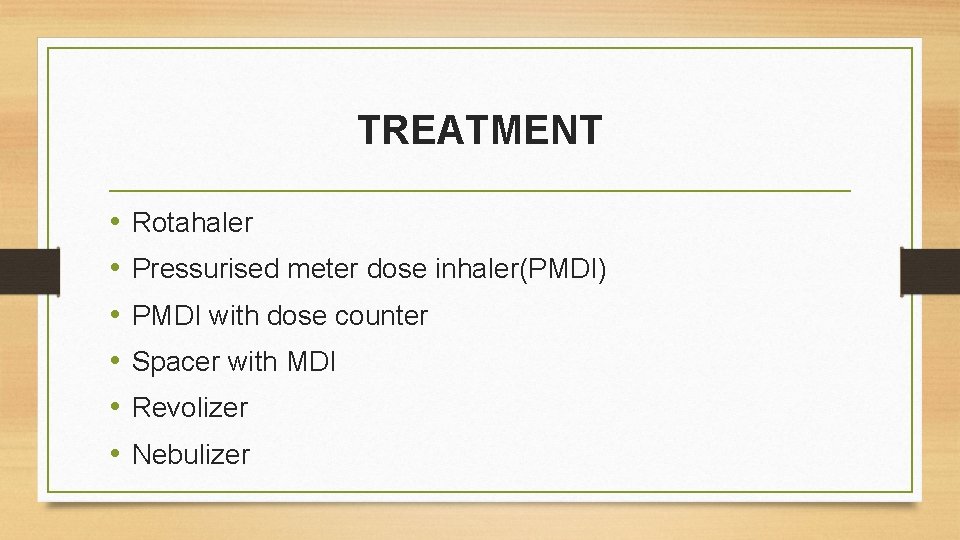
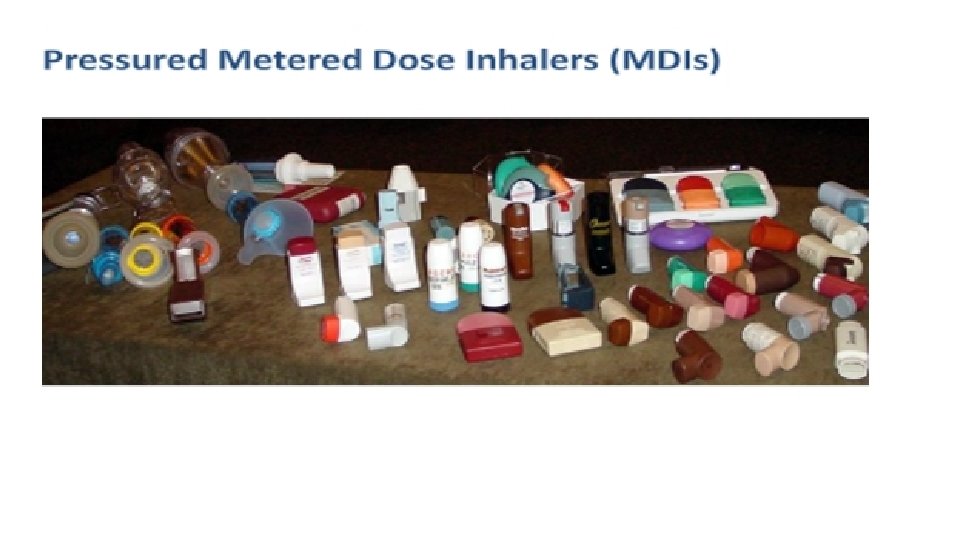
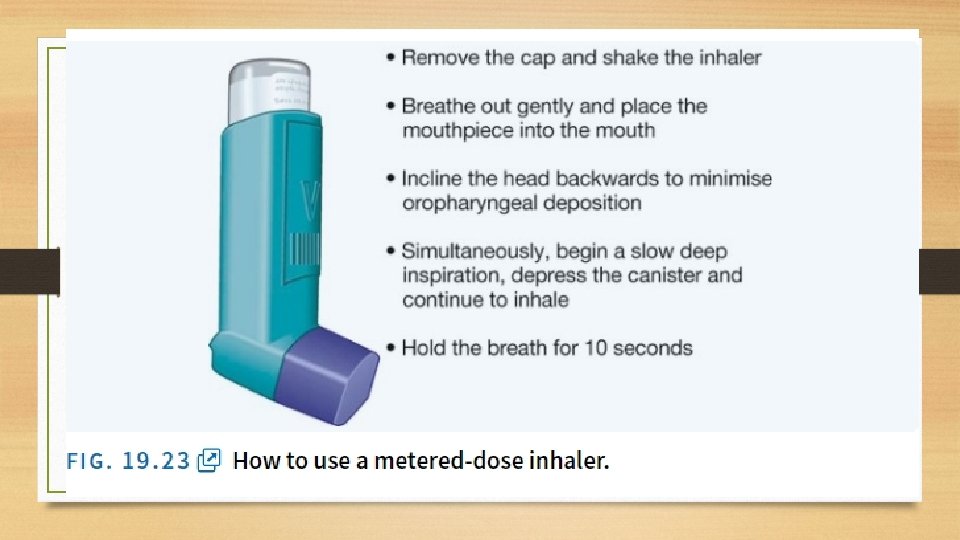
TREATMENT • • • Rotahaler Pressurised meter dose inhaler(PMDI) PMDI with dose counter Spacer with MDI Revolizer Nebulizer
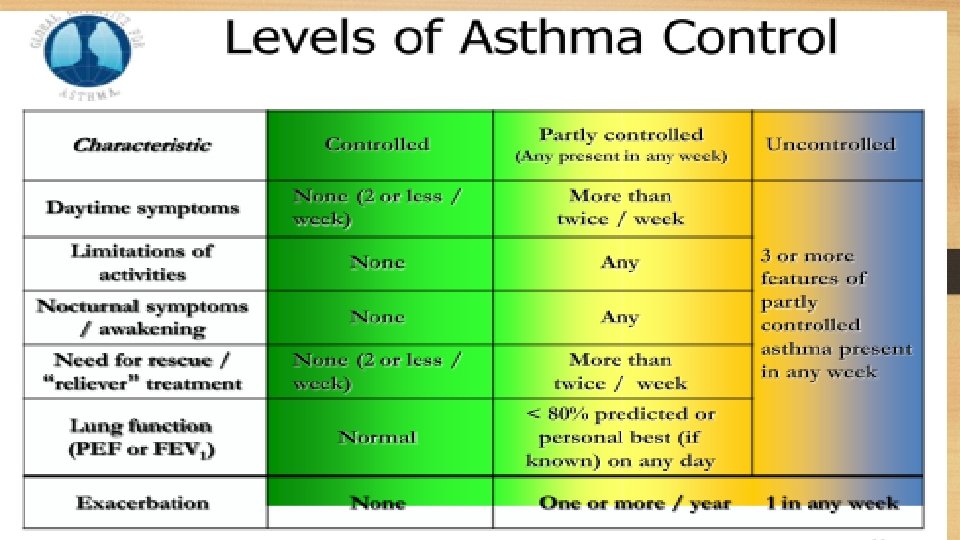
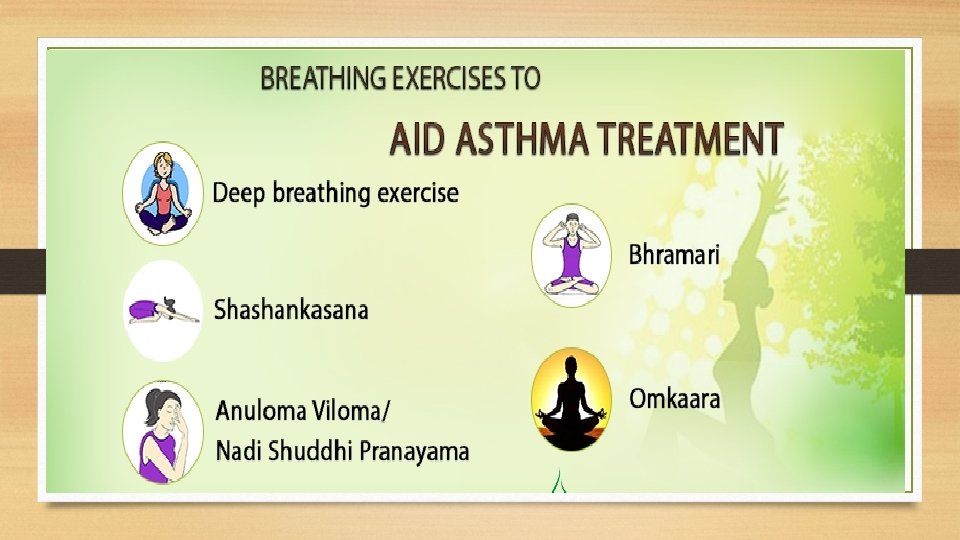

Summary
Take home message • Prevention is better than cure • avoid exposure to triggers

• THANK YOU
- Slides: 35