
Bronchial Asthma An Overview Based on GINA Management
Bronchial Asthma An Overview – Based on GINA Management Guide Lines Dr. R. V. S. N. Sarma, M. D. , M. Sc. (Canada), Consultant Physician & Chest Specialist visit us at: www. drsarma. in 1
When you can't breathe, nothing else matters® American Lung Association 2
Bronchial Asthma A Paradigm Shift In The Management Time Now, to Unlearn Our Age Old Outdated Practices 3

Resources Consulted – Sincere Thanks • • • GINA ACCP ATS BTS thoracic. org. uk NICE Chest Net CDC NAEPP CTS www. ginasthma. org www. chestnet. org www. thoracic. org www. britwww. nice. uk. org www. chestnet. net www. cdc. nih. gov www. naepp. nhlbi. org 5
What Is Asthma ? l Primarily – Allergic inflammation of AW l Secondary – Bronchoconstriction – Airway Hyper-reactivity - AWHR – Recurrent wheezing, coughing and SOB – Airflow limitation is variable and often reversible – Infiltration of dendritic cells, mast cells, 6
The Huge Gap l Many patients are not detected l Many do not seek medical attention l Many have no access to health service l Many doctors do not do what is right l Stigma associated with the label l Broken marriages, alliances l Missed diagnosis (Bronchitis, LRI) 7
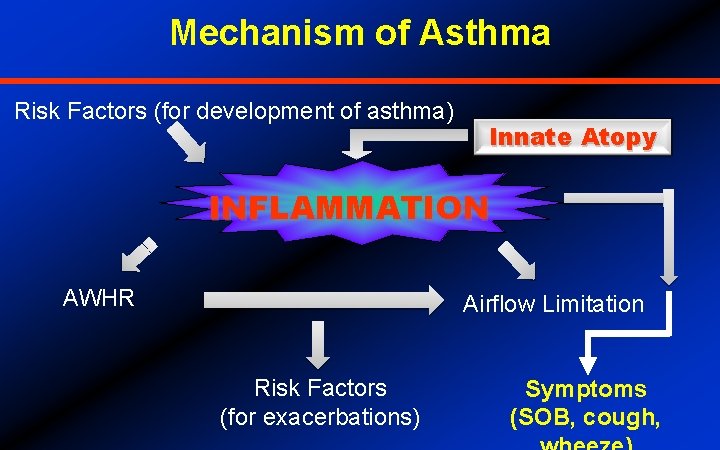
Mechanism of Asthma Risk Factors (for development of asthma) Innate Atopy INFLAMMATION AWHR Airflow Limitation Risk Factors (for exacerbations) Symptoms (SOB, cough,
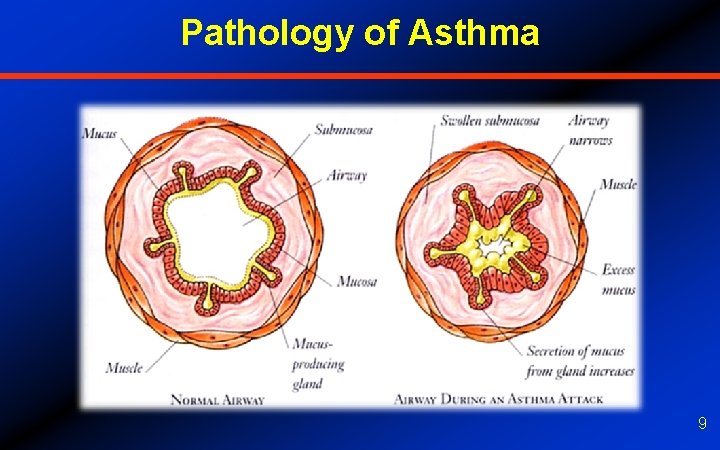
Pathology of Asthma 9
Risk Factors for Asthma Causal Factors l Indoor Allergens – – l Domestic mites Animal Allergens Cockroach Allergens Fungi moulds Outdoor Allergens Host Factors l Contributing Factors l l – Pollens – Fungi, RSV l Occupational exposure Genetic Atopy ( Ig. E), AWHR l Respiratory infections Small size at birth, Obesity Diet Air pollution – Outdoor pollutants – Indoor pollutants Smoking – Active / Passive 10
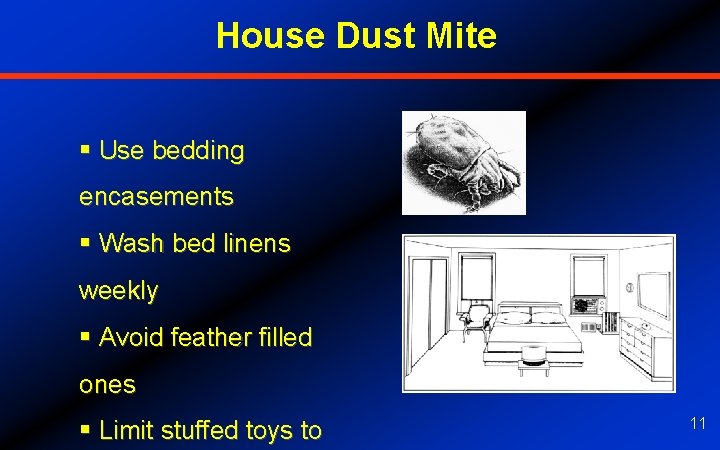
House Dust Mite § Use bedding encasements § Wash bed linens weekly § Avoid feather filled ones § Limit stuffed toys to 11
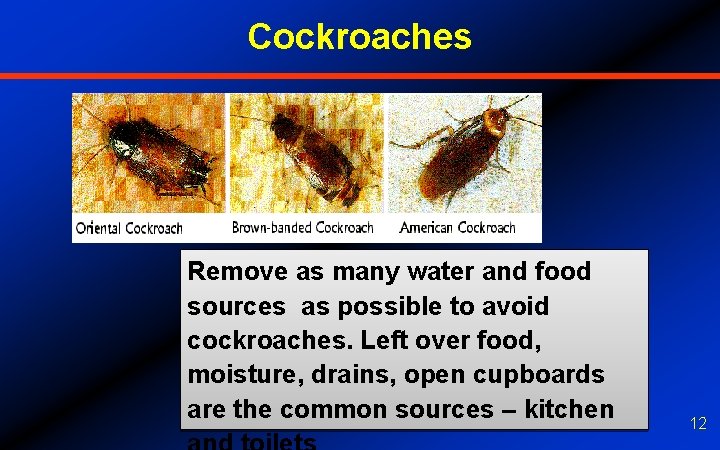
Cockroaches Remove as many water and food sources as possible to avoid cockroaches. Left over food, moisture, drains, open cupboards are the common sources – kitchen 12
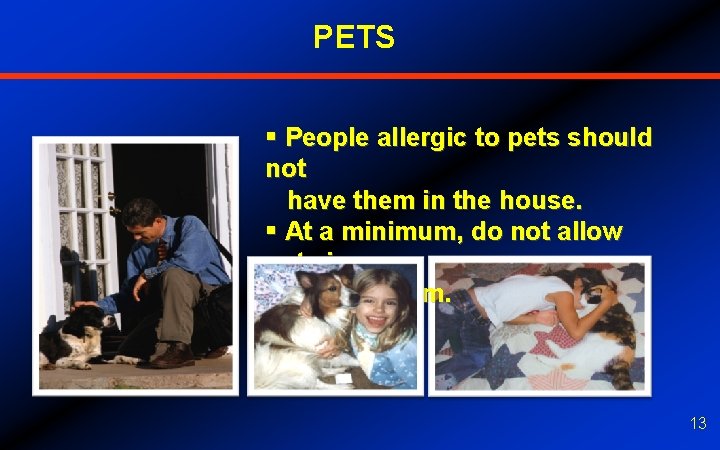
PETS § People allergic to pets should not have them in the house. § At a minimum, do not allow pets in the bedroom. 13
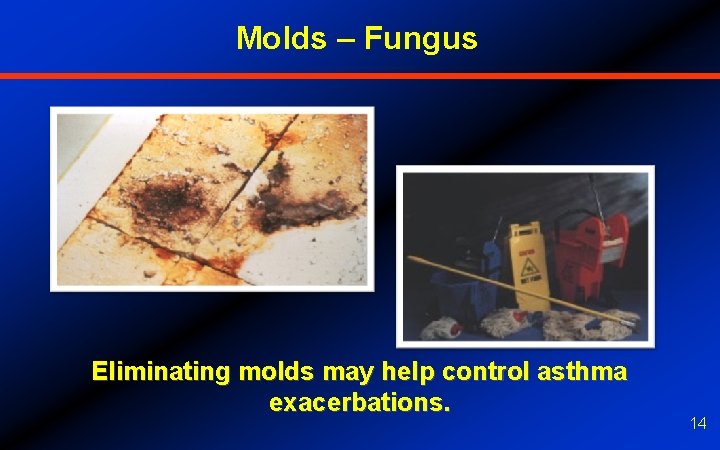
Molds – Fungus Eliminating molds may help control asthma exacerbations. 14
Diagnosis of Asthma l History and patterns of symptoms l Physical examination l Measurements of lung function – Peak flow meter 15
Patient History l Recurrent attacks or episodes of wheezing? l Troublesome cough, worse particularly at night l Cough after physical activity (e. g. playing)? l H/o seasonal attacks of breathing 16
Main Symptom Clues l Do the patient’s colds ‘go to the chest’ or take more than 10 days to resolve? l Does the patient use any medication ? Is there (relief) ? (e. g. bronchodilator) when symptoms occur l If the patient answers “YES” to any of the above questions, suspect asthma. l Remember, the commonest cause of persistent cough is asthma 17
Physical Examination l l l Wheeze Usually heard without a stethoscope Dyspnea Rhonchi heard with a stethoscope Use of accessory muscles Remember Absence of symptoms at the time of examination does not exclude the diagnosis of asthma 18
Physical Examination l Hyper-expansion of the thorax l Increased nasal secretions or nasal polyps l Atopic dermatitis, eczema, or other allergic skin conditions 19
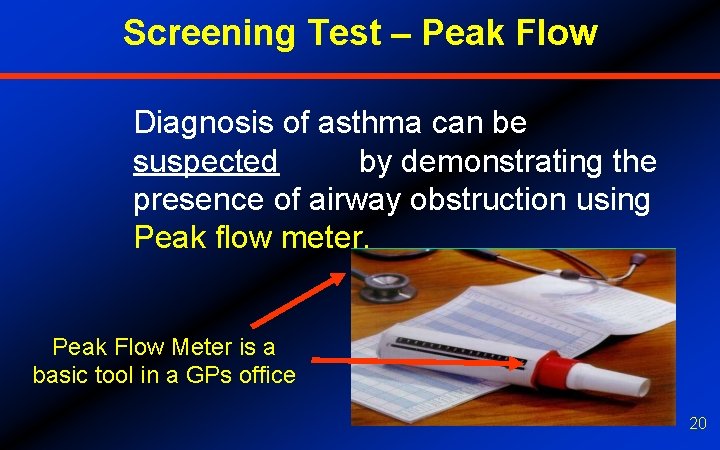
Screening Test – Peak Flow Diagnosis of asthma can be suspected by demonstrating the presence of airway obstruction using Peak flow meter. Peak Flow Meter is a basic tool in a GPs office 20
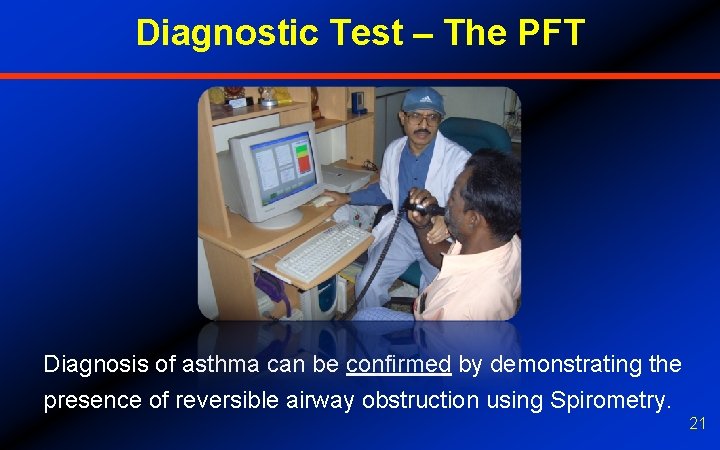
Diagnostic Test – The PFT Diagnosis of asthma can be confirmed by demonstrating the presence of reversible airway obstruction using Spirometry. 21
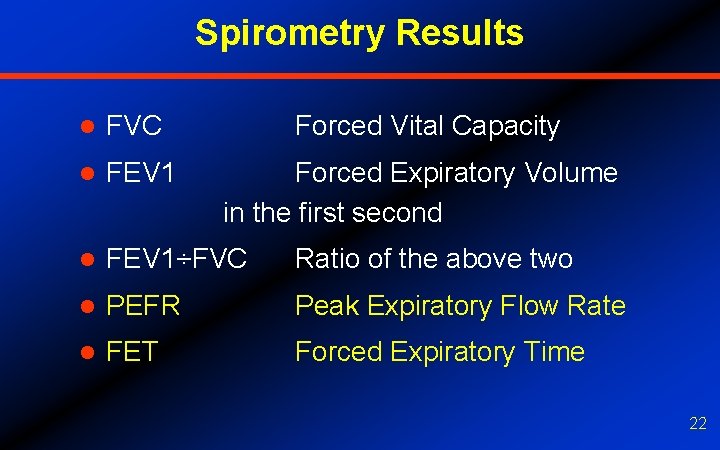
Spirometry Results l FVC Forced Vital Capacity l FEV 1 Forced Expiratory Volume in the first second l FEV 1÷FVC Ratio of the above two l PEFR Peak Expiratory Flow Rate l FET Forced Expiratory Time 22
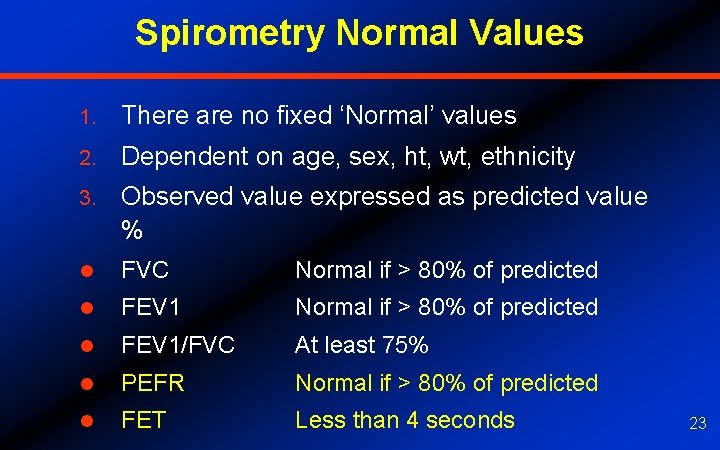
Spirometry Normal Values 1. There are no fixed ‘Normal’ values 2. Dependent on age, sex, ht, wt, ethnicity 3. Observed value expressed as predicted value % l FVC Normal if > 80% of predicted l FEV 1/FVC At least 75% l PEFR Normal if > 80% of predicted l FET Less than 4 seconds 23
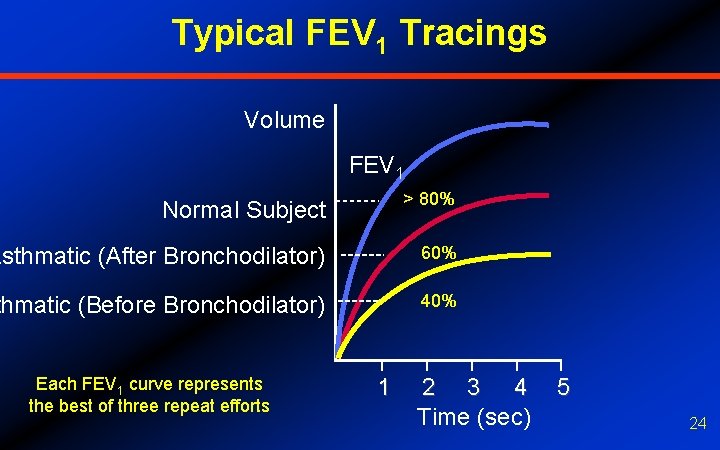
Typical FEV 1 Tracings Volume FEV 1 Normal Subject > 80% Asthmatic (After Bronchodilator) 60% thmatic (Before Bronchodilator) 40% Each FEV 1 curve represents the best of three repeat efforts 1 2 3 4 Time (sec) 5 24
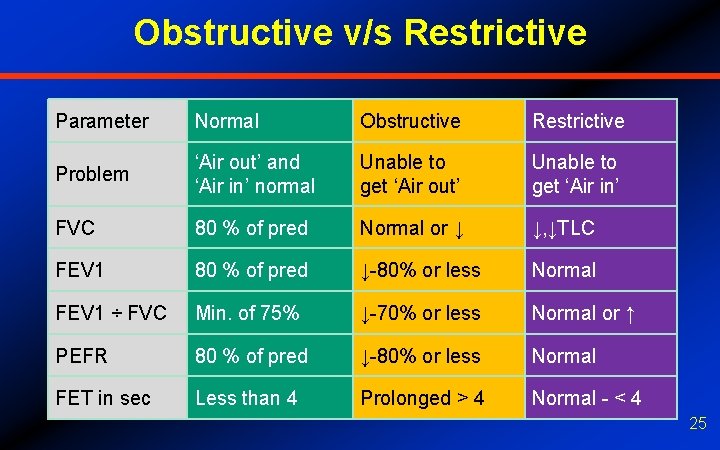
Obstructive v/s Restrictive Parameter Normal Obstructive Restrictive Problem ‘Air out’ and ‘Air in’ normal Unable to get ‘Air out’ Unable to get ‘Air in’ FVC 80 % of pred Normal or ↓ ↓, ↓TLC FEV 1 80 % of pred ↓-80% or less Normal FEV 1 ÷ FVC Min. of 75% ↓-70% or less Normal or ↑ PEFR 80 % of pred ↓-80% or less Normal FET in sec Less than 4 Prolonged > 4 Normal - < 4 25
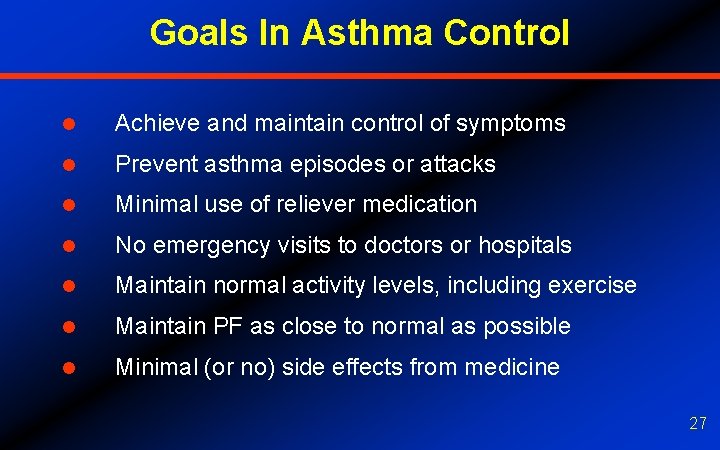
Goals In Asthma Control l Achieve and maintain control of symptoms l Prevent asthma episodes or attacks l Minimal use of reliever medication l No emergency visits to doctors or hospitals l Maintain normal activity levels, including exercise l Maintain PF as close to normal as possible l Minimal (or no) side effects from medicine 27
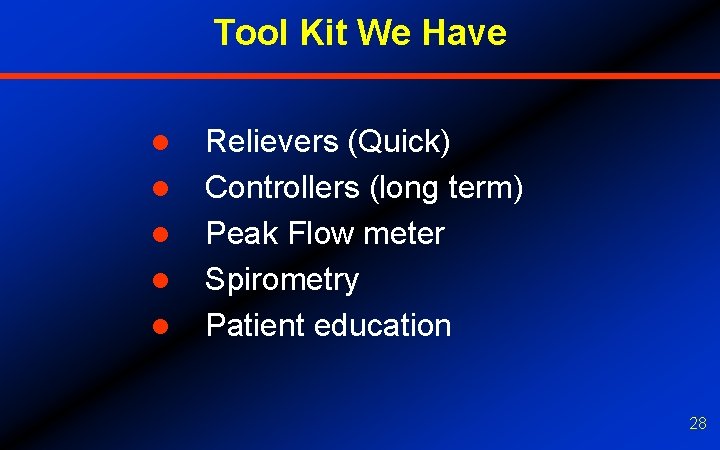
Tool Kit We Have l l l Relievers (Quick) Controllers (long term) Peak Flow meter Spirometry Patient education 28
Asthma Treatment Today l We can completely control symptoms l Make their life as normal as possible l Treatable by general practice physicians l We do not need to be Chest Specialists! 29
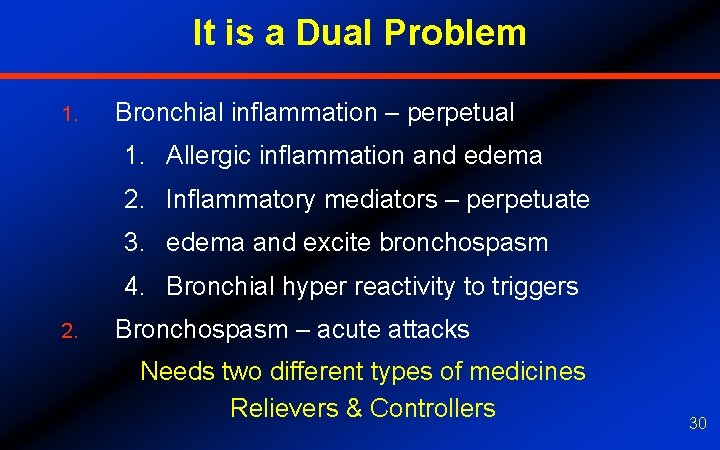
It is a Dual Problem 1. Bronchial inflammation – perpetual 1. Allergic inflammation and edema 2. Inflammatory mediators – perpetuate 3. edema and excite bronchospasm 4. Bronchial hyper reactivity to triggers 2. Bronchospasm – acute attacks Needs two different types of medicines Relievers & Controllers 30
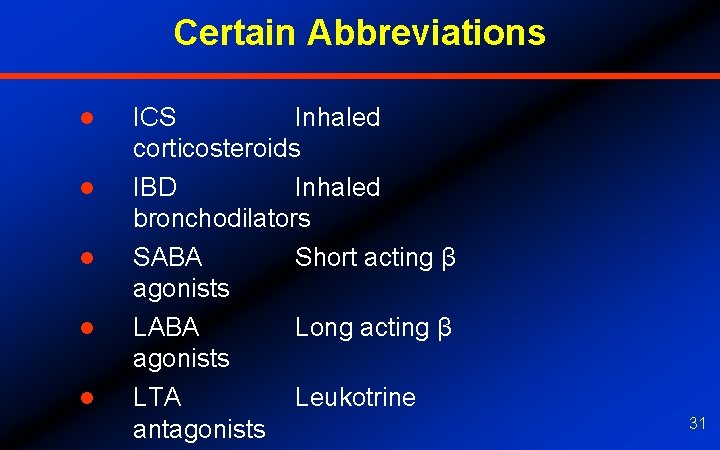
Certain Abbreviations l ICS Inhaled corticosteroids l IBD Inhaled bronchodilators SABA Short acting β agonists LABA Long acting β agonists LTA Leukotrine antagonists l l l 31
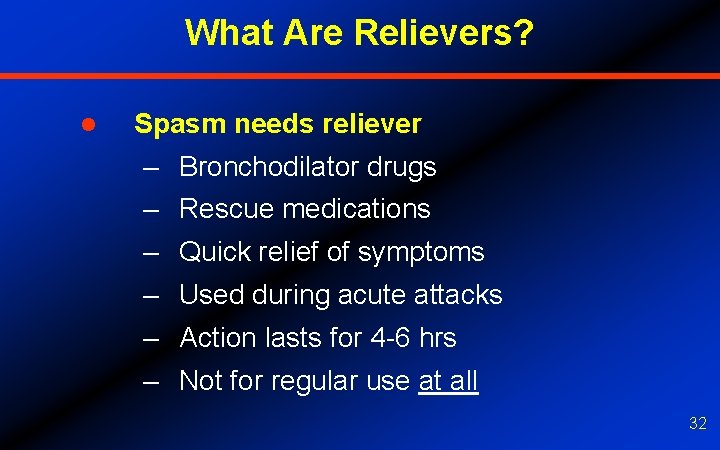
What Are Relievers? l Spasm needs reliever – Bronchodilator drugs – Rescue medications – Quick relief of symptoms – Used during acute attacks – Action lasts for 4 -6 hrs – Not for regular use at all 32
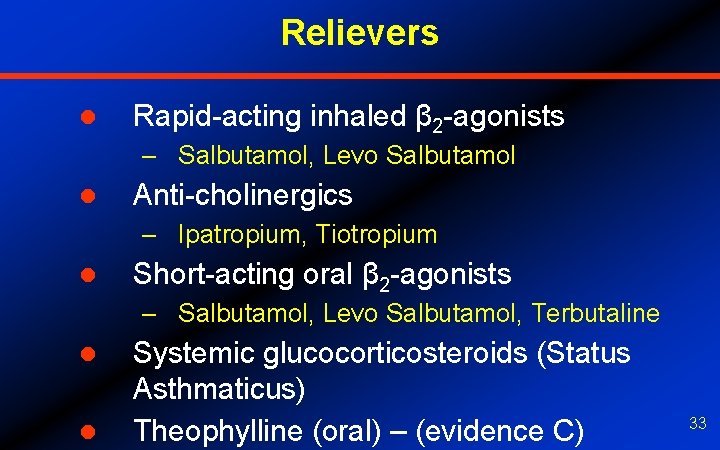
Relievers l Rapid-acting inhaled β 2 -agonists – Salbutamol, Levo Salbutamol l Anti-cholinergics – Ipatropium, Tiotropium l Short-acting oral β 2 -agonists – Salbutamol, Levo Salbutamol, Terbutaline l l Systemic glucocorticosteroids (Status Asthmaticus) Theophylline (oral) – (evidence C) 33
What Are Controllers ? l Prevent future attacks – Reduce allergic inflammation – Reduce inflammatory mediators – Reduce hyper-responsiveness – Long term control of asthma – Prevent airway remodeling – For regular use – well or ill 34

Let Us Question § Are we giving the right drug? § Are we giving the drug in right form? § Are we using the correct technique? 35
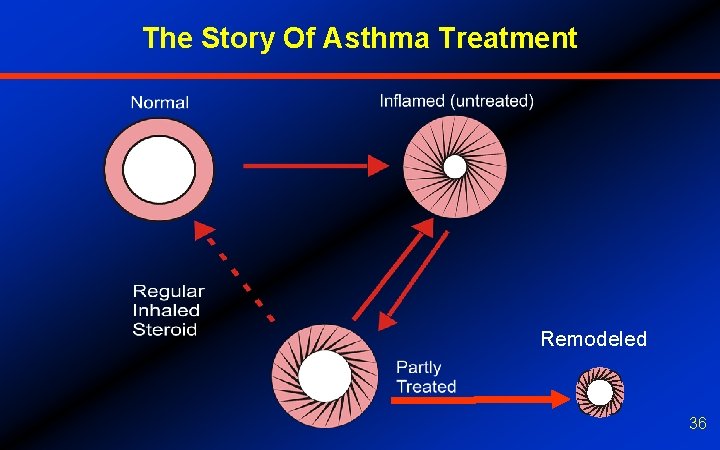
The Story Of Asthma Treatment Remodeled 36
Most Important All Asthma drugs should ideally be taken through the inhaled route. 37
What Changes Their Life ? ICS Inhaled corticosteroids ICS are the most potent and effective antiinflammatory medication currently available for Asthma * *GINA (NHLBI & WHO Workshop Report) *Guidelines for the diagnosis and management of Asthma NIH, NHLBI 38
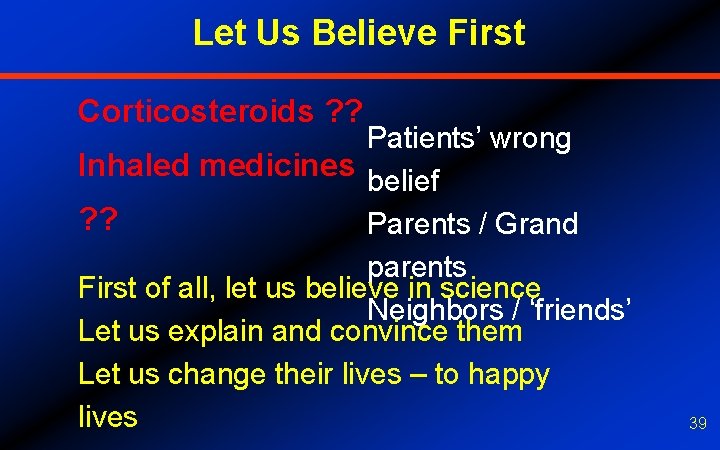
Let Us Believe First Corticosteroids ? ? Patients’ wrong Inhaled medicines belief ? ? Parents / Grand parents First of all, let us believe in science Neighbors / ‘friends’ Let us explain and convince them Let us change their lives – to happy lives 39
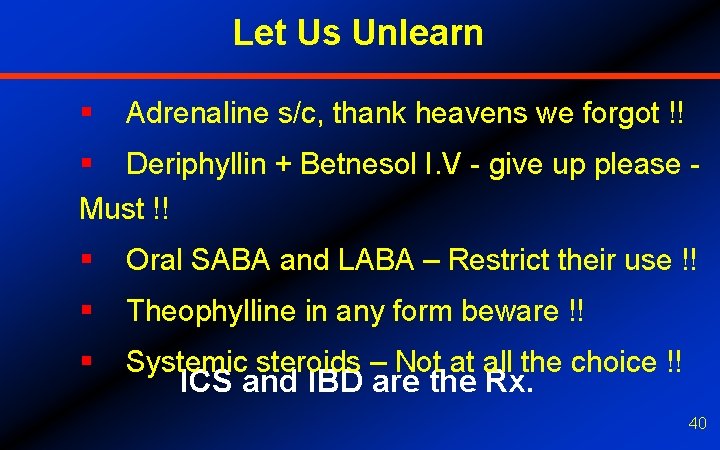
Let Us Unlearn § Adrenaline s/c, thank heavens we forgot !! § Deriphyllin + Betnesol I. V - give up please Must !! § Oral SABA and LABA – Restrict their use !! § Theophylline in any form beware !! § Systemic steroids – Not at all the choice !! ICS and IBD are the Rx. 40
Remember Instead of asthma controlling our patient, allow our patient to control his / her asthma 41
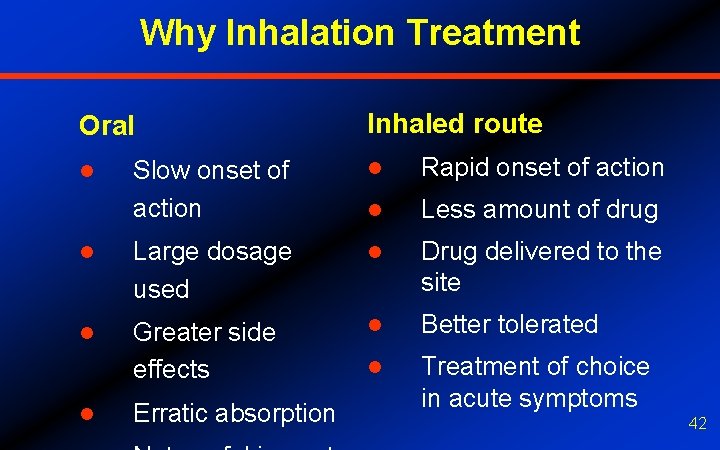
Why Inhalation Treatment Oral Inhaled route Slow onset of action l Rapid onset of action l Less amount of drug l Large dosage used l Drug delivered to the site l Greater side effects l Better tolerated l Treatment of choice in acute symptoms l l Erratic absorption 42
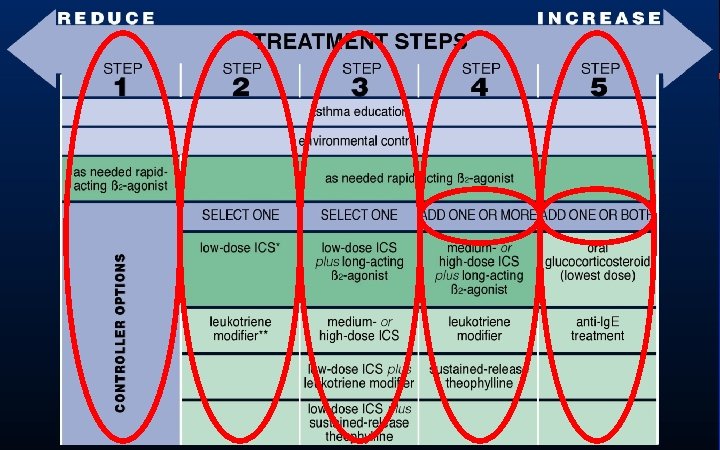
Preventers Inhaled corticosteroids l Budesonide/ beclomethasone/ fluticasone – use any l Start (400 -1000 mcg/day approx. in 2 divided doses) l Maintain for 3 months l Taper slowly and keep at 200 mcg 43
ICS – How safe are they? They are very safe l Even in small children for several years l 30% of Olympic athletes use ICS l Not anabolic (performance-enhancing) steroid l Even highest ICS dose is safer than low dose oral steroid or beta agonist l Best “Addiction” for asthmatics 44
ICS are safe even for a child l 400 mcg/day (budesonide) l Over 9 years of continuous use l No growth retardation l Uncontrolled asthma causes growth retardation Pedersen & Agertoft NEJM 2000 45
Not All Are Same !! Beclomethasone 6 hrly + Salbutamol 6 th hrly l Budesonide 12 hrly + Salmeterol 12 hrly l Salmeterol 12 hrly + Ipatropium 12 hrly l Fluticasone 24 hrly + Formoterol 24 hrly l Formoterol 24 hrly + Tiotropium 24 hrly Choice is based on 1. If need is urgent and uncontrolled – 6 hrly l 46
Pregnancy and Asthma l Don’t x-ray (if possible) l All asthma medication is safe l Even oral corticosteroids are safe for exacerbations l Uncontrolled asthma during pregnancy is a serious risk factor foetal distress and anoxia 47
Leukotrine Modifiers l Oral Leukotrine antagonist – anti inflammatory l Not as effective as inhaled steroid l May be first-line for 2 to 5 yr. olds. l Montelukast available; Zafirlukast is not in India l 4 mg, 5 mg, 8 mg tabs available l Can be add on to ICS, IBD inhalers 48
Step Up and Down – Acute Asthma l l l l SABA (IBD) in full doses SABA Increase frequency or Nebulize SABA as above + IPA (IBD), then add OCS (Methyl prednisolone) 30 -60 mg for 3 to 10 days - add ICS (1000 mcg) / day and maintain for 6 weeks minimum Gradually bring down doses and maintain with ICS If symptoms are not relieved – Check the technique compliance Look for aggravating factors like 49
The Step Care Approach - Prevent l l l l l ICS + LABA (IBD) + Double Dose ICS (DD) + LABA + LTA (oral) ICS (DD) + LABA + LTA + OCS + TIO (IBD) SR Theophylline may be an add on SABA or LABA Oral + IPA (IBD) may be a useful add on No long acting steroid injections No injectable or short acting Theophylline 50
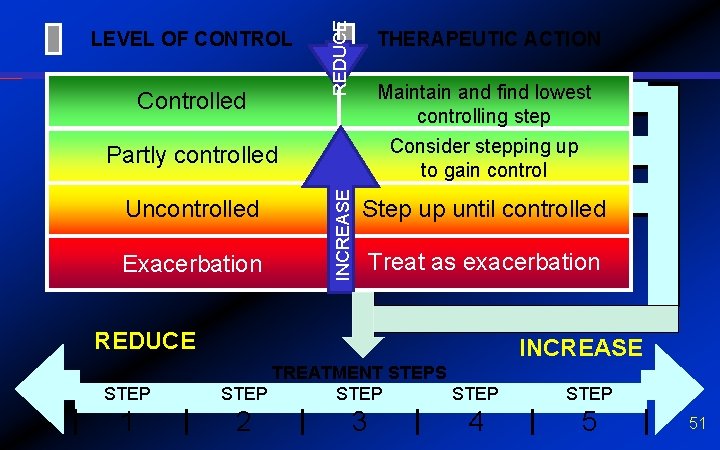
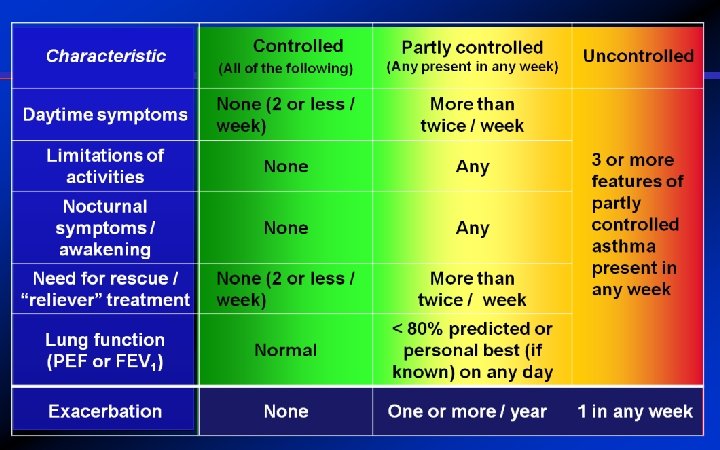
Controlled REDUCE LEVEL OF CONTROL THERAPEUTIC ACTION Maintain and find lowest controlling step Consider stepping up to gain control Uncontrolled Exacerbation INCREASE Partly controlled Step up until controlled Treat as exacerbation REDUCE STEP 1 INCREASE TREATMENT STEPS STEP 2 3 4 STEP 5 51
52
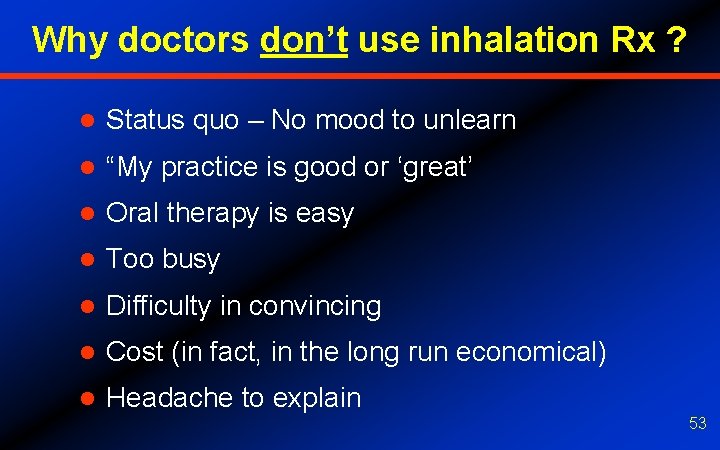
Why doctors don’t use inhalation Rx ? l Status quo – No mood to unlearn l “My practice is good or ‘great’ l Oral therapy is easy l Too busy l Difficulty in convincing l Cost (in fact, in the long run economical) l Headache to explain 53
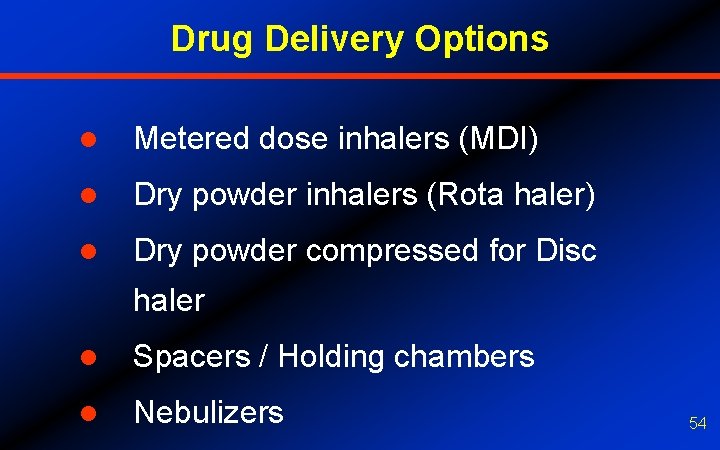
Drug Delivery Options l Metered dose inhalers (MDI) l Dry powder inhalers (Rota haler) l Dry powder compressed for Disc haler l Spacers / Holding chambers l Nebulizers 54
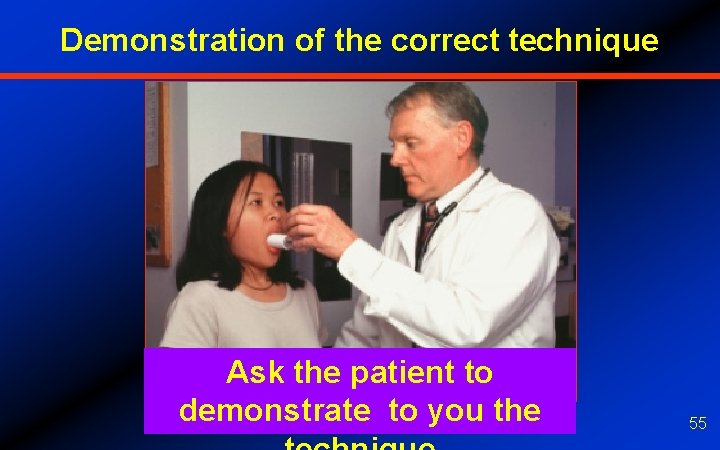
Demonstration of the correct technique Ask the patient to demonstrate to you the 55
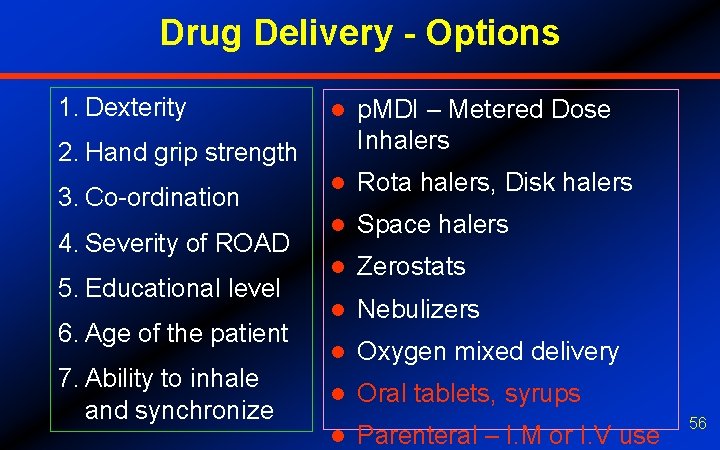
Drug Delivery - Options 1. Dexterity l p. MDI – Metered Dose Inhalers l Rota halers, Disk halers l Space halers l Zerostats l Nebulizers l Oxygen mixed delivery l Oral tablets, syrups l Parenteral – I. M or I. V use 2. Hand grip strength 3. Co-ordination 4. Severity of ROAD 5. Educational level 6. Age of the patient 7. Ability to inhale and synchronize 56
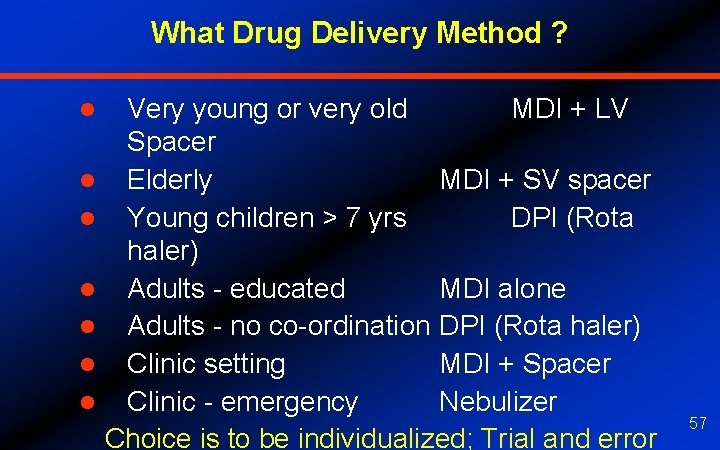
What Drug Delivery Method ? Very young or very old MDI + LV Spacer l Elderly MDI + SV spacer l Young children > 7 yrs DPI (Rota haler) l Adults - educated MDI alone l Adults - no co-ordination DPI (Rota haler) l Clinic setting MDI + Spacer l Clinic - emergency Nebulizer Choice is to be individualized; Trial and error l 57
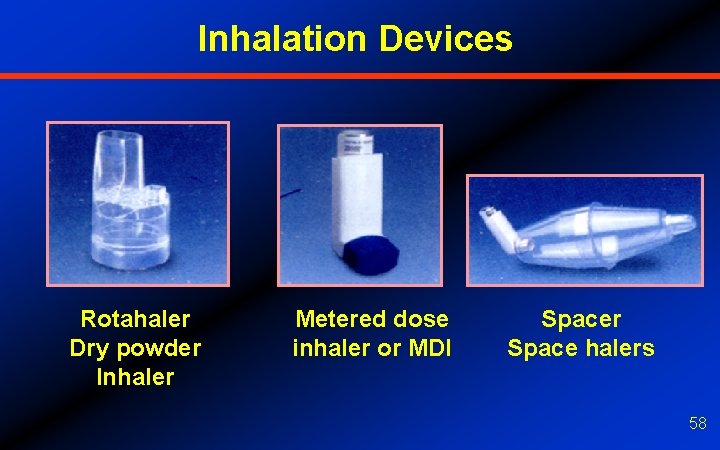
Inhalation Devices Rotahaler Dry powder Inhaler Metered dose inhaler or MDI Spacer Space halers 58
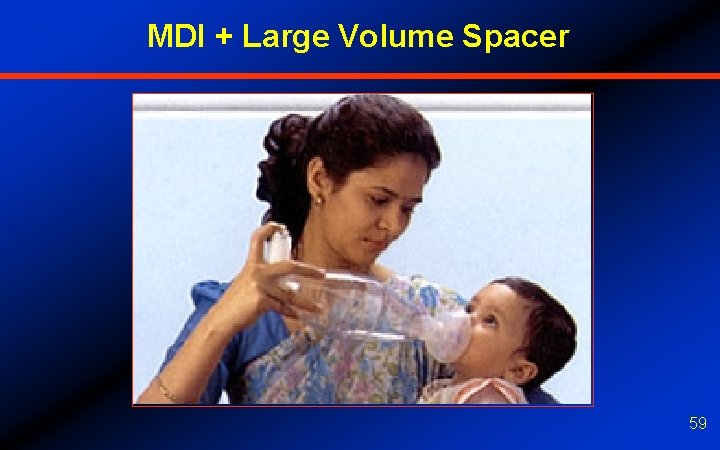
MDI + Large Volume Spacer 59
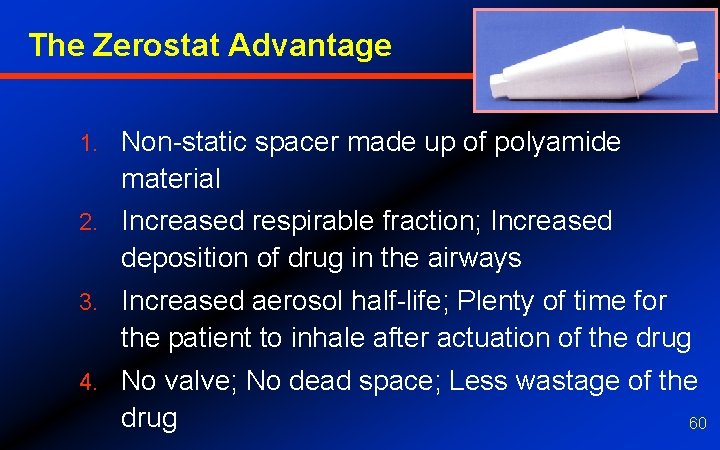
The Zerostat Advantage 1. Non-static spacer made up of polyamide material 2. Increased respirable fraction; Increased deposition of drug in the airways 3. Increased aerosol half-life; Plenty of time for the patient to inhale after actuation of the drug 4. No valve; No dead space; Less wastage of the drug 60
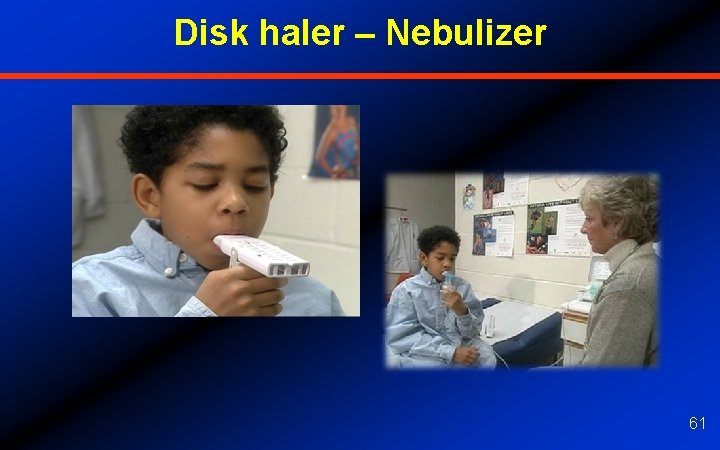
Disk haler – Nebulizer 61
Nebulizer Therapy 1. Severe breathlessness despite using inhalers 2. Assessment should be done for improvement 3. Choice between a facemask or mouth piece 4. Equipment servicing and support are essential 5. 0. 5 ml of Ipa + 0. 5 ml of Sal + 5 ml of Nacl (not DW) 6. If decided to use ICS (FEV 1 < 50%) - 0. 5 ml of Buduso. 62
Patient Education l Explain nature of the disease (inflammation) l Explain action of prescribed drugs l Stress the need for regular, long-term therapy l That way only we can convince l Allay fears and concerns l Peak flow testing 63
Patient Education l Asthma is a common disorder l It can happen to anybody, May not be life long l It is not caused by supernatural forces l Asthma is not contagious, All kin needn’t be affected l Recurrent attacks of cough with or without wheeze l Between attacks people with asthma lead 64
Patient Education l Can be effectively controlled, although can’t be cured. l Effective asthma management programs include education, objective measures of lung function, environmental control, and pharmacologic therapy. l A stepwise approach to pharmacologic therapy is recommended. The aim is to 65

Yours Faithfully Urges l A little time spent talking to our patients – really is a great investment. l This may make all the difference between a happy life and pulmonary invalidity 66

Life Time Happiness

Can we dare to make them pulmonary invalids ? Let Us Give Them Life Time Happiness 68
- Slides: 68