
British Literature Unit One Old English Beowulf Elegies
British Literature Unit One: Old English, Beowulf, Elegies and History
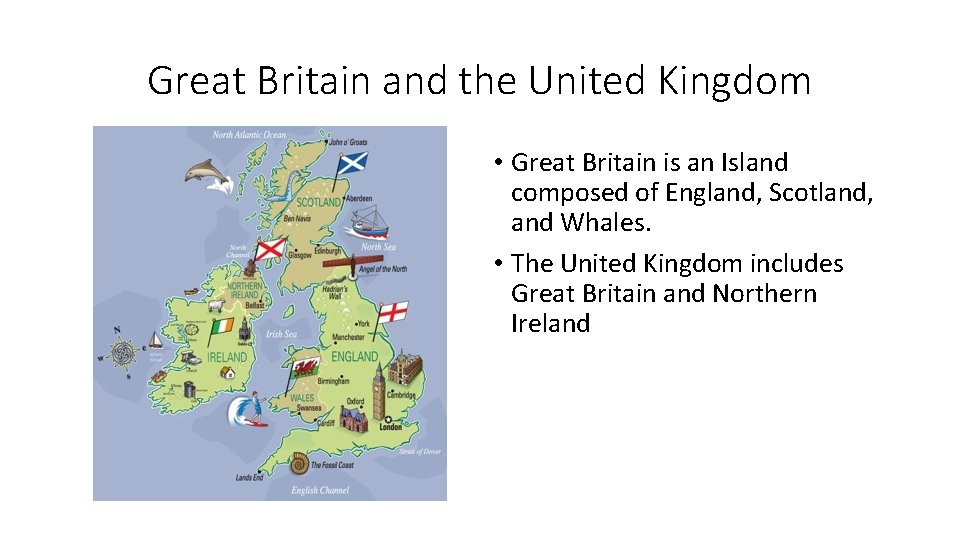
Great Britain and the United Kingdom • Great Britain is an Island composed of England, Scotland, and Whales. • The United Kingdom includes Great Britain and Northern Ireland
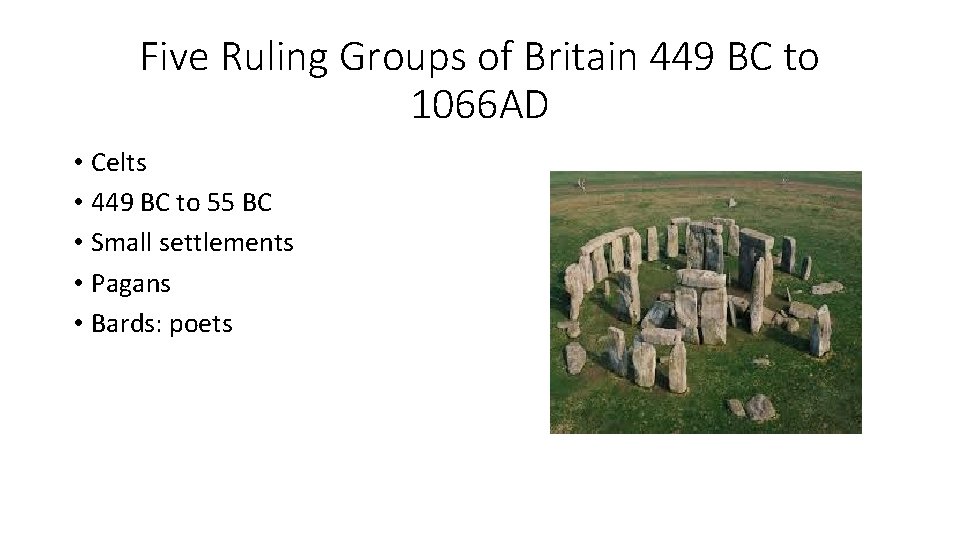
Five Ruling Groups of Britain 449 BC to 1066 AD • Celts • 449 BC to 55 BC • Small settlements • Pagans • Bards: poets

55 BC to 407 AD • The Romans • Introduced both Latin and Christianity • Large Army • Settlements at the control of the military and church • Had to leave to defend the falling empire.
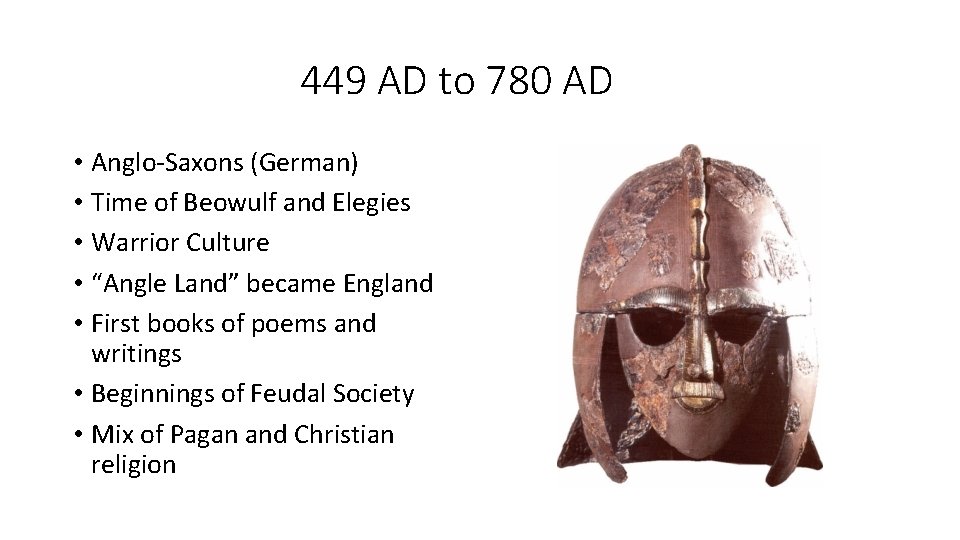
449 AD to 780 AD • Anglo-Saxons (German) • Time of Beowulf and Elegies • Warrior Culture • “Angle Land” became England • First books of poems and writings • Beginnings of Feudal Society • Mix of Pagan and Christian religion
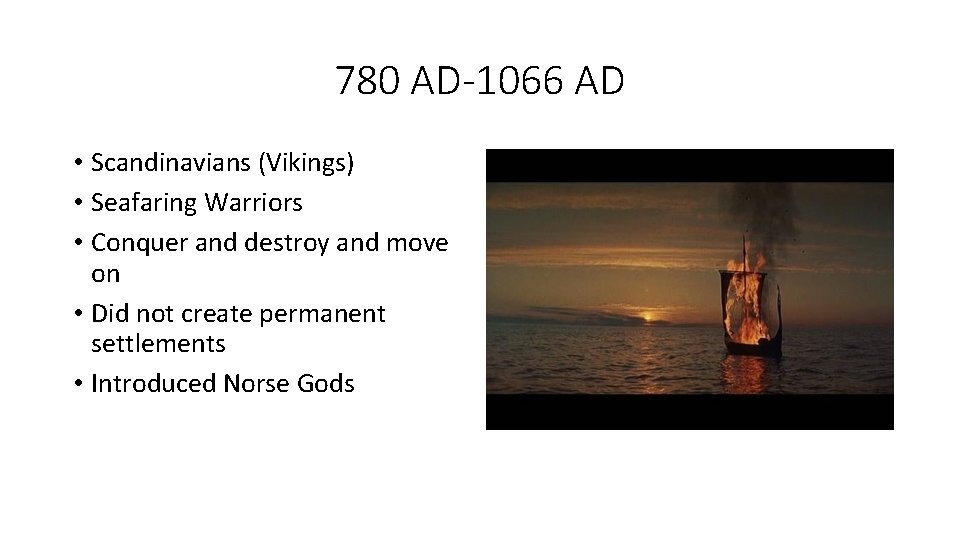
780 AD-1066 AD • Scandinavians (Vikings) • Seafaring Warriors • Conquer and destroy and move on • Did not create permanent settlements • Introduced Norse Gods
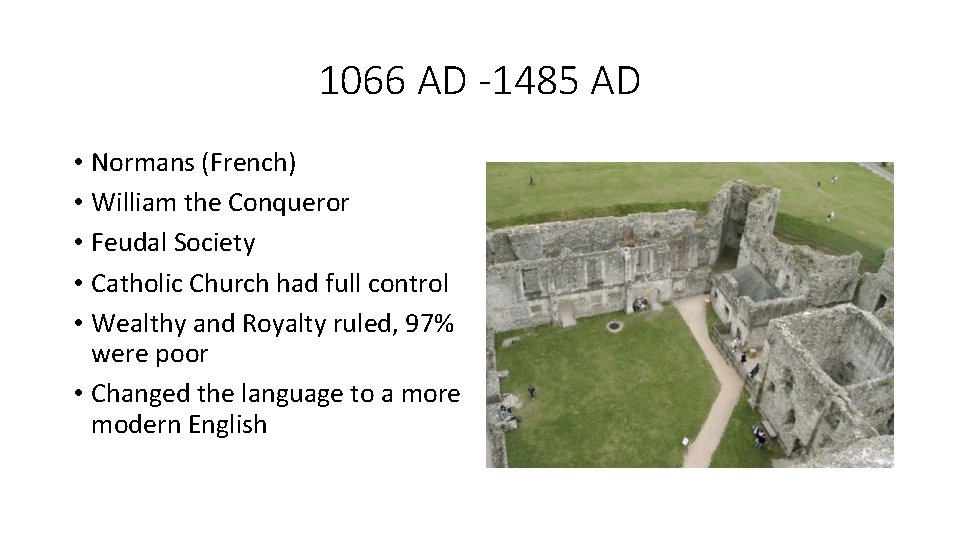
1066 AD -1485 AD • Normans (French) • William the Conqueror • Feudal Society • Catholic Church had full control • Wealthy and Royalty ruled, 97% were poor • Changed the language to a more modern English
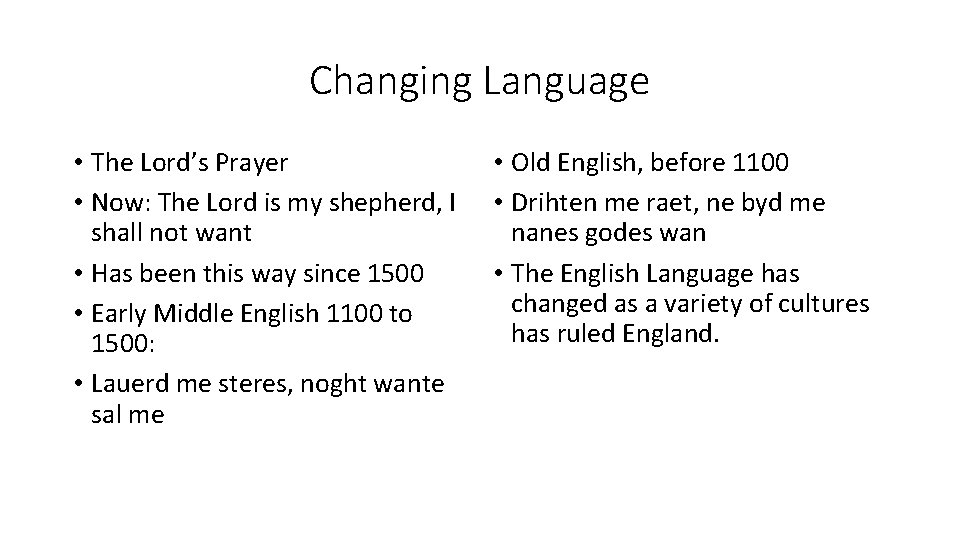
Changing Language • The Lord’s Prayer • Now: The Lord is my shepherd, I shall not want • Has been this way since 1500 • Early Middle English 1100 to 1500: • Lauerd me steres, noght wante sal me • Old English, before 1100 • Drihten me raet, ne byd me nanes godes wan • The English Language has changed as a variety of cultures has ruled England.
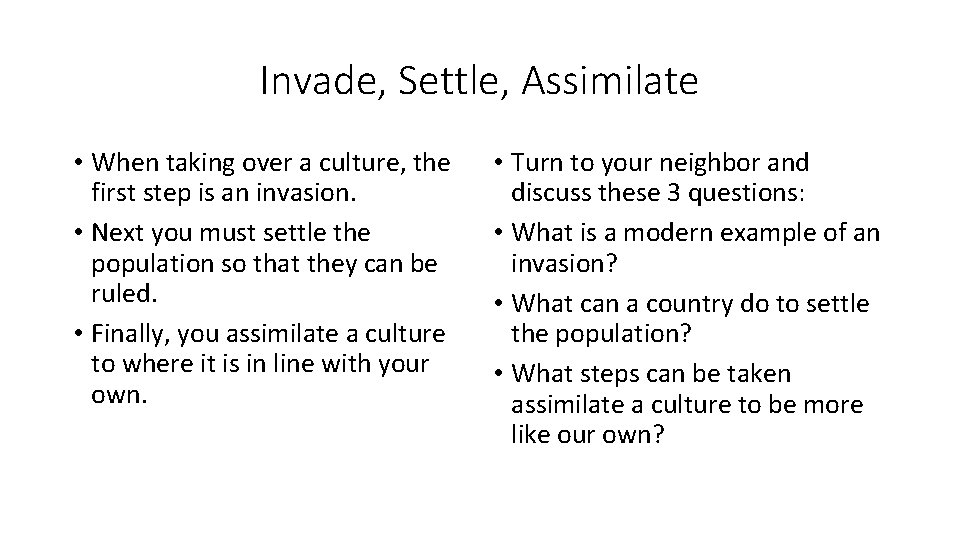
Invade, Settle, Assimilate • When taking over a culture, the first step is an invasion. • Next you must settle the population so that they can be ruled. • Finally, you assimilate a culture to where it is in line with your own. • Turn to your neighbor and discuss these 3 questions: • What is a modern example of an invasion? • What can a country do to settle the population? • What steps can be taken assimilate a culture to be more like our own?
Assimilation
Beowulf, Elegies, and Anglo-Saxon Culture • Important Ideas: • Mead Hall: gathering place for warriors • The idea of “HOME” • The “Sea Road” • Loyalty • Pagan Beliefs • The Hero’s Code • Proving yourself as a man • Living by guiding principles • Punishment for breaking the code • Changing culture
Elegies • Poems that mourn the loss of someone or something • Usually reflective of isolation, being cut off from that which one loves • Regret, bitterness, and redemption are major themes • Literary Devices • Alliteration • Kennings • Caesuras • Assonance
The Epic • Turn to your partner and answer the following: • What epic have you read in school, and what made it an epic? • Elements of an Epic • Epic Hero • Quest • Valorous deeds • Divine Intervention • Great Events
Why do we study the Epic? • Think about what we just discussed about epics! • On a sheet of paper: • List 3 modern examples of epics • List 3 modern epic heroes • List 1 reason why epics are so popular • Examples of epics: • Comic book heroes: Iron Man, Captain America, Spider Man, Deadpool and the X-Men • Stories: Comics, Star Wars, Big Movie Franchises: Star Trek etc.
Epic Conventions • Begin “In Medias Res”: In the middle • Opens by stating a purpose, invoking a muse • Serious in tone and lofty in style
Beowulf • Anglo-Saxon tale of a hero • Covers his rise to hero and confronting his mortality in old age • Originally meant to be told (sung) to music • Combines many cultural and religious elements • Contains many pagan and supernatural elements • Exemplifies the warrior culture • Places an importance on the hero’s code • The movie is nothing like the story. It tries to create a “Hollywood or Americanized” story.
- Slides: 16