
Bringing the worlds largest science experiment into the
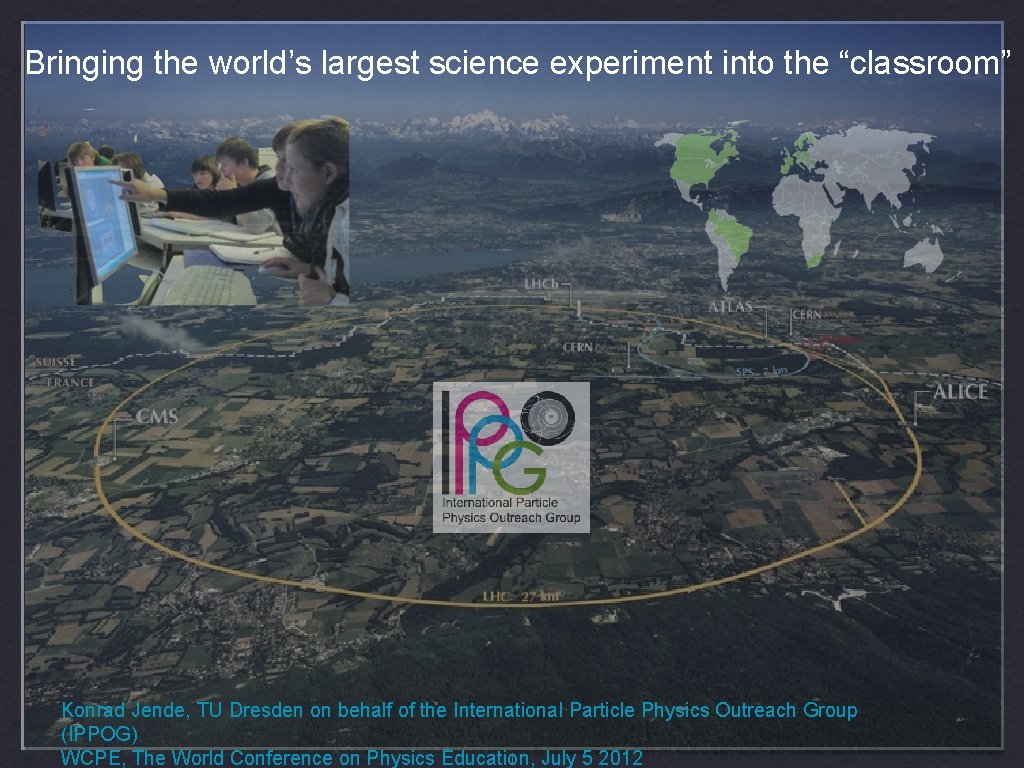
Bringing the world’s largest science experiment into the “classroom” Konrad Jende, TU Dresden on behalf of the International Particle Physics Outreach Group (IPPOG) 1 WCPE, The World Conference on Physics Education, July 5 2012
Outline Introduction IPPOG’s International Masterclasses Physics Analyses Evaluation Participation Summary 2
IPPOG’s International Masterclasses Concept Students (15 -19 years old) spend 1 day at research institute, experience science from scientists “The Master” and carry out measurements based on analyses of real data from particle physics experiments, discuss their results with colleagues basic idea from UK (1996, Roger Barlow et al. ) FUNDED BY: + MASTERCLASSES COORDINATOR LHC UPGRADE DVD PRODUCTION US PARTNER EXPERIMENTAL DATA PROGRAMME VIDEOCONFERENCE 3 NATIONAL FUNDING AGENCIES
IPPOG’s International Masterclasses Objectives stimulate students interest in physics demonstrate scientific research process let students explore fundamental forces and building blocks of matter offer authentic experience 4
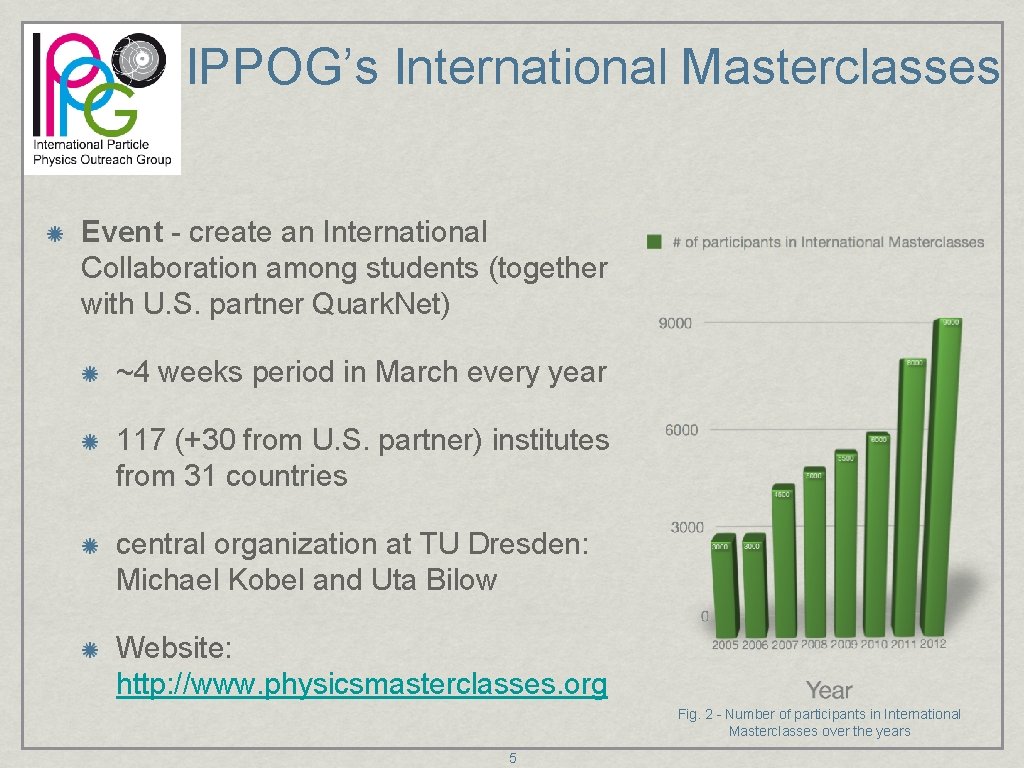
IPPOG’s International Masterclasses Event - create an International Collaboration among students (together with U. S. partner Quark. Net) ~4 weeks period in March every year 117 (+30 from U. S. partner) institutes from 31 countries central organization at TU Dresden: Michael Kobel and Uta Bilow Website: http: //www. physicsmasterclasses. org Fig. 2 - Number of participants in International Masterclasses over the years 5
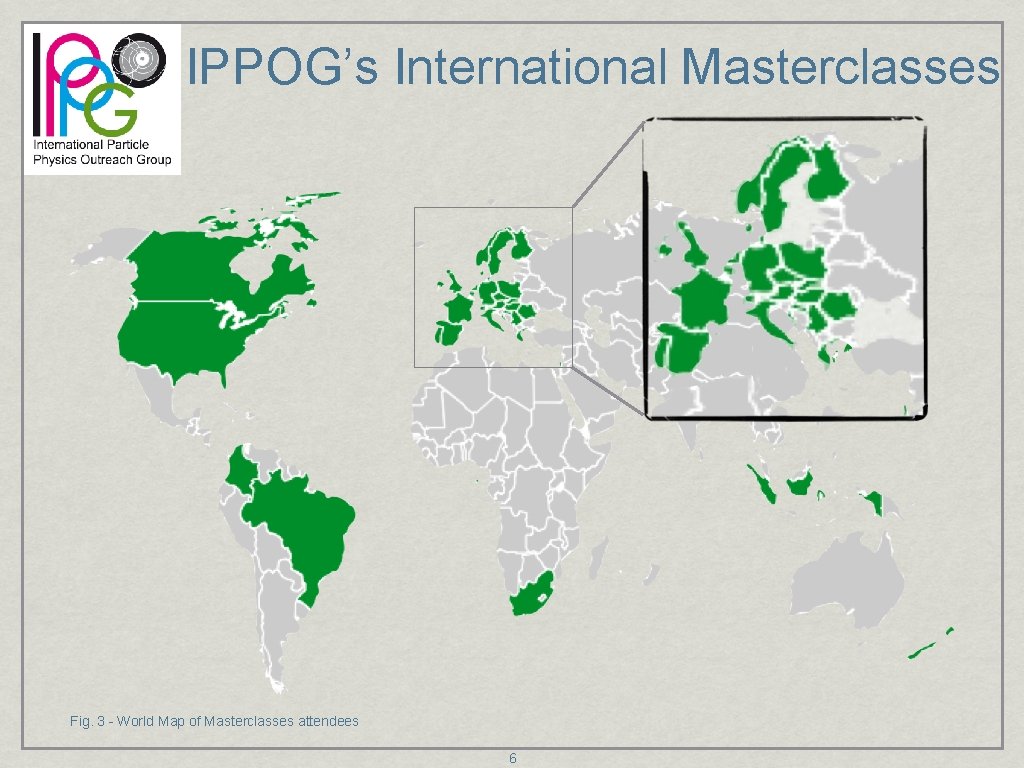
IPPOG’s International Masterclasses Fig. 3 - World Map of Masterclasses attendees 6
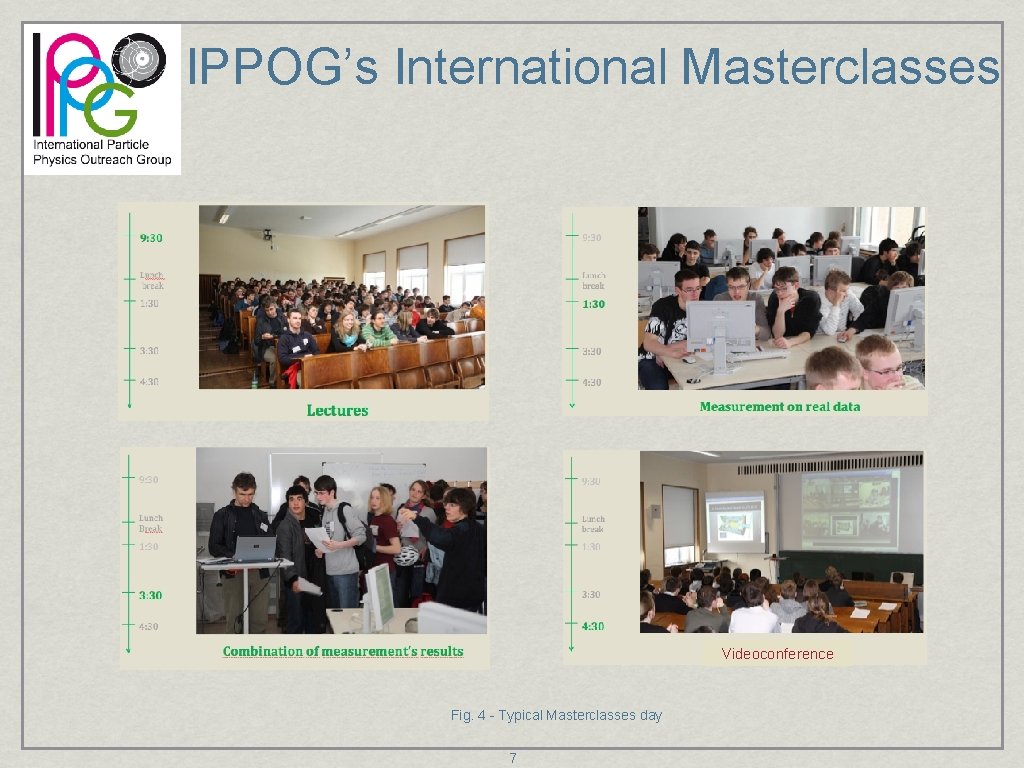
IPPOG’s International Masterclasses Videoconference Fig. 4 - Typical Masterclasses day 7
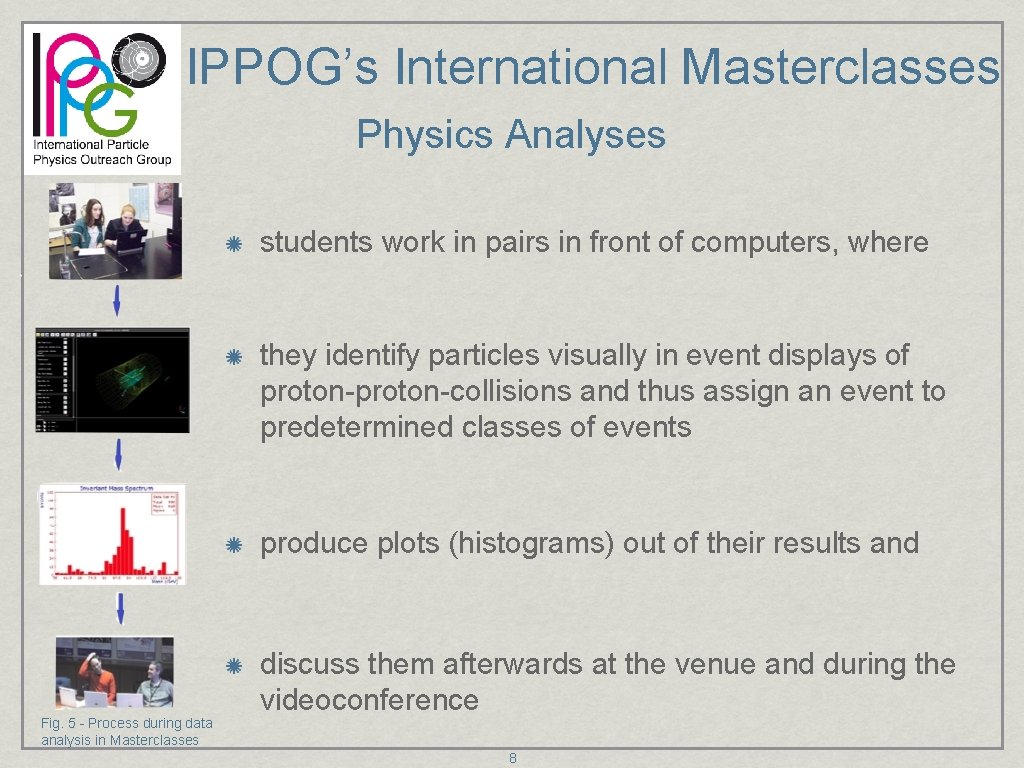
IPPOG’s International Masterclasses Physics Analyses students work in pairs in front of computers, where they identify particles visually in event displays of proton-collisions and thus assign an event to predetermined classes of events produce plots (histograms) out of their results and Fig. 5 - Process during data analysis in Masterclasses discuss them afterwards at the venue and during the videoconference 8
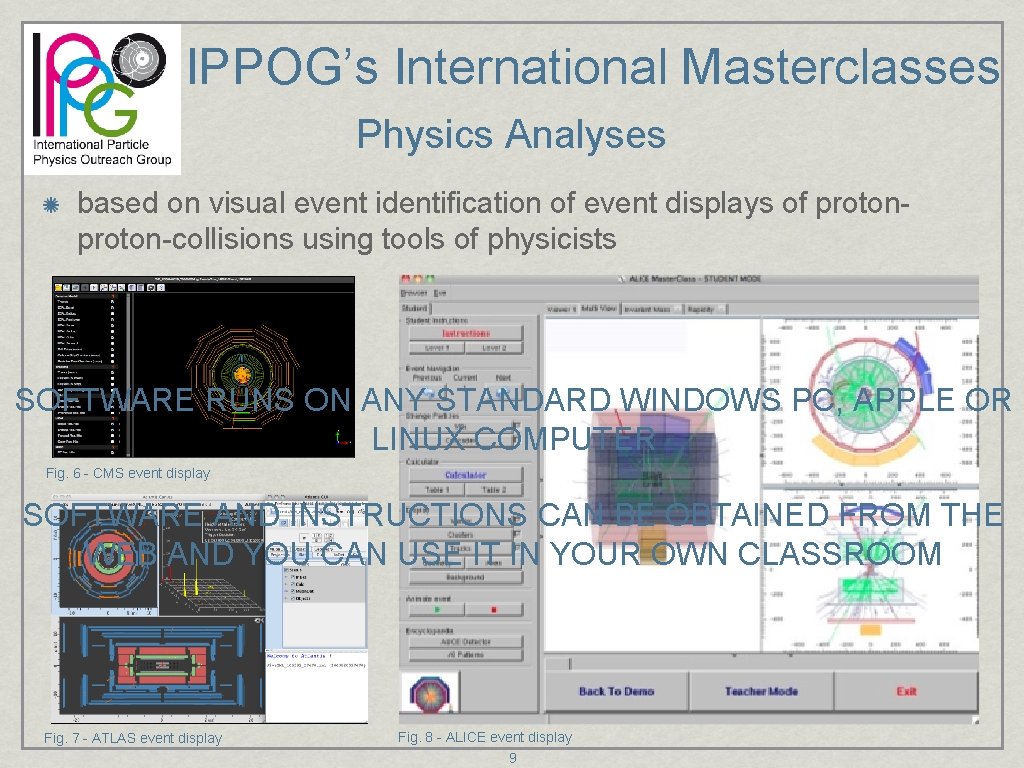
IPPOG’s International Masterclasses Physics Analyses based on visual event identification of event displays of proton-collisions using tools of physicists SOFTWARE RUNS ON ANY STANDARD WINDOWS PC, APPLE OR LINUX COMPUTER Fig. 6 - CMS event display SOFTWARE AND INSTRUCTIONS CAN BE OBTAINED FROM THE WEB AND YOU CAN USE IT IN YOUR OWN CLASSROOM Fig. 7 - ATLAS event display Fig. 8 - ALICE event display 9
IPPOG’s International Masterclasses Physics Analyses based on visual event identification of event displays of proton-collisions using tools of physicists various exercises/measurements on real data are provided by the LHC experiments ALICE, ATLAS and CMS, where students: identify particles/events by using different techniques (e. g. invariant mass calculation, looking at momentum conservation) identify particles/events in order to explore the inner structure of the proton, search for not yet discovered particles (with the help of simulated data) 10
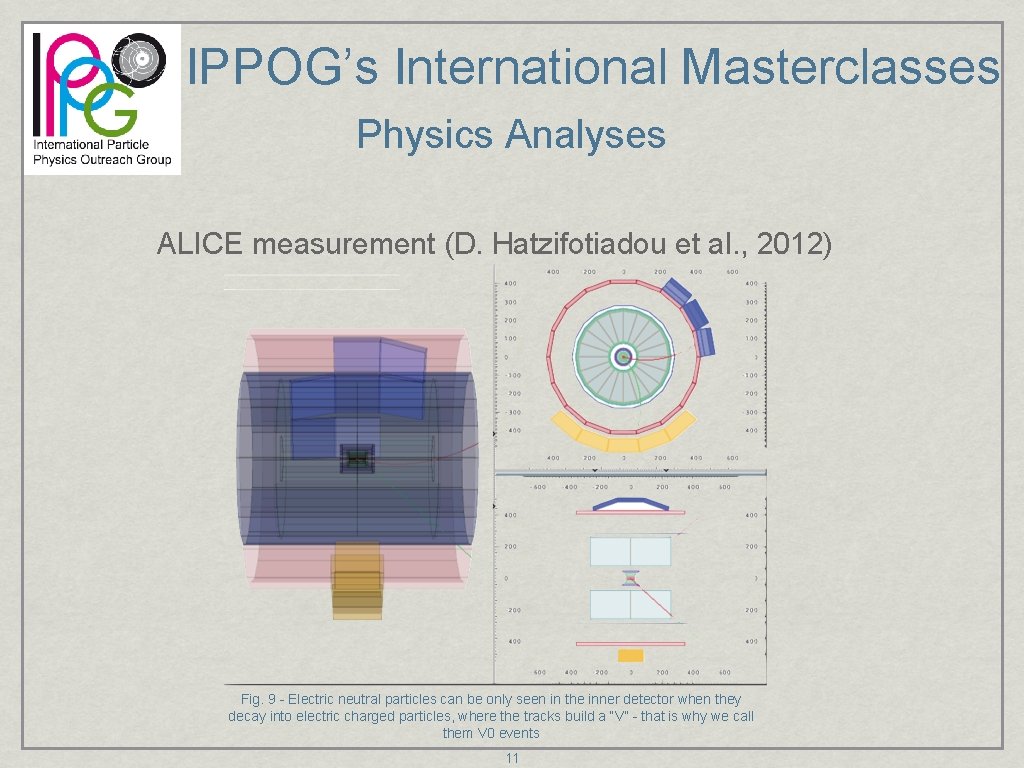
IPPOG’s International Masterclasses Physics Analyses ALICE measurement (D. Hatzifotiadou et al. , 2012) Fig. 9 - Electric neutral particles can be only seen in the inner detector when they decay into electric charged particles, where the tracks build a “V” - that is why we call them V 0 events 11
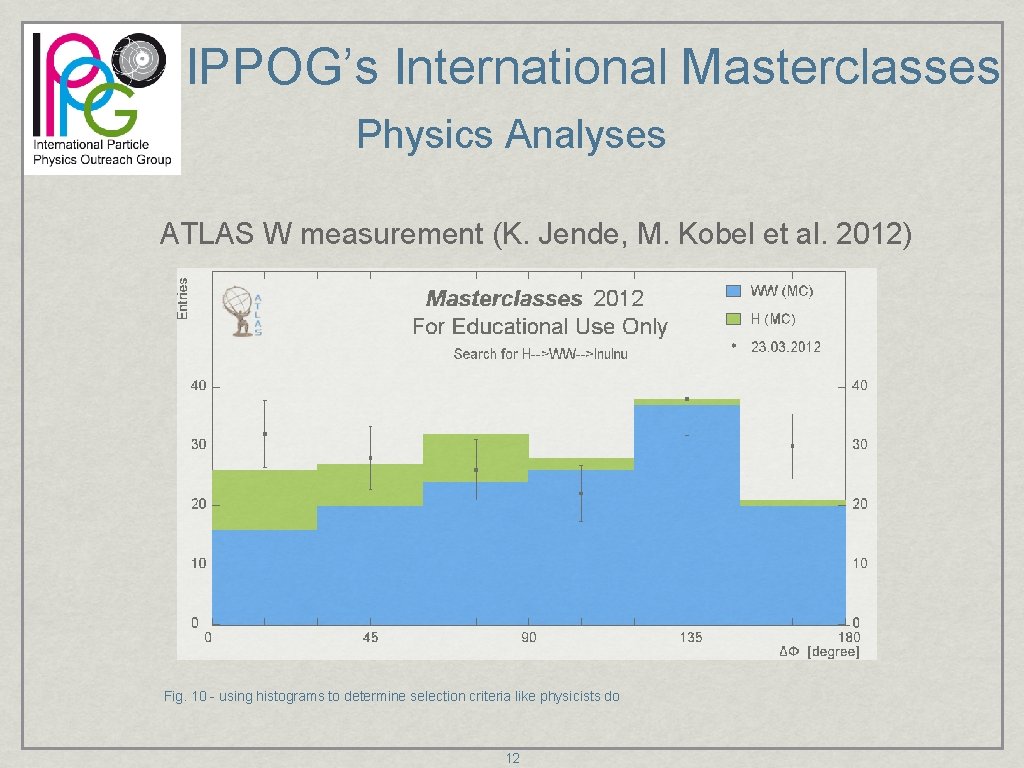
IPPOG’s International Masterclasses Physics Analyses ATLAS W measurement (K. Jende, M. Kobel et al. 2012) Fig. 10 - using histograms to determine selection criteria like physicists do 12
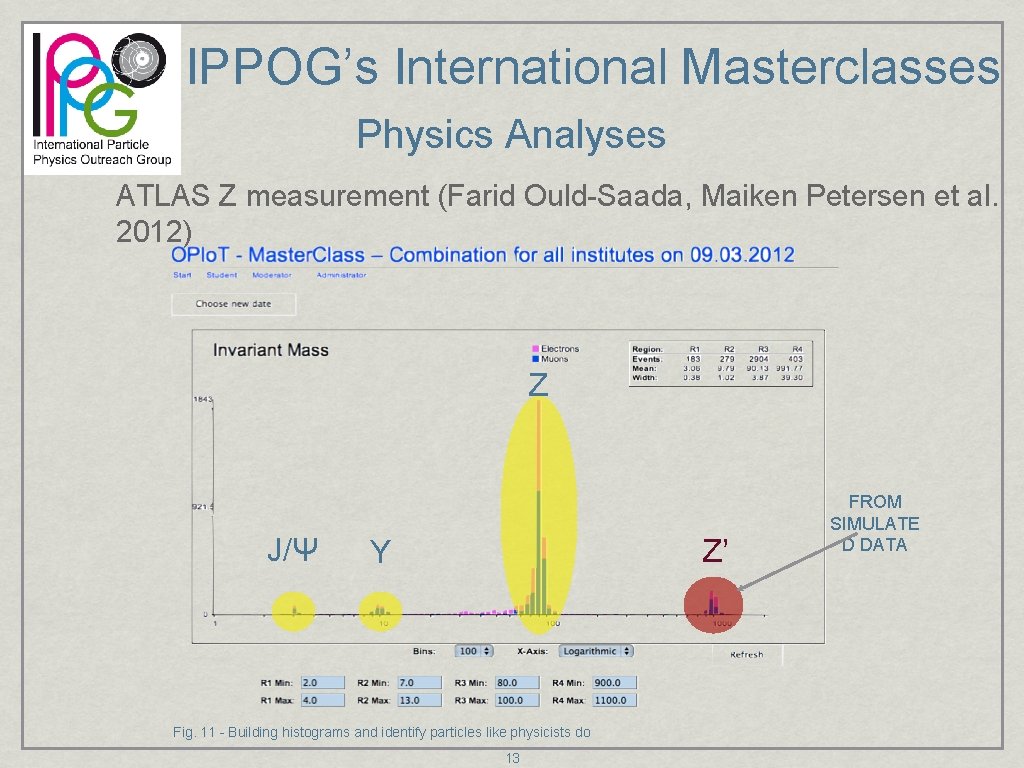
IPPOG’s International Masterclasses Physics Analyses ATLAS Z measurement (Farid Ould-Saada, Maiken Petersen et al. 2012) Z J/Ψ Z’ Υ Fig. 11 - Building histograms and identify particles like physicists do 13 FROM SIMULATE D DATA
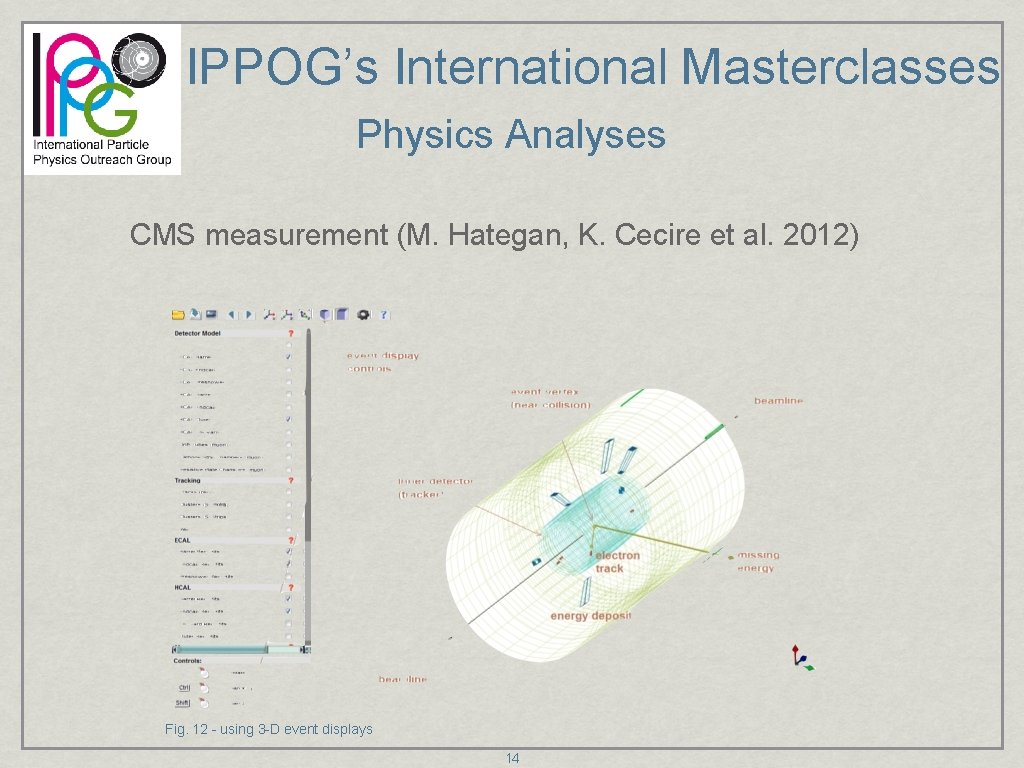
IPPOG’s International Masterclasses Physics Analyses CMS measurement (M. Hategan, K. Cecire et al. 2012) Fig. 12 - using 3 -D event displays 14
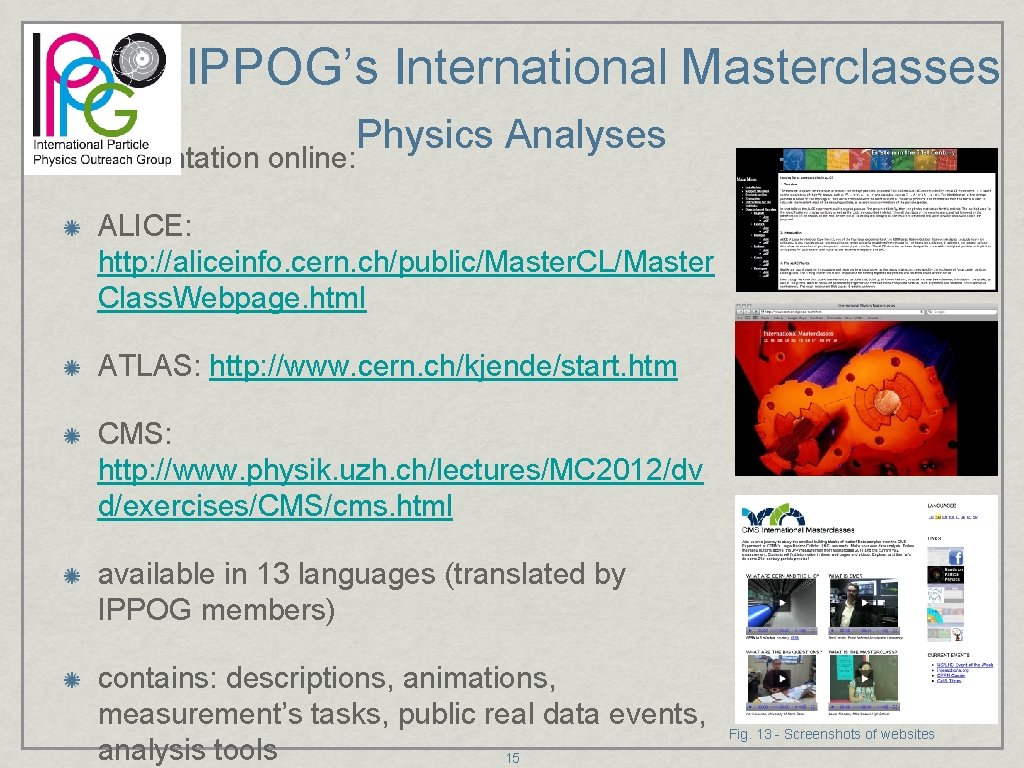
IPPOG’s International Masterclasses documentation online: Physics Analyses ALICE: http: //aliceinfo. cern. ch/public/Master. CL/Master Class. Webpage. html ATLAS: http: //www. cern. ch/kjende/start. htm CMS: http: //www. physik. uzh. ch/lectures/MC 2012/dv d/exercises/CMS/cms. html available in 13 languages (translated by IPPOG members) contains: descriptions, animations, measurement’s tasks, public real data events, analysis tools 15 Fig. 13 - Screenshots of websites
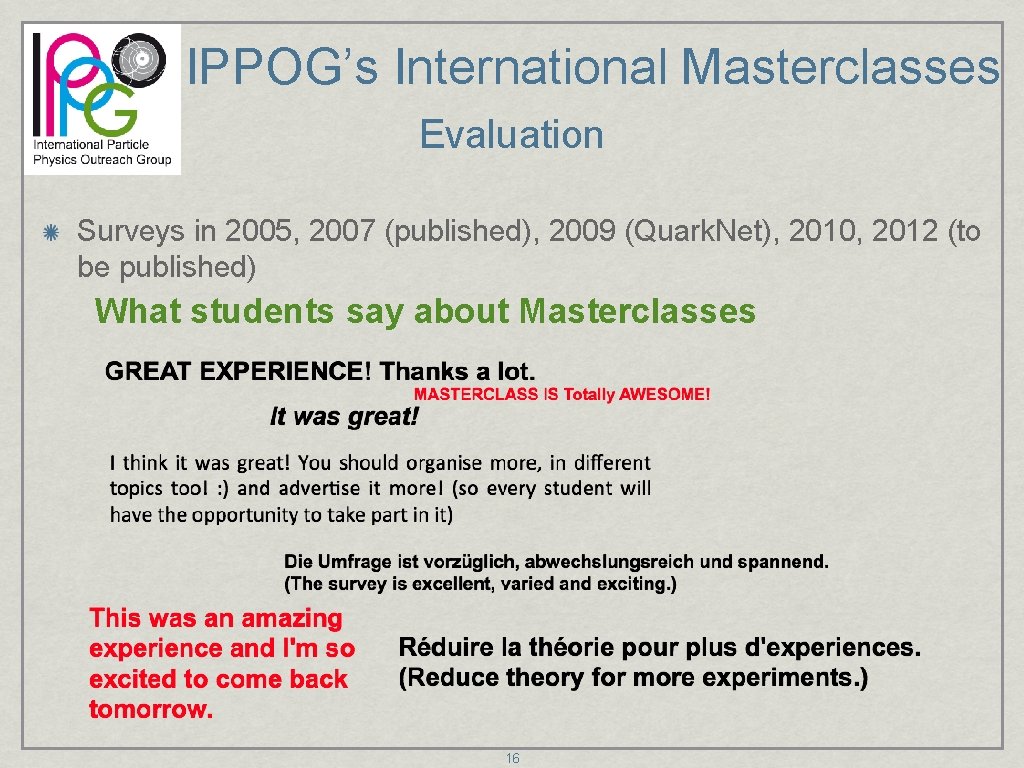
IPPOG’s International Masterclasses Evaluation Surveys in 2005, 2007 (published), 2009 (Quark. Net), 2010, 2012 (to be published) What students say about Masterclasses 16
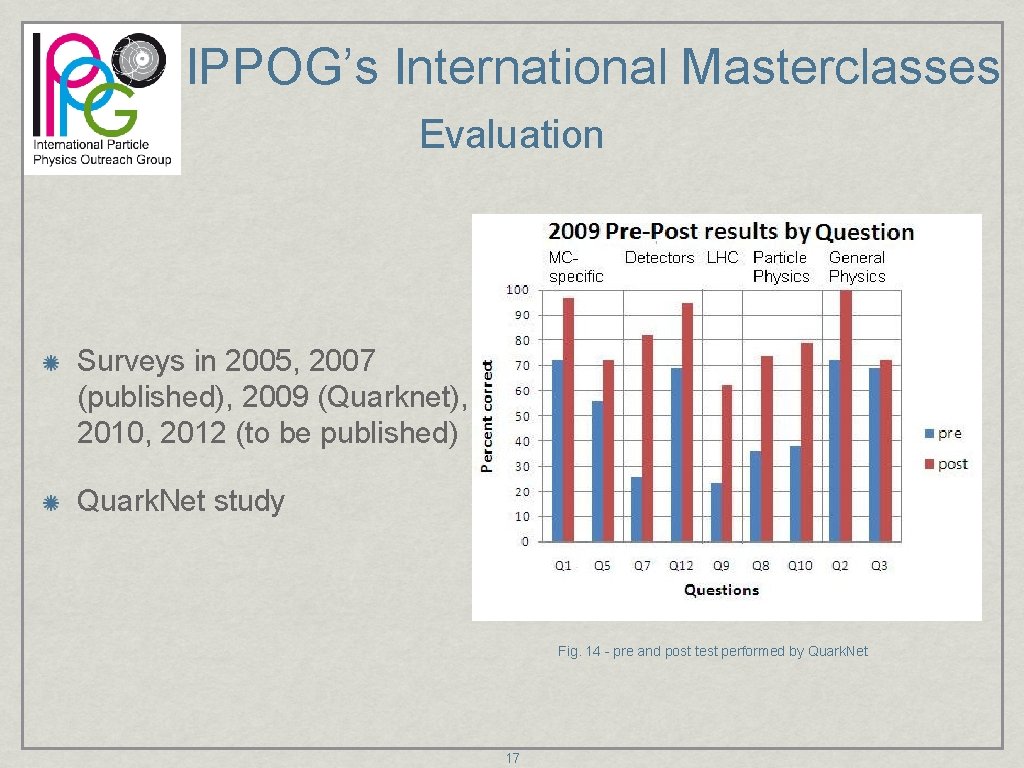
IPPOG’s International Masterclasses Evaluation Surveys in 2005, 2007 (published), 2009 (Quarknet), 2010, 2012 (to be published) Quark. Net study Fig. 14 - pre and post test performed by Quark. Net 17
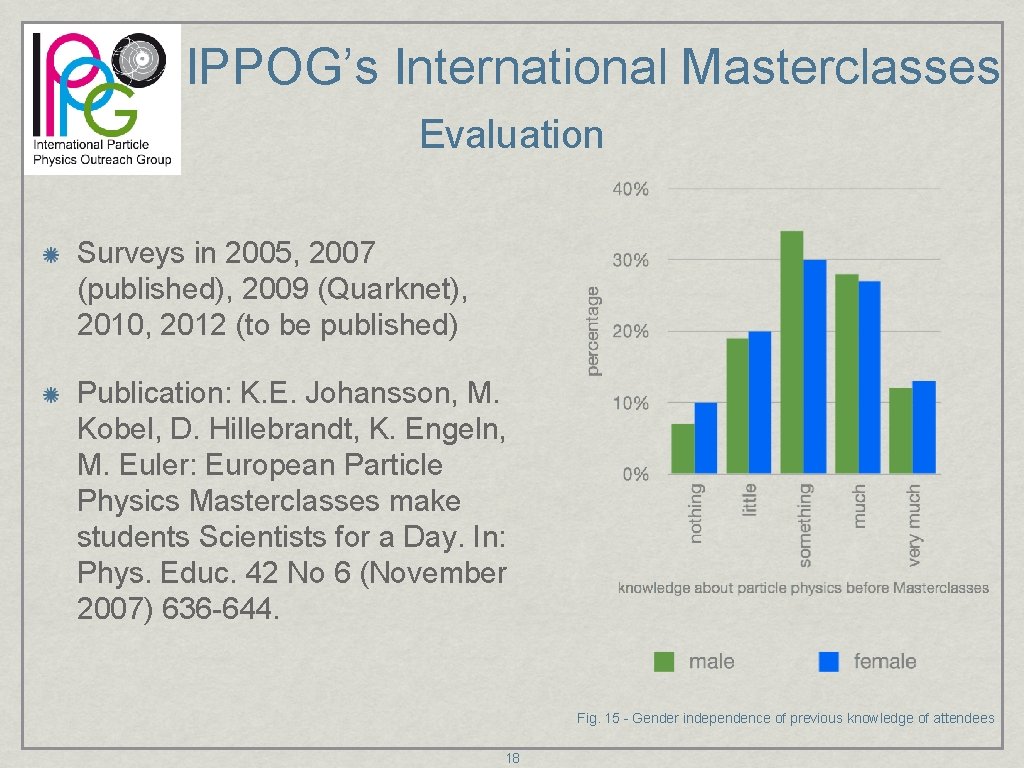
IPPOG’s International Masterclasses Evaluation Surveys in 2005, 2007 (published), 2009 (Quarknet), 2010, 2012 (to be published) Publication: K. E. Johansson, M. Kobel, D. Hillebrandt, K. Engeln, M. Euler: European Particle Physics Masterclasses make students Scientists for a Day. In: Phys. Educ. 42 No 6 (November 2007) 636 -644. Fig. 15 - Gender independence of previous knowledge of attendees 18
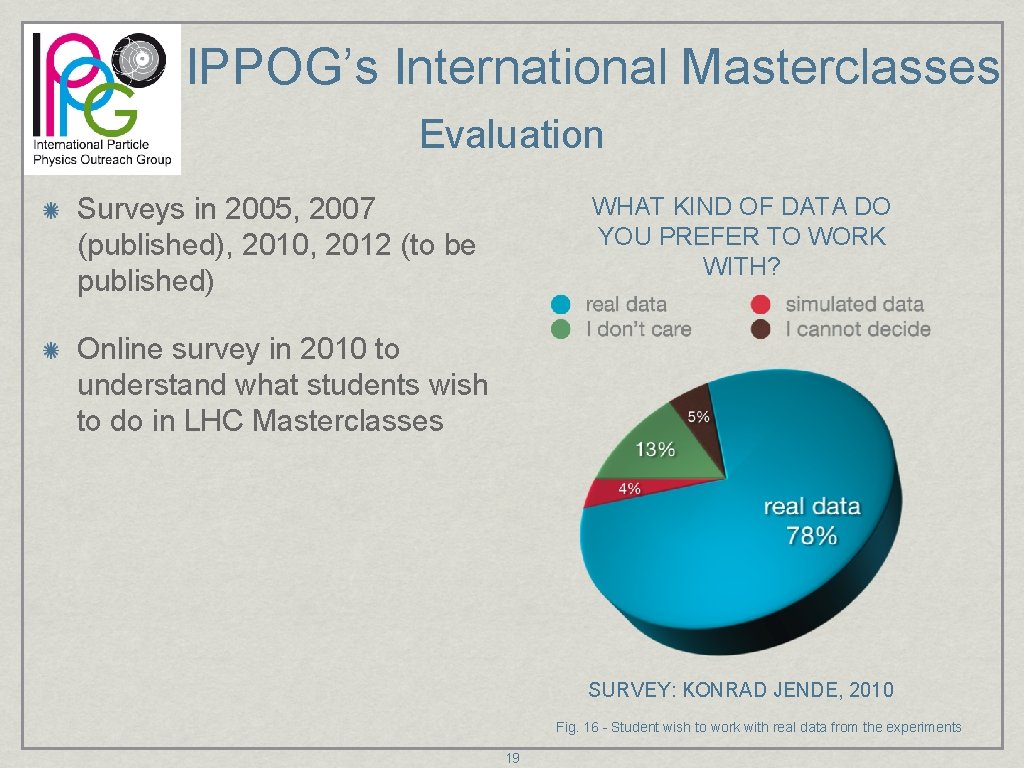
IPPOG’s International Masterclasses Evaluation Surveys in 2005, 2007 (published), 2010, 2012 (to be published) WHAT KIND OF DATA DO YOU PREFER TO WORK WITH? Online survey in 2010 to understand what students wish to do in LHC Masterclasses SURVEY: KONRAD JENDE, 2010 Fig. 16 - Student wish to work with real data from the experiments 19
IPPOG’s International Masterclasses Participation How you can get involved. . . Physics Institutes willing to host a Masterclass. . . Schools, teachers, students who want to attend a Masterclass. . . Please see our website http: //www. physicsmasterclasses. org or contact the organizer by e-mail via masterclass@physik. tu-dresden. de How we can benefit from each other. . . Outreach Database was established to share material related to particle physics (videos, brochures, ideas for hands-on activities, posters, talks available in various languages): Use it, share it, upload your material! Please see: http: //ippog. web. cern. ch/resources or send an e-mail to ippog. admin@cern. ch 20
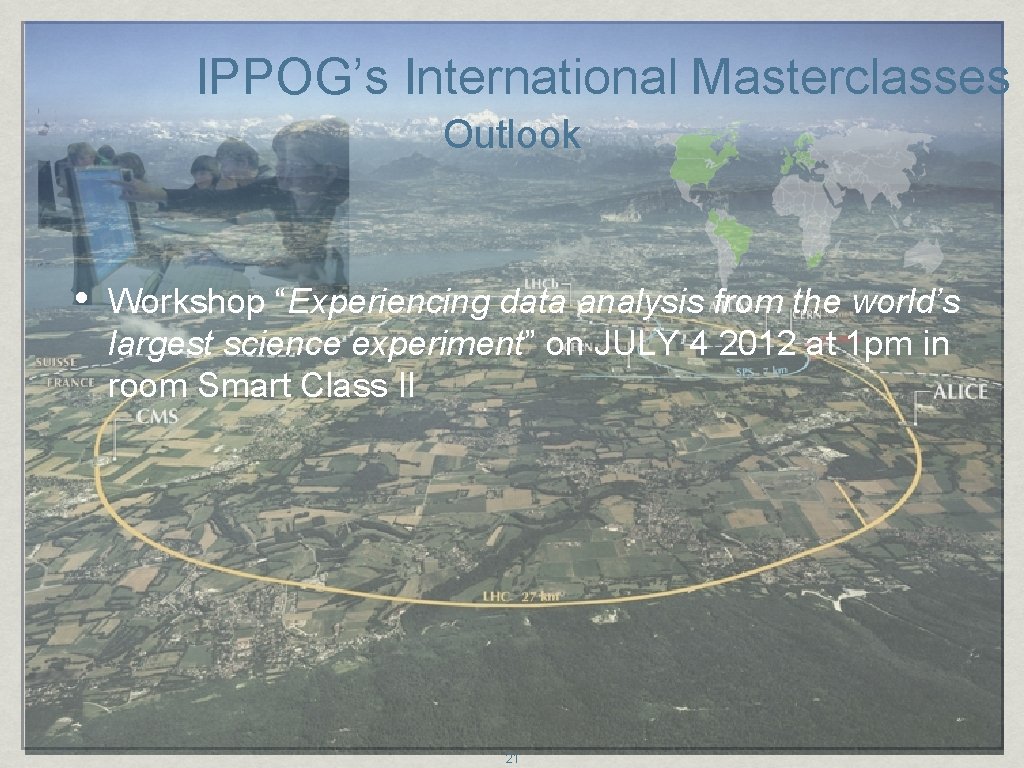
IPPOG’s International Masterclasses Outlook • Workshop “Experiencing data analysis from the world’s largest science experiment” on JULY 4 2012 at 1 pm in room Smart Class II 21
IPPOG’s International Masterclasses Summary • world-wide collaboration of 15 -19 years old high-school students experiencing cutting-edge particle physics • analyzing real data from “today” and largest science experiments on earth • discussing results and reflecting activities • going home with the feeling “we learned something about today’s research” • hopefully coming back to universities to study physics or science subjects FUNDED BY: + COORDINATOR LHC UPGRADE DVD PRODUCTION US PARTNER EXPERIMENTAL DATA PROGRAMME VIDEOCONFERENCE 22 NATIONAL FUNDING AGENCIES
IPPOG’s International Masterclasses Back up slides Taking the idea further (by IPPOG members) International Masterclasses - Physics Analyses Technical Platforms and tools 23
IPPOG’s International Masterclasses Taking the idea further (by IPPOG members) Germany - Netzwerk Teilchenwelt (ran since 2010) Masterclasses-like activity (Ph. D. students go into schools; 120 MC in 2011) 2011: eight (further developing) teacher programmes in Germany, two Teacher Programmes at CERN, two programmes for students at CERN, 9 research projects done by students Please see: http: //www. teilchenwelt. de for further information CMS (under development) toolkit with software, real data toolkit + local physicist are sent to school 24
IPPOG’s International Masterclasses Physics Analyses - Technical Platforms and tools ATLAS MINERVA (M. Wielers, P. Watkins, T. Mc. Laughlan et al. ) based on ATLANTIS: http: //atlas-minerva. web. cern. ch HYPATIA (C. Kourkoumelis et al. ) based on ATLANTIS: http: //hypatia. phys. uoa. gr CMS i. Spy online (P. Nguyen, T. Mc. Cauley et al. ) in collaboration with Quark. Net (US): http: //iguana. web. cern. ch/iguana/ispy/ ALICE masterclass application (P. Debski, Y. Foka et al. ) simplified ALICE event display in ROOT environment: http: //aliceinfo. cern. ch/public/Master. CL/Master. Class. Installation. html 25
Bibliography 1. K. E. Johansson, M. Kobel, D. Hillebrandt, K. Engeln, M. Euler: European Particle Physics Masterclasses make Students Scientists for a Day. In: Phys. Educ. 42 No 6 (November 2007) 636 -644. • C. Ilgner, T. Trefzger: Ziele der Forschung am Large Hadron Collider. In: H. Schwarze (publisher): Large Hadron Collider. Themenheft aus "Praxis der Naturwissenschaften - Physik in der Schule„ 60 No 2 (März 2011 ) 5 -16. 26
- Slides: 26