
Bringing the use of assessment to the fore
Bringing the use of assessment to the fore in 2020/21: CLF October conference 22. 10. 20
Agenda Quiz Intro (Kate) Activity 1: Reading and sharing (in Academy Teams) Activity 2: Planning a series of learning (in Academy Teams Sharing of learning – RA leaders will share a piece of work from each academy in teams of 2/3 Back together with Kate in this Teams meeting.
Quiztastic! • Microsoft Forms • https: //forms. office. com/Pages/Response. Page. aspx? id=Vi. Ob py. SMIkm 0 IMbib. Qt. Akas. Xkb. AJvod. Ekq. Wo. I 7 st. T 6 t. UMk. RQWj. ZX Mz. NYUUM 0 TVFa. WVBZTl. VTRDFUMi 4 u
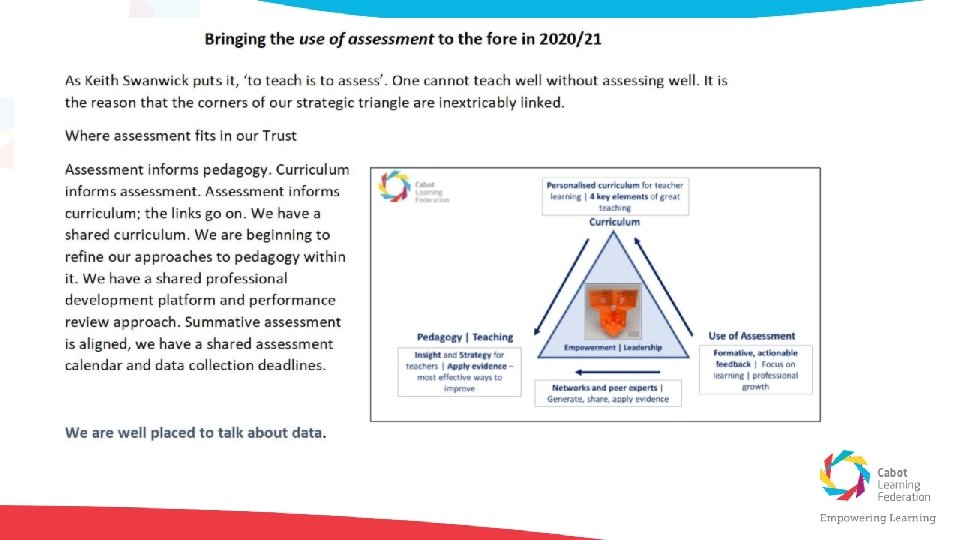
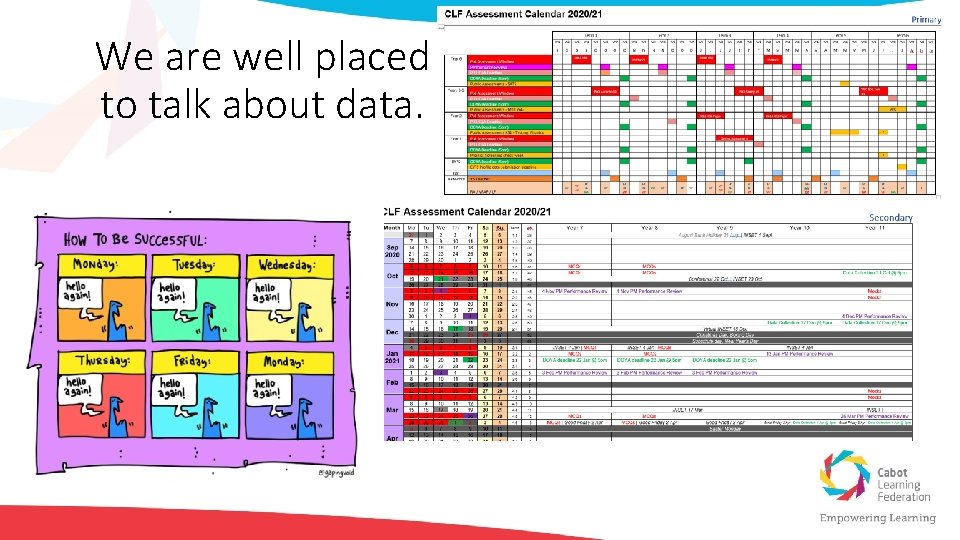
We are well placed to talk about data.

• Responsive planning • Responsive teaching Formative loop • Responsive planning • Responsive teaching Formative loop • Responsive planning • Responsive teaching CTMs Pupil progress meetings CTMs Academy routines Term 1 DOYA drop Y 6 performance review Central data experts Year 6 mock data Transition data collection Assessment 2020/21
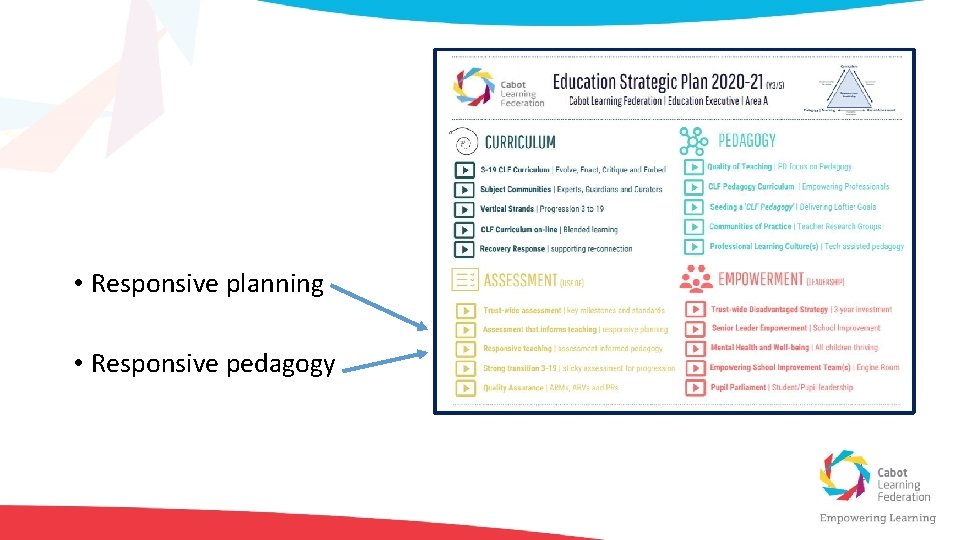
• Responsive planning • Responsive pedagogy
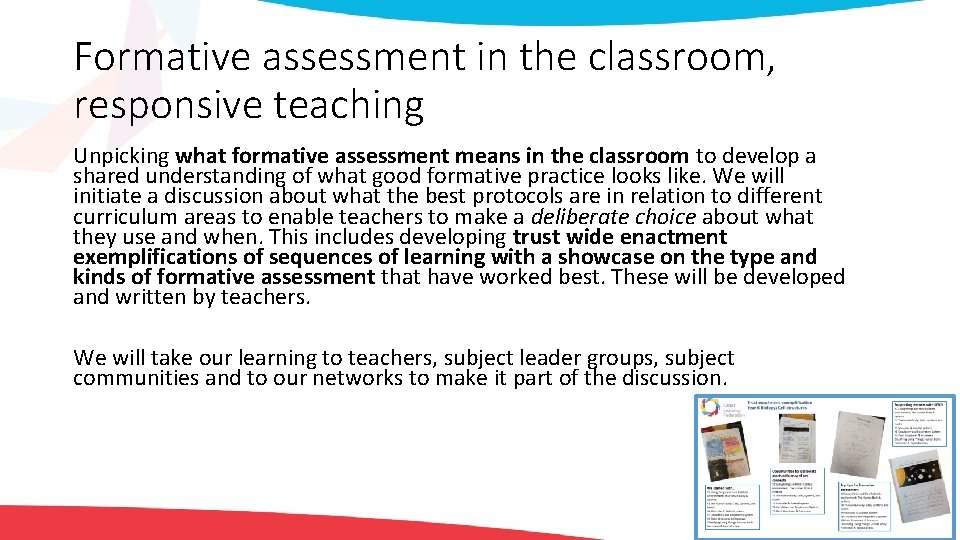
Formative assessment in the classroom, responsive teaching Unpicking what formative assessment means in the classroom to develop a shared understanding of what good formative practice looks like. We will initiate a discussion about what the best protocols are in relation to different curriculum areas to enable teachers to make a deliberate choice about what they use and when. This includes developing trust wide enactment exemplifications of sequences of learning with a showcase on the type and kinds of formative assessment that have worked best. These will be developed and written by teachers. We will take our learning to teachers, subject leader groups, subject communities and to our networks to make it part of the discussion.
‘If your students have no desire to learn, you are wasting your time’ Wiliam, 2018. Increasing engagement in learning: We will be looking at ways to ensure children are actively engaged in their own learning, and how we can activate them as learning resources for one another. We will look at key successful learning behaviours and how to assess a child holistically in order to ensure they develop the key skills and attributes they need to have agency, in line with the loftier goals of our curriculum.
What is formative assessment? ‘It can be agued that all assessment is formative. What is not reasonable is to claim that all kinds of formative assessment are equally effective, because the evidence is clear that the shorter the assessment-interpretation-action cycles becomes, the greater the impact on student achievement’ Dylan William, 2016.
Adding advantage through a rich curriculum
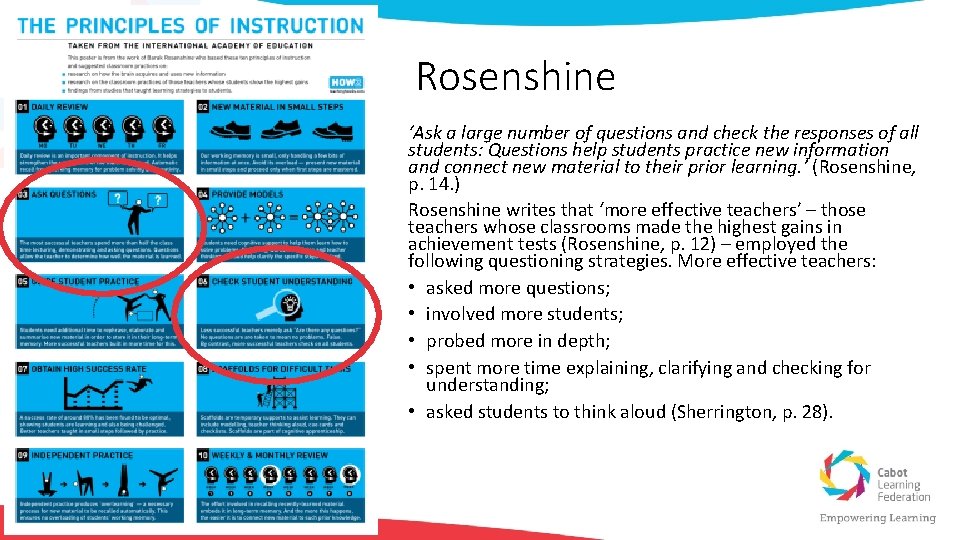
Rosenshine ‘Ask a large number of questions and check the responses of all students: Questions help students practice new information and connect new material to their prior learning. ’ (Rosenshine, p. 14. ) Rosenshine writes that ‘more effective teachers’ – those teachers whose classrooms made the highest gains in achievement tests (Rosenshine, p. 12) – employed the following questioning strategies. More effective teachers: • asked more questions; • involved more students; • probed more in depth; • spent more time explaining, clarifying and checking for understanding; • asked students to think aloud (Sherrington, p. 28).
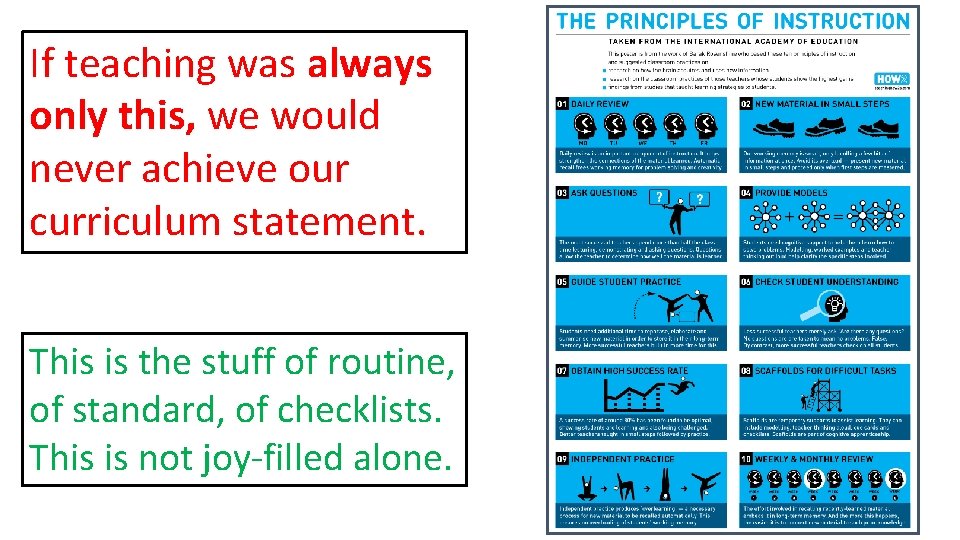
If teaching was always only this, we would never achieve our curriculum statement. This is the stuff of routine, of standard, of checklists. This is not joy-filled alone.
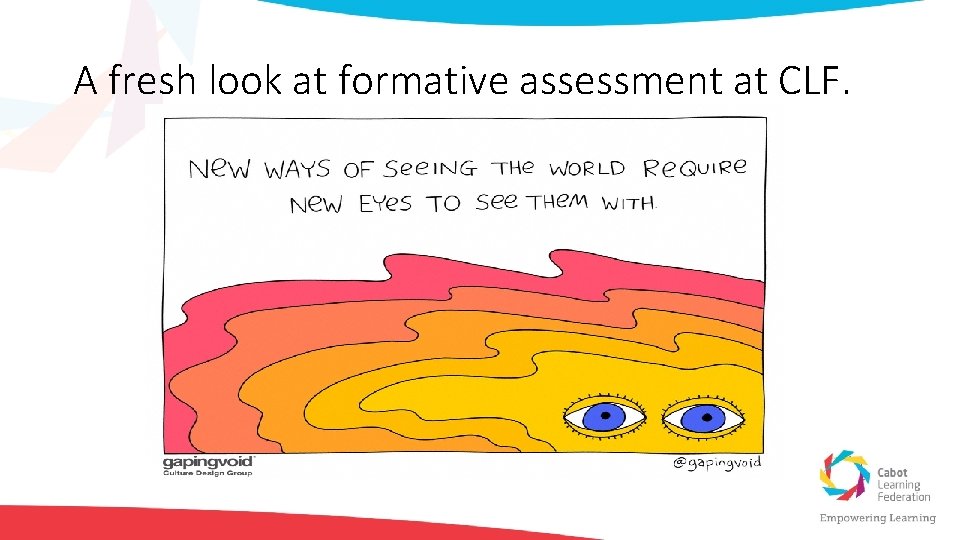
A fresh look at formative assessment at CLF.
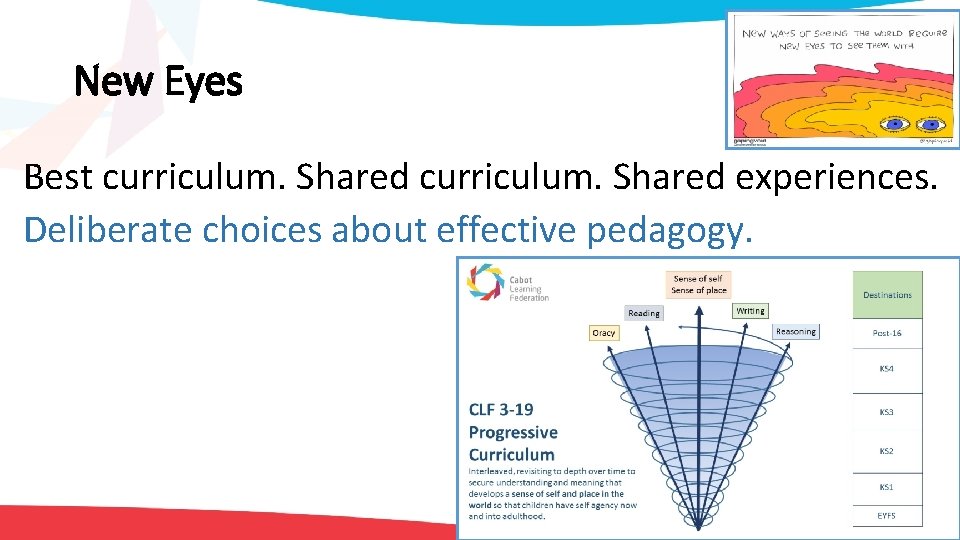
New Eyes Best curriculum. Shared experiences. Deliberate choices about effective pedagogy.
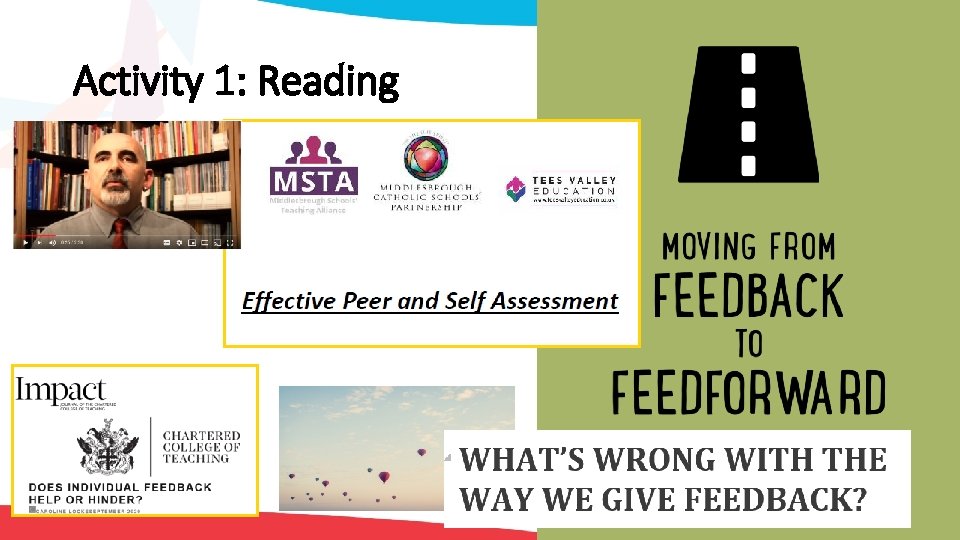
Activity 1: Reading
Activity 1: Reading Joe Hirsch
Activity 1: Reading …utilises peer and self assessment as the learning is happening, whilst the child still has the opportunity to redirect or develop the initial quality of the piece of work. Middlesborough Schools Teaching Alliance
Activity 1: Reading
Activity 1: Reading
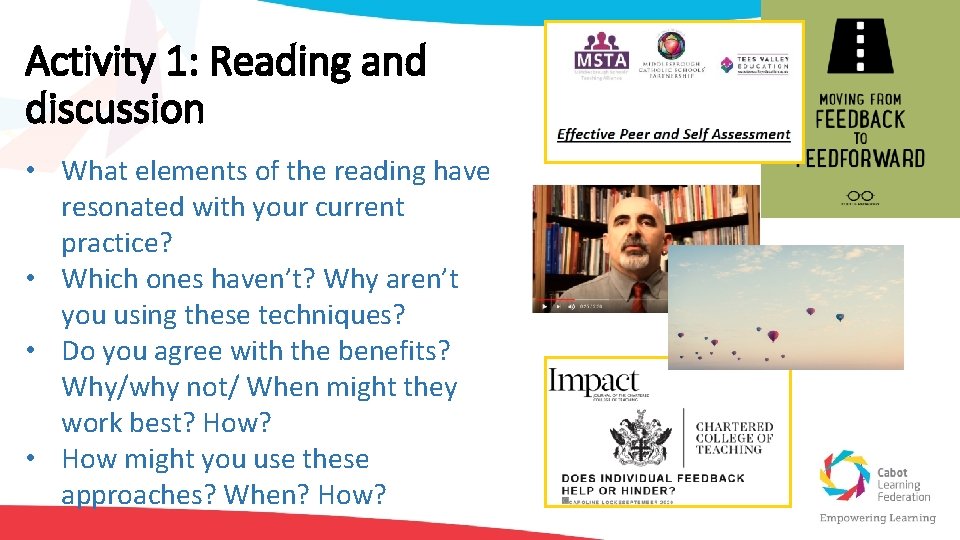
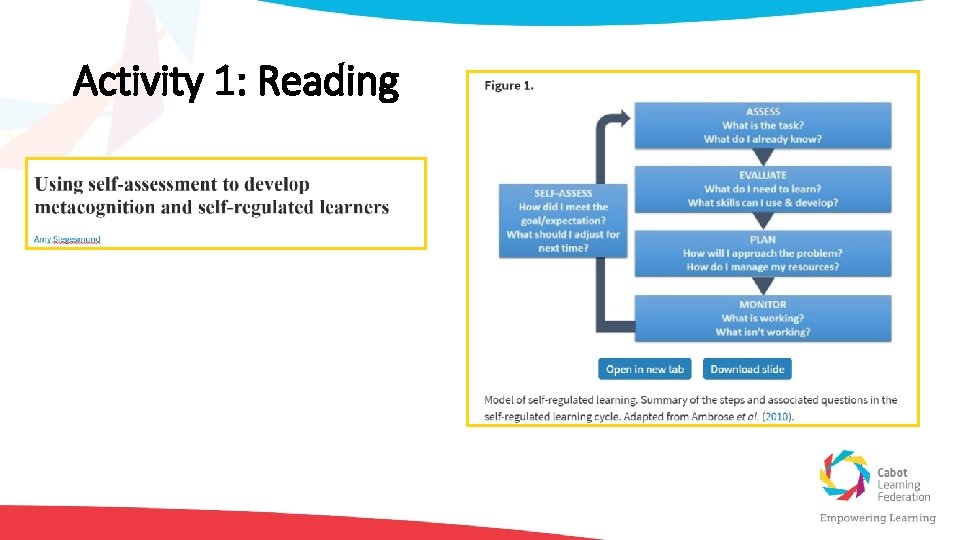
Activity 1: Reading and discussion • What elements of the reading have resonated with your current practice? • Which ones haven’t? Why aren’t you using these techniques? • Do you agree with the benefits? Why/why not/ When might they work best? How? • How might you use these approaches? When? How?
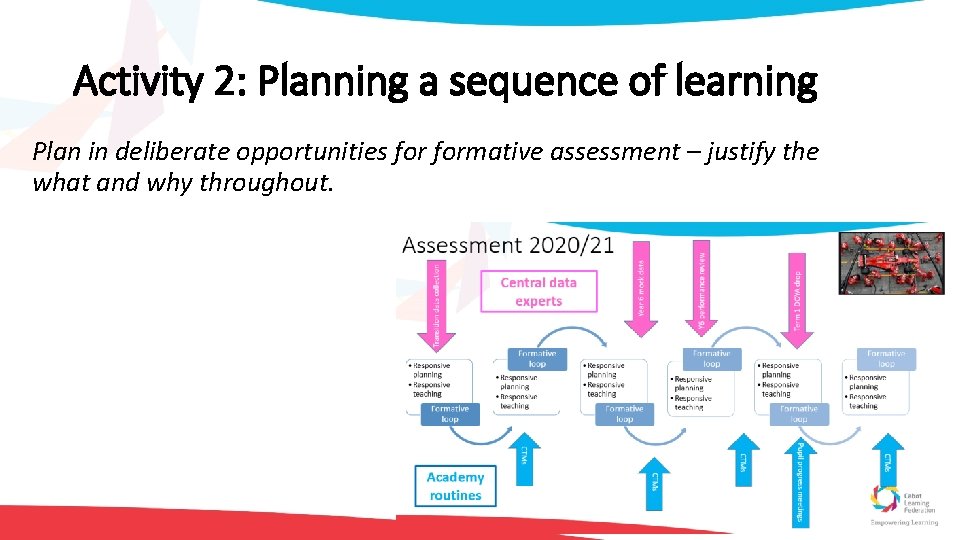
Activity 2: Planning a sequence of learning Plan in deliberate opportunities formative assessment – justify the what and why throughout.
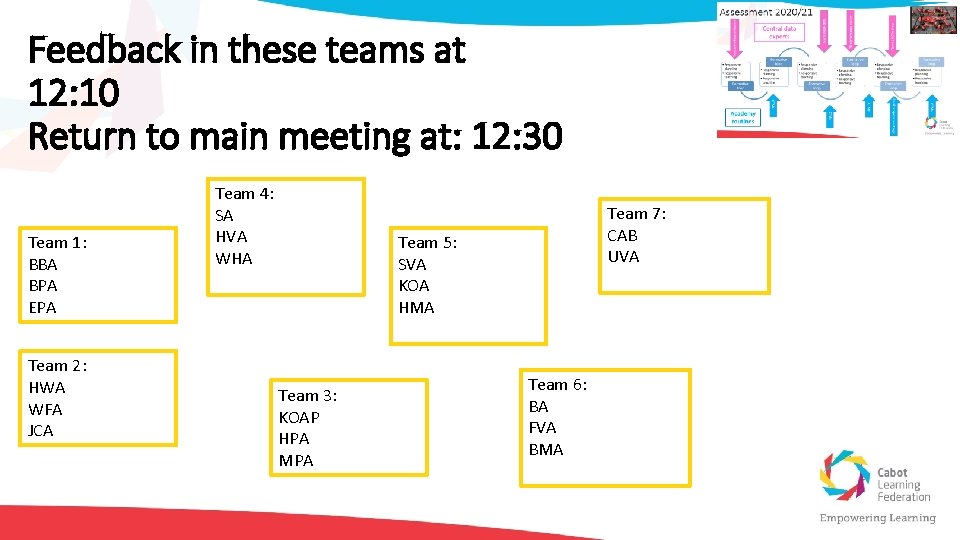
Feedback in these teams at 12: 10 Return to main meeting at: 12: 30 Team 1: BBA BPA EPA Team 2: HWA WFA JCA Team 4: SA HVA WHA Team 7: CAB UVA Team 5: SVA KOA HMA Team 3: KOAP HPA MPA Team 6: BA FVA BMA
In Summary • Activity 1: Reading and discussion • Activity 2: Planning a sequence of learning • Groups at 12: 10 • Come back to this meeting at 12: 30
Closing thoughts What next? If you have any further thoughts or comments, please do get in touch: Kate. Richardson@clf. uk
- Slides: 26