
Bringing the 4 PLC Questions to Life Ensuring
Bringing the 4 PLC Questions to Life!: Ensuring the Systemic Implementation of the PLC Process Anthony Muhammad, Ph. D
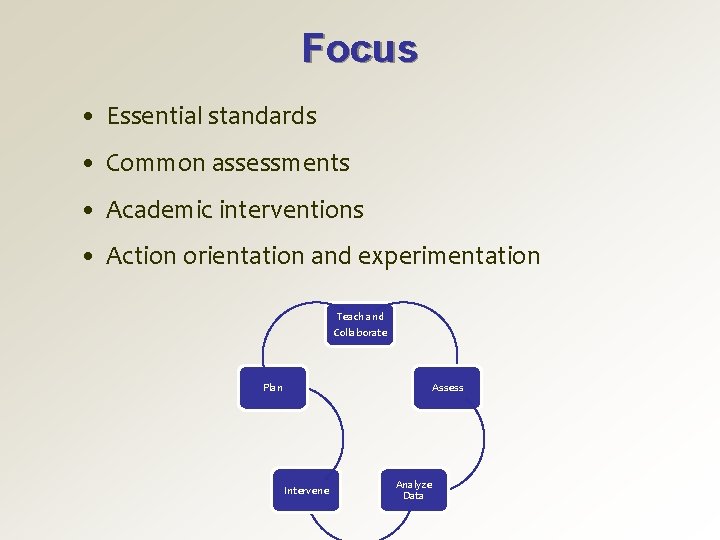
Focus • Essential standards • Common assessments • Academic interventions • Action orientation and experimentation Teach and Collaborate Plan Assess Intervene Analyze Data

Four Corollary PLC Questions • What do we want student to know and be able to do? • How do we know if students have learned? • How do we respond when students don’t learn? • How de we respond when students have learned?
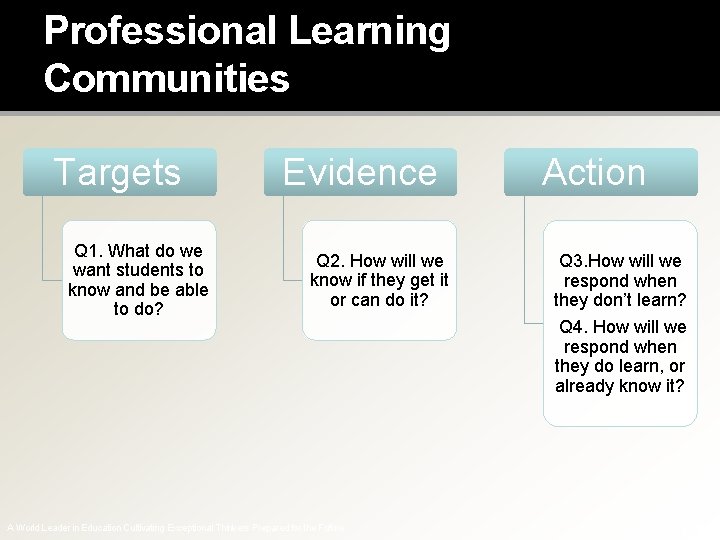
Professional Learning Communities Targets Q 1. What do we want students to know and be able to do? Evidence Q 2. How will we know if they get it or can do it? A World Leader in Education Cultivating Exceptional Thinkers Prepared for the Future Action Q 3. How will we respond when they don’t learn? Q 4. How will we respond when they do learn, or already know it?
PLC Question #1 Robert Marzano (2001) found that… ü On average - 200 broad standards; 3093 benchmarks (www. mcrel. org) ü Given # of days/hours/minute, necessary to change from K – 12 to K - 22 prior to university ü Increase time or decrease standards!
Power STandards “Prioritized standards that are derived from a systematic and balanced approach to distinguishing which standards are absolutely essential for student success from those that are nice to know. ” -Ainsworth, Power Standards: Identifying the Standards that Matter Most, 2004
Power Standards LESS is more! Leverage Endurance Success in School (readiness)
What Do We Want Students to Know and Be Able to Do? • Identify essential standards and outcomes. • Pace them per quarter. • Identify instructional material to ensure student mastery of standards.

Unpack learning targets Understands and analyzes how cultures and cultural groups have contributed to history.
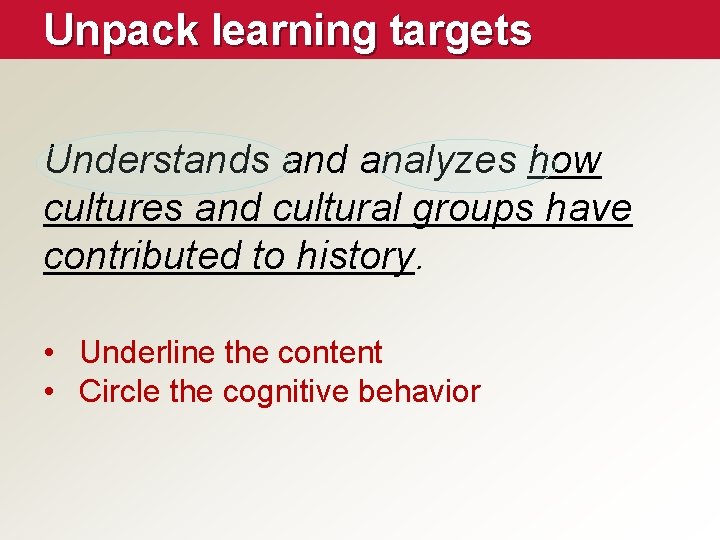
Unpack learning targets Understands and analyzes how cultures and cultural groups have contributed to history. • Underline the content • Circle the cognitive behavior
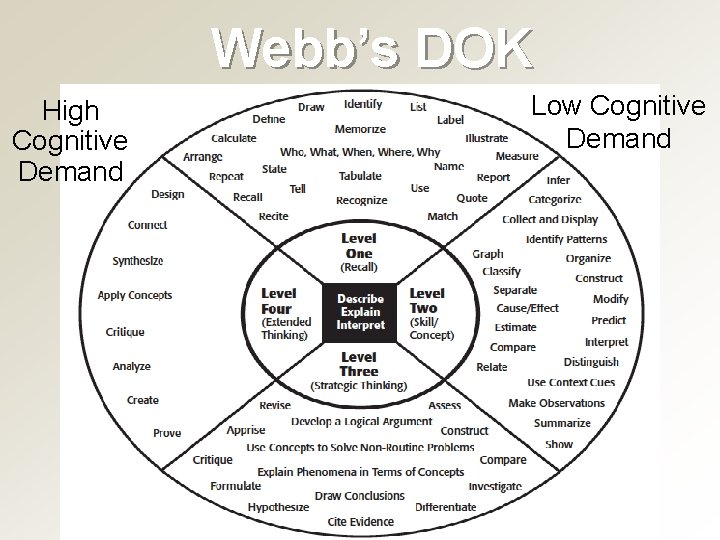
Webb’s DOK High Cognitive Demand Low Cognitive Demand
Reflection • How do you currently address the first PLC question: What do we want students to learn? • Do teachers get an opportunity to gain a common understanding of the standards?
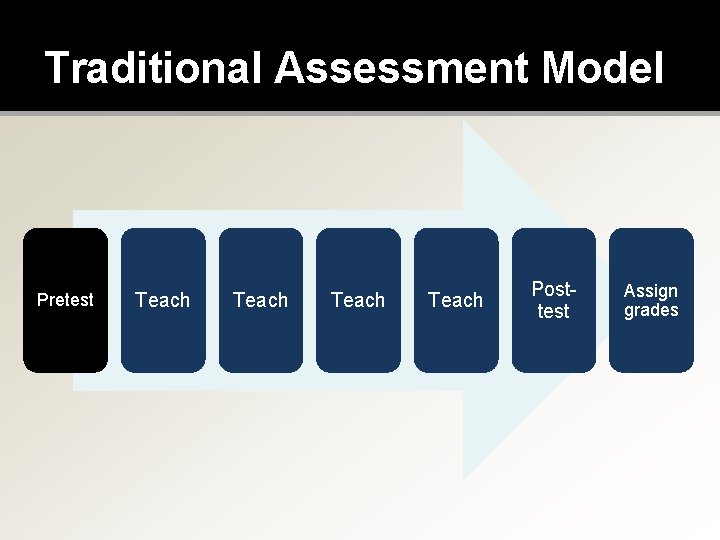
Traditional Assessment Model Pretest Teach Posttest Assign grades
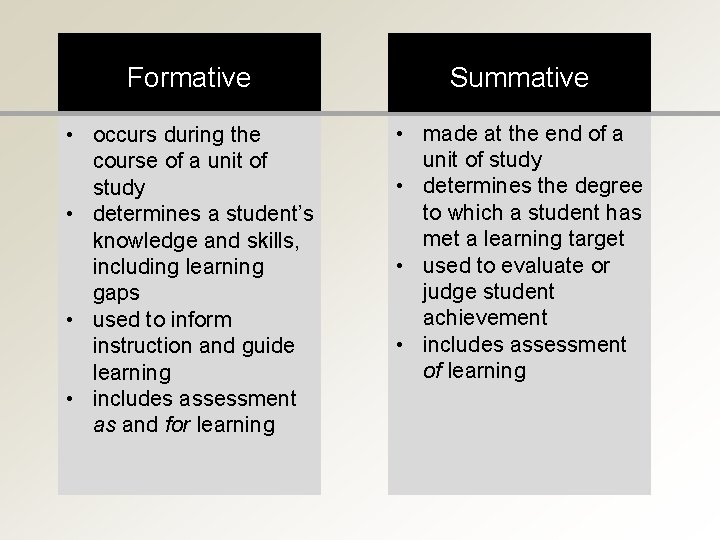
Formative Summative • occurs during the course of a unit of study • determines a student’s knowledge and skills, including learning gaps • used to inform instruction and guide learning • includes assessment as and for learning • made at the end of a unit of study • determines the degree to which a student has met a learning target • used to evaluate or judge student achievement • includes assessment of learning
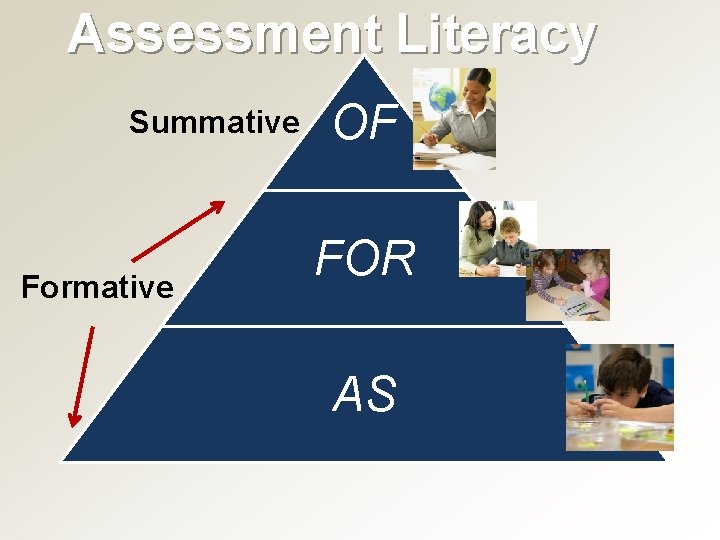
Assessment Literacy Summative Formative OF FOR AS
How Do We Know If Students Have Learned? Develop common assessments. • Assessments measure if students can perform identified tasks. • Students should receive assessments at least each quarter per core subject matter. • Assessments should not exceed 25 questions. • Teachers who teach the content should develop assessments. • Assessment questions should be more challenging than the modality used on state assessment.
Reflection • How do you currently address the second PLC question: How do we know if students have learned? • What do you do with assessment results?
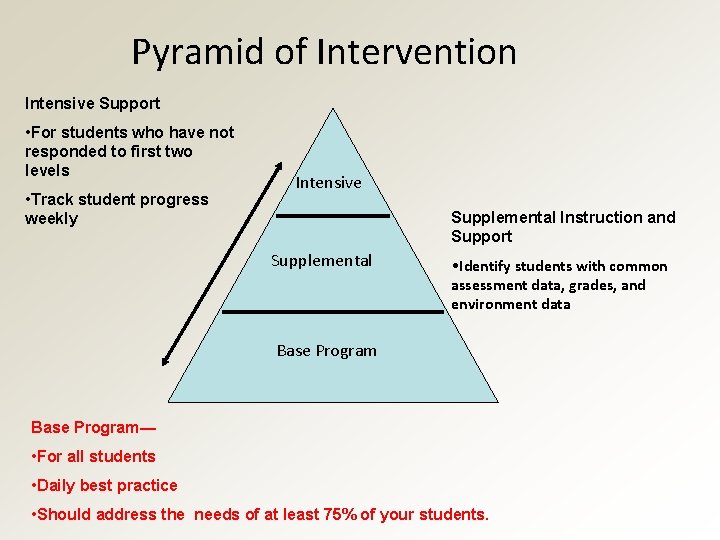
Pyramid of Intervention Intensive Support • For students who have not responded to first two levels • Track student progress weekly Intensive Supplemental Instruction and Support Supplemental • Identify students with common assessment data, grades, and environment data Base Program— • For all students • Daily best practice • Should address the needs of at least 75% of your students.
Pyramid of Interventions How do we respond when students do not learn? • Homework lunch • In-school tutors • Student support specialist • After-school tutoring • Student success plan • Title 1 Summer Institute
Reflection • How do you address the third and fourth PLC questions? – How do we respond when students do not learn? – How do we respond when students have learned? • Do you need to address these questions again systemically?
- Slides: 20