
BRIEFING Vulnerability Assessment Tool VAT Presented By Nanaimo
BRIEFING Vulnerability Assessment Tool (VAT) Presented By Nanaimo Housing First Initiative A Community Project Managed By Nanaimo Region John Howard Society & Nanaimo Women’s Resource Society
WHY WE CHOSE THE VAT Needed an Objective Community Process Info provided via Our Referral Form Incomplete An arms-length decision making tool Need comparative information on prospective client needs Across agencies, diverse clients, multi-barriered needs VAT is designed for Housing First Peer reviewed, tested and reliable Endorsed by Cdn Housing First Assessment Taskforce (2015)
OVERVIEW OF THE VAT Created by The DESC (Seattle) Structured Measure of individual vulnerability to continued instability Developed in 2003 Peer-reviewed and Tested Rating across 10 domains Comparative tool with other people experiencing homelessness. Structured Interview Process Objective Sense of Vulnerability to Continued Instability Doesn’t Replace Relationships VAT Helps Deploy Limited Resources
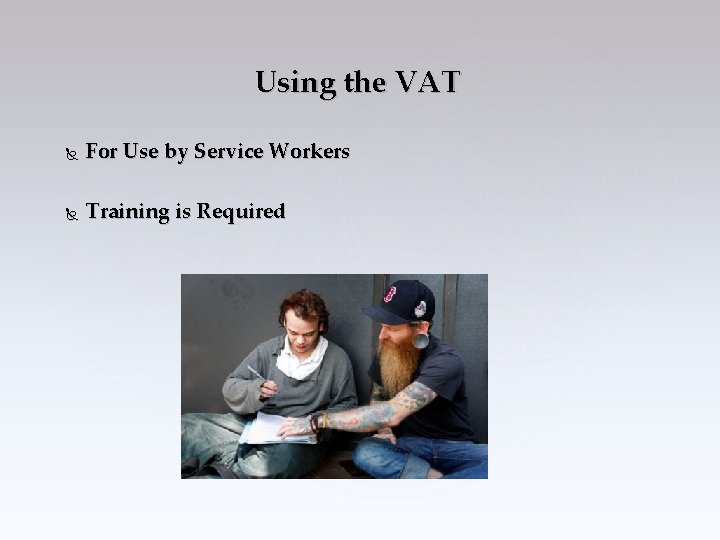
Using the VAT For Use by Service Workers Training is Required
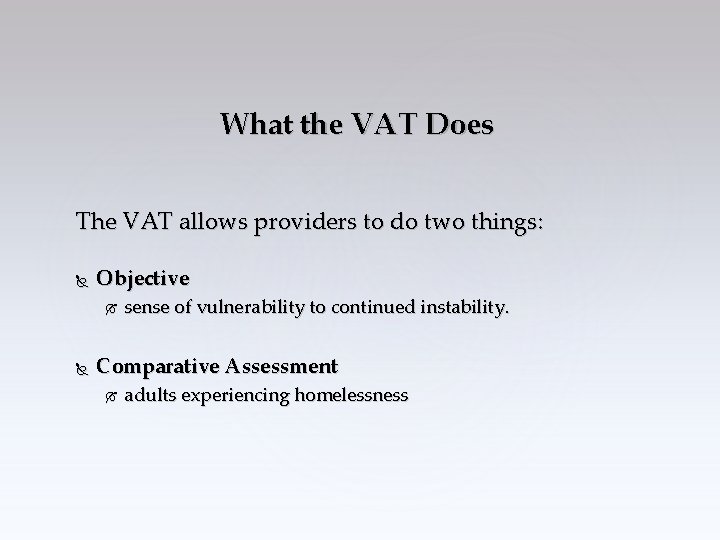
What the VAT Does The VAT allows providers to do two things: Objective sense of vulnerability to continued instability. Comparative Assessment adults experiencing homelessness
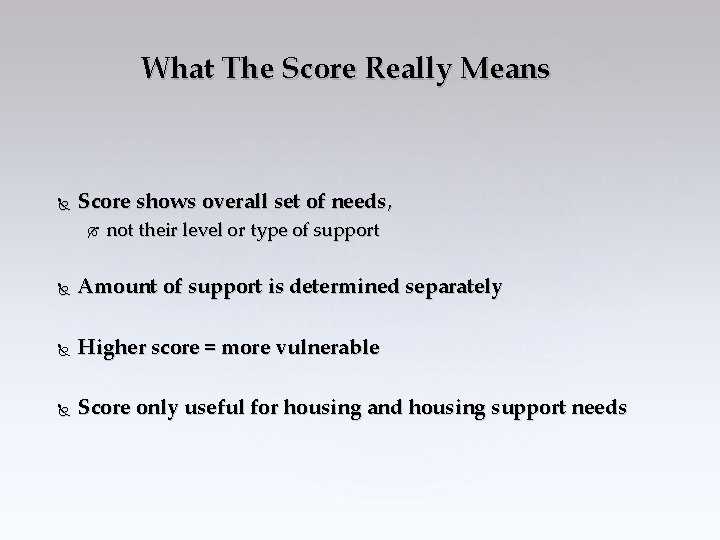
What The Score Really Means Score shows overall set of needs, not their level or type of support Amount of support is determined separately Higher score = more vulnerable Score only useful for housing and housing support needs
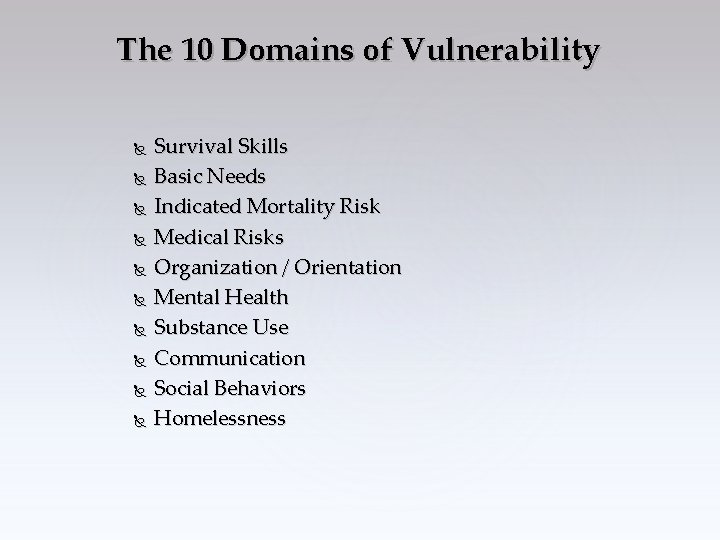
The 10 Domains of Vulnerability Survival Skills Basic Needs Indicated Mortality Risk Medical Risks Organization / Orientation Mental Health Substance Use Communication Social Behaviors Homelessness
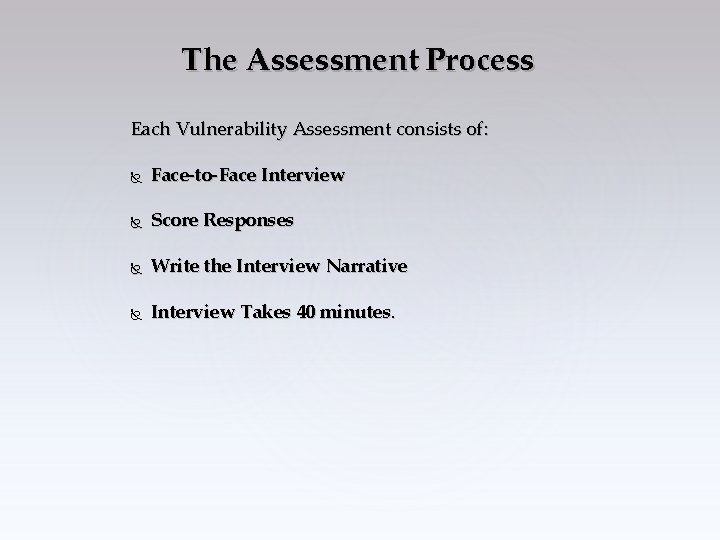
The Assessment Process Each Vulnerability Assessment consists of: Face-to-Face Interview Score Responses Write the Interview Narrative Interview Takes 40 minutes.
The Role of the Interviewer is the link individual’s level of vulnerability. accurate, consistent and complete. Collect factual information Don’t let program requirements dictate scoring. Inflating scores is a slippery slope Objectivity is Paramount: Don’t allow “the desire to help” skew scores
Assessment Focus Homeless person’s needs and functioning Unique situations and needs VAT measures relative vulnerability Especially people living in shelters, streets, and other places not intended for human habitation.
Participation Requirements Interviewer’s Ethics: Explain the purpose of the VAT Voluntary participation Use of results Impairment from substance use will be present in a typical interview Postponement reserved for severe cases.
What the VAT Can’t Do Overcome Limited Resources Doesn’t Replace Relationships Early Assessments = Early into Housing stock Limited Subsidies Limited Program Funding = Limited Outreach Adjunct to it – informs the decision Allows the client to tell their story Comparative Remember: VAT is NOT an Intake Process
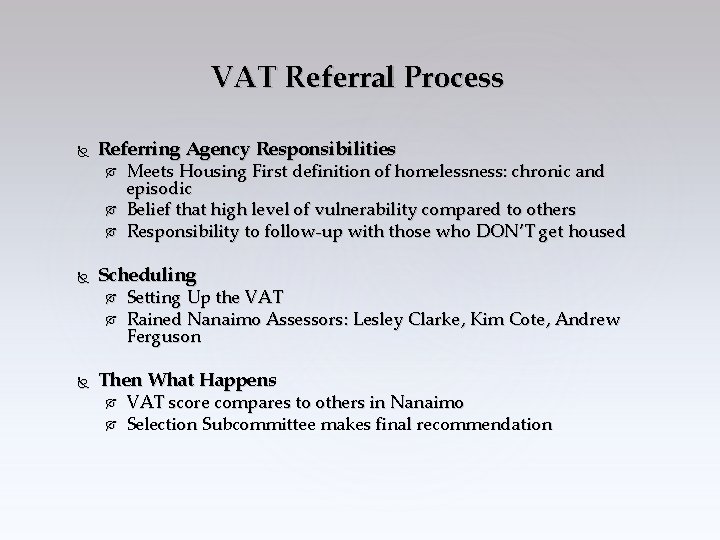
VAT Referral Process Referring Agency Responsibilities Scheduling Meets Housing First definition of homelessness: chronic and episodic Belief that high level of vulnerability compared to others Responsibility to follow-up with those who DON’T get housed Setting Up the VAT Rained Nanaimo Assessors: Lesley Clarke, Kim Cote, Andrew Ferguson Then What Happens VAT score compares to others in Nanaimo Selection Subcommittee makes final recommendation
Questions? REFERENCES www. desc. org/vulnerability. html DESC Vulnerability Assessment Tool Training Manual
- Slides: 14