
Brief Summary of Atomic Theory Democritus 400 B
Brief Summary of Atomic Theory
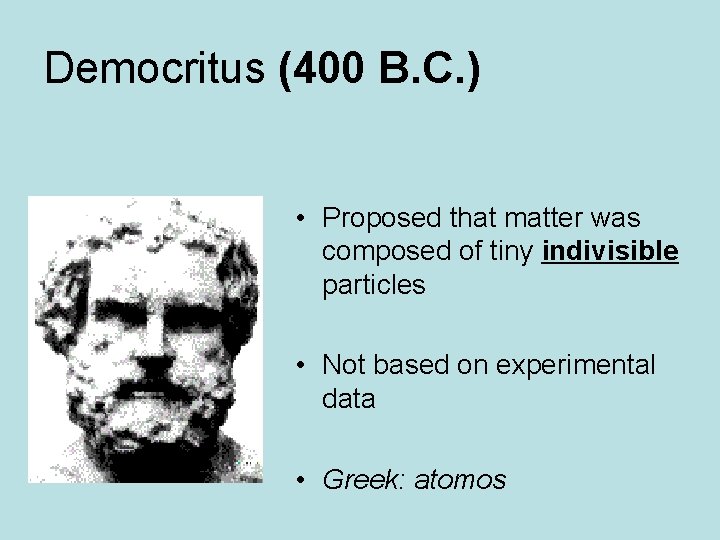
Democritus (400 B. C. ) • Proposed that matter was composed of tiny indivisible particles • Not based on experimental data • Greek: atomos
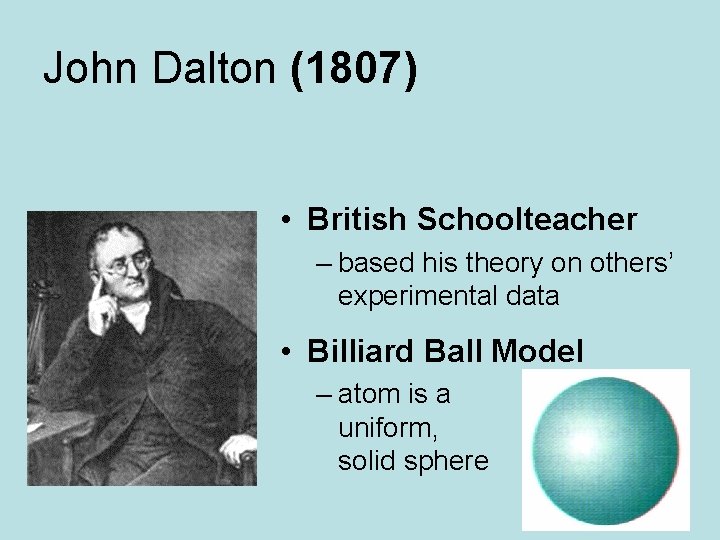
John Dalton (1807) • British Schoolteacher – based his theory on others’ experimental data • Billiard Ball Model – atom is a uniform, solid sphere
John Dalton’s Four Postulates 1. Elements are composed of small indivisible particles called atoms. 2. Atoms of the same element are identical. Atoms of different elements are different. 3. Atoms of different elements combine together in fixed proportions to create a compound. 4. In a chemical reaction, atoms are rearranged, but not changed.
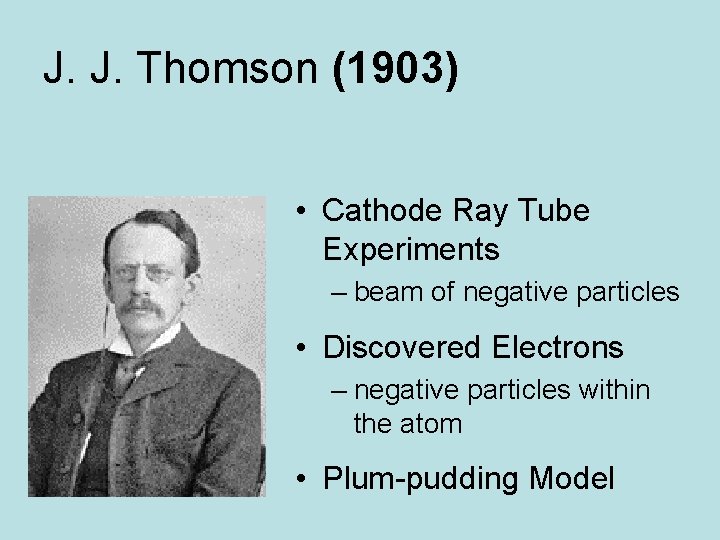
J. J. Thomson (1903) • Cathode Ray Tube Experiments – beam of negative particles • Discovered Electrons – negative particles within the atom • Plum-pudding Model
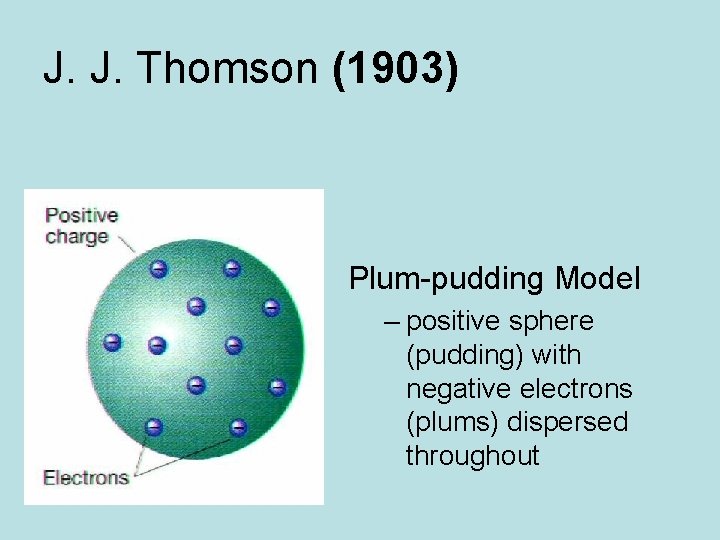
J. J. Thomson (1903) Plum-pudding Model – positive sphere (pudding) with negative electrons (plums) dispersed throughout
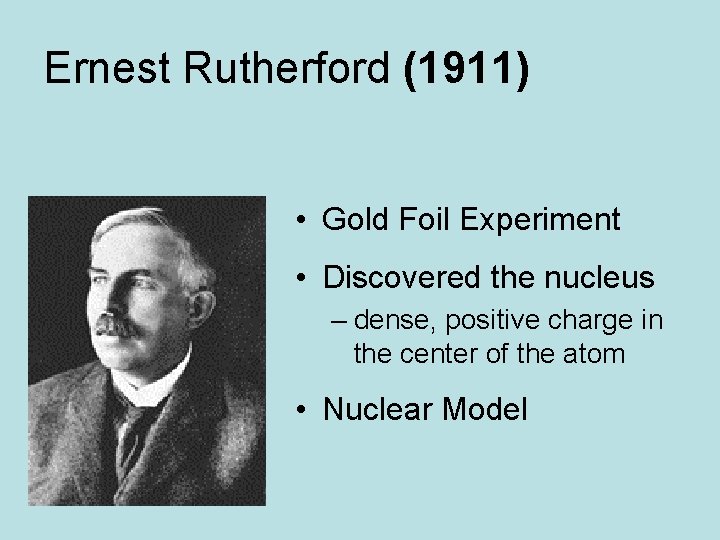
Ernest Rutherford (1911) • Gold Foil Experiment • Discovered the nucleus – dense, positive charge in the center of the atom • Nuclear Model
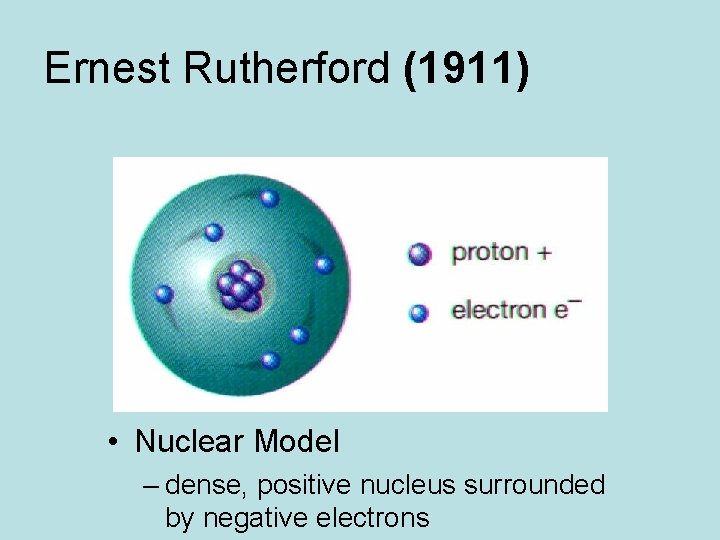
Ernest Rutherford (1911) • Nuclear Model – dense, positive nucleus surrounded by negative electrons
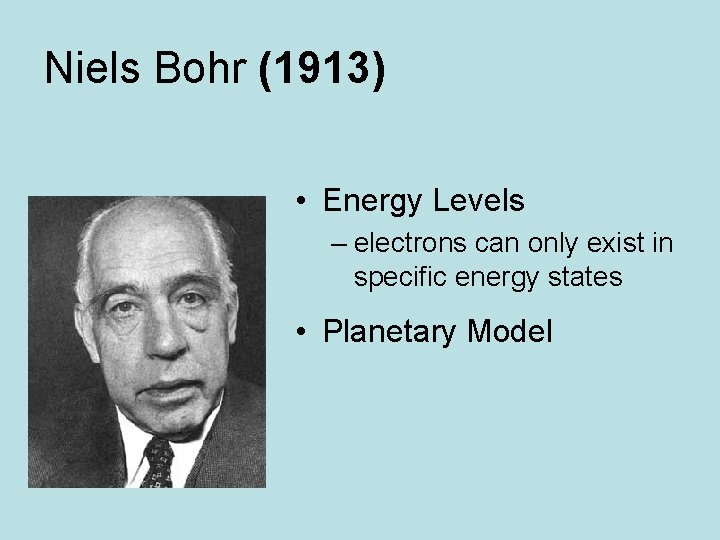
Niels Bohr (1913) • Energy Levels – electrons can only exist in specific energy states • Planetary Model
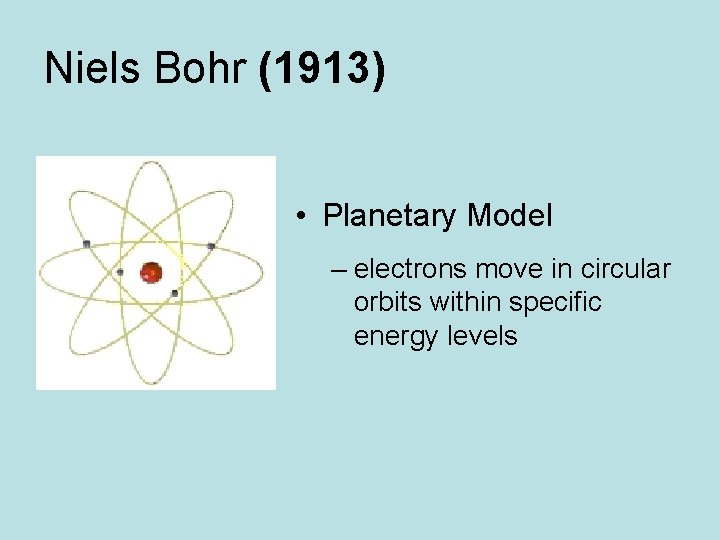
Niels Bohr (1913) • Planetary Model – electrons move in circular orbits within specific energy levels
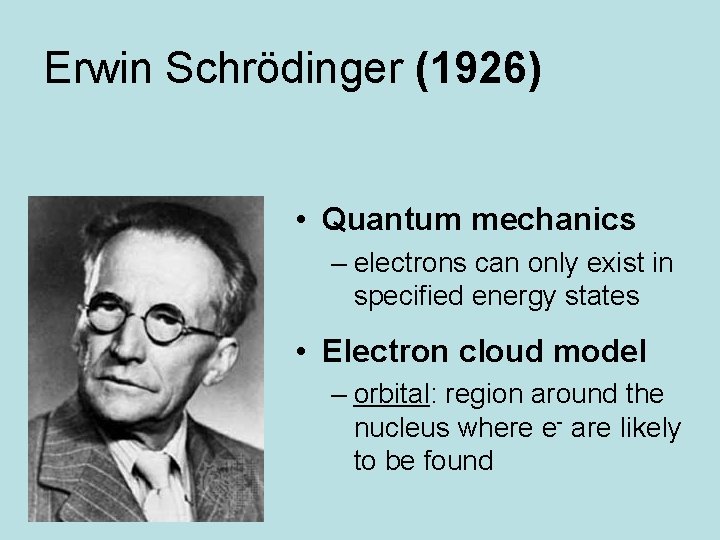
Erwin Schrödinger (1926) • Quantum mechanics – electrons can only exist in specified energy states • Electron cloud model – orbital: region around the nucleus where e- are likely to be found
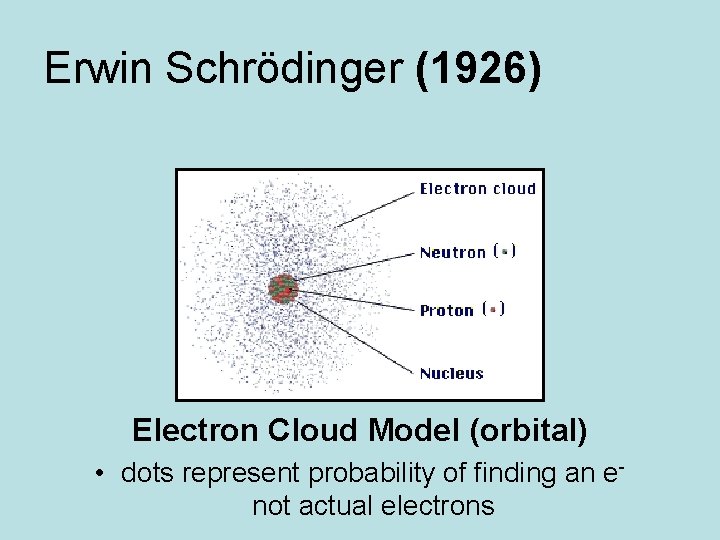
Erwin Schrödinger (1926) Electron Cloud Model (orbital) • dots represent probability of finding an enot actual electrons
Warm-Up • Atomic Theories Quiz • EVERYONE TAKE OUT A SHEET OF PAPER & PENCIL • Nothing else should be on your desk.
What’s an Atom? • What key words can you think of from the atomic theories that were used to define the atom? – Electron – Proton – Neutron – Nucleus
Paraphrasing • Paraphrasing is not the same thing as copying and pasting… • Today we are going to learn how to paraphrase…
Paraphrasing Text On the next 2 slides are paragraphs from you book (p. 311). When the pages are displayed, begin reading them. Write down any key words or ideas.
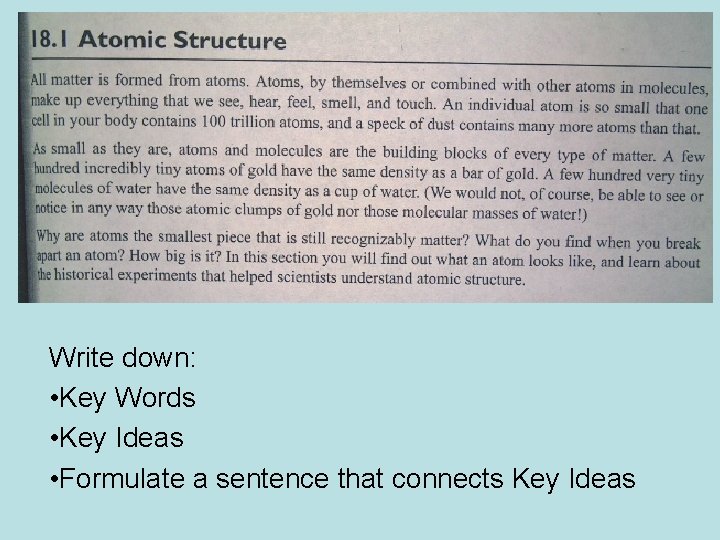
Write down: • Key Words • Key Ideas • Formulate a sentence that connects Key Ideas
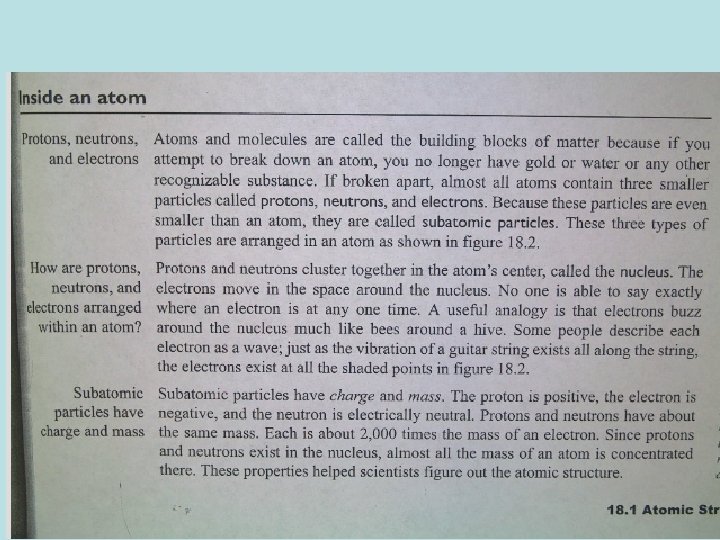
What is… • • • An Atom? An Electron? A Proton? A Neutron? The Nucleus?
According to Dalton… 1. Elements are composed of small indivisible particles called atoms. 2. Atoms of the same element are identical. Atoms of different elements are different. This means: Each element on the periodic table is composed of different atoms!!
In other words… • We can describe elements by the number of protons, neutrons, and electrons their atoms contain
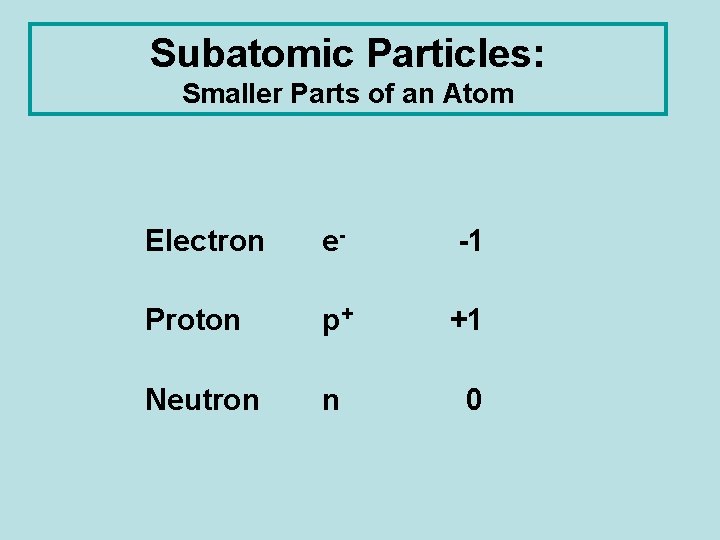
Subatomic Particles: Smaller Parts of an Atom Particle Symbol Charge Electron e- -1 Proton p+ +1 Neutron n 0
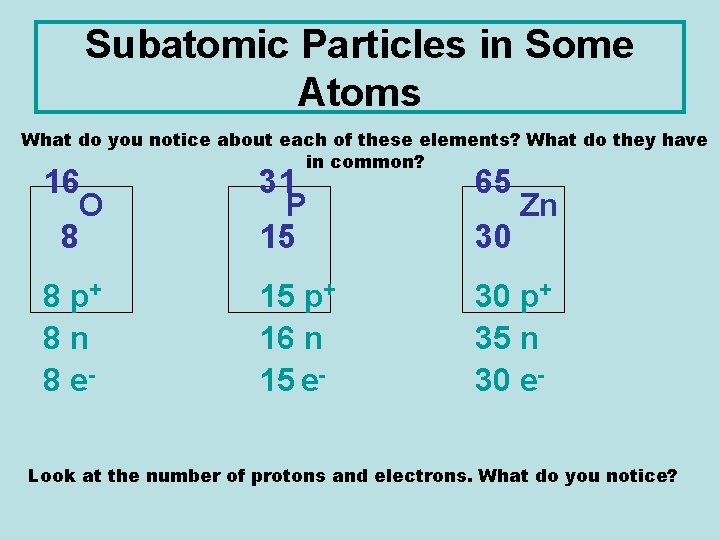
Subatomic Particles in Some Atoms What do you notice about each of these elements? What do they have in common? 16 O 8 31 P 15 65 8 p+ 8 n 8 e- 15 p+ 16 n 15 e- 30 p+ 35 n 30 e- 30 Zn Look at the number of protons and electrons. What do you notice?
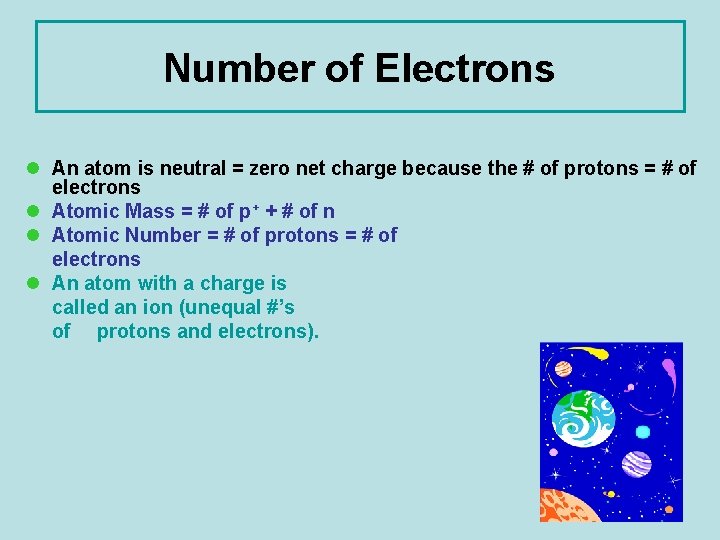
Number of Electrons l An atom is neutral = zero net charge because the # of protons = # of electrons l Atomic Mass = # of p+ + # of n l Atomic Number = # of protons = # of electrons l An atom with a charge is called an ion (unequal #’s of protons and electrons).
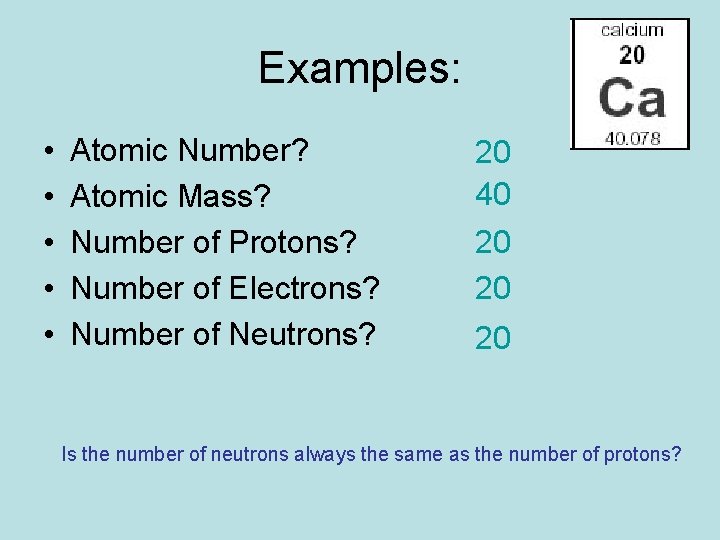
Examples: • • • Atomic Number? Atomic Mass? Number of Protons? Number of Electrons? Number of Neutrons? 20 40 20 20 20 Is the number of neutrons always the same as the number of protons?
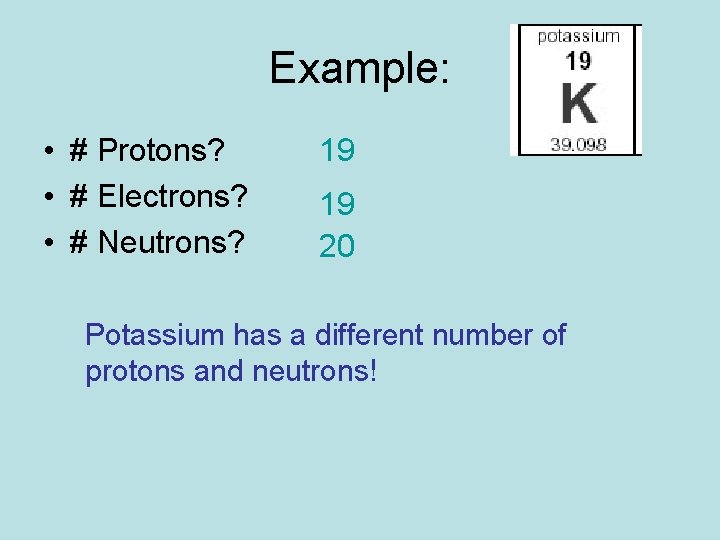
Example: • # Protons? • # Electrons? • # Neutrons? 19 19 20 Potassium has a different number of protons and neutrons!
Charge of an Atom • • • The charge is equal to the number of electrons that have been lost or gained Neutral Atoms: # electrons = # protons In a positive atom, which is true: A. # electrons > # protons B. # electrons < # protons Remember, electrons are negative, protons are positive
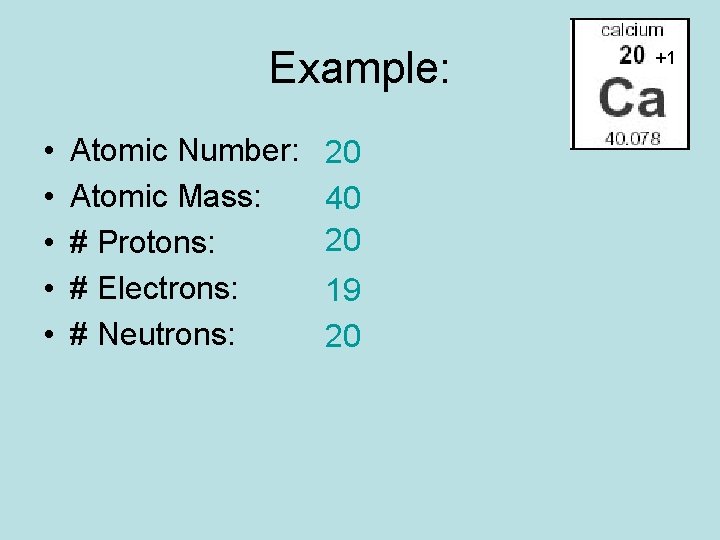
Example: • • • Atomic Number: Atomic Mass: # Protons: # Electrons: # Neutrons: 20 40 20 19 20 +1
Homework • A-Day: – Due: Wednesday, October 2 nd • B- Day – Due: Thursday, October 3 rd
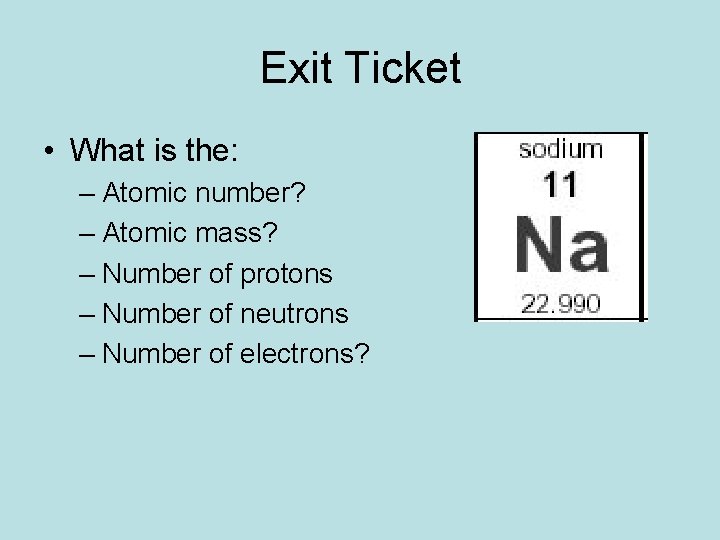
Exit Ticket • What is the: – Atomic number? – Atomic mass? – Number of protons – Number of neutrons – Number of electrons?
- Slides: 30