
Brief Review of Lecture 1 Understanding Science Oceanography
Brief Review of Lecture 1 Understanding Science, Oceanography, Physical Oceanography Descriptive or Dynamical Approaches Eulerian or Lagrangian techniques History of oceanography Oceans and ocean basins – oceans are not simply drowned low lying areas on the earth’s crust!
What physical properties do we observe? • • Temperature Salinity Depth Sea Surface Height Sound Light Current Velocity And many others……waves, met data, etc.
Considerations for Observation • • Cost Ease of measurement Time taken – ocean is dynamic! Precision – repeat observation without deviation • Accuracy – in addition, should be consistent with a reference standard
Temperature • Measure of the heat content of a body (SI unit: Celsius) • Temperature of ocean change if heat is lost or gained in situ heat is advected • Source of heat: mainly the sun (surface) geo-thermal (bottom) • Difference between heating of ocean and atmosphere • Ocean body NOT uniform in temperature
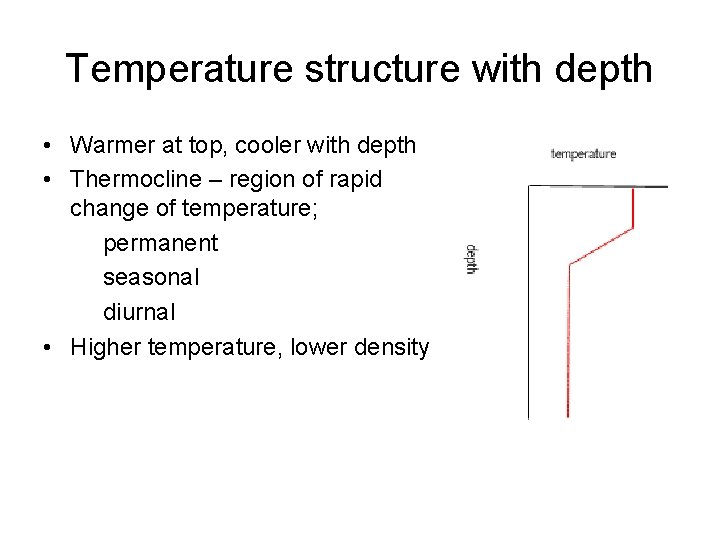
Temperature structure with depth • Warmer at top, cooler with depth • Thermocline – region of rapid change of temperature; permanent seasonal diurnal • Higher temperature, lower density
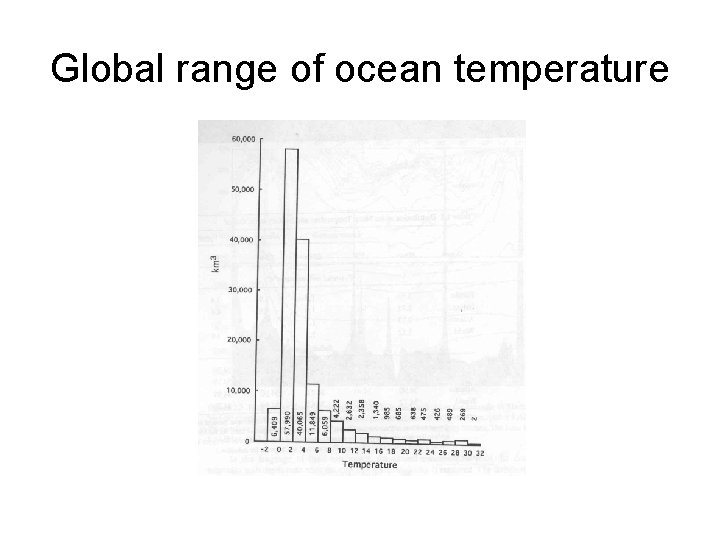
Global range of ocean temperature

Measurement of Temperature • • • Expansion of liquid or metal Differential expansion (eg bimetallic strip) Vapor pressure of liquid Thermocouple Electric resistance (thermistor) IR radiation from sea surface (remote sensing)
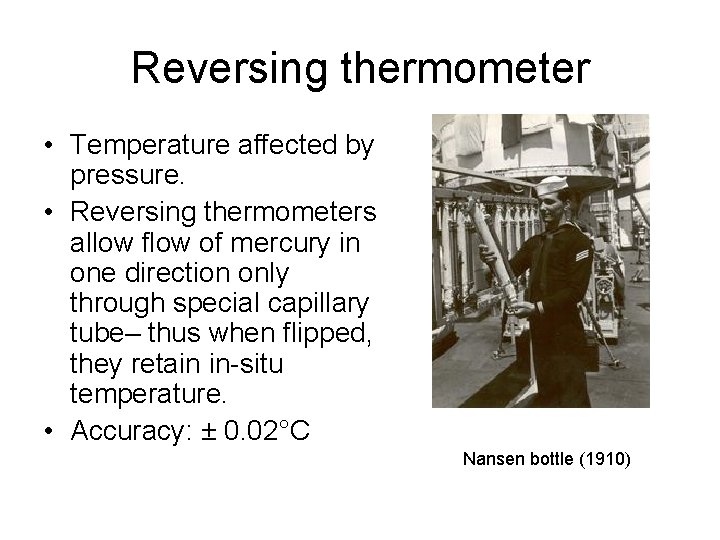
Reversing thermometer • Temperature affected by pressure. • Reversing thermometers allow flow of mercury in one direction only through special capillary tube– thus when flipped, they retain in-situ temperature. • Accuracy: ± 0. 02°C Nansen bottle (1910)
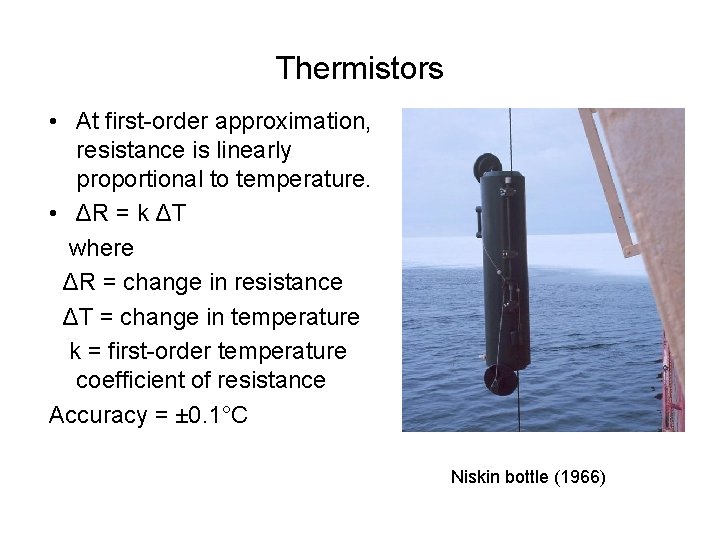
Thermistors • At first-order approximation, resistance is linearly proportional to temperature. • ΔR = k ΔT where ΔR = change in resistance ΔT = change in temperature k = first-order temperature coefficient of resistance Accuracy = ± 0. 1°C Niskin bottle (1966)
Mechanical Bathythermograph • Liquid in metal thermometer (toluene in copper) • Many limitations (max depth 300 m, hysteresis and creep, can be deployed at low ship speed only) • Accuracy < 0. 06°C
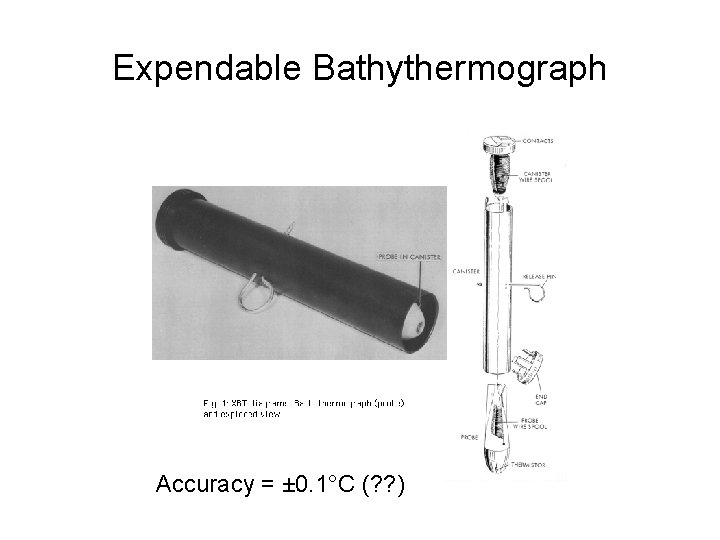
Expendable Bathythermograph Accuracy = ± 0. 1°C (? ? )
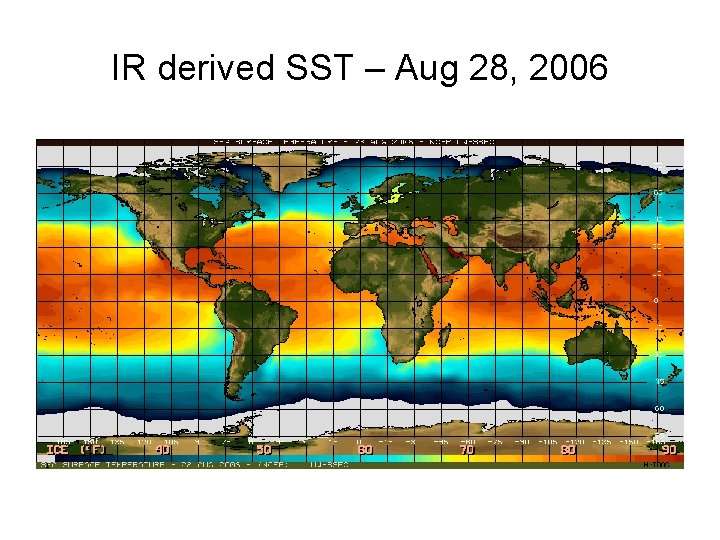
IR derived SST – Aug 28, 2006
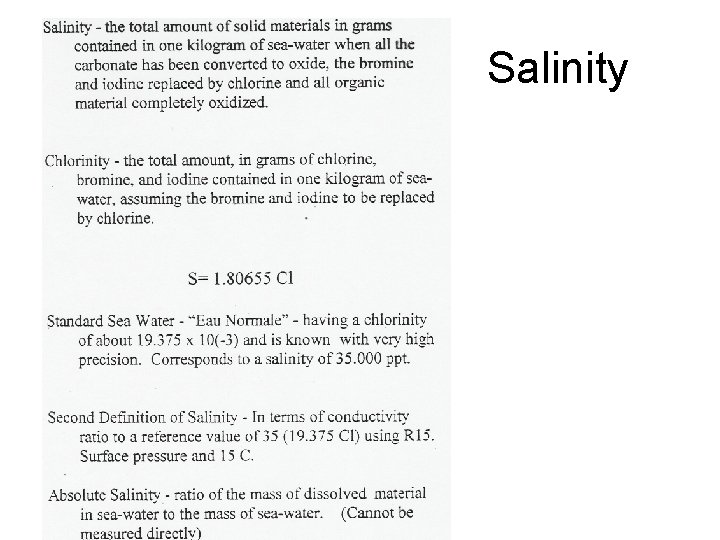
Salinity
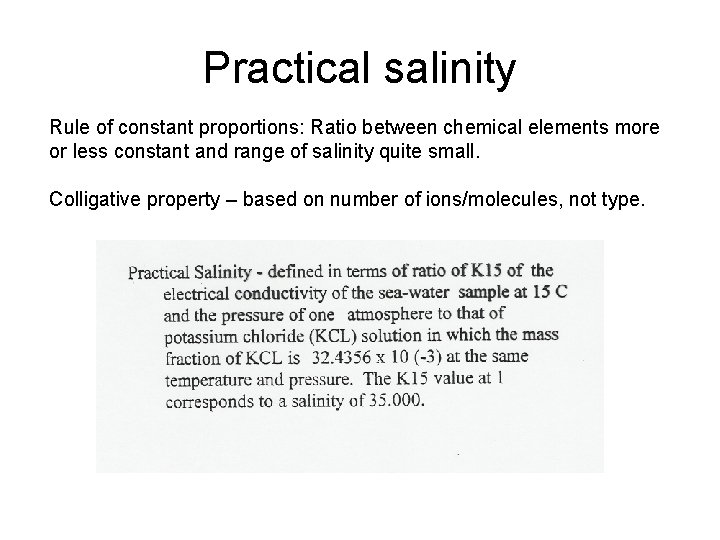
Practical salinity Rule of constant proportions: Ratio between chemical elements more or less constant and range of salinity quite small. Colligative property – based on number of ions/molecules, not type.
Range of salinity • 75% of ocean water between 34. 5 and 35 • Lowest in coastal waters • High in enclosed seas and evaporative basins • Pacific salinity much lower than Atlantic – important repercussions for circulation and climate! • Higher the salinity, higher the density
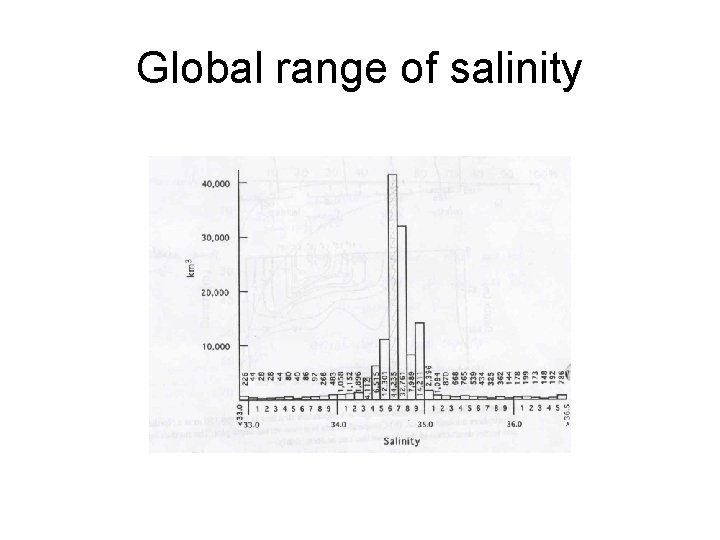
Global range of salinity
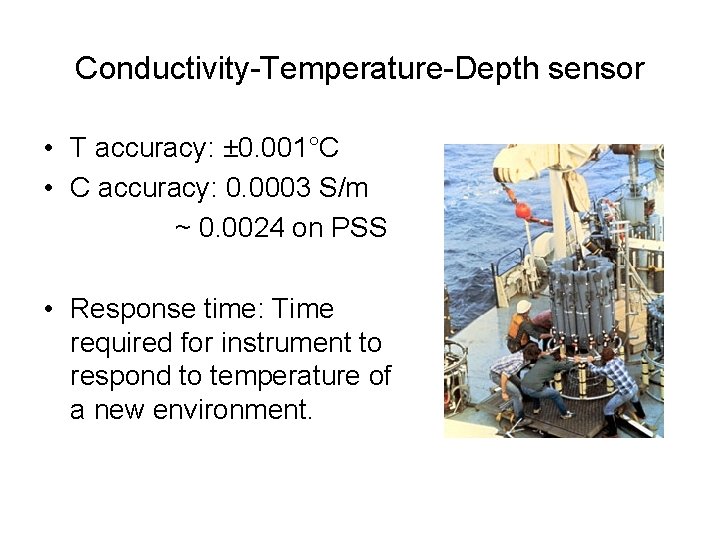
Conductivity-Temperature-Depth sensor • T accuracy: ± 0. 001°C • C accuracy: 0. 0003 S/m ~ 0. 0024 on PSS • Response time: Time required for instrument to respond to temperature of a new environment.
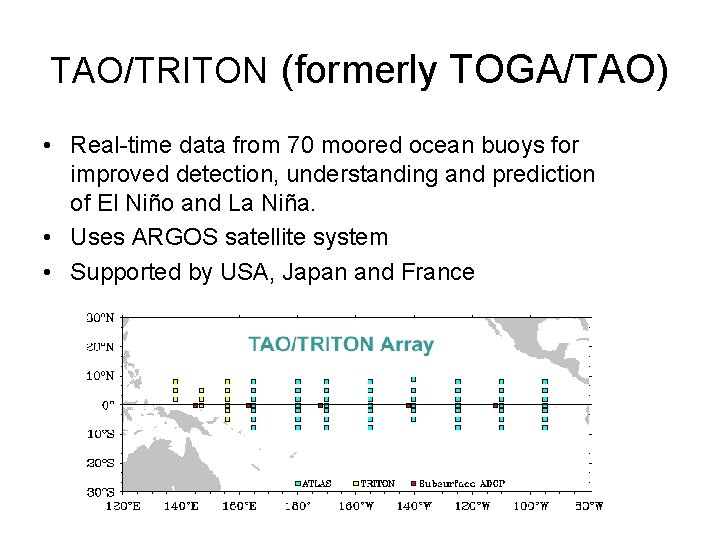
TAO/TRITON (formerly TOGA/TAO) • Real-time data from 70 moored ocean buoys for improved detection, understanding and prediction of El Niño and La Niña. • Uses ARGOS satellite system • Supported by USA, Japan and France
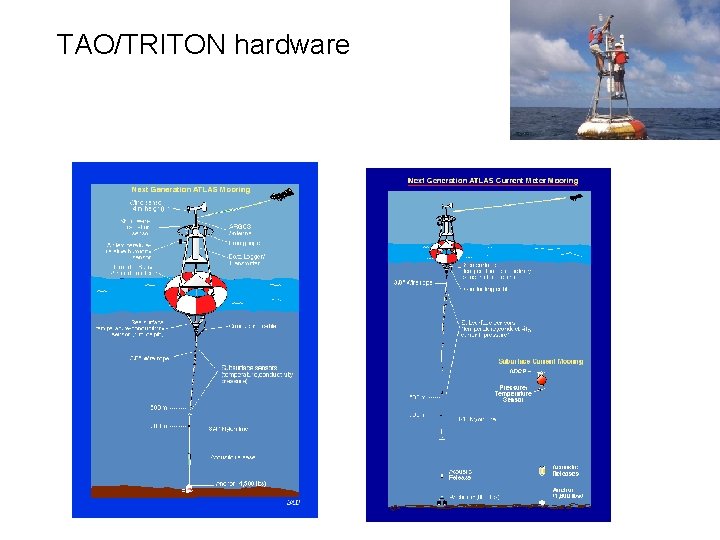
TAO/TRITON hardware
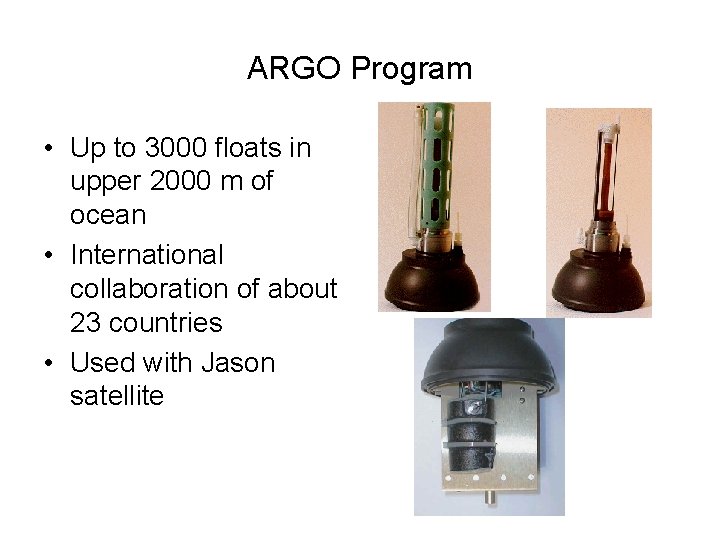
ARGO Program • Up to 3000 floats in upper 2000 m of ocean • International collaboration of about 23 countries • Used with Jason satellite
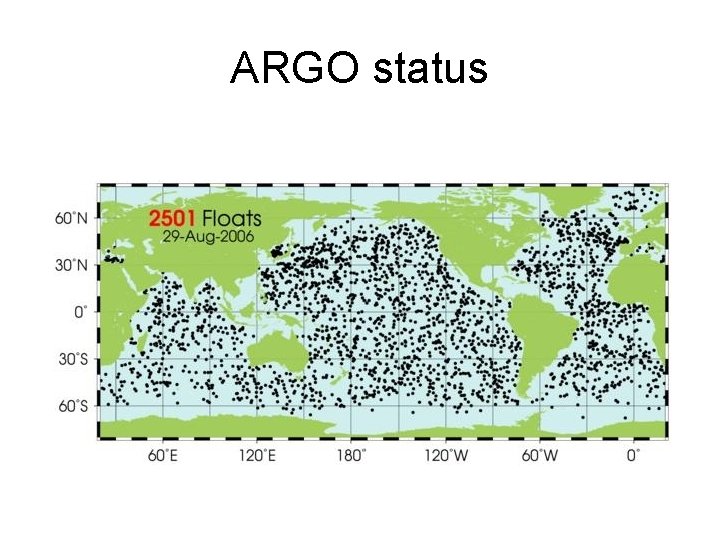
ARGO status
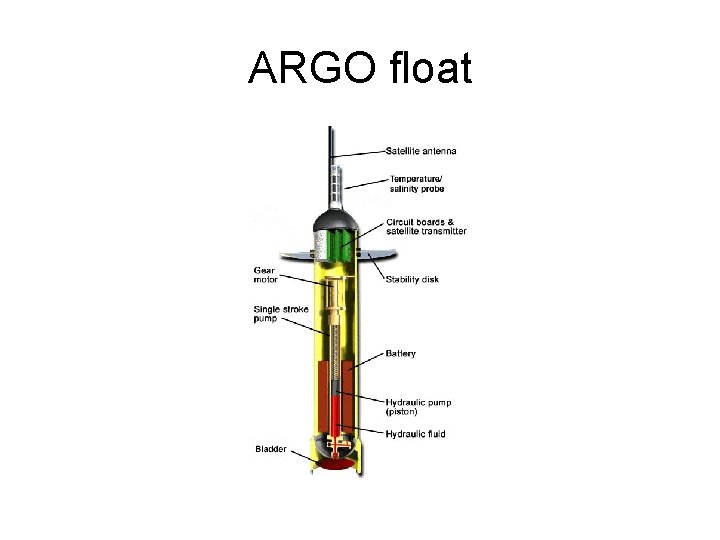
ARGO float
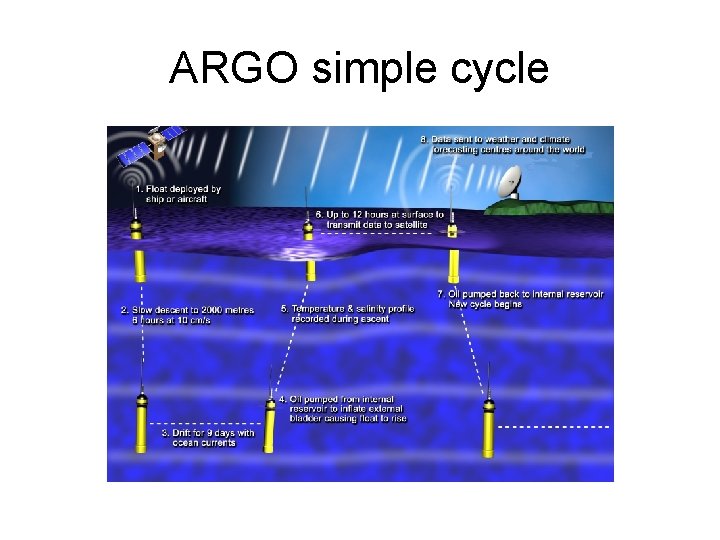
ARGO simple cycle
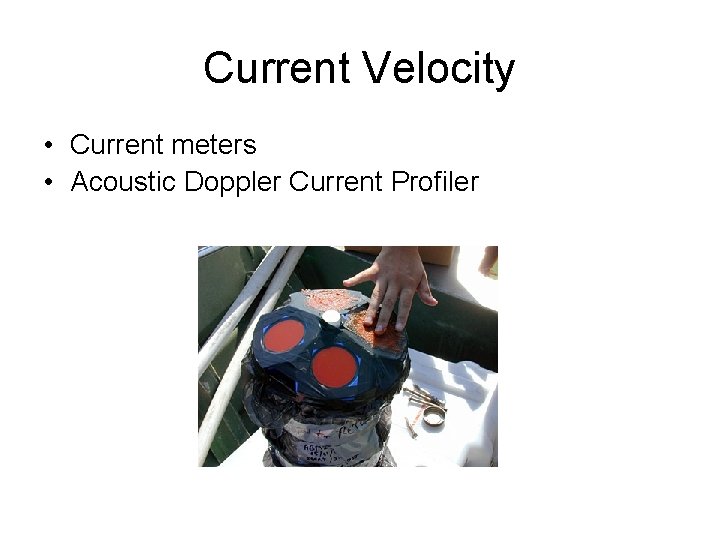
Current Velocity • Current meters • Acoustic Doppler Current Profiler
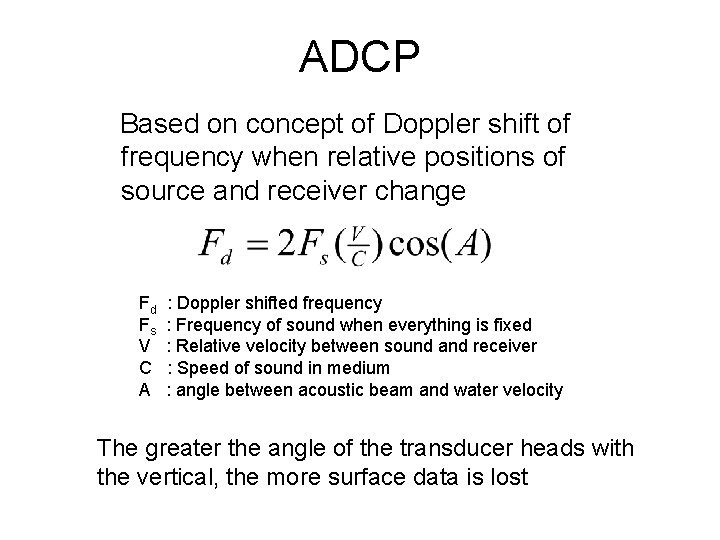
ADCP Based on concept of Doppler shift of frequency when relative positions of source and receiver change Fd Fs V C A : Doppler shifted frequency : Frequency of sound when everything is fixed : Relative velocity between sound and receiver : Speed of sound in medium : angle between acoustic beam and water velocity The greater the angle of the transducer heads with the vertical, the more surface data is lost
Depth/Pressure • Rope/line over a meter wheel • Pressure gauge - pressure proportional to depth (hydrostatic balance) – correction for inverse barometric effect (eg. Tide gauge) [1 d. B ~ 1 m] • Echo sounding – time taken for acoustic signal to make trip to sea-floor and back is proportional to distance traveled.
Something to think about… • Ocean varies on different temporal and spatial scales • Our ability to understand these variations only as good as our instrumentation • What processes we resolve depend on our sampling plan (duration, frequency, extent, …. ) • What drives ocean variability? • How does the ocean respond to such forcing?
- Slides: 27