
BRIEF ON THE NATIONAL METEOROLOGICAL AND HYDROLOGICAL SERVICES
BRIEF ON THE NATIONAL METEOROLOGICAL AND HYDROLOGICAL SERVICES ( NMHS) IN BURUNDI: Case of OBSERVATIONS AUTOMATION b. Y Ruben Barakiza METEOROLOGIST DEPARTMENT OF HYDROMETEOROLOGY; BURUNDI
PRESENTATION LAYOUT • Introduction • Viision and Mission of the Department of Hydrometeorology ü observational network üData collection system üData Processing and Analysis • • • Communication SYSTEM Partnership CHALLENGES Projets/solutions Conclusion

1. Introduction • The national meteorological and hydrological services are carried out by by the Department of Hydrometeorology and Agrometeorology • The DEPARTMENT IS ONE OF THE 3 DEPARTMENTS OF THE GEOGRAPHIC INSTITUTE OF BURUNDI( IGEBU) WHICH IS A NATIONAL INSTITUTION UNDER THE MINISTRY OF ENVIRONMENT; AGRICULTURE AND LIVESTOCK. • The 3 Departments OF THE GEOGRAPHIC INSTITUTE OF BURUNDI( IGEBU) ARE: ü DEPARTMENT OF HYDROMETEOROLOGY AND AGROMETEOROLOGY ü DEPARTMENT OF MAPPING AND LEVELLING ü DEPARTMENT OF ADMINISTRATIVE AND FINANCIAL MATTERS
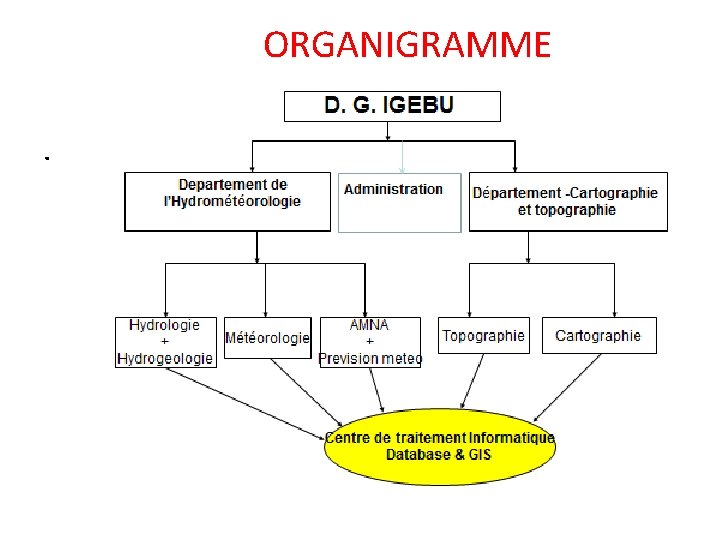
ORGANIGRAMME.
• The Department of Hydrometeorology and Agrometeorology has the following sections ü Hydrology ü hydrogeology ü Meteorology and public weather services ü Meteorological Services for international Air Navigation( Service AMNA) ü Computer-based Data management ( Service CTI)
Vision • The vision of NMHS in Burundi is to promote meteorological and hydrological activities at national level for wellbeing of the population

Missions Of THE Department OF HYDROMETEORLOGY § Set up an efficient system for monitoring hydrological and meteorological phenomena § Management of a national network for observing and collecting hydrological and meteorological data § Carry out data Processing and analysis § Forecsting weather cli; ate conditions; including severe weather and climate extremes ( heavy rainfall; floods; drought; etc) § Communication of weather/climate information to the public and private sectors. § Expertise works( climate change; water resources management; etc. ) at national and regional levels.

2. 1. National Network for meteorological Observations Network ü 2 Synoptic stations 24 h/24( Bujumbura and Muyinga) ü 19 main climatological stations ü 125 rainfall sites ü 5 automatic weather stations ( AWS) üA good number of rainfall sites operated by PROSANUT; a project of the Ministry of Environment, Agriculture and Livestock.

2. 1. b. Network for Hydrological Observations Network: 54 hydrological stations ; with at least one observer/ station Equipments: - limnimetric scales - water level recorder (recording Limnigraph)
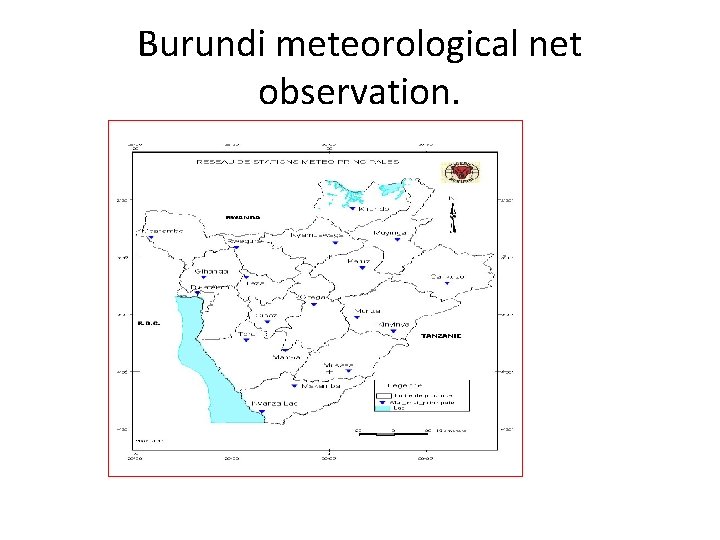
Burundi meteorological net observation.

. 2. 2. Hydrological observations network 2 major River l basins Nile River Basin Congo River Basin 54 hydrological stations installed on the big rivers and lakes. 10 Automatic stations.

METEOROLOGICAL INFRASTRUCTURE and CURRENT OBSERVATIONAL NETWORK • METEOROLOGICAL INFRASTRUCTURE • Data Observational systems and network; • Data telecommunication systems and network; • Data procession, analysis and forecasting systems; • Product and information dissemination systems; • Human resource capital CURRENTOBSERVATIONALNETWORK manuel observations Synoptic Stations: – 3 manned Surface Synoptic Stations, – 17 Climatological stations Automatic Weather Observing Systems: ─10 Automatic Weather Stations (AWSs)
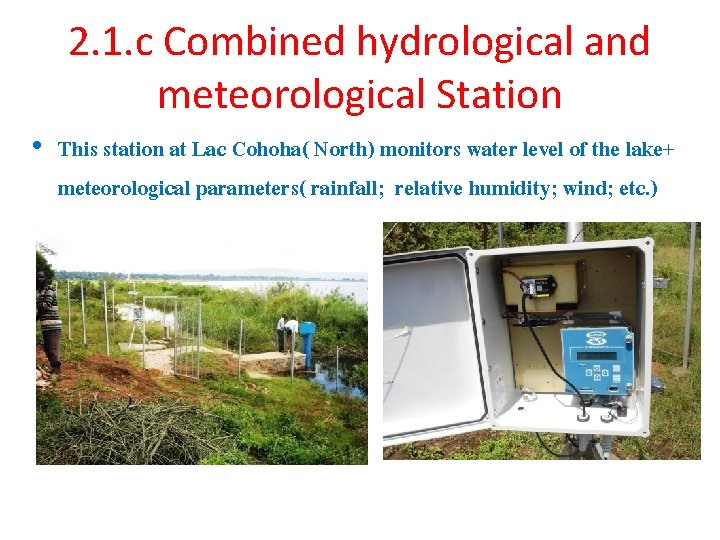
2. 1. c Combined hydrological and meteorological Station • This station at Lac Cohoha( North) monitors water level of the lake+ meteorological parameters( rainfall; relative humidity; wind; etc. )
2. 2 Main Activities of Meteorological Services of Burundi q. Collect weather/climate data from meteorological station network on daily basis ü Rainfall ü temperature, ü Wind ü evaporation ü Cloudiness etc q Daily weather forecasts for the public q. SAEASONAL RAINFALL FORECASTS
2. 3. Data collection § Meteorological data – Telephone ( Tansmission of observal data from stations to the Headquartes on daily basis at 08 h 00 et 15 h 00 local time) – Though Post Office ( Agrrement between IGEBU and et La Postal Office) – Regular Visites : for equipment Inspection and maintenance; and data collection. – Electonic transmission « Flyer-imvura » : project Prosanut operated by (Minagri) – IGEBU, les données sont directement reçues sur serveur à l’IGEBU
2. 3. Data. Collection (cont’d) • Hydrological data: ü water flow measurements for major rivers üRegular station Inspection and maintenance üAutomatic data transmission : hydrological data are measured and automatically transmitted to the server at IGEBU Headquarters (HYCOS-IGEBUProject).
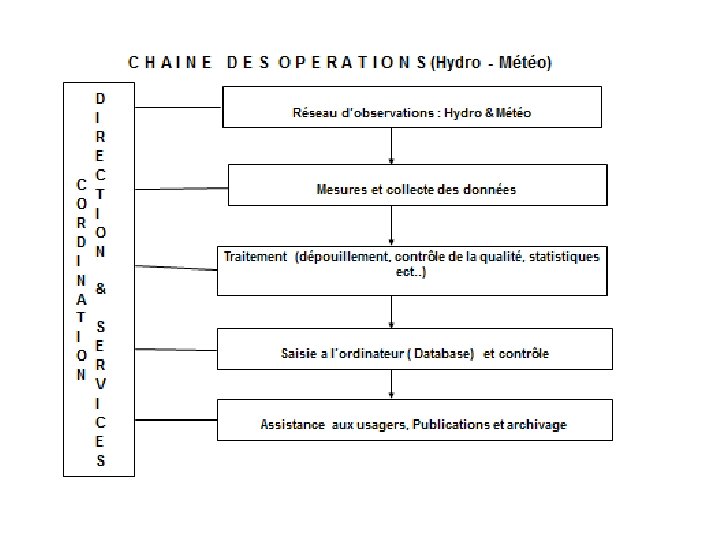
2. 4. Data processing • • • Data entry at the data management section Preliminary quality control of data Collecting and collating data ( folders) Advanced quality control at the data bank Electronic Archiving at the server + Backup
3. Communication Publication Internet (Email) Web site: « www. meteo. gov. be » Broadcating of Meteorological Bulletins through Burundi National Radio-Television ( RTNB) • Information Note on seasonal rainfall forecasts • workshops • Assistance to various users (university students, researchers , consultants) • •
4. Partners • International: ü ü ü world Meteorlogical Organization ( WMO) IGAD Cli; ate Predictions and Application Centre(ICPAC-Nairobi) African Centre for Meteorlogical Applications to Development( ACMAD) EAC Meteorological Society Germany Government Cooperation (BGR) for Water Ressources Management Ect…. • National level: Burundi Civil Aviation Authority( AACB) Red Cross (Protocole) Office for Civil Protection and Disaster Risk Management (PFN-GRCN) Projet PROSANUT of the Ministry of Environment; Agriculture and Livestock- (protocole ) ü National Radiotelevision (RTNB (protocole : Présentation du bulletin météo) ü Other public and private users; Etc…… ü ü
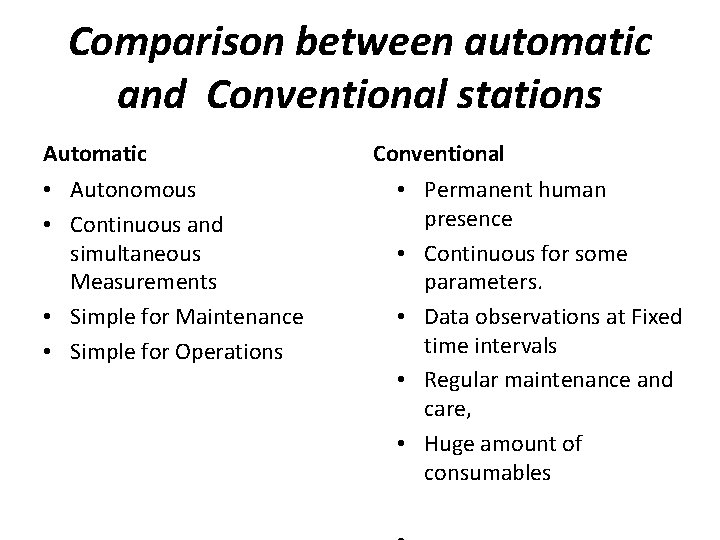
Comparison between automatic and Conventional stations Automatic • Autonomous • Continuous and simultaneous Measurements • Simple for Maintenance • Simple for Operations Conventional • Permanent human presence • Continuous for some parameters. • Data observations at Fixed time intervals • Regular maintenance and care, • Huge amount of consumables
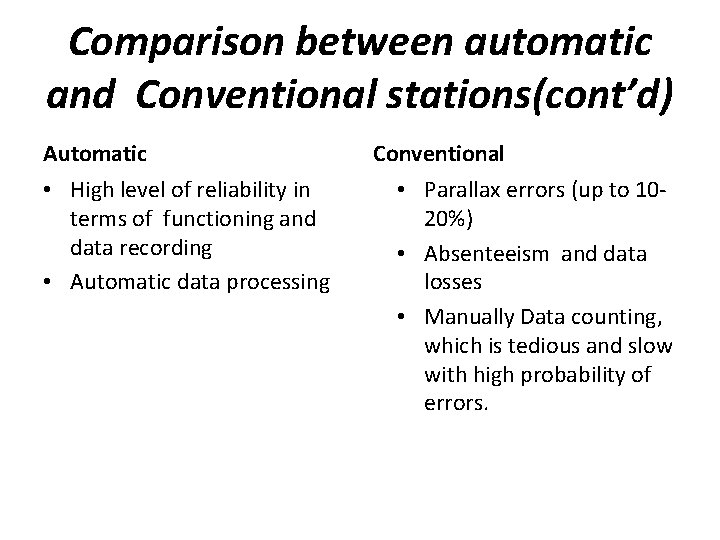
Comparison between automatic and Conventional stations(cont’d) Automatic • High level of reliability in terms of functioning and data recording • Automatic data processing Conventional • Parallax errors (up to 10 - 20%) • Absenteeism and data losses • Manually Data counting, which is tedious and slow with high probability of errors.
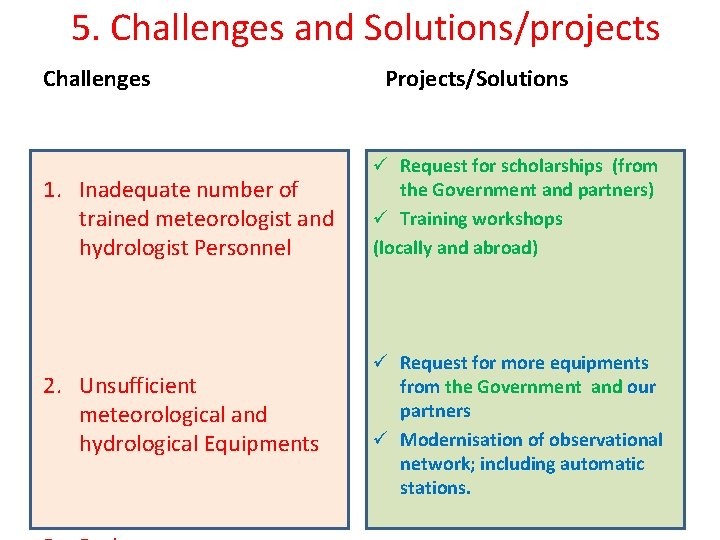
5. Challenges and Solutions/projects Challenges 1. Inadequate number of trained meteorologist and hydrologist Personnel 2. Unsufficient meteorological and hydrological Equipments Projects/Solutions ü Request for scholarships (from the Government and partners) ü Training workshops (locally and abroad) ü Request for more equipments from the Government and our partners ü Modernisation of observational network; including automatic stations.

The END THANK YOU FOR YOUR ATTENTION
- Slides: 24