
Brief Introduction to Motivational Interviewing Chris Bundy C
Brief Introduction to Motivational Interviewing Chris Bundy C Psychol, Professor of Behavioural Medicine
Psychological approaches to managing long-term conditions o o Cognitive-behaviour therapy Mindfulness based stress reduction Emotional disclosure Motivational Interviewing
Psychological approaches to managing long-term conditions o Cognitive-behaviour therapy o Mindfulness based stress reduction o Emotional disclosure o Motivational Interviewing
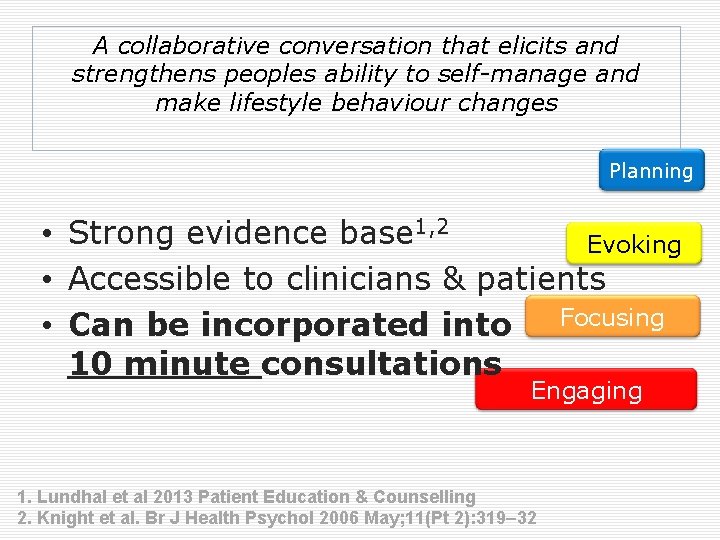
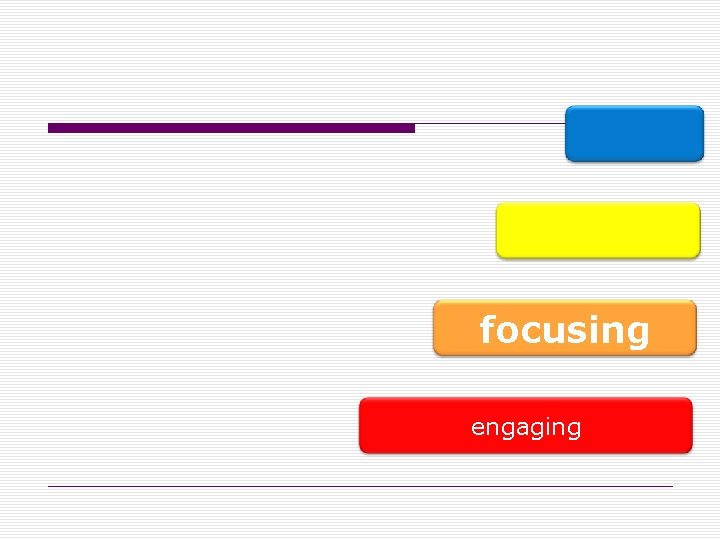
A collaborative conversation that elicits and strengthens peoples ability to self-manage and make lifestyle behaviour changes Planning • Strong evidence base 1, 2 Evoking • Accessible to clinicians & patients • Can be incorporated into Focusing 10 minute consultations Engaging 1. Lundhal et al 2013 Patient Education & Counselling 2. Knight et al. Br J Health Psychol 2006 May; 11(Pt 2): 319– 32
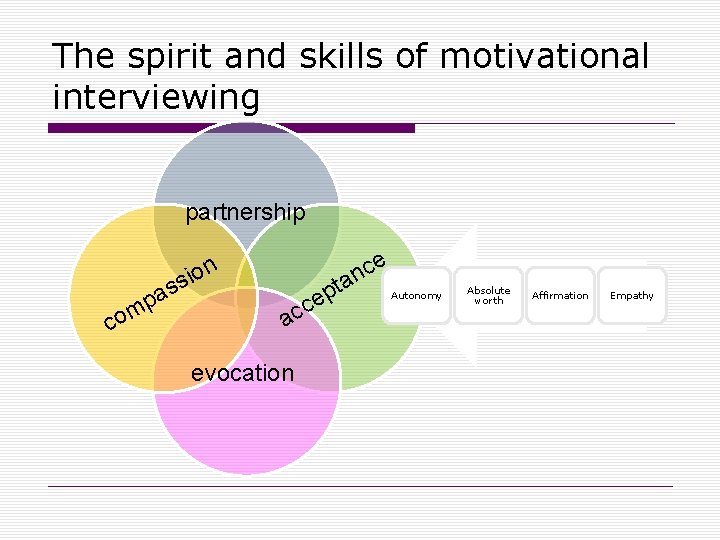
The spirit and skills of motivational interviewing partnership n o i s m o c s pa e ep c ac c n a t evocation Autonomy Absolute worth Affirmation Empathy
Engaging
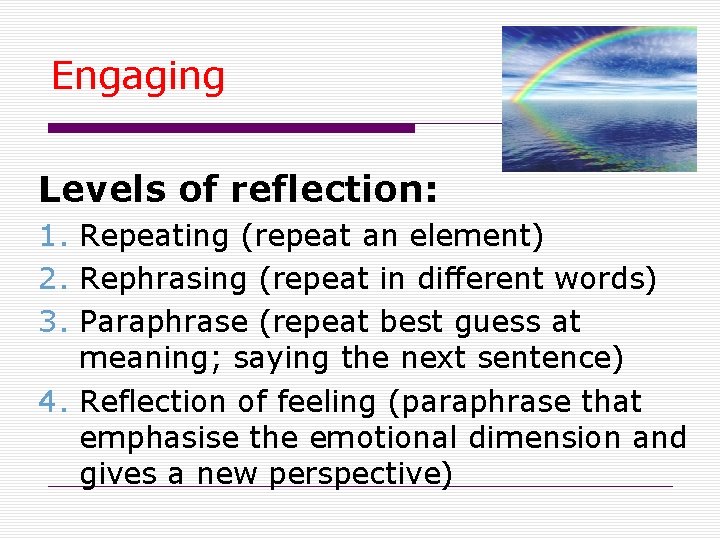
Engaging Levels of reflection: 1. Repeating (repeat an element) 2. Rephrasing (repeat in different words) 3. Paraphrase (repeat best guess at meaning; saying the next sentence) 4. Reflection of feeling (paraphrase that emphasise the emotional dimension and gives a new perspective)
“I’ll do anything to get better!” Levels of reflection: 1. Repeating (repeat an element) 2. Rephrasing (repeat in different words) 3. Paraphrase (repeat best guess at meaning; saying the next sentence) 4. Reflection of feeling (paraphrase that emphasises the emotional dimension and gives a new perspective)
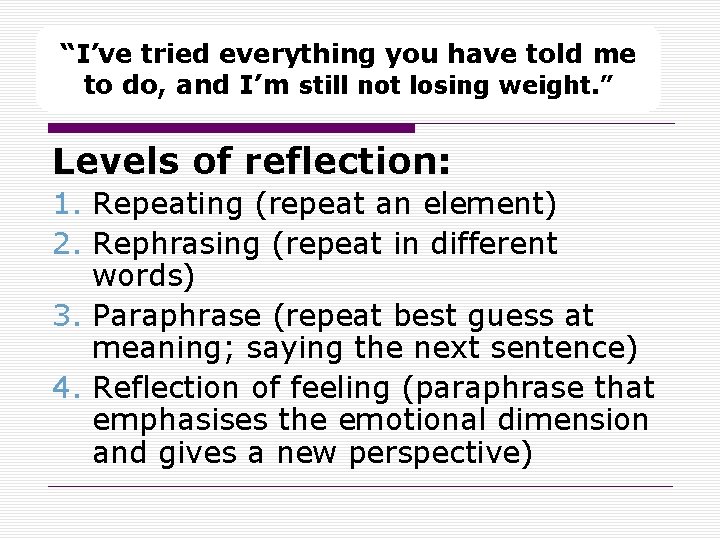
“I’ve tried everything you have told me to do, and I’m still not losing weight. ” Levels of reflection: 1. Repeating (repeat an element) 2. Rephrasing (repeat in different words) 3. Paraphrase (repeat best guess at meaning; saying the next sentence) 4. Reflection of feeling (paraphrase that emphasises the emotional dimension and gives a new perspective)
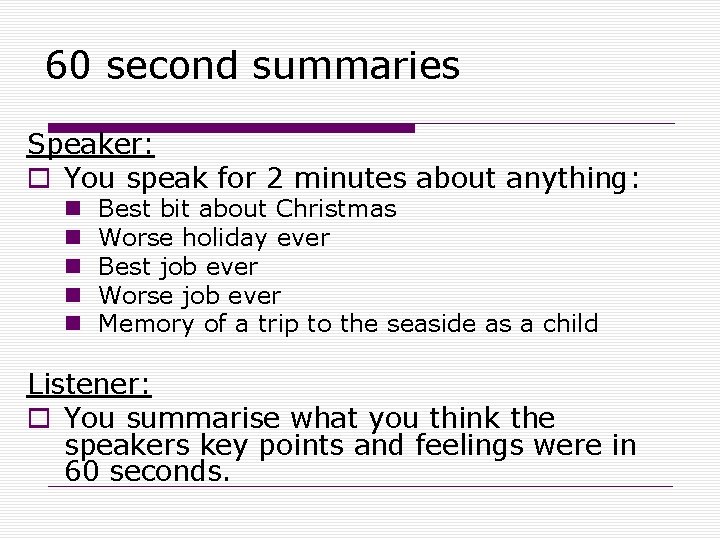
60 second summaries Speaker: o You speak for 2 minutes about anything: n n n Best bit about Christmas Worse holiday ever Best job ever Worse job ever Memory of a trip to the seaside as a child Listener: o You summarise what you think the speakers key points and feelings were in 60 seconds.
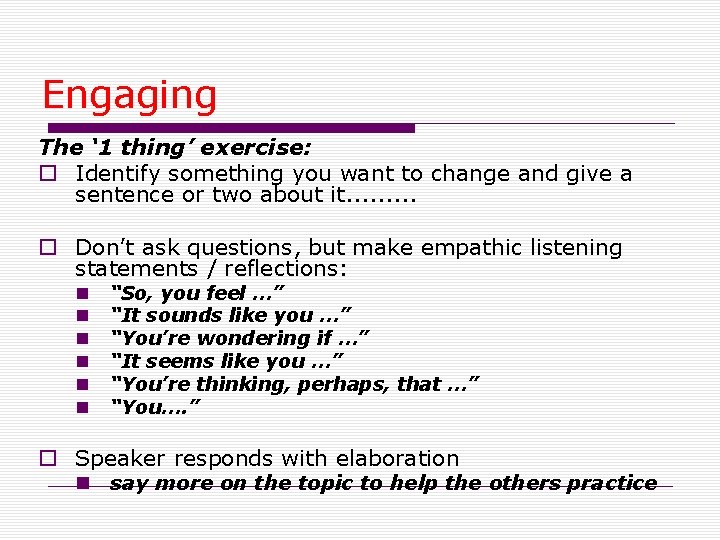
Engaging The ‘ 1 thing’ exercise: o Identify something you want to change and give a sentence or two about it. . o Don’t ask questions, but make empathic listening statements / reflections: n n n “So, you feel …” “It sounds like you …” “You’re wondering if …” “It seems like you …” “You’re thinking, perhaps, that …” “You…. ” o Speaker responds with elaboration n say more on the topic to help the others practice
focusing engaging
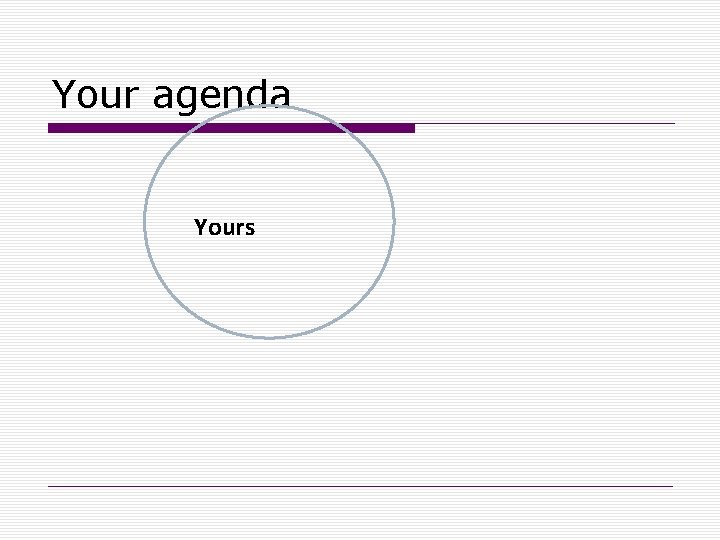
Your agenda Yours
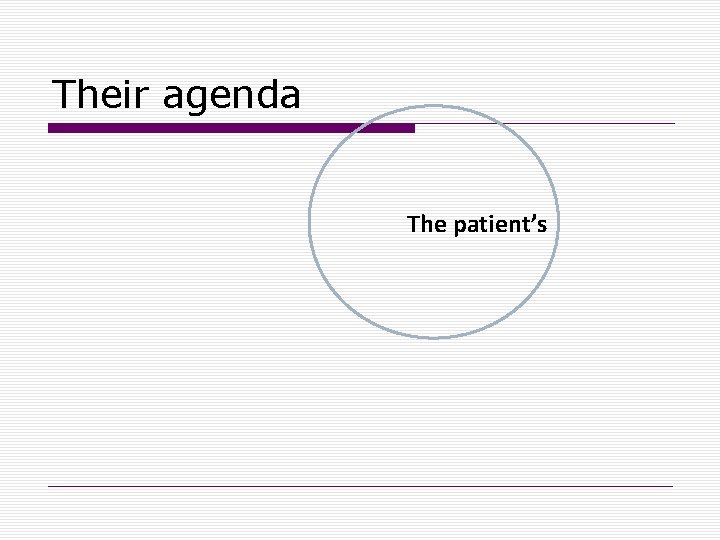
Their agenda The patient’s
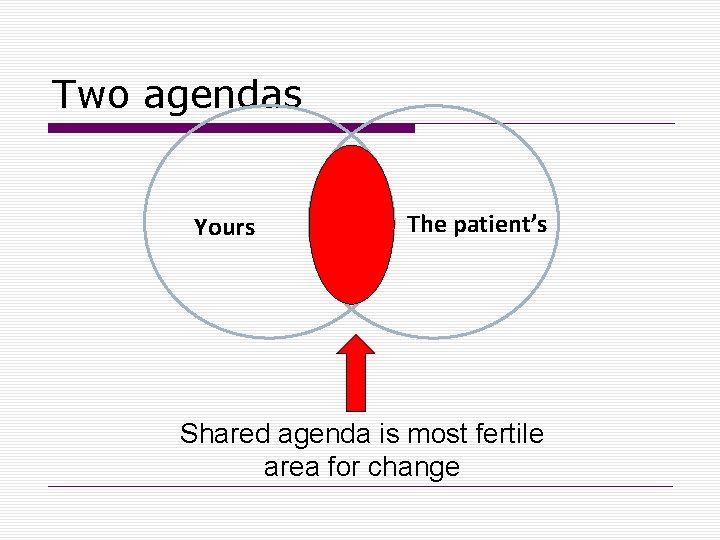
Two agendas Yours The patient’s Shared agenda is most fertile area for change
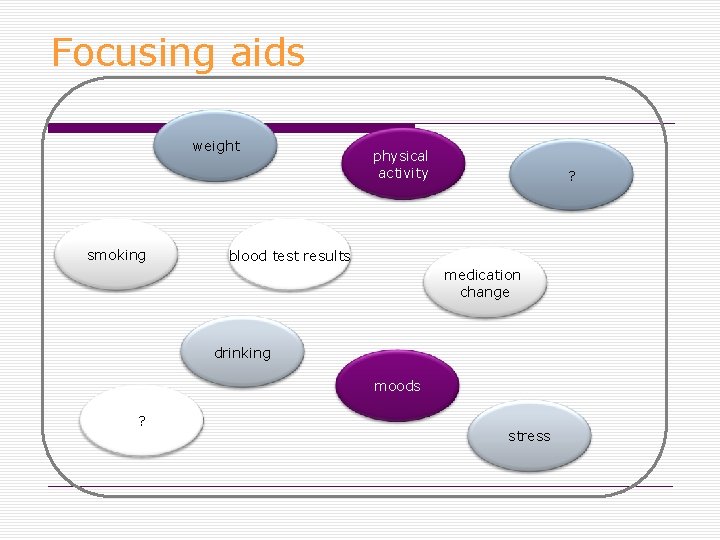
Focusing aids weight smoking physical activity ? blood test results medication change drinking moods ? stress
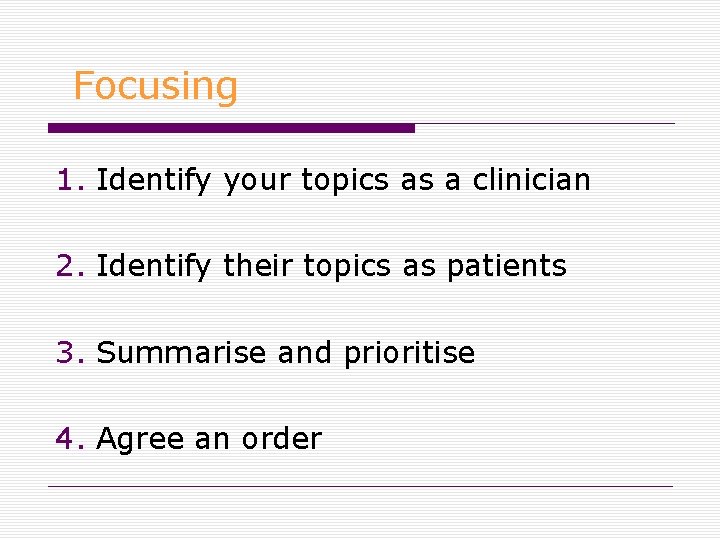
Focusing 1. Identify your topics as a clinician 2. Identify their topics as patients 3. Summarise and prioritise 4. Agree an order
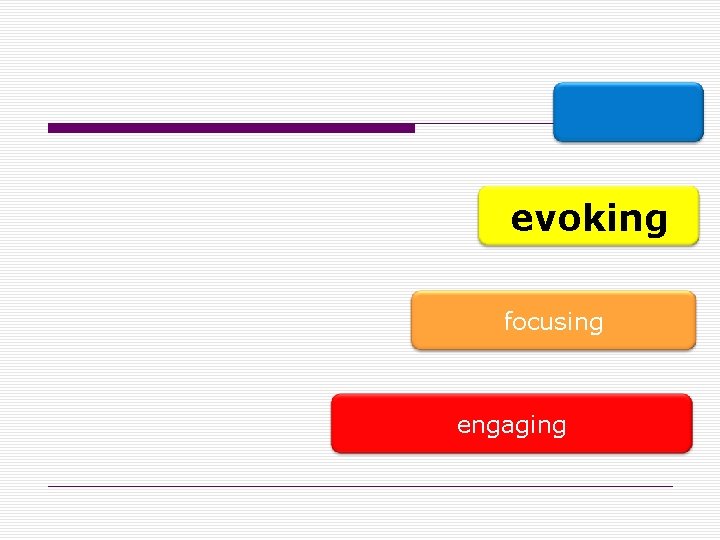
evoking focusing engaging
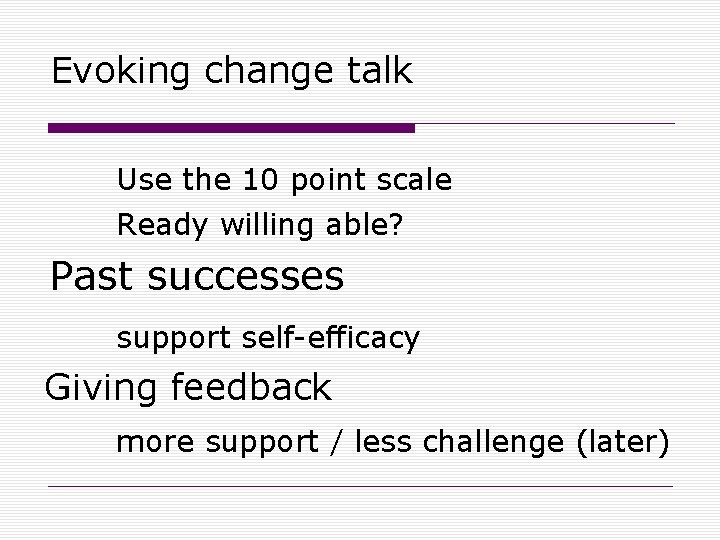
Evoking change talk Use the 10 point scale Ready willing able? Past successes support self-efficacy Giving feedback more support / less challenge (later)
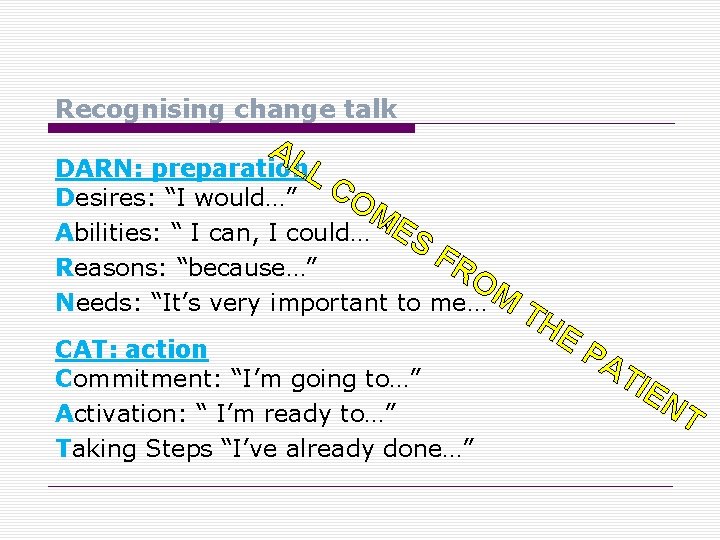
Recognising change talk AL DARN: preparation. L Desires: “I would…” CO ME Abilities: “ I can, I could… “ S F RO Reasons: “because…” Needs: “It’s very important to me… M CAT: action Commitment: “I’m going to…” Activation: “ I’m ready to…” Taking Steps “I’ve already done…” TH E PA TIE NT
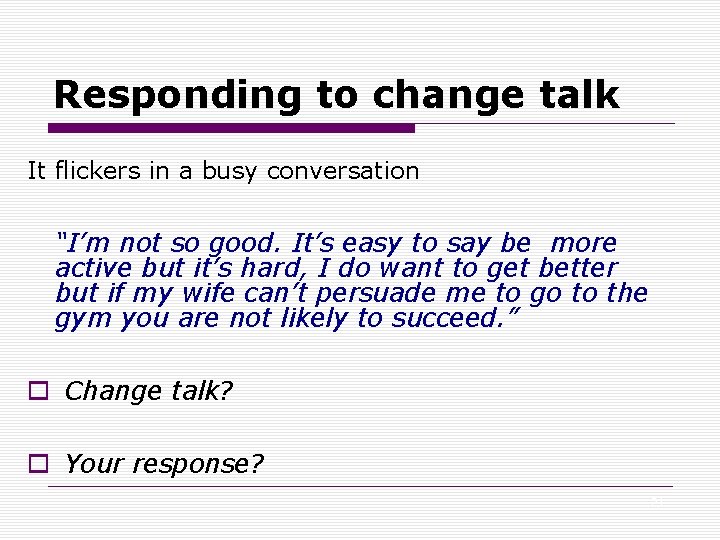
Responding to change talk It flickers in a busy conversation “I’m not so good. It’s easy to say be more active but it’s hard, I do want to get better but if my wife can’t persuade me to go to the gym you are not likely to succeed. ” o Change talk? o Your response? 21
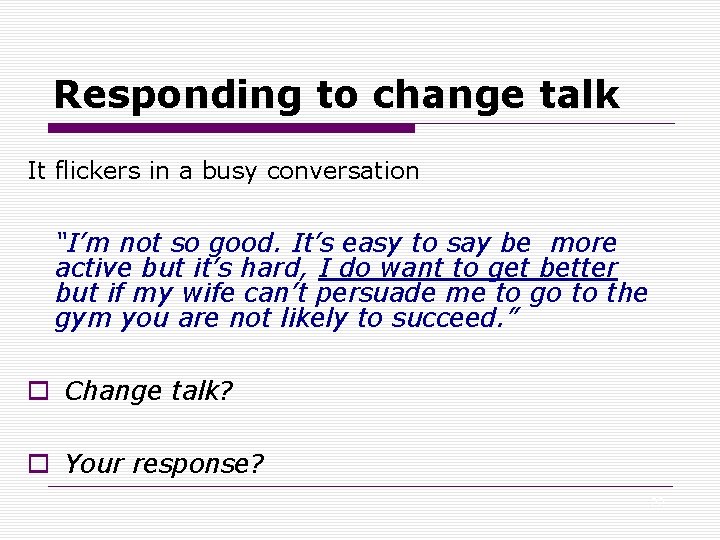
Responding to change talk It flickers in a busy conversation “I’m not so good. It’s easy to say be more active but it’s hard, I do want to get better but if my wife can’t persuade me to go to the gym you are not likely to succeed. ” o Change talk? o Your response? 22
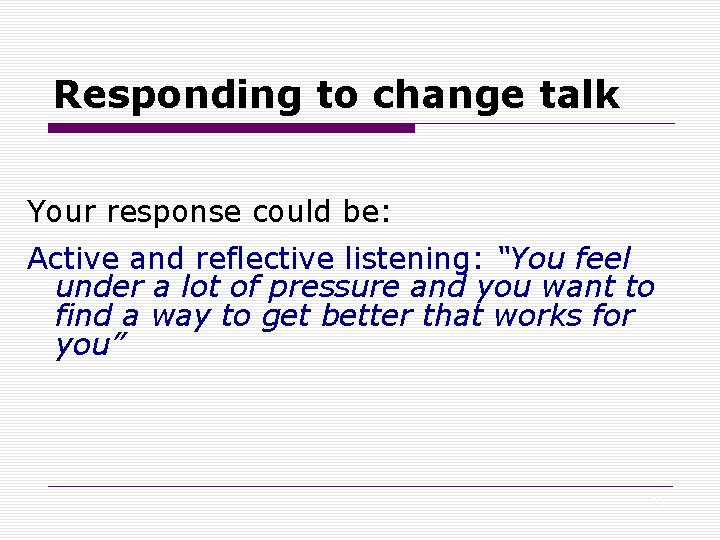
Responding to change talk Your response could be: Active and reflective listening: “You feel under a lot of pressure and you want to find a way to get better that works for you” 23
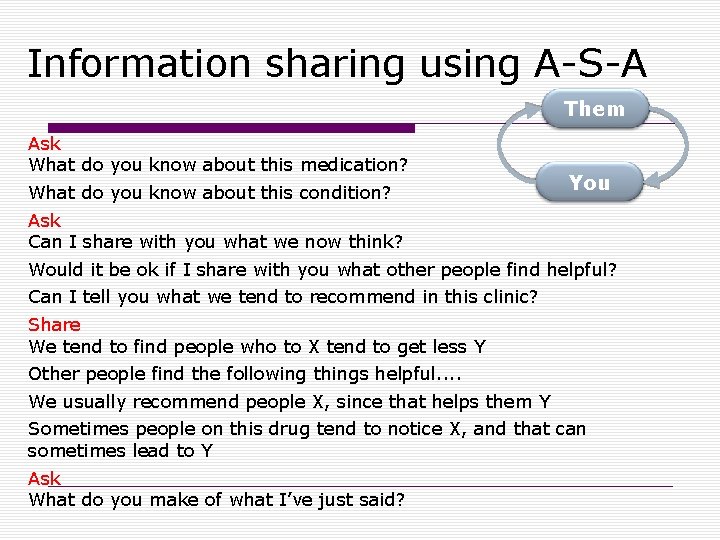
Information sharing using A-S-A Them Ask What do you know about this medication? What do you know about this condition? You Ask Can I share with you what we now think? Would it be ok if I share with you what other people find helpful? Can I tell you what we tend to recommend in this clinic? Share We tend to find people who to X tend to get less Y Other people find the following things helpful. . We usually recommend people X, since that helps them Y Sometimes people on this drug tend to notice X, and that can sometimes lead to Y Ask What do you make of what I’ve just said?
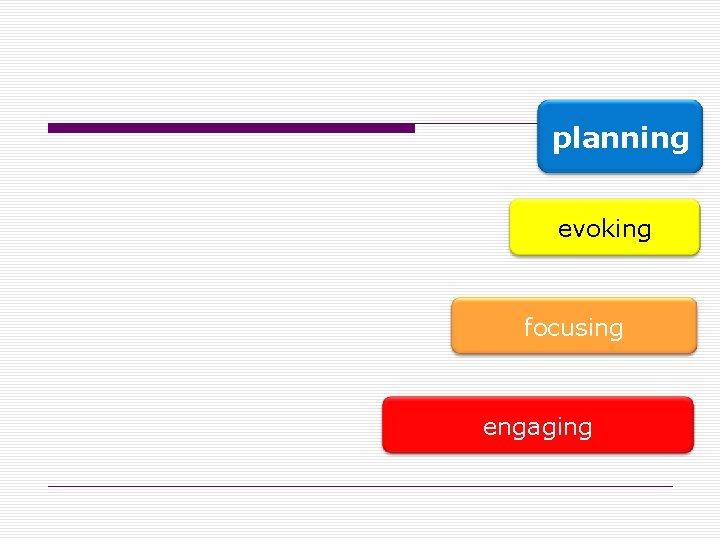
planning evoking focusing engaging
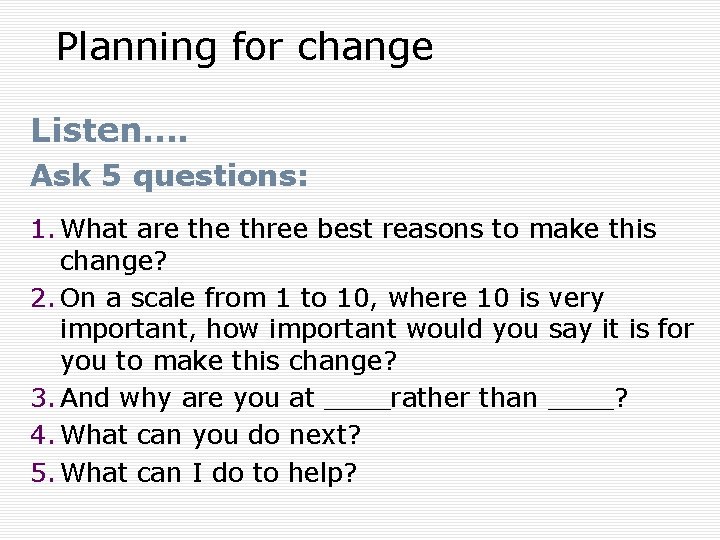
Planning for change Listen…. Ask 5 questions: 1. What are three best reasons to make this change? 2. On a scale from 1 to 10, where 10 is very important, how important would you say it is for you to make this change? 3. And why are you at ____rather than ____? 4. What can you do next? 5. What can I do to help?
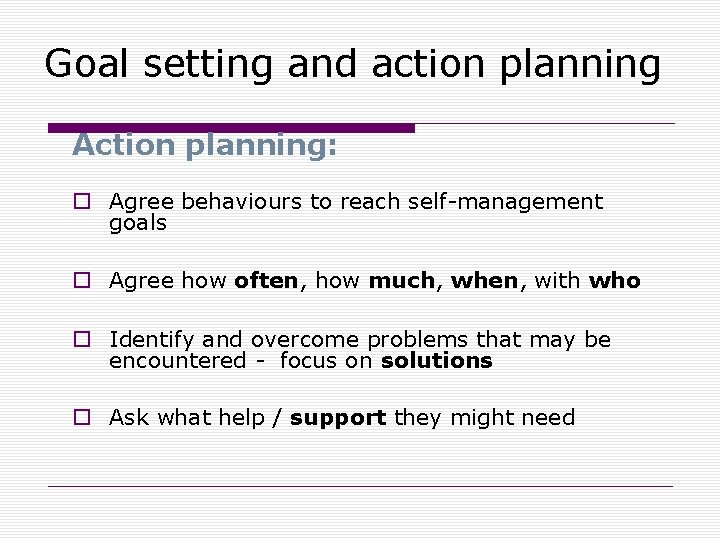
Goal setting and action planning Action planning: o Agree behaviours to reach self-management goals o Agree how often, how much, when, with who o Identify and overcome problems that may be encountered - focus on solutions o Ask what help / support they might need
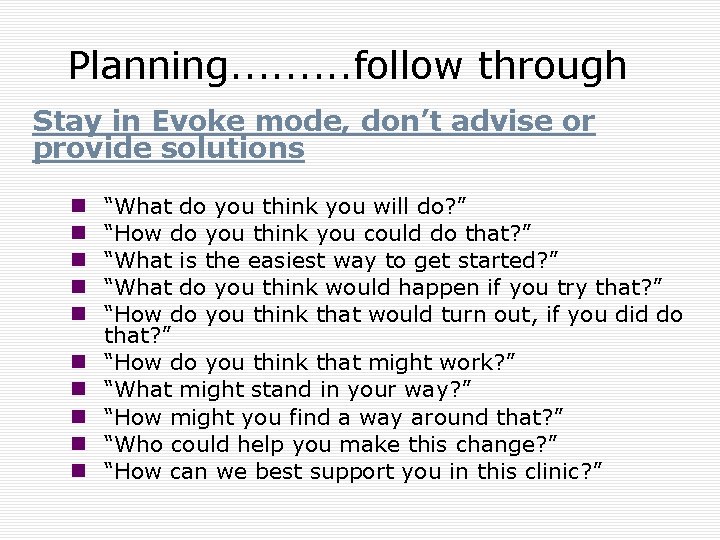
Planning. . follow through Stay in Evoke mode, don’t advise or provide solutions n n n n n “What do you think you will do? ” “How do you think you could do that? ” “What is the easiest way to get started? ” “What do you think would happen if you try that? ” “How do you think that would turn out, if you did do that? ” “How do you think that might work? ” “What might stand in your way? ” “How might you find a way around that? ” “Who could help you make this change? ” “How can we best support you in this clinic? ”
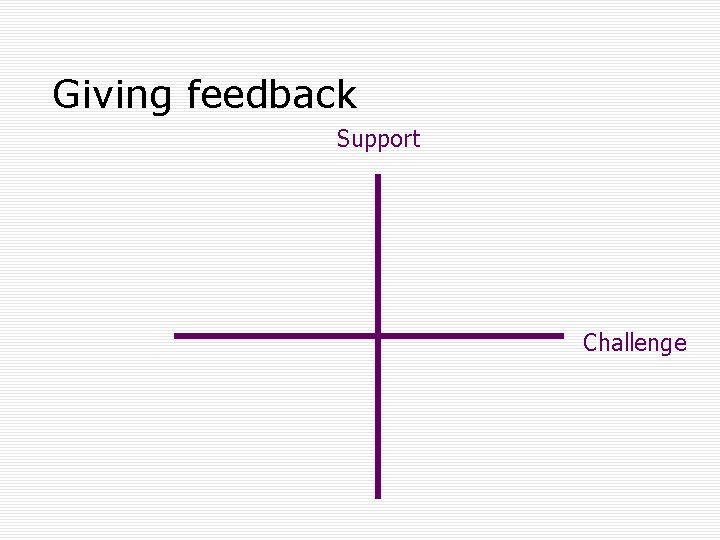
Giving feedback Support Challenge
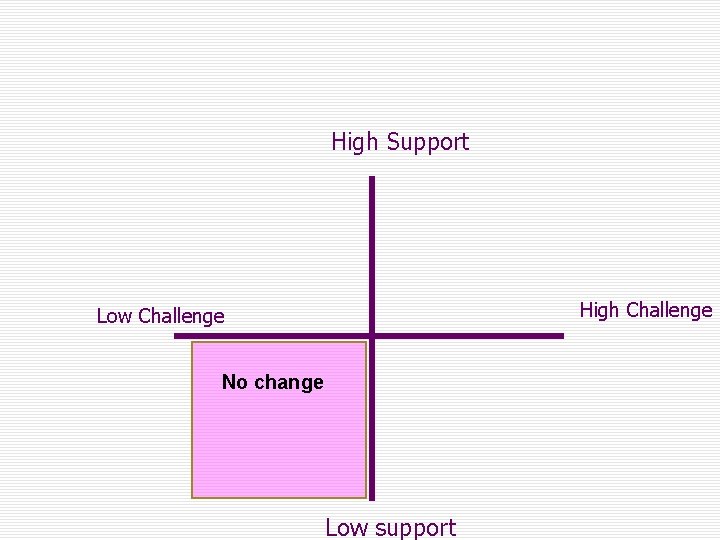
High Support High Challenge Low Challenge No change Low support
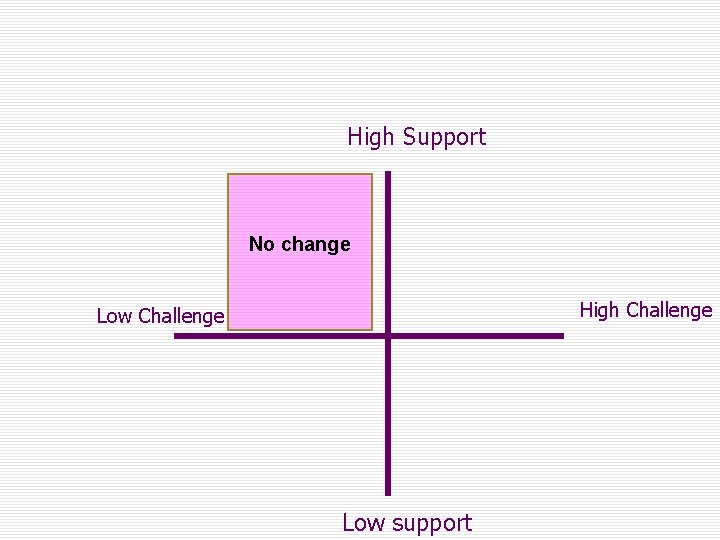
High Support No change High Challenge Low support
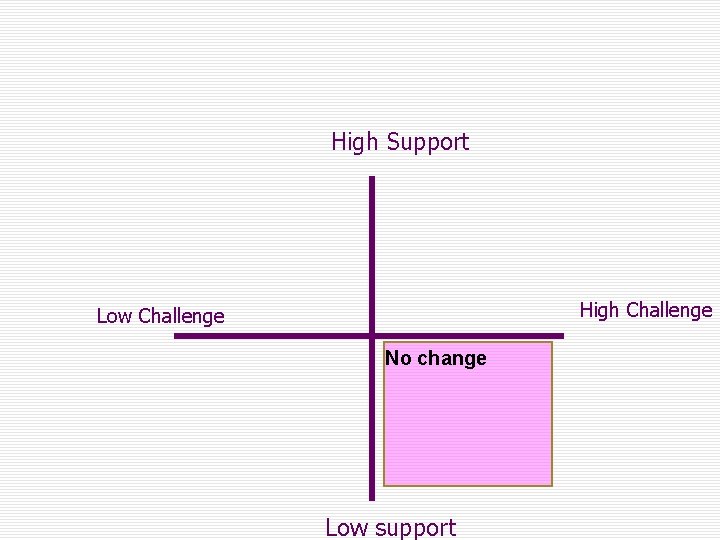
High Support High Challenge Low Challenge No change Low support
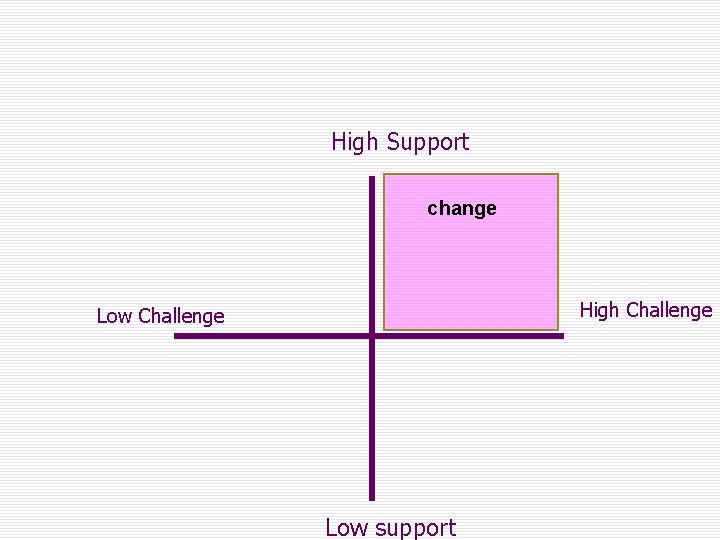
High Support change High Challenge Low support
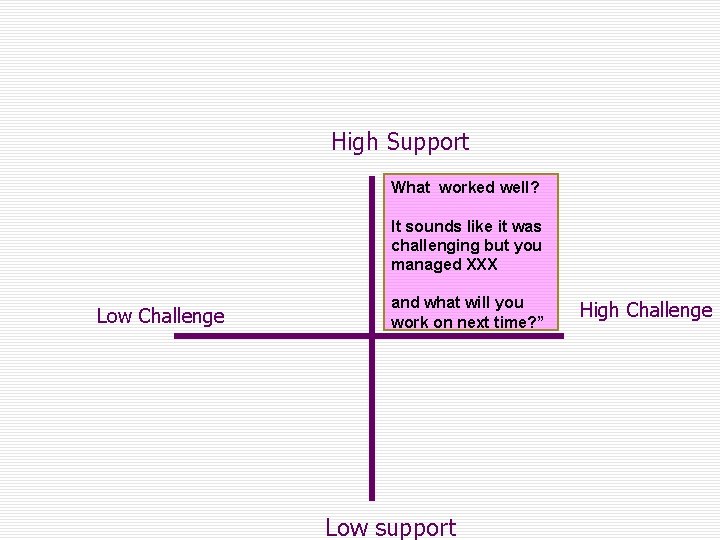
High Support What worked well? It sounds like it was challenging but you managed XXX Low Challenge and what will you work on next time? ” Low support High Challenge
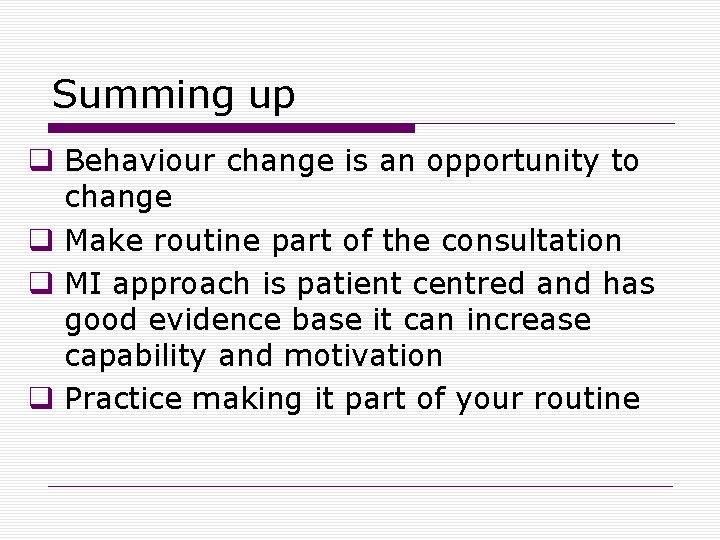
Summing up q Behaviour change is an opportunity to change q Make routine part of the consultation q MI approach is patient centred and has good evidence base it can increase capability and motivation q Practice making it part of your routine

Thank you. bundyec@cardiff. ac. uk
- Slides: 36