
Brief History of Astronomy The Early Days Based
Brief History of Astronomy
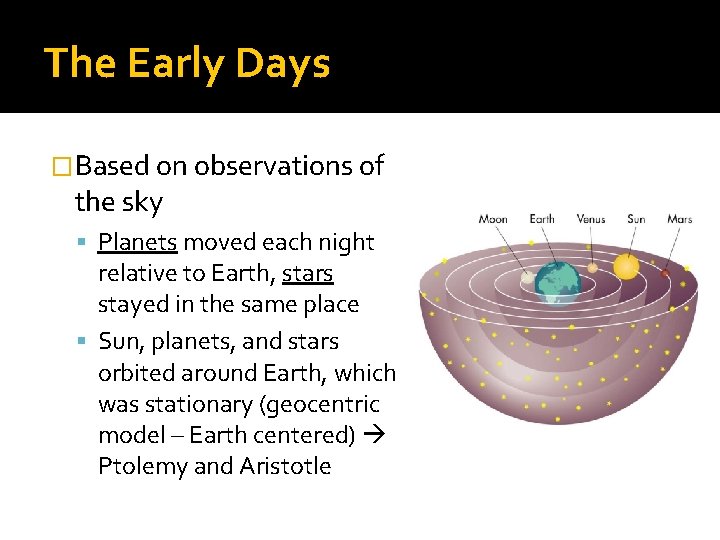
The Early Days �Based on observations of the sky Planets moved each night relative to Earth, stars stayed in the same place Sun, planets, and stars orbited around Earth, which was stationary (geocentric model – Earth centered) Ptolemy and Aristotle
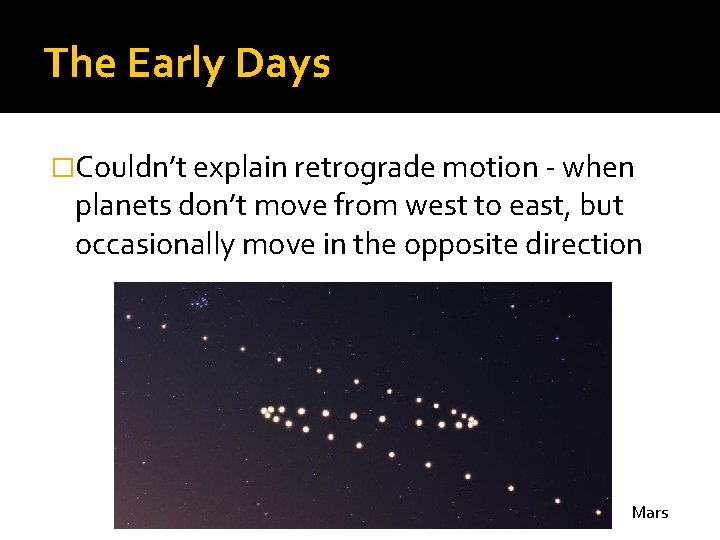
The Early Days �Couldn’t explain retrograde motion - when planets don’t move from west to east, but occasionally move in the opposite direction Mars
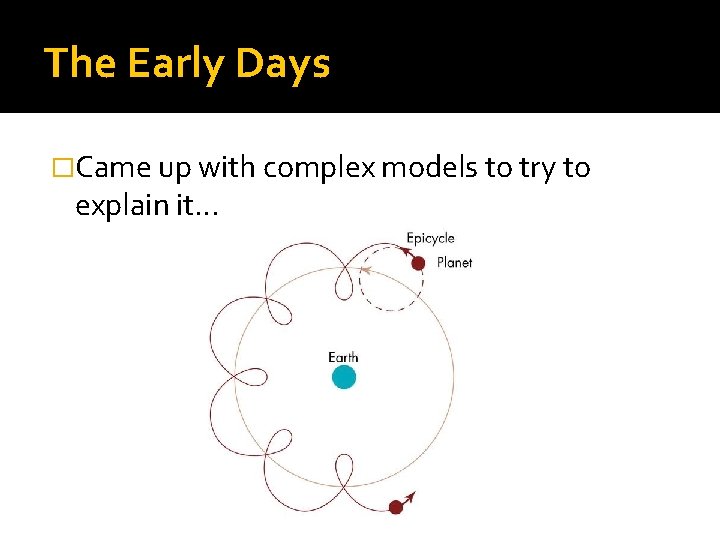
The Early Days �Came up with complex models to try to explain it…

Heliocentric Model �Copernicus (1543) suggested the sun was the center of the solar system �Things started to fall into place…
Heliocentric Model �Galileo Galilei – first to use a telescope to look at the sky Found moons that orbit Jupiter Proved that not all celestial bodies orbit Earth! Implied that Earth isn’t the center of the solar system Ideas went against the Catholic church ▪ During the Roman Inquisition Galileo promised to take back his work ▪ He didn’t, so lived out his life on house arrest
Copernicus and Galileo were right �Earth and the other 7 planets revolve around the sun �Earth is one planet within our solar system �We live in one solar system within the Milky Way Galaxy Ours is a flat disk-shape �We live in just one galaxy in the universe �Universe is everything that exists in both space and time
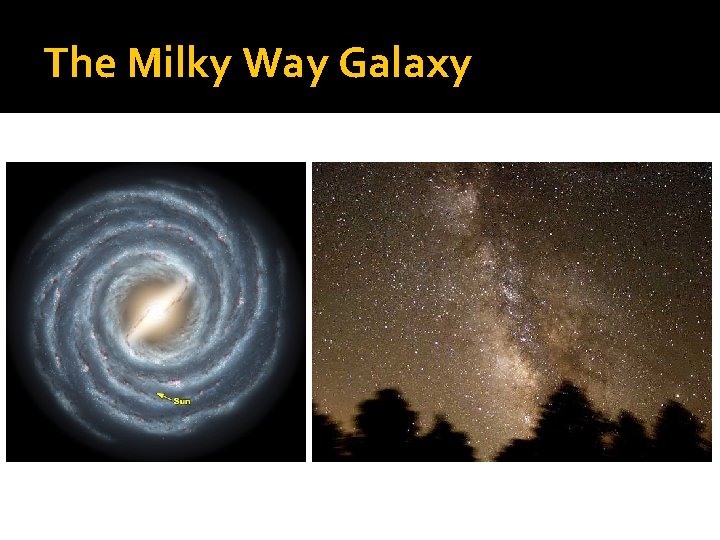
The Milky Way Galaxy
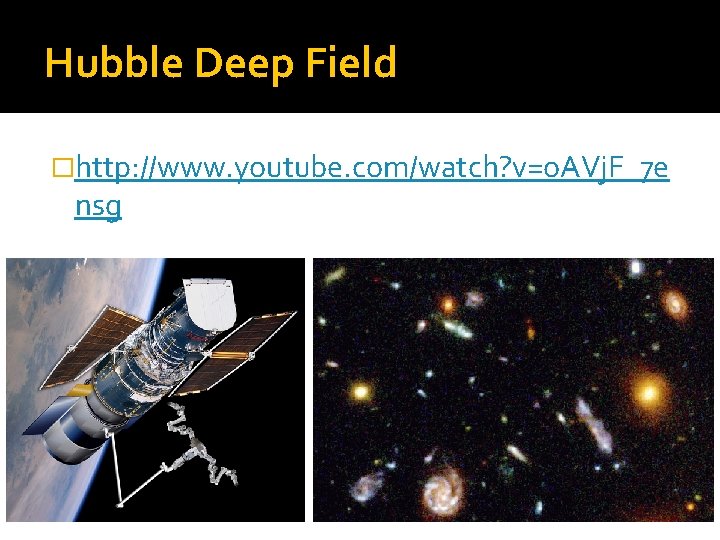
Hubble Deep Field �http: //www. youtube. com/watch? v=o. AVj. F_7 e nsg
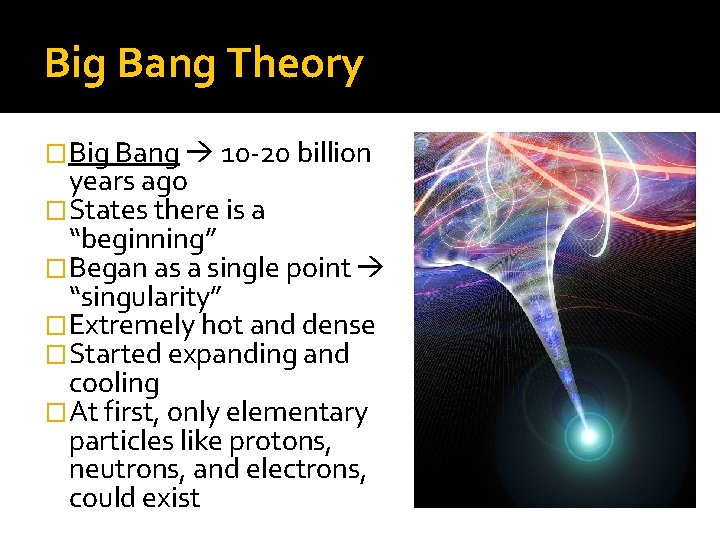
Big Bang Theory �Big Bang 10 -20 billion years ago �States there is a “beginning” �Began as a single point “singularity” �Extremely hot and dense �Started expanding and cooling �At first, only elementary particles like protons, neutrons, and electrons, could exist
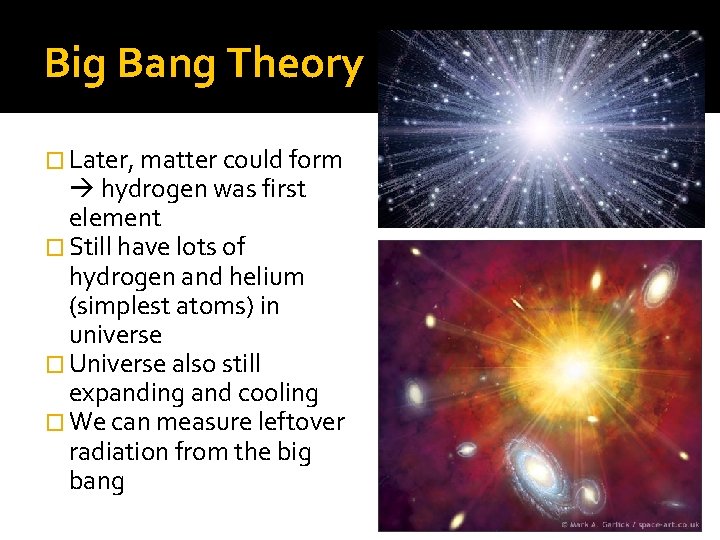
Big Bang Theory � Later, matter could form hydrogen was first element � Still have lots of hydrogen and helium (simplest atoms) in universe � Universe also still expanding and cooling � We can measure leftover radiation from the big bang

Our Solar System
- Slides: 12