
Bridging the Investment Gap in flood risk management
Bridging the Investment Gap in flood risk management Chris Zevenbergen Chair Flood Resilience Group IHE Delft & GCECA ICFM 7
2 key questions What drives investors? Can we make a difference as water professionals?
Finance & FRM: where are we ? Investments in water security are conditional to drive sustainable growth (GWP-OECD, 2016) Investment needs for FRM are large and growing Capacity to absorb finance is limited: investment planning, programming and implementation gap (OECD, 2017) This leads to (unacceptable) low levels of investments both in developed as well as in developing countries (OECD, 2015; WB, 2015; ASCE, 2017)
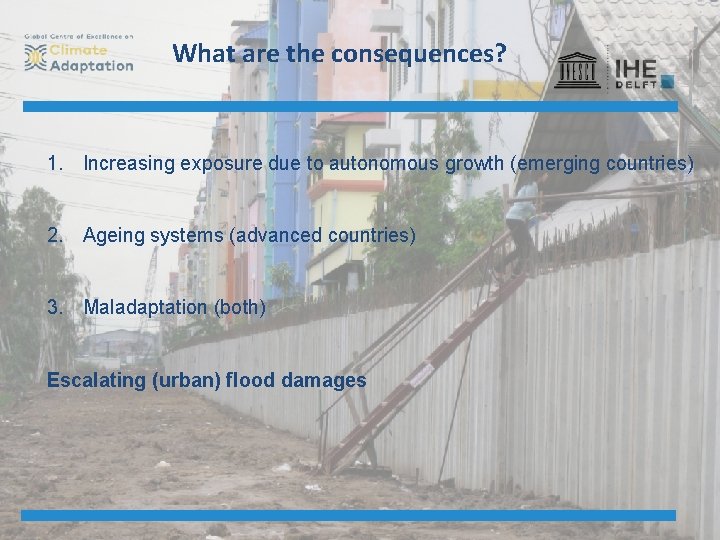
What are the consequences? 1. Increasing exposure due to autonomous growth (emerging countries) 2. Ageing systems (advanced countries) 3. Maladaptation (both) Escalating (urban) flood damages
Changing landscape of FRM Globalization, urbanization, decentralization § Cities – regions as fundamental spatial units for global economy § Devolution of power to local government Innovation in information systems (e. g. citizens observatories) Finance is no longer a limiting factor
Barriers for investments in FRM (modified after: HLPW, 2016) High sunk costs & long pay-back period Land acquisition: lengthy processes & lack transparency Diverse beneficiaries, benefits not easy to be monetized Uncertainty in assessing (hydrological) risks Emerging approaches as GI* lack performance track record Flood infrastructure: category of high risk asset classes *green infrastructure
Actions to overcome barriers (OECD-WWC Roundtable, 2017) Maximize the value of existing assets Select investment pathways that reduce water risks at least cost over time (demonstrably sustainable!) Ensure synergies and complementarities with investments in other sectors (economies of scale, win-win) Scale-up financing through attractive risk-return allocation

Select investment pathways Infrastructure Investment Project Cycle UP-STREAM (plans) National Development Plan/Strategy DOWN-STREAM (projects) Strategy Development & Programming Regional/City Development Plan/Strategy Project structuring Key features interface: 1. Understand assess flood risk 2. Valuation of alternative scenario’s 3. Long-term, adaptive development strategy 4. Package of projects Feasibility Study Financing Arrangements Learning Project Implementation Operation & Maintenance (Modified from CDIA, 2015)
China Leading in renewable energy investments (mitigation) Falls short in investing in flood management infrastructure (adaptation) Globally highest investment needs (30% of total needs, Global Infrastructure Hub, 2017) Private funding is needed to bridge the gap
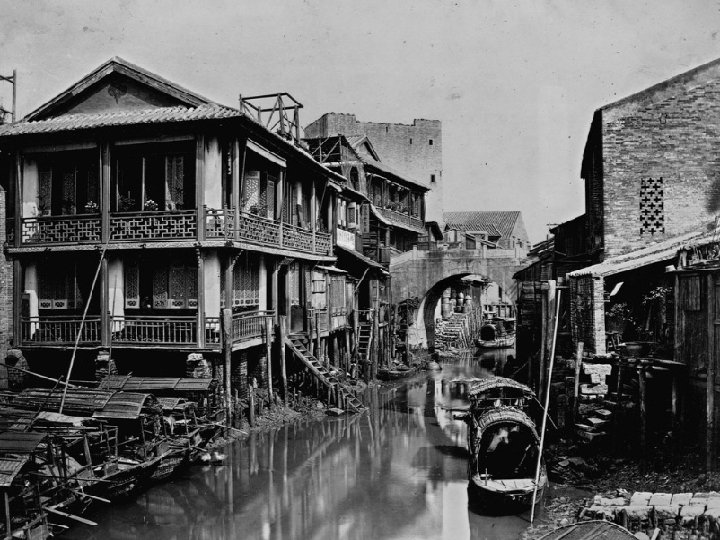
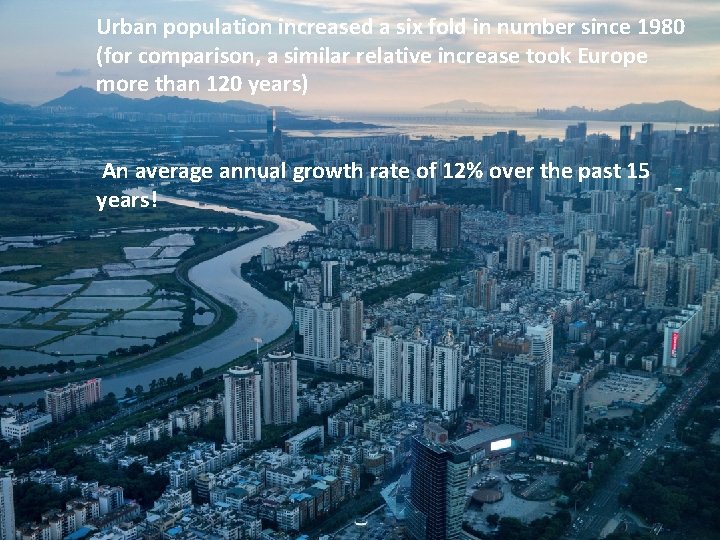
Urban population increased a six fold in number since 1980 (for comparison, a similar relative increase took Europe more than 120 years) An average annual growth rate of 12% over the past 15 years!
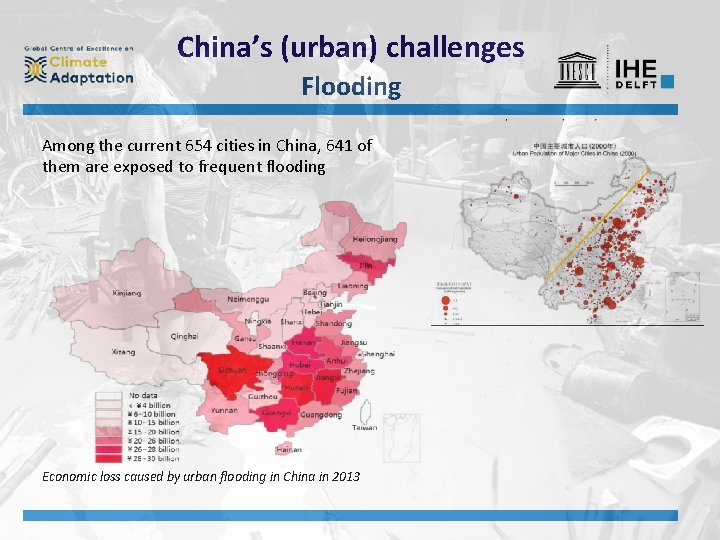
China’s (urban) challenges Flooding Among the current 654 cities in China, 641 of them are exposed to frequent flooding Economic loss caused by urban flooding in China in 2013
Sponge Cities program (launched 2013) • Sponge Cities program: "building Sponge Cities where stormwater can be naturally conserved, infiltrated, and purified“ (President Xi Jinping, 2013 ) • Costs ≈ $1. 5 trillion (657 cities, 20 years) • Challenge 30 pilot cities: • time for reflection and peer learning • private investments (lack of business model)
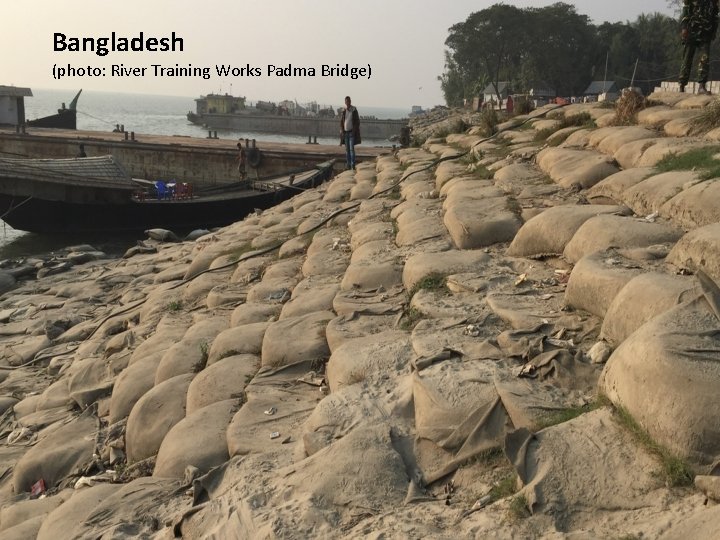
Bangladesh (photo: River Training Works Padma Bridge)
Bangladesh 90% flood prone, 90% river basins located outside the country Since 1950: 16 catastrophic floods Typical example of an emerging economy (GDP= 6%) National Delta Plan to be accepted in December 2017 Frontrunner in the development of a comprehensive investment plan using ADM
Investment Plan (for the DP Bangladesh 2100) 80 projects (65 physical projects) selected and prioritized Total capital investment: $ 38 bln All to be started 1 st 8 years Alignment 5 years planning cycle Major challenge: to development the capacity needed to implement (incl monitoring and learning) the plan
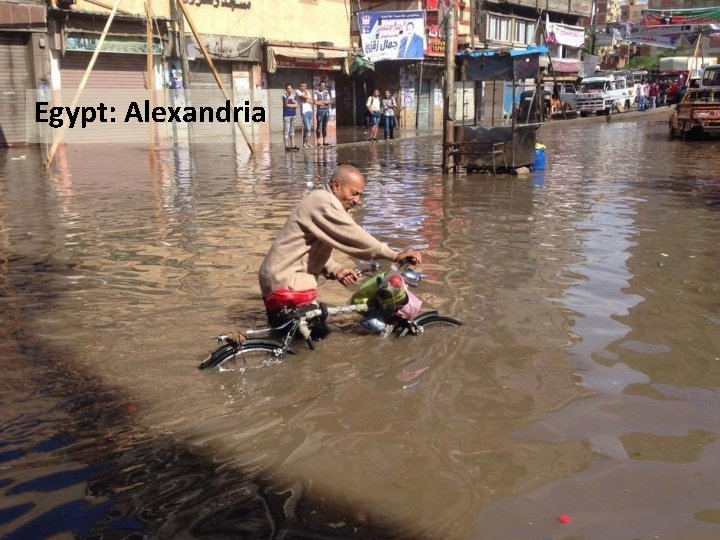
Egypt: Alexandria
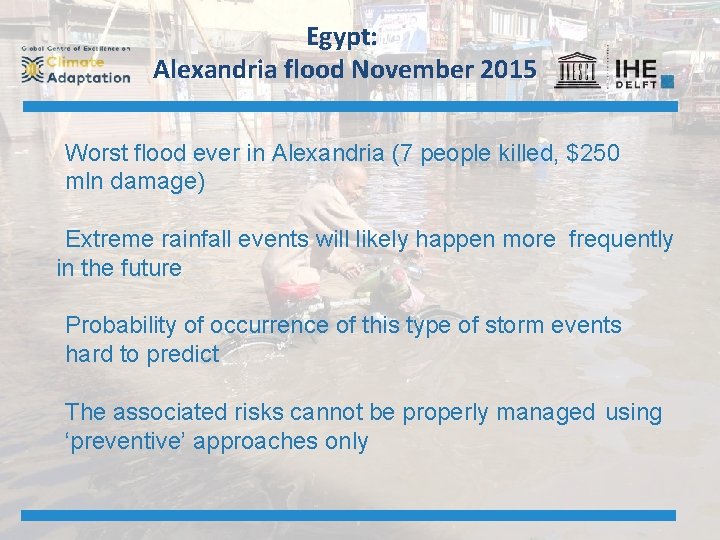
Egypt: Alexandria flood November 2015 Worst flood ever in Alexandria (7 people killed, $250 mln damage) Extreme rainfall events will likely happen more frequently in the future Probability of occurrence of this type of storm events hard to predict The associated risks cannot be properly managed using ‘preventive’ approaches only
Scoping Mission report Implement Mitigation Action Plan: – quick-wins: invest in preparedness (emergency response & anticipatory water management) – develop long-term (transformation) strategy: requiring large investments (adapting existing infrastructure and new build) Development strategy will take time (> 5 yrs)
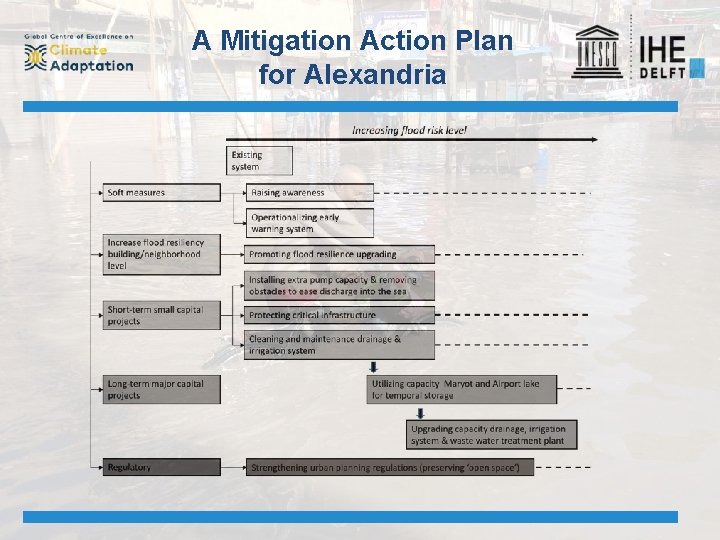
A Mitigation Action Plan for Alexandria
Conclusions (1) FRM: high complexity, risky investments Calls for a broad, integrated appreciation Shifts needed: • focus on unlocking economic potential rather than on efficiency • from single projects to packages of projects (programs) • from short-term to long-term • from a robust to an adaptive approach
Conclusions (2) FRM professionals need to: • have an understanding of the services FRM provides to people and businesses, and their interrelationship • acknowledge interests of various policy areas, levels of government & private stakeholders (incl. financing world) • provide evidence-based (long-term) investment scenario’s towards sustainable development Collective learning will be essential for development and implemenation
- Slides: 23