
Bridging the Gap Between PRACTICE RESEARCH SANDRA J

Bridging the Gap Between PRACTICE &RESEARCH SANDRA J. HUSTON, Ph. D. , Texas Tech University SONYA BRITT-LUTTER, Ph. D. , CFP®, Kansas State University
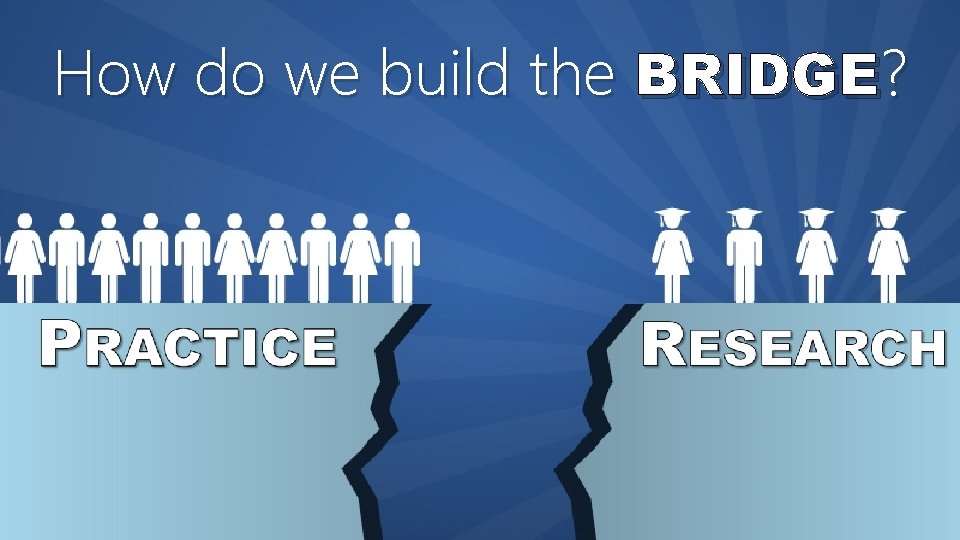
How do we build the BRIDGE?
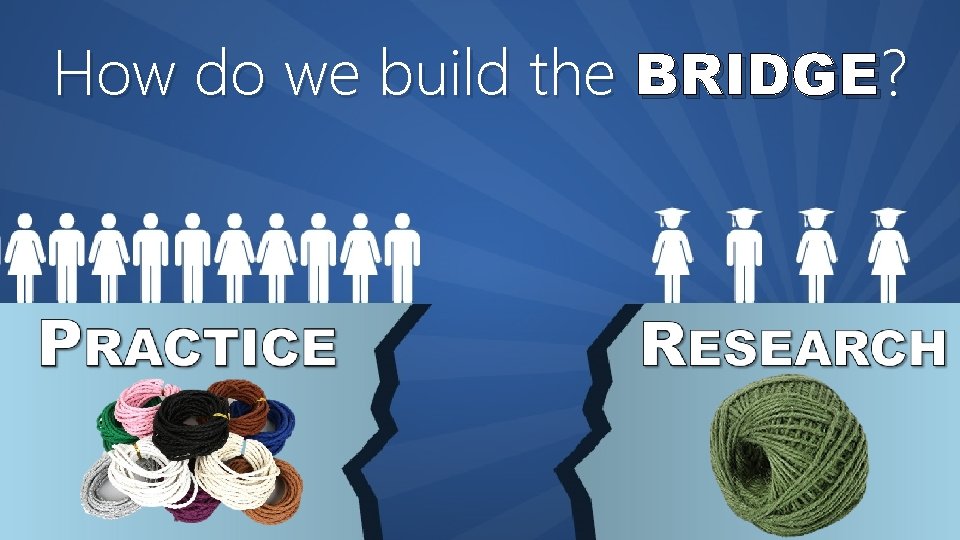
How do we build the BRIDGE?
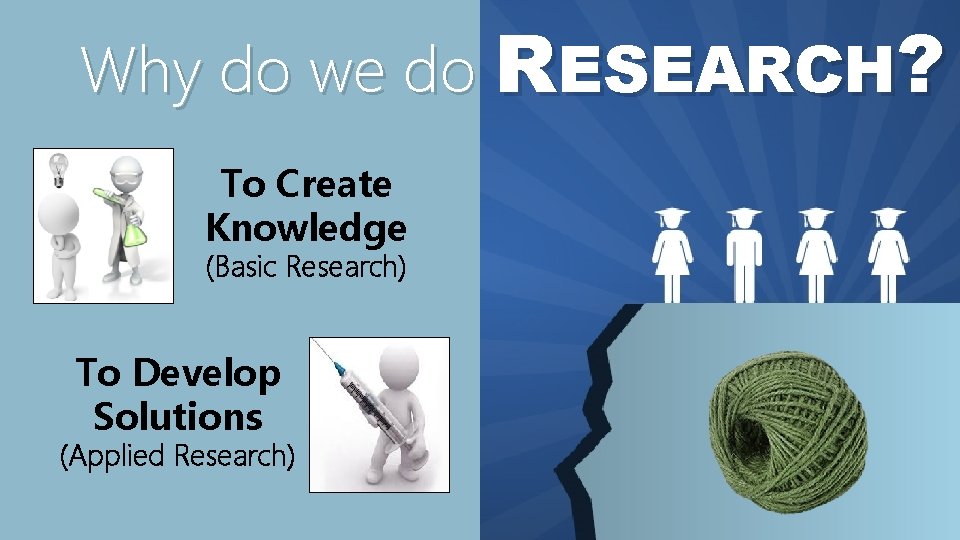
Why do we do RESEARCH? To Create Knowledge (Basic Research) To Develop Solutions (Applied Research)
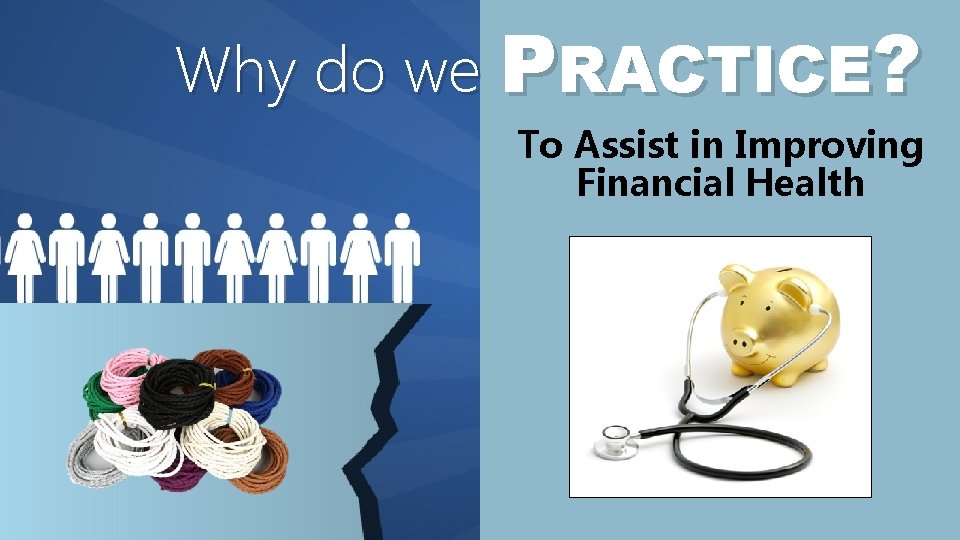
Why do we PRACTICE? To Assist in Improving Financial Health
What is FINANCIAL HEALTH?
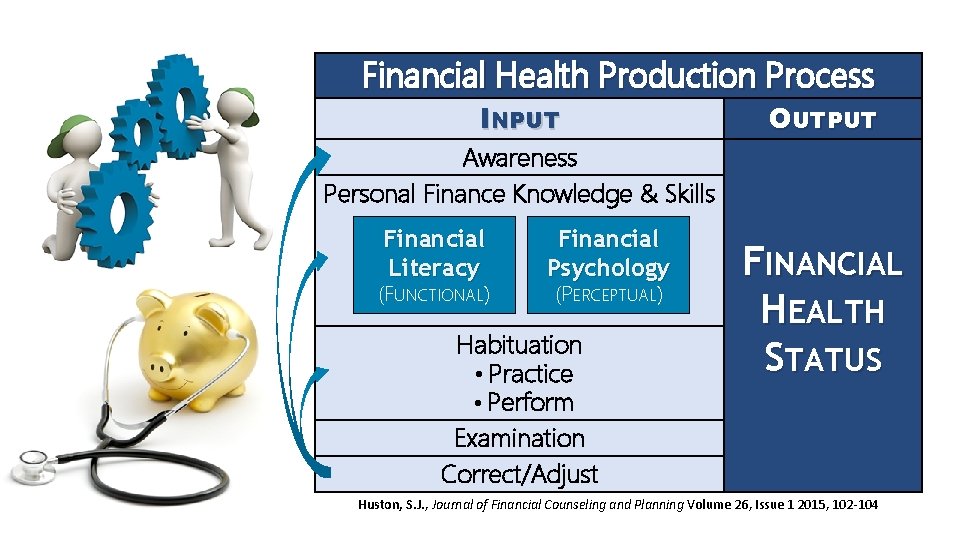
Financial Health Production Process INPUT OUTPUT Awareness Personal Finance Knowledge & Skills Financial Literacy (FUNCTIONAL) Financial Psychology (PERCEPTUAL) Habituation • Practice • Perform FINANCIAL HEALTH STATUS Examination Correct/Adjust Huston, S. J. , Journal of Financial Counseling and Planning Volume 26, Issue 1 2015, 102 -104
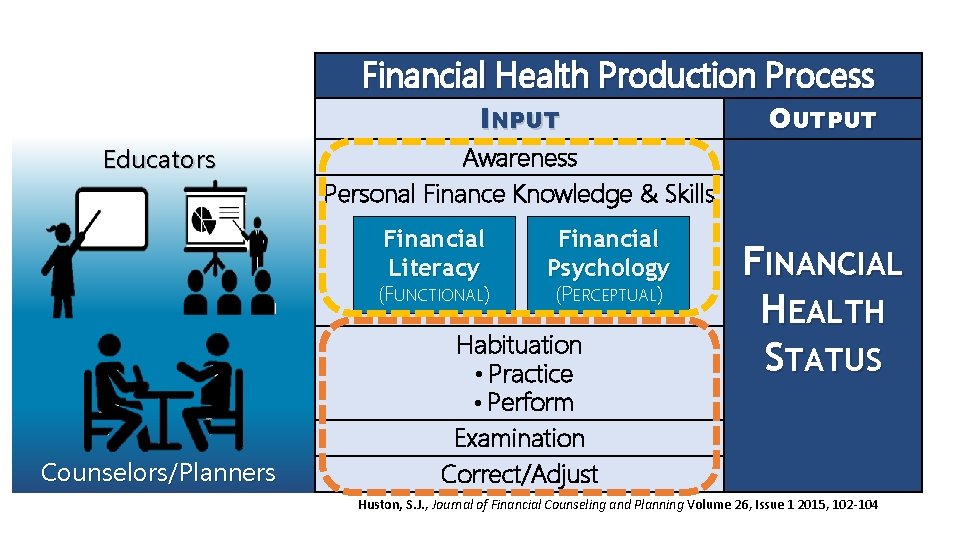
Financial Health Production Process INPUT Educators Awareness Personal Finance Knowledge & Skills Financial Literacy (FUNCTIONAL) Financial Psychology (PERCEPTUAL) Habituation • Practice • Perform Counselors/Planners OUTPUT FINANCIAL HEALTH STATUS Examination Correct/Adjust Huston, S. J. , Journal of Financial Counseling and Planning Volume 26, Issue 1 2015, 102 -104
How do we know HOW TO PRACTICE?
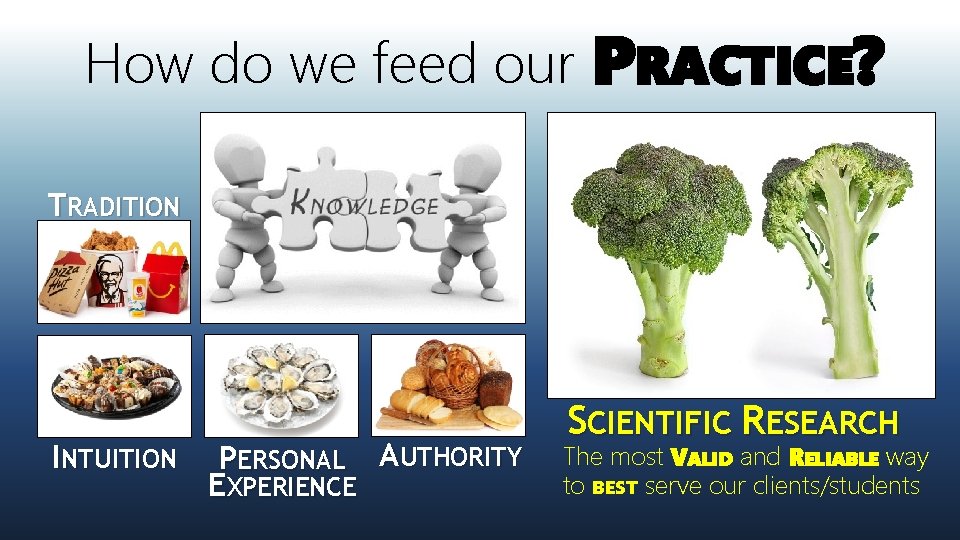
How do we feed our PRACTICE? TRADITION INTUITION PERSONAL AUTHORITY EXPERIENCE SCIENTIFIC RESEARCH The most VALID and RELIABLE way to BEST serve our clients/students
Generally Agreed Upon Practices Evidence-Based Practices
Generally Agreed Upon Practices What’s the difference? Lower Odds Higher Odds Evidence-Based Practices

Generally Agreed Upon Practices STAGNATION What’s the difference? Lower Odds Higher Odds Evidence-Based Practices
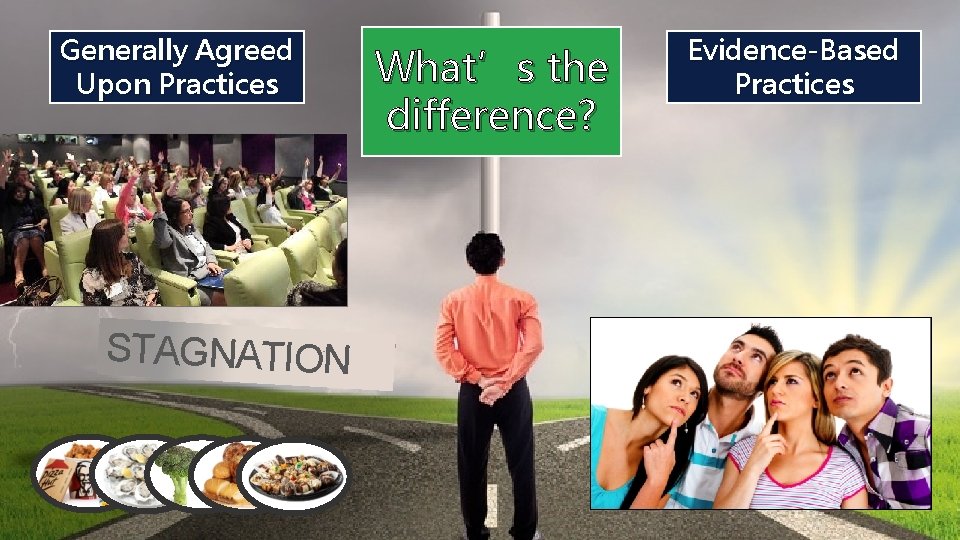
Generally Agreed Upon Practices STAGNATION What’s the difference? Lower Odds Higher Odds Evidence-Based Practices
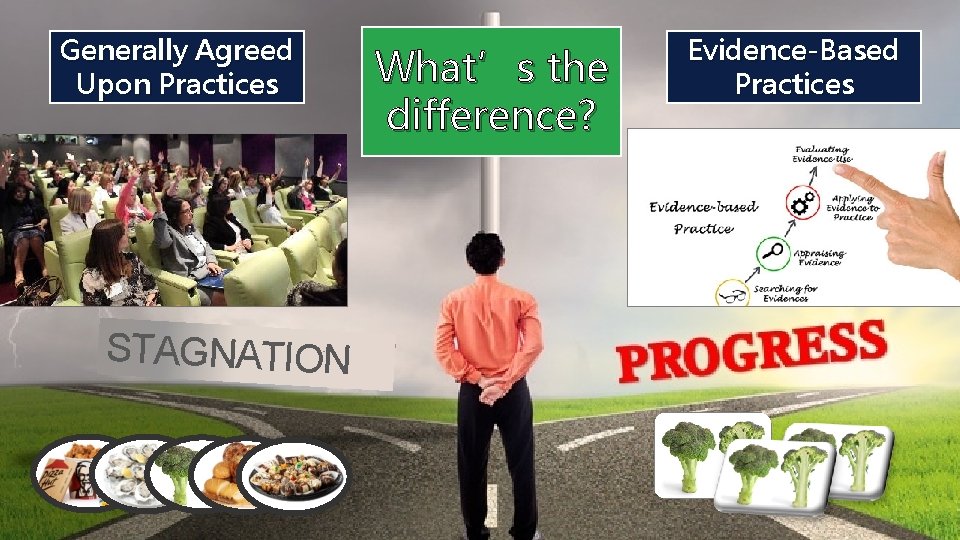
Generally Agreed Upon Practices STAGNATION What’s the difference? Lower Odds Higher Odds Evidence-Based Practices
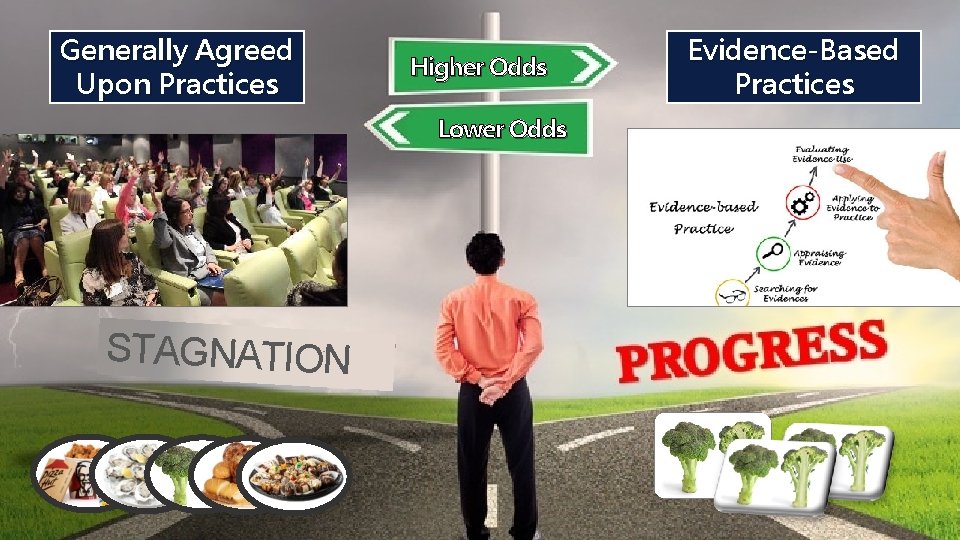
Generally Agreed Upon Practices Higher Odds Lower Odds STAGNATION Evidence-Based Practices
VISION: Best Practices = Evidence-Based Practices
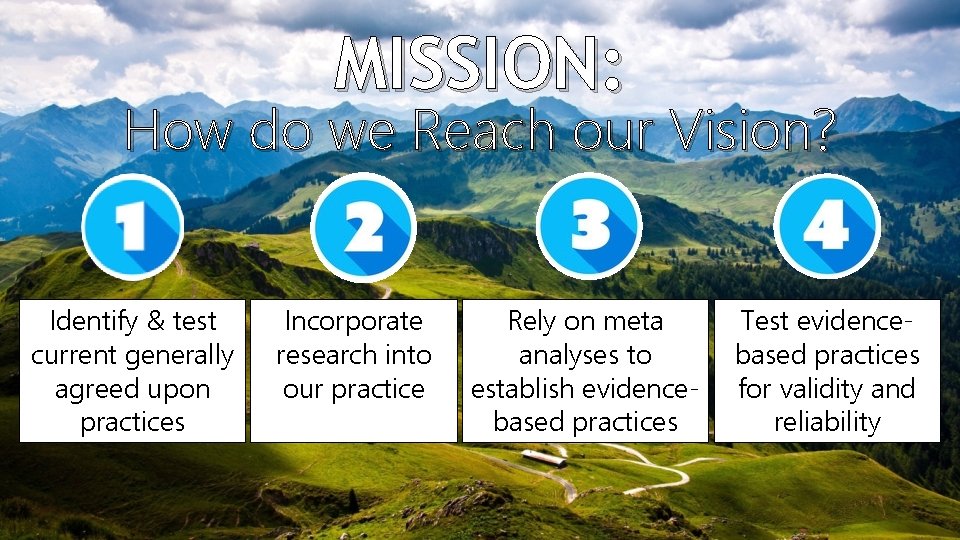
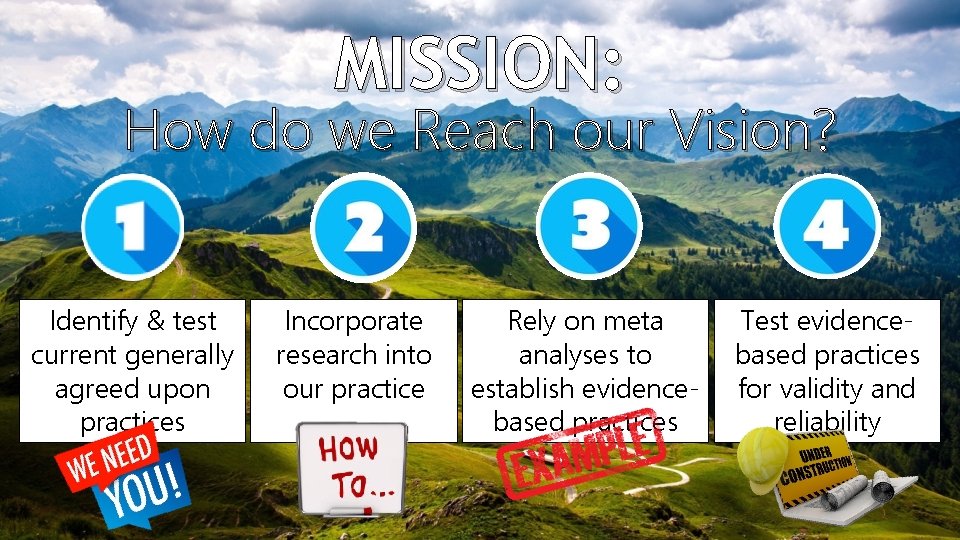
MISSION: How do we Reach our Vision? Identify & test current generally agreed upon practices Incorporate research into our practice Rely on meta analyses to establish evidencebased practices Test evidencebased practices for validity and reliability
MISSION: How do we Reach our Vision? Identify & test current generally agreed upon practices Incorporate research into our practice Rely on meta analyses to establish evidencebased practices Test evidencebased practices for validity and reliability
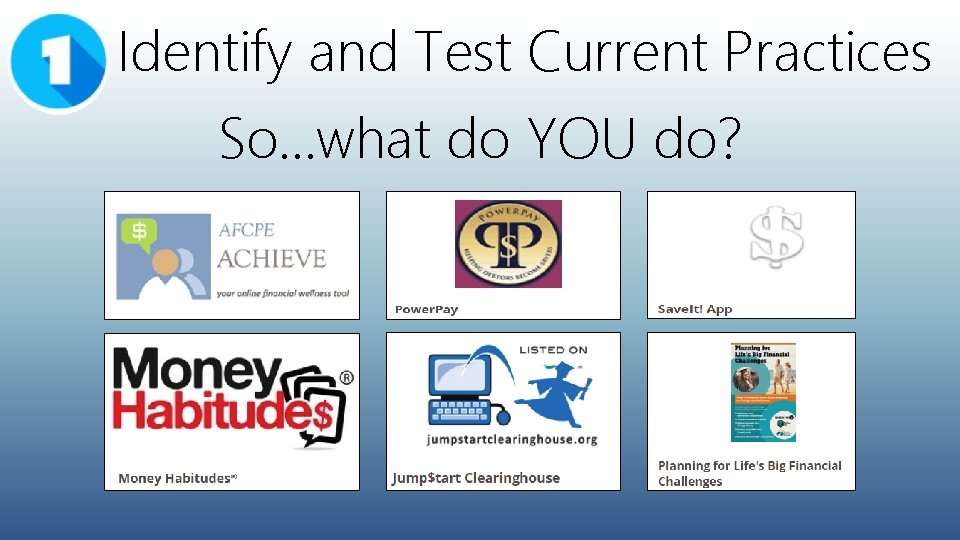
Identify and Test Current Practices So…what do YOU do?
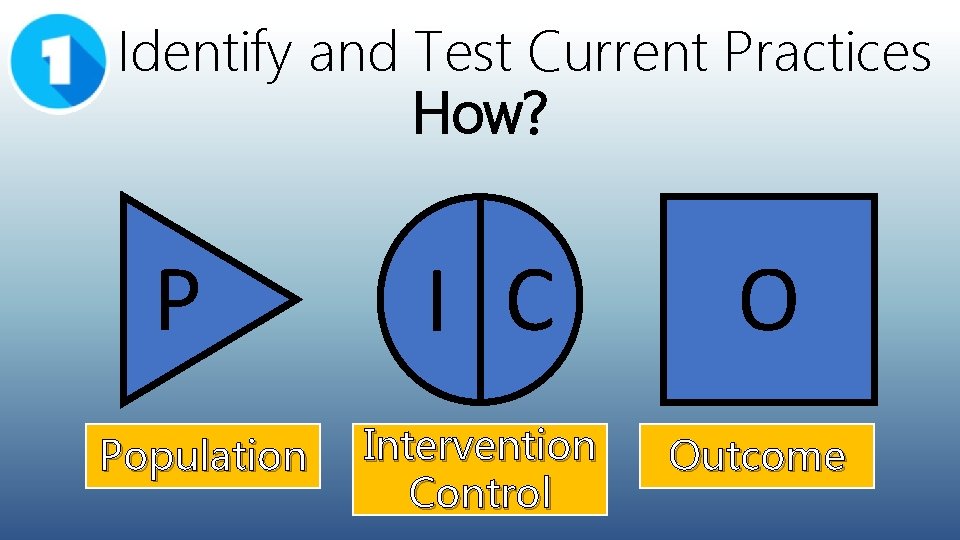
Identify and Test Current Practices How? P Population I C O Intervention Control Outcome
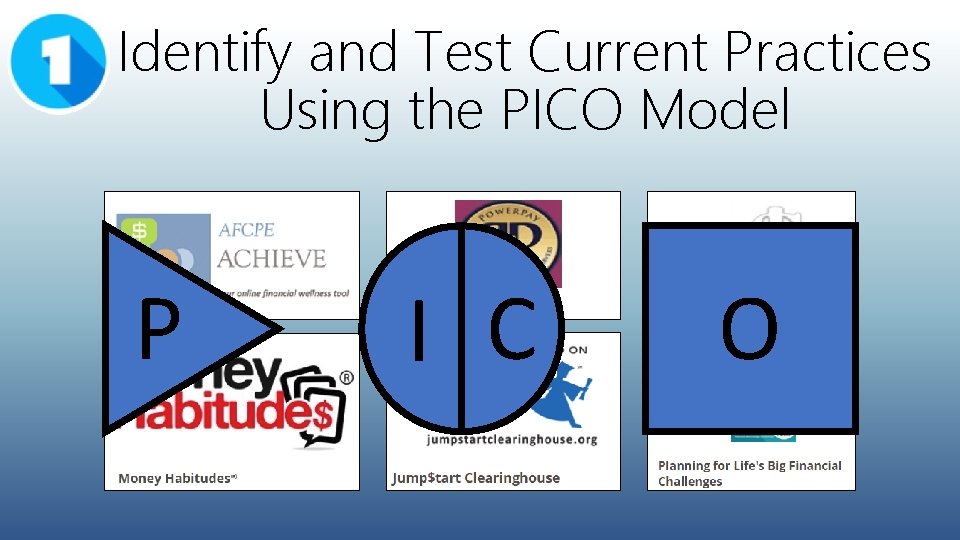
Identify and Test Current Practices Using the PICO Model P I C O
Identify and Test Current Practices Using the PICO Model P I C O

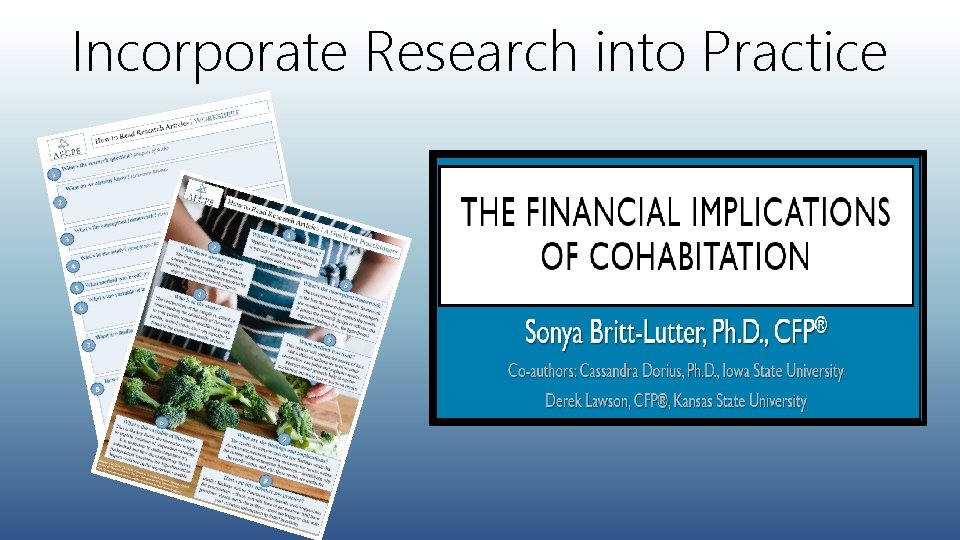
Incorporate Research into Practice
Incorporate Research into Practice
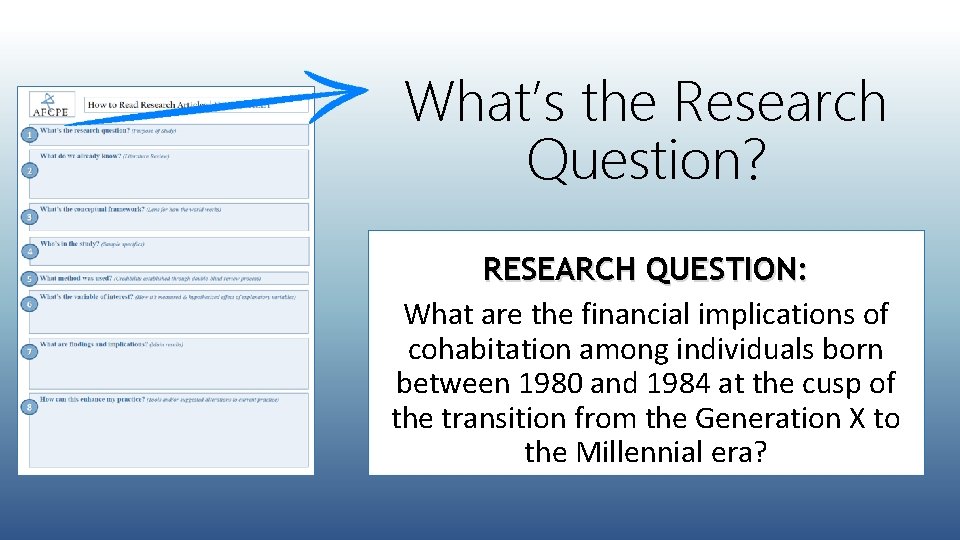
What’s the Research Question? RESEARCH QUESTION: What are the financial implications of cohabitation among individuals born between 1980 and 1984 at the cusp of the transition from the Generation X to the Millennial era?
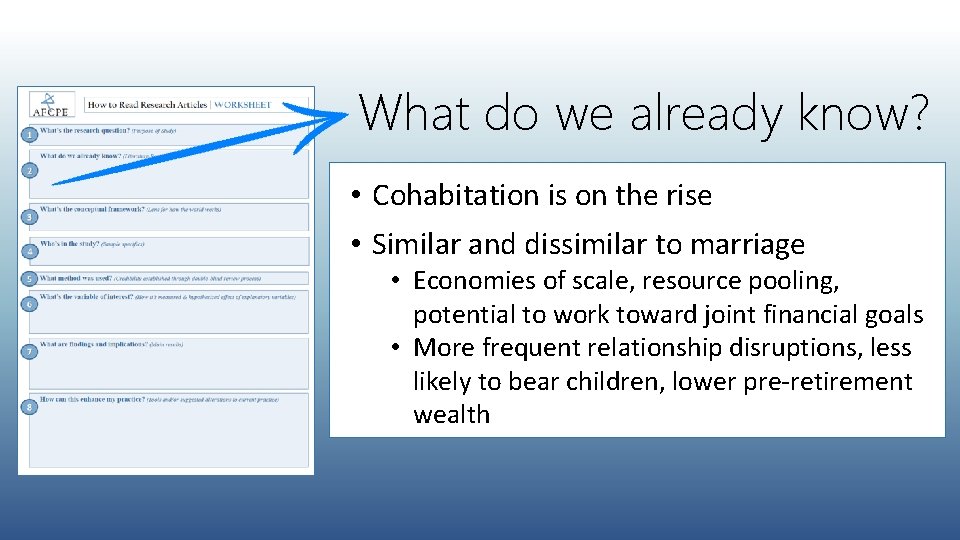
What do we already know? • Cohabitation is on the rise • Similar and dissimilar to marriage • Economies of scale, resource pooling, potential to work toward joint financial goals • More frequent relationship disruptions, less likely to bear children, lower pre-retirement wealth
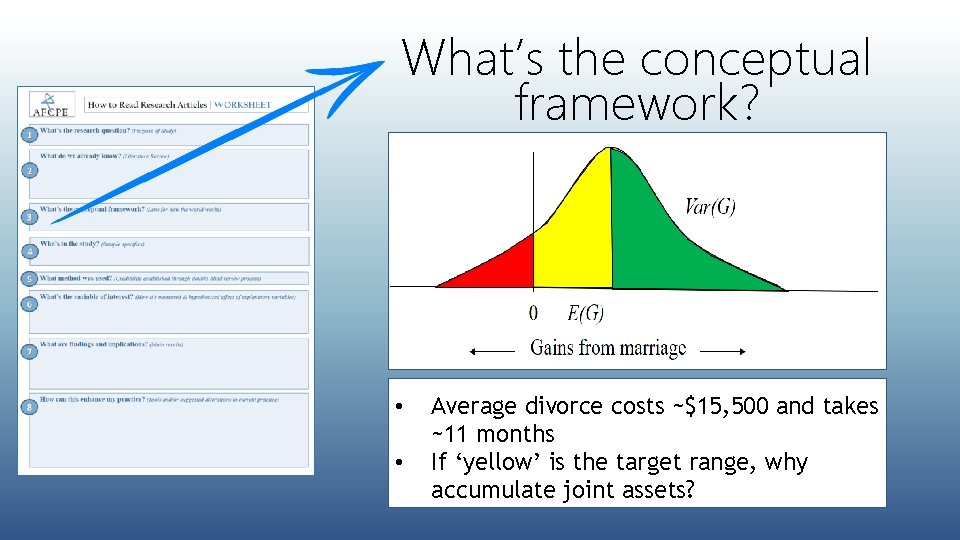
What’s the conceptual framework? • • Average divorce costs ~$15, 500 and takes ~11 months If ‘yellow’ is the target range, why accumulate joint assets?
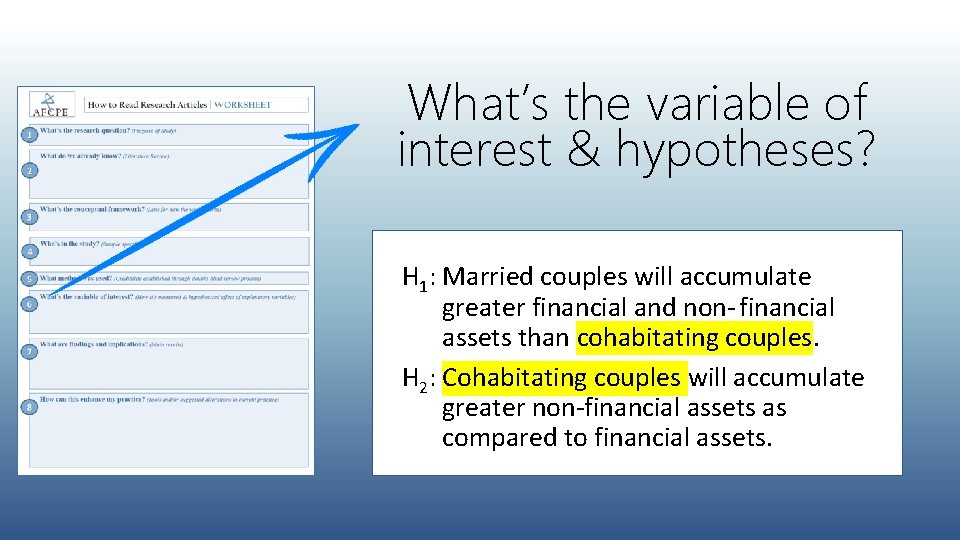
What’s the variable of interest & hypotheses? H 1: Married couples will accumulate greater financial and non- financial assets than cohabitating couples. H 2: Cohabitating couples will accumulate greater non-financial assets as compared to financial assets.
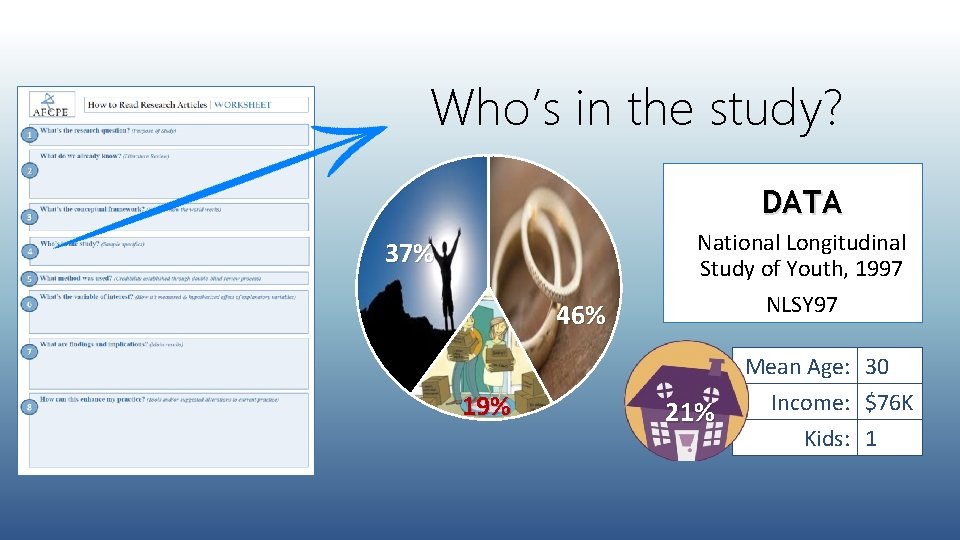
Who’s in the study? DATA 37% 46% 19% National Longitudinal Study of Youth, 1997 NLSY 97 21% Mean Age: 30 Income: $76 K Kids: 1
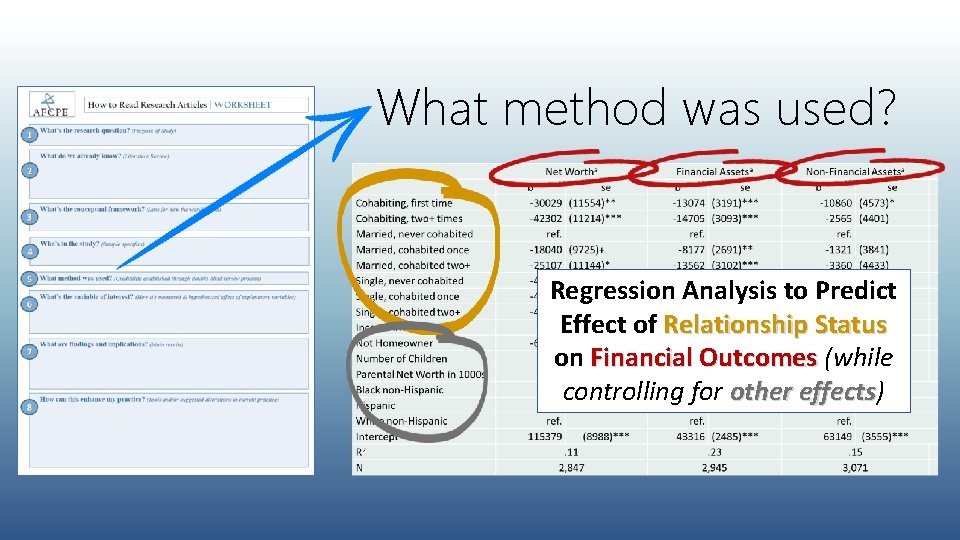
What method was used? Regression Analysis to Predict Effect of Relationship Status on Financial Outcomes (while controlling for other effects) effects
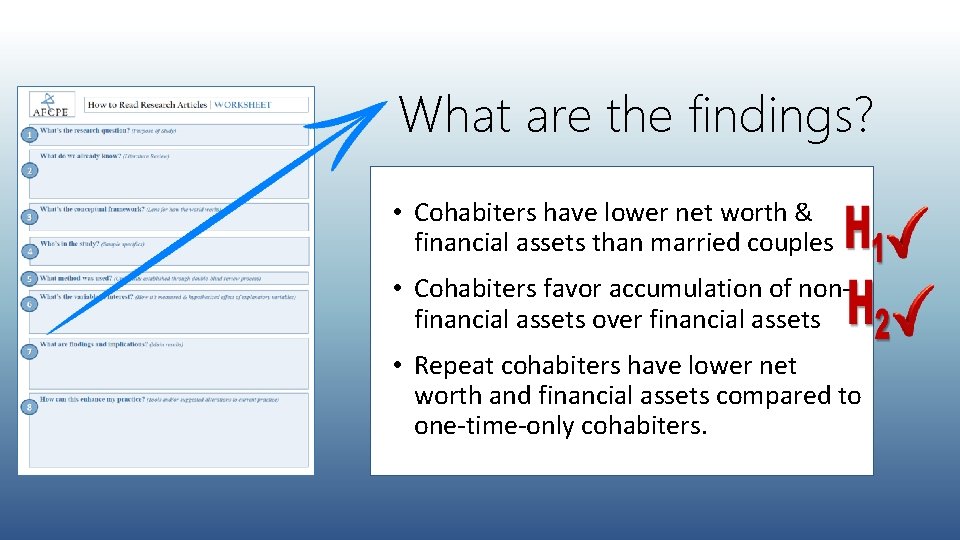
What are the findings? • Cohabiters have lower net worth & financial assets than married couples • Cohabiters favor accumulation of nonfinancial assets over financial assets • Repeat cohabiters have lower net worth and financial assets compared to one-time-only cohabiters.
How can this enhance my practice?
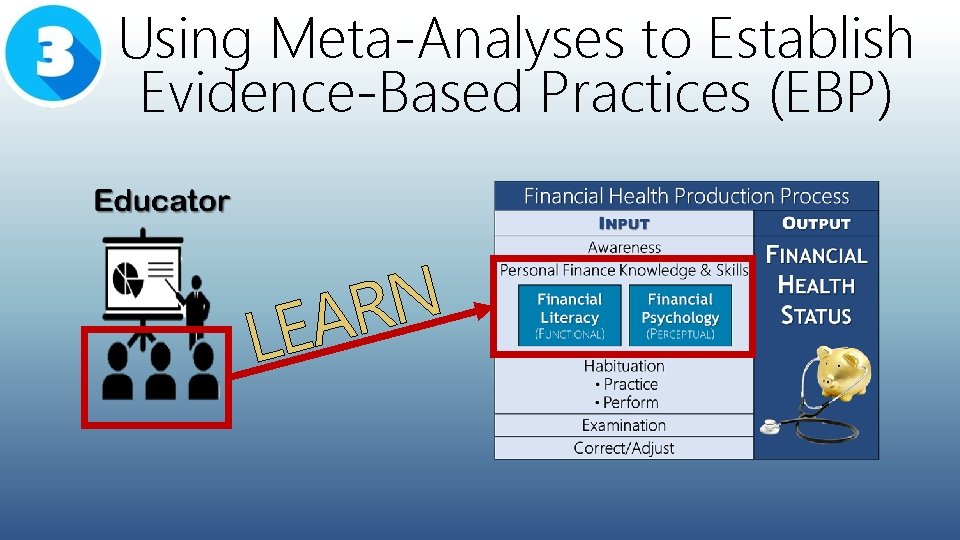
Using Meta-Analyses to Establish Evidence-Based Practices (EBP) N R A E L
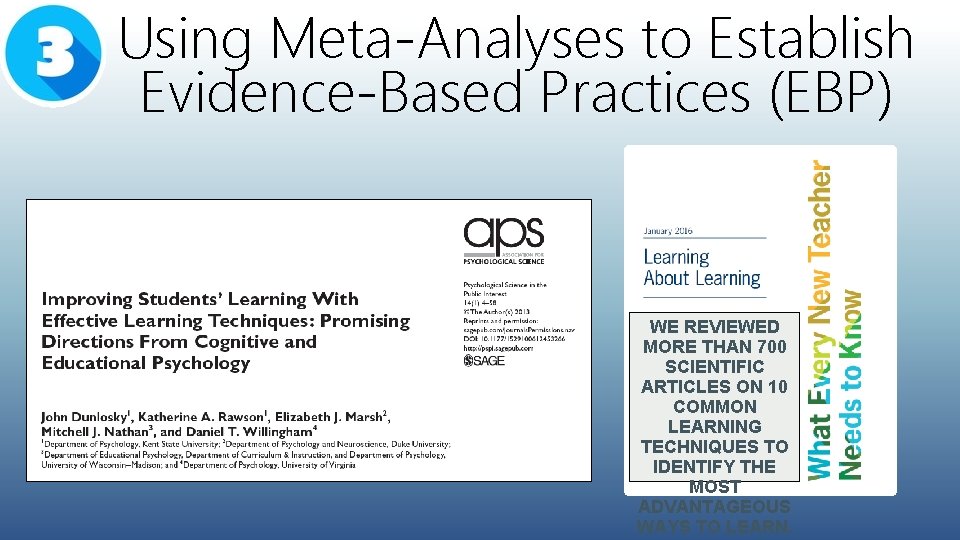
Using Meta-Analyses to Establish Evidence-Based Practices (EBP) WE REVIEWED MORE THAN 700 SCIENTIFIC ARTICLES ON 10 COMMON LEARNING TECHNIQUES TO IDENTIFY THE MOST ADVANTAGEOUS WAYS TO LEARN.
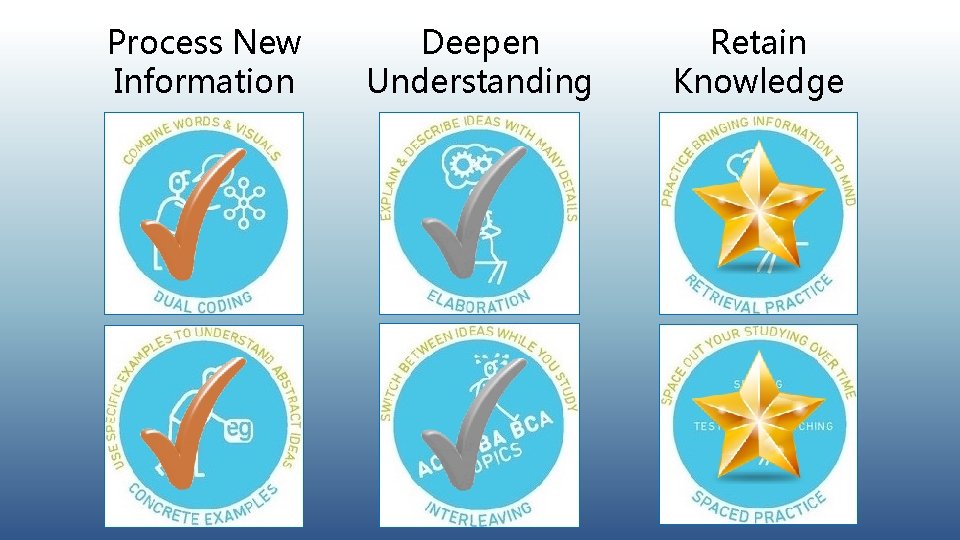
Process New Information Deepen Understanding Retain Knowledge
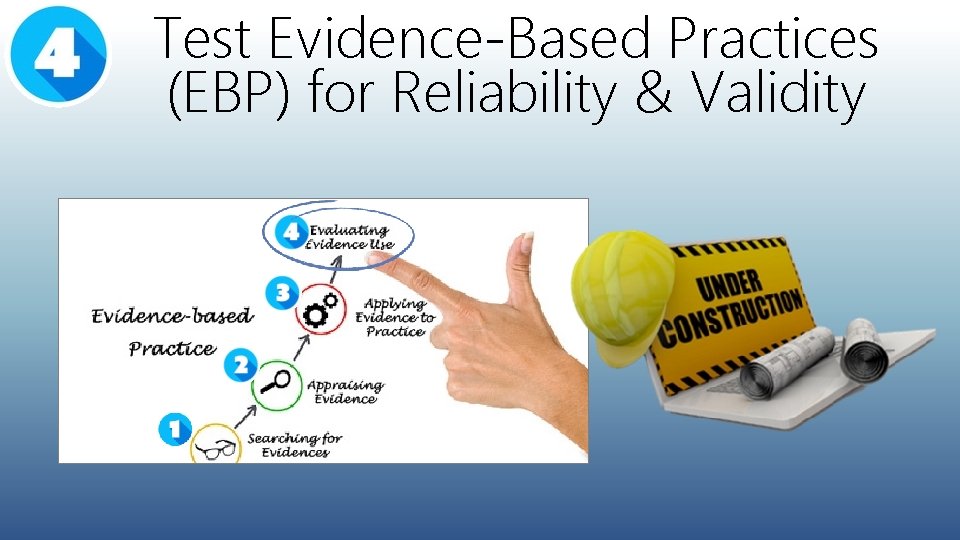
Test Evidence-Based Practices (EBP) for Reliability & Validity
What can AFCPE do to help close the gap between research & practice?
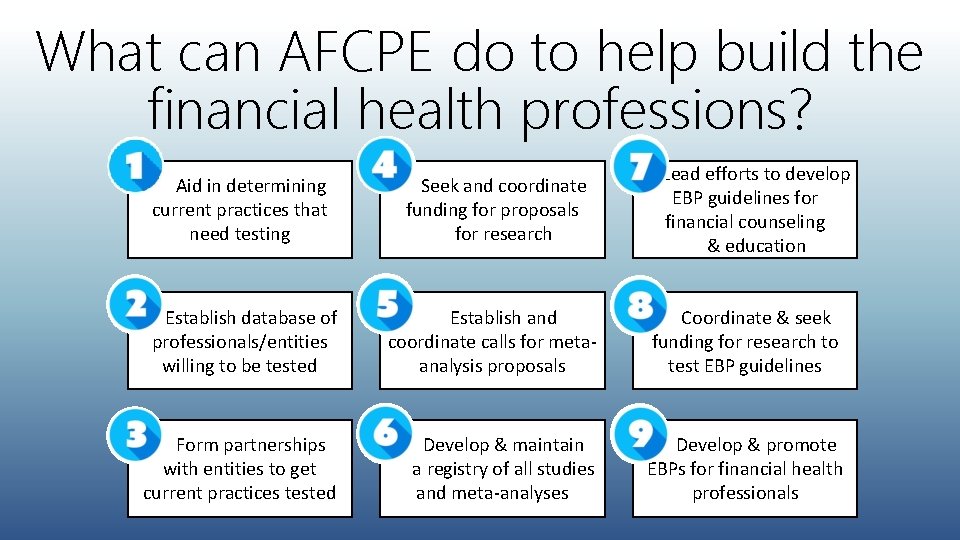
What can AFCPE do to help build the financial health professions? Lead efforts to develop EBP guidelines for financial counseling & education Aid in determining current practices that need testing Seek and coordinate funding for proposals for research Establish database of professionals/entities willing to be tested Establish and coordinate calls for metaanalysis proposals Coordinate & seek funding for research to test EBP guidelines Form partnerships with entities to get current practices tested Develop & maintain a registry of all studies and meta-analyses Develop & promote EBPs for financial health professionals
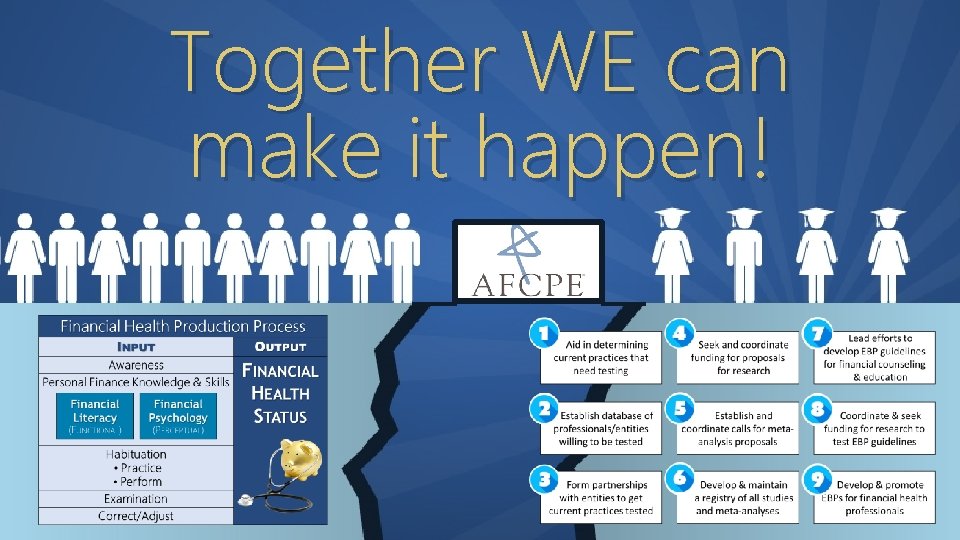
Together WE can make it happen!
- Slides: 40