
Bridging the Gap between Health Promotion Theory and
Bridging the Gap between Health Promotion Theory and Care for Chronic Illness Empowering for Health Care Management at Home C. L. Mc. William, MSc. N, Ed. D The University of Western Ontario, London, Ontario, CANADA E. Vingilis, M. Stewart, E. Vingilis, C. Ward-Griffin, J Hoch, A. Donner, UWO G. Browne, Mc. Master University P. Coyte, University of Toronto S. Golding (PRESENTER), S. Coleman, M. Wilson, et al. , CCACs of Ontario, CANADA FUNDED BY: The Canadian Institutes of Health Research
Bridging the Gap between Health Promotion Theory and Care for Chronic Illness Purpose: To evaluate the Costs & Outcomes of an Empowering Partnering Approach to Chronic Care Management at Home (2000 -2004)
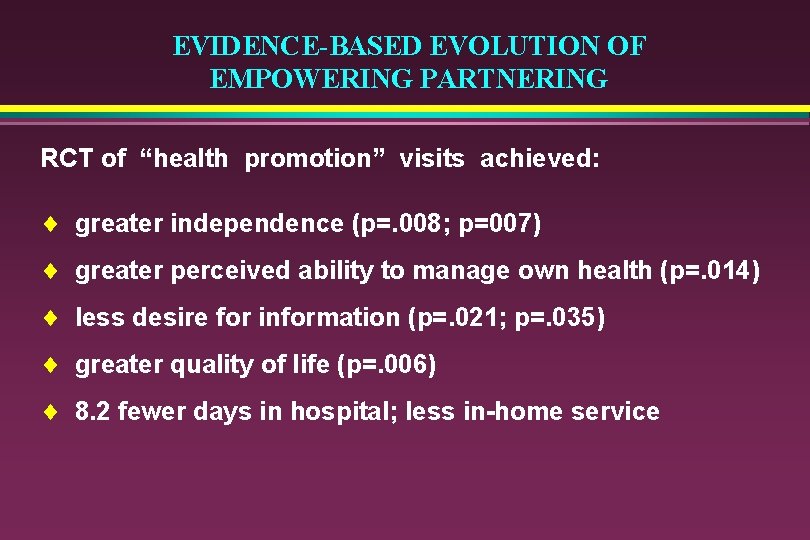
EVIDENCE-BASED EVOLUTION OF EMPOWERING PARTNERING RCT of “health promotion” visits achieved: ¨ greater independence (p=. 008; p=007) ¨ greater perceived ability to manage own health (p=. 014) ¨ less desire for information (p=. 021; p=. 035) ¨ greater quality of life (p=. 006) ¨ 8. 2 fewer days in hospital; less in-home service
PHENOMENOLOGICAL STUDY FINDINGS The Empowering Partnering Process Relationship-building + Conscious Awareness
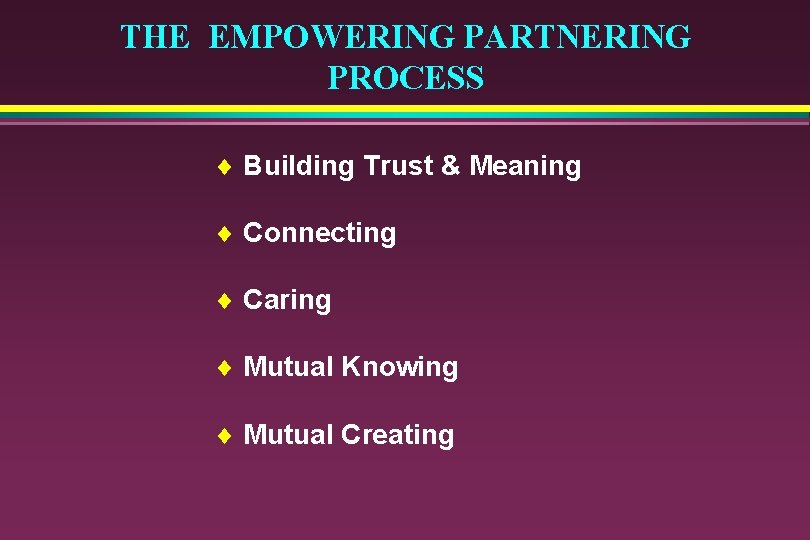
THE EMPOWERING PARTNERING PROCESS ¨ Building Trust & Meaning ¨ Connecting ¨ Caring ¨ Mutual Knowing ¨ Mutual Creating
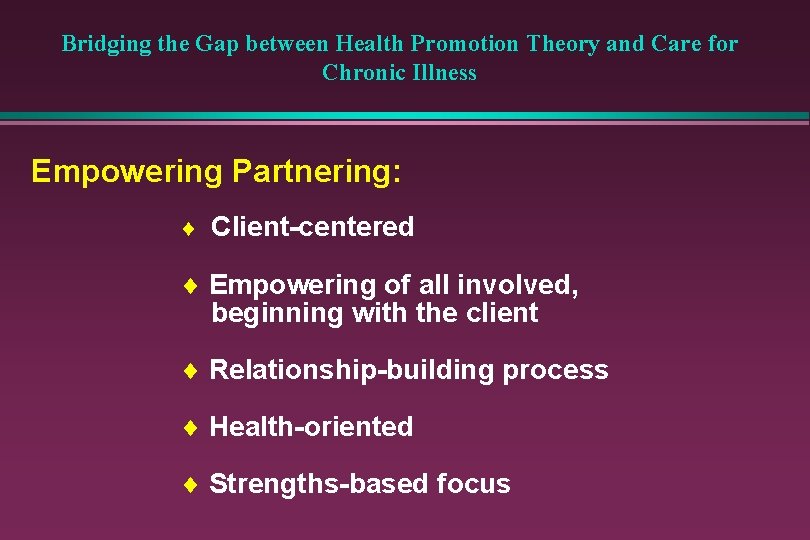
Bridging the Gap between Health Promotion Theory and Care for Chronic Illness Empowering Partnering: ¨ Client-centered ¨ Empowering of all involved, beginning with the client ¨ Relationship-building process ¨ Health-oriented ¨ Strengths-based focus
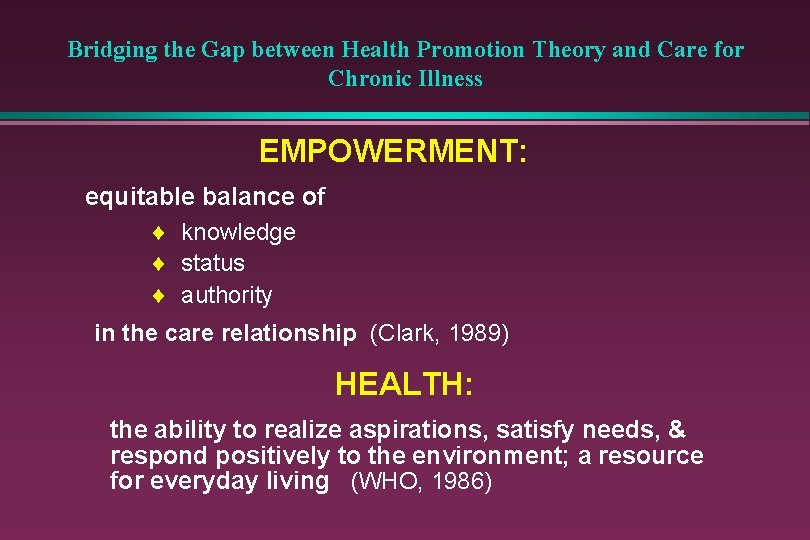
Bridging the Gap between Health Promotion Theory and Care for Chronic Illness EMPOWERMENT: equitable balance of ¨ knowledge ¨ status ¨ authority in the care relationship (Clark, 1989) HEALTH: the ability to realize aspirations, satisfy needs, & respond positively to the environment; a resource for everyday living (WHO, 1986)
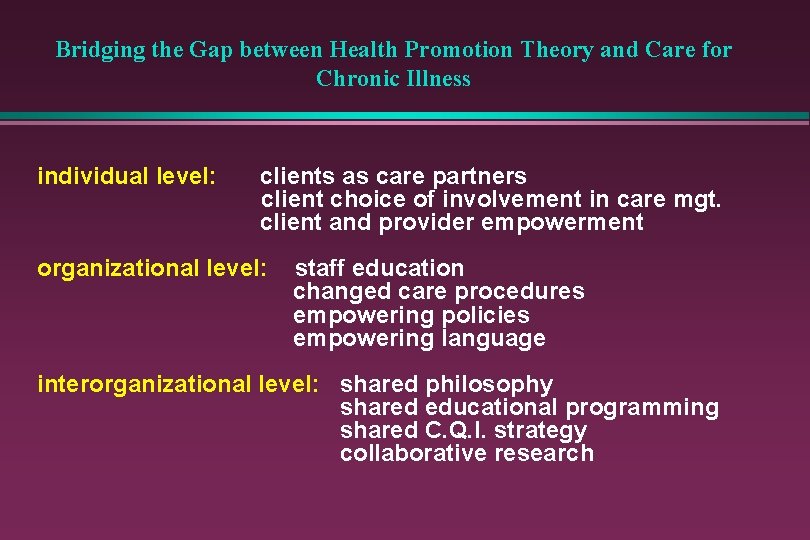
Bridging the Gap between Health Promotion Theory and Care for Chronic Illness individual level: clients as care partners client choice of involvement in care mgt. client and provider empowerment organizational level: staff education changed care procedures empowering policies empowering language interorganizational level: shared philosophy shared educational programming shared C. Q. I. strategy collaborative research
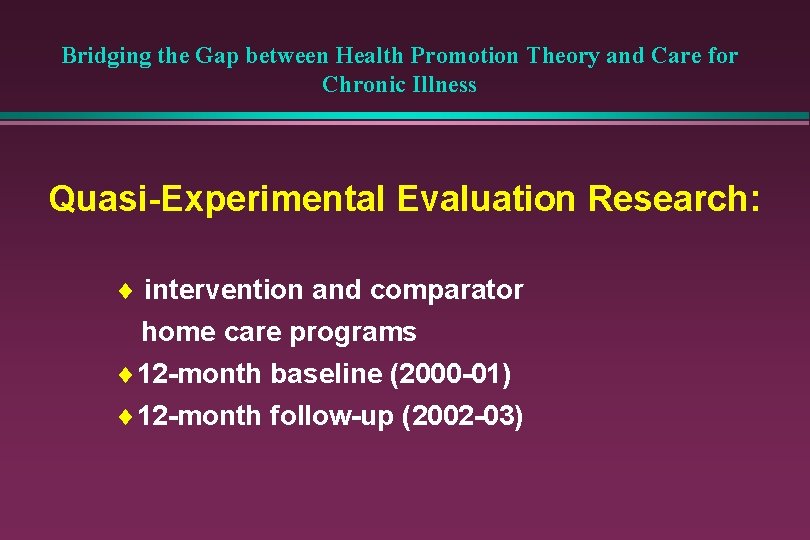
Bridging the Gap between Health Promotion Theory and Care for Chronic Illness Quasi-Experimental Evaluation Research: ¨ intervention and comparator home care programs ¨ 12 -month baseline (2000 -01) ¨ 12 -month follow-up (2002 -03)
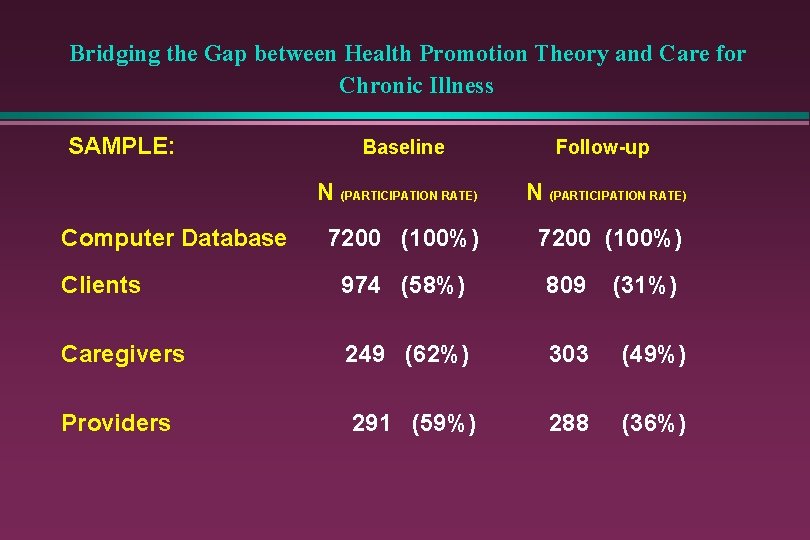
Bridging the Gap between Health Promotion Theory and Care for Chronic Illness SAMPLE: Computer Database Baseline Follow-up N (PARTICIPATION RATE) 7200 (100%) Clients 974 (58%) 809 (31%) Caregivers 249 (62%) 303 (49%) Providers 291 (59%) 288 (36%)
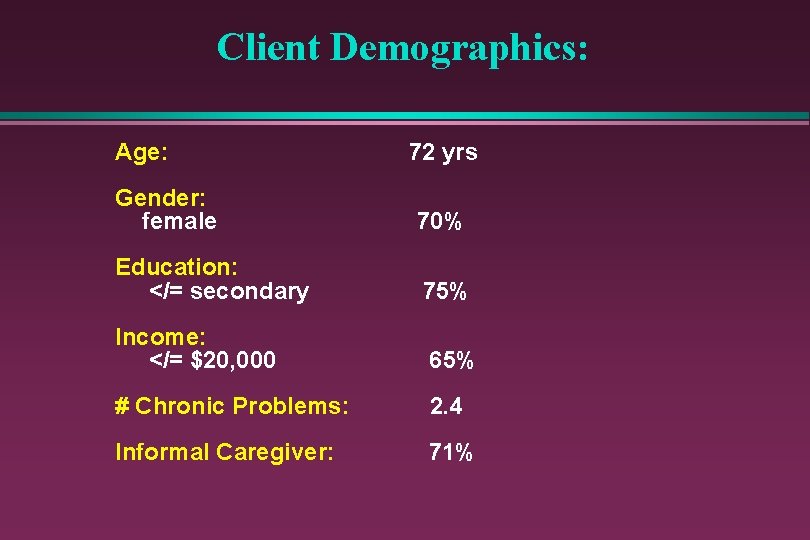
Client Demographics: Age: 72 yrs Gender: female 70% Education: </= secondary 75% Income: </= $20, 000 65% # Chronic Problems: 2. 4 Informal Caregiver: 71%
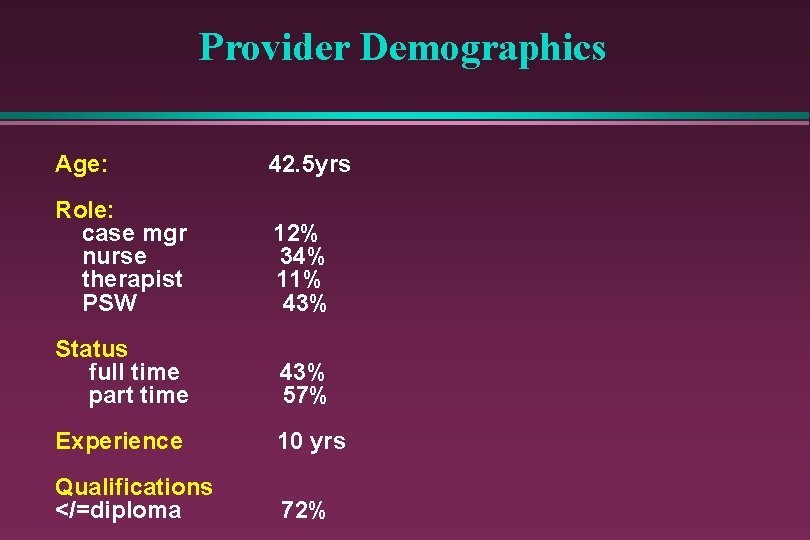
Provider Demographics Age: 42. 5 yrs Role: case mgr nurse therapist PSW 12% 34% 11% 43% Status full time part time 43% 57% Experience 10 yrs Qualifications </=diploma 72%
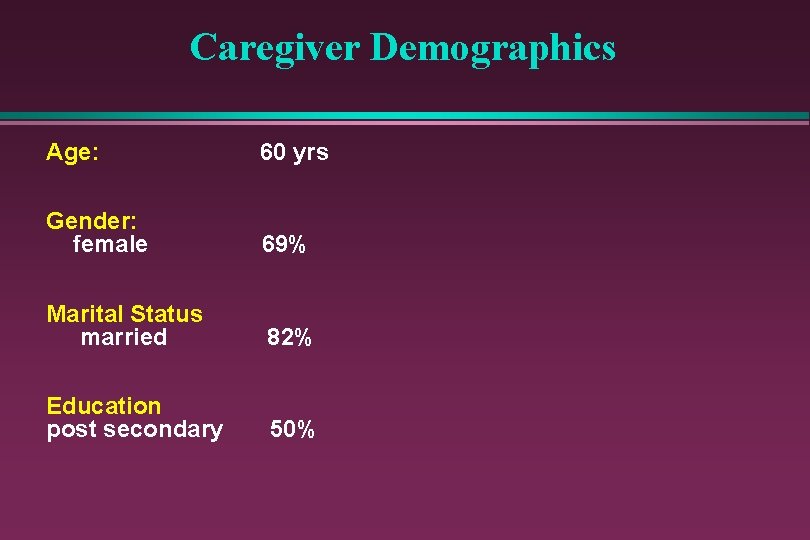
Caregiver Demographics Age: 60 yrs Gender: female 69% Marital Status married 82% Education post secondary 50%
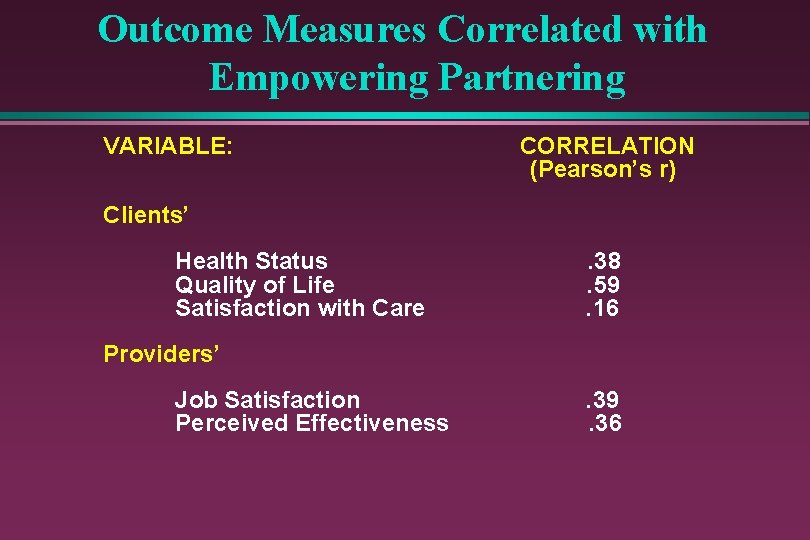
Outcome Measures Correlated with Empowering Partnering VARIABLE: CORRELATION (Pearson’s r) Clients’ Health Status Quality of Life Satisfaction with Care . 38. 59. 16 Providers’ Job Satisfaction Perceived Effectiveness . 39. 36
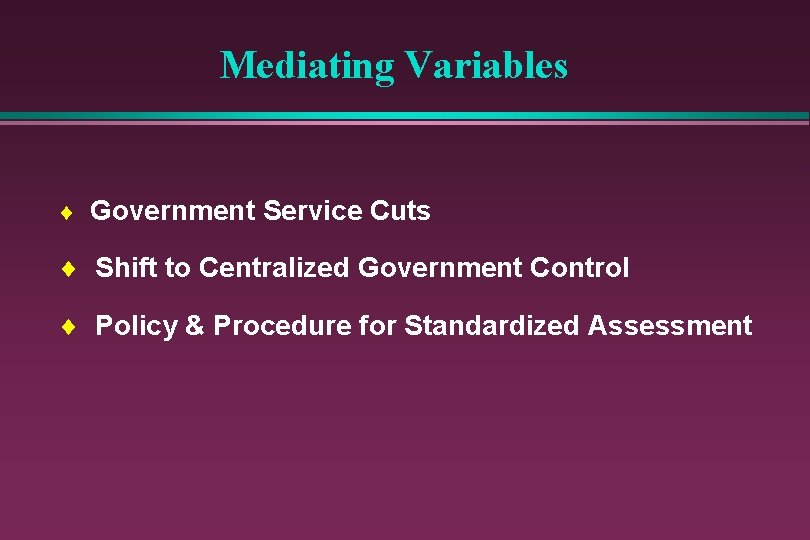
Mediating Variables ¨ Government Service Cuts ¨ Shift to Centralized Government Control ¨ Policy & Procedure for Standardized Assessment
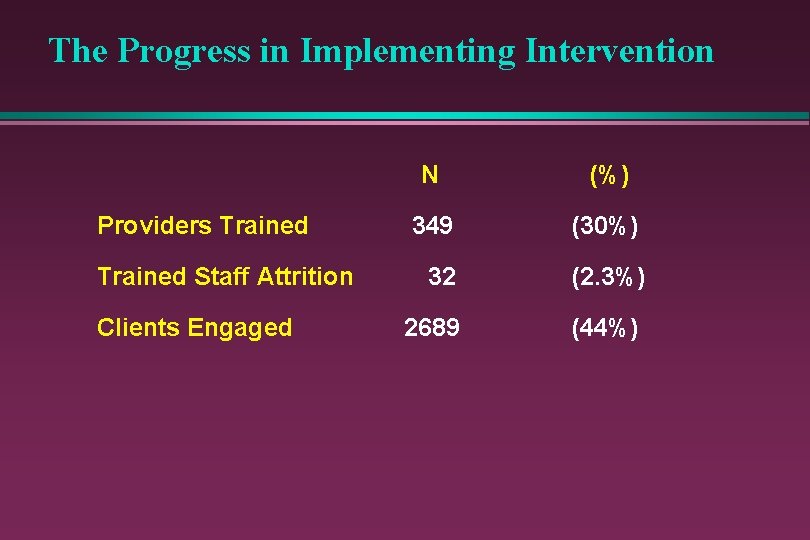
The Progress in Implementing Intervention Providers Trained Staff Attrition Clients Engaged N (%) 349 (30%) 32 (2. 3%) 2689 (44%)
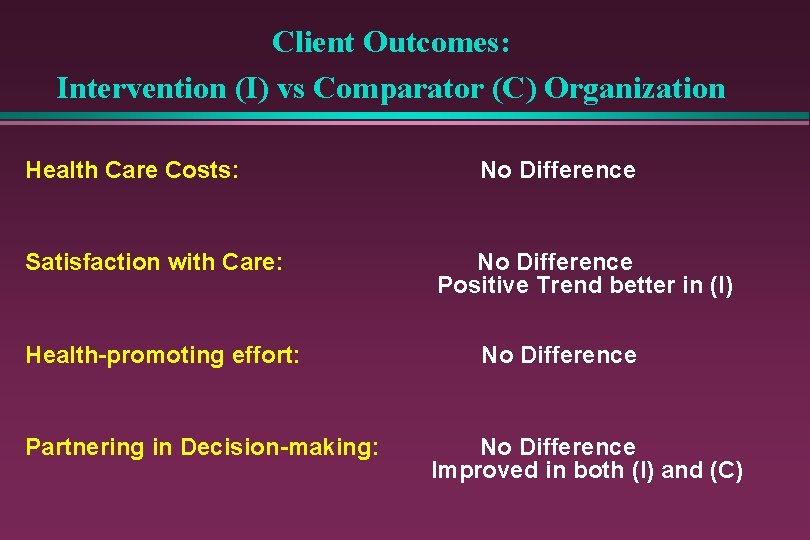
Client Outcomes: Intervention (I) vs Comparator (C) Organization Health Care Costs: Satisfaction with Care: Health-promoting effort: Partnering in Decision-making: No Difference Positive Trend better in (I) No Difference Improved in both (I) and (C)
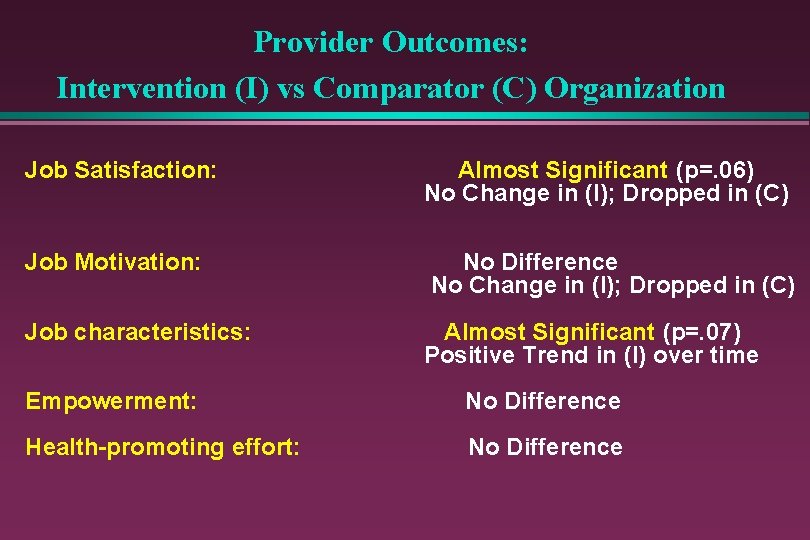
Provider Outcomes: Intervention (I) vs Comparator (C) Organization Job Satisfaction: Almost Significant (p=. 06) No Change in (I); Dropped in (C) Job Motivation: No Difference No Change in (I); Dropped in (C) Job characteristics: Almost Significant (p=. 07) Positive Trend in (I) over time Empowerment: No Difference Health-promoting effort: No Difference
Caregiver Outcomes
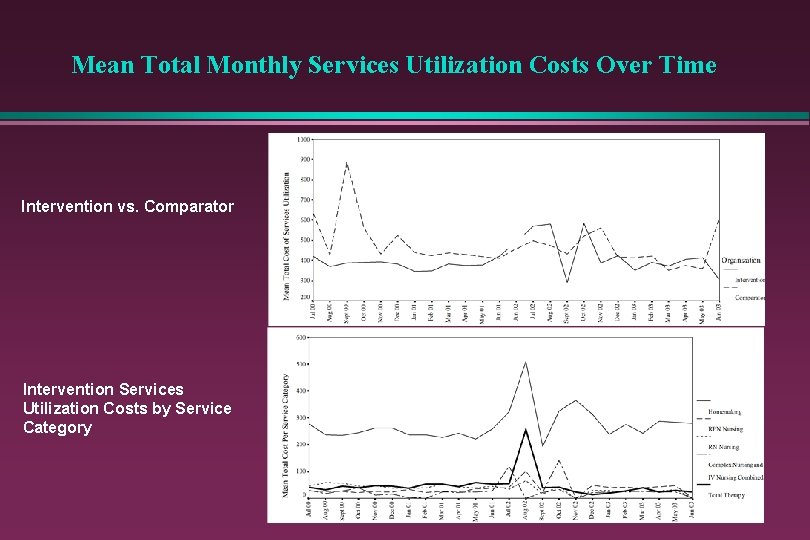
Mean Total Monthly Services Utilization Costs Over Time Intervention vs. Comparator Intervention Services Utilization Costs by Service Category
Bridging the Gap between Health Promotion Theory and Care for Chronic Illness Conclusions: ¨ Change takes time ¨ The policy context may impede the intervention ¨ Program outcomes affected by many factors ¨ KT requires grassroots perspective transformation ¨ Further research is needed
- Slides: 21