
BRIDGES TRACK STRUCTURE ON BRIDGES 5 3 Inspection
BRIDGES & TRACK STRUCTURE ON BRIDGES 5. 3 Inspection and Maintenance of bridges, Numerical Rating PERIODS 2
BRIDGE INSPECTION & NUMERICAL RATING SYSTEM (NRS)
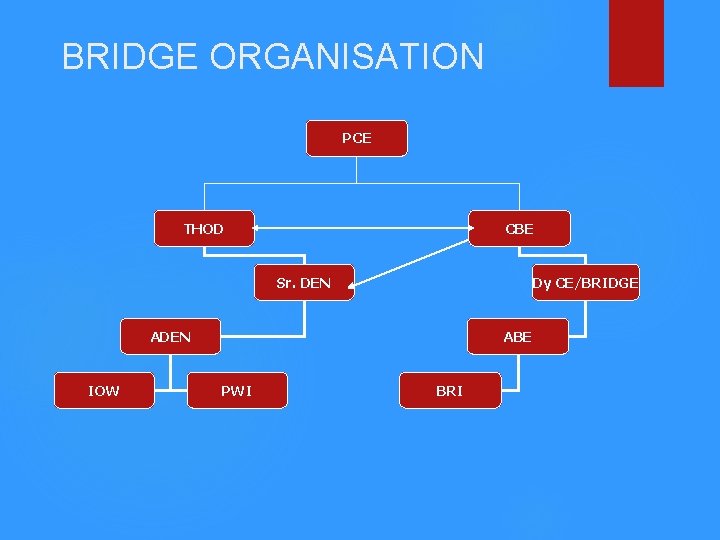
BRIDGE ORGANISATION PCE THOD CBE Sr. DEN Dy CE/BRIDGE ADEN IOW ABE PWI BRI
BRIDGE INSPECTION SYSTEMATIC OBSERVATION OF CONDITION AND BEHAVIOUR OF VARIOUS COMPONENETS/ PARTS OF A BRIDGE IS CALLED BRIDGE INSPECTION
AIMS OF BRIDGE INSPECTION n To assess structural soundness and fitness for use n To identify trouble at the earliest stage n To keep a systematic record of condition and behaviour (data bank) n To plan repair and rehabilitation strategy and programme
PHOTOGRAPHS Photographs of bridges showing failure of bridge components due to lack of proper inspection and lack of timely corrective/remedial action against the notice of defects.
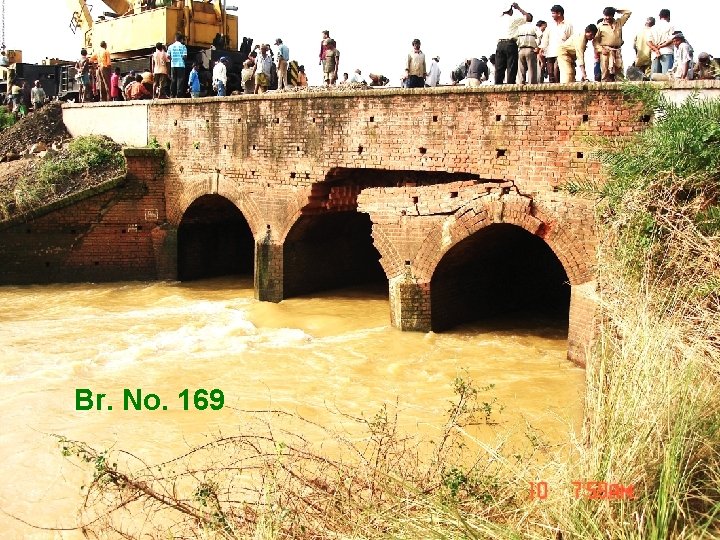
Br. No. 169
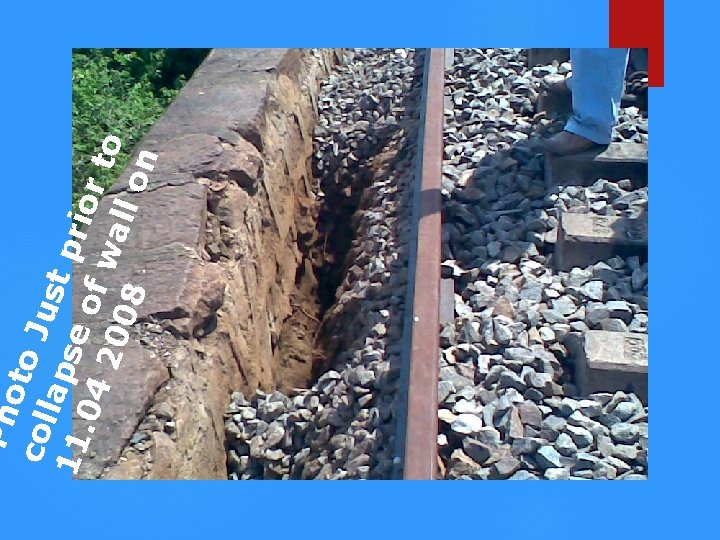
Ph oto col lap Just 11 pri s e. 04 or of to wa 20 ll o 08 n
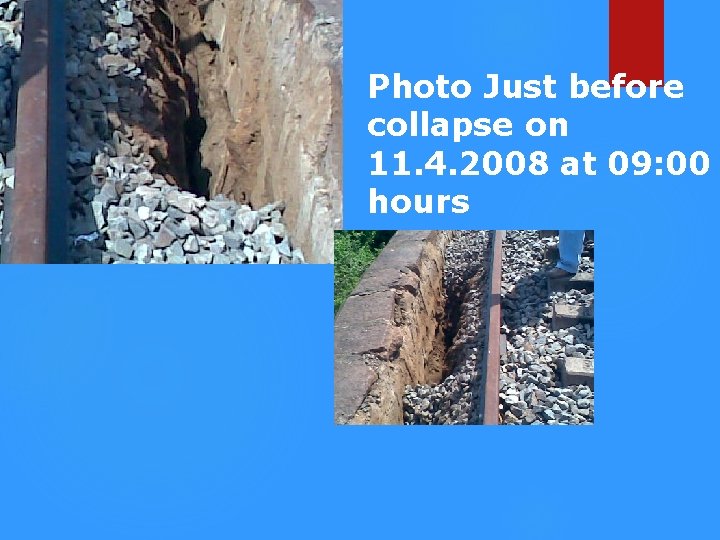
Photo Just before collapse on 11. 4. 2008 at 09: 00 hours
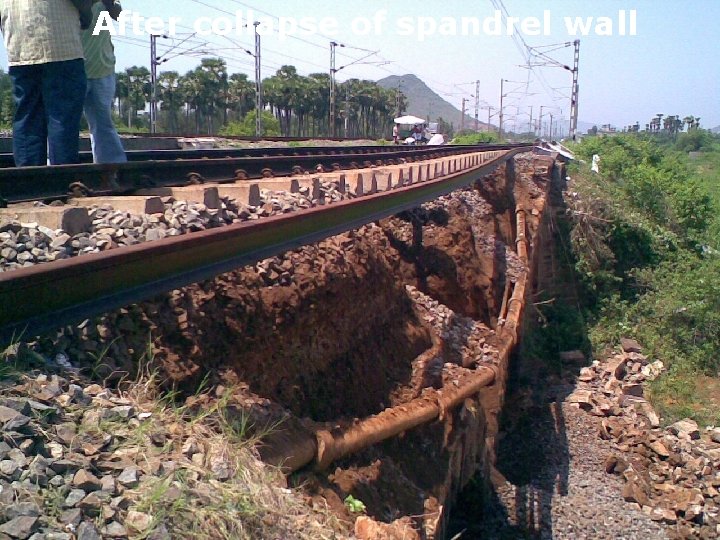
After collapse of spandrel wall
SCHEDULE OF INSPECTION SSE/P. Way or SSE/Works {P. WAY/ WORKS INSPECTORS} � ASSISTANT ENGINEER � DIVISIONAL ENGINEER/Sr. DEN � TERRITORIAL HOD &CBE � SSE/BRIDGE {BRIDGE INSPECTOR} � AEN/DEN (Bridge) � Dy. CE/Bridges CBE �
As per Para 117 (1) of IRBM- Bridge Manual § § § Works/P. Way Ispectors Will be responsible for up-keep and maintenance of all the items of bridges Schedule: Once a year prior to monsoon What to inspect: - Foundation, flooring, substructure, bed blocks, protection work of all bridges including ROB/RUB Super structure of Steel work of spans less than 12. 2 m(Detailed inspection once in a 5 years), RCC/ PSC slabs, RCC boxes and masonary bridges. Marking HFL, Danger level
P. WAY INSPECTORS As per Para 117 (1) of IRBM n Track on bridge & its approaches Guard rails, foot path, notice boards, name boards, trolley refuges, sand bins etc. Clearing of waterway of Bridges Posting of bridge watchman wherever necessary & insure their effective functioning Tunnels in his section after monsoon. n n
ASSISTANT ENGINEER As per Para 102 of IRBM Every bridge including ROB/RUB once in a year – after monsoon (Foundation & flooring, substructure, protective works, bed blocks, track over bridges and approaches, guard rails and other appurtenances of all bridges, pipes, RCC Boxes, Arch/RCC/PSC slab bridges. General condition of steel work of girders & bearings and corroded portions. RCC/Composite and PSC girders and bearings) Joint inspection of canal/irrigation xing (Railway Affecting Works) Inspection to cover all aspects of the structure Inspect every Tunnel in sub-division once in year before monsoon and Maintain Flood Records
DIVISIONAL ENGINEER/Sr. DEN n Examining all Bridge Registers and issue orders on matter referred to him n Inspection of all Bridges with ORN 1, 2, 3 and revise/confirm the rating given by the ADEN. n Inspection of all important Bridges
CHIEF BRIDGE ENGINEER n Examining all Bridge Registers and issue orders on matter referred to him n Inspection of bridges referred to him as required by the Division.
BRIDGE INSPECTOR Steel girders 12. 2 m and above, RCC/PSC girders(except slabs), including bearings of girders– once in 5 years Welded girder – initial inspection within 1 year of installation, then once in 3 years PSC/Composite girder – 1 st year and subsequently 5 years Overstressed girders – at least once in a year Early steel girder – Floor System– once in a year : restonce in 5 years. Steel work, rivet testing, weld test etc.
AEN/DEN (Bridge) Scrutinize Inspect All – registers sent by BRI Bridges referred to him overstressed bridges – camber loss 10% test check of BRIs work Dy. CE/Bridges Scrutinize Inspect bridge inspection registers Bridges referred to him or call for inspection
Inspection Includes Going to the bridge Seeing the bridge with an eye of the Doctor (Engineer) with unaided as well as an aided eye. Systematic time observation over a period of
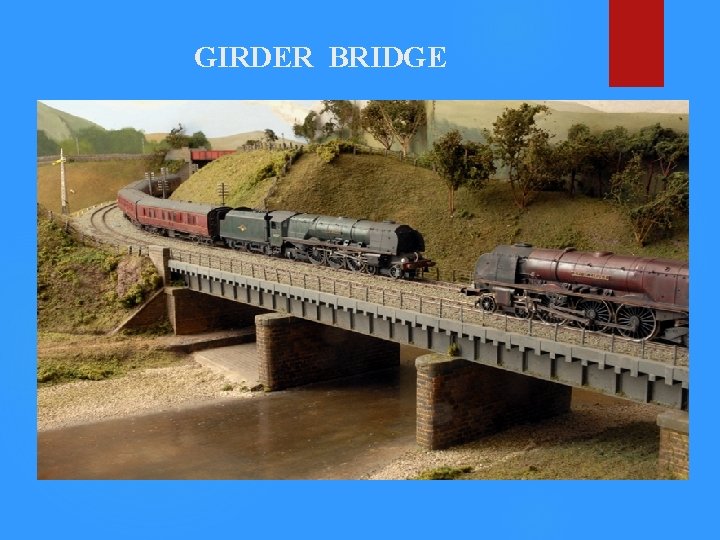
GIRDER BRIDGE
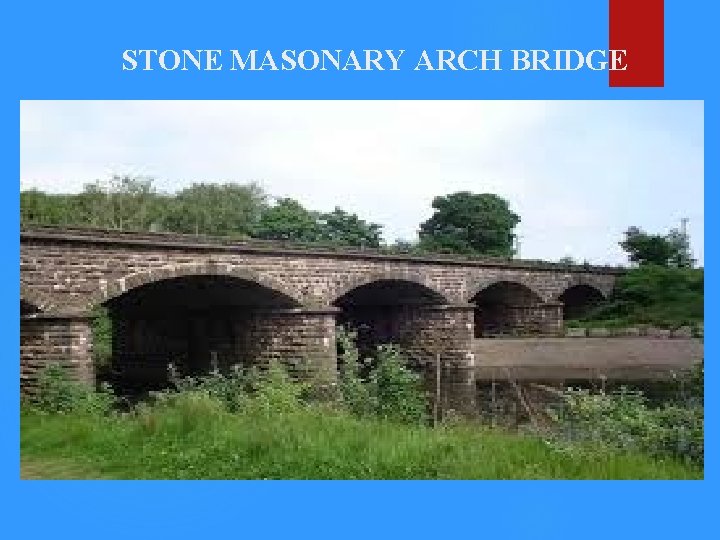
STONE MASONARY ARCH BRIDGE
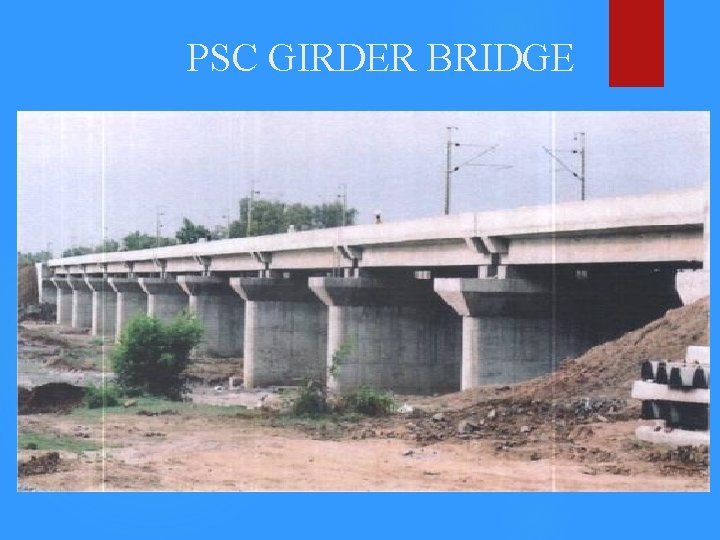
PSC GIRDER BRIDGE
Planning of Inspection When to inspect? How to inspect? Whom to take along for inspection? What to inspect
When to Inspect? Bridges over water – times of low water Bridges requiring high climbing – winds or extreme temperatures are not likely Bridges suspected of having trouble on account of thermal movement during thermal extremes
How to inspect? Decide work load for each day Scrutinize the previous years inspection notes Try to have plan, drawings and other details of the important bridges Go through the drawings (important bridges to identify critical locations) Plan any special inspection equipment, temporary staging etc. (like tunnel inspection) Don’t rush to complete – done once a year
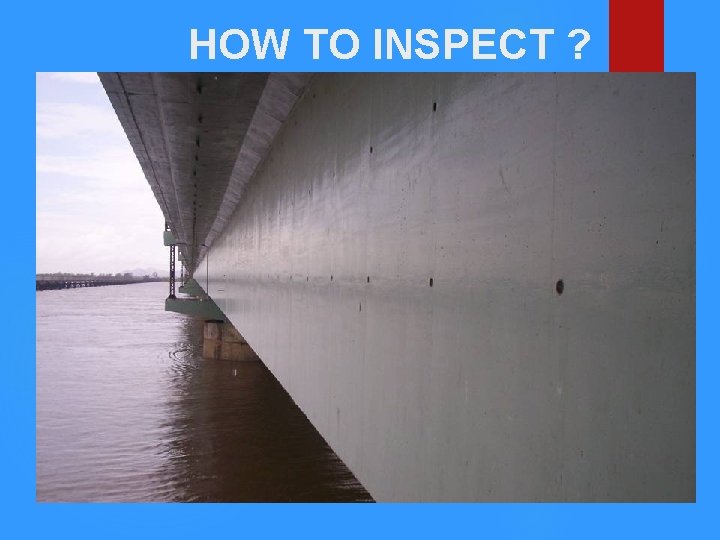
HOW TO INSPECT ?
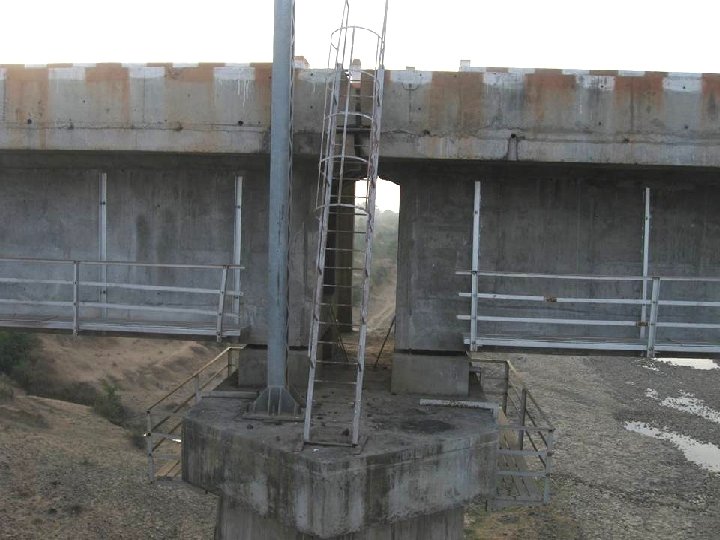
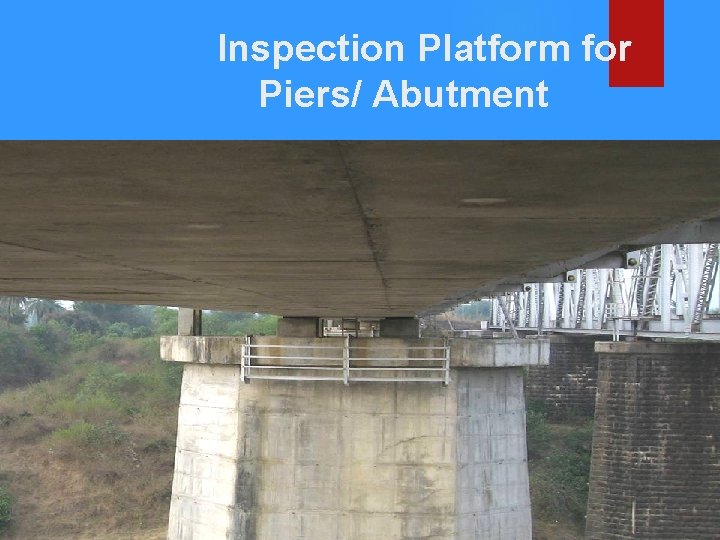
Inspection Platform for Piers/ Abutment
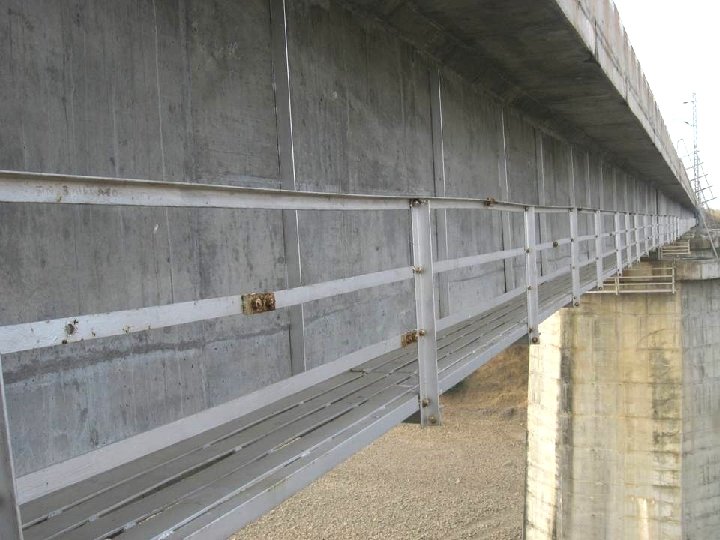
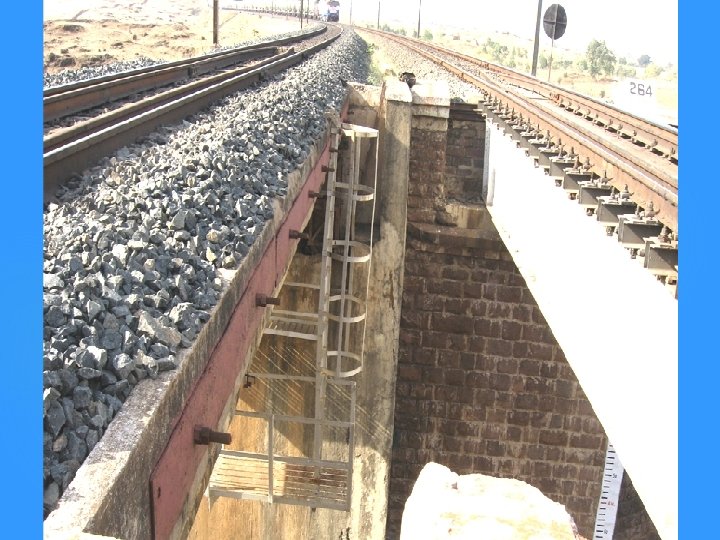
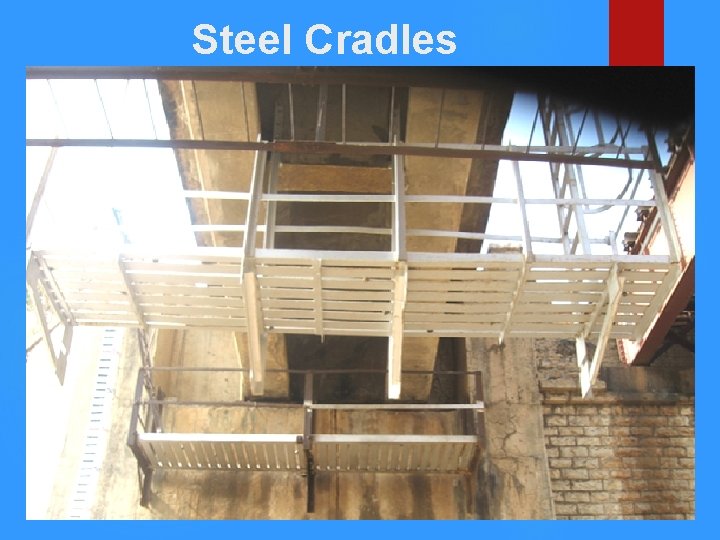
Steel Cradles
Whom to take along? SSE/Works, Bridge SSE/P-way Inspector for specific bridges Specific skilled staff if all components of bridge are not easily accessible
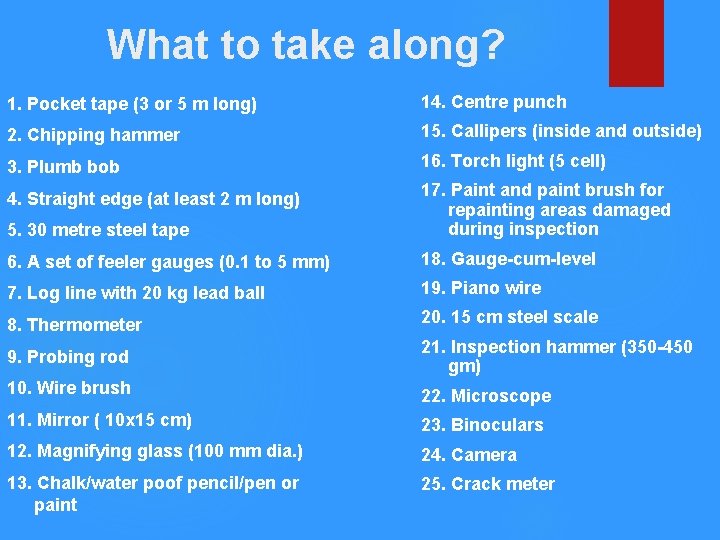
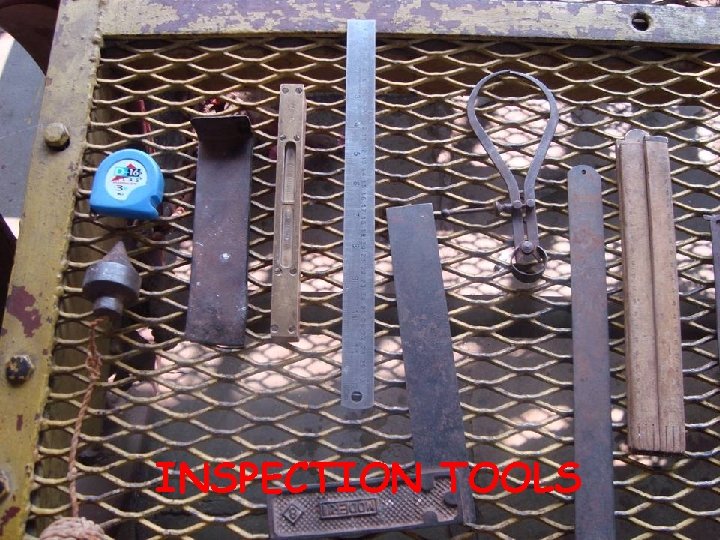
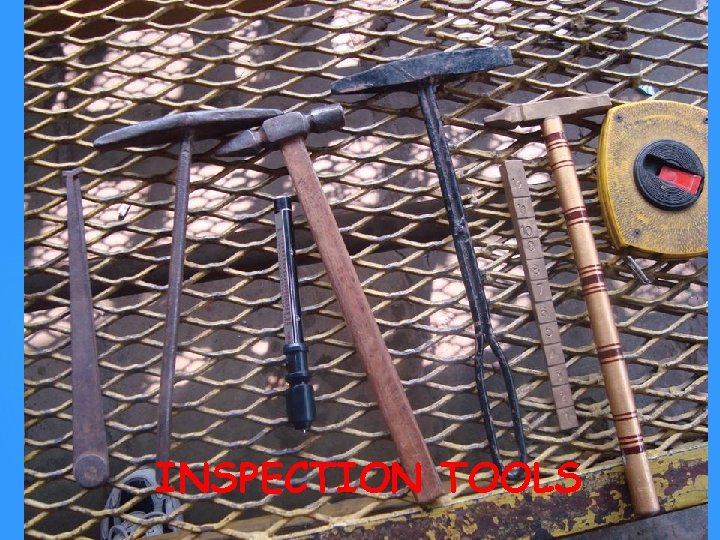
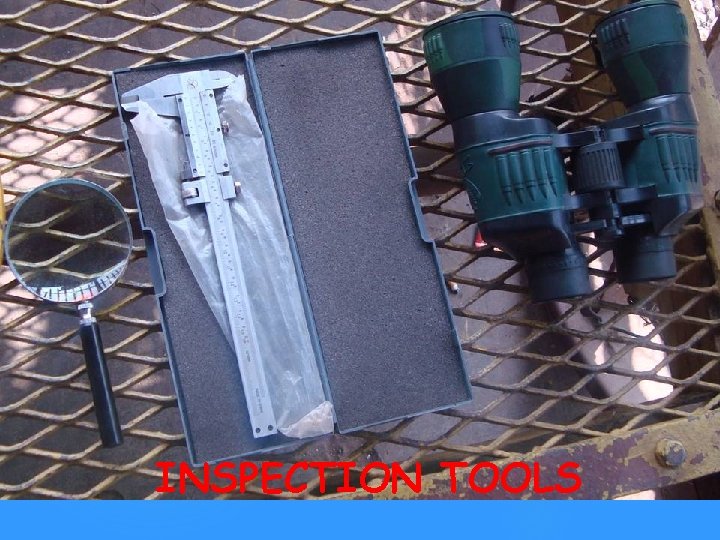
What to take along? 1. Pocket tape (3 or 5 m long) 14. Centre punch 2. Chipping hammer 15. Callipers (inside and outside) 3. Plumb bob 16. Torch light (5 cell) 4. Straight edge (at least 2 m long) 5. 30 metre steel tape 17. Paint and paint brush for repainting areas damaged during inspection 6. A set of feeler gauges (0. 1 to 5 mm) 18. Gauge-cum-level 7. Log line with 20 kg lead ball 19. Piano wire 8. Thermometer 20. 15 cm steel scale 9. Probing rod 21. Inspection hammer (350 -450 gm) 10. Wire brush 22. Microscope 11. Mirror ( 10 x 15 cm) 23. Binoculars 12. Magnifying glass (100 mm dia. ) 24. Camera 13. Chalk/water poof pencil/pen or paint 25. Crack meter
INSPECTION TOOLS
INSPECTION TOOLS
INSPECTION TOOLS
What to Inspect Work through a checklist prepared for the particular type of structure. Should be familiar with the details of the structure and as to how it is intended to function. Should study previous reports before conducting inspection, so that the condition of the defects noticed earlier could be checked. Should be aware of rectification work done earlier, the same should be inspected and its performance should be recorded.
What to Inspect? Foundation Masonry in substructure Training and Protection Works Bed blocks Bearings Masonry in superstructure (ballast walls, spandrel walls in arches, pipes, boxes…) Superstructure Track (girders, slabs…)
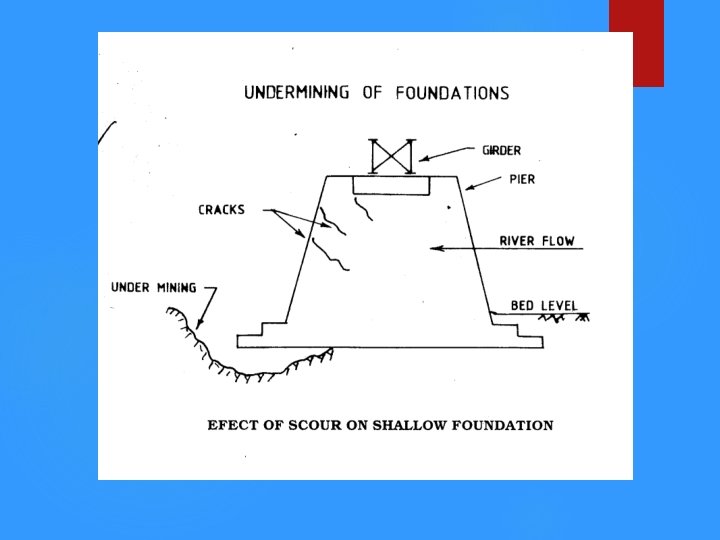
FOUNDATION Visual examination difficult Observe exposed element Take scour reading Verticality of abutment and pier Under water inspection – most difficult Inspect quality of material – dry season. Tell tale Permanent kink in alignment – tilt of pier
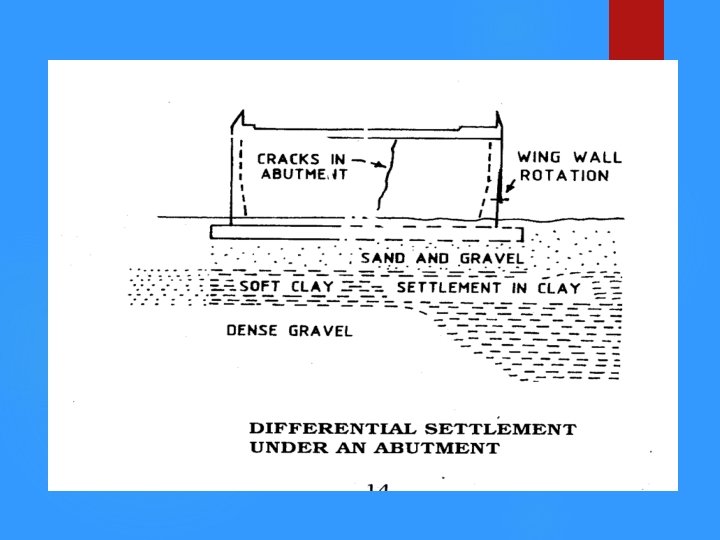
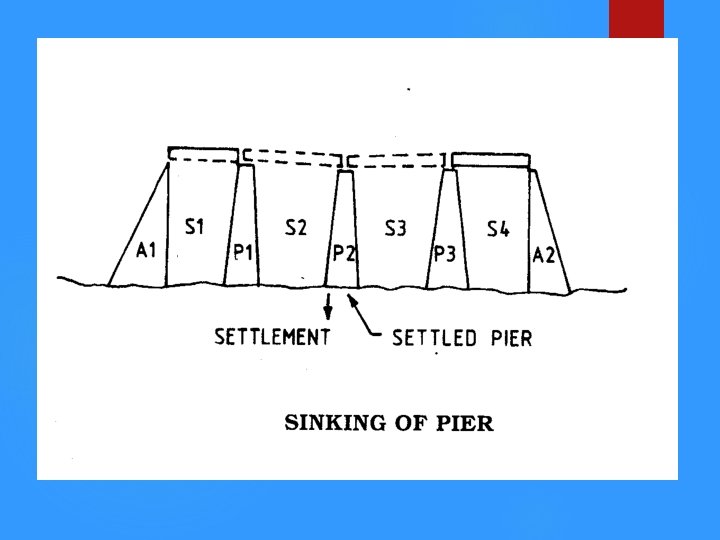
Piers/ Abutments n Inadequate/abnormal clearance between ballast wall and end girder leaning, n bulging of abutments Abnormal level difference Tilting of pier Unequal Sinking n of foundation Crack pattern Uneven n settlement Weathering settlement
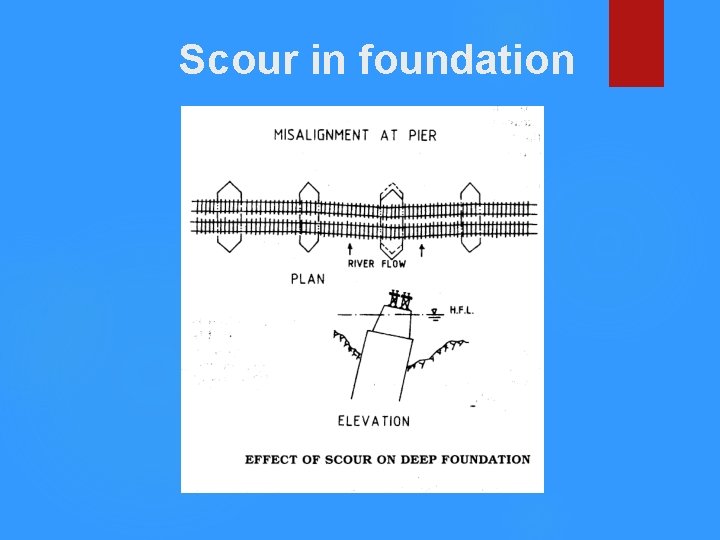
Scour in foundation
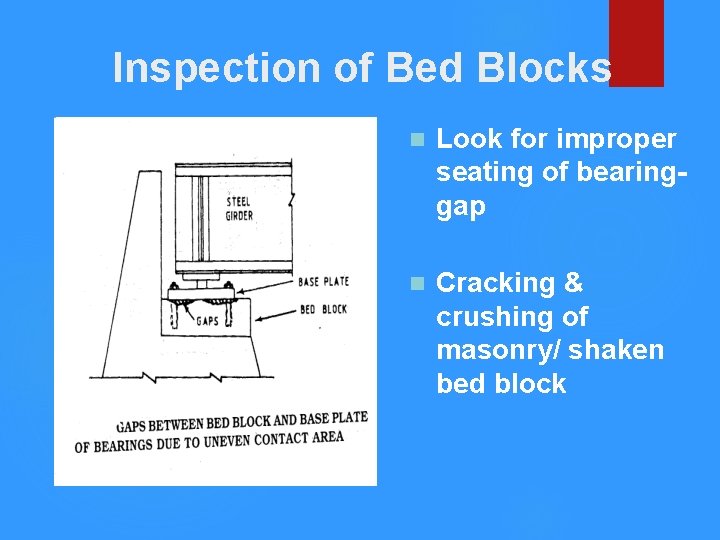
Inspection of Bed Blocks n Look for improper seating of bearinggap n Cracking & crushing of masonry/ shaken bed block
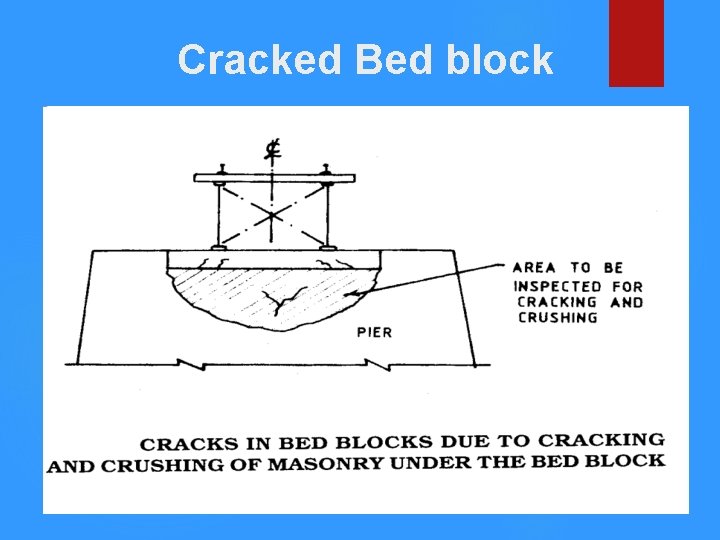
Cracked Bed block
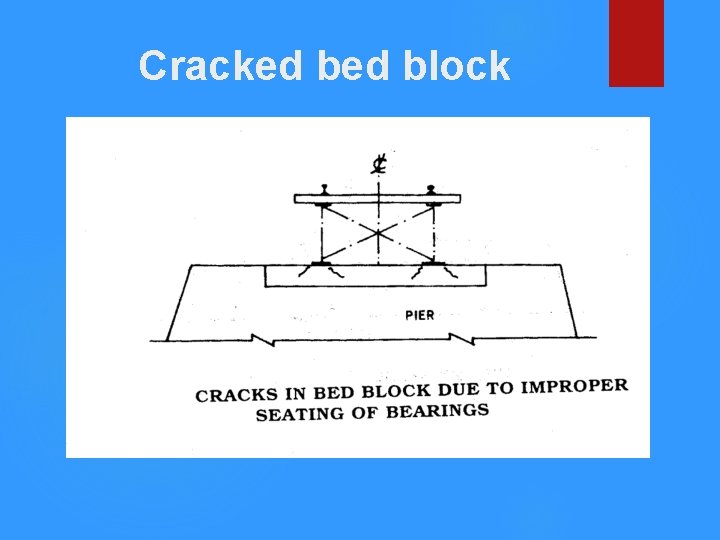
Cracked block
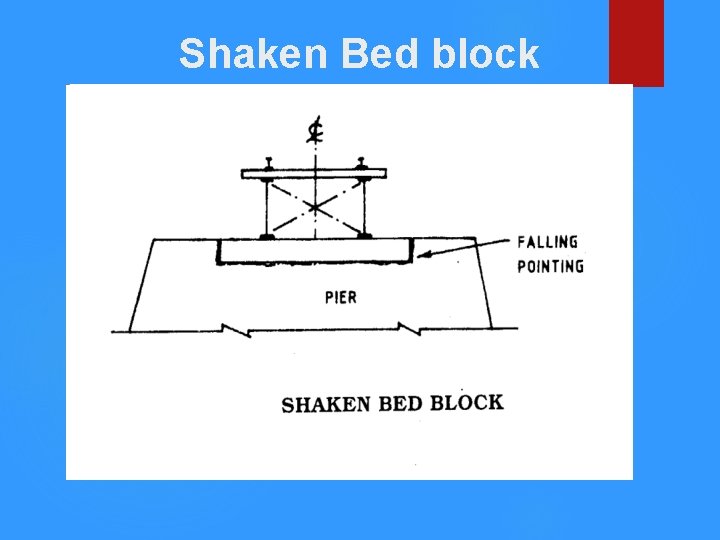
Shaken Bed block
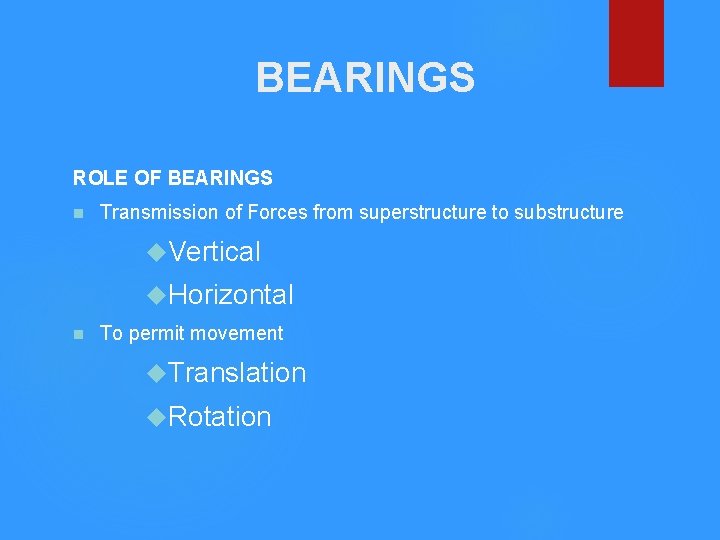
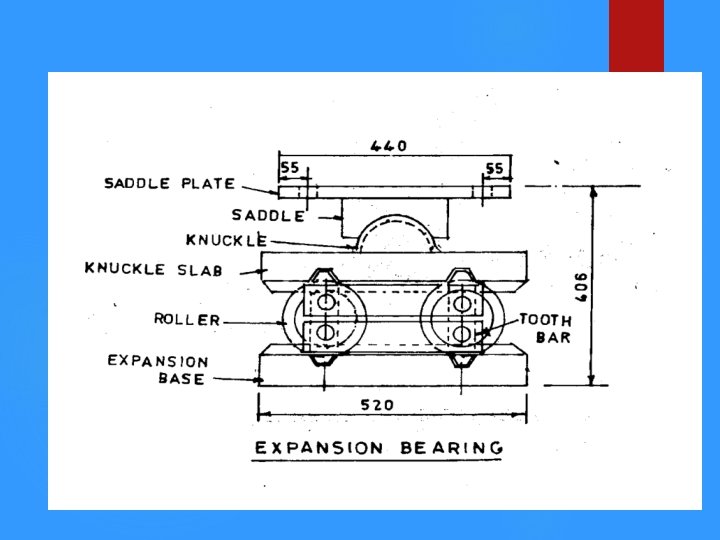
BEARINGS ROLE OF BEARINGS n Transmission of Forces from superstructure to substructure Vertical Horizontal n To permit movement Translation Rotation

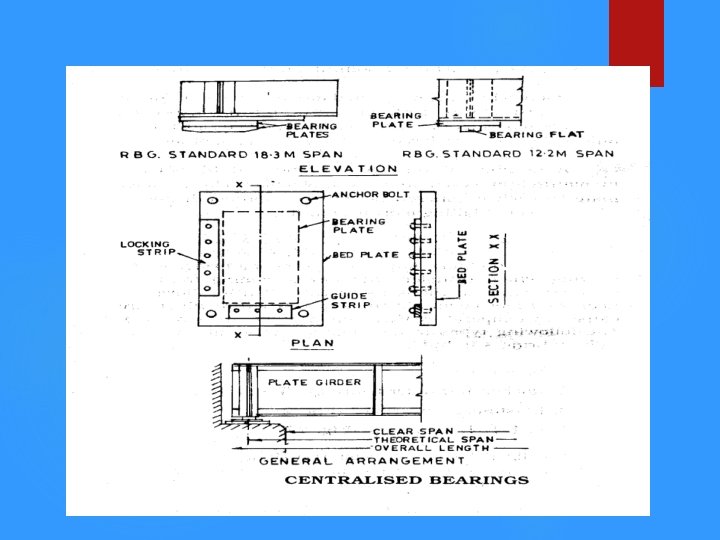
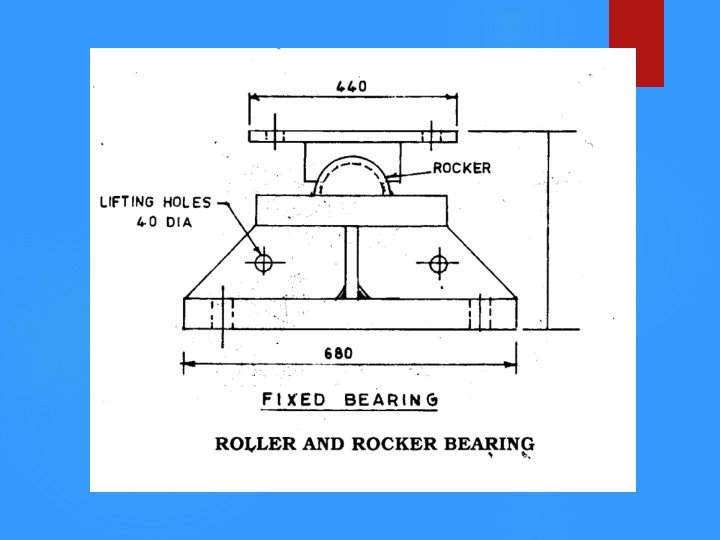
BEARINGS TYPES OF BEARINGS n Sliding bearings n Rocker & roller bearings n Oil bath bearings n Elastomeric bearings n PTFE bearings
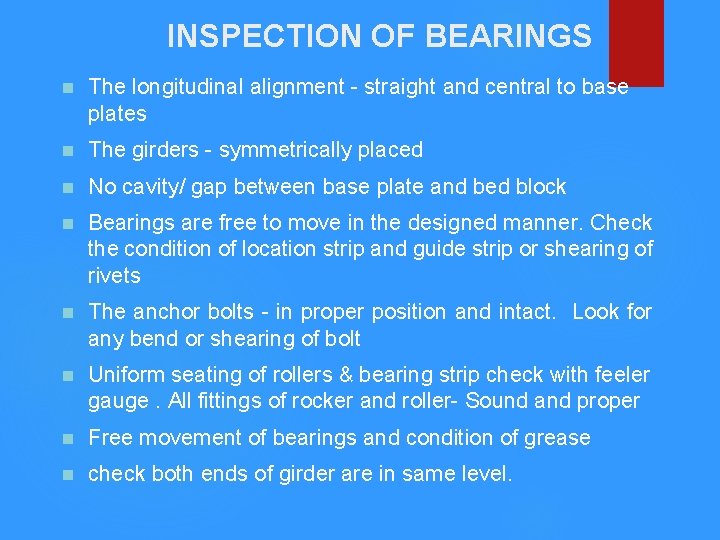
INSPECTION OF BEARINGS n The longitudinal alignment - straight and central to base plates n The girders - symmetrically placed n No cavity/ gap between base plate and bed block n Bearings are free to move in the designed manner. Check the condition of location strip and guide strip or shearing of rivets n The anchor bolts - in proper position and intact. Look for any bend or shearing of bolt n Uniform seating of rollers & bearing strip check with feeler gauge. All fittings of rocker and roller- Sound and proper n Free movement of bearings and condition of grease n check both ends of girder are in same level.
Inspection of Girders CORROSION Inspect for corrosion/loss of section Critical locations /cracks etc.
TRACK n APPROACHES Settlement- same level for 100 m Alignment Track parameters within limits Full ballast section No rail joint within 3 m from abutment Standard guard rail arrangement Well anchored track
TRACK cont… ON BRIDGE PROPER n Central to rail bearers and main girder n Track in good line and level n Proper track fittings n Creep n Proper guard rail & its fixing arrangement n Proper spacing of sleepers n Hook bolts- properly tightened n Provision of tie bar
Precautions Clothing (suitable dress) Glasses Shoes Scaffolding No and ladders short cuts please Lookout men and protection wherever required Watch your steps

…and the most important thing is to know and realize that every deterioration has a cause and the aim of inspecting official is to determine that cause
PLANNING FOR INSPECTION n Decide number of bridges to be inspected n Go through previous inspection reports n Collect plans and other details n Special equipment/ arrangements required n Manpower and tools required n Inspect Systematically
NUMERICAL RATING SYSTEM (NRS) Numerical Rating System (NRS) is a rating system used for management of bridges which assigns a “UNIQUE RATING NUMBER” (URN) to represent the physical condition of a bridge.
USES OF NRS n n n USED TO CREATE DATA BASE FOR BROAD MANAGEMENT INDICATES THE PHYSICAL CONDITION OF A BRIDGE AS A WHOLE LOWER THE NUMBER MORE SERIOUS IS THE CONDITION IDENTIFIES THE PROGRESSIVE DETERIORATION FIXES PRIORITIES OF BRIDGE REHABILITATION
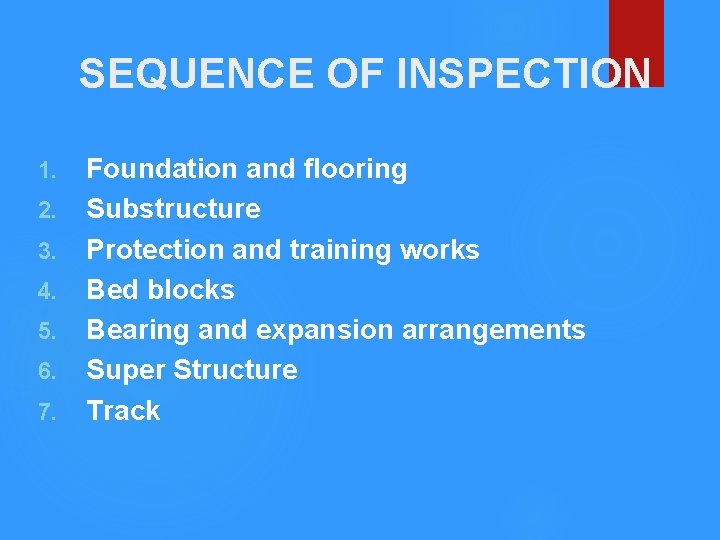
SEQUENCE OF INSPECTION 1. 2. 3. 4. 5. 6. 7. Foundation and flooring Substructure Protection and training works Bed blocks Bearing and expansion arrangements Super Structure Track
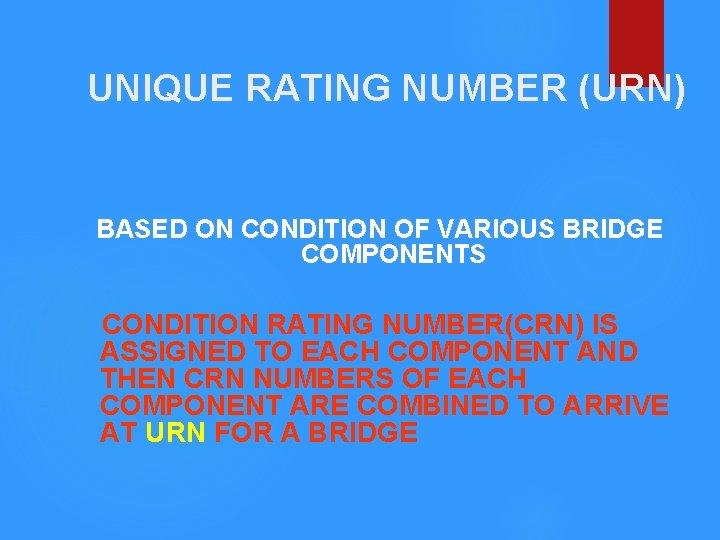
UNIQUE RATING NUMBER (URN) BASED ON CONDITION OF VARIOUS BRIDGE COMPONENTS CONDITION RATING NUMBER(CRN) IS ASSIGNED TO EACH COMPONENT AND THEN CRN NUMBERS OF EACH COMPONENT ARE COMBINED TO ARRIVE AT URN FOR A BRIDGE
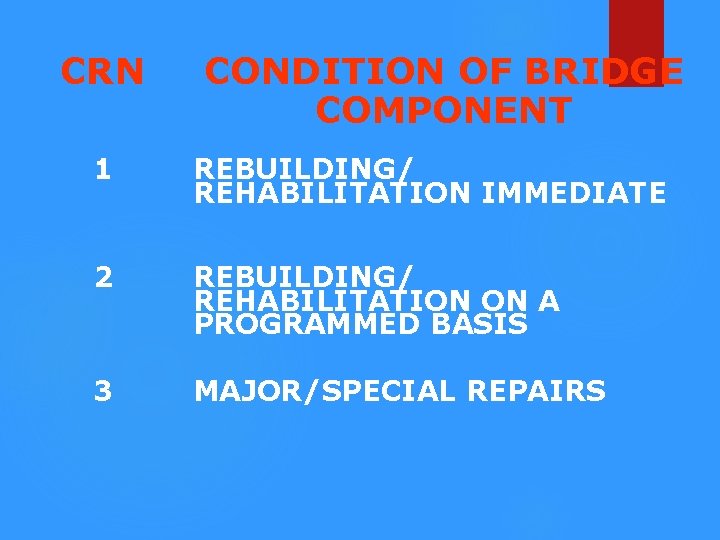
CRN CONDITION OF BRIDGE COMPONENT 1 REBUILDING/ REHABILITATION IMMEDIATE 2 REBUILDING/ REHABILITATION ON A PROGRAMMED BASIS 3 MAJOR/SPECIAL REPAIRS
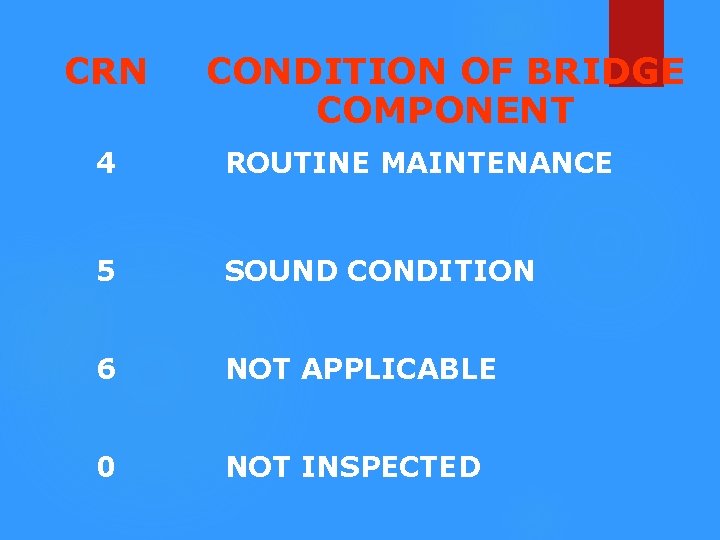
CRN CONDITION OF BRIDGE COMPONENT 4 ROUTINE MAINTENANCE 5 SOUND CONDITION 6 NOT APPLICABLE 0 NOT INSPECTED
CRN WHEN THERE ARE MORE THAN ONE NUMBER OF ANY COMPONENT/ EACH IS ASSIGNED A CRN n THE LOWEST OF THE NUMBER BECOMES THE CRN OF THAT COMPONENT n IF ANY COMPONENTS DOES NOT EXIST THE CRN WILL BE 6 n IF ANY COMPONENTS IS NOT INSPECTED, THE CRN WILL BE 0 n
OVERALL RATING NUMBER (ORN) n IT IS THE LOWEST OF CRN EXCEPT 0 GIVEN TO THE VARIOUS BRIDGE COMPONENTS IN SEQUENCE
UNIQUE RATING NUMBER (URN) n URN = ORN followed by CRN of each of seven Bridge Components in sequence.
URN 20362544 will indicate 1 st Digit- 2>>>Represents ORN>> Whole bridge or one or more of its components require(s) rebuilding/ rehabilitation on a programmed basis 2 nd Digit- 0>>> Foundation & flooring were not inspected 3 rd Digit- 3>>> Substructure requires major/special repairs 4 th Digit – 6>>> Not applicable, I. e. the bridge does not have any training or protective works
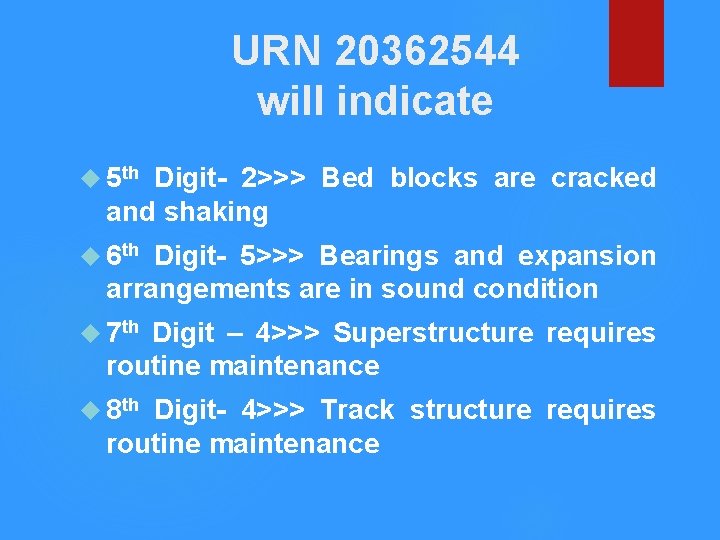
URN 20362544 will indicate 5 th Digit- 2>>> Bed blocks are cracked and shaking 6 th Digit- 5>>> Bearings and expansion arrangements are in sound condition 7 th Digit – 4>>> Superstructure requires routine maintenance 8 th Digit- 4>>> Track structure requires routine maintenance
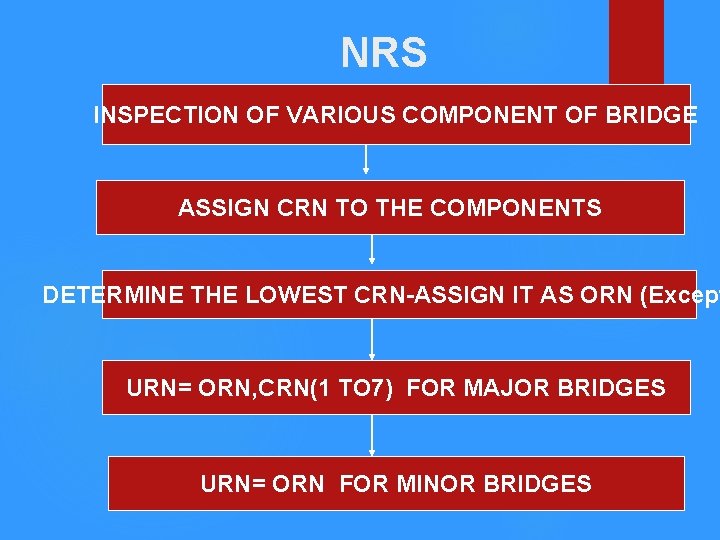
NRS INSPECTION OF VARIOUS COMPONENT OF BRIDGE ASSIGN CRN TO THE COMPONENTS DETERMINE THE LOWEST CRN-ASSIGN IT AS ORN (Except URN= ORN, CRN(1 TO 7) FOR MAJOR BRIDGES URN= ORN FOR MINOR BRIDGES

- Slides: 73