
Bridge vs Tension Band Construct for Spinal Fractures
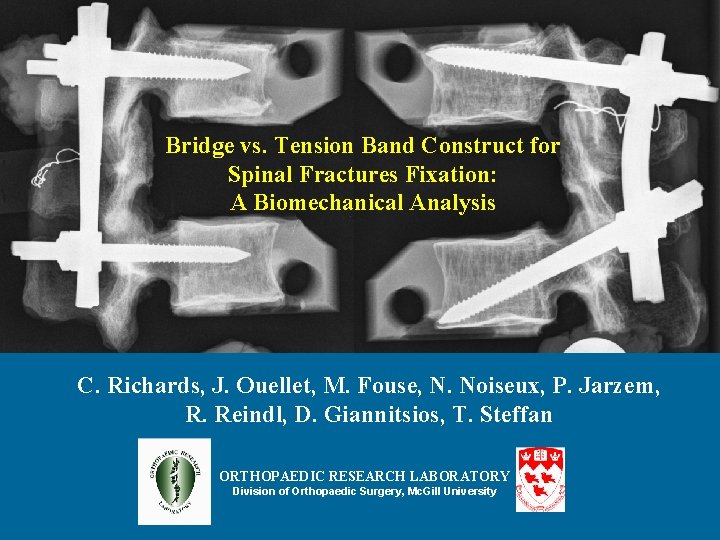
Bridge vs. Tension Band Construct for Spinal Fractures Fixation: A Biomechanical Analysis C. Richards, J. Ouellet, M. Fouse, N. Noiseux, P. Jarzem, R. Reindl, D. Giannitsios, T. Steffan ORTHOPAEDIC RESEARCH LABORATORY Division of Orthopaedic Surgery, Mc. Gill University
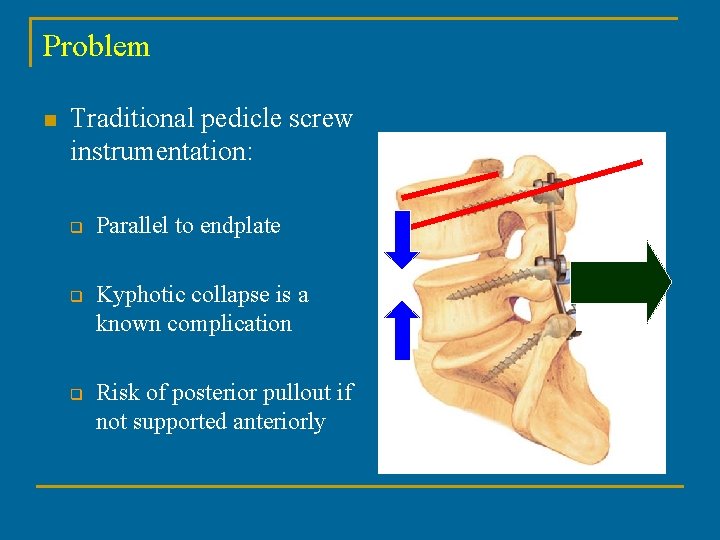
Problem n Traditional pedicle screw instrumentation: q q q Parallel to endplate Kyphotic collapse is a known complication Risk of posterior pullout if not supported anteriorly
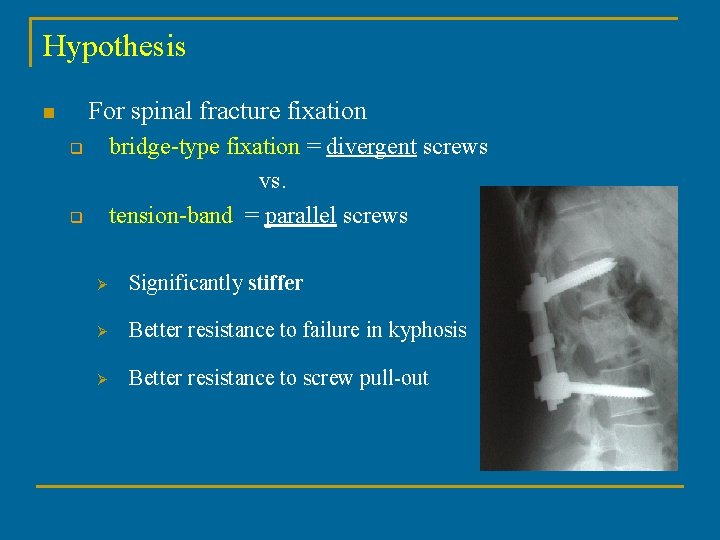
Hypothesis For spinal fracture fixation n bridge-type fixation = divergent screws vs. tension-band = parallel screws q q Ø Significantly stiffer Ø Better resistance to failure in kyphosis Ø Better resistance to screw pull-out
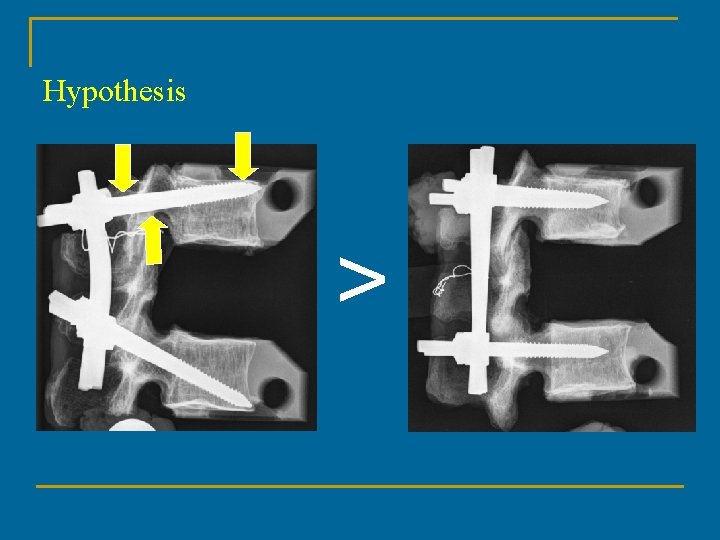
Hypothesis >
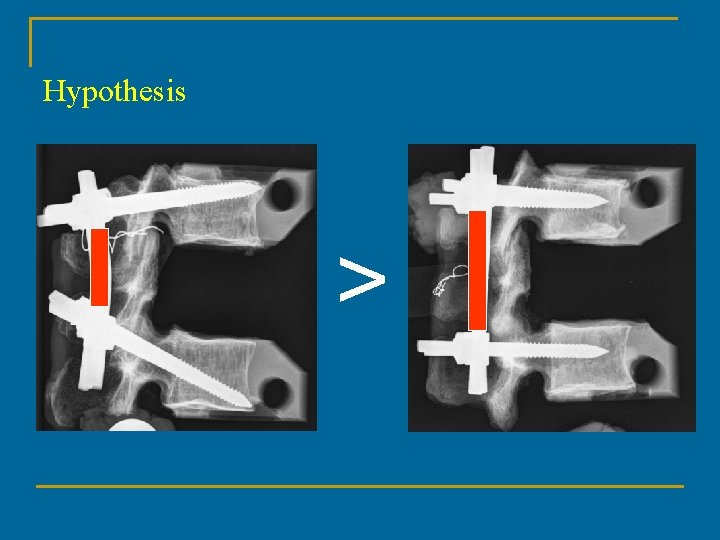
Hypothesis >
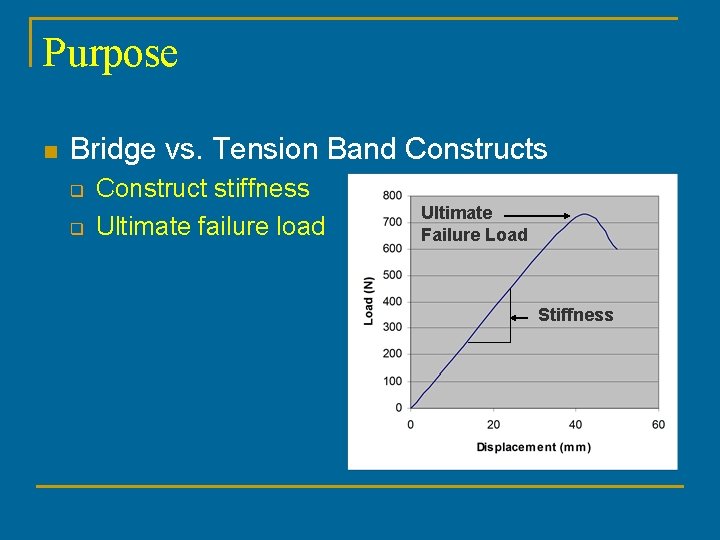
Purpose n Bridge vs. Tension Band Constructs q q Construct stiffness Ultimate failure load Ultimate Failure Load Stiffness
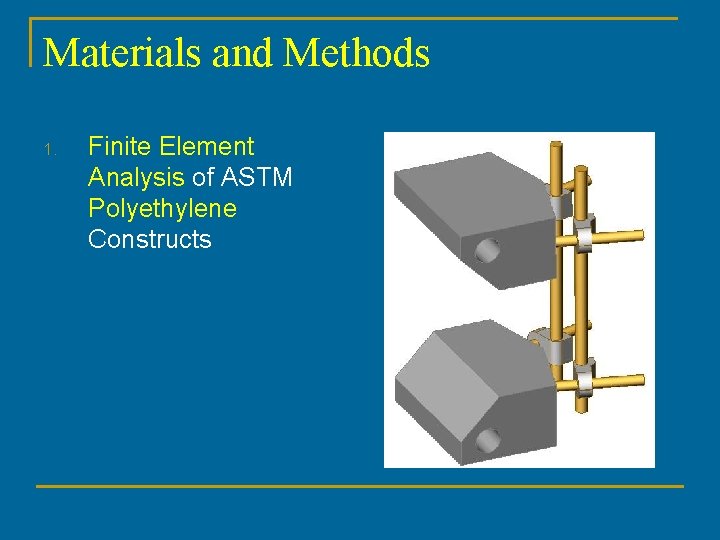
Materials and Methods 1. Finite Element Analysis of ASTM Polyethylene Constructs
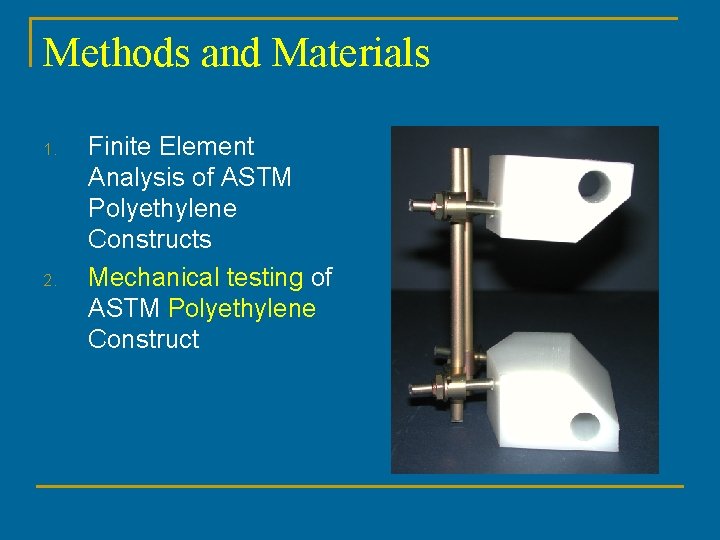
Methods and Materials 1. 2. Finite Element Analysis of ASTM Polyethylene Constructs Mechanical testing of ASTM Polyethylene Construct
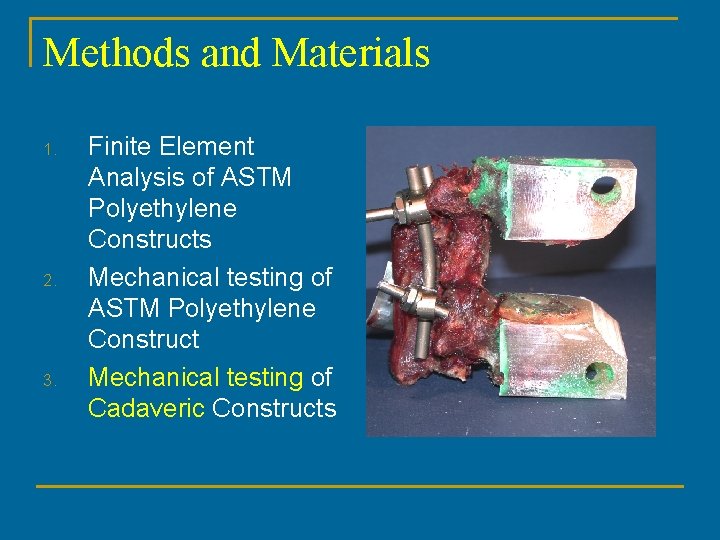
Methods and Materials 1. 2. 3. Finite Element Analysis of ASTM Polyethylene Constructs Mechanical testing of ASTM Polyethylene Construct Mechanical testing of Cadaveric Constructs
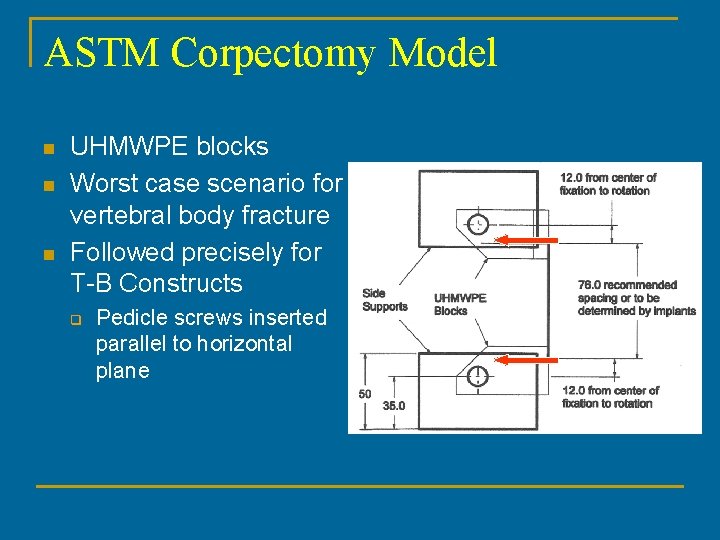
ASTM Corpectomy Model n n n UHMWPE blocks Worst case scenario for vertebral body fracture Followed precisely for T-B Constructs q Pedicle screws inserted parallel to horizontal plane
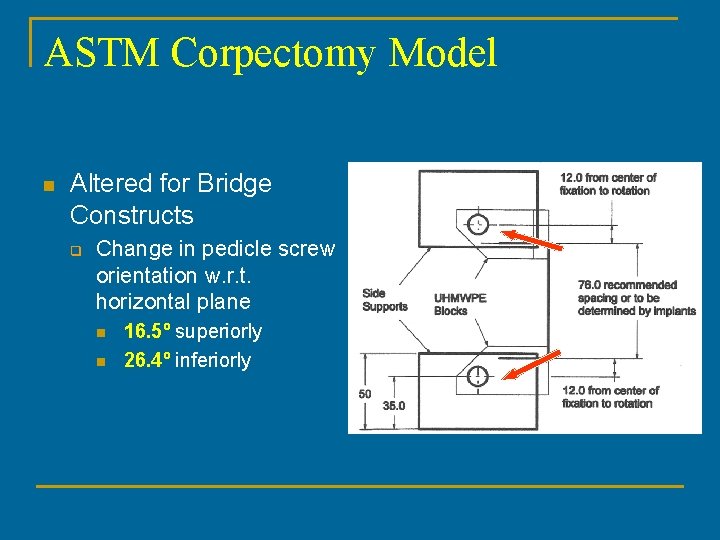
ASTM Corpectomy Model n Altered for Bridge Constructs q Change in pedicle screw orientation w. r. t. horizontal plane n n 16. 5º superiorly 26. 4º inferiorly
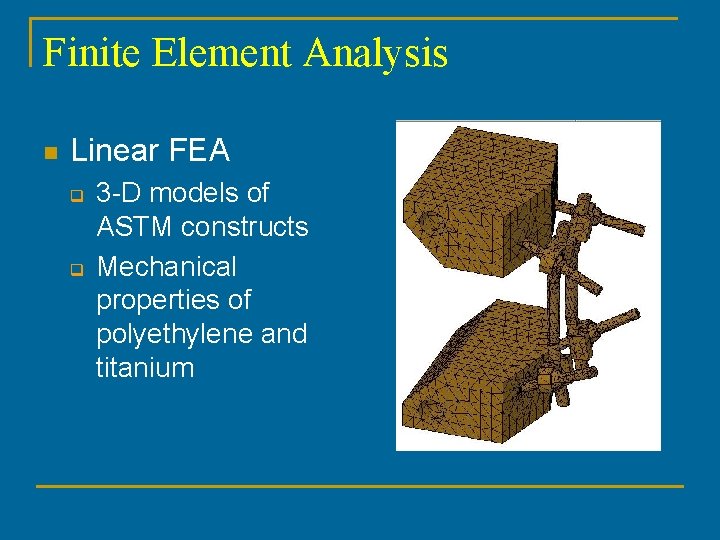
Finite Element Analysis n Linear FEA q q 3 -D models of ASTM constructs Mechanical properties of polyethylene and titanium
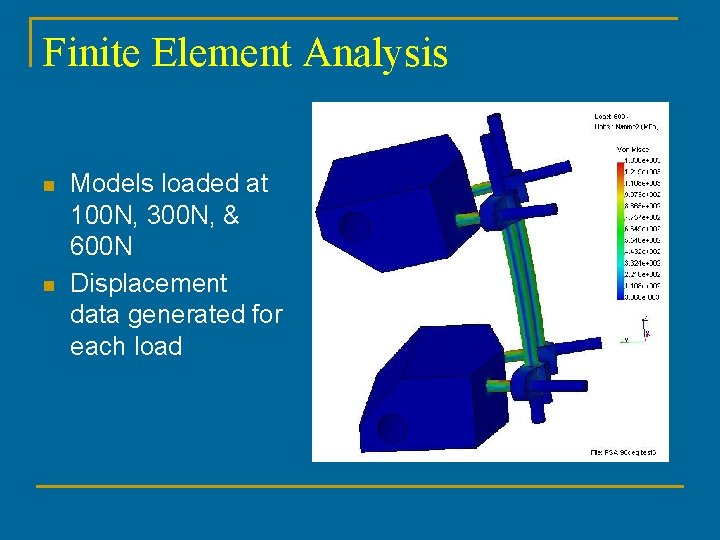
Finite Element Analysis n n Models loaded at 100 N, 300 N, & 600 N Displacement data generated for each load
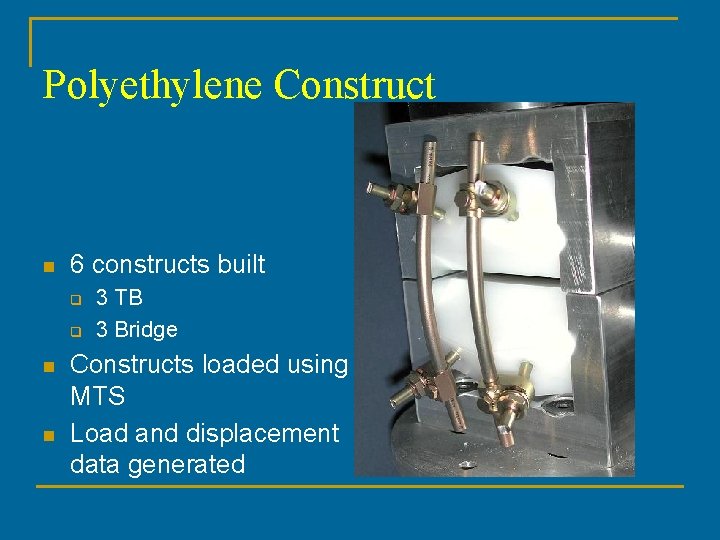
Polyethylene Construct n 6 constructs built q q n n 3 TB 3 Bridge Constructs loaded using MTS Load and displacement data generated
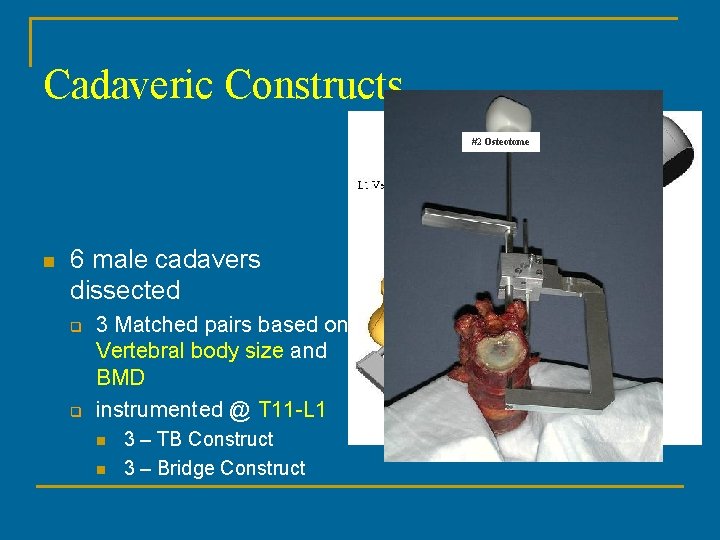
Cadaveric Constructs #2 Osteotome n 6 male cadavers dissected q q 3 Matched pairs based on Vertebral body size and BMD instrumented @ T 11 -L 1 n n 3 – TB Construct 3 – Bridge Construct
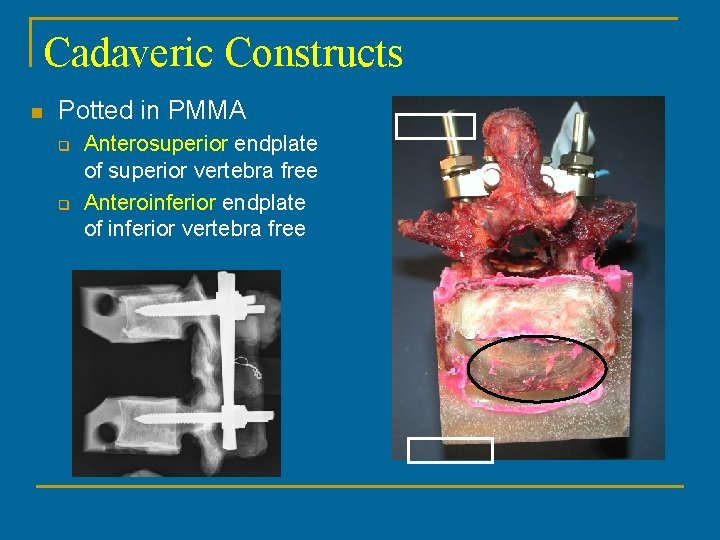
Cadaveric Constructs n Potted in PMMA q q Anterosuperior endplate of superior vertebra free Anteroinferior endplate of inferior vertebra free
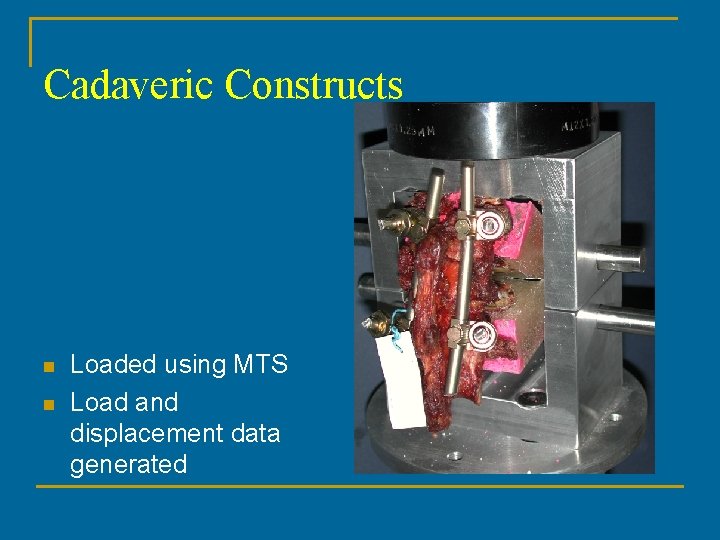
Cadaveric Constructs n n Loaded using MTS Load and displacement data generated
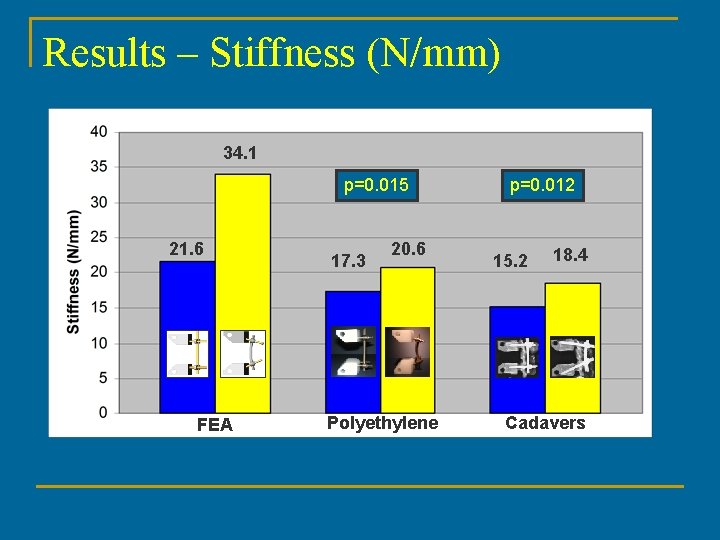
Results – Stiffness (N/mm) 34. 1 p=0. 015 21. 6 FEA 17. 3 20. 6 Polyethylene p=0. 012 15. 2 18. 4 Cadavers
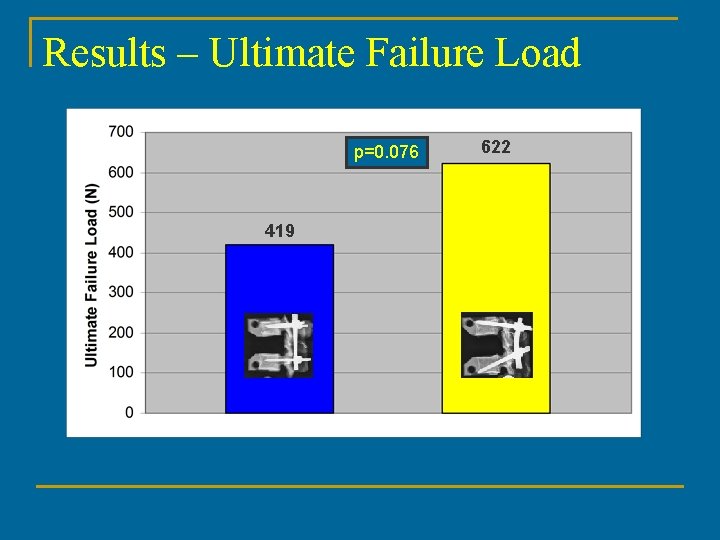
Results – Ultimate Failure Load p=0. 076 419 622
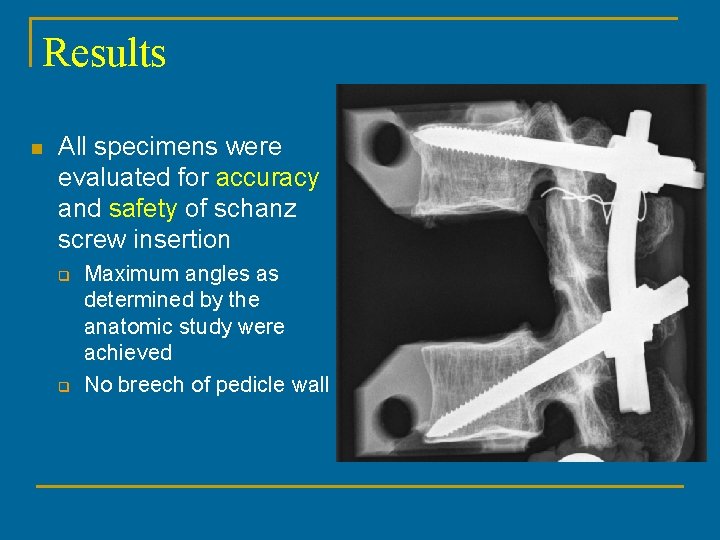
Results n All specimens were evaluated for accuracy and safety of schanz screw insertion q q Maximum angles as determined by the anatomic study were achieved No breech of pedicle wall
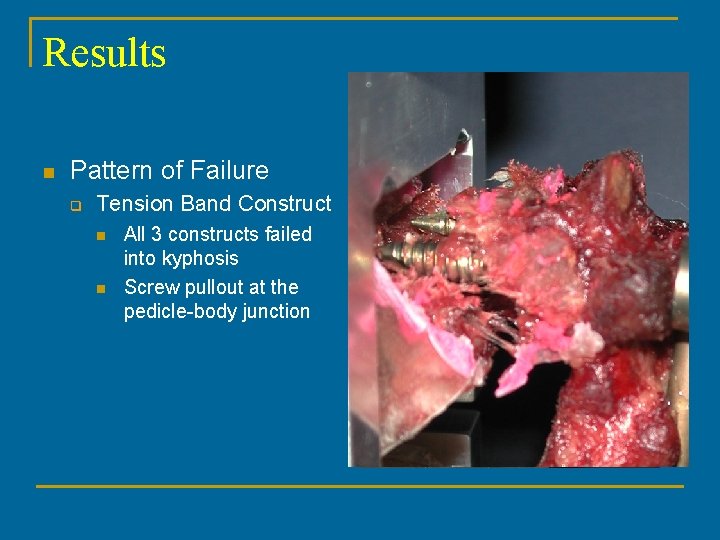
Results n Pattern of Failure q Tension Band Construct n n All 3 constructs failed into kyphosis Screw pullout at the pedicle-body junction
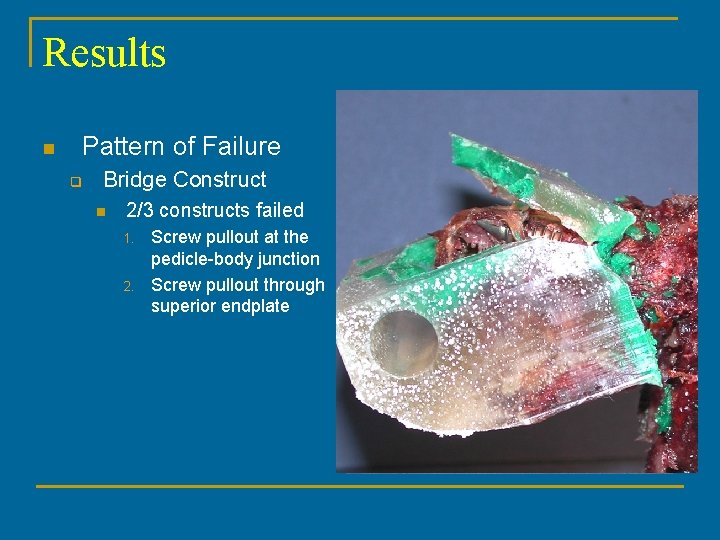
Results n Pattern of Failure q Bridge Construct n 2/3 constructs failed 1. 2. Screw pullout at the pedicle-body junction Screw pullout through superior endplate
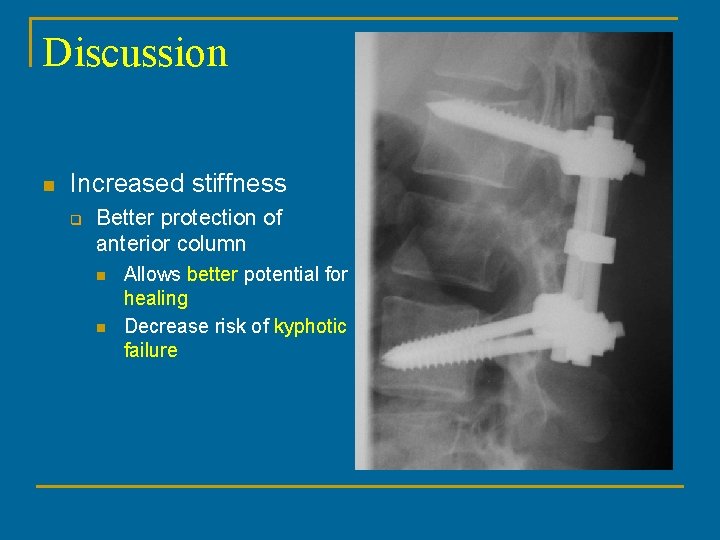
Discussion n Increased stiffness q Better protection of anterior column n n Allows better potential for healing Decrease risk of kyphotic failure
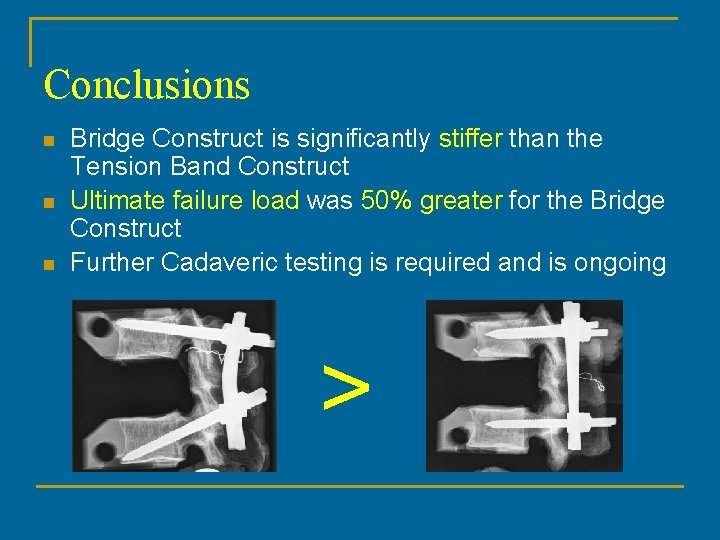
Conclusions n n n Bridge Construct is significantly stiffer than the Tension Band Construct Ultimate failure load was 50% greater for the Bridge Construct Further Cadaveric testing is required and is ongoing >
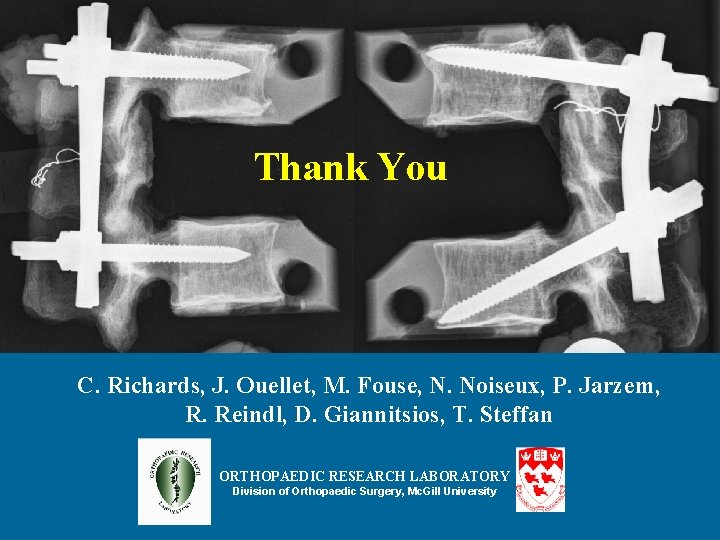
Thank You C. Richards, J. Ouellet, M. Fouse, N. Noiseux, P. Jarzem, R. Reindl, D. Giannitsios, T. Steffan ORTHOPAEDIC RESEARCH LABORATORY Division of Orthopaedic Surgery, Mc. Gill University
- Slides: 25