
Bridge Design and Build Project By Michael Ball
Bridge Design and Build Project By: Michael Ball Period 5 CAD Engineering 1
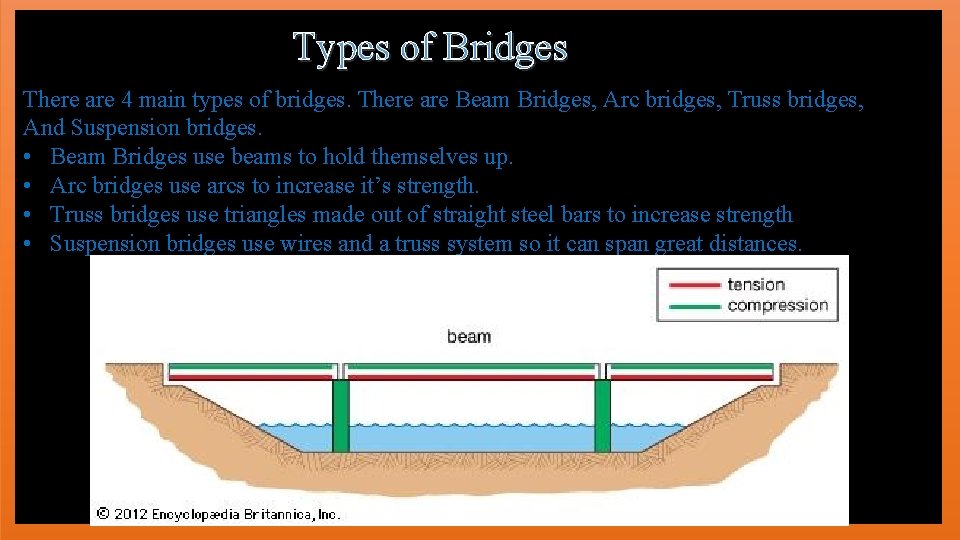
Types of Bridges There are 4 main types of bridges. There are Beam Bridges, Arc bridges, Truss bridges, And Suspension bridges. • Beam Bridges use beams to hold themselves up. • Arc bridges use arcs to increase it’s strength. • Truss bridges use triangles made out of straight steel bars to increase strength • Suspension bridges use wires and a truss system so it can span great distances.
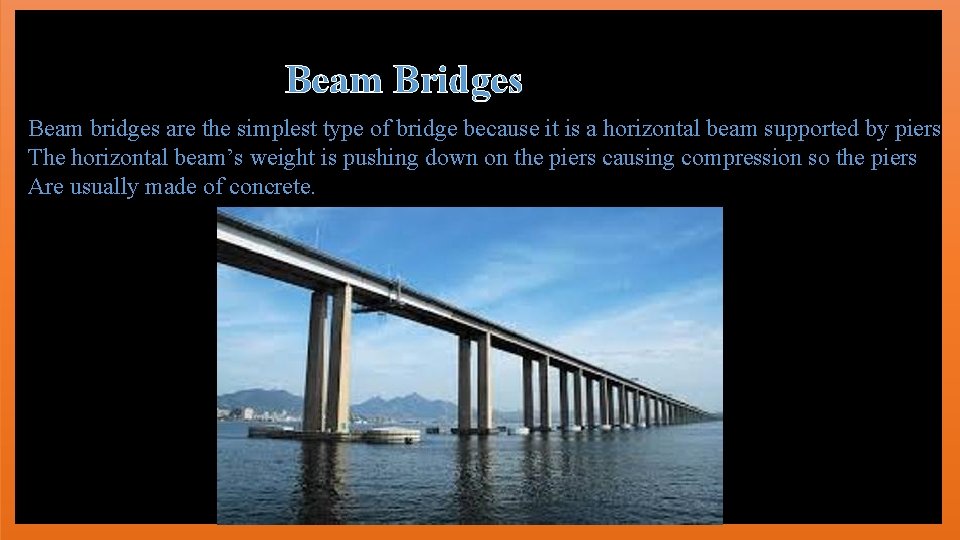
Beam Bridges Beam bridges are the simplest type of bridge because it is a horizontal beam supported by piers The horizontal beam’s weight is pushing down on the piers causing compression so the piers Are usually made of concrete.

Arc Bridges Arch bridges use arches in the design to increase it’s strength. They have a huge amount of Strength because of this design choice. They are not recent however, Romans started building This type of bridge for multiple purposes.

Truss Bridges Truss bridges are bridges that use triangles in the design for increased strength, though There are more complex versions of the truss bridge. The Firth of Forth is a complex version Of the truss bridge, it uses rigid arms that extend from both sides of two piers.

Suspension bridges use metal wires connected to large vertical towers that hold the bridge together. They use A Truss system at the bottom of the bridge to resist torsion. This design has a large amount to Strength so it can reach up to 7, 000 feet. Suspension Bridges

Compression and Tension Compression is when a material is pressed Together and it becomes shorter. Tension is when a material is pulled apart Causing it to become longer
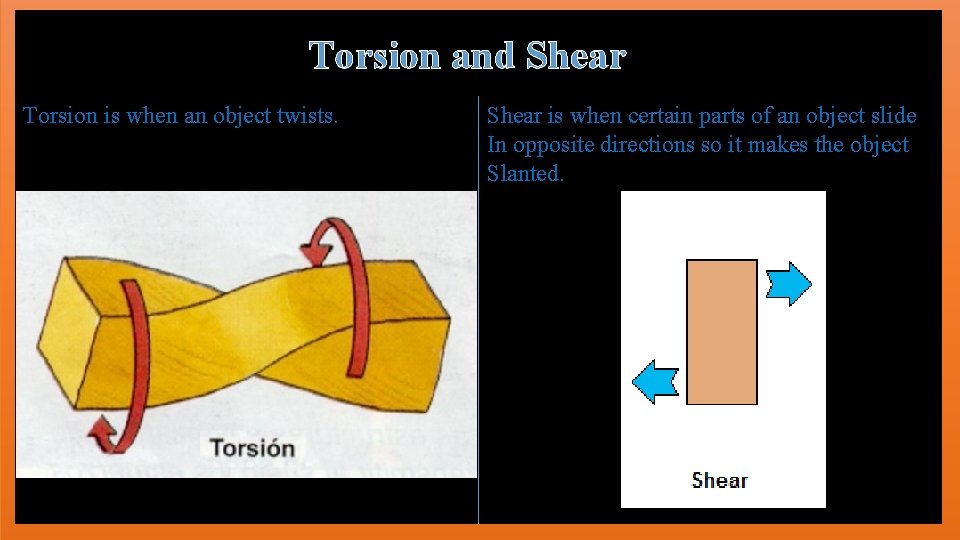
Torsion and Shear Torsion is when an object twists. Shear is when certain parts of an object slide In opposite directions so it makes the object Slanted.
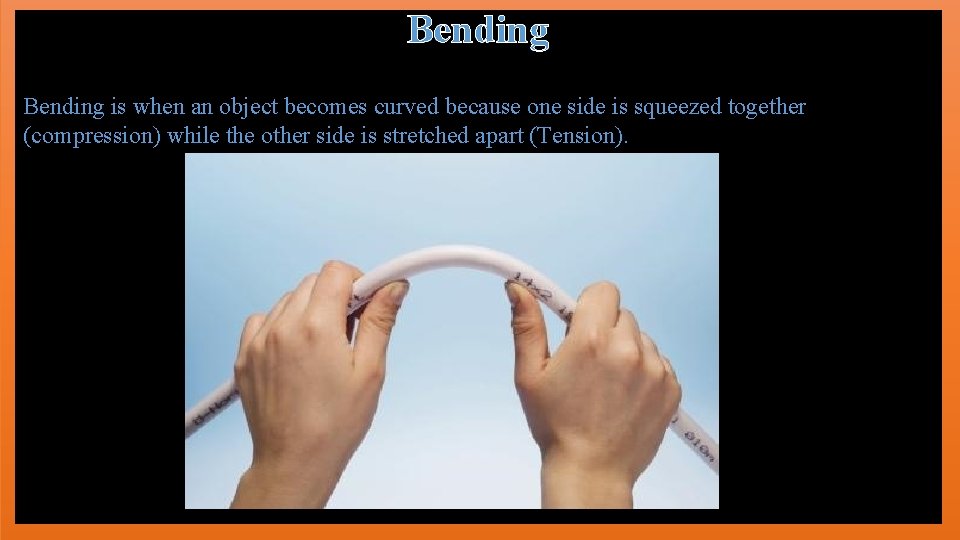
Bending is when an object becomes curved because one side is squeezed together (compression) while the other side is stretched apart (Tension).
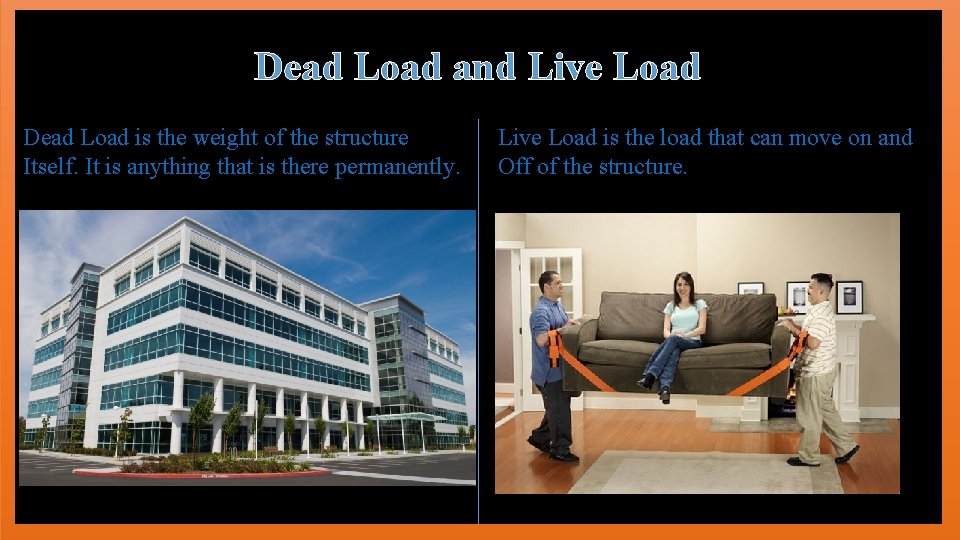
Dead Load and Live Load Dead Load is the weight of the structure Itself. It is anything that is there permanently. Live Load is the load that can move on and Off of the structure.
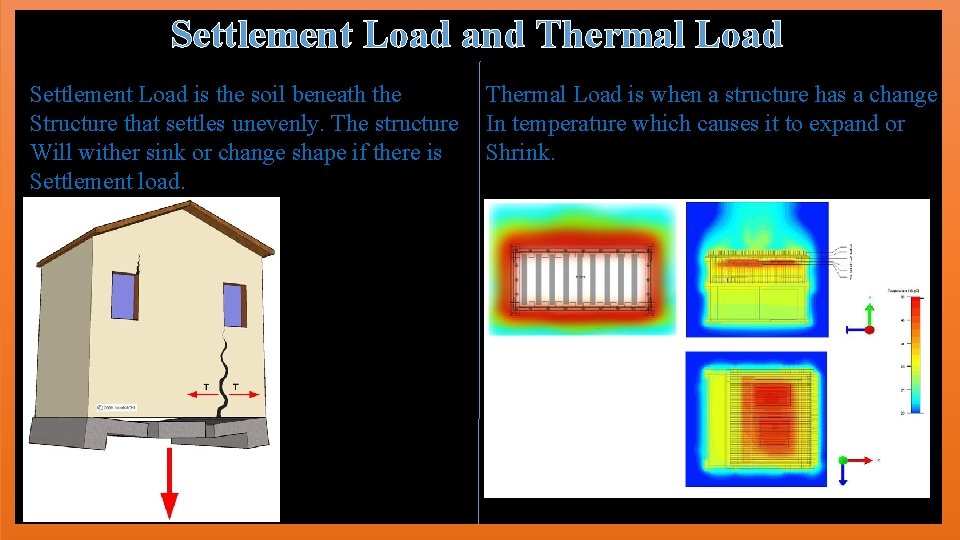
Settlement Load and Thermal Load Settlement Load is the soil beneath the Structure that settles unevenly. The structure Will wither sink or change shape if there is Settlement load. Thermal Load is when a structure has a change In temperature which causes it to expand or Shrink.
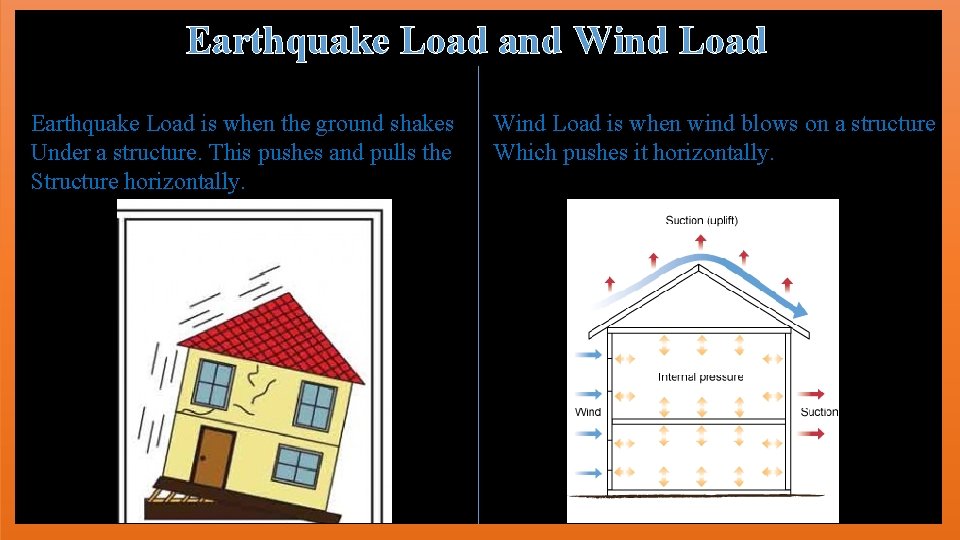
Earthquake Load and Wind Load Earthquake Load is when the ground shakes Under a structure. This pushes and pulls the Structure horizontally. Wind Load is when wind blows on a structure Which pushes it horizontally.
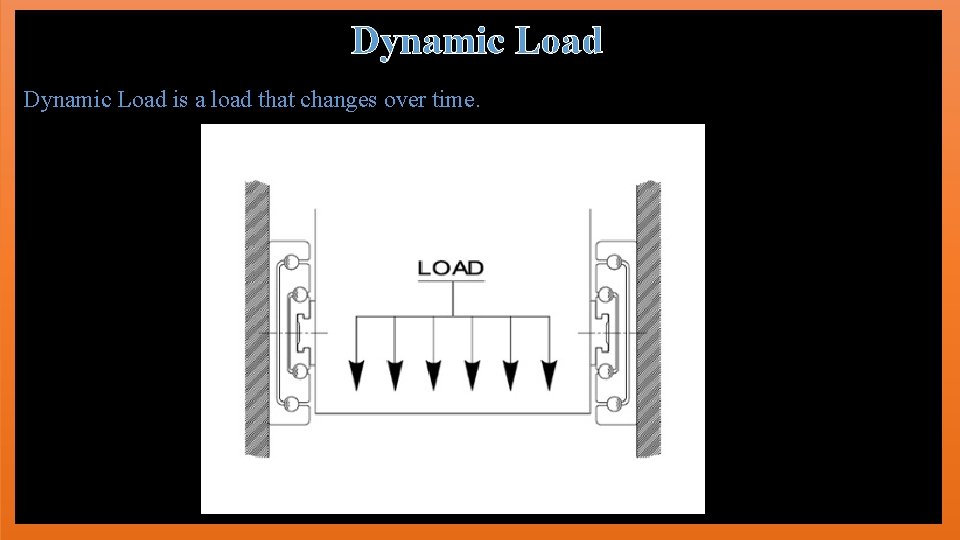
Dynamic Load is a load that changes over time.
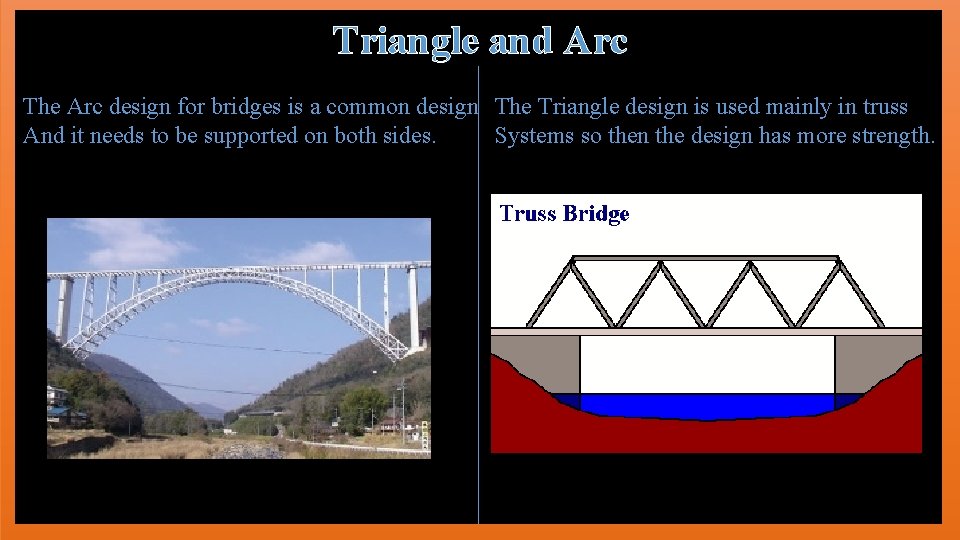
Triangle and Arc The Arc design for bridges is a common design The Triangle design is used mainly in truss Systems so then the design has more strength. And it needs to be supported on both sides.

Rectangle The Rectangle design on bridges is one of the most commonly used shapes. If you push it from The side it becomes a parallelogram unless there is a diagonal brace
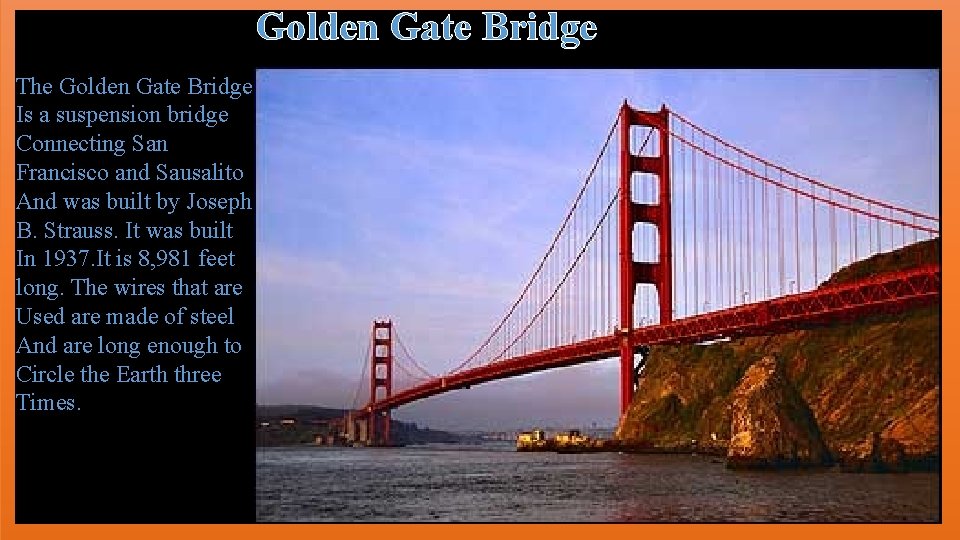
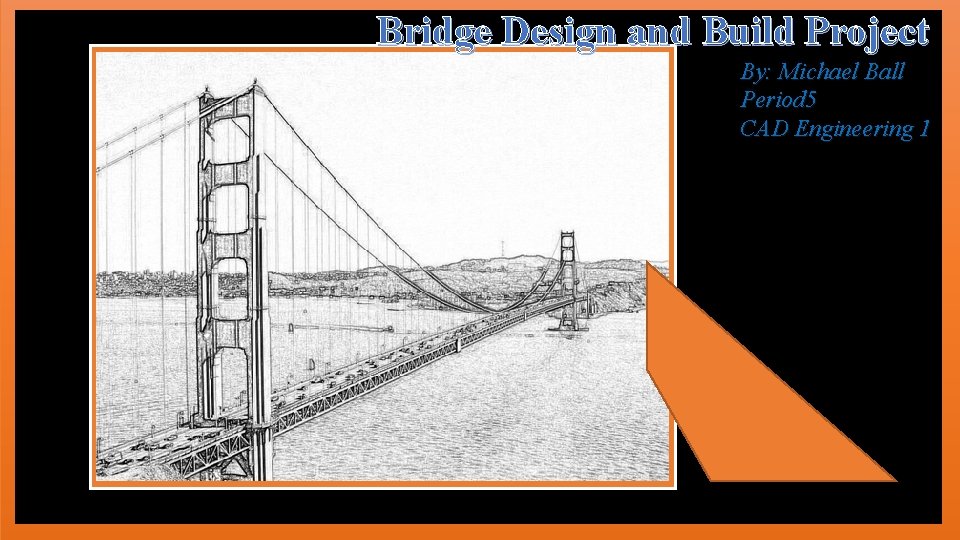
Golden Gate Bridge The Golden Gate Bridge Is a suspension bridge Connecting San Francisco and Sausalito And was built by Joseph B. Strauss. It was built In 1937. It is 8, 981 feet long. The wires that are Used are made of steel And are long enough to Circle the Earth three Times.
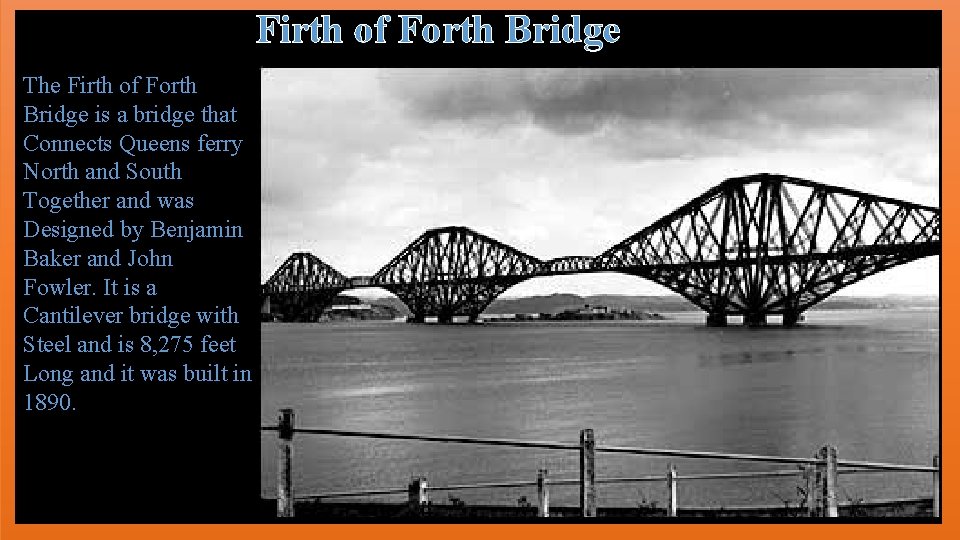
Firth of Forth Bridge The Firth of Forth Bridge is a bridge that Connects Queens ferry North and South Together and was Designed by Benjamin Baker and John Fowler. It is a Cantilever bridge with Steel and is 8, 275 feet Long and it was built in 1890.
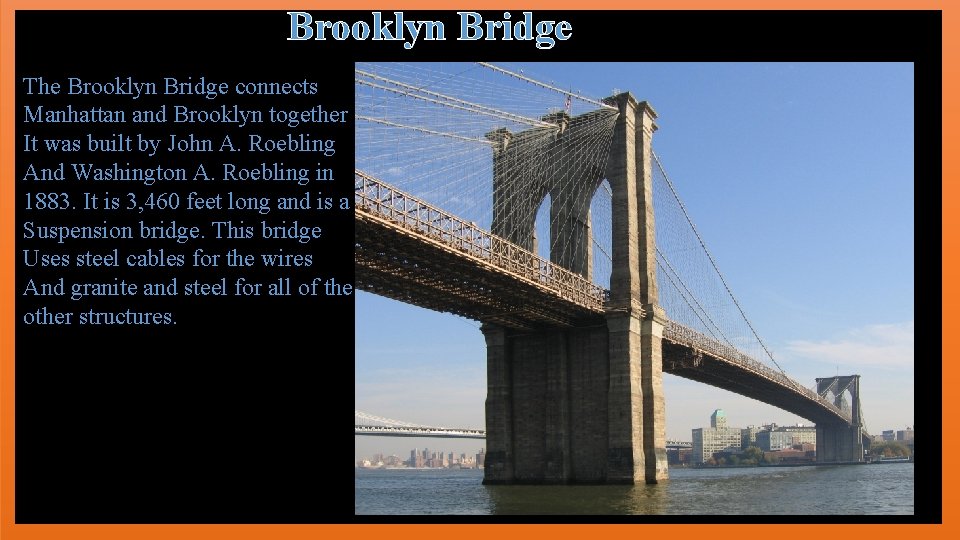
Brooklyn Bridge The Brooklyn Bridge connects Manhattan and Brooklyn together It was built by John A. Roebling And Washington A. Roebling in 1883. It is 3, 460 feet long and is a Suspension bridge. This bridge Uses steel cables for the wires And granite and steel for all of the other structures.
- Slides: 18