
Brickley Smith and Zimmerman Managerial Economics and Organizational
Brickley, Smith, and Zimmerman, Managerial Economics and Organizational Architecture, 4 th ed. Chapter 6: Market Structure

Market structure objectives • Students should be able to • Differentiate among the four standard market structures • Distinguish between price takers and price searchers

Market structure • What is a market? • All firms and individuals willing and able to buy or sell a particular product • What is market structure? • Defined by attributes of the market environment
Market structures • • Perfect competition Monopoly Monopolistic competition Oligopoly
Perfect competition characteristics • • Many buyers and sellers Product homogeneity Low cost and accurate information Free entry and exit

Firm demand curve perfect competition (Figure 6. 1)
Firm supply • Short run – Marginal cost curve above average variable cost • Long run – Long-run marginal cost curve above long-run average cost
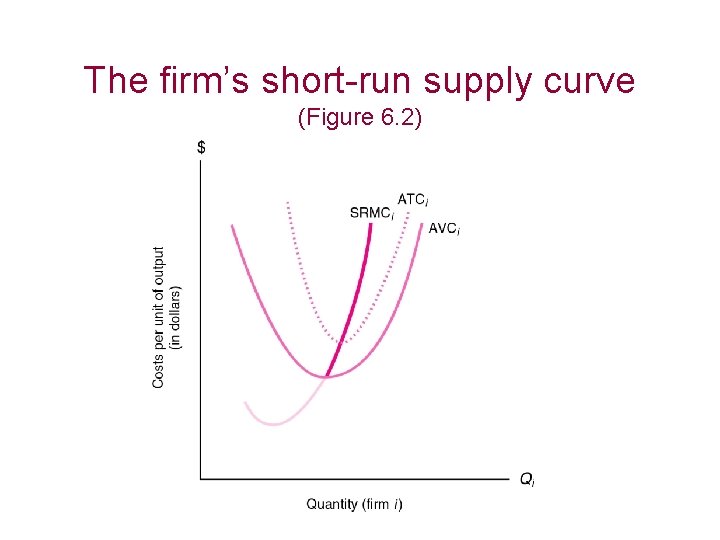
The firm’s short-run supply curve (Figure 6. 2)
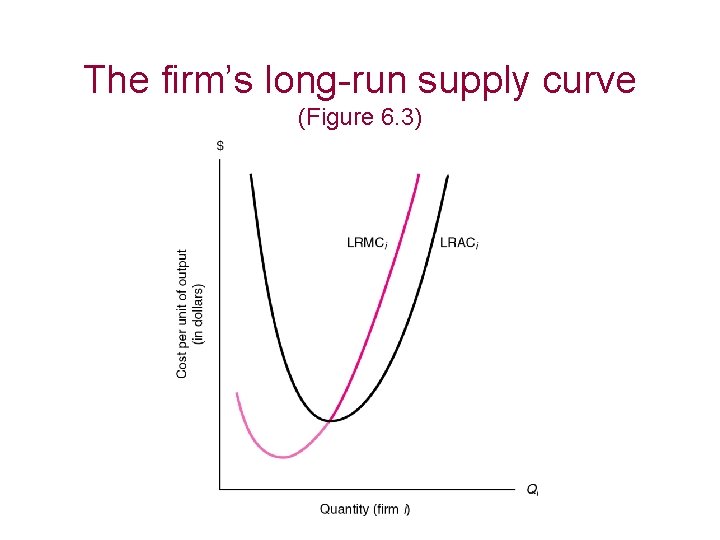
The firm’s long-run supply curve (Figure 6. 3)
Shut-down Analysis • If Price (P) > Average Cost (AC) • Stay Open (this applies to both short run and long run) • What if Price (P) < Average Cost (AC)? • Then we need to do more analysis
Shut-down Analysis • If Price (P) < Average Variable Cost (AVC) • Shut down immediately
Shut-down Analysis • What if Average Total Cost (ATC)> Price (P) > Average Variable Cost (AVC)? • Short run: stay in business • Long run: shut down
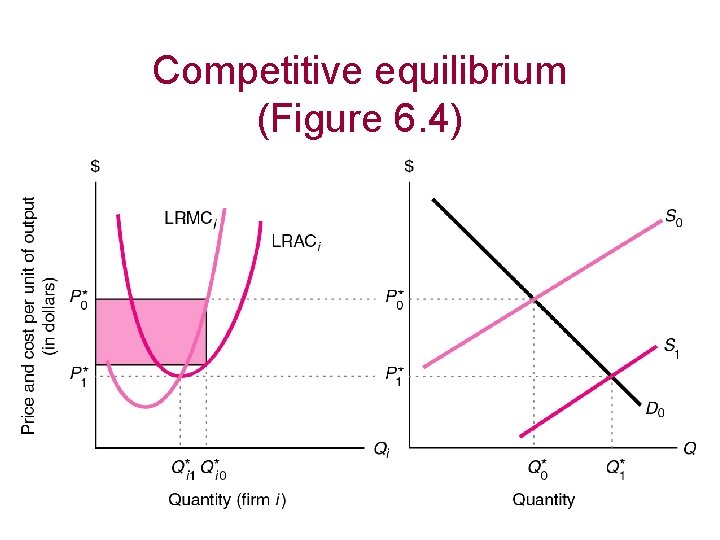
Competitive equilibrium (Figure 6. 4)

Barriers to entry Incumbent reactions Incumbent advantages • • • Precommitment contracts • Licenses and patents • Learning-curve effects • Pioneering brand advantages Specific assets Economies of scale Excess capacity Reputation effects
Monopoly • Strong barriers to entry single supplier • Profit maximization – faces market demand sets MR=MC • Unexploited gains from trade
Monopolistic competition • • Multiple firms produce similar products Firms face downsloping demand curves Profit maximization occurs where MC=MR In the limit, firms compete away economic profits
Oligopoly • A few firms produce most market output • Products may or may not be differentiated • Effective entry barriers protect firm profitability • Firm interdependence requires strategic thinking
The Nash equilibrium • An oligopolist does the best it can, given expectations of rival behavior • Behaviors are noncooperative • Duopolists considering a low price or a high price must consider rival’s response • Nash equilibrium occurs when each firm does the best it can given rival’s actions
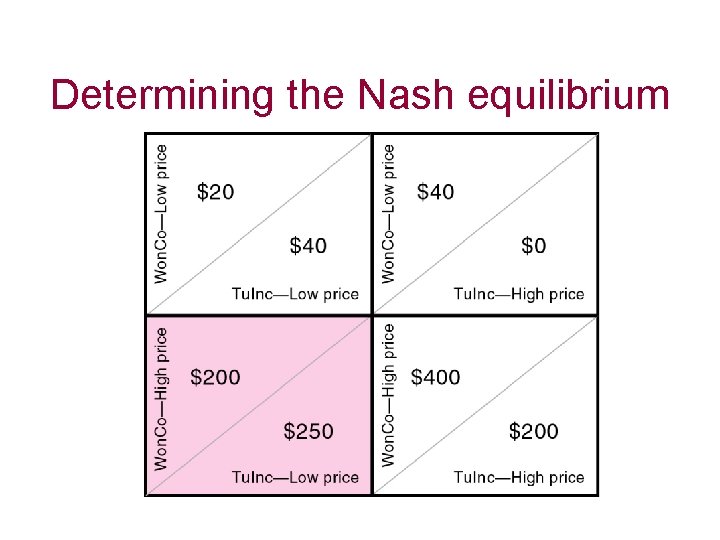
Determining the Nash equilibrium
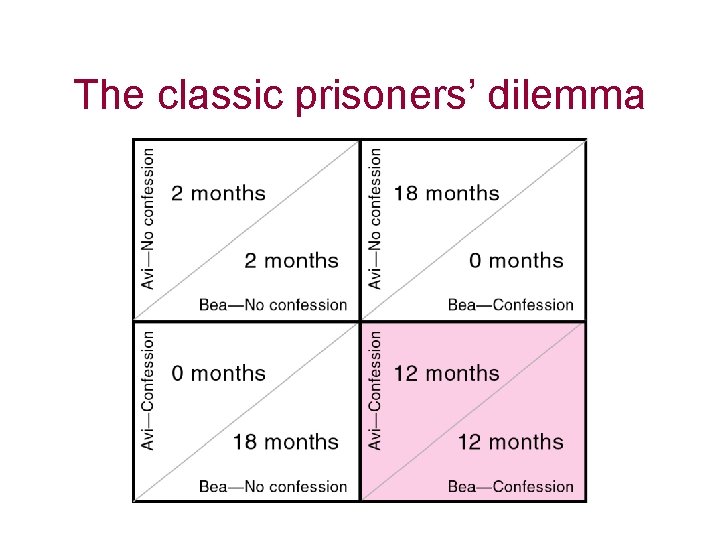
The classic prisoners’ dilemma
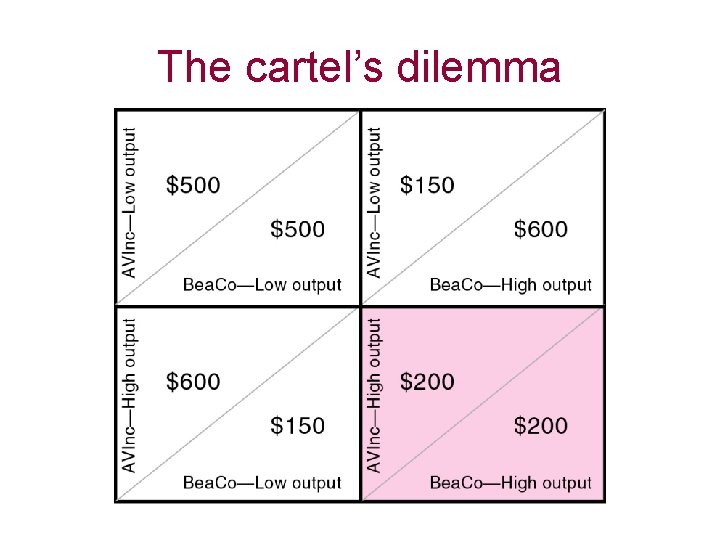
The cartel’s dilemma
- Slides: 21