
Brian Peacock ANTHROPOMETRY APPLIED TO WORKPLACE AND EQUIPMENT
Brian Peacock ANTHROPOMETRY APPLIED TO WORKPLACE AND EQUIPMENT DESIGN 1

PEOPLE VARY IN SHAPE AND SIZE 2

ANTHROPOMETRY � Measure from easily identified boney points � � Use standard measures of length, width and girth Mark the point clearly Repeat the measurement Use a sufficient sample size � Use Drillis and Contini proportions model � ISO 7250 -1: 2006 Basic human body measurements for technological design – Part 1: Body measurement definitions and landmarks. � ISO/TR 7250 -2 2010 Basic human body measurement for technological design – Part 2: Statistical summaries of body measurements from individual ISO populations. 3

MEASUREMENT � Measure class heights and weights � Calculate BMI � Estimate segment lengths, widths and girths � Use Drillis and Contini and other proportional models 4
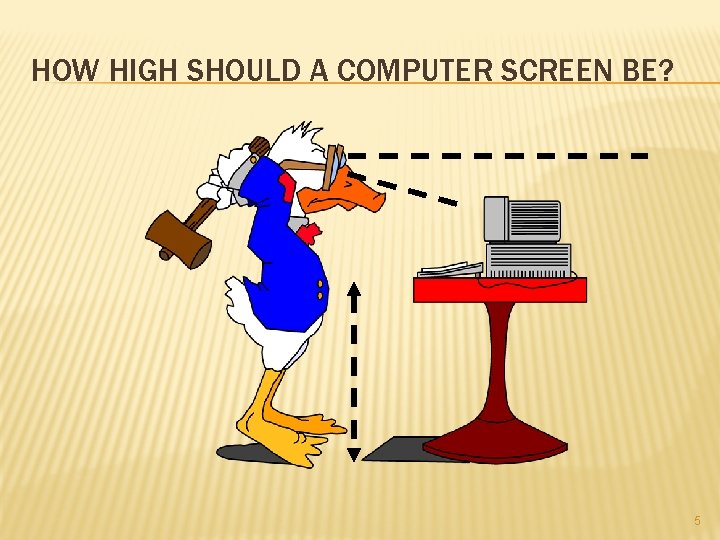
HOW HIGH SHOULD A COMPUTER SCREEN BE? 5
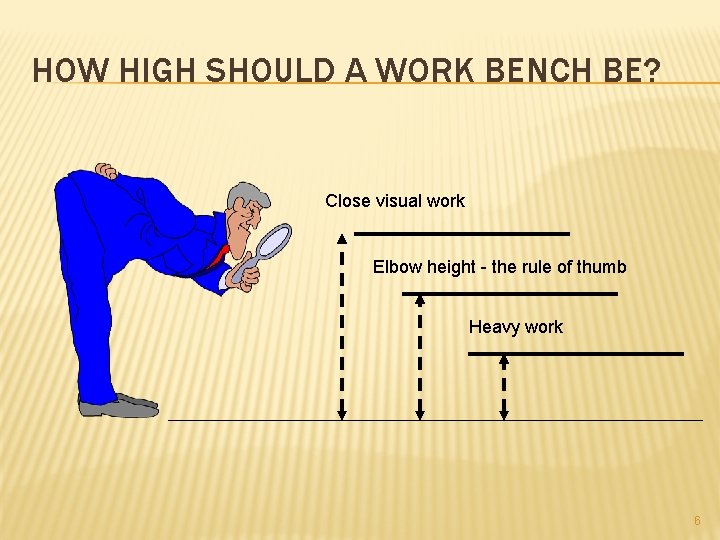
HOW HIGH SHOULD A WORK BENCH BE? Close visual work Elbow height - the rule of thumb Heavy work 6
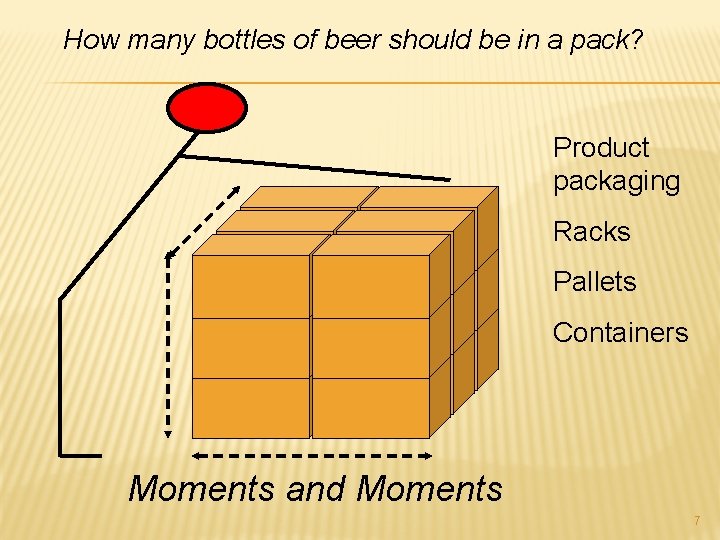
How many bottles of beer should be in a pack? Product packaging Racks Pallets Containers Moments and Moments 7
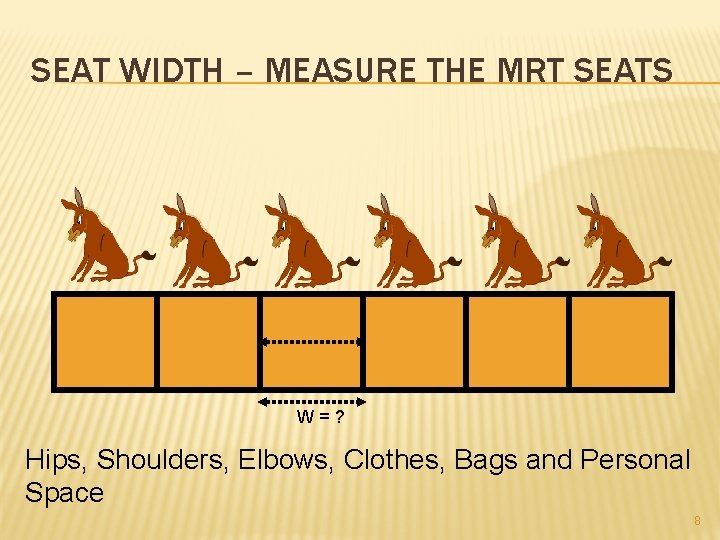
SEAT WIDTH – MEASURE THE MRT SEATS W=? Hips, Shoulders, Elbows, Clothes, Bags and Personal Space 8
CAR DESIGN QUESTIONS • How long are your arms? • How long are your legs? • What is your seated (eye) height? Draw it • What seat back angle do you prefer? • How high should the head restraint be? • How much do you tilt your wheel? • How many seat belts should there be in the back seat of a car? • Should there be adjustable pedals? • How close should you sit to the airbag? • How should you adjust your rear view mirrors? • How high should the trunk floor be? • How wide should the door open? 9
FITTING TRIALS � � First we use anthropometry to get to the ball park Then we design an adjustable physical mockup We bring in a representative sample of subjects to adjust the mockup to their liking as they go through a series of functional trials We use an appropriate experimental design and psychophysical methods of adjustment � � method of limits, just noticeable differences Sometimes the anthropometric evidence and the fitting trials evidence don’t match - why? 10
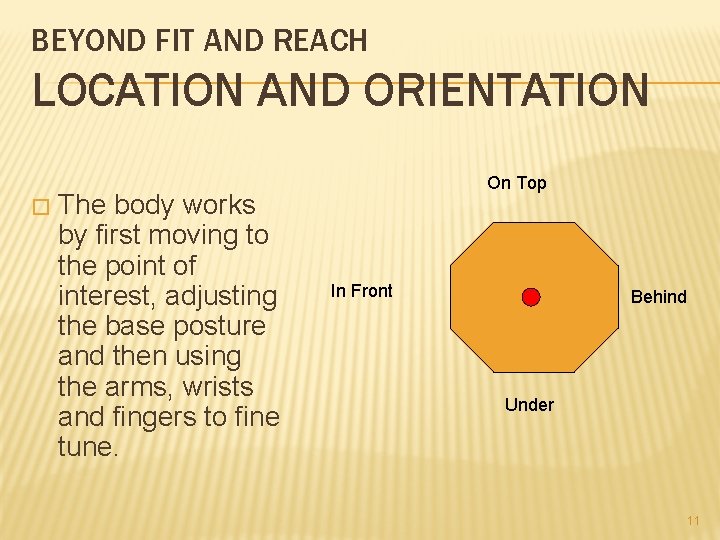
BEYOND FIT AND REACH LOCATION AND ORIENTATION � The body works by first moving to the point of interest, adjusting the base posture and then using the arms, wrists and fingers to fine tune. On Top In Front Behind Under 11
MORE DESIGN QUESTIONS � Where should the emergency button be placed on an MRT train � Where should the emergency button be placed on an MRT platform � How high should the grab rails / handles be on the MRT or bus � How high should the seats be on a Bus? MRT? Airplane? � How big are your shoes? 12
GRASPING AND MANIPULATING � Fingers have postures too � How big are your hands? � How big should handles be? � How big should keyboards be? � Length, Width, Circumference, Shape 13
FIT, REACH AND ACCESS RULES OF THUMB � � � Fit – the 95 th percentile male Reach – the 5 th percentile female Access – physical and visual � � � These rules of thumb vary with the type, importance and duration of the task � � � 95 th percentile male should get in or out of the workplace without obstruction 5 th percentile female should be able to move to the object / control quickly 90% of the population should be able to see relevant displays Object orientation may also be a challenge It may be possible for someone to lean forward or move to the task Emergency evacuation should let everybody out A short time on a high seat is unimportant Other criteria such as importance, esthetics, cost may require tradeoffs in accommodation Design adjustability into the system wherever possible 14
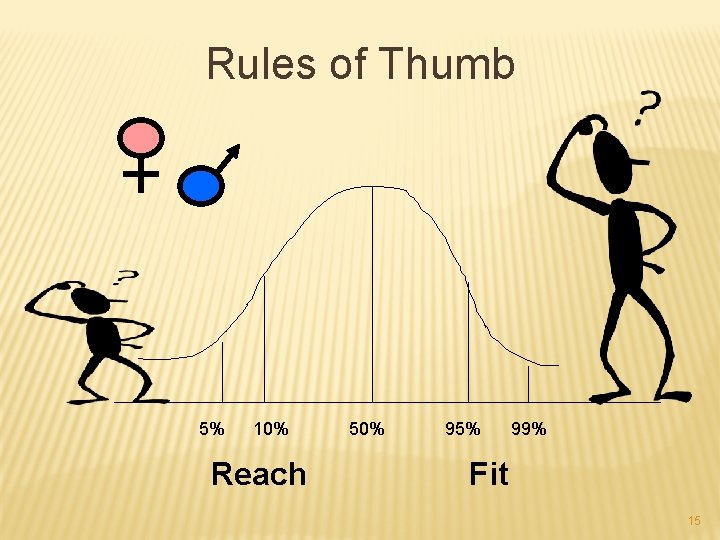
Rules of Thumb 5% 10% Reach 50% 95% 99% Fit 15
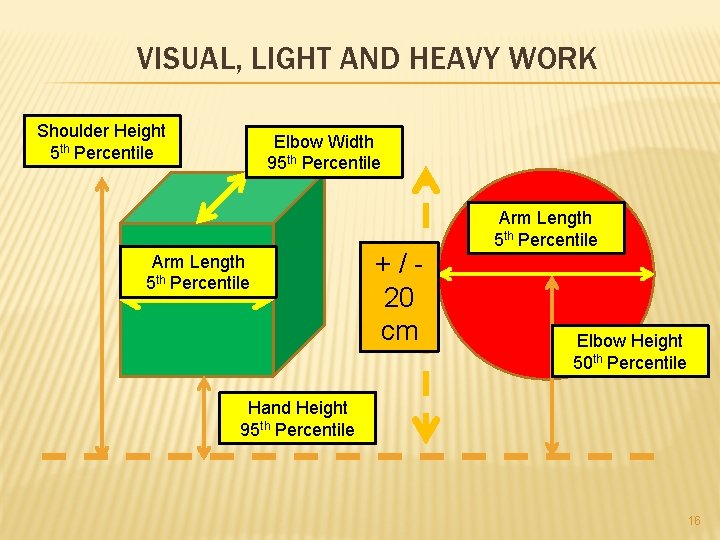
VISUAL, LIGHT AND HEAVY WORK Shoulder Height 5 th Percentile Elbow Width 95 th Percentile Arm Length 5 th Percentile +/20 cm Arm Length 5 th Percentile Elbow Height 50 th Percentile Hand Height 95 th Percentile 16
ERGONOMICS CONTRIBUTIONS TO THE DESIGN OF THE HONG KONG MASS TRANSIT RAILWAY Brian Peacock Compare the Singapore MRT 17
18
THE OPPORTUNITIES � Passenger Compartment � � Operators Cab � � � � Seats Grab Rails Entry / Egress Seat Instrument Panel Emergency Systems Thermal Environment Control Room Design Turnstiles Transport for the Handicapped 19
THE PASSENGER COMPARTMENT • Short Journeys, Most Passengers Stand • Maximize Pay Load, Stability and Mobility • Get 25 Passengers On and Off in 25 seconds 20
THE SEAT DESIGN � Aluminum, Scalloped Seats � Seat Centers - 500 mm (19. 7”) � Seat Height - 400 mm (15. 7”) � Seat Depth - 380 mm (15”) � 3 degrees upward inclination of seat surface � Lumbar Curve - 230 mm (9”) 250 mm (9. 8”) radius � Head contact with side wall and encroachment on standing area / capacity 21
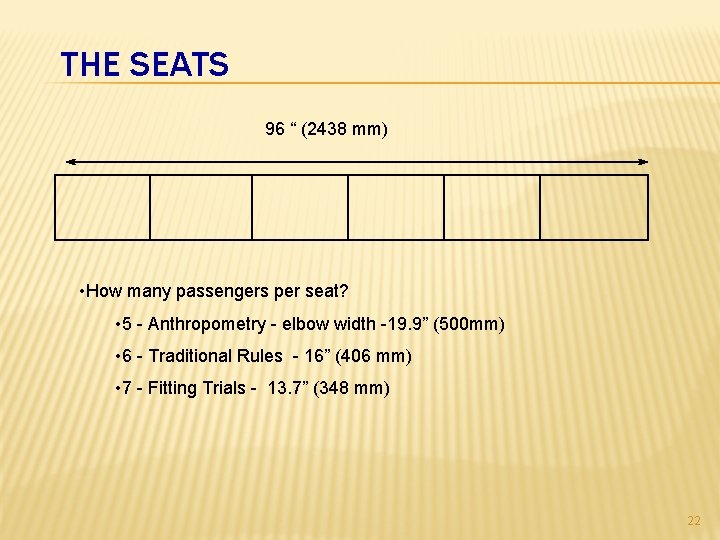
THE SEATS 96 “ (2438 mm) • How many passengers per seat? • 5 - Anthropometry - elbow width -19. 9” (500 mm) • 6 - Traditional Rules - 16” (406 mm) • 7 - Fitting Trials - 13. 7” (348 mm) 22
RULES OF BUM � � “It was normal to erect temporary viewing stands (bleachers) along the route in London of a royal procession. The official directive to the builders of stands was, for some centuries, to allow 18” for each aristocratic behind and 17” for commoners. ” - the Toronto Transit Commission chose 17” for their subway. The rules brought to the table for the Hong Kong Mass Transit design were 16” to the bum, 16 bums to the ton” 23
THE FIRE DEPARTMENT AND THE TRANSPORTATION DEPARTMENT � Hot aluminum gives of noxious fumes � Helicopter pad material for floors � Stainless steel seats, no padding, no scallops � Sometimes cold � Sliding � Easy to clean � Durable � Stainless steel grab rails 24
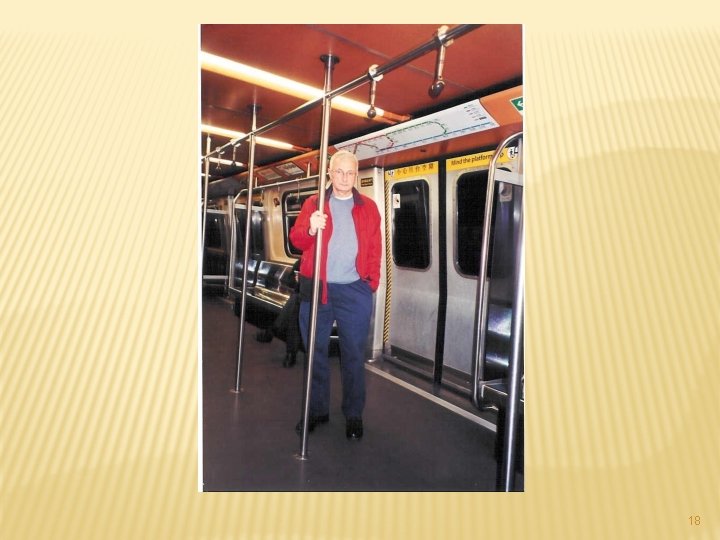
GRAB RAILS � Reach for short passengers (including children) � Fit (for tall passengers - head clearance) � Horizontal Bars (above the seats) � 3” set back � Vertical Poles � Straps 25
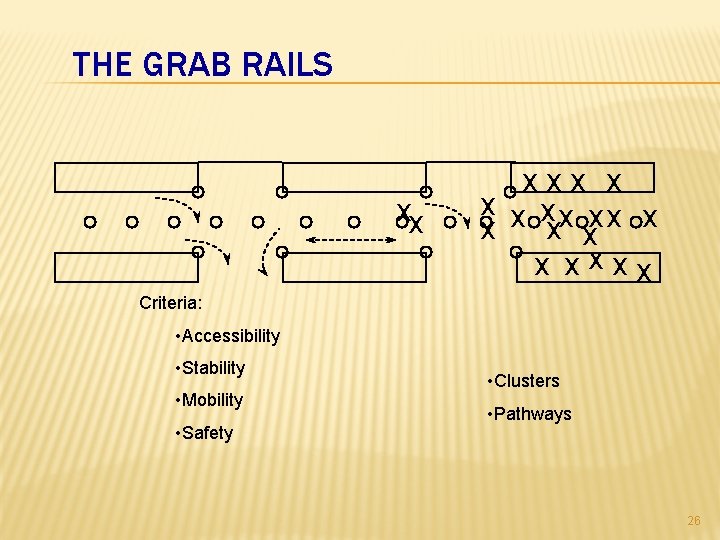
THE GRAB RAILS xx x x x xx xx x x xxxx Criteria: • Accessibility • Stability • Mobility • Safety • Clusters • Pathways 26
ENTRY / EGRESS � Headway � Dwell time � Passenger flow through doors � Physical mock ups (Bamboo) � Timed Trials � Old, Young, Big, Small, Packages, etc. � Requirements – 25 off, 25 on in 25 seconds � What are the Singapore MRT dwell times? 27
OPERATOR’S CAB � Seat � Entry - Egress (Every 90 seconds) � Control Panel � Brake, Speed Control � Communications � Doors � Emergency Stop � Lighting and Thermal Environment � Coffee Cups 28

OPERATOR’S SEAT � Sitting � Flip Up - Standing - Emergency and Routine Exit � Padded Front Edge � Most Common Posture � Monks, Sit Stand, Hip Angle and Pelvic Tilt 29
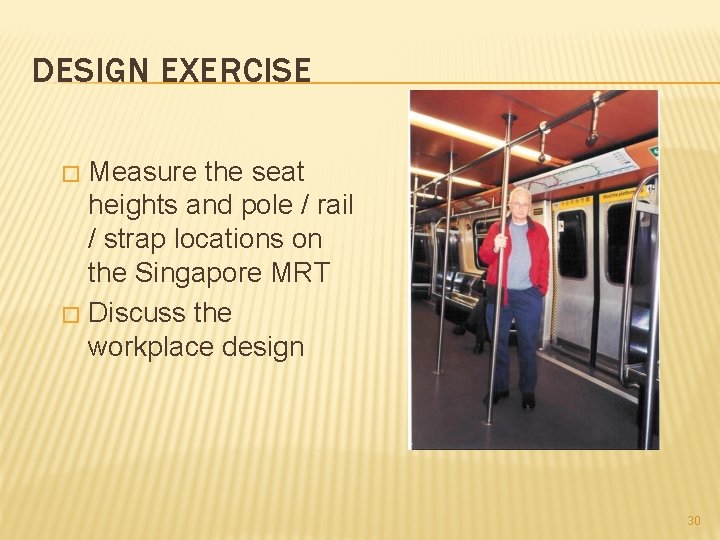
DESIGN EXERCISE Measure the seat heights and pole / rail / strap locations on the Singapore MRT � Discuss the workplace design � 30
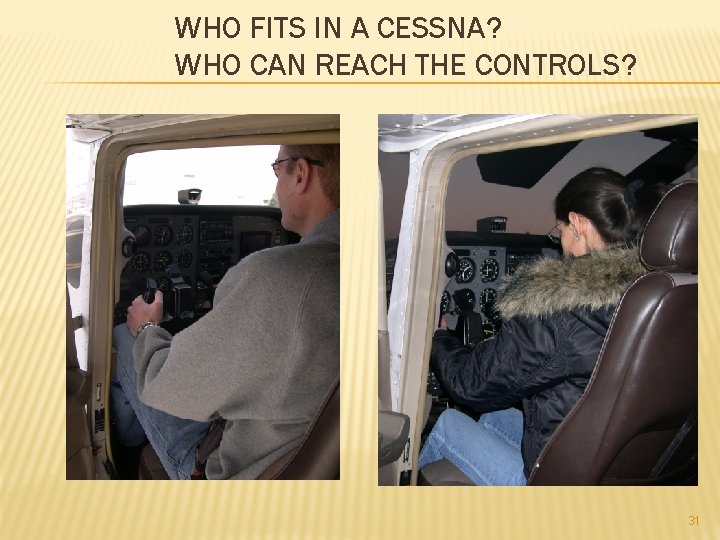
WHO FITS IN A CESSNA? WHO CAN REACH THE CONTROLS? 31
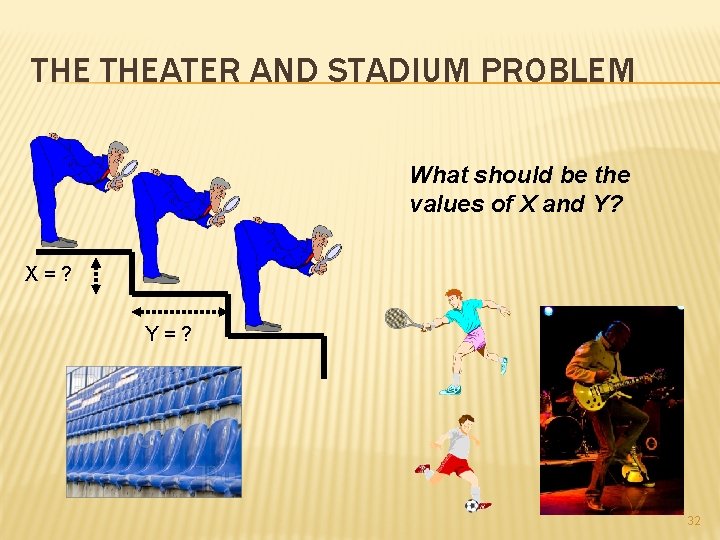
THE THEATER AND STADIUM PROBLEM What should be the values of X and Y? X=? Y=? 32
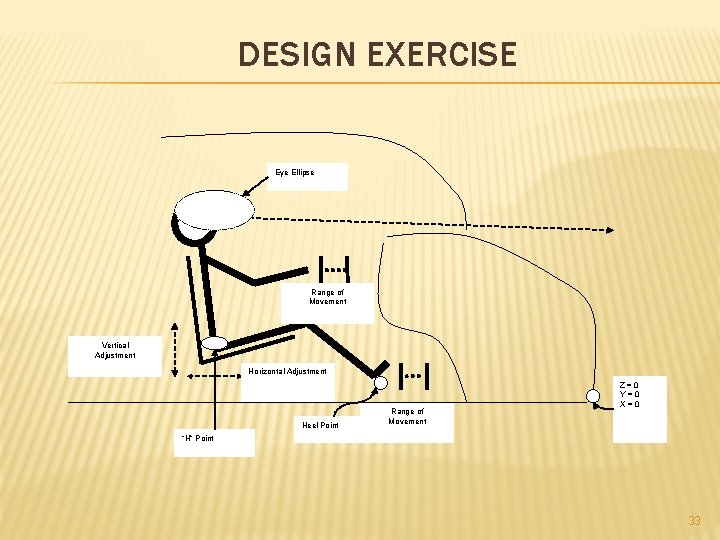
DESIGN EXERCISE Eye Ellipse Range of Movement Vertical Adjustment Horizontal Adjustment Heel Point Range of Movement Z=0 Y=0 X=0 “H” Point 33
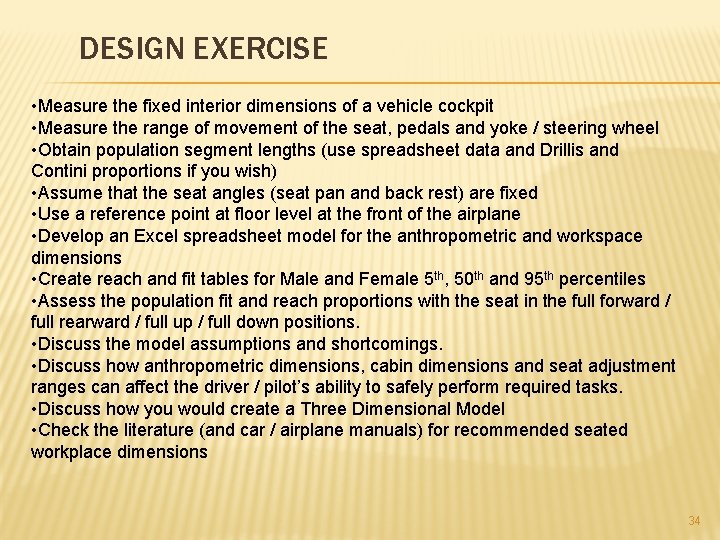
DESIGN EXERCISE • Measure the fixed interior dimensions of a vehicle cockpit • Measure the range of movement of the seat, pedals and yoke / steering wheel • Obtain population segment lengths (use spreadsheet data and Drillis and Contini proportions if you wish) • Assume that the seat angles (seat pan and back rest) are fixed • Use a reference point at floor level at the front of the airplane • Develop an Excel spreadsheet model for the anthropometric and workspace dimensions • Create reach and fit tables for Male and Female 5 th, 50 th and 95 th percentiles • Assess the population fit and reach proportions with the seat in the full forward / full rearward / full up / full down positions. • Discuss the model assumptions and shortcomings. • Discuss how anthropometric dimensions, cabin dimensions and seat adjustment ranges can affect the driver / pilot’s ability to safely perform required tasks. • Discuss how you would create a Three Dimensional Model • Check the literature (and car / airplane manuals) for recommended seated workplace dimensions 34
HOMEWORK, ONE PAGE REPORT � Choose one of the design exercises � Theater / Stadium Seating � Car � Train � Airplane cabin � Airplane cockpit � Use the attached data and Excel files � Measure the group members’ segment lengths, widths, girths � Construct your one page design report 35
CONCLUSIONS � Ergonomics starts with Anthropometry � Then it deals with all the other human characteristics � Sometimes there are conflicts and tradeoffs � Always we must deal with variability � If it isn’t design it isn’t ergonomics 36
- Slides: 36